

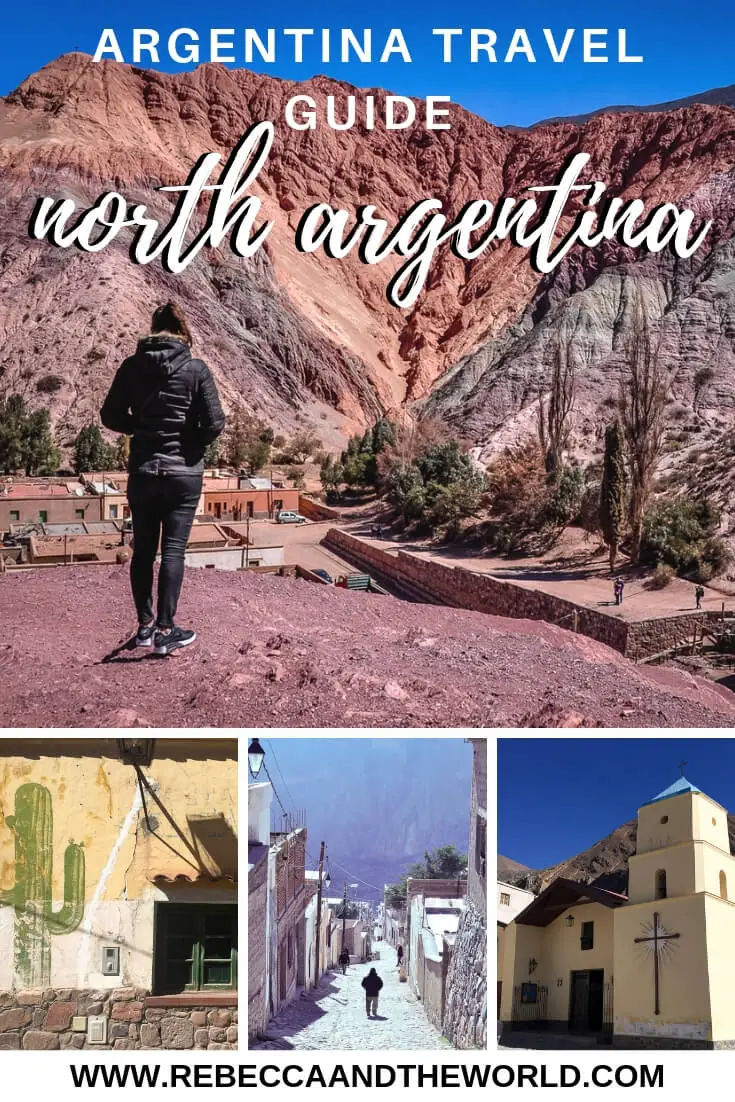
Planning to visit north Argentina? This 9-day road trip itinerary is the perfect introduction to this stunning region.
One of the amazing things about travelling in Argentina is the varying landscapes. And one of the places that most surprised me was north Argentina.
In fact, after a road trip through the region, it’s now my favourite place to visit in Argentina, and I find myself constantly recommending anyone who’s travelling to Argentina to put the north of the country on their itinerary.
Hiring a car and tracing the windy roads of the provinces of Salta and Jujuy on an Argentina road trip is the best way to experience northwest Argentina. Along the way you’ll see surprising rock formations, taste incredible wines and experience a culture that is distinctly different to other areas of Argentina.
This part of Argentina is a little off the beaten path, so if this sort of trip is up your alley, I’ve put together a 9-day North Argentina itinerary to help you experience the highlights of this region. This follows the route that my husband and our friends took, plus some advice for things I’d do differently next time.
Seriously, if you’re thinking about visiting Argentina, please consider the north of Argentina – it blew my mind and I know it will amaze you, too!
This blog post may contain affiliate links, meaning if you book or buy something through one of these links, I may earn a small commission (at no extra cost to you).
Snapshot: North Argentina travel guide
☀️ Best time to visit: April to November
🗺️ Route overview: fly into Salta, then loop through Purmamarca and the Quebrada de Humahuaca, over to Cachi, down to Cafayate and back to Salta.
⭐️ You shouldn’t miss:
- Purmamarca and the Cerro de los Siete Colores (Hill of Seven Colours) at sunrise/sunset
- Salinas Grandes (the blinding-white salt flats)
- The Quebrada de Humahuaca villages (Tilcara/Humahuaca)
- Wine tasting in Cafayate (hello, torrontés)
🏨 Where to stay: Keep it simple and base yourself in Salta (start/end), Purmamarca, Cachi and Cafayate. Book early in peak season and on weekends – options can be limited in the smaller towns.
🚙 Car hire: A 2WD is usually fine for the main loop, but roads are slow and winding – add more time to your driving than you think you’ll need and avoid driving after dark. If you’re adding Iruya, expect a rougher final stretch and more “adventure driving”. Book a rental car on DiscoverCars
⛽️ Fuel and cash: Fill up whenever you can (especially before long stretches) and carry cash – some places have patchy card/internet or don’t take card at all
North Argentina road trip itinerary
Here’s how I’d recommend planning this road trip over 9 days.
- Day 1: Arrive in and explore Salta
- Day 2: Drive to Iruya
- Days 3 and 4: Humahuaca, Tilcara and Purmamarca plus Salinas Grandes day trip
- Days 5 and 6: Cachi
- Days 7 and 8: Cafayate
- Day 9: Return to Salta via Quebrada de Cafayate
How many days do you need?
I think 9 days is a great amount of time to explore the north of Argentina. But if you don’t have this amount of time, then you could do this in 5 days or 7 days. Honestly, 7 days would be my recommended minimum.
5-day itinerary
- Day 1: Arrive in Salta, pick up your rental car and drive to Purmamarca
- Days 2-3: From Purmamarca, spend a few days exploring the nearby towns of Humahuaca and Tilcara as well as Salinas Grandes
- Day 4: Return to Salta in the afternoon
- Day 5: Spend your final day in Salta, visiting the museum, taking a walking tour
7-day itinerary
- Day 1: Arrive in Salta, pick up your rental car and drive to Purmamarca
- Days 2-3: From Purmamarca, spend a few days exploring the nearby towns of Humahuaca and Tilcara as well as Salinas Grandes
- Day 4: Return to Salta, visit the city
- Day 5: Drive to Cafayate, stopping at places like the Quebrada de las Conchas and the Amphitheatre
- Day 6: Wine tasting in Cafayate
- Day 7: Return to Salta and fly out
North Argentina road trip logistics
Before we get into the details of the north Argentina road trip itinerary, here are a few logistics to consider.
You should also stop by and read my plan a trip to Argentina guide and Argentina travel tips for some useful advice if it’s your first time visiting.
When to visit north Argentina
We drove this north Argentina route in early September and it was perfect. It wasn’t super hot during the day, but also not too cold at night (do I sound like Goldilocks?). We did wake up to frost some mornings. We needed jackets but they were often peeled off by midday.
The great thing about the timing of our trip was that it was low season, so it wasn’t very busy and the other tourists we saw were mostly Argentines.
Overall, April to November is the ideal time to visit north Argentina. Summer (December to February) brings a lot of rain, which can often wash out roads or make them unpassable.
How to get to north Argentina
To do this trip, fly into Salta or Jujuy. We flew into Salta and did a sort-of figure eight loop. You’ll loop north into Jujuy and Humahuaca/Purmamarca, then swing back through Salta province to Cachi and down to Cafayate before returning to Salta (see the map later on).
You could also mix up this itinerary to avoid some looping back, and fly into Salta and out of Jujuy; simply alter the order of the itinerary.
Aerolíneas Argentinas, Jet Smart and FlyBondi all fly to Salta; Aerolíneas Argentinas and FlyBondi have services to Jujuy.
How to get around northern Argentina
The best way to experience north Argentina is to hire a car and drive it yourself.
This gives you time to stop in small towns that pique your interest and relax as you drive around this beautiful area.
We hired a car through a company that I think has now gone bust, so book online with DiscoverCars. They collate all the car rental companies in Salta so you can choose the right one for you.
I’ve got a full guide to renting a car in Argentina with my tips and tricks.
Do you need a 4WD for north Argentina?
No. We had a teeny-tiny car that was fine for the four of us but it was a little hairy in some parts. A four-wheel drive would have been nice but not necessary. If you plan to drive to Iruya, a 4WD would be handy.
Can I do a tour instead?
The thought of driving around north Argentina may be a little intimidating, so there are plenty of tours that can take you on multi-day trips or day trips to the highlights that I’ll be outlining in this blog post. A few that I’ve found online that come recommended are:
- This day trip from Salta will have you exploring gorgeous Purmamarca and Salinas Grandes.
- This 7-day tour hits the highlights of north Argentina with a side trip into the Atacama Desert in Chile. For adventurous travellers looking for something beyond the usual Atacama sightseeing, Ojos del Salado is another possibility. The volcano can be climbed on foot with a certified mountain guide on an Ojos del Salado expedition.
- Driving up to Iruya can be a little hairy, so consider this 2-day trip from Salta which visits Iruya and Purmamarca.
- If you’re all about the wine, this day trip from Salta heads straight to Cafayate for all the vino.
Tips for a north Argentina itinerary
So now, hopefully I’ve convinced you that a self-drive road trip is the best way to get around the north of the country. If you do go down this path, here’s some Argentina travel advice for a safe trip.
Check that your car has a spare tyre. We got a flat on our final day (ugh) and were thankful that we knew there was a spare in the boot/trunk. Having said that, make sure you actually know how to change a flat tyre! (The funniest part about our flat tyre is that it happened on the smoothest tarmac of our trip, not on the bumpy, rocky roads we’d traversed the days before!)
Fill up with fuel whenever you see a petrol station. Distances can be long here and you don’t want to end up in the middle of nowhere with an empty tank.
It’s the law in Argentina to drive with your headlights on when on a highway – even during the daylight hours. If you don’t, expect a fine if you’re pulled over by the police.
While most of the towns along the way do have ATMs, bring cash. Cards aren’t accepted in all restaurants and you will need cash to purchase souvenirs sold in the marketplaces. In these parts of the country, cash is king in Argentina.
Always get travel insurance when you travel, especially to these more remote areas of the country.
Need help planning your Argentina trip? 🇦🇷
Feeling overwhelmed about planning your trip to Argentina? I get it. And I can help! I offer one-to-one travel consultation calls to help you plan your trip to Argentina. In an hour, we can map out a realistic itinerary or work through your specific questions so you can book an incredible trip. Save hours of your time with my local knowledge and expertise.
Day-by-day North Argentina road trip itinerary
Let’s get into it! First up, here’s a map of the northern Argentina itinerary so you can visualise the suggested route that follows.
Map of northwest Argentina
Day 1: Salta
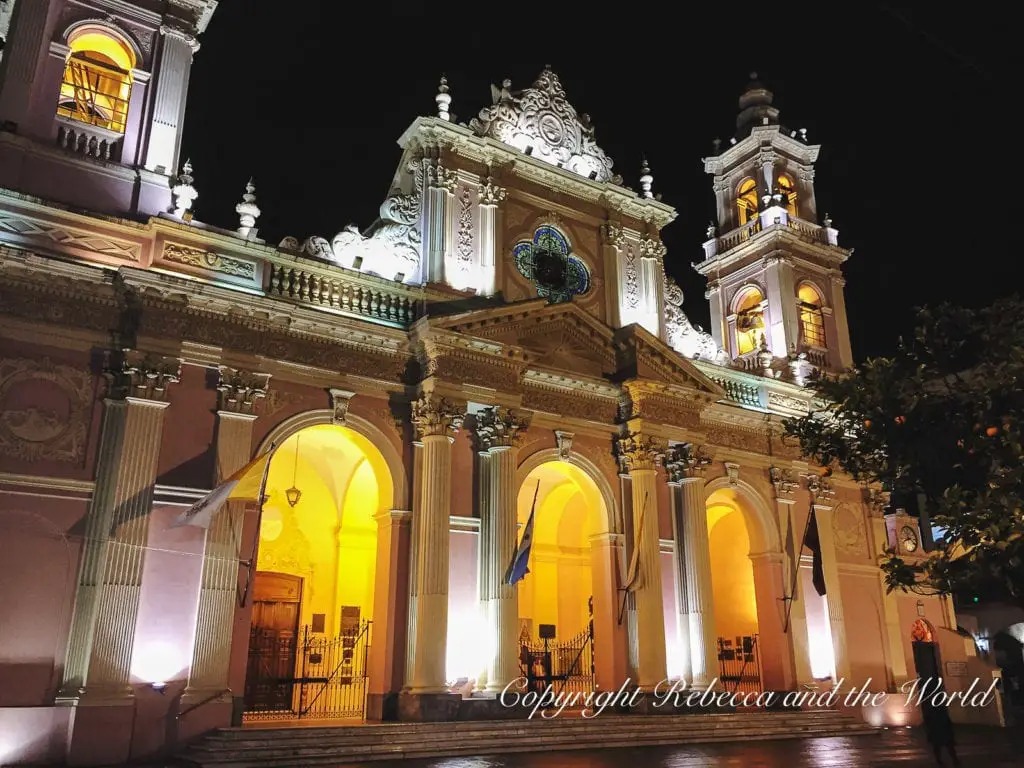
Off we go! We’re starting the Argentina road trip in Salta. They call this city Salta la Linda, and it’s easy to see why, with its peaceful plazas and beautiful buildings that date back to the late 16th century.
Make sure to visit the Museo de Arqueología de Alta Montaña. One of the top things to do in northern Argentina, here you’ll see the mummified bodies of the sacrificed Incan children discovered in 1999 on the top of Llullaillaco mountain. Only one of the three children is displayed at a time, mesmerisingly frozen in time. It’s incredible to see the details in their faces still so well preserved after hundreds of years.
The museum costs ARS$16,000 and is open Tuesday to Sunday, from 11am to 7pm.
You can easily pass a day in Salta wandering the streets, people-watching in Plaza 9 de Julio and admiring the city’s colourful churches. Join a guided walking tour or this free Salta walking tour to see the best of the city.
Where to stay in Salta
On our first night in Salta, we stayed in Design Suites Salta, a modern hotel with spacious bedrooms. It’s located within walking distance of the main area of the city. | Book your stay at Design Suites Salta today on Booking.com or Expedia
Another hotel that gets great reviews is Legado Mitico, a boutique hotel in the heart of the city. It’s a contemporary hotel with estancia style and a lovely garden. | Check rates online
Where to eat in Salta
We ate steaks the size of our heads at El Charrúa (Caseros 221) – photo evidence below.
Also try Doña Salta (Córdoba 46) for empanadas and José Balcarce (Necochea 594) for traditional regional dishes.

Day 2: Iruya
Drive time: 6 hours
Road surface: Mix of sealed and gravel
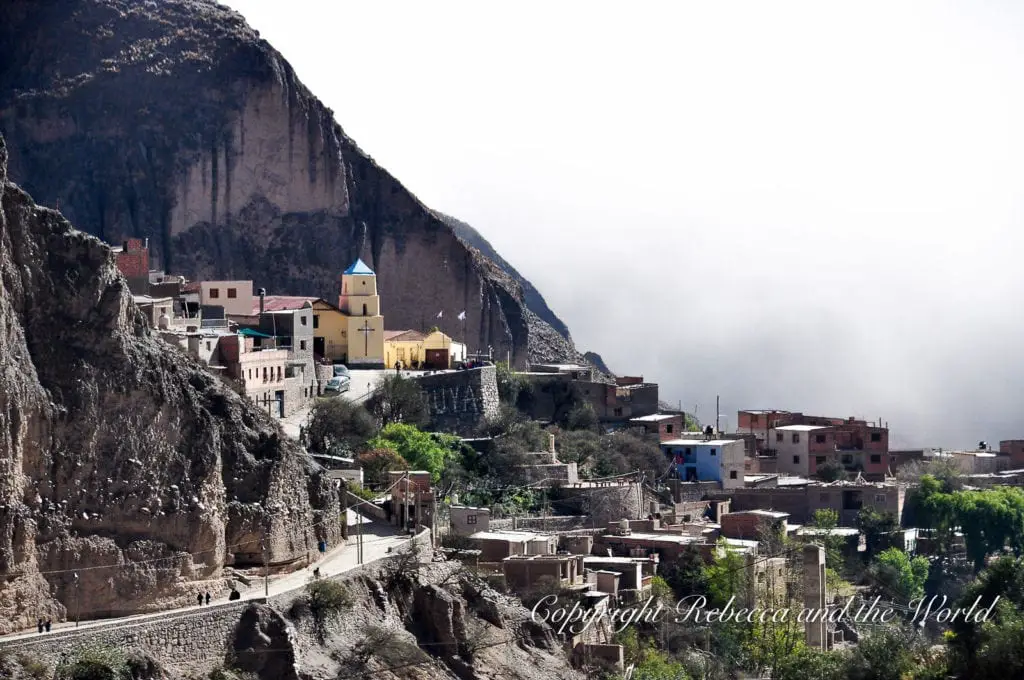
Pick up your hire car in the morning and begin the 320-kilometre journey to Iruya, a tiny, cloud-shrouded town perched on the side of a mountain. Leave early, because this is a long day of driving.
Iruya is properly remote – it’s the most “out there” detour on this north Argentina loop. It’s one of the more remote places to visit in Argentina, but worth it if you’re up for an adventure! The last 50 kilometres of the trip is on a bone-jarring dirt road that winds through, over and around mountains (this is where a four-wheel drive might come in handy – but we were fine with a 2WD).
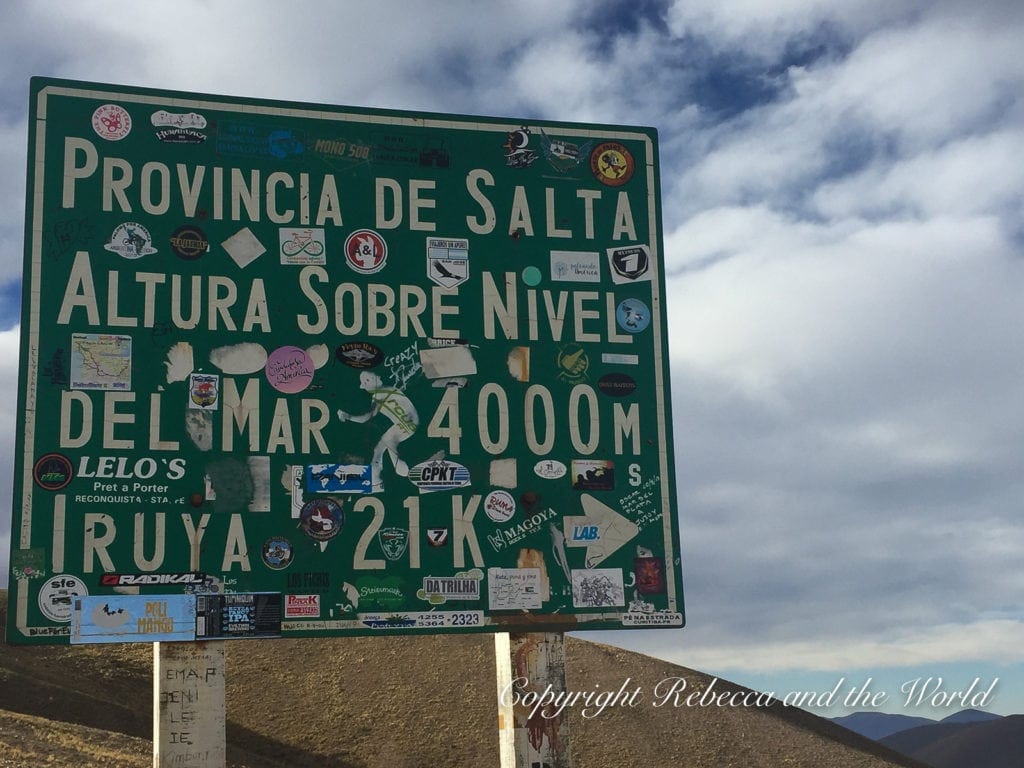
The journey will take you to 4,000 metres above sea level at the crossing between the Salta and Jujuy provinces, and comprises an array of stunning landscapes, from dusty flat towns to mountains rippled with layers of brown, red, green, purple and slate-grey earth.
Important! Do this drive only if you’re a confident driver and the weather looks fine. The roads are slow-going with several switchbacks. I wouldn’t attempt it after heavy rain or if you’re not comfortable with narrow mountain roads. If the road looks rough or weather’s closing in, spend the night in Tilcara instead.
In town, you can wander the cobblestoned streets or spend a few extra days hiking in the area. We stayed here only one night, but if you have the time, I’d recommend staying here for at least two nights, as the drive here is difficult.
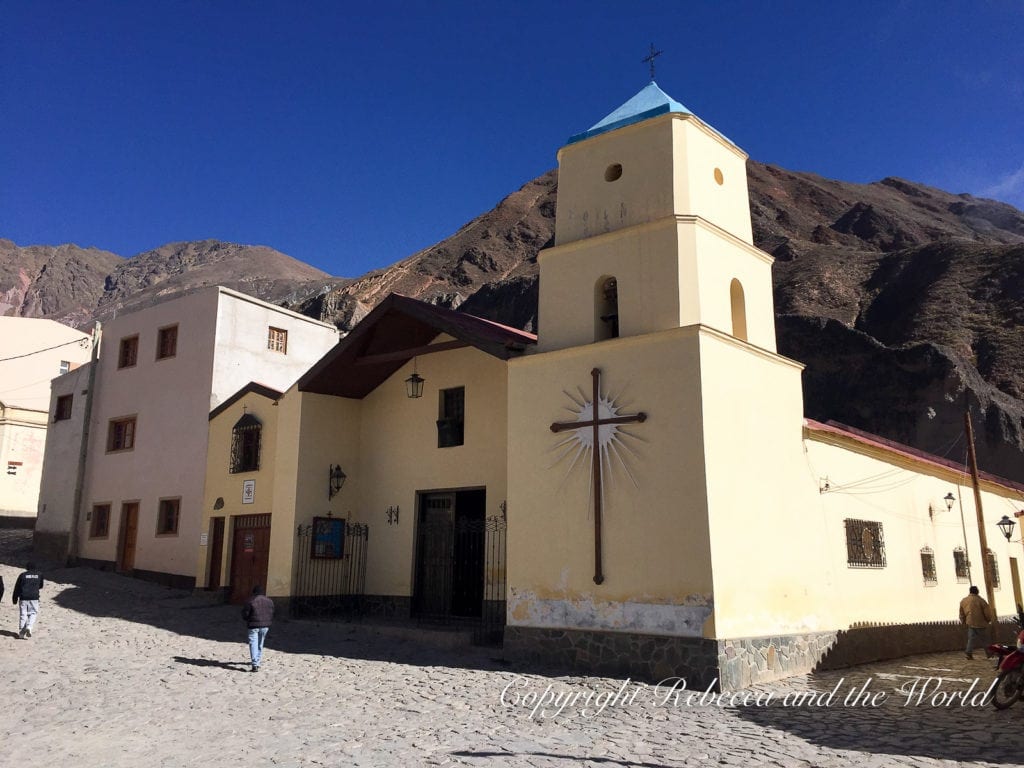
If you haven’t already chowed down on them in Salta, you can try your first empanadas salteñas, crispy pastries filled with meat and vegetables. The empanadas in this region are different to those you’ll find elsewhere in Argentina.
My top tip: always ask for them fried (rather than baked). Not as healthy, of course, but so tasty.
There’s a small shop in the square opposite the church that sells stellar empanadas (unfortunately, I never wrote down the name of the shop!).

Note that this part of the trip is completely optional, because it is a tough drive. You could skip Iruya and spend an extra day in Humahuaca, Tilcara or Purmamarca instead.
Top tip! Parts of this route climb above 3,500-4,000m. If you’re arriving from Buenos Aires or sea level, take it slow the first day, drink more water than you think you need and don’t plan any strenuous activities the same afternoon.
Where to stay and eat in Iruya
Hotel Iruya is perched at the top of the hill (San Martín 641). The restaurant serves surprisingly good food. | Check the latest prices and book your stay at Hotel Iruya online with Booking.com
Days 3 and 4: Humahuaca, Tilcara and Purmamarca
Drive time: 3 hours from Iruya to Purmamarca, but allow 3-5 additional hours for sightseeing and lunch
Road surface: Mix of sealed and gravel/dirt
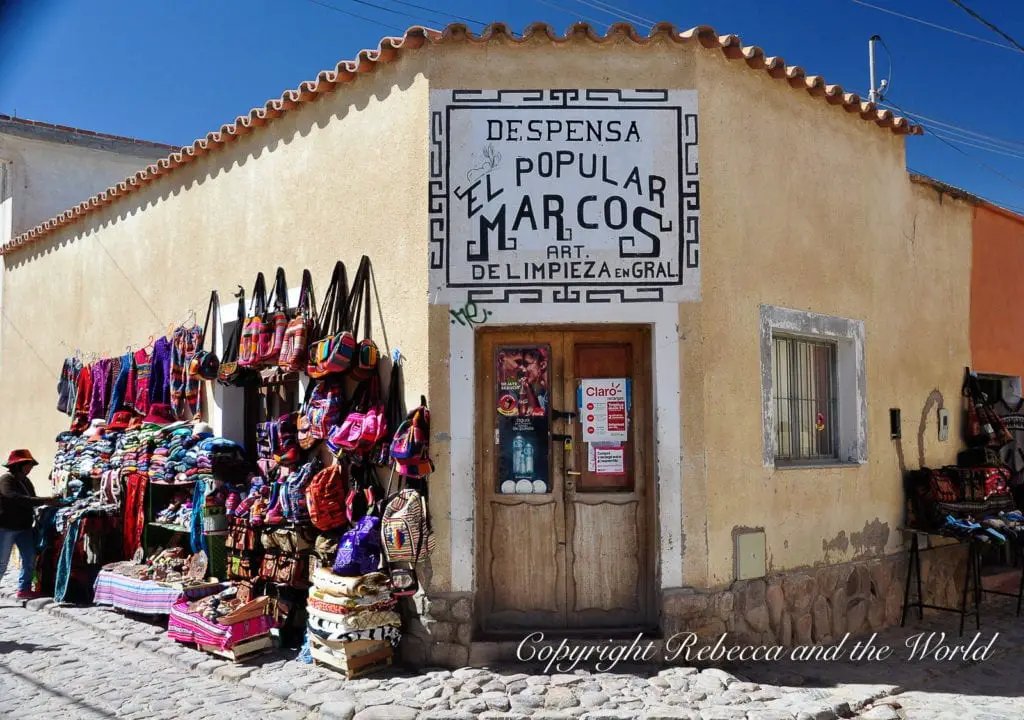
Get back in your car and return the same way you came, stopping along the way to have lunch in the photogenic town of Humahuaca. The restaurant Pachamanka (Buenos Aires 457) serves great tamales and traditional dishes on colourful tables.
You can pick up a range of handcrafted goods here in Humahuaca including blankets and rugs, pottery, clothing and ornaments. We bought a colourful handwoven rug from one of the many vendors.
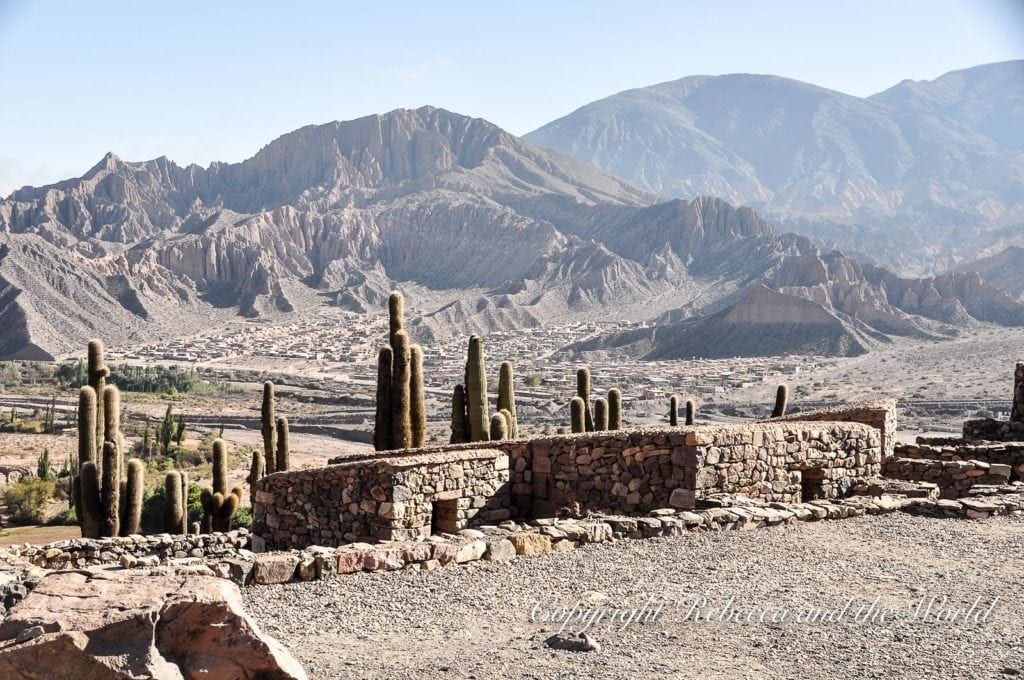
Continue south to Tilcara where you can visit the Pucará ruins, a pre-Inca fortification.
This site was strategically chosen, as it offered views across the valley and plenty of chances to see any enemies approaching. Wander through the cactus-filled ruins – but be aware that it can be windy at times so hold on to your hat!
The site is closed Mondays, but open from 9am to 6.30pm Tuesday to Sunday.
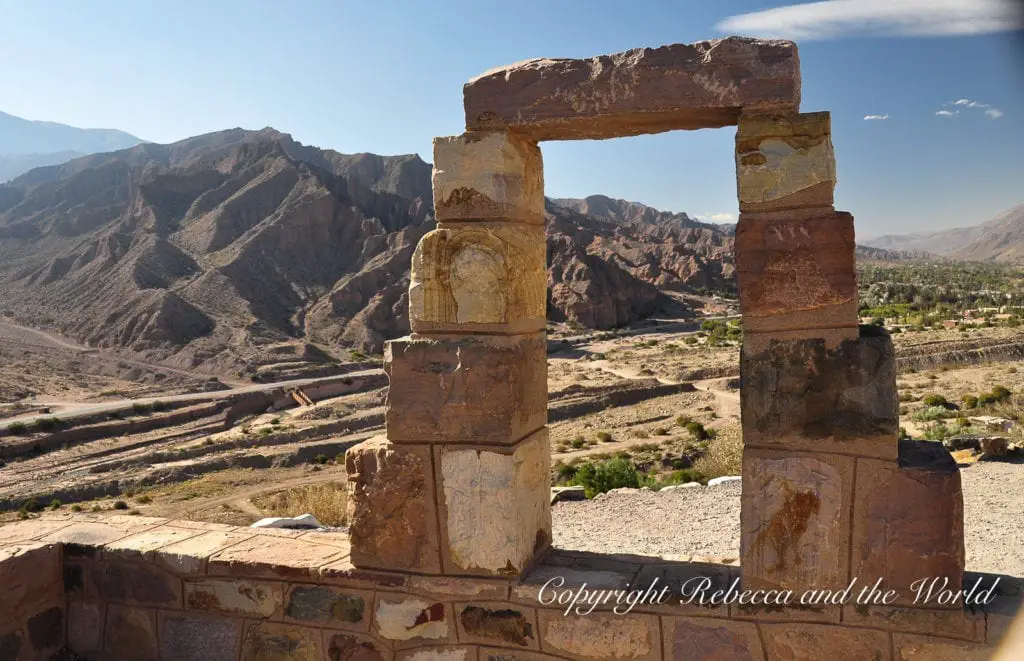
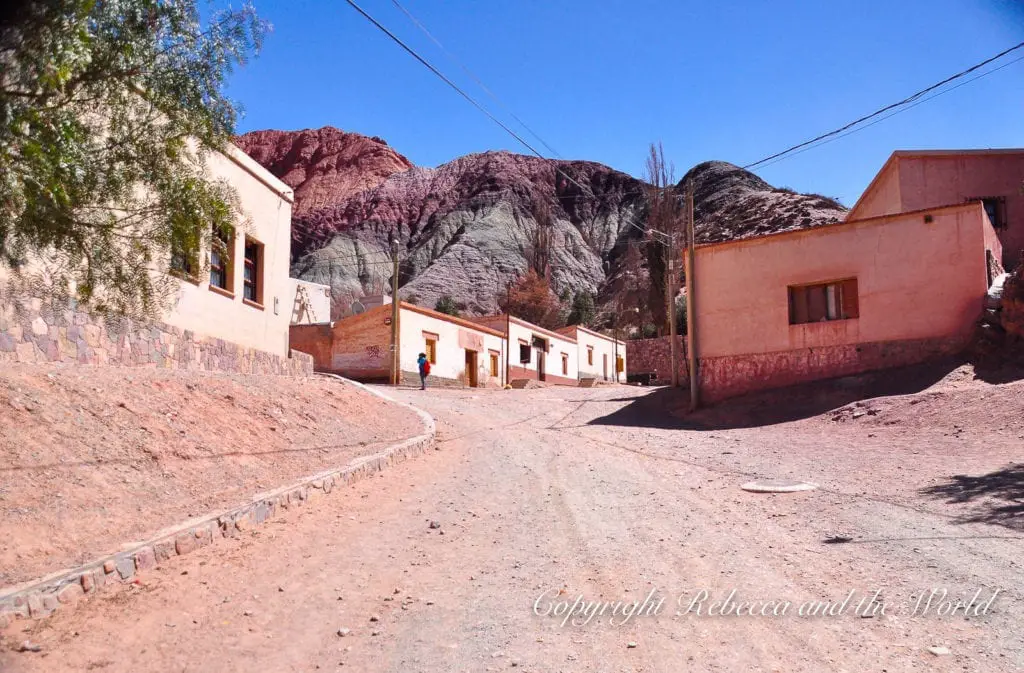
You can stay the night in Humahuaca or Tilcara, but we chose to base ourselves in Purmamarca.
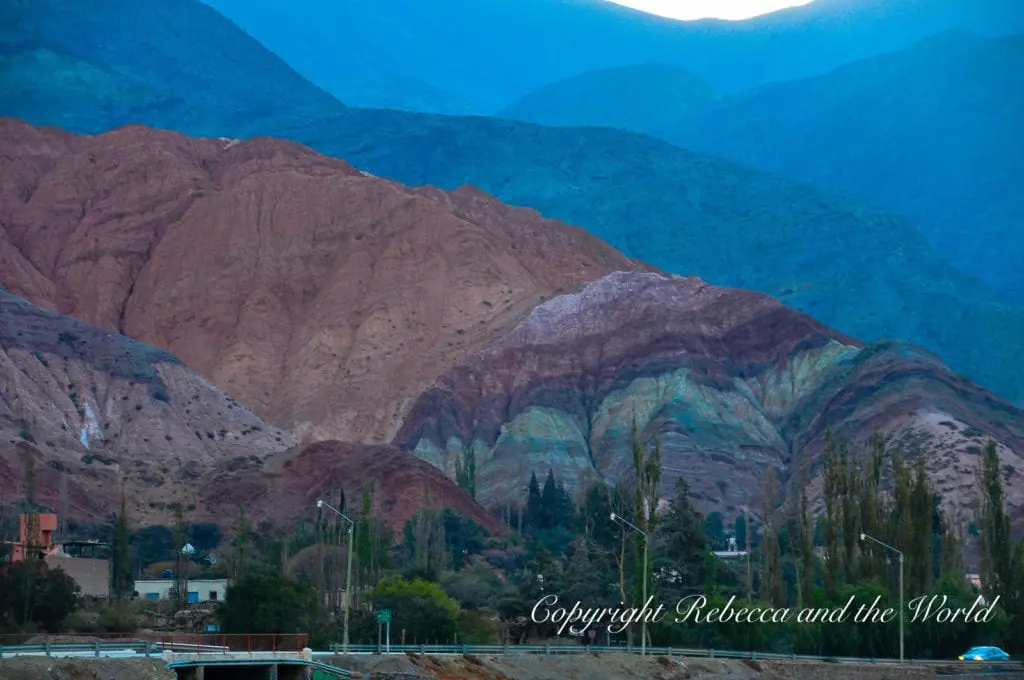
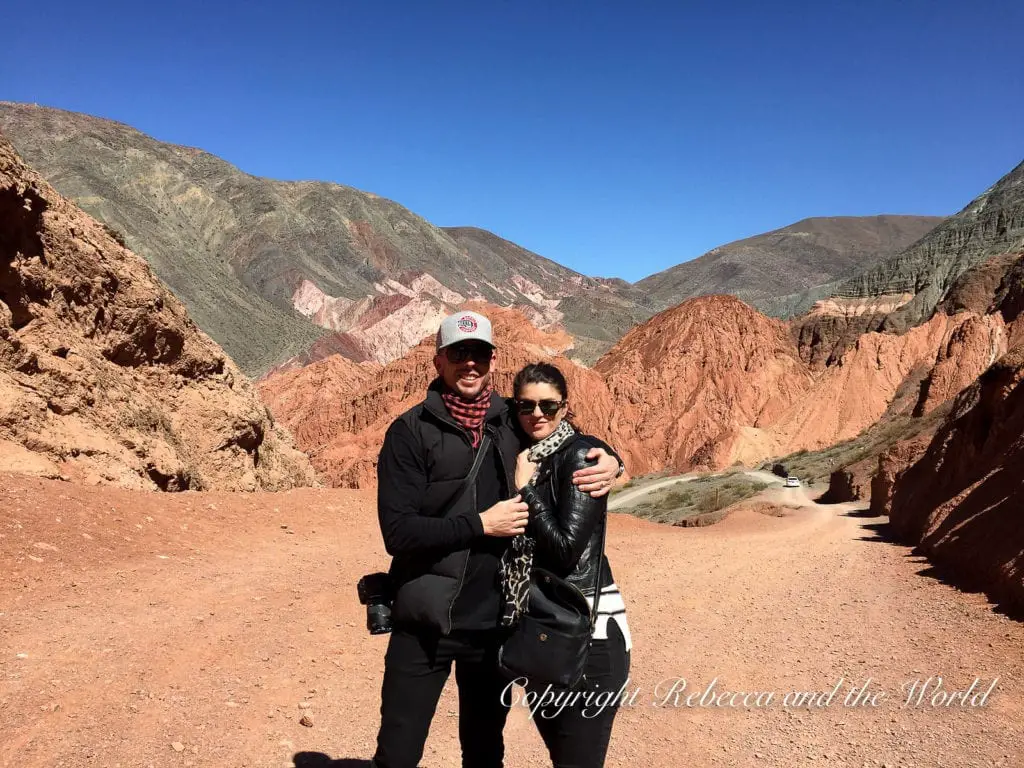
Looming over this tiny town is the stunning Cerro de los Siete Colores (Hill of Seven Colours), one of the best places to see in Argentina.
Staying here overnight will allow you to visit the various viewpoints before and after the busloads of tourists that pour in for their photo opps of this Argentina tourist attraction have left.
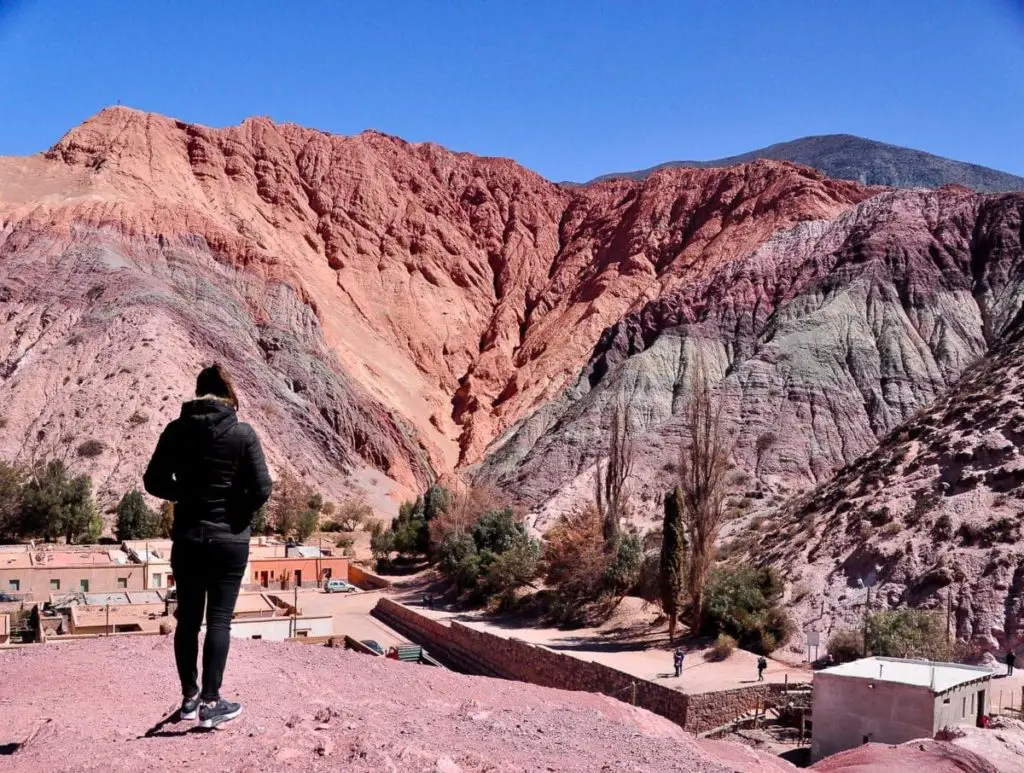
On day four, take a day trip along the winding road to the Salinas Grandes, one of South America’s largest and most spectacular salt flats. This is one of those Argentina destinations that few people know exist.
It takes about 1.5 hours to drive to the entrance from Purmamarca. If you put it in Google Maps it will tell you there’s no way to get there by car! But just follow National Route 52 and the signs.
At the entrance, you will need to hire a guide. Guides will take you out to the flats. Expect to pay a small guide fee – confirm this with the guide first. The guide will get into your car so you’ll need an extra seat available.
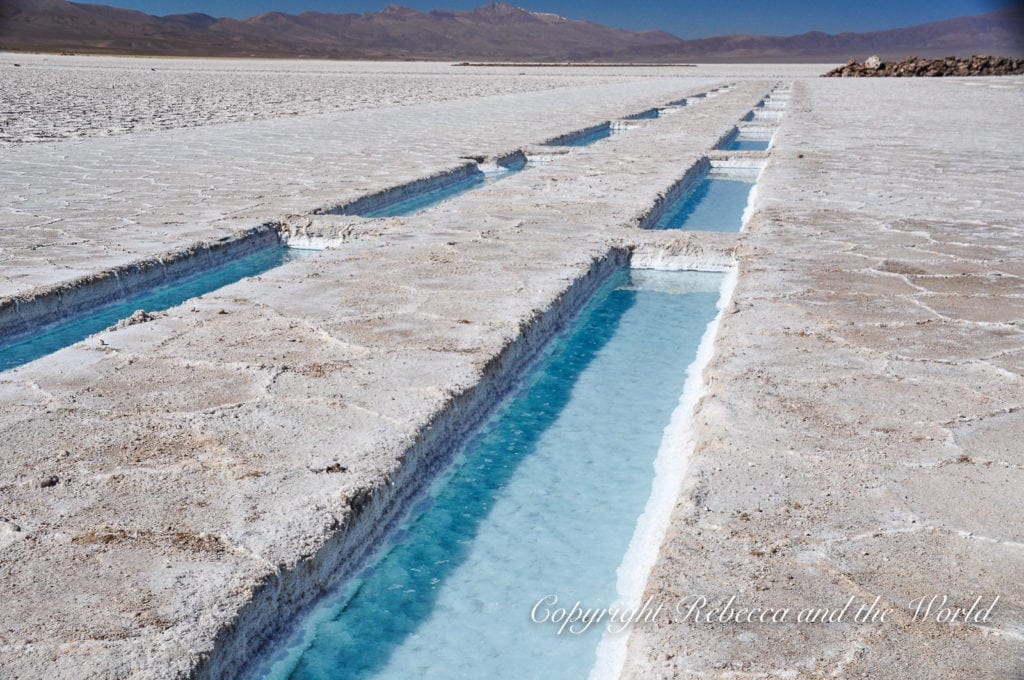
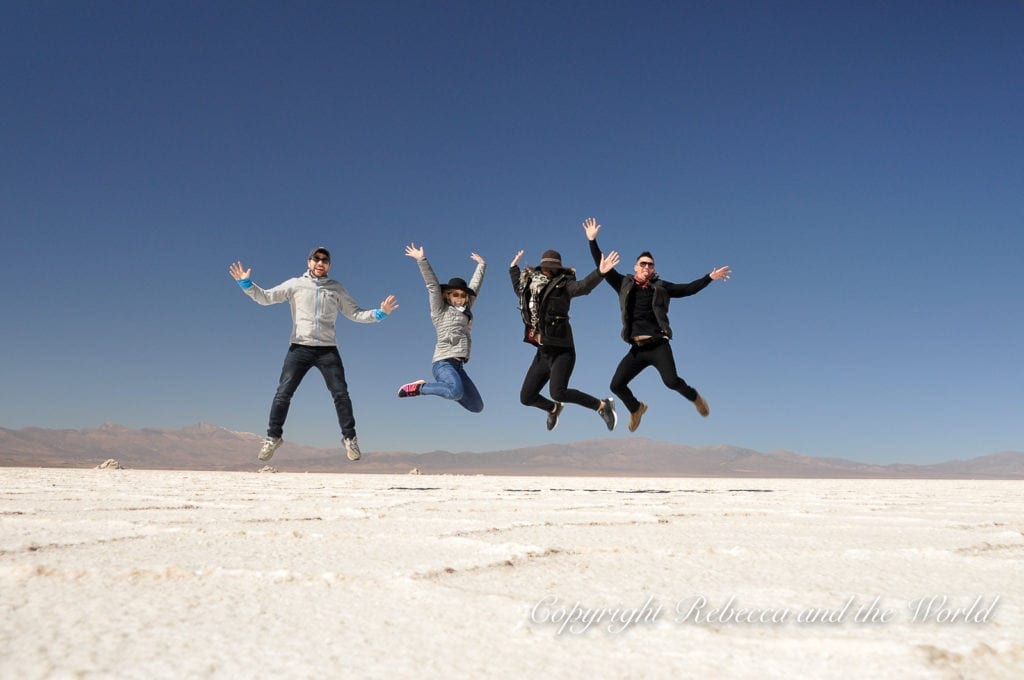
One of the most fun things to do in Argentina is practice your forced perspective photos in the Salinas Grandes (or fail to do so, as we did!).
Back in Purmamarca, do the easy hike around the base of Cerro de los Siete Colores to see its layered colours from all angles.
Where to stay and eat in Purmamarca
El Manantial del Silencio (Ruta Nacional 52, Km 3.5) is built in the style of an old estancia. We stayed here and thoroughly enjoyed it. It has a good restaurant serving local fish and meat. | Book online with Booking.com or Expedia
If you prefer to stay in Humahuaca or Tilcara, there are plenty of accommodation options. I recommend comparing prices on Booking.com and Expedia.
Days 5 and 6: Cachi
Drive time: 6 hours
Road surface: Mix of sealed and dirt roads
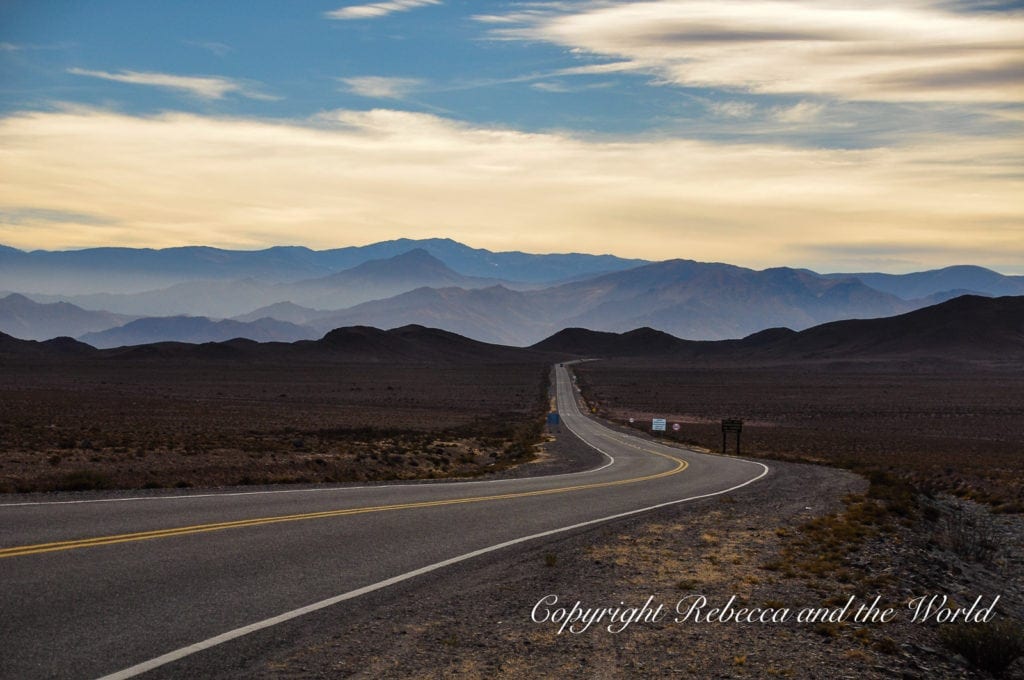
Get back on the road for more stunning north Argentina scenery, passing back through Salta.
Cachi is a charming village where you can take a few days to relax and wander the streets. It’s one of the best places to visit in Argentina to chill out. But if you’re after something more adventurous, local companies offer hiking and biking trips; ask around.
Head out to Miraluna (7 kilometres from Cachi in the small village of La Aguada) for a tour of the bodega. It’s one of the highest wineries in the world. Take a bottle (or two) of their great Malbec back to your hotel to enjoy with a picada plate (Argentina’s version of charcuterie).
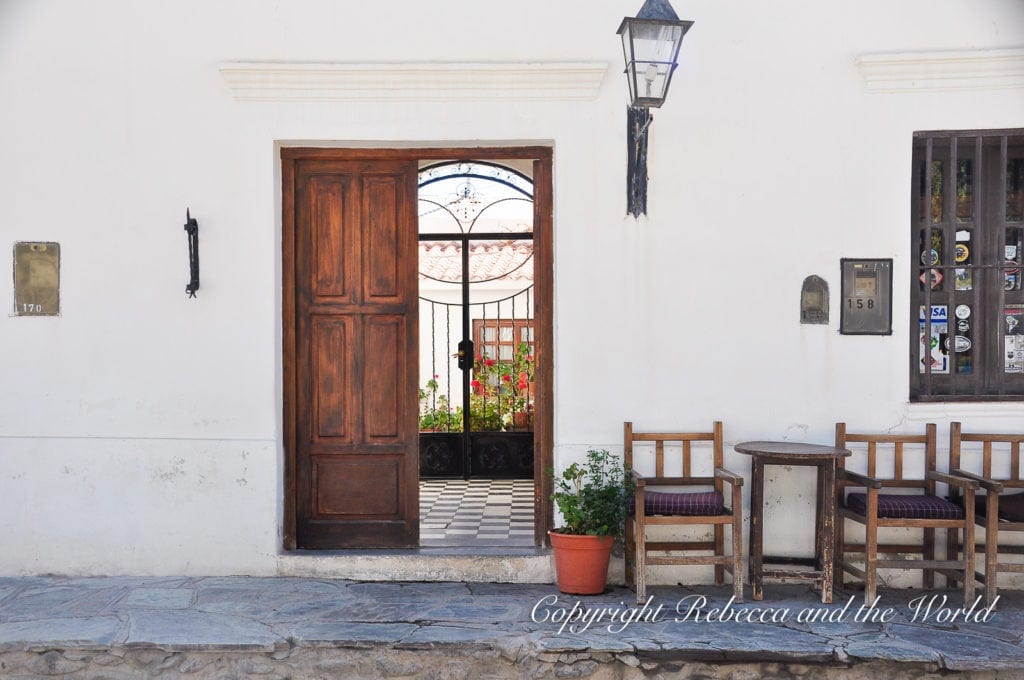
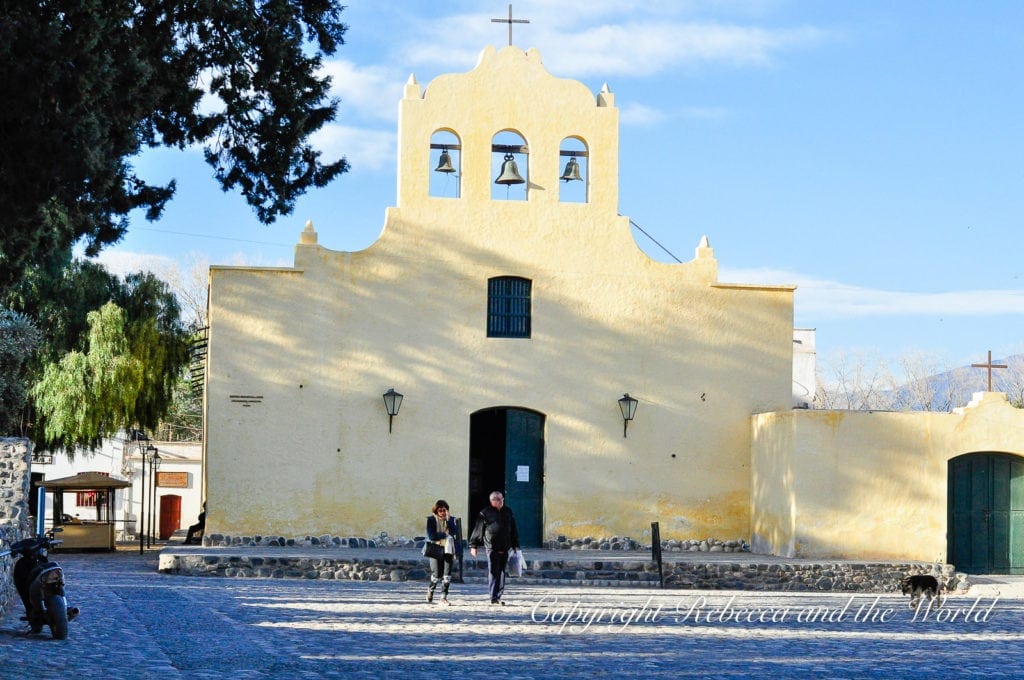
Where to stay in Cachi
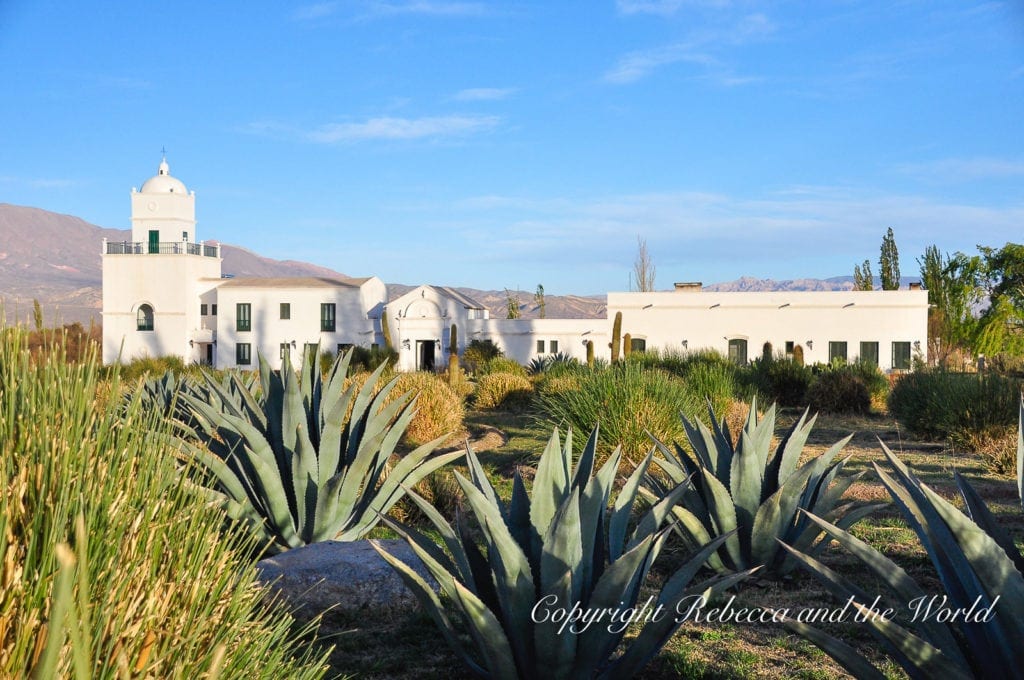
La Merced del Alto (Fuerte Alto 4417) is a white-washed adobe building with ceramic-tiled floors. The service is detailed and attentive. | Book your stay at La Merced del Alto online
Where to eat in Cachi
El Antigal for cheap and delicious food. There’s no written menu, so the staff will simply verbally reel off a list of what they have available that day.
Days 7 and 8: Cafayate
Drive time: 5 hours (including side trip to Bodega Colomé)
Road surface: Mix of sealed and dirt/gravel
More driving ahead of you, including a well-worth-it detour to Bodega Colomé.
Stop by Bodega Colomé (18 kilometres west of the town of Molinos) for lunch and a tour of the mind-blowing James Turrell Museum. The museum displays Turrell’s works of light and perception. I’m completely unable to describe it in words so you need to see it for yourself!
Follow up lunch with a tasting of their famous wines. You will need to make a reservation in advance.
Top tip! The road to and from Colomé is rutted and bumpy so carefully pack any bottles of wine you’ve bought. Drive slowly.
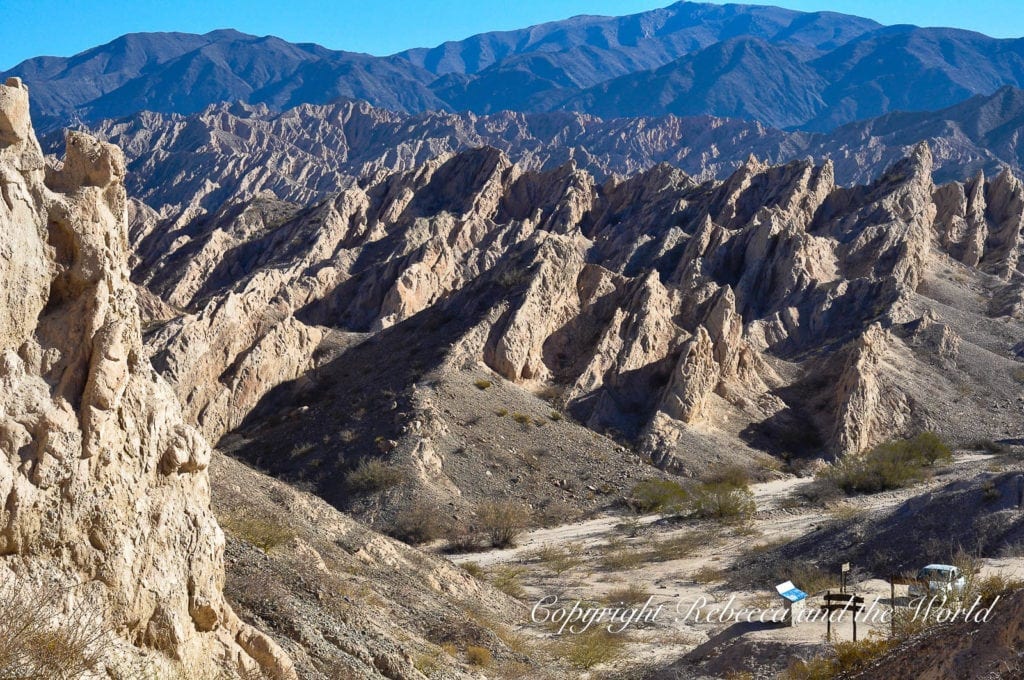
After lunch, continue on to Cafayate. The journey will take you through the Quebrada de las Flechas, a lunar-like place with leaning limestone structures that resemble quivers of arrows.
In Cafayate, hit as many wineries as you can possibly handle in two days. Start with San Pedro de Yacochuya (Ruta Provincial No 2, Km 6), Piattelli (Ruta Provincial No 2, Km 3) and El Porvenir (Córdoba 32).
I’ve written a guide to the best wineries in Cafayate, so check it out and plan your visit to Cafayate accordingly.
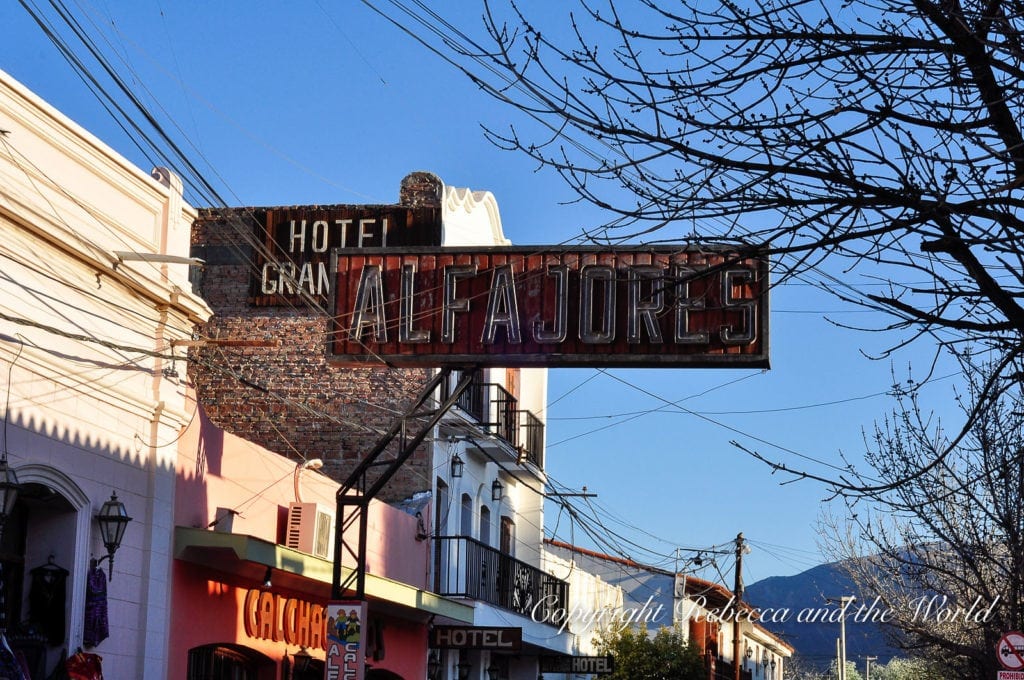
Try the Malbec and Torrontes-flavoured ice creams at one of the many heladerías around Plaza San Martín and pick up a box of alfajores at one of the stores nearby. Finish the day off at Chato’s Wine Bar (Nuestra Señora del Rosario 132) with a degustation of (more) wines and a picada plate.
Where to stay in Cafayate
Splash out for a room at Grace Cafayate (Ruta Nacional 40, Km 4340). It’s located in a winery and has comfortable rooms. Ours had a huge bathtub. | Book your stay at Grace Cafayate online with Booking.com
Where to eat in Cafayate
Grab a table at Pacha Cocina de Autor (Avenida General Güemes Sur 143). La Casa de las Empanadas (Mitre 24) serves cheap and delicious empanadas.
Want tips on how to plan a trip like this north Argentina road trip? Check out my 15 easy steps on how to plan a trip from start to finish!
Day 9: Back to Salta
Drive time: 3.5 hours (but allow more time for visiting the Quebrada de Cafayate)
Road surface: Sealed
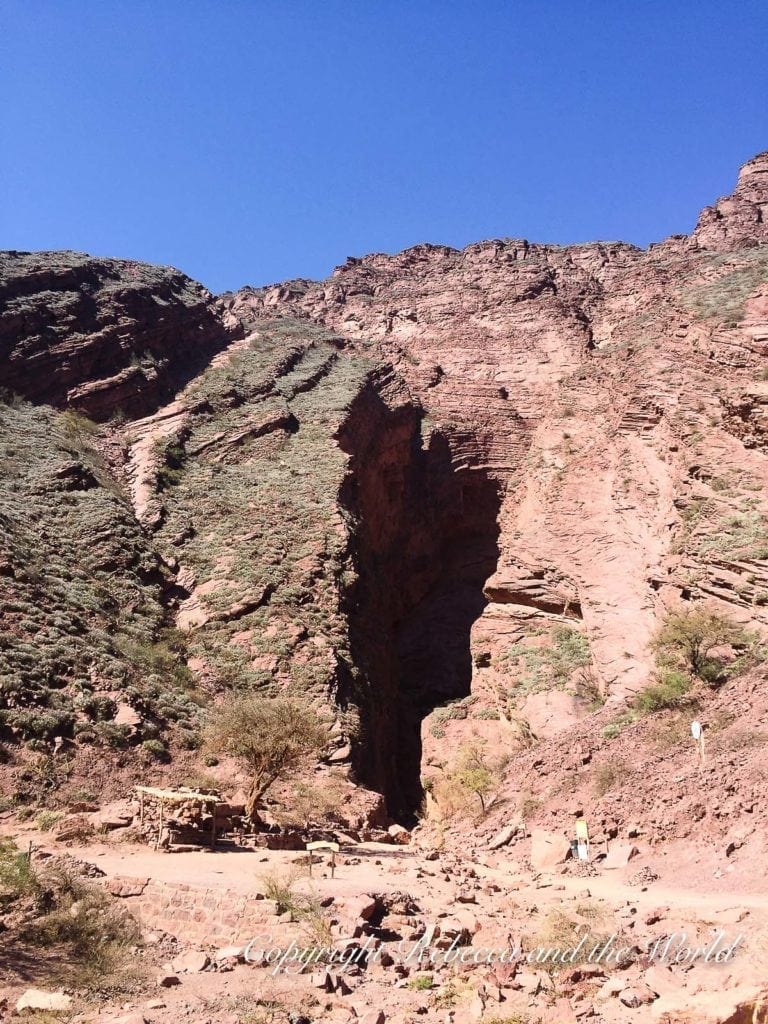
Heading back to Salta, you’ll pass through the astonishing Quebrada de Cafayate. It’s one of Argentina’s most amazing drives. You’ll see colours of all tones in the rock formations that have been carved out by the Río de las Conchas.
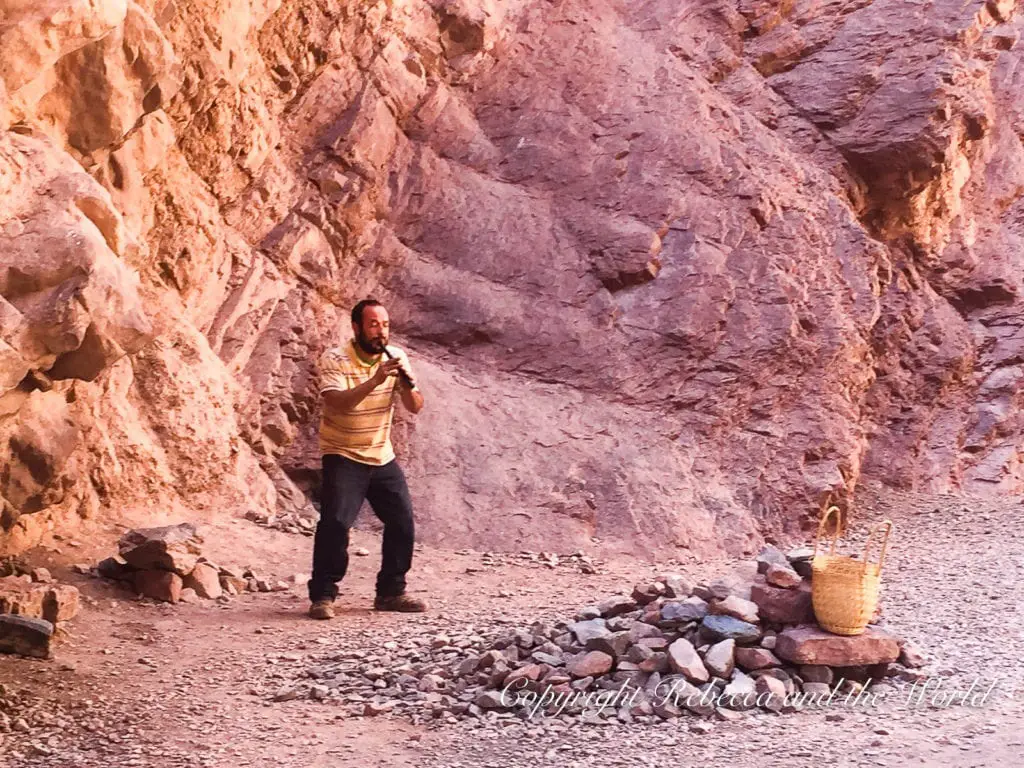
Along the way, stop at El Anfiteatro. Here, you’ll most likely come across a musician using the natural amphitheatre to entertain visitors. Garganta del Diablo (Devil’s Throat) is a huge cavern a little further along.
End your north Argentina road trip back in Salta. You can either fly out that same day or stay another night to prolong your time in northwest Argentina.
Wrap up: North Argentina road trip
You’ve probably picked up by now that North Argentina is my absolute favourite part of the country. I loved how different it was to other regions, particularly the south, and the ever-changing landscapes.
This is, in my opinion, one of the best road trips in Argentina.
While it’s not as visited as other regions, I can guarantee this region will capture your heart and you’ll leave Argentina wanting to come back!
FAQs: North Argentina road trip
Do I need a 4WD for this route?
Not necessarily. We did this loop in a regular 2WD without issues. The one exception is Iruya: the final stretch is slow, bumpy dirt road and conditions can change quickly after rain. If you’re skipping Iruya, a standard car is usually fine.
Is Iruya worth it if I only have 7 days?
If you love remote mountain villages and don’t mind a challenging drive, then 7 days on this road trip can still be worth it. Focus on Purmamarca, Tilcara, Humahuaca and Cafayate – and leave Iruya for next time.
How hard is the driving in north Argentina?
It’s mostly straightforward, but expect longer drive times than the kilometres suggest. You’ll deal with winding mountain roads, occasional gravel and big altitude changes. The key is to drive in daylight, take breaks and give yourself more time than you think you’ll need.
What should I book ahead when visiting north Argentina?
Book accommodation in peak periods and anywhere with limited options like Purmamarca. Also book Bodega Colomé in advance if you’re doing the Molinos/Colomé detour. You can usually reserve any winery tastings or lunches in Cafayate a few days in advance.
What should I pack for a Northwest Argentina road trip?
A few essentials make this trip much easier: cash, water and snacks, layers, sunscreen and sunglasses, a phone charger and offline maps. Some parts of this itinerary are in higher-altitude spots, so pack plenty of water and take it slow.
Is it safe to drive in North Argentina?
Generally, yes – but you need to be prepared. Stick to daytime driving, watch for animals on rural roads, keep fuel topped up, take plenty of water and plan ahead. If you’re unsure about road conditions, ask locally before hitting the road.
Did you find this article helpful? Consider buying me a coffee as a way to say thanks!
Have you been on a road trip through north Argentina? What was your favourite part? Leave your tips, advice and thoughts in the comments below.
Need help planning your Argentina trip? 🇦🇷
Feeling overwhelmed about planning your trip to Argentina? I get it. And I can help! I offer one-to-one travel consultation calls to help you plan your trip to Argentina. In an hour, we can map out a realistic itinerary or work through your specific questions so you can book an incredible trip. Save hours of your time with my local knowledge and expertise.
Read next
Before you go… you might also like these Argentina travel articles:
- Argentina Itinerary Ideas for 1-4 Weeks
- 2 Weeks in Argentina Itinerary
- The Best Places to Visit in Argentina
- Incredible Things to Do in Argentina
- The Complete Guide to Visiting Iguazu Falls
- How to Visit the Ruta de los Siete Lagos
ARGENTINA TRIP ESSENTIALS
- Book your flight to Argentina online with Skyscanner. I like how this site allows you to find the cheapest days.
- One thing I always purchase is travel insurance! Travel Insurance Master allows you to compare across multiple policy providers, while SafetyWing is great for long-term travellers and digital nomads.
- Wise is my choice for sending and receiving money and spending money overseas (you can get a digital and physical card).
- Find a great hotel in Argentina. Check prices on Booking.com and Expedia online.
- Check out the huge range of day tours throughout Argentina on GetYourGuide or Viator. I love a good food tour in particular!
- Saving money? Check out the range of free walking tours across Argentina with GuruWalk (don’t forget to tip!).
- How to get around? I use DiscoverCars for car hire, or Motorhome Republic and Jucy for campervan/RV rental. For buses, trains and ferries, I use 12GO, Busbud and Omio.
- Grab an e-sim to stay connected while on the road.
- A copy of the Lonely Planet guide to Argentina will be handy. Also pick up a Spanish language phrasebook to help you navigate your visit.
- Keep those bottles of wine you’ll be buying safe in these wine bags.
- Check out my Amazon shop for my fave travel items – everything from backpacks and suitcases to travel adapters and beauty products.
PIN IT FOR LATER:
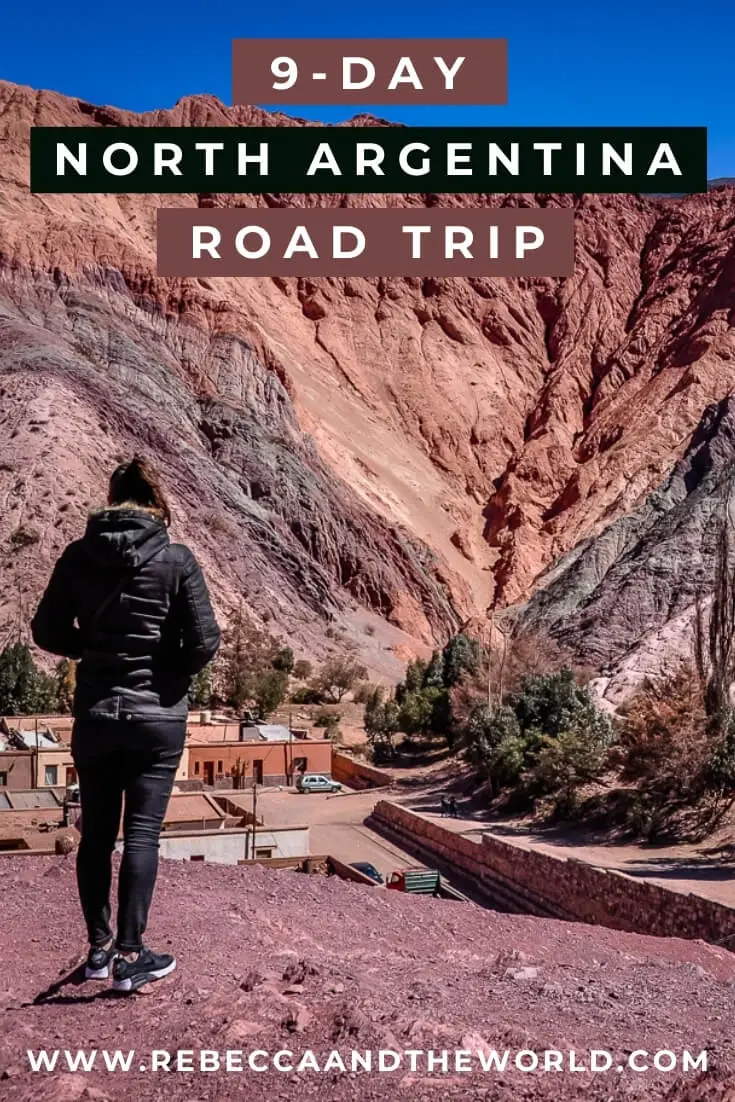
Liked this North Argentina road trip itinerary? Save it to Pinterest for later!

Dear Rebecca, thank you for posting this amazing itinerary. I wanted to ask if you know anything about the road closure between Cachi and Cafayate. If you go on google it shows that the road is closed. Is that because it is a gravel road, or is it closed because of a landslide or something. If the road is closed, how would you change your itinerary? With thanks,Margaret
Hi Margaret, I’ve seen that the road is closed. Checking the govt website, looks like repairs due to water damage and that it won’t reopen until April this year. If it is still closed when you visit, I would choose either Cachi or Cafayate to visit. Not both. Unless you’re okay with driving in to Cachi from Ruta 60, then back to Ruta 60 and down to Cafayate. Unfortunately it means you’ll have to do some backtracking on your route, but it’s worth it – this is a stunning part of the world! If you were to choose between the two, Cafayate would be my pick. I hope that helps!
Thank you for helping me out!
Hi Rebecca,
I have really enjoyed reading your posts about Northern Argentina. It has proved to be a great source of inspiration. We are travelling to Argentina in June for a month, flying to Bueno Aires, planning to take the bus to Iguazu falls then fly to Salta. We really want to do the 9 day road trip from Salta. But I have a concern about altitude sickness. My husband has a heart condition and we were advised by the doctor not to travel to Peru to view Inca trails so opted for Argentina. Could we be liable to altitude sickness in Salta? After Salta we want to fly to Mendosa for a week then fly to Sydney from Santiago . Any advice would be gratefully received. Many thanks
Thanks so much Debbie for the great feedback! It’s a stunning part of the country and well worth the visit. Salta is around 1,152m high (Machu Picchu is 2,430m high in comparison) so depending on your husband’s condition, he might experience some altitude sickness. Some parts of the area are higher so you would have to check each area and avoid the higher parts. It’s probably worth checking with his doctor just to make sure! Mendoza is much lower, about 740m. Your trip sounds fantastic, hope it’s great! Feel free to get in touch if you have more questions.
Amazing itinerary! I am considering doing this trip, but I will be solo as a 22 year old female. Do you think I will be safe- driving and otherwise? Any tips for doing this drive alone will be very helpful! Thank you so much 🙂
I felt really safe in the north. I’d take all the usual precautions and plan to stay in populated areas, make sure you always have a working phone etc. If you’re confident travelling solo, I think you will have a great time.
Thank you for all your thoughtful and informative posts. My wife, son and I are considering booking a last minute vacation to Argentina in late July/early Aug for two weeks. We are circling around 5 days in BA and 2 days in Ignatz Falls area. The other week, we were thinking of both some days in the North, as you explain above, and/or taking the ferry from BA to Montevideo to explore Uruguay while we are down in that area. We loved your article above, but feel a lot of the scenery is very reminiscent of the Southwest part of the US (New Mexico, Arizona, Utah, etc.) which we have loved visiting and exploring multiple times. If we are looking to get the most out of our time when the amazing part of South America, would love your thoughts on where you might steer us for that additional week. Thanks in advance for your further thoughts and insight.
Hi Richard, thanks for the message! I also love the Southwest of USA and can see your point about the landscape being similar – but I can promise you, it’s so different! Throw in the different cultures and food and it’s a very different experience to travelling in that part of the country. I would definitely recommend going there! But if you do want to try somewhere else, heading over to Uruguay is fun, and you could hire a car if you have a week and spend some time exploring around Colonia, Montevideo and so on. Another option if you like wildlife is Ibera Wetlands. It might be a bit cooler in July/August and it is low season but I believe there’s still some good animal spotting to be had! Enjoy your trip!
Thanks for your itinerary! It’s really helpful! Just one question, did you drive to Salinas Grandes or join a tour? I’m a little confused as you said you had a guide to bring you out to the flats.
Hey! We drove to Salinas Grandes, but then you pick up a guide when you get there. There are several people at the “entrance” who will jump in your car. Let me know if you have any other questions 🙂
Oh, I so badly want to visit Argentina but never looked too much at the North, now I’ve got to visit. Salinas Grandes looks spectacular, so unique!
I think the north gets overlooked in favour of Buenos Aires, Patagonia and Mendoza. Which is good because it means the north is quieter 🙂 It’s so beautiful that way, I hope you get there!
Thank you for sharing, we found the post really helpful and informative for our upcoming travels to Argentina later this year.
Where are you going? Argentina is so amazing! So many things to do.
I’m always on the hunt for off the beaten track destinations, so this is perfect for me! I can’t believe how beautiful the landscape is!
I’m so happy we got to that part of the country, it truly is spectacular.
My goodness, I can’t get over this post! Such a beautiful road trip – Iruya looks so cute, and Cerro de los Siete Colores must be Argentina’s equivalent to Peru’s Rainbow Mountain – love the striation of colors. Just stunning! We were talking about possibly doing Argentina/Chile next year (possibly March), and this will be my go-to guide! Thanks for sharing your amazing adventures!
Yes, yes, yes you guys have to go!! Let me know if you have any questions. There are soooo many different places to visit.
Hello Rebecca,
You are getting too good at this photography business. (I check in from time to time).
Best wishes,
Richard Dellman
Thanks Richard! I’ve known a few good photographers in my life that I’ve learned from 🙂