
Can you spend 4 weeks in Argentina and see both the south and the north of the country! Yes! This month-long Argentina itinerary is a great way to see the highlights of the country.
If you’ve got four weeks set aside for Argentina – lucky you! I lived in Buenos Aires for two years, and even then I never ran out of new corners of the country to explore; a month is proper, generous time to spend here.
It’s also one of the trickier trip lengths to plan well, because a month opens up so many possibilities that narrowing them down is tough. Argentina is enormous, and once you start weighing up Patagonia against the north-west, or wine country against the coast, it’s easy to feel like you have to pick a favourite and let the rest go.
That’s exactly the position a reader found herself in when she emailed me recently. She had four weeks and couldn’t decide between the glaciers of Patagonia and the deserts of the north-west, and asked if there was a way to fit both into one trip. My first instinct was to suggest picking one and really diving deep and saving the other for a future visit. But the more I thought about it, the more I wanted to actually try building an itinerary that let her have both.
What follows is that itinerary. Think of this as a template rather than a fixed itinerary. If slightly over four weeks feels like too much, there are natural places to trim a day or two. If you’ve got a few extra days to spare, there are just as many places worth stretching out instead.
So, here’s how I’d do a month in Argentina – in fact, I might just follow this itinerary myself for my next trip back there!
This blog post may contain affiliate links, meaning if you book or buy something through one of these links, I may earn a small commission (at no extra cost to you).
Is a month in Argentina enough time?
For most of Argentina, yes. A month in Argentina is a comfortable amount of time to explore a handful of regions well, without racing between hotels every other day. If you’re wondering how many days you need in Argentina to see one region properly, whether that’s Patagonia, Mendoza’s wine country or the north, a week to ten days is plenty on its own (you can see my shorter, one week in Argentina itinerary ideas for specific inspiration).
While you can’t see everything in a month – Argentina is the eighth largest country in the world and most of its best regions sit thousands of kilometres apart, connected by a limited number of direct flights – you can fit both the far south and the north-west into one Argentina itinerary.
This Argentina month-long itinerary I’ve built out is rather ambitious, but you can adapt it – cut out a destination if you wish and add a few more days elsewhere. But if seeing both halves of the country in a single trip matters more to you than a slower pace, a month in Argentina can just about deliver it, and this is how I’d structure it.
4-week Argentina itinerary at a glance
Here’s the overview of the itinerary. It’s 30 days rather than a clean 28 days/4 weeks. You’re covering an enormous amount of ground, there’s only one proper rest day built in anywhere along the way and a couple of the stops are shorter than I’d normally recommend (I love staying somewhere for a minimum of two or three nights). But it does deliver both of Argentina’s biggest bucket-list regions in one trip – glaciers and granite peaks in the south, desert canyons and wine country in the north – covering a nice loop around the country with few backtracking flights through Buenos Aires.
| Day | Where | Highlight |
| 1 | Arrive in Buenos Aires | |
| 2-4 | Buenos Aires | Downtown, Recoleta, tango, La Boca and Palermo |
| 5 | Fly to Ushuaia | |
| 6-7 | Ushuaia | Beagle Channel cruise, Tierra del Fuego National Park |
| 8 | Fly to El Calafate | |
| 9 | El Calafate | Perito Moreno Glacier |
| 10 | Transfer to El Chaltén | |
| 11-13 | El Chaltén | Hiking Mount Fitz Roy |
| 14 | Transfer to El Calafate, fly to Buenos Aires, connect to Mendoza | Long travel day |
| 15-17 | Mendoza | Wine tasting, an Andes day trip |
| 18 | Fly to Salta | |
| 19 | Salta | City sightseeing |
| 20-21 | Purmamarca | Humahuaca and Tilcara, plus Salinas Grandes |
| 22 | Cachi | Charming small town |
| 23-24 | Cafayate | Wine tasting |
| 25 | Drive back to Salta | |
| 26 | Fly to Iguazú | |
| 27-28 | Iguazú Falls | Both the Argentina and Brazil sides of the falls |
| 29 | Fly to Buenos Aires | Do anything you didn’t get to do on your first few days here, explore different neighbourhoods |
| 30 | Fly home |
Best time to do this itinerary
This is the trickiest part of planning a trip that covers both the south and the north, because the two regions have different climates. Ushuaia, El Calafate and El Chaltén are at their best from November to March, while the north-west is best avoided in summer, since December to February (and even into April) brings heavy rain that can wash out unsealed roads.
What I’d recommend is starting this itinerary in September, October or November, and by the time you reach the northern loop around week 3, you’ll still be (or should be!) inside the region’s dry season rather than its wettest weeks.
Starting in March works just as well in the other direction: Patagonia gets you in before autumn really sets in, and the north-west, which you’ll reach around three weeks later, is by then (hopefully) clear of the summer rains too.
What I’d avoid is starting this itinerary in December or January. Patagonia will be glorious, but your northern road trip days will land right in the middle of the wet season.
Days 1-4: Buenos Aires
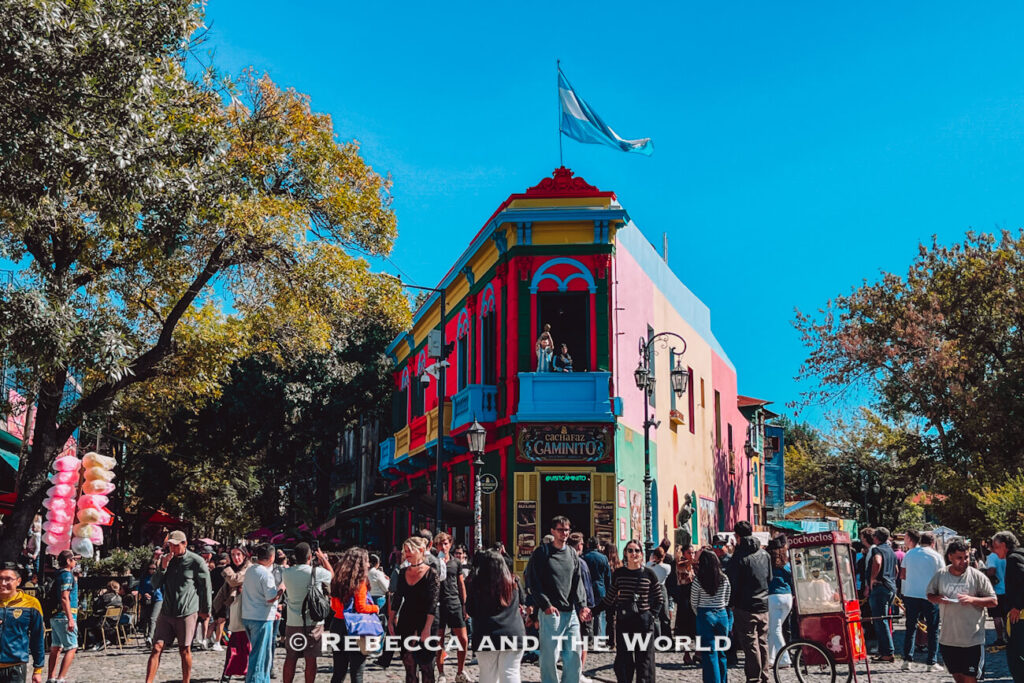
Start your month in Argentina the way I think everyone should: with a few days in Buenos Aires, one of the most incredible cities in the world in my opinion! Follow my full 3 days in Buenos Aires itinerary to plan out each day.
Kick things off with downtown and San Telmo: wander the Plaza de Mayo and Casa Rosada, then spend the afternoon in San Telmo’s cobbled streets, home to some of the city’s best antique shops and, if you’re there on a Sunday, its famous street market.
Spend another day visiting Teatro Colón, one of the world’s great opera houses, followed by the elegant streets and cemetery of Recoleta, finishing with a tango show in the evening.
Make sure you also spend some time in the colourful neighbourhood of La Boca, home to painted houses and La Bombonera stadium. I recommend a free walking tour to hear the stories behind this neighbourhood. Also take some time to wander around Palermo, Buenos Aires’ trendiest neighbourhood that’s filled with restaurants, bars, cafes and shopping.
Where to stay in Buenos Aires
Palermo and Recoleta are the best neighbourhoods to stay in, in my opinion. Palermo is great for restaurants and bars right on your doorstep, while Recoleta is close to many of the main attractions and has many elegant buildings. I have a much fuller guide to where to stay in Buenos Aires which covers more neighbourhoods.
- Home Hotel and Be Jardin Escondido by Coppola are my top picks for Palermo hotels
- In Recoleta, I always recommend Hotel Club Frances or the 5-star Alvear Palace Hotel if you’re splurging.
READ NEXT
Days 5-7: Ushuaia
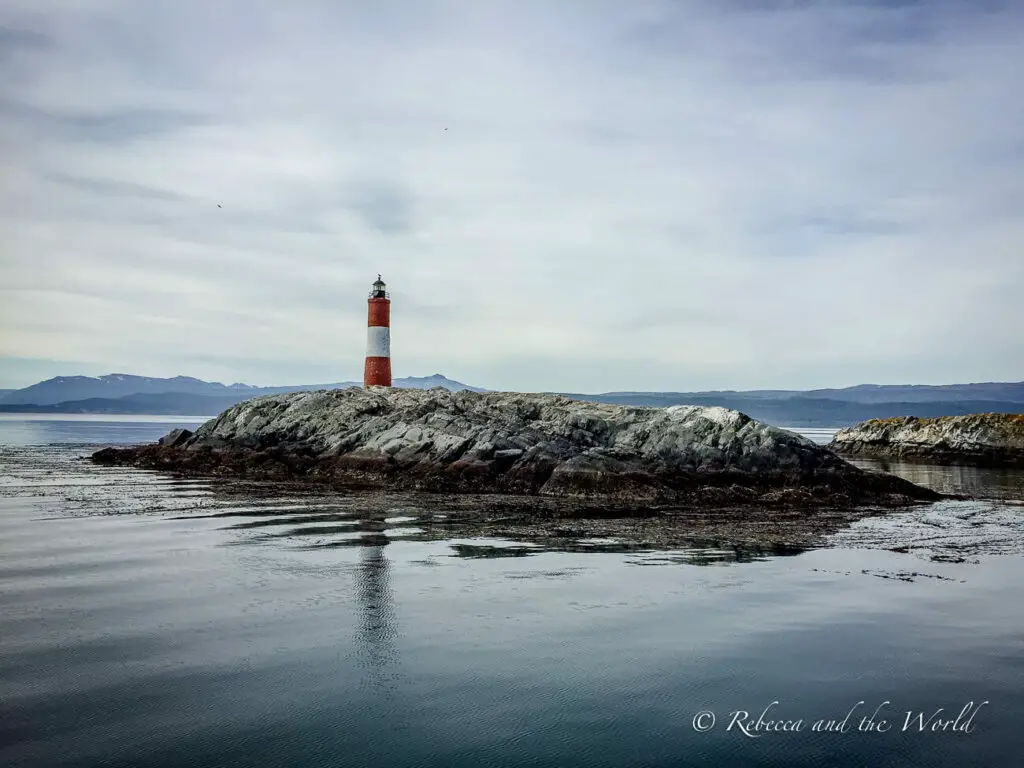
This next part of the trip takes you south for a Patagonia itinerary.
Fly from Buenos Aires’ Aeroparque airport to Ushuaia on day 5, a direct flight of around three hours to the southernmost city in the world. You can check flight schedules and prices here.
Top tip! I usually fly Aerolíneas Argentinas domestically. While other airlines may be cheaper… they also come with higher cancellation risks!
Here, you can take a Beagle Channel cruise, ideally one that stops near Martillo Island so you can see the Magellanic penguin colonies (best from November to February).
On your second day, head into Tierra del Fuego National Park itself, walking out to Bahía Lapataia, where the Pan-American Highway finally ends, or tackling the hike out to Laguna Esmeralda if you’d rather get away from the crowds.
My full guide to the best things to do in Ushuaia has plenty more options to fill your time here.
Where to stay in Ushuaia
- Arakur Ushuaia Resort & Spa has sweeping views over the Beagle Channel and Ushuaia Bay | Check rates and availability on Booking.com
- Ushuaia Lodge Las Margaritas 430 is a classic wooden chalet-style building with a lovely garden and terrace area, and some rooms have views of the Beagle Channel | Check rates and availability on Booking.com
Days 8-9: El Calafate & Perito Moreno Glacier
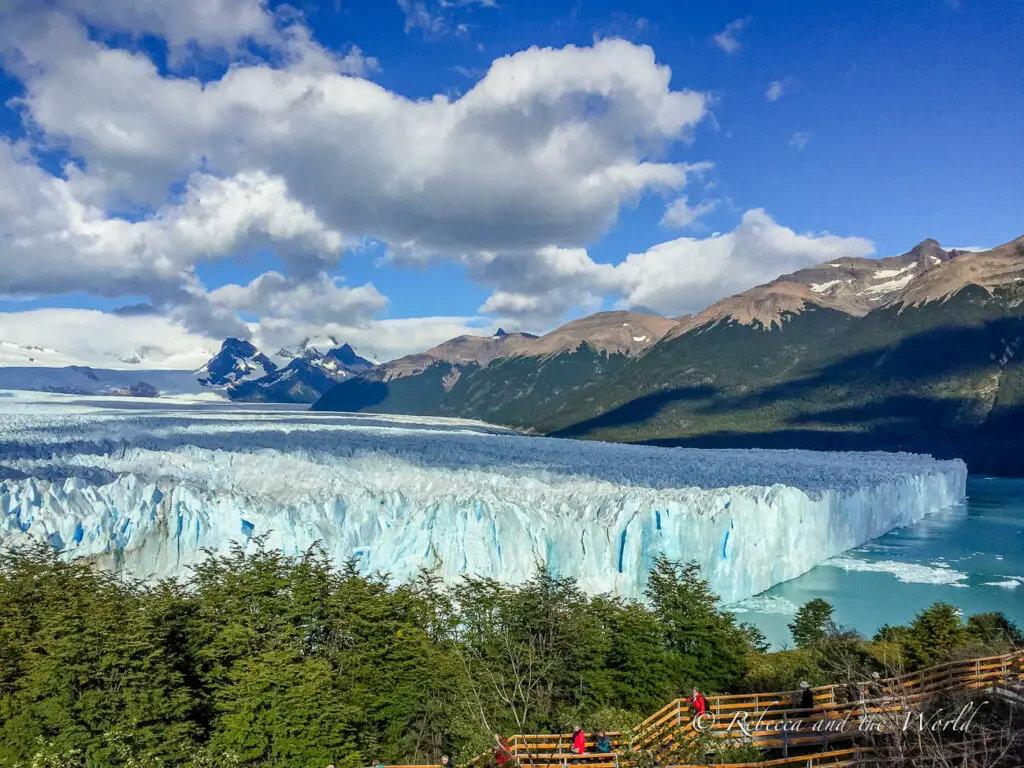
Take a direct flight from Ushuaia and El Calafate – this flight is seasonal, so do check before planning out your itinerary.
Spend the afternoon wandering El Calafate – see the pink flamingos on the shore of Lago Argentino, visit the Glaciarium to learn about the region’s glaciers and grab a drink at the ice bar there.
Day 9 is the reason everyone comes to this part of Patagonia: Perito Moreno Glacier. Whether you book the Big Ice or Minitrekking tour to actually walk on the ice with crampons (book these tours well in advance!), or visit independently and take in the glacier from the boardwalks or from a boat, it’s one of the best places to visit in Argentina and worth the price tag.
My complete guide to trekking Perito Moreno Glacier covers everything you need to know about visiting this natural wonder.
Where to stay in El Calafate
- Hostería La Estepa has sweeping views over Lago Argentino | Check rates and availability on Booking.com
- América del Sur Hostel is a great budget option nearer downtown | Check rates and availability on Booking.com
Days 10-13: El Chaltén
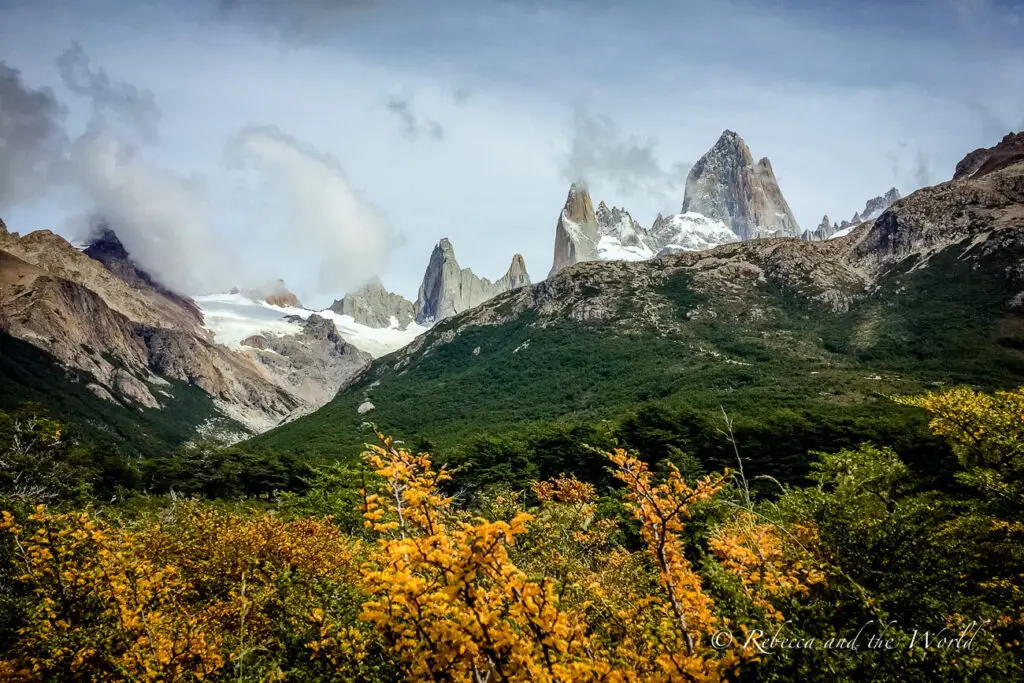
From El Calafate, take the roughly three-hour bus to El Chaltén, Argentina’s trekking capital.
With three full days here, there’s room to do this place justice: start with an easy warm-up hike like Mirador Los Cóndores or Laguna Capri, then tackle the two big full-day treks, Laguna Torre and Laguna de los Tres, on separate days rather than trying to cram both into one. My full guide to the best El Chaltén hiking trails has all the details on distances, difficulty and what to pack.
El Chaltén’s weather is notoriously unpredictable, so having a few days here helps.
Where to stay in El Chaltén
- Destino Sur Hotel de Montaña & Spa is close to the trailheads with a sauna for after a big hiking day | Check rates and availability on Booking.com and Expedia
- Patagonia Eco Domes is a memorable, fully off-grid option | Check rates and availability on Booking.com and Expedia
- Cóndor de los Andes is a solid budget base | Check rates and availability on Booking.com
Day 14: Travel to Mendoza – long travel day!
Day 14 is a bit of a slog, with a bus/car transfer, a flight through Buenos Aires and a connection to Mendoza all in the same day.
I’ve kept it as one day rather than spreading it over two – but you could spend a night in Buenos Aires if you’d prefer. If you stick with the full travel day, don’t book anything for that evening beyond checking into your hotel when you arrive in Mendoza and going out for dinner.
Where to stay in Mendoza
- Mendoza City is the easiest base if you don’t have a car. I recommend Park Hyatt Mendoza for luxury or Huentala Hotel for a great pool and location
- Chacras de Coria, in the heart of Luján de Cuyo, is my personal favourite area to stay in, just a short 25-minute drive from the heart of the city. Here, I like the self-contained spaces at Lodwine Lodges or the gorgeous Finca Adalgisa Wine Hotel
I have more accommodation recommendations in my where to stay in Mendoza guide.
Days 15-17: Mendoza
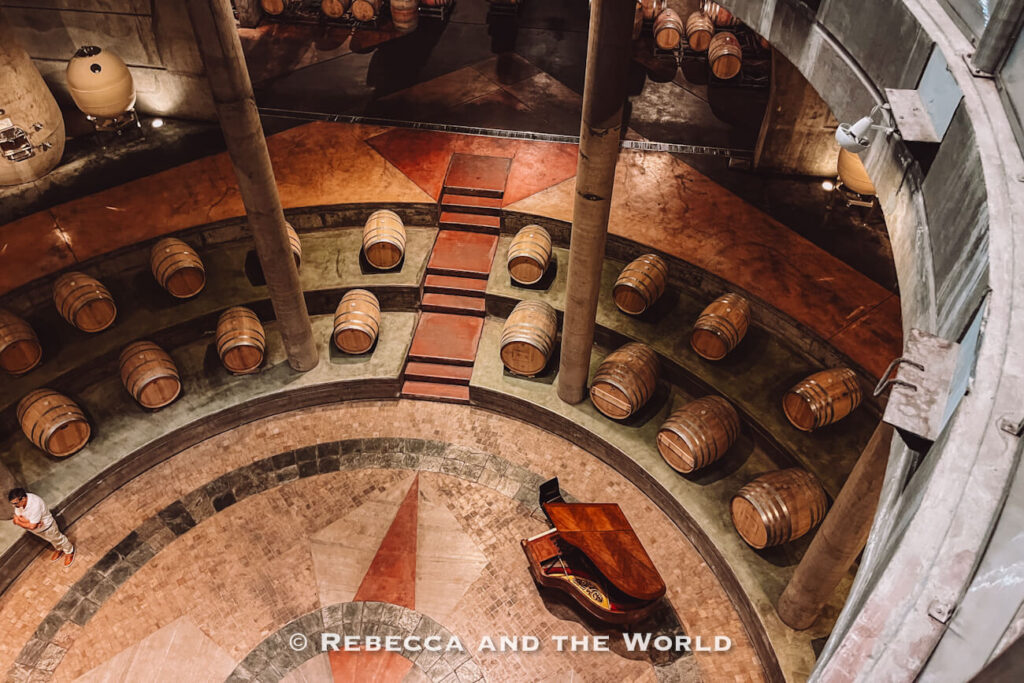
Welcome to Mendoza, Argentina’s most famous wine country and home to Malbec. With three days here, you can spend two days tasting wines across the different wine regions and another day venturing out for spectacular Andes views.
Mendoza has three different wine regions: Maipú, Luján de Cuyo and the Valle de Uco. Pick two and spend a day in each. Luján de Cuyo or Maipú are the wine regions closest to Mendoza City, with a range of cellar doors and plenty of winery restaurants suitable for a long, lazy lunch. The Uco Valley is further out, with scenery and wineries that are more dramatic.
While you could easily fill all three days with wineries, I recommend spending at least one day swapping vineyards for mountains. You can drive – either rent a car or take a tour – out towards Aconcagua, the tallest mountain in the Americas, stopping at Puente del Inca along the way. The scenery here is completely different from the lush green vineyards: here you’ll find rich ochre earth and layered mountains.
→ READ NEXT: My full 3 days in Mendoza itinerary has the day-by-day detail and my guide to the best wineries in Mendoza will help you narrow down which cellar doors to book ahead.
Days 18-19: Salta
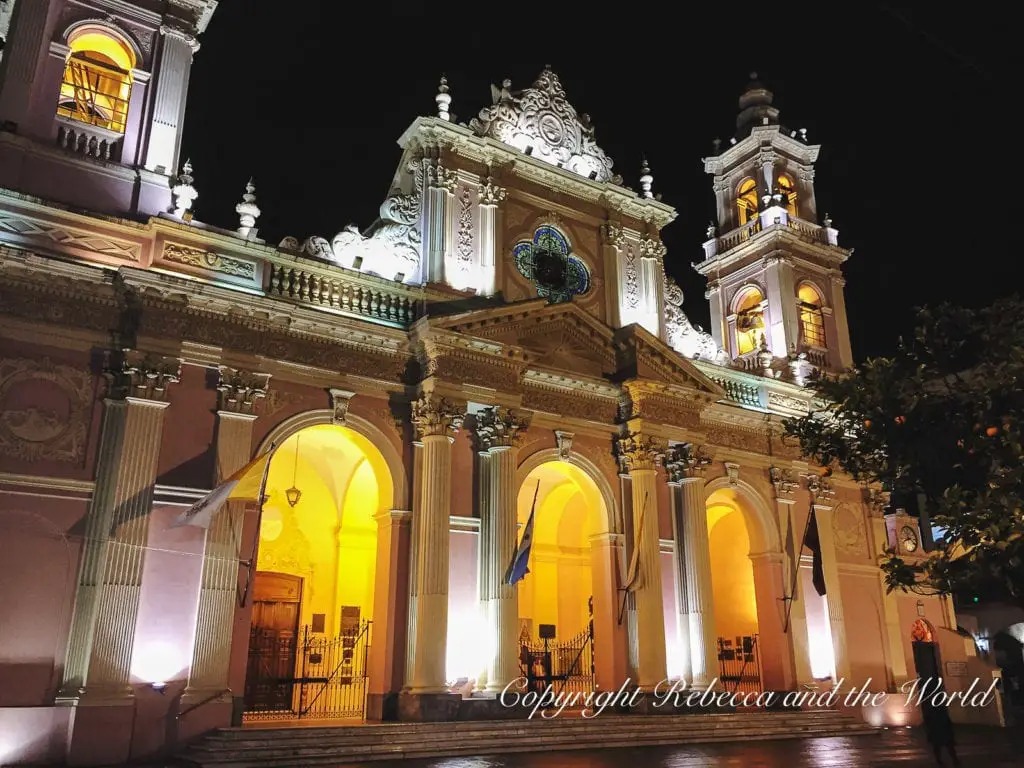
This next part of the trip is an epic Argentina road trip. It’s a part of the country that gets a fraction of the visitors Patagonia does, despite being just as spectacular.
Fly from Mendoza to Salta. There’s a seasonal direct connection which means you can avoid backtracking through Buenos Aires.
Spend a day exploring Salta itself, known locally as Salta la Linda for its peaceful plazas and colonial architecture. The Museo de Arqueología de Alta Montaña is one of the region’s must-sees, and it’s worth setting aside a couple of hours here alone. You’ll see the bodies of three Incan children mesmerisingly frozen in time.
Where to stay in Salta
- Design Suites Salta is a modern, well-located choice | Check rates and availability on Booking.com and Expedia
- Legado Mítico is a boutique estancia-style option in the heart of the city | Check rates and availability on Booking.com and Expedia
Days 20-21: Purmamarca
Pick up a rental car and get this road trip underway. A standard 2WD is fine for this entire loop. I like comparing cars and prices through DiscoverCars, which aggregates all the different rental car companies.
My full north Argentina road trip itinerary covers the entire loop you’ll take over the next few days in more detail, including drive times and road conditions. If you haven’t hired a car in Argentina before, my car rental guide covers everything you need to know before picking up the keys.
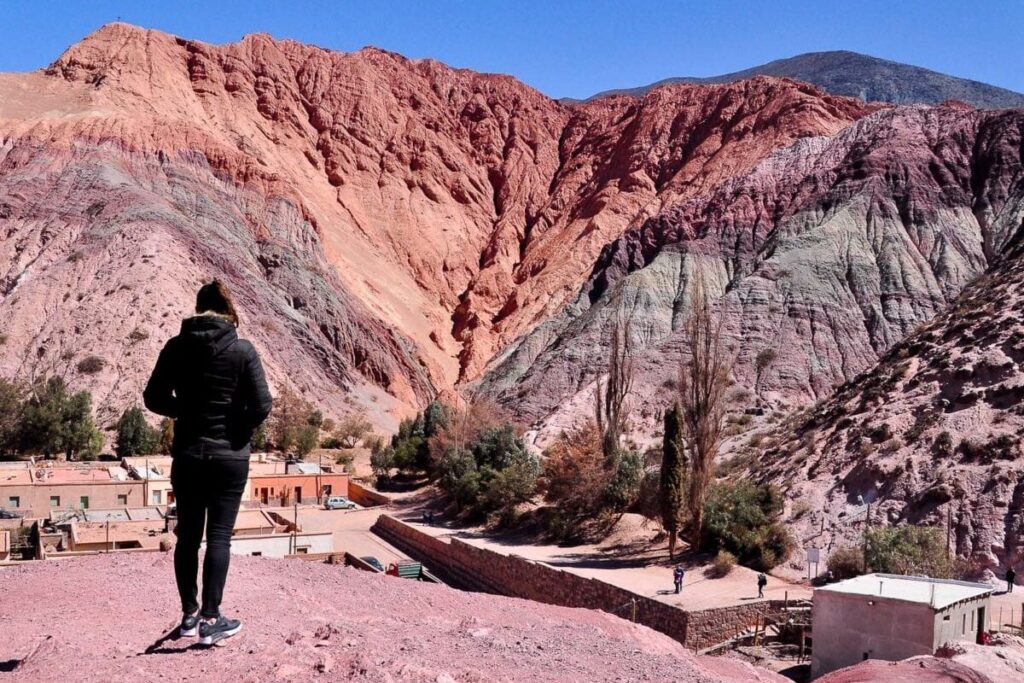
Drive north, stopping in Humahuaca and Tilcara along the way, and base yourself in Purmamarca for two nights. This small town sits right beneath the Cerro de los Siete Colores, a hillside of pink, purple, orange, yellow, green and white sediment that’s most spectacular at sunrise or sunset. You’ll have the views all to yourself when the tour buses leave in the afternoon.
On your second day, take a trip out to the Salinas Grandes salt flats, one of the largest salt pans in the world.
Where to stay in Purmamarca
- El Manantial del Silencio, an old estancia-style property just outside town, is where I stayed and I loved it | Check rates and availability on Booking.com and Expedia
- The views of the surrounding mountains are the drawcard of Huaira Huasi, a collection of terracotta-coloured adobe buildings | Check availability on Booking.com
Day 22: Cachi
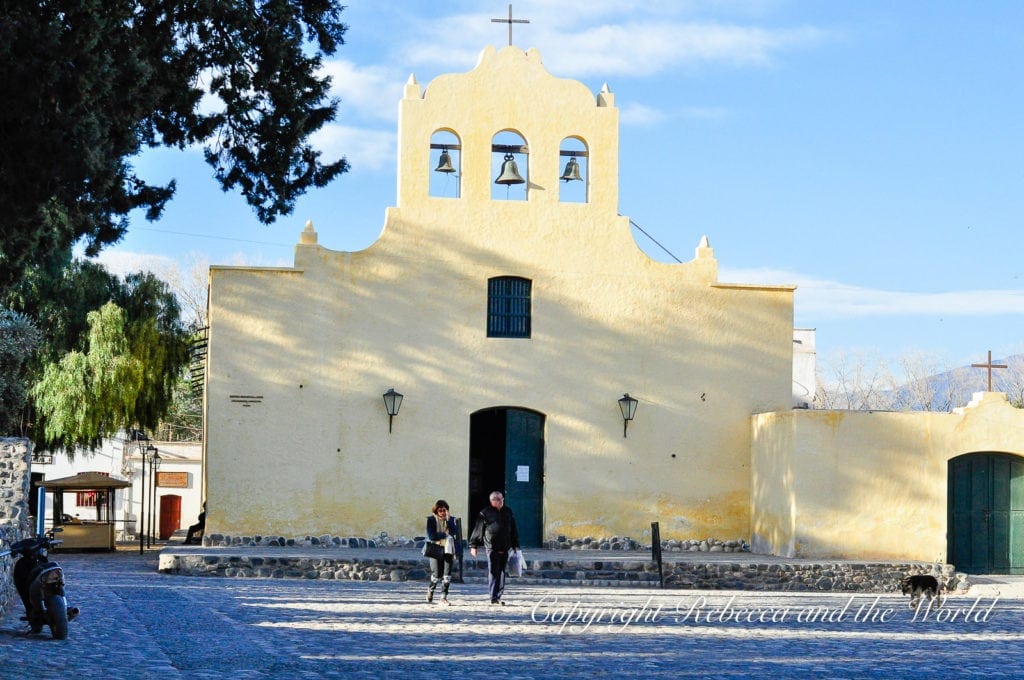
Drive south to Cachi, a longer stretch of driving than the previous days, but a beautiful one. It’s a small, charming village worth slowing right down for, and there’s a winery here that’s one of the highest in the world if you fancy a detour. One night is enough to get a feel for the place before moving on.
Where to stay in Cachi:
- La Merced del Alto, a whitewashed adobe property with ceramic-tiled floors and attentive service | Check rates and availability on Expedia
Days 23-25: Cafayate & back to Salta
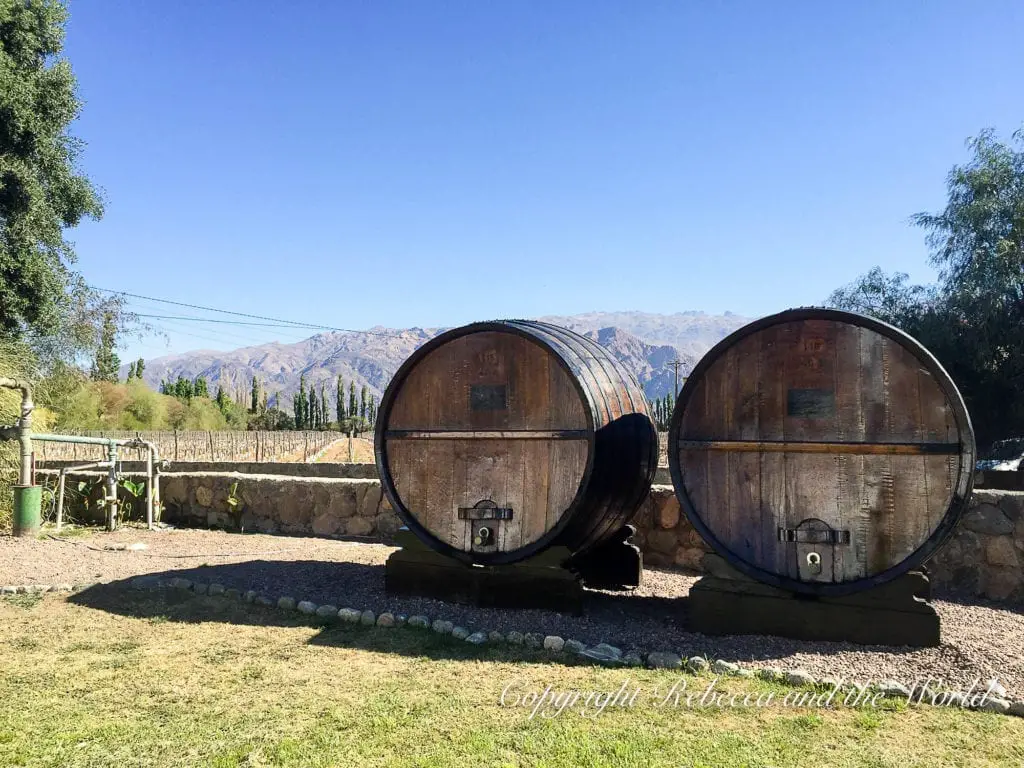
Drive on to Cafayate, stopping at Bodega Colomé along the way if you feel like the detour. Bodega Colomé is definitely a little off the beaten path, but it’s a great winery that’s also home to an incredible James Turrell museum.
Spend two full days working through Cafayate’s wineries; it’s known as Argentina’s other wine region, famous for the fruity Torrontés variety, and it’s one of the best-kept secrets in the whole country. I have several recommended tastings to try in my guide to the best wineries in Cafayate.
On day 25, drive back to Salta via the Quebrada de Cafayate, a canyon of dramatic red rock formations that’s worth the detour on its own.
Where to stay in Cafayate:
- Grace Cafayate, set inside a working winery, is a memorable splurge | Check rates and availability on Booking.com
- Hotel Asturias is a country-style hotel with cute little balconies. Rooms are comfortable and it’s right in the heart of Cafayate | Check prices and availability on Booking.com
Top tip! If the flight to Puerto Iguazú is in the afternoon, you could spend an extra night in Cafayate and drive straight to Salta Airport. Just give yourself some extra buffer time for traffic delays and for returning the rental car.
Days 26-28: Iguazú Falls
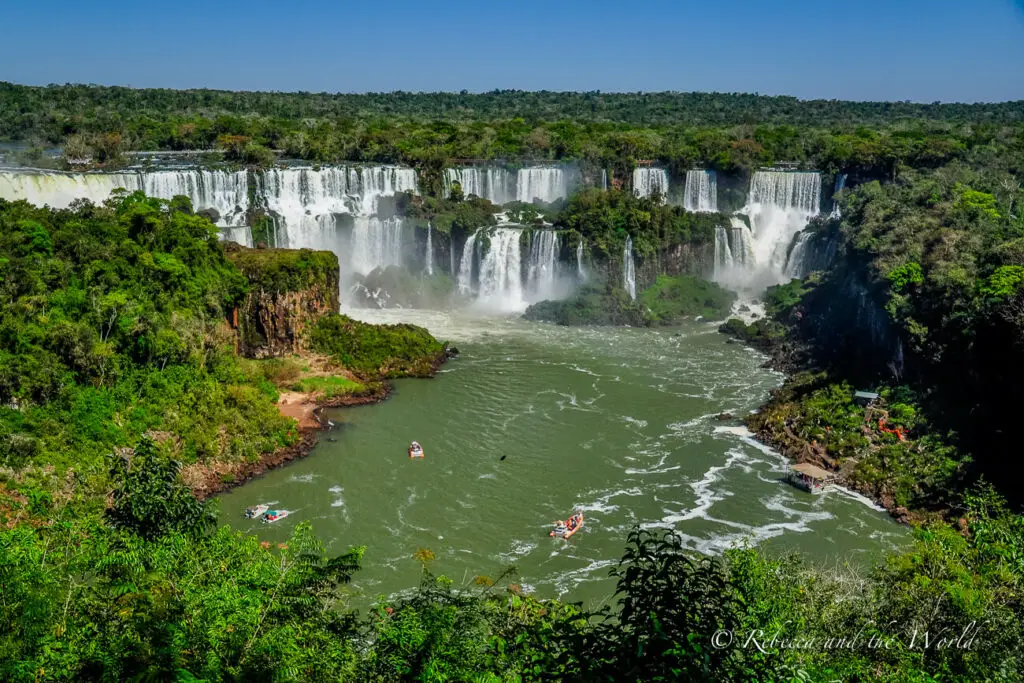
Fly from Salta to Puerto Iguazú on day 26; there are direct flights on certain days of the week, so it’s worth checking the schedule when you book to avoid a Buenos Aires connection.
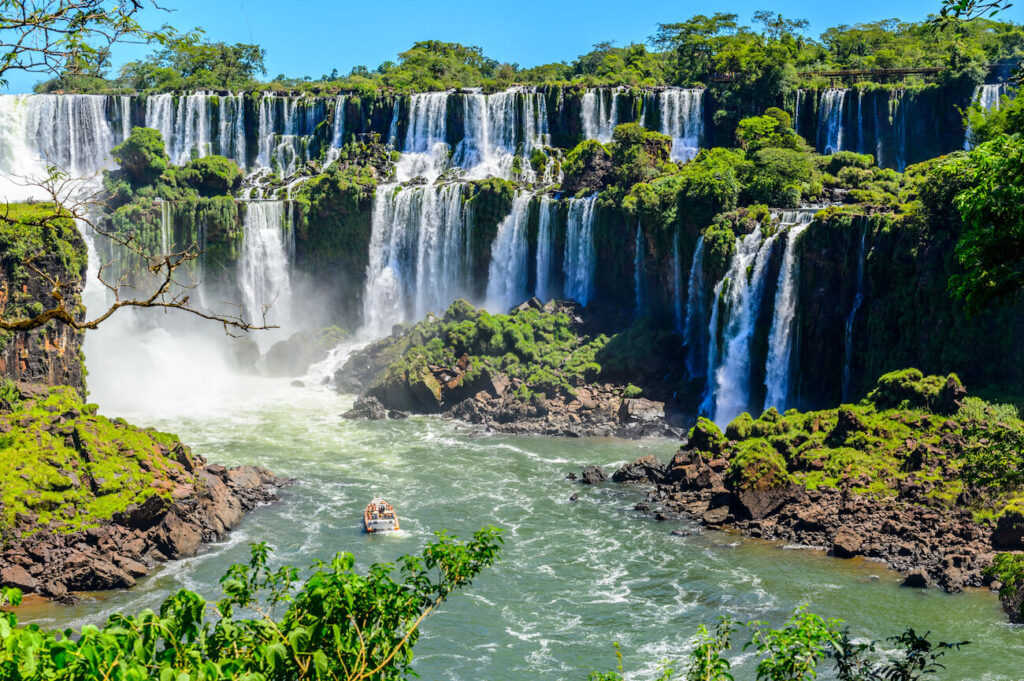
Give the falls two full days. Spend one day on the Argentina side, which is larger and more immersive, and where you’ll find the thundering Devil’s Throat viewpoint. Then, dedicate another day to the Brazil side, which delivers the classic panoramic view you’ve probably seen in photos.
Crossing the border between the two is straightforward (just bring your passport), and both sides are worth the effort rather than picking just one. My complete guide to visiting Iguazú Falls covers both sides in full, including border-crossing logistics.
Need to know! Australians, Americans and Canadians currently require an eVisa to enter Brazil. Check requirements here.
Where to stay in Iguazú:
- Gran Meliá Iguazú, inside the national park itself with the falls’ mist visible from the balcony, is where I stayed | Check rates and availability on Booking.com and Expedia
- Puerto Bemberg is a jungle boutique alternative | Check rates and availability on Booking.com and Expedia
- O2 Hotel Iguazú is a solid mid-range pick with a pool | Check rates and availability on Booking.com and Expedia
Days 29-30: Return to Buenos Aires and home
Fly from Puerto Iguazú back to Buenos Aires and use your second-last day as a buffer for anything you missed on your first pass through the city. Then, fly home on day 30, bringing this incredible month-long Argentina itinerary sadly to a close.
What to know before you go
Visa and entry requirements
Most tourists, including citizens of the US, Canada, Australia, the UK and most EU countries, can enter Argentina visa-free for stays of up to 90 days, so a 30-day trip is well within that window. Entry rules vary by nationality and do occasionally change, so check with your local Argentine embassy or consulate before booking, and note that a handful of nationalities are charged a reciprocity fee on arrival.
One rule catches a lot of visitors out: Argentina legally requires everyone entering the country to hold travel insurance that covers medical emergencies and hospitalisation. Enforcement at the border is patchy, but it’s a legal requirement rather than a nice-to-have, and for a trip covering glacier trekking, multi-day hiking and a self-drive road trip through high-altitude terrain, I’d want proper cover regardless of whether anyone checks. Look for a policy that explicitly names adventure activities and medical evacuation, given how remote parts of this route are. My guide to travel insurance for Argentina walks through what to look for.
Money
Argentina’s currency situation has settled down considerably over the last couple of years, and the gap between the official, blue market and card rates is now narrow enough that you don’t need to obsess over it the way visitors once did. Still, for a month away, bring a mix of payment options:
- A Visa or Mastercard for hotels, restaurants and bigger purchases (American Express is barely accepted, so leave it at home)
- A secondary card, something like a Wise card, as backup for places that surcharge credit cards and to act as an ATM card (back up only!)
- Clean, unmarked US dollar notes, ideally US$100s, which fetch the best rate and are essential for smaller towns and cash-only spots
- An ATM card, kept as a last resort, since withdrawal limits are low and fees stack up quickly
You’ll spend a good chunk of this itinerary well outside the bigger cities: El Chaltén, Cachi and Cafayate are all far more cash-reliant than Buenos Aires or Mendoza, so top up before you leave the last major town rather than counting on finding a working ATM. My guide to navigating money in Argentina covers exchange rates and where to change cash in more depth.
Safety
Argentina is a safe country to explore, and the vast majority of visitors get through a trip like this without any issues. The usual big-city habits apply: keep your phone out of sight while walking rather than checking it mid-street, keep your bag on your lap instead of hanging it off a chair, and use a licensed taxi or rideshare (Uber and Cabify both work well) rather than hailing one on the street at night. Pickpocketing is the biggest issue in Buenos Aires.
My safety in Argentina guide covers this in more depth, region by region.
As for other safety concerns: in El Chaltén, there’s no mobile signal at all once you’re out on the trails, so let someone at your accommodation know your planned route and expected return time before you set off. On the northern road trip, stick to daylight hours on the mountain roads, keep your fuel tank topped up between towns and carry more water than feels necessary once you’re up at altitude.
What to pack
This itinerary swings through several different climates. You’ll go from Patagonian wind and proper cold in the south (even on some days in summer), to Mendoza’s mild autumn days, to the north-west’s hot afternoons and cold desert nights, to Iguazú’s sticky jungle humidity. A few things you must pack:
- Broken-in hiking boots for El Chaltén’s trails, plus separate comfortable walking shoes for everywhere else
- A packable, windproof and waterproof jacket for Patagonia and the exposed northern drives
- Lightweight, breathable layers for Iguazú, plus something to keep your phone dry near the spray (like this waterproof phone case)
- A reusable water bottle, especially useful at altitude on the northern loop
- A portable charger, printed copies of your passport and insurance policy, and a stash of cash you don’t touch until you actually need it
Most hotels offer laundry, and even smaller towns like Cafayate and El Chaltén usually have a lavandería nearby. Pack for about a week and plan to do a load or two along the way instead of overstuffing your bag. For the complete region-by-region breakdown, see my Argentina packing list.
Budget
This is the most expensive of the Argentina itineraries I’ve put together, simply because it combines the priciest domestic flights in the country (anything touching Ushuaia or El Calafate) with a rental car for the northern loop and a full month of accommodation and meals. While things change regularly in Argentina when it comes to costs, you can expect to pay roughly:
- Accommodation: Hostel dorms from around US$15-$21 a night, boutique hotels roughly US$150-$300 a night, splurge properties US$400 and up
- Domestic flights: Budget US$80-$200 per leg, and expect around six legs across the month
- Glacier tours in El Calafate: The Big Ice or Minitrekking experiences run several hundred US dollars per person, plus the Los Glaciares park entrance fee, which is roughly US$34
- A rental car for the northern loop: Figure on at least a week’s hire, which will set you back anywhere from US$300-$400 (plus fuel)
- Wine tastings in Mendoza: Roughly US$30-$80 per winery (but far cheaper in Cafayate)
- Iguazú entry fees: Around US$60 for the Argentina side, more again if you’re doing the Brazil side too
As a rough guide, budget travellers might expect to spend somewhere around US$110-$150 per person per day. Mid-range travellers should plan on US$200-$350 a day, and that’s before any particularly indulgent wine dinners or hotel splurges. For more detail on Buenos Aires-specific costs, see my Buenos Aires travel budget guide.
Final thoughts
I know not everyone has the luxury of travelling to one country for a month, but if you can make that happen for Argentina, it’s very much worth it. What I like most about this particular itinerary is that it doesn’t make you choose between the two halves of the country that first pull people towards Argentina: the glaciers and granite peaks of the far south, and the deserts and colonial towns of the north-west. Most trips through Argentina end up picking one or the other. This one gives you both, in a single, well-planned month.
If thirty days is more than you can spare, don’t force this exact route into a shorter trip. Have a look at my 1 week in Argentina, 2 weeks in Argentina or 3 weeks in Argentina guides instead.
FAQs: 4 Weeks in Argentina
Is a month enough time to see all of Argentina?
Not all of it – Argentina is the eighth-largest country in the world, and I lived there for two years without running out of new places to visit. But four weeks is plenty enough to properly cover many of the country’s highlights.
Do I need to rent a car for this itinerary?
Yes, but only for the northern loop, from Salta through Purmamarca, Cachi and Cafayate and back to Salta. A standard 2WD is fine for this route. Everywhere else on this itinerary runs on flights, buses and transfers, so you won’t need a car for Buenos Aires, Patagonia or Mendoza – but you can rent one in Patagonia and Mendoza if you’d like the extra flexibility.
Do I need travel insurance to enter Argentina?
Yes. The Argentine government requires foreign visitors to carry travel insurance covering medical emergencies and hospitalisation. Checks at the border are inconsistent in practice, but it’s a legal requirement, not a suggestion, and this itinerary in particular covers glacier trekking, multi-day hiking and self-driving at altitude, so make sure your policy names all three.
How many domestic flights does this one month Argentina itinerary involve?
Six, plus your international flights in and out of Buenos Aires: Buenos Aires to Ushuaia, Ushuaia to El Calafate, El Calafate to Buenos Aires to Mendoza (booked as one connecting itinerary), Mendoza to Salta, and Salta to Iguazú before the final hop back to Buenos Aires.
Is this itinerary too rushed for most travellers?
It’s ambitious rather than relaxed, and I’d be doing you a disservice pretending otherwise. There’s essentially one full rest day in the entire month, and day 14 in particular is a long travel day. If a more comfortable pace matters more to you than covering both regions, consider dropping the northern loop or the far south and spending those extra days elsewhere instead.
Is it worth adding Peninsula Valdes or a Uruguay side trip to either itinerary?
I’d leave Peninsula Valdes for a future trip. It’s a genuinely lovely spot for whale-watching and wildlife, but there’s no direct flight connection from there to Ushuaia, so it forces an extra Buenos Aires backtrack for a relatively short stay. Colonia del Sacramento, just across the river in Uruguay, is a much easier add — it works well as the optional day-trip option during your Buenos Aires days on either itinerary, just remember it’s not technically part of your Argentina trip.
Is a month too long to spend in just Argentina, or should I combine it with Chile, Uruguay or Brazil?
Not too long at all. A month gives you enough time to explore Argentina properly without needing to pad the trip out with a neighbouring country. That said, a couple of natural add-ons already sit inside these itineraries: Iguazú Falls straddles the Argentina-Brazil border, so you’re technically stepping into Brazil for a day, and Colonia del Sacramento is an easy Uruguay day trip from Buenos Aires. If you did want to extend further into Chile – Torres del Paine is a natural add-on near El Calafate – I’d treat that as its own trip rather than squeezing it into these four weeks.
Did you find this article helpful? Consider buying me a coffee as a way to say thanks!
Which of these 4 weeks in Argentina itinerary ideas is your favourite? Drop any questions in the comments section below.
Need help planning your Argentina trip? 🇦🇷
Feeling overwhelmed about planning your trip to Argentina? I get it. And I can help! I offer one-to-one travel consultation calls to help you plan your trip to Argentina. In an hour, we can map out a realistic itinerary or work through your specific questions so you can book an incredible trip. Save hours of your time with my local knowledge and expertise.
Read next
Before you go, you might like these Argentina travel articles:
- How to Spend 2 Weeks in Argentina
- 1 Week in Argentina: 7 Itinerary Ideas
- The Perfect 3 Weeks in Argentina Itinerary
- The Best Places to Visit in Argentina
- How to Plan a Trip to Argentina: Step-By-Step Guide
ARGENTINA TRIP ESSENTIALS
- Book your flight to Argentina online with Skyscanner. I like how this site allows you to find the cheapest days.
- One thing I always purchase is travel insurance! Travel Insurance Master allows you to compare across multiple policy providers, while SafetyWing is great for long-term travellers and digital nomads.
- Wise is my choice for sending and receiving money and spending money overseas (you can get a digital and physical card).
- Find a great hotel in Argentina. Check prices on Booking.com and Expedia online.
- Check out the huge range of day tours throughout Argentina on GetYourGuide or Viator. I love a good food tour in particular!
- Saving money? Check out the range of free walking tours across Argentina with GuruWalk (don’t forget to tip!).
- How to get around? I use DiscoverCars for car hire, or Motorhome Republic and Jucy for campervan/RV rental. For buses, trains and ferries, I use 12GO, Busbud and Omio.
- Grab an e-sim to stay connected while on the road.
- A copy of the Lonely Planet guide to Argentina will be handy. Also pick up a Spanish language phrasebook to help you navigate your visit.
- Keep those bottles of wine you’ll be buying safe in these wine bags.
- Check out my Amazon shop for my fave travel items – everything from backpacks and suitcases to travel adapters and beauty products.
PIN IT FOR LATER: 4 WEEKS IN ARGENTINA
Save these 4-week Argentina itinerary ideas to Pinterest so you can plan your trip later.