
Wondering how much it costs to visit Buenos Aires? This guide will give you an idea of how much you need to plan for your Buenos Aires travel budget – for hotels, transport, sightseeing, eating out and more.
Buenos Aires has always been a city where you can eat well, stay somewhere nice and fill your days with culture – without spending London or New York money. But the last couple of years have been a rollercoaster. High inflation and major economic changes under Argentina’s new government have resulted in rapid changes to the cost of things.
It’s certainly changed from the time I lived in Buenos Aires, where we could easily have a steak dinner (including a bottle of wine) for under US$30 for two people.
To help you plan your Buenos Aires travel budget, here’s a guide to what things cost. While you can check the latest prices for attractions online (usually), it is a bit harder with restaurants, which are reluctant to post prices on websites if they’re likely to change.
This guide is all based on my most recent trip to Buenos Aires (April 2026), where I noted everything we spent. It’ll help you answer the question “Is Buenos Aires expensive?” – which is subjective, based on your personal budget.
But, because prices and exchange rates can change fast in Argentina – take this guide as a planning tool, not an exact science! Use it to plot out a rough budget for your own trip to Buenos Aires, and then add a bit of a buffer.

This blog post may contain affiliate links, meaning if you book or buy something through one of these links, I may earn a small commission (at no extra cost to you).
Need help planning your Argentina trip? 🇦🇷
Feeling overwhelmed about planning your trip to Argentina? I get it. And I can help! I offer one-to-one travel consultation calls to help you plan your trip to Argentina. In an hour, we can map out a realistic itinerary or work through your specific questions so you can book an incredible trip. Save hours of your time with my local knowledge and expertise.
How much does Buenos Aires cost?
Transport prices in Buenos Aires
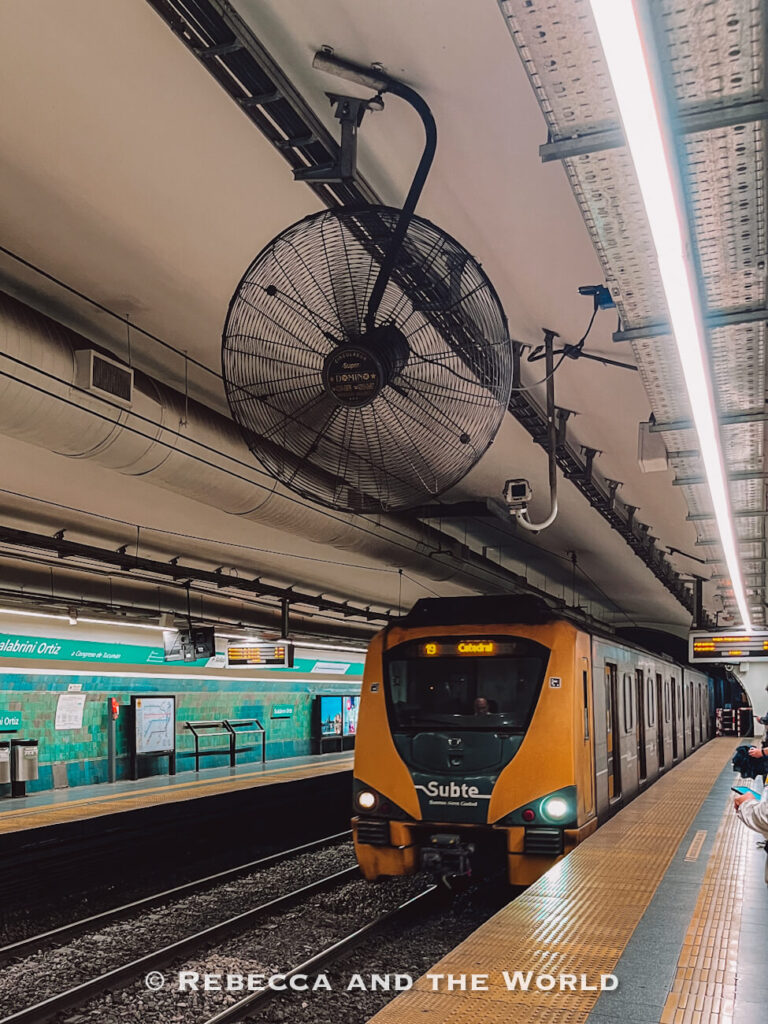
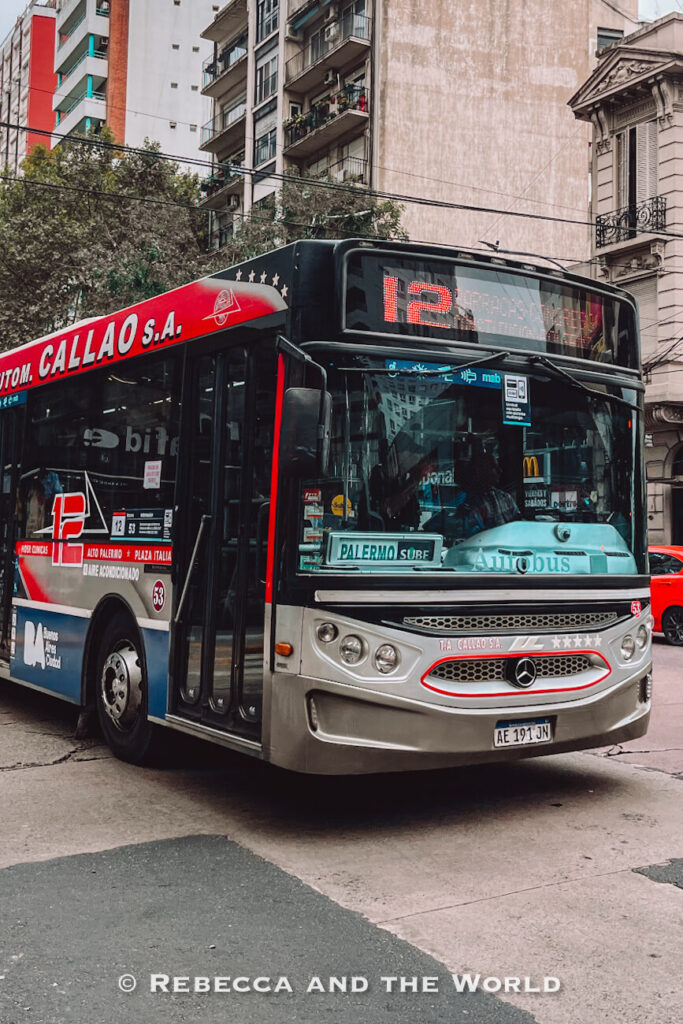
Buenos Aires is really easy to get around – you don’t need a car here during your Buenos Aires itinerary. There’s an extensive public transport system with buses, a subway and aboveground trains, and taxis and Ubers are very cheap.
- Subte (subway system) single ride: US$1.05 (tapping my credit card, not using a SUBE card)
- Bus (colectivo) fare: ARS$1.137,23-ARS$1.458,41 (US$0.84-$1.07) depending on distance – on an unregistered SUBE card or tapping with credit card
- Short trip in rideshare: US$5.06 (this trip was from Retiro to Palermo, 5.3km, 23 min ride, using Cabify)
- Longer cross-city trip (rideshare): US$7.50 (this trip was from Palermo to La Boca, 10km, 24 min ride, using Uber)
- Hop-on hop-off tourist bus (24-hour ticket): US$39 (book a ticket here: there’s a red bus and a yellow bus – read more about it in my Buenos Aires hop-on hop-off bus guide)
I used both Uber and Cabify in Buenos Aires – I find Cabify is usually slightly cheaper, but it’s worth checking both to compare. I used to always use taxis when I lived in Buenos Aires, but find it far easier now to use Uber and Cabify with my credit card. As you can see, the trip prices for ride-shares are very affordable!
Having said that – don’t be afraid to use taxis! They’re everywhere (just look for the one with the “Libre” sign lit up) and also very affordable.
First time using Cabify? Add my code REBECCAA468 in the app or use this link: https://cabify.com/i/rebeccaa468 for a discount!
Airport transfers
Again, I prefer to use rideshare to and from airports, but have included an example of a private transfer for the longer trip from Ezeiza Airport (where most intercontinental flights land).
- AEP to Palermo (Cabify, 6km, 25 min trip): US$6.45
- Private transfer from EZE: From US$67 (Book online here)
Want to rent a car in other parts of the country? Here’s my guide to hiring a car in Argentina.
Accommodation costs in Buenos Aires
I’ve gathered some example accommodation costs below. I checked prices for a one-night stay for two people on a weekday in February and again in July, using Booking.com.
I’ve chosen February and July to provide high-season and low-season costs, respectively. February is still summer and popular with travellers, while July is the depths of winter and can be noticeably cheaper for many hotels.
Prices swing around long weekends, events and school holidays, so I recommend using the examples below as a starting point, then checking your exact dates.
Hostel dorm bed
- High season: USD$15 per night (per person) in a 6-bed dorm room at America del Sur Hostel (San Telmo)
- Low season: USD$21 per night (per person) in a 6-bed dorm room at America del Sur Hostel (San Telmo)
Hostel – private room
- High season: USD$55 per night for a double room with private bathroom at America del Sur Hostel (San Telmo)
- Low season: USD$76 per night for a double room with private bathroom at America del Sur Hostel (San Telmo)
The discrepancy in pricing (with low season being higher than high season) is likely because I researched high-season rates just a week out – prices may have been lower as the hostel attempted to sell the room.
Boutique hotel
- High season: USD$297 per night for a Luxe Suite at The Glu Boutique Hotel (Palermo Soho)
- Low season: USD$255 per night for a Luxe Suite at The Glu Boutique Hotel (Palermo Soho)
Apartment (one bedroom)
- High season: USD$80 per night for a one-bedroom apartment (with small balcony and a washing machine) like Grid Suites Charcas in Palermo – note that there’s a 2-night minimum stay
- Low season: USD$80 per night for a one-bedroom apartment (with small balcony and a washing machine) like Grid Suites Charcas in Palermo – note that there’s a 2-night minimum stay
Splurge hotels
- High season: USD$638 per night for a Premier Palace Double Room at the Alvear Palace Hotel (Recoleta)
- Low season: USD$500 per night for a Premier Palace Double Room at the Alvear Palace Hotel (Recoleta)
→ READ NEXT: Where to stay in Buenos Aires
Food and drink prices in Buenos Aires
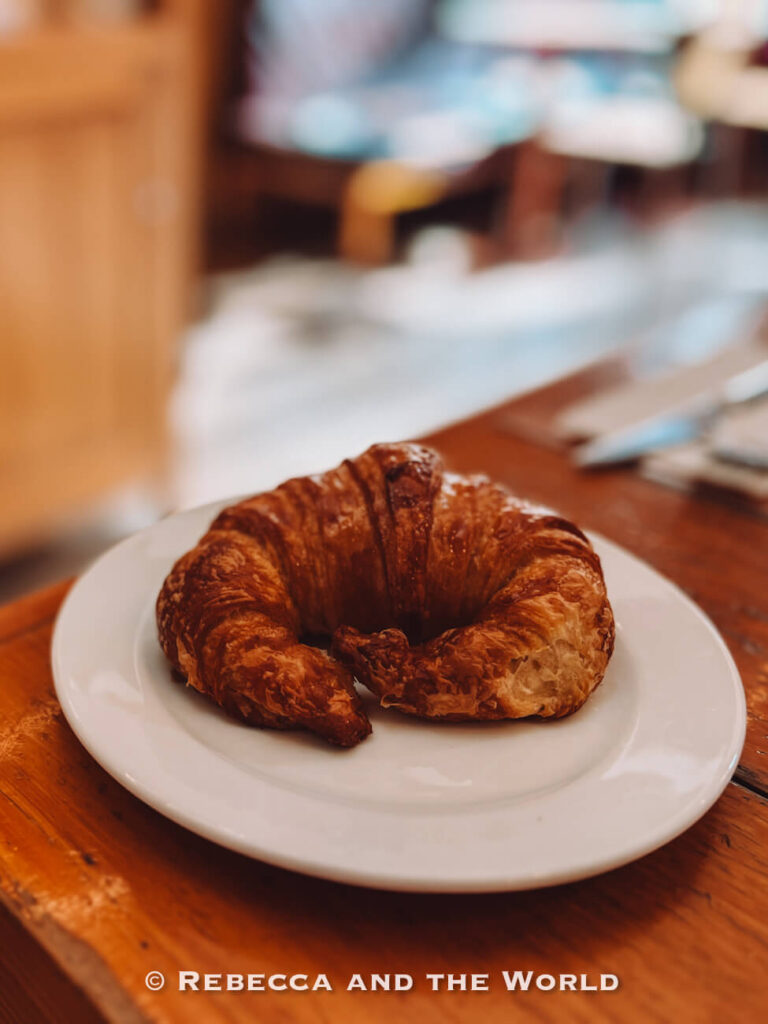

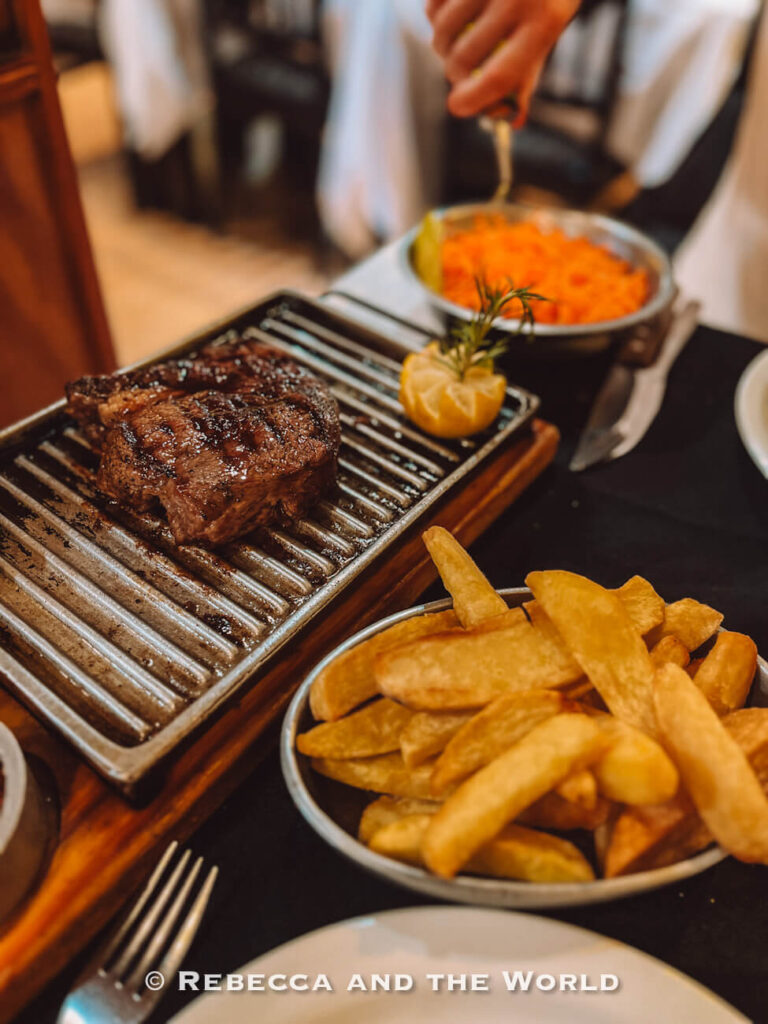
When I was planning our trip back to Buenos Aires (to visit our beloved former home), I found it hard to find current pricing online for restaurants and bars. While many restaurants link their menus, most don’t include pricing – because things can change so rapidly. It made it really hard for me to budget, so hopefully this helps you!
Here are a few examples of the costs we paid during our trip.
- Coffee (Americano) at Ninina in Palermo (upscale café): ARS$6.300 / US$4.64
- Coffee + 2 medialunas combo at Cafe Martinez (chain café): ARS$8.100 / US$6.02
- Empanada (each) at El Guachito: ARS$4.000 (cash only)
- Empanadas (dozen) at Güerrin: ARS$38.000 / US$27.97
- Choripán at Parrilla Peña: ARS$9.000 / US$6.62
- Pizza slice (slice of muzzarella from Güerrin): ARS$4.200 / US$3.09
- Milanesa sandwich from Varela Varelita: ARS$15.000 / US$11.04
- Parrilla dinner (steak + sides (salad and fries) + dessert + half-bottle of wine) for two people at Parrilla Peña (one of my favourite steakhouses in Buenos Aires): AR$100.400 / US$74.66
- Dinner (steak + sides (salad and fries) + bottle of wine) for two at Calden del Soho: ARS$108.200 / US$88.50
- Dinner for two at Niño Gordo (3 dishes + 2 wines + cocktail): ARS$122.900 / US$100.65
- 9-course dinner for two at Fogón Asado (with premium wine selection): US$352 (would have saved $120 if we hadn’t got wine!)
- Bottle of Malbec in a restaurant (Salentein Reserva at Calden del Soho): ARS$25.500 / US$18.77
- Bottle of Malbec from a kiosko (bottle of Salentein Reserva): ARS$10.000 / US$7.36
- Helado (cup with two scoops from Tufic): ARS$7.000 / US$5.15
- Cocktail at CoChinChina in Palermo: ARS$16.000 / US$11.78
- Pint of craft beer at Desarmadero in Palermo: ARS$8.600 / US$6.33
- Can of beer from a kiosko (Quilmes): ARS$3.000 / US$2.21
The meals above (at Parrilla Peña and Niño Gordo, for example) include a 10% tip.
Heads up: One thing you may notice on your bill is a cubierto charge – this is for the bread basket often provided to a table. (Not for providing knives and forks, as some have thought!)
→ READ NEXT: Where to eat in Buenos Aires
Attraction and activity costs in Buenos Aires
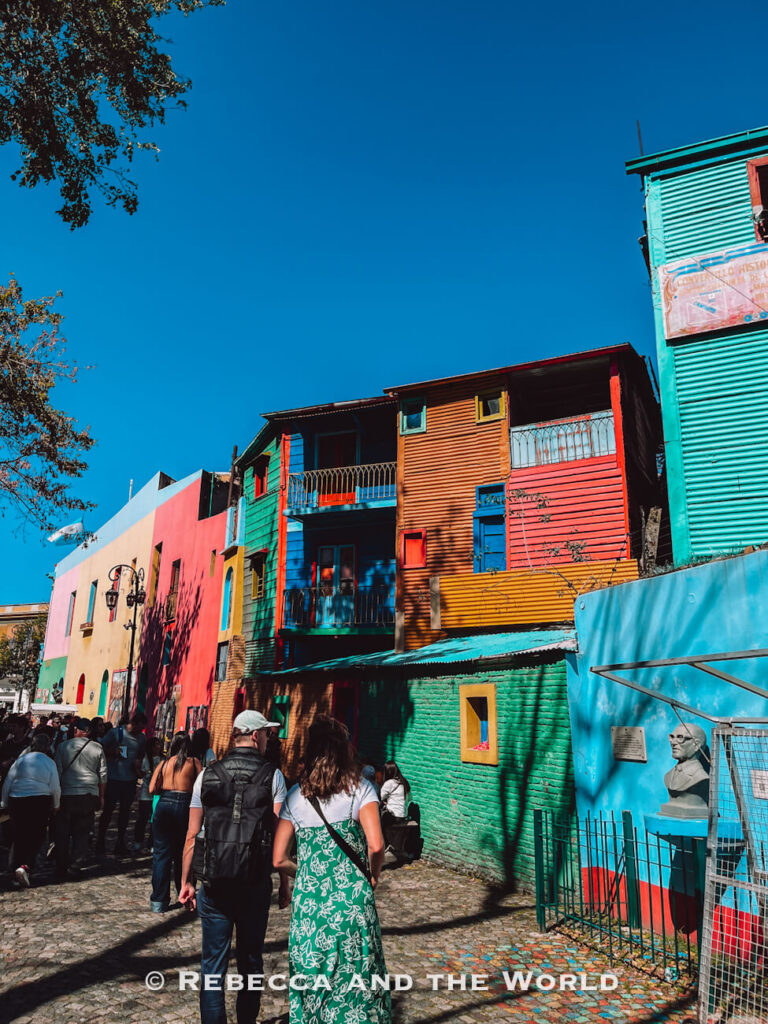
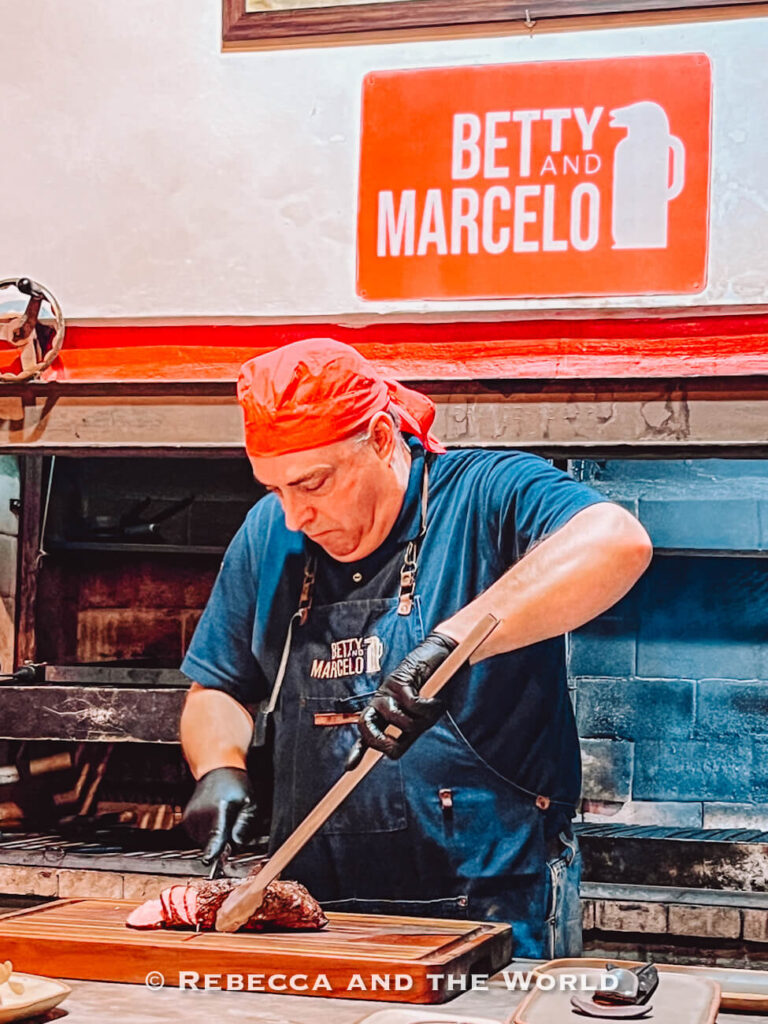
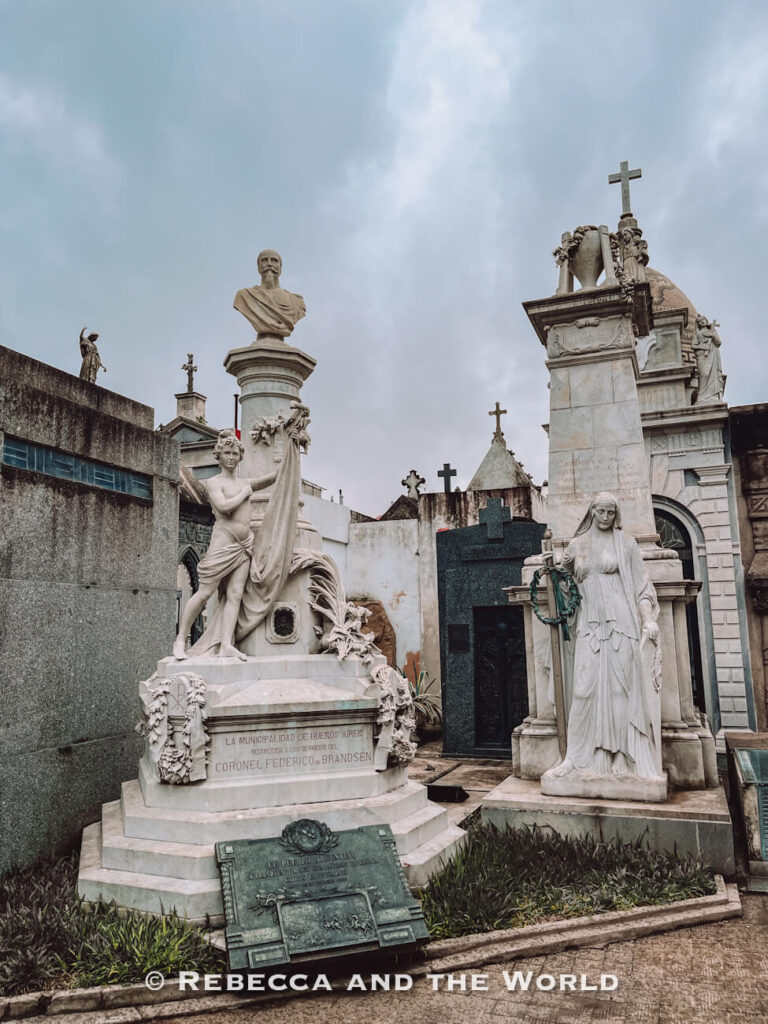
So what about getting out and about? Here are some of the best things to do in Buenos Aires, including Buenos Aires food tours, attractions and tango shows, and what they cost.
- The Asado Adventure – full-day asado experience in a private home: US$230 per person BUT save 10% if you book using my code RATW10 (read my review here)
- Betty and Marcelo – family asado experience: US$110 per person but save 5% if you use my code REBECCA&THEWORLD (read my review here)
- Sherpa Food Tour (food tour in Palermo): US$115 per person BUT save 5% if you use my code REBECCA5 (read my review here)
- The Argentine Experience: US$115 per person (read my review here)
- La Boca walking tour: Free with GuruWalk – although don’t forget to tip! I tipped around ARS$40.000 (US$30) to cover my husband and I
- Palermo street art tour with Graffitimundo: US$38 per person
- Teatro Colón guided tour: ARS$30.000 / US$22.08 (foreigner pricing)
- MALBA ticket: ARS$10.000 / US$7.36 – tickets are half price on Wednesdays!
- Recoleta Cemetery: ARS$24.030 / US$17.69 (foreigner pricing) – I recommend adding on a free walking tour (tips required) to fully experience the cemetery; there are so many stories behind the tombs
- Tango show (Rojo Tango): US$260 without dinner; US$330 with dinner (per person)
- Tango show (Secreto Tango Society): US$75 per person for a table seat
- Small-group day trip to Tigre Delta: US$75 per person
- Day trip to Colonia del Sacramento (Uruguay): US$74 per person (including ferry ticket and a walking tour)
- Gaucho / estancia day trip: US$196 (including transport, lunch and horse riding)
→ READ NEXT: The best day trips from Buenos Aires
Free (or almost free) things to do in Buenos Aires
While prices may be rising in Buenos Aires – and across Argentina as a whole – there are still plenty of ways to spend very little but still feel like you’ve properly experienced the city.
- I love browsing the huge variety of “free” walking tours on GuruWalk – they cover the city’s key sights. Just remember to tip! (I tip around ARS$20,000 per person)
- Keep an eye out for free or cheap tickets for museums – for example, MALBA tickets are half price on Wednesdays, and the Museo Sivori is free on Wednesdays
- There are so many free museums in Buenos Aires – the Museo Nacional de Arte Decorativo, the Museo Nacional de Bellas Artes and the Museo Histórico Nacional are just some examples (and all worth visiting)
- Spend an afternoon in Palermo’s parks – pack a picnic to save some money on lunch
- If you’re travelling with kids, Ecoparque – a former zoo – is completely free to visit
- Browse El Ateneo Grand Splendid, one of the world’s most beautiful bookshops
- Walk Recoleta’s elegant streets and plazas, and pop into churches and courtyards you pass along the way
→ READ NEXT: The best things to do in Buenos Aires
How to save money in Buenos Aires
As well as taking advantage of the free things to do in Buenos Aires, there are other ways to keep costs down while still eating well and doing the experiences that make the city special.
- Visit in the low season. If you have flexibility, July can offer noticeably better accommodation deals than January and February, especially for hotels.
- Make lunch your main meal. Many classic neighbourhood restaurants, the kind locals actually eat at, offer excellent value at lunch. Go bigger at midday, then keep dinner lighter. (Also great for the waistline!)
- Pay cash for meals – some restaurants will offer up to 10% discount if you pay en efectivo.
- Pick up snacks and wine from the local supermarket or kiosko – wine can be especially cheap!
- Book accommodation with a kitchen so you can make your own meals. We usually do this, cooking breakfast and then eating lunch out. We’ll then either go out for dinner (I have to do a lot of “research” for this blog!) or get something light from the supermarket.
- Do one “hero” splurge and keep the rest simple. Choose one or two signature experiences, like a food tour, Teatro Colón tour or a tango show, and then balance those with cheaper options, like a milonga, museum visits, strolling the streets and hanging out in parks.
- Choose a milonga instead of a tango show. If you want tango but do not care about the stage production side, a milonga is usually far cheaper and feels more local. You can still book a lesson beforehand if you want to join in.
- Carry a refillable water bottle (also great for the environment!). You can drink tap water in Buenos Aires.
Money, cards and tipping in Buenos Aires
You may have heard that the money situation in Argentina is challenging. It’s far easier now, so don’t worry.
I have a whole guide to how best to pay for things in Argentina, but here’s a summary of what I recommend – which is now largely what I’d recommend when visiting most countries:
- Bring at least one Visa or Mastercard for hotels, most restaurants and shopping. I would not rely on AMEX, as it is less widely accepted.
Tip: If you pay with credit card in supermarkets, you might be asked for ID. I usually just provide (verbally) my passport number and that suffices.
- Also bring a debit card: Some places either do not take credit cards or they add a surcharge for them. On my most recent trip to Argentina I used a Wise card as a debit option in a few restaurants that charged around 10% extra for credit cards, and in kioskos that only accepted debit.
- Bring US dollars in cash as well: Cash is still somewhat king in Argentina and you can’t rely on cards alone. Having USD cash means you can exchange into pesos and pay in places that are cash only. You can also sometimes score a better deal in restaurants by paying cash.
- When you bring USD, bring clean, crisp US$50 or US$100 notes, as these get the best rate.
- Bring an ATM card as a safety net, but don’t rely on ATMs day to day. Withdrawals can be frustrating because you can often only take out small amounts, and that can mean big fees if you need to withdraw repeatedly.
→ READ NEXT: Money in Argentina for travellers
Tipping in Buenos Aires
Tipping is generally more low key than in the US, but it is appreciated. In restaurants, bars and cafés, 10% is usually the norm – but only if you thought the service was good.
When paying by credit card, you often have the opportunity to add a tip – the server will ask you, but you may need to let them know before they process the payment (I find it’s hit and miss whether they ask you!). Otherwise, leave a tip in cash. Again, it really depends on how you found the service.
As mentioned, if you take a free walking tour, I tip ARS$20.000 or the equivalent of US$15. For paid tours, it’s really up to you if you wish to tip.
If you take a taxi, rounding up the fare is common.
Cost to visit Buenos Aires: Final thoughts
With prices changing often in Buenos Aires, I hope this guide helps you to plan your Argentina travel budget. There are still some great experiences to be had at an affordable price – and overall, the city remains cheaper than many European, North American and Australian cities.
And, it’s your holiday – make sure you enjoy it and aren’t just counting dollars!
Did you find this article helpful? Consider buying me a coffee as a way to say thanks!
If you’ve recently been to Buenos Aires, I’d love it if you shared some examples of your travel costs in the comments below!
Need help planning your Argentina trip? 🇦🇷
Feeling overwhelmed about planning your trip to Argentina? I get it. And I can help! I offer one-to-one travel consultation calls to help you plan your trip to Argentina. In an hour, we can map out a realistic itinerary or work through your specific questions so you can book an incredible trip. Save hours of your time with my local knowledge and expertise.
Read next
Before you go… you might also like these Buenos Aires articles:
- How to Spend 3 Days in Buenos Aires: A First-timer’s Itinerary
- Where to Eat in Buenos Aires
- The Ultimate Buenos Aires Bucket List
- Where to Stay in Buenos Aires
- How to Handle Your Money When You Visit Argentina
- What to Know Before Visiting Argentina
ARGENTINA TRIP ESSENTIALS
- Book your flight to Argentina online with Skyscanner. I like how this site allows you to find the cheapest days.
- One thing I always purchase is travel insurance! Travel Insurance Master allows you to compare across multiple policy providers, while SafetyWing is great for long-term travellers and digital nomads.
- Wise is my choice for sending and receiving money and spending money overseas (you can get a digital and physical card).
- Find a great hotel in Argentina. Check prices on Booking.com and Expedia online.
- Check out the huge range of day tours throughout Argentina on GetYourGuide or Viator. I love a good food tour in particular!
- Saving money? Check out the range of free walking tours across Argentina with GuruWalk (don’t forget to tip!).
- How to get around? I use DiscoverCars for car hire, or Motorhome Republic and Jucy for campervan/RV rental. For buses, trains and ferries, I use 12GO, Busbud and Omio.
- Grab an e-sim to stay connected while on the road.
- A copy of the Lonely Planet guide to Argentina will be handy. Also pick up a Spanish language phrasebook to help you navigate your visit.
- Keep those bottles of wine you’ll be buying safe in these wine bags.
- Check out my Amazon shop for my fave travel items – everything from backpacks and suitcases to travel adapters and beauty products.
PIN IT FOR LATER
Save this Buenos Aires travel budget to Pinterest for later.