

Planning a trip to Argentina? These Argentina travel tips – from someone who lived there – will help you get the most out of your visit.
Oh, Argentina. The world’s 8th largest country is a stunning mix of beautiful landscapes, vibrant cities, rich culture, delicious wine, and undoubtedly one of the most incredible South American destinations.
There are plenty of reasons to plan a trip to Argentina – but also a few things to know before going. This Argentina travel guide will help you navigate the ins and outs of your first visit.
After living in Argentina for two years, these are the things I think travellers should know before they arrive – the money quirks, cultural differences, safety tips and practical info that can make your trip even better.
Let’s get into my top Argentina travel tips!
This blog post may contain affiliate links, meaning if you book or buy something through one of these links, I may earn a small commission (at no extra cost to you).
Argentina essential info
- Capital: Buenos Aires
- Language: Spanish
- Population: 45,993,336
- Area: 2,780,400 square kilometres (1,073,500 sq miles)
- Currency: Argentine Peso
- Emergency numbers:
- General emergencies (in Buenos Aires): 911
- Police: 101
- Fire: 100
- Medical emergencies: 107
- Electricity: 230V 50Hz Type I connectors (same as Australia, New Zealand and Uruguay)
- Telephone country code: +54
Need help planning your Argentina trip? 🇦🇷
Feeling overwhelmed about planning your trip to Argentina? I get it. And I can help! I offer one-to-one travel consultation calls to help you plan your trip to Argentina. In an hour, we can map out a realistic itinerary or work through your specific questions so you can book an incredible trip. Save hours of your time with my local knowledge and expertise.
Argentina travel tips
After living in and travelling extensively through Argentina, here are my travel tips to help you plan your visit.
1. You can’t see all of Argentina in one trip
Argentina is the eighth-largest country in the world, and one of the biggest mistakes I see first-time visitors make is trying to cram too much into a single itinerary.
It’s tempting to want to visit Buenos Aires, Iguazú Falls, Mendoza, Patagonia and Salta all in one trip. But with such vast distances between regions, you’ll end up spending more time in airports than actually enjoying the country.
Instead, focus on two or three regions that match your interests. If you love hiking, spend more time in Patagonia. If food and wine are your priority, combine Buenos Aires and Mendoza. Wildlife lovers might prefer Iguazú Falls and Peninsula Valdés. I’ve got several Argentina itinerary ideas that will help maximise your time here without rushing you.
Trust me – Argentina is one of those countries that almost always leaves people wanting to come back. Rather than trying to see everything on your first visit, leave yourself a reason to return.
→ READ NEXT: Read my step-by-step guide to planning a trip to Argentina to choose the best destinations and build a realistic route

2. Get creative with your route in and out of Argentina
There are direct flights to Buenos Aires from North America, Europe and New Zealand, as well as from most South American countries.
Most people will fly in and out of Buenos Aires, but if you’re clever (and the flights/budget work), you may be able to fly in to Buenos Aires and out of another city – saving some time backtracking.
For example, there are direct flights from Mendoza to Santiago, Lima and Patagonia, and flights from Salta to Lima and Panama City. One of my favourite websites is Flight Connections – I’m always on here figuring out how to get from A to B and have often found some creative ways to travel around by air. You’ll have to weigh up the costs and timings but often it can save you some travel time.
I like to begin the flight booking process by checking routes on Flight Connections and then going to a site like Skyscanner to check schedules and prices. Skyscanner is particularly great because you can set up price alerts and also search for the cheapest days to fly. Click here to try it out.
3. There are two airports in Buenos Aires
Buenos Aires has two airports: Aeropuerto Internacional Ministro Pistarini, more commonly known as Ezeiza (EZE), serves most international flights and many domestic flights. Aeroparque Jorge Newbery (AEP) handles domestic flights and international flights to neighbouring South American countries.
Ezeiza and Aeroparque are 41 kilometres (25 miles) apart, so if you do have a connection upon arrival in Argentina, make sure you plan your travel accordingly. This is because the trip between the two airports can sometimes take more than two hours in peak hour traffic. You don’t want to miss your connecting flight!
→ READ NEXT: First time in Buenos Aires? Here’s what to know
4. Choose your domestic airline wisely
If you’re flying within Argentina, it can be tempting to book the cheapest fare. But before you do, it’s worth considering reliability as well as price.
While low-cost carrier Flybondi often advertises very competitive fares, it’s consistently ranked among the country’s (and indeed the entire world’s!) poorest-performing airlines for on-time performance. In 2026, significant operational disruptions left thousands of passengers stranded.
Personally, if I’m travelling within Argentina, I usually choose Aerolíneas Argentinas. It’s not perfect, but in my experience it’s generally the more reliable option.
If you do decide to fly Flybondi because the price is significantly cheaper, I’d avoid booking it on the same day as an international departure or any other time-sensitive plans.
→ READ NEXT: Want even more tips on travel planning? Check out my 15 easy steps on how to plan a trip from start to finish!
5. Getting around Buenos Aires
Getting around Buenos Aires is easy. Rideshares like Uber and Cabify are super cheap and there are plenty of drivers. I find Cabify to be a little cheaper but Uber to have a quicker response time and usually more cars available.
Taxis are also plentiful and easy to hail from the street. Make sure the driver turns on the meter when your trip begins. It’s also handy to know the cross streets closest to your destination, as drivers will use those to navigate (rather than an actual address).
Public transport is cheap in Buenos Aires and there’s an extensive network. There are colectivos (buses), the subte (underground train) and the train (aboveground, these tend to go to the outer suburbs). Use Google Maps to figure out the best way to get from A to B.
To take public transport, you can pay with your credit card (tapping on) or you’ll need a SUBE card. Purchase one from the subte ticket window or from a kiosko (convenience store). Paying with your credit card is slightly more expensive, but it’s not much more.
There’s also the Buenos Aires hop-on hop-off bus, which is a great way to see the city in a short amount of time.
→ READ NEXT: How to get around Buenos Aires
6. You need medical insurance to enter Argentina
I always recommend travelling with insurance, but for Argentina it’s no longer simply a recommendation. Foreign visitors are required to declare that they have health insurance when entering the country. The requirement was introduced in 2025.
Checks may not be consistent at every airport or border crossing (I’ve never actually been asked for proof of coverage…), but don’t assume that means you can travel without cover.
But medical cover is only part of the picture. I ALWAYS recommend buying comprehensive travel insurance that also covers cancellations, delays, lost luggage and any specific activities you plan to do (remote hiking, mountain climbing etc).
You can compare policies for Argentina through Travel Insurance Master, which brings together options from multiple providers, or find cover through World Nomads.
Buy your policy as soon as you book your flights. That way, your cancellation and trip interruption cover begins well before your departure date, rather than only once your holiday starts.
→ READ NEXT: What to know before buying travel insurance for Argentina
7. There are a few options for money
One of the most important things to know before going to Argentina is how to deal with money.
The economy in Argentina is… complicated, to say the least. And that used to cause travellers a lot of headaches, but it’s now much simpler. I have a full guide on money in Argentina tips, but here are a few things to know.
Always have cash on hand
One of my biggest travel tips for Argentina is to always have cash (pesos) on hand, particularly smaller notes. This is helpful for smaller shops, tipping tour guides and leaving tips in restaurants. While you can now pay for most things with credit or debit card, some cash on hand is helpful.
ATMs are expensive
ATMs are in all major cities, but they have strict limits on how much you can withdraw in each transaction and high transaction fees which will add up quickly. Withdrawal amounts vary, but you’ll usually only be able to get the equivalent of around US$35-$75 out each time (and sometimes less) and be paying a lot in bank fees to get that money, sometimes up to US$15 per withdrawal. Ouch!
ATMS often run out of money, especially around holiday periods and long weekends.
Bring US dollars or Euros
The best way to handle your travel money in Argentina is to bring cash with you, specifically US dollars or Euros. This is how you’ll get the best exchange rate in Argentina. HOWEVER, this can change frequently – so check out my guide to money in Argentina, which I try to update every other month.
Credit cards
Credit cards are accepted in most restaurants and shops, as well as in hotels. Visa cards are best, as well as Mastercard. I wouldn’t even bother attempting to pay with American Express. I always travel with two or three credit cards, just in case, as well as my Wise debit card (for places that don’t take credit card or that add high surcharges to credit cards).
Some stores will also want to see photo ID when you pay with your credit card, so take along your driver’s license or a copy of your passport. Otherwise, I just usually verbally provide my passport number, which they can type into their machine.

8. Pack for where you’re going
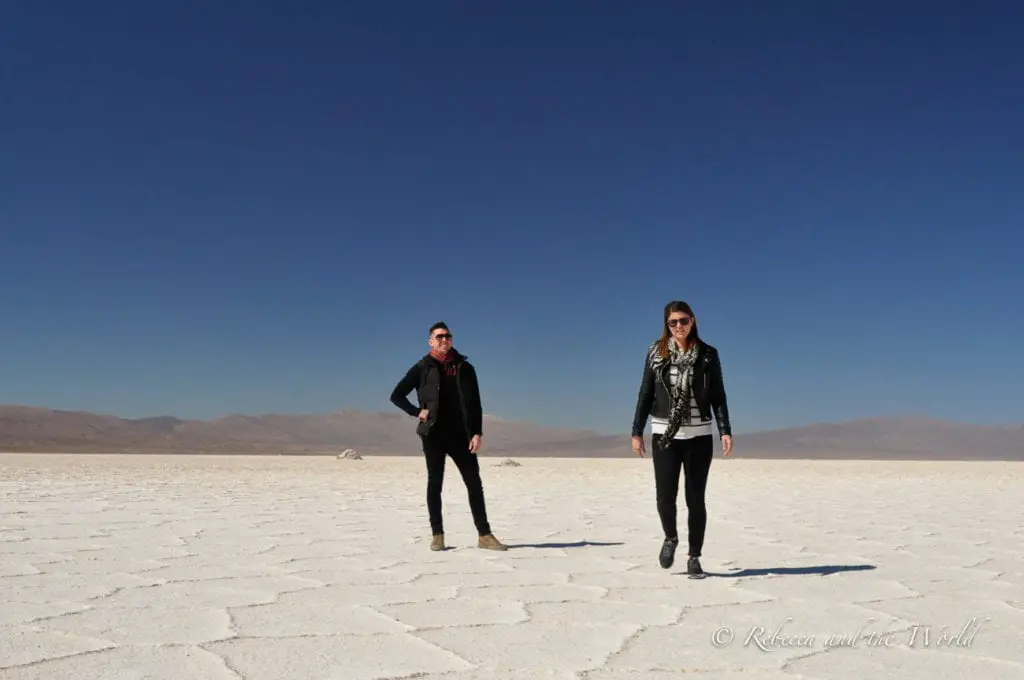
Argentina is a big country, which means the weather can vary wildly. I have a full Argentina packing list with suggestions for what to bring if you’re travelling to Patagonia, the north, Iguazú Falls or the cities.
I’d recommend wearing your normal clothing in Argentina – tourists traipsing around in zip-off pants and waist packs in the city stand out from a mile away and could make you a target for thieves. Wear basics like jeans and t-shirts to help you to blend in. Definitely bring some comfy walking shoes because you’re going to be racking up the steps.
Include a nice outfit for going out for dinner or to a tango show.
If you’re planning on going hiking or doing any other outdoor activities, it’s best to bring your own gear. Hiking gear including shoes, trekking poles and so on is expensive in Argentina.
Some other key must-have items:
- The Argentina Lonely Planet guide
- A universal travel adapter (Argentina uses the same plug as Australia)
- A bag or backpack with a zipper, like this stylish anti-theft bag
- Sunscreen – SPF50+ at minimum
- A raincoat that packs up easily
- Medications that you use regularly, along with prescriptions
- A padded wine bag to transport your precious wine bottles home
→ READ NEXT: The ultimate Argentina packing list
9. Bring your own phone
If you’re wondering what to do in Argentina to stay connected, get an eSIM. This is the easiest way to connect. I used Airalo on our most recent trip to Argentina (and across Chile and Colombia) and had no issues.
You can also get a physical sim card, but it’s a bit more complicated. There are three main cell providers in Argentina: Personal, Movistar and Claro. There’s a Personal stand in Ezeiza airport, so you can easily buy a sim card there. Otherwise, find a store in the city – they’re all located in Microcentro (the centre of the city) – and get your sim card there. You’ll usually need your passport to purchase.
Topping up is easy. Wherever you see a kiosko (like a small general store) with a sign “recarga aqui” (recharge here) and the logo of the provider your sim card is with, you’ll be able to top up.
10. Learn a few Spanish phrases
Even though many people in Argentina speak English, especially in Buenos Aires, you should try to learn a few key Spanish phrases.
But be warned: your high school Spanish may not cut it here. Argentines actually speak Castellano and with a whole lot of hand gestures thanks to their Italian and Spanish heritage. People use vos instead of tú, and “y” and “ll” sounds are completely different (pollo sounds more like posho, with the sh as in sshh).
Watch a few Argentine movies (I’ve suggested some later on) so you start to get your head around the accent.
11. Argentina is safe – but take the usual precautions
Argentina is a safe country to visit. However, like anywhere in the world, take precautions.
In Buenos Aires, watch out for pickpockets, especially on buses, the subte and in marketplaces. I’ve been pickpocketed in Buenos Aires so I can unfortunately vouch for their tremendous skill!
Keep your bags close to you, especially at restaurants and bars and while on public transport. Don’t pull out your phone in busy places and never ever leave it on the table while you’re eating. Never leave your handbag on the back of your chair.
Motochorros are thieves on motorbikes who ride past and snatch bags or even phones out of the hands of people walking on the street or sitting in taxis. Always have your window up and the door locked when you’re in a taxi or car.
My tips for staying safe in Argentina:
- Learn some basic Spanish, enough so that you can get by in taxis and on public transport
- Travel by private transport at night, like a taxi, Uber or Cabify rather than a public bus
- Be careful with your cash and only carry with you what you need. Also, put money in different spots. Some could go in your wallet, some in another pocket, some in your shoe, some (for the ladies) inside your bra
- Don’t flash around pricey cameras and phones. These items are expensive in Argentina and enticing for thieves
- Don’t carry your passport around with you, take a copy instead
- If something does happen, don’t fight back! Valuables can be replaced, your life cannot. Violent crime does happen in Argentina
- Keep an eye out for protests, which happen frequently in Argentina. You may be curious to see what’s going on, but they can turn violent
Beyond a few rogue characters, you’ll find Argentines to be incredibly friendly and welcoming and you should have a safe visit.
→ READ NEXT: Is Argentina safe to visit?
12. Argentines eat late
If you’re used to eating dinner at 6 or 7pm, Argentina might come as a bit of a shock.
Lunch is often the main meal of the day and can stretch well into the afternoon, so it’s perfectly normal for dinner not to start until 9 or 10pm. In Buenos Aires especially, many restaurants don’t start filling up until after 9pm, and it’s not unusual to see families with young children sitting down to eat at 10pm or later.
My advice? Don’t fight it – embrace it. Have a leisurely lunch, enjoy an afternoon coffee and pastry, or stop for a pre-dinner drink before heading out for dinner later in the evening. You’ll quickly find yourself slipping into the Argentine rhythm of life as you work your way through all the must-eat foods in Argentina.
Can’t handle the late hours? Luckily there are plenty of food tours in Buenos Aires that operate at “gringo hours” and many restaurants will have earlier sittings.
→ READ NEXT: What to eat in Argentina

13. Don’t expect to be rushed out of restaurants
One of the things I loved most about living in Argentina is that meals are about so much more than eating.
Friends and families often linger around the table long after they’ve finished their meal, chatting over coffee, dessert or another glass of wine. This tradition is known as sobremesa – literally “over the table” – and it’s a reminder that sharing time together is just as important as the food itself.
As a result, restaurant service can feel slower than you might be used to. Don’t be surprised if your waiter doesn’t immediately bring the bill once you’ve finished eating. In Argentina, that’s considered polite. It would be seen as rushing you out before you’ve finished enjoying your time together.
When you’re ready to leave, simply catch your server’s attention and ask for la cuenta (the bill).
→ READ NEXT: My favourite places to eat in Buenos Aires
14. Tipping isn’t compulsory, but it’s appreciated
Tipping in Argentina is much more straightforward than in countries like the United States.
In restaurants, it’s customary to leave around 10% if you’ve received good service. While some restaurants may include a service charge, most don’t, so it’s worth checking your bill before leaving a tip.
One thing that surprises many visitors is that tips are usually left in cash, even if you’ve paid for your meal by credit card. If you’re carrying Argentine pesos, it’s a good idea to keep some smaller notes on hand for this purpose. You can ask to add the tip to the bill, though, so you can put it on your card (we always do this where possible to save our cash).
Important! You might notice on the bill a “service charge” (“cubierto”). This isn’t the tip. It actually covers the bread, cutlery and so on.
You don’t need to tip for absolutely everything, but it’s common to leave a tip for hotel staff, tour guides and taxi drivers if you’ve received particularly good service.
Don’t stress too much about getting it exactly right. A small tip is always appreciated, but it’s never expected in the same way it is in some other countries.
15. Argentines share drinks
When you visit Argentina, you may at first be surprised to see people gathered together sharing mate (pronounced mah-tay) from the same cup.
Mate is a tea made from yerba leaves and drunk from a cup (also called a mate) and a shared straw (called a bombilla). It’s part of the cultural fabric of Argentina (and Uruguay).
You’ll see friends sharing it and strangers sharing it. When we were getting our DNIs (our resident cards), we even saw another lady sharing the drink with the bureaucrat processing her request!
If germs don’t bother you, then sharing mate is something that you should partake in if you’re offered. I personally am not a fan of the bitter flavour, but my husband loved it and I’d often come home to find him sipping on mate with the porteros (doormen) at our apartment or our Spanish teacher. It’s a great way to connect with people.
16. Watch out for perros – and their caca
You’ll often see packs of dogs while wandering around Argentina. Some are tethered to their dog walkers (called paseo perros) in humourously large groups, while others roam free. They’re usually pretty friendly, but be wary.
The biggest danger with dogs, in my opinion, is the poop you’ll see everywhere!! Many (not all) dog owners in Argentina don’t seem to care about picking up after their pups, so beware the footpaths littered with caca!!

17. Check out some movies and books about Argentina
One of my favourite travel tips for Argentina is to read up about the country before you visit or watch some classic movies.
So you can get a feel for Argentina culture, here are a few of my faves:
Books
- Lonely Planet guide to Argentina – a practical guide to the country to help you plan your trip to Argentina
- In Patagonia by Bruce Chatwin – non-fiction book about Chatwin’s explorations around Patagonia; the descriptions are incredibly vivid and will put Patagonia on your bucket list if it’s not there already
- Anything by Jorge Luis Borges or Ernesto Sábato – two of Argentina’s most famous writers
- The Tango Singer by Tomás Eloy Martínez – a fictional story about an American student researching tango in Argentina
Movies
- Relatos Salvajes (Wild Tales) – hands down one of my favourite movies ever. The series of 6 short stories are all captivating and wickedly funny or sad
- El Secreto de Sus Ojos (The Secret in Their Eyes) – a thriller that won the Oscar for Best Foreign Language Film in 2010
- The Clan – a true story (yes, it’s really true and you’ll constantly ask yourself this question as you watch it) about a family involved in a series of kidnappings during the “Dirty War” of the 1970s
Final thoughts: Argentina travel tips
Argentina remains one of my favourite countries. It could be because I lived there and got to learn about the culture, food, language and traditions, but I think any visitor will very quickly fall in love during their time in the country.
If it’s your first time in Argentina, with a bit of careful pre-planning and these handy tips for travelling to Argentina, you’ll have an amazing trip – and probably want to come back!
Argentina travel tips: FAQs
What should I know before travelling to Argentina?
Argentina is huge, so the biggest thing to know is that you can’t see everything in one trip. Distances are long, seasons vary dramatically between regions and many domestic flights route through Buenos Aires. Plan around the places you most want to visit, build in travel time and don’t try to squeeze Patagonia, Iguazú Falls, Mendoza AND the northwest into a short itinerary.
Is Argentina safe for tourists?
Argentina is generally safe for tourists, but petty crime can happen, especially in busy parts of Buenos Aires and other major cities. The main risks are pickpocketing, phone snatching, bag theft and common travel scams. Be alert in crowded areas, don’t leave your phone on café tables and avoid walking around with valuables on display. But, you’ll find that most visits are trouble-free.
Do I need to speak Spanish in Argentina?
You don’t need fluent Spanish to visit Argentina, but knowing a few basics will make your trip much easier. English is spoken in hotels, many restaurants and in the tourist areas, especially in Buenos Aires and Patagonia, but it’s less common in smaller towns and local businesses. Learn simple phrases for ordering food, asking for directions, buying tickets and dealing with taxis. Or bring out the Google Translate app!
What’s the biggest mistake first-time visitors make in Argentina?
The biggest mistake that I see is people trying to do too much. Argentina looks manageable on a map, but it’s the eighth-largest country in the world, and getting between regions takes time. A better trip usually means choosing fewer places and seeing them properly, rather than losing too many days to airports, buses and rushed transfers.
Did you find this article helpful? Consider buying me a coffee as a way to say thanks!
Were these Argentina travel tips helpful? If you’ve got more questions, drop them in the comments section below.
Need help planning your Argentina trip? 🇦🇷
Feeling overwhelmed about planning your trip to Argentina? I get it. And I can help! I offer one-to-one travel consultation calls to help you plan your trip to Argentina. In an hour, we can map out a realistic itinerary or work through your specific questions so you can book an incredible trip. Save hours of your time with my local knowledge and expertise.
Read next
Before you go… these Argentina travel articles might be of interest:
- How to Plan the Ultimate 2 Weeks in Argentina Itinerary
- The Best Places to Visit in Argentina
- 50 Incredible Things to Do in Argentina
- How Much Does it Cost to Visit Buenos Aires?
- Is Argentina Safe to Visit?
ARGENTINA TRIP ESSENTIALS
- Book your flight to Argentina online with Skyscanner. I like how this site allows you to find the cheapest days.
- One thing I always purchase is travel insurance! Travel Insurance Master allows you to compare across multiple policy providers, while SafetyWing is great for long-term travellers and digital nomads.
- Wise is my choice for sending and receiving money and spending money overseas (you can get a digital and physical card).
- Find a great hotel in Argentina. Check prices on Booking.com and Expedia online.
- Check out the huge range of day tours throughout Argentina on GetYourGuide or Viator. I love a good food tour in particular!
- Saving money? Check out the range of free walking tours across Argentina with GuruWalk (don’t forget to tip!).
- How to get around? I use DiscoverCars for car hire, or Motorhome Republic and Jucy for campervan/RV rental. For buses, trains and ferries, I use 12GO, Busbud and Omio.
- Grab an e-sim to stay connected while on the road.
- A copy of the Lonely Planet guide to Argentina will be handy. Also pick up a Spanish language phrasebook to help you navigate your visit.
- Keep those bottles of wine you’ll be buying safe in these wine bags.
- Check out my Amazon shop for my fave travel items – everything from backpacks and suitcases to travel adapters and beauty products.
ARGENTINA TRAVEL TIPS: PIN IT FOR LATER
Save this guide to help you plan your trip to Argentina by clicking on any of the images below to save it to Pinterest.

Off to Argentina for the first time next week, just read your article, thank you it has been very useful.
Have an amazing trip! Where are you going in Argentina?
Thank you for all this information! Makes planning our trip that much easier. Super helpful.
Hi Diana, this makes me so happy! Thanks for stopping by and let me know if you have any further questions 🙂