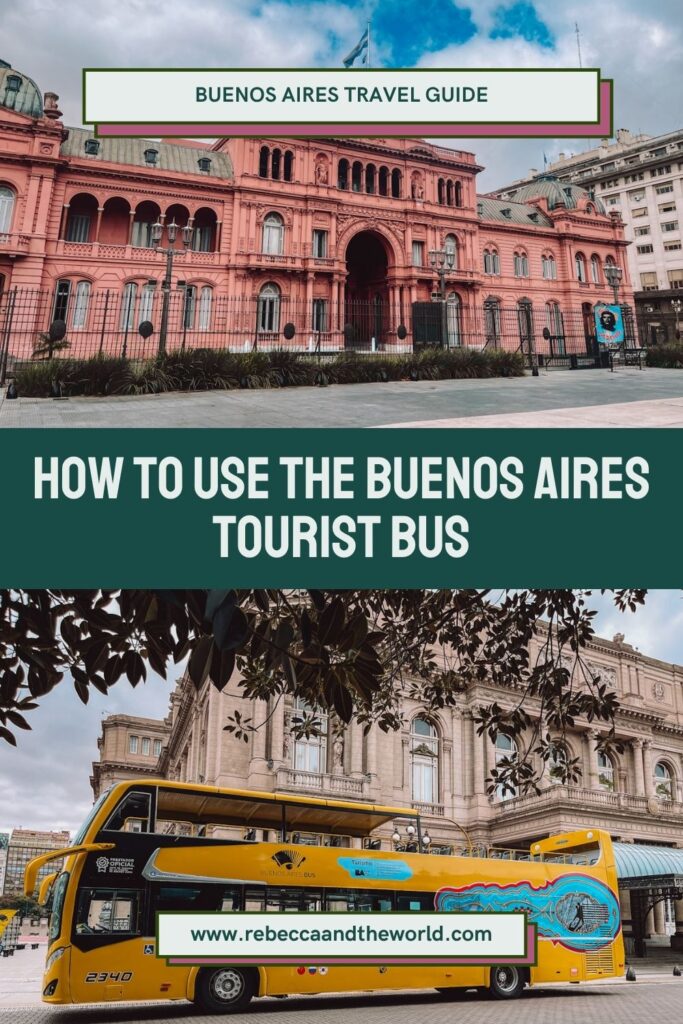

Planning to see the city via the Buenos Aires hop on hop off bus? Sure, it’s touristy – but it’s a convenient way to hit the highlights of this fantastic city!
The Casa Rosada. Colourful Caminito. Recoleta Cemetery. San Telmo’s historic market. La Bombonera. Palermo’s parks.
Buenos Aires has plenty of amazing sights and things to do.
But it’s also really big.
The distances between all these classic sights can be deceptively long, and if you’re short on time, travelling with kids, battling summer heat or simply want to get your bearings on day one of your trip, the hop-on hop-off bus can be genuinely handy.
Yes, it’s touristy. And no, it’s not the “most local” way to get around. But used strategically, the hop-on hop-off bus can be a simple and economical way to stitch together Buenos Aires’ key neighbourhoods without constantly navigating directions, transport cards or Uber wait times.
In this guide, I’ll walk you through exactly how the Buenos Aires hop-on hop-off bus works, the stops that are actually worth hopping off for and a few ready-to-steal itineraries so you can make the most of your ticket – whether you’ve got half a day or you’re spending a whole day exploring the city.
This blog post may contain affiliate links, meaning if you book or buy something through one of these links, I may earn a small commission (at no extra cost to you).
Need help planning your Argentina trip? 🇦🇷
Feeling overwhelmed about planning your trip to Argentina? I get it. And I can help! I offer one-to-one travel consultation calls to help you plan your trip to Argentina. In an hour, we can map out a realistic itinerary or work through your specific questions so you can book an incredible trip. Save hours of your time with my local knowledge and expertise.
How the hop-on hop-off bus works in Buenos Aires
If you’re considering the hop-on hop-off bus in Buenos Aires, the first thing to know is that there are actually two different services running similar loops. I’m calling them by their colours for ease:
They’re operated by different companies but both cover the city’s big-hitter neighbourhoods – Recoleta, Plaza de Mayo and the Centro Histórico, San Telmo, La Boca (Caminito) and Palermo. Both include an audio guide onboard in multiple languages.
Both are airconditioned inside and have open-air decks – but they do have an awning that they pull over if it rains.
Both buses have online tracking so you can see how far away they are. You can board the buses at any stop – no need to start at the beginning.
The difference comes down to ticket options, extra inclusions and a few route variations.
Note: If you stayed on for the full loop without hopping off, it would take roughly 3.5 hours – but the whole point is to use it as a tool to explore, not as a single long ride!
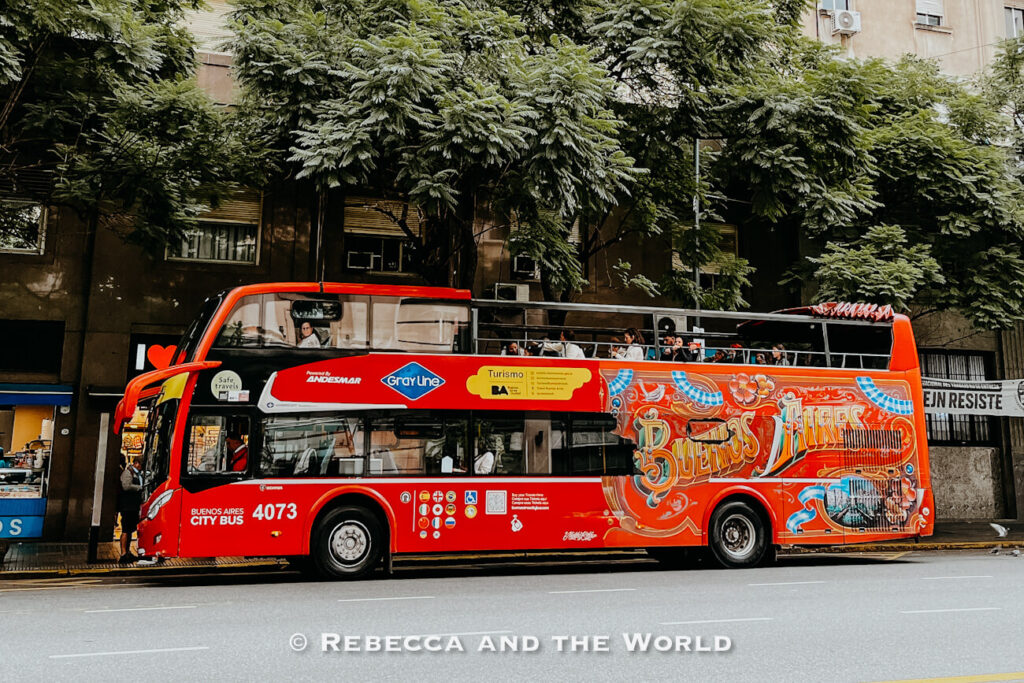
Hop on hop off Buenos Aires: The Red Bus
The Red Bus has ticketing options for 24, 48 or 72 hours, so you can decide how quickly you want to see the city. They also have tickets so you can combine the bus tour Buenos Aires with a boat tour along the Río de la Plata. Their route covers 26 stops.
The red hop on hop off Buenos Aires bus runs from 9.30am to 6pm, with buses every 25-30 minutes.
A big perk is the free walking tours included at four stops:
- San Telmo (10am, 3pm)
- Plaza de Mayo (11am, 1pm and 3pm)
- Recoleta (11am, 1pm and 3pm)
- La Boca and Caminito (11am, 1pm and 3pm)
Important! Confirm the times of the walking tours with the bus driver, because they can change. Tour guides do also expect a tip for the free service.
Route-wise, the Red Bus also reaches a couple of places the Yellow Bus does not. It goes further out to Barrio Chino and Parque de la Memoria, which can be harder to slot into a short Buenos Aires itinerary without planning a dedicated trip.
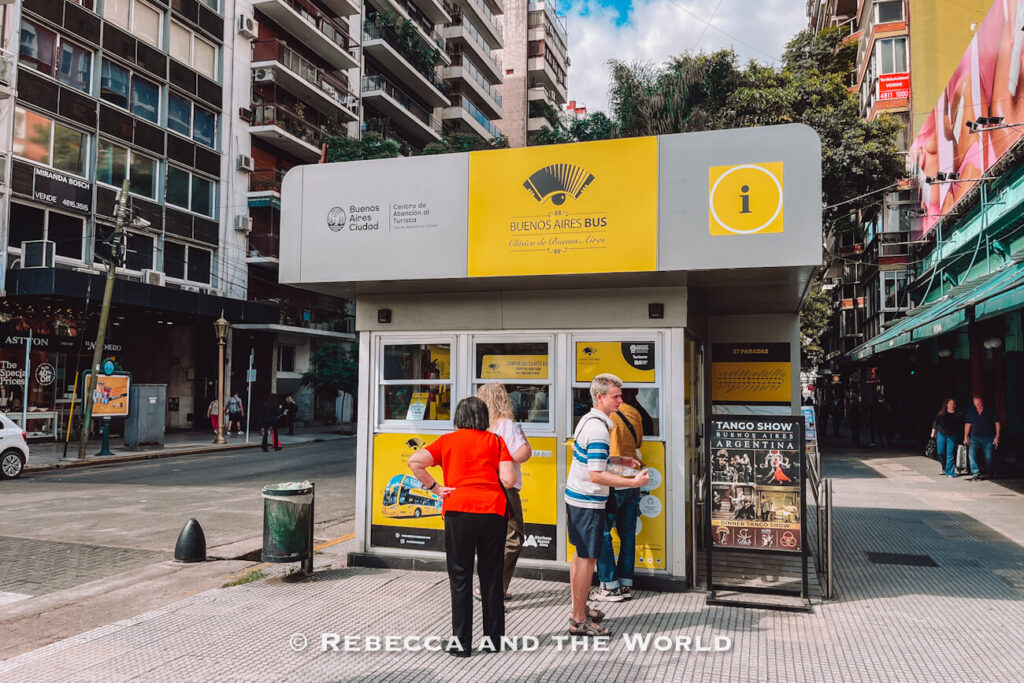
You can buy tickets online or at several (but not all bus stops).
Hop on hop off Buenos Aires: The Yellow Bus
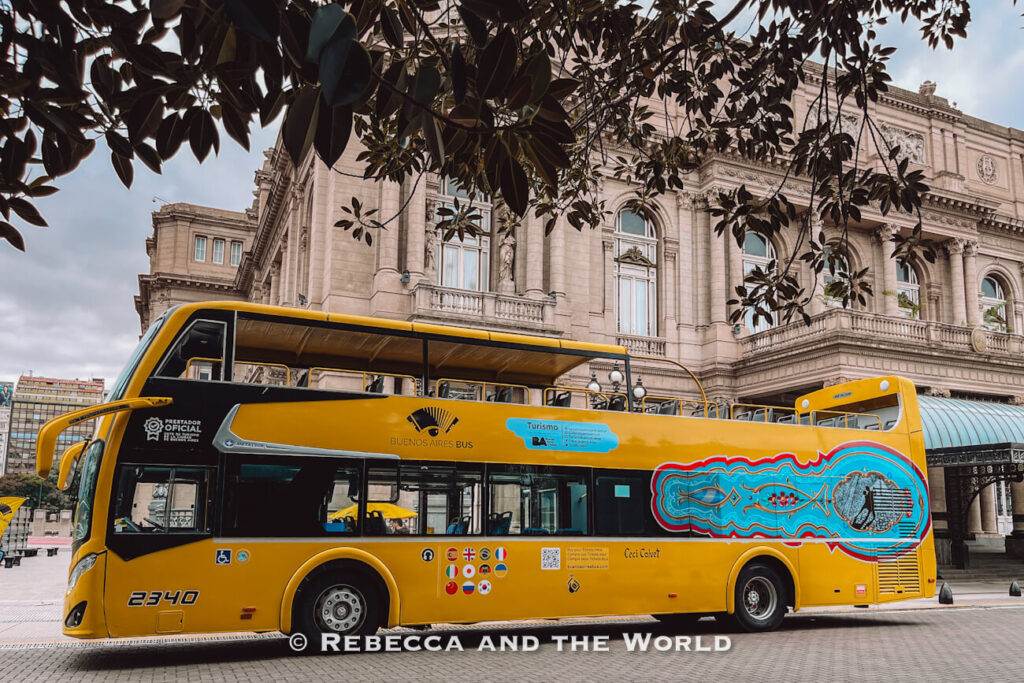
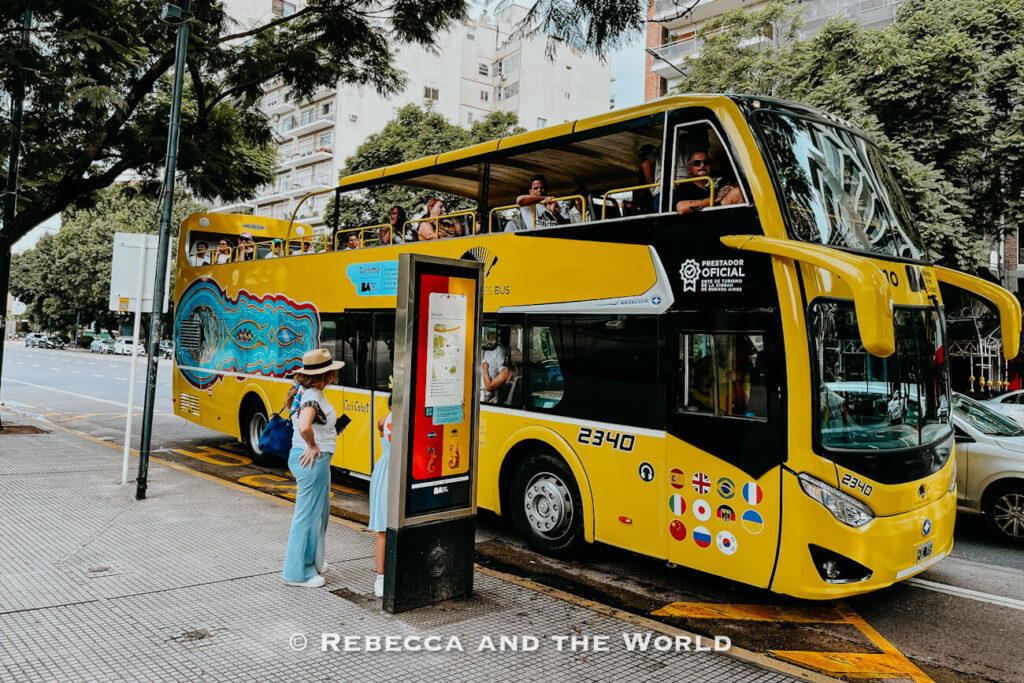
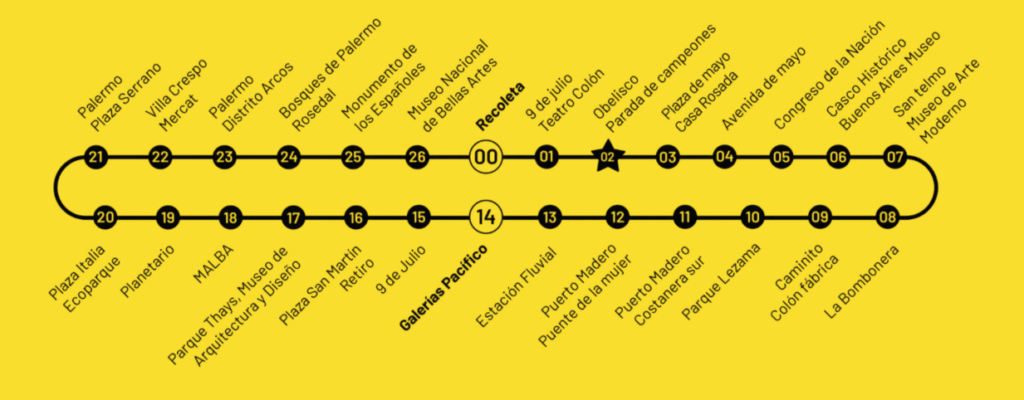
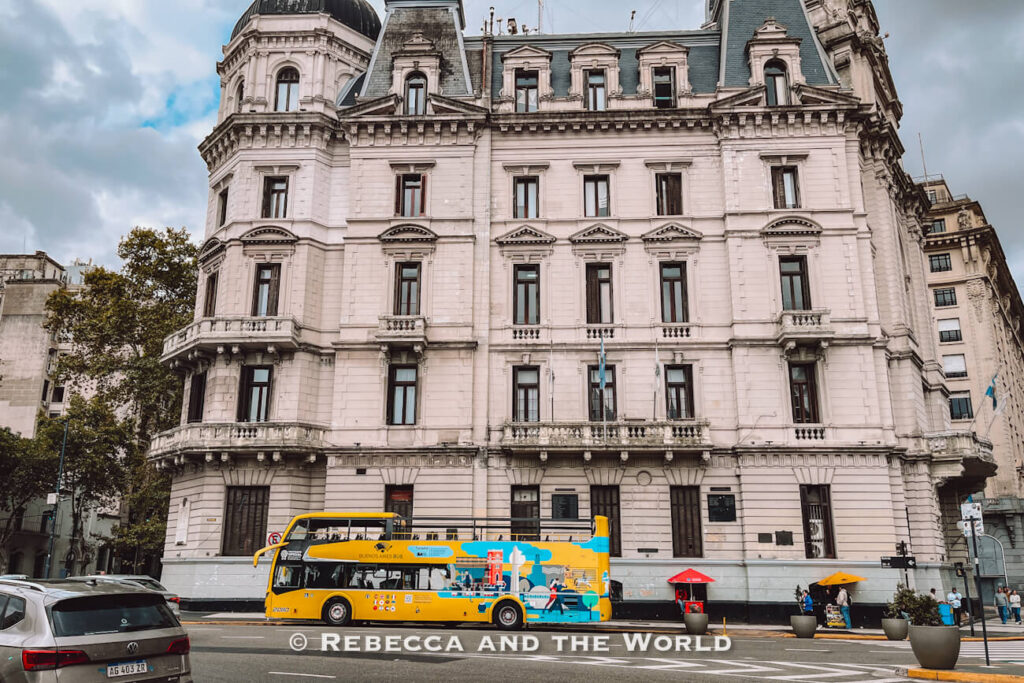
The Buenos Aires City Yellow Bus is the official city hop-on hop-off bus. It also offers flexibility, with 24-hour, 48-hour and 72-hour tickets. It has 27 stops.
The yellow hop on hop off Buenos Aires bus runs from 9am to 5pm, beginning at Stop 00, which is in Recoleta.
Two features make the Yellow Bus especially user friendly:
- Frequency: The Yellow Bus runs every 15 to 20 minutes, so it’s more frequent than the Red Bus.
- Discounts for cafés, restaurants, museums and shops near different stops, which can make the ticket feel better value if you actually use them
Which bus should you choose?
Here’s a simple way to decide which Buenos Aires tourist bus is for you:
- Pick the Red Bus if you’ll use the free walking tours, or you want to reach less touristed places like Barrio Chino and Parque de la Memoria
- Pick the Yellow Bus if you want more frequent services, or you’ll take advantage of the discount partners around the stops
I think the Yellow Bus has better stop locations that make it easier for you to walk from one part of the neighbourhood to the next bus stop (for the most part). But the Red Bus has a more interesting network that covers both the tourist sights and some more off-the-beaten-path locations.
Either way, both hop-on hop-off buses go to the city’s major sites and work well as an orientation tool – an easy way to get your bearings, see the city’s highlights and decide where you might want to come back to later to explore in more depth. They’re both similarly priced.
I’d recommend buying a ticket online in advance to avoid queuing or holding up the bus. You can’t buy tickets from every bus stop, so buying online is far more convenient.
Route overview – the best stops for each neighbourhood
Both hop-on hop-off Buenos Aires bus routes are designed to link the city’s best neighbourhoods. The below map shows each bus’s stops. If you read on, I have suggested itineraries for half-day and full-day exploring using the hop-on hop-off bus so you know what’s worth seeing.
Top stops if you’re short on time
If you’ve only got time to hop off three times from the Buenos Aires tourist bus, make them count with a mix of history and atmosphere:
1) Plaza de Mayo and the Centro Histórico
The best “first stop” for getting your bearings – grand buildings, iconic sights and an easy walk along Avenida de Mayo.
2) San Telmo
For cobblestone streets, antique stores and a neighbourhood that’s made for wandering. Build in time to stroll and stop for lunch.
3) La Boca and Caminito
One of the most distinctive and recognisable corners of Buenos Aires. Wander colourful Caminito and gaze up at the enormous La Bombonera stadium.
Three ready-to-steal hop-on hop-off Buenos Aires bus itineraries
If you can’t decide how to spend the day on the hop-on hop-off bus, here are three itineraries – a half day, full day and 48-hour route – to help you make the most of your time.
I’ve kept them flexible so they work whether you choose the Red Bus or the Yellow Bus.
Itinerary 1 – Half-day highlights loop
If you’ve only got a short amount of time, use this loop to get your bearings. You’ll see the big sights, hop off twice (maybe three times if you’re speedy) and finish in the early afternoon (if you start off early in the morning).
Obviously you’re not using the full value of your 24-hour ticket, but it’s still a great way to easily see the sights of the city.
Start in the Centro Histórico
- Yellow Bus: Start at Stop 01 – 9 de Julio/Teatro Colón or Stop 02 – Obelisco
- Red Bus: Start at Stop 25 – Teatro Colón or Stop 0 – Diagonal Norte
Spend some time wandering around Teatro Colón – take a tour if you can line up the tour times – and snap some photos at the famous Obelisco.
Plan your own adventure: Teatro Colón tours in English run at 10am, 11am, 12pm, 1pm, 1.30pm, 2pm, 3pm and 3.30pm, and the tour takes around 50 minutes.
Hop off for Plaza de Mayo and take a short walk
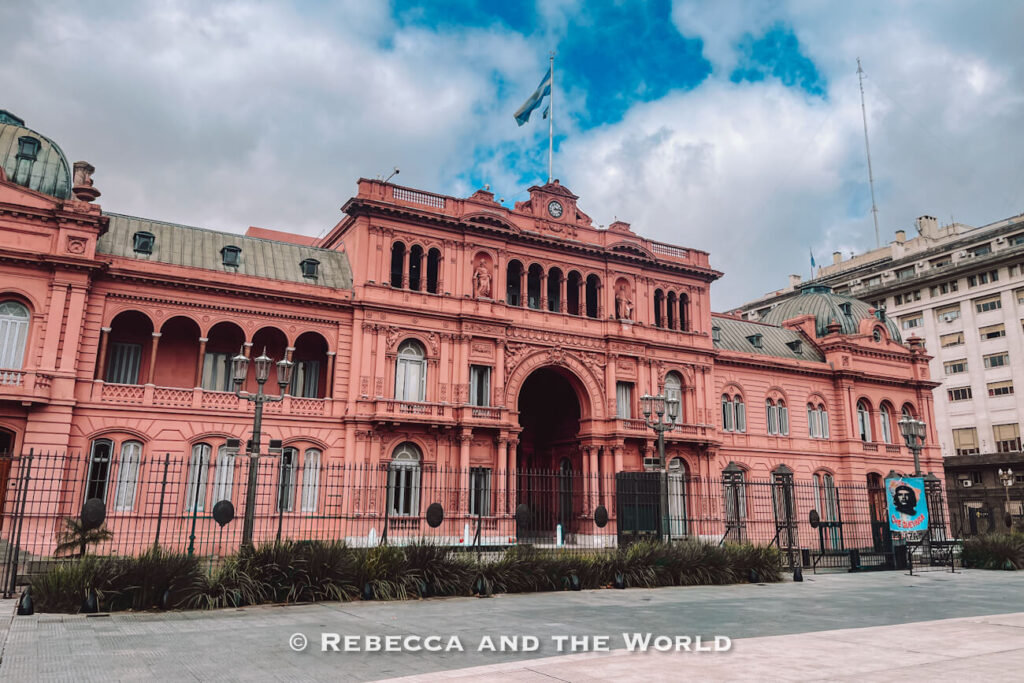
- Yellow Bus: Stop 03 – Plaza de Mayo / Casa Rosada then walk to Stop 04 – Avenida de Mayo to see this beautiful street
- Red Bus: The closest stop is Stop 0 – Diagonal Norte then walk down to Plaza de Mayo, or hop off at Stop 1 – Congreso and walk up Avenida de Mayo towards Plaza de Mayo (the second option is a really pretty walk)
Here, you’ll see the Plaza de Mayo (the oldest public square in Buenos Aires), the pink Casa Rosada (the president’s office), the grand Banco Nacional, the Metropolitan Cathedral (where Pope Francis worked before he became pope) and the Cabildo (the town hall).
Choose one neighbourhood stop – San Telmo or La Boca
Next, stop in one of Buenos Aires’ famous neighbourhoods: San Telmo or La Boca. San Telmo is famous for its cobblestoned streets and antique markets, while La Boca is known for colourful Caminito and La Bombonera stadium.
Option A: San Telmo
- Yellow: Stop 07 – San Telmo / Museo de Arte Moderno
- Red: Stop 3 – San Telmo / Plaza Dorrego
If you’re on the Red Bus, you can time this with the free walking tour from the San Telmo stop.
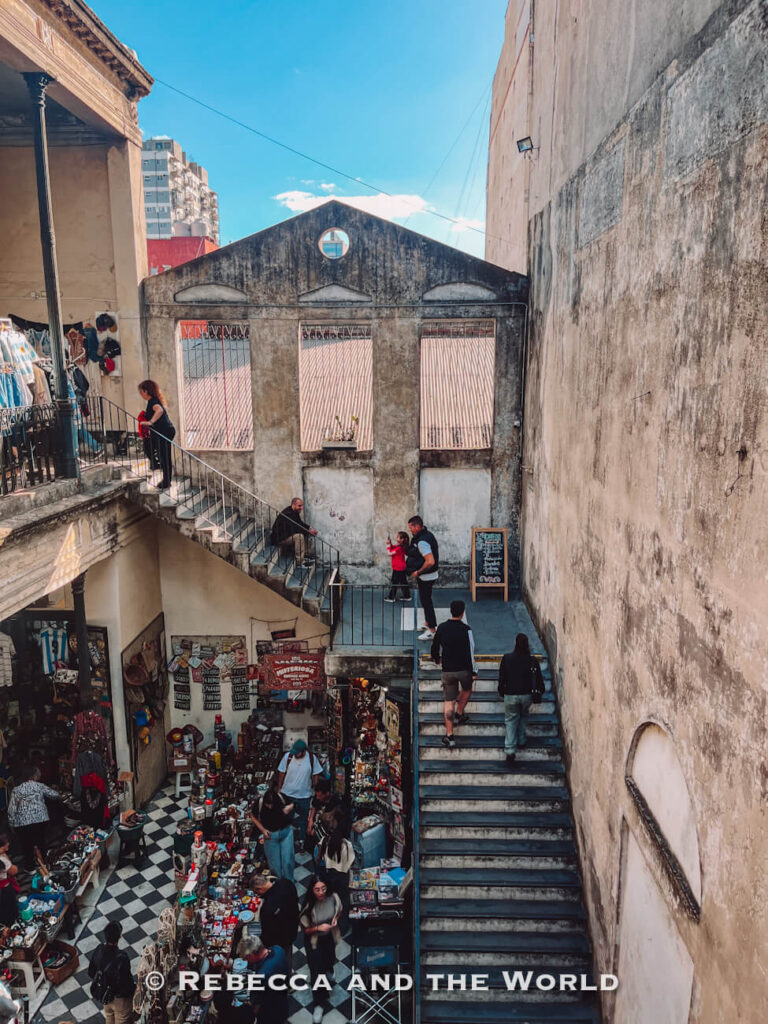
San Telmo is a great place to grab a bite to eat or simply wander the cobblestoned streets. There are antique markets, tango dancers in Plaza Dorrego and historic buildings like Pasaje de la Defensa.

Option B: La Boca
- Yellow: Stop 09 – Caminito / Colón Fábrica or Stop 08 – La Bombonera (you could get off at Stop 8 and then walk to Caminito)
- Red: Stop 6 – La Boca / Caminito or Stop 5 – Bombonera
Again, the Red Bus has a free walking tour option around La Boca and Caminito, so you can learn about the history of this port area that’s becoming gentrified.
Once here, take plenty of photos in colourful Caminito and grab a choripán or sit down for lunch. Soccer fans will be blown away by the enormous La Bombonera stadium.
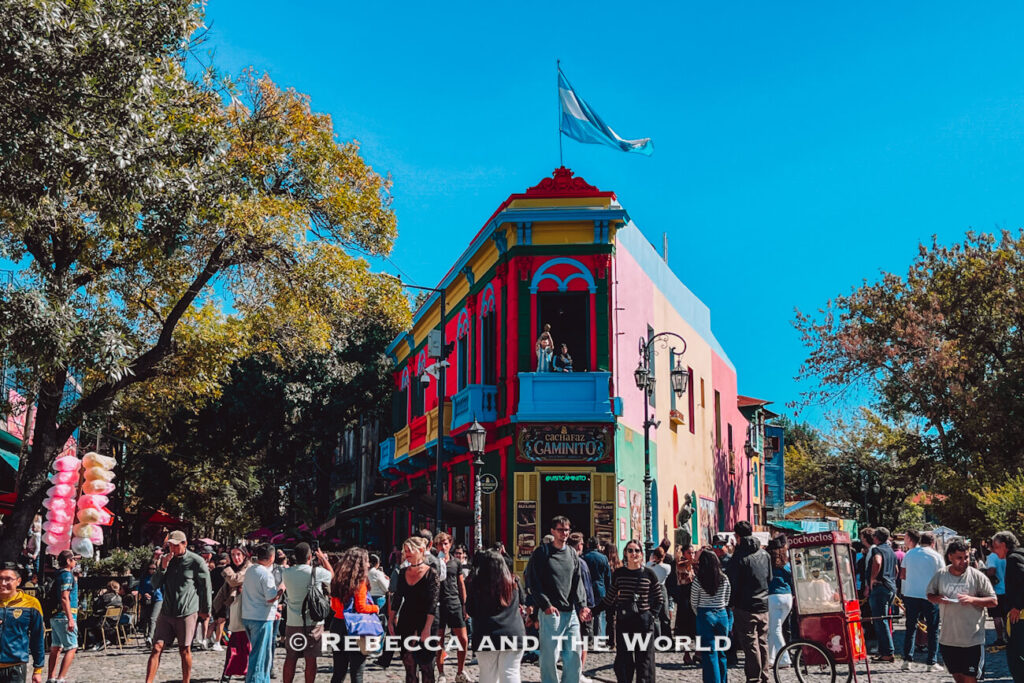
Finish in Recoleta
- Yellow: Stop 00 – Recoleta or Stop 26 – Museo Nacional de Bellas Artes
- Red: Stop 24 – Recoleta (plus nearby stops like Floralis Genérica and the museums)
Recoleta is one of Buenos Aires’ most beautiful neighbourhoods, filled with elegant buildings, tree-lined streets and expensive shops. Recoleta is a nice end point because you can visit the Recoleta Cemetery (one of the most interesting things to do in Buenos Aires) or take it easy and choose a café, museum or park to explore.
Itinerary 2 – Full day loop
This is my favourite way to use the hop-on hop-off Buenos Aires bus – you get a proper overview of the city and explore three neighbourhoods. This is a great way to see the city if you’re only here for a day or two.
This is a long day, though, so start early!
Morning – Centro Histórico
- Yellow: Stop 01 – 9 de Julio/Teatro Colón then Stop 02 – Obelisco then Stop 03 – Plaza de Mayo (you can walk between these three stops rather than waiting for the bus each time)
- Red: Stop 25 – Teatro Colón then Stop 0 – Diagonal Norte (you can walk between Teatro Colón and Plaza de Mayo rather than waiting for a bus; it will take 20-25 minutes)
Spend 30-45 minutes around Teatro Colón and the Obelisco. If you time it right, you could even go inside Teatro Colón for a guided tour.
Plan your own adventure: Teatro Colón tours in English run at 10am, 11am, 12pm, 1pm, 1.30pm, 2pm, 3pm and 3.30pm, and the tour takes around 50 minutes. Book tickets for Teatro Colón ahead of time, but factor in any potential bus delays so you arrive on time.
At the Obelisco, snap some photos of this enormous monument.

Then either get back on the bus or walk down to Plaza de Mayo – I’d recommend walking because this is a beautiful part of the city. There are incredible buildings to see, including the very unique Palacio Barolo, which was inspired by Dante’s Divine Comedy.
Here, you’ll see the Plaza de Mayo (the oldest public square in Buenos Aires), the pink Casa Rosada (the president’s office), the grand Banco Nacional, the Cathedral (where Pope Francis worked before he became pope) and the Cabildo (the town hall).
If you’re on the Red Bus, this is also a great time to join the Plaza de Mayo free walking tour to get some history about this important part of the city.
Late morning to early afternoon – San Telmo
- Yellow: Stop 07 – San Telmo / Museo de Arte Moderno
- Red: Stop 3 – San Telmo / Plaza Dorrego
Spend a couple of hours in San Telmo. It’s one of the best places in the city to just walk, browse and stop for a long lunch. Stop in at all of the antique stores, see tango dancers in Plaza Dorrego and have a coffee and browse the stores in pretty Pasaje de la Defensa.
If you’re visiting on a Sunday, factor in slower movement and bigger crowds – this is when the neighbourhood’s streets fill up with people for the weekly Feria de San Telmo.
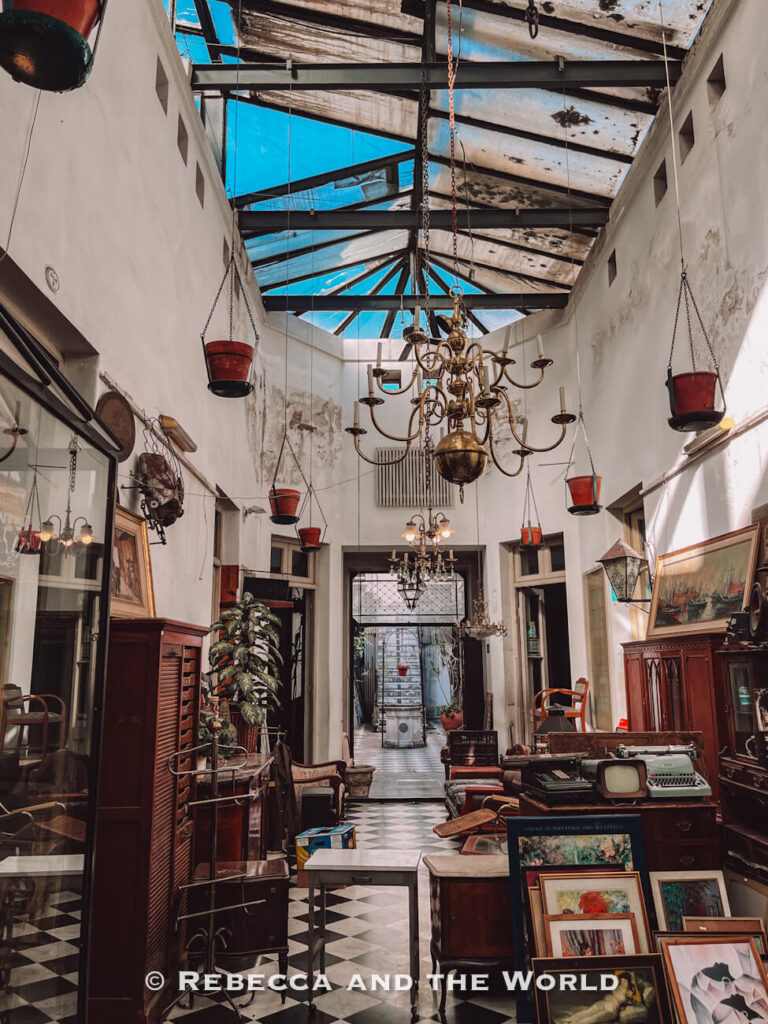

Mid afternoon – La Boca and Caminito
- Yellow: Stop 08 – La Bombonera then walk to Caminito to Stop 09 – Caminito / Colón Fábrica to continue on later
- Red: Stop 5 – Bombonera then walk to Caminito to Stop 6 – La Boca / Caminito to continue on later
This is the most “touristy” section and the crowds can be overwhelming, especially on the weekend. Once here, wander Caminito, walk around the enormous La Bombonera stadium, grab a choripán for a quick snack and take lots of photos!
If you’re on the Red Bus, the La Boca/Caminito walking tour is a great way to get some cultural context to this port area that’s becoming gentrified.
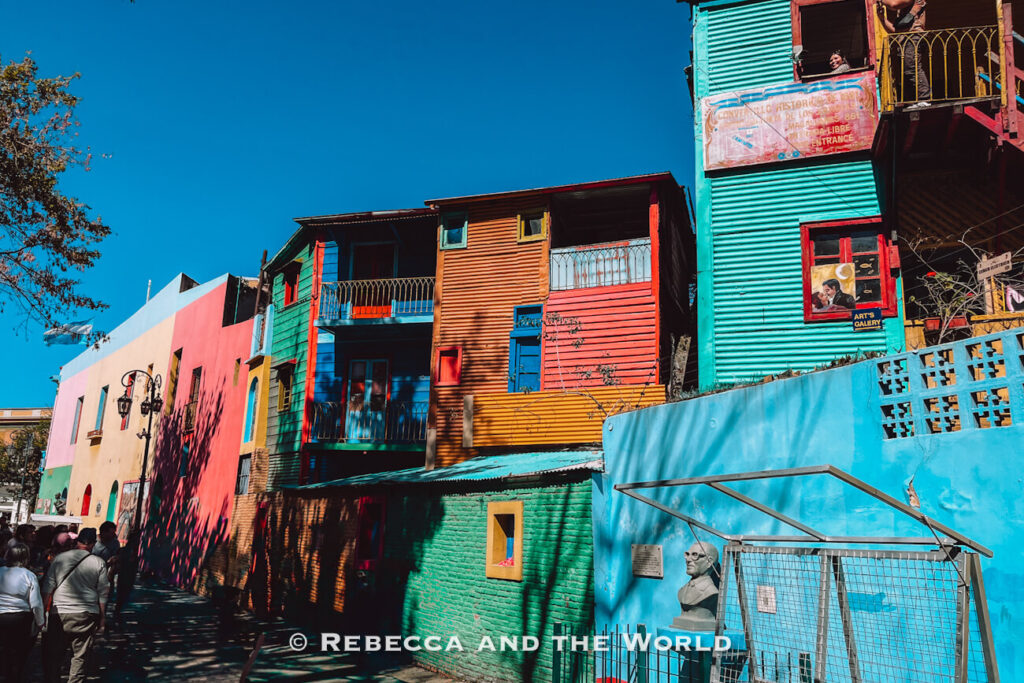
Late afternoon – Recoleta or Palermo
Head to elegant Recoleta or trendy Palermo for the rest of the afternoon.
Option A: Recoleta
- Yellow: Stop 26 – Museo Nacional de Bellas Artes then walk through Recoleta to Stop 00 – Recoleta
- Red: Stop 24 – Recoleta
Recoleta is fabulous to wander around – see the nearby parks or elegant buildings, or stroll through the Recoleta Cemetery to be amazed by the huge monuments and tombstones.
The Museo Nacional de Bellas Artes (the Fine Arts Museum) is free to wander, and it’s surrounded by lovely parks filled with enormous statues and monuments.
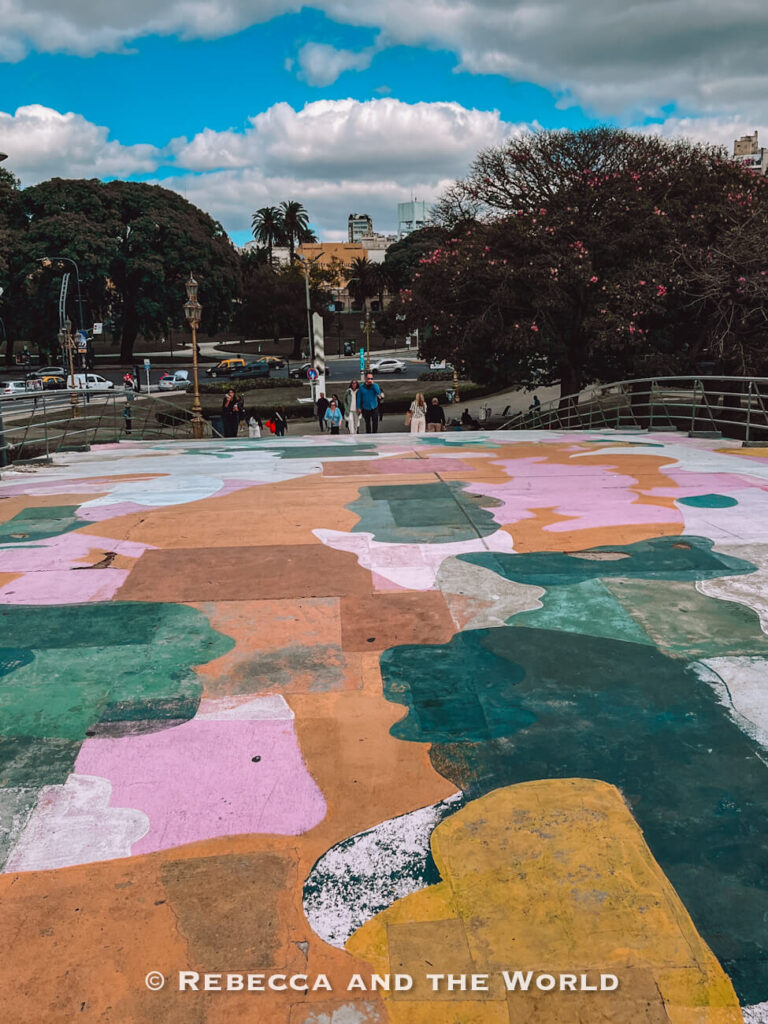
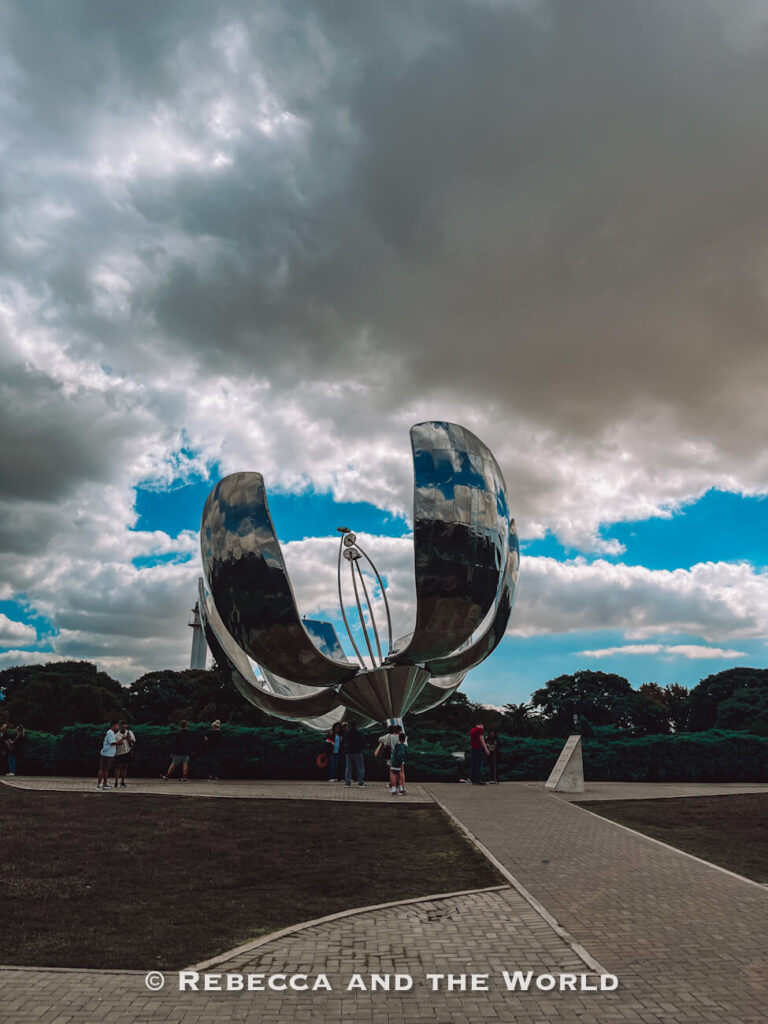
Option B: Palermo
- Yellow: Stop 24 – Bosques de Palermo (Rosedal) for parks or Stop 21 – Palermo / Plaza Serrano for cafés and browsing
- Red: Stop 15 – Planetario or Stop 22 – Monumento a los Españoles for a parks afternoon
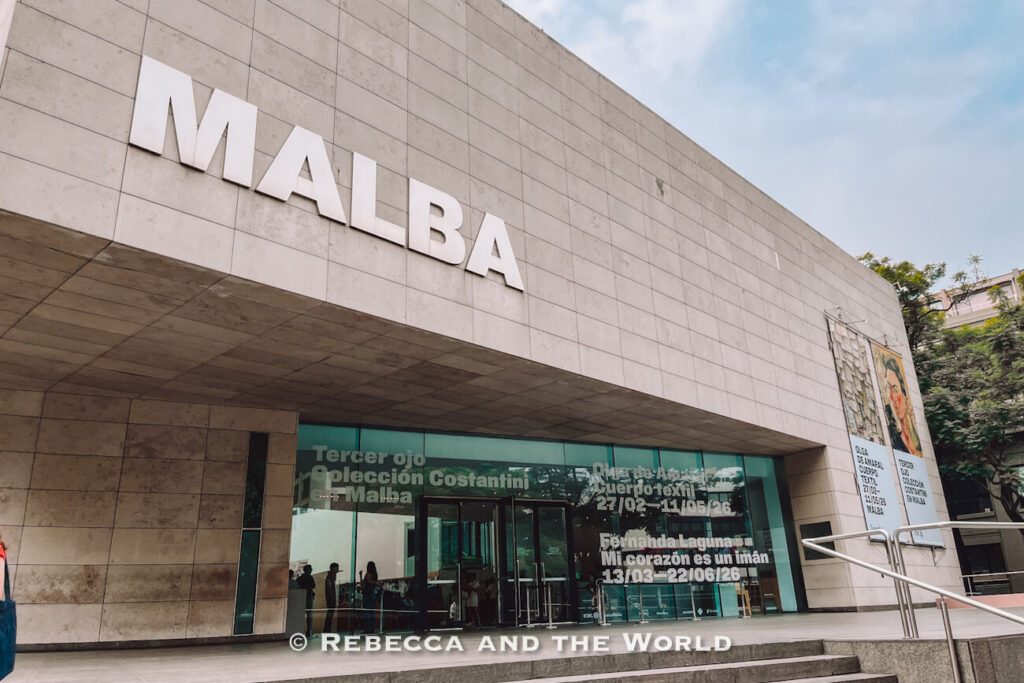
The Yellow Bus has the best connections within Palermo, with stops at MALBA (one of the best art galleries in Buenos Aires), Palermo’s parks and locations right in the heart of Palermo.
If you’re staying in Palermo, it’s easy to be dropped off here. Spend some time in Palermo’s beautiful parks, grab a late afternoon drink and snack (it’s called merienda in Argentina) or wander the streets and do some shopping.
Evening
The buses stop running quite early in the evening (around 5.30pm/6pm) so you’ll need to either stay in Palermo or Recoleta for dinner or get on the bus so you can make it back to a neighbourhood closer to where you’re staying. (Here’s my guide to where to stay in Buenos Aires if you haven’t yet made up your mind.)
What’s for dinner? Check out my guide to where to eat in Buenos Aires (which has more than 35 of my favourite restaurants across the city) or my favourite steakhouses in Buenos Aires.
Itinerary 3 – Two days on the hop-on hop-off bus
You can purchase a 48-hour ticket and really take it slow exploring the city. Here’s an idea for spreading your bus stops over two days.
Day 1 – Centro Histórico, San Telmo and La Boca
This day gives you the “Buenos Aires greatest hits” mix – grand landmarks, a neighbourhood wander and the most iconic splash of colour.
Morning – Centro Histórico
- Yellow bus: start at 01 – 9 de Julio / Teatro Colón or 02 – Obelisco then hop off at 03 – Plaza de Mayo / Casa Rosada
- Red bus: start at Stop 25 – Teatro Colón or Stop 0 – Diagonal Norte
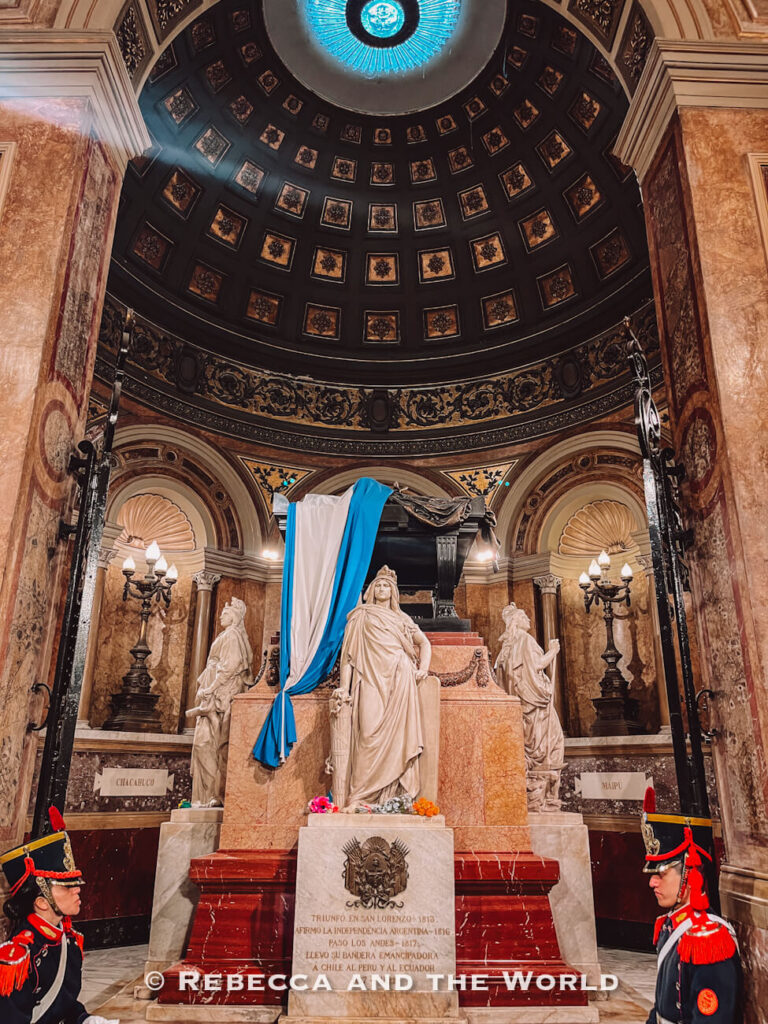
What to do: check out the stunning architecture of Teatro Colón, walk along Avenida de Mayo and then wander the historical landmarks at Plaza de Mayo.

Late morning to early afternoon – San Telmo
- Yellow: 07 – San Telmo / Museo de Arte Moderno
- Red: Stop 3 – San Telmo / Plaza Dorrego
Spend a couple of hours wandering, browsing and lunching.
Mid afternoon – La Boca and Caminito
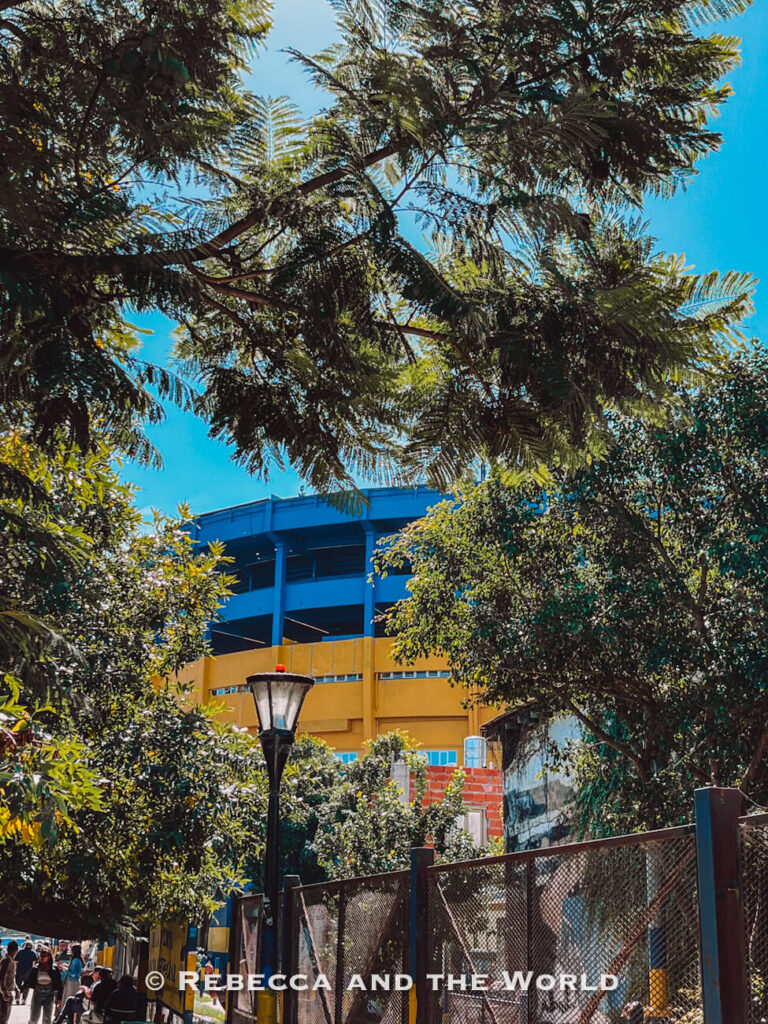
- Yellow: Stop 08 – La Bombonera then walk over to colourful Caminito where you can then jump back on the bus at Stop 09 – Caminito / Colón Fábrica to continue on
- Red: Get off at Stop 5 – Bombonera and walk to Caminito to Stop 6 – La Boca / Caminito where you can continue back on the bus

Late afternoon – Puerto Madero
- Yellow: 12 – Puerto Madero / Puente de la Mujer
- Red: Stop 8 – Puerto Madero
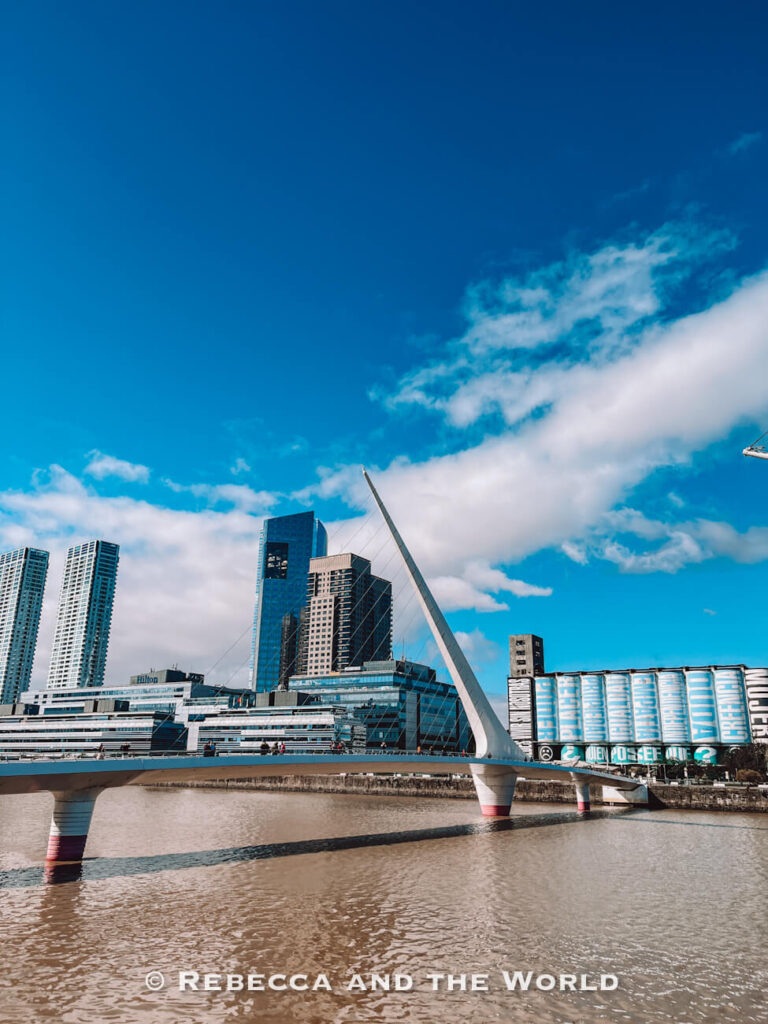
This is optional, but it’s a nice short stroll to wind down before heading to your dinner neighbourhood. Take some snaps along the Puente de la Mujer and wander along the river. One very cool thing to know is that all the streets in Puerto Madero are named after Argentine women!

Day 2 – Recoleta and Palermo
This day is more relaxed and flexible – museums and architecture, then parks and cafés.
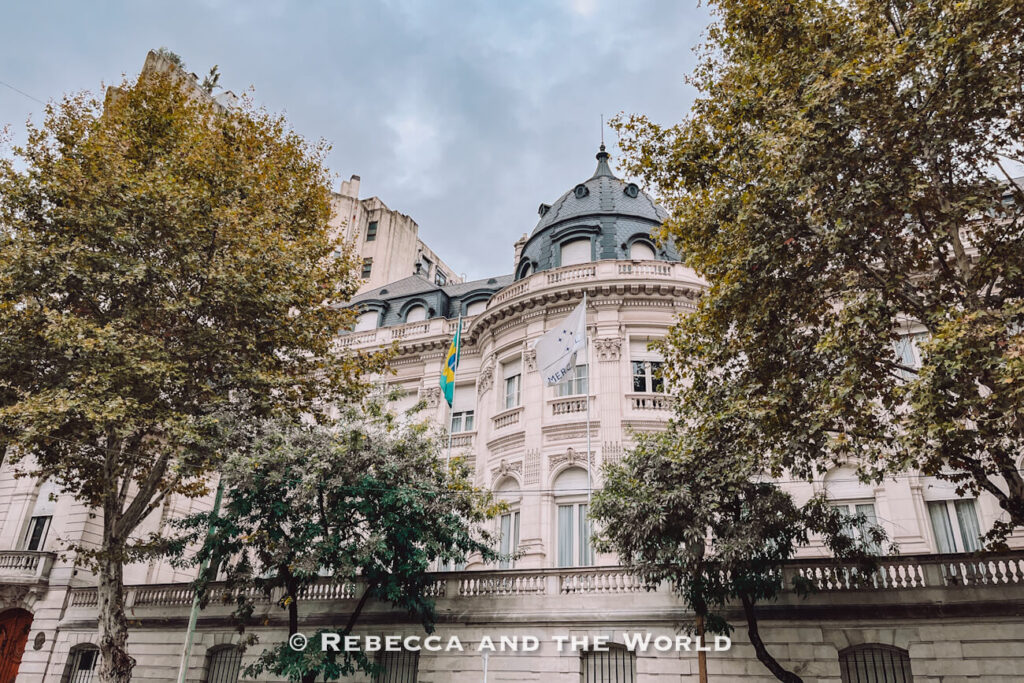
Morning – Recoleta
- Yellow: 00 – Recoleta and or 26 – Museo Nacional de Bellas Artes
- Red: Stop 24 – Recoleta plus nearby stops like Stop 23 – Museo Nacional de Arte Decorativo, Stop 13 – Floralis Genérica and Stop 11 – El Ateneo
Recoleta is easy to explore on foot once you hop off. If you’re on the red bus, it’s also a great place to use the free Recoleta walking tour.
Lunch
Stay in Recoleta or head towards Palermo depending on what you want next – leisurely café, museum café or something trendier in Palermo. (Check out my guide to where to eat in Buenos Aires for ideas.)
Afternoon – Palermo
Pick your version of Palermo based on what you’re up for:
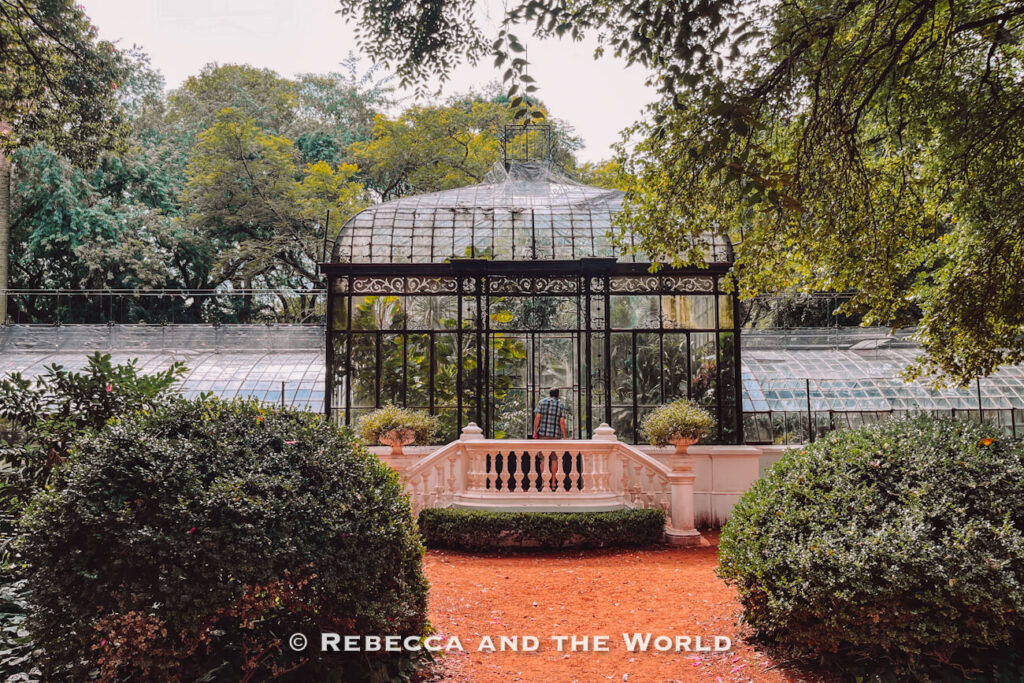
Palermo parks and lakes
- Yellow: 24 – Bosques de Palermo (Rosedal), 19 – Planetario, 20 – Ecoparque / Plaza Italia
- Red: Stop 15 – Planetario, Stop 22 – Monumento a los Españoles
Palermo cafés and browsing
- Yellow: 21 – Palermo / Plaza Serrano and or 23 – Palermo / Distrito Arcos
- Red: You can use the Palermo stops above and then explore on foot
If you’re on the yellow bus and want something a bit different
- Add 22 – Villa Crespo Mercat for a food hall stop between Palermo areas.
Red bus bonus options (if you want to go beyond the usual tourist loop)
If you’re riding the red bus and you’ve already covered the core neighbourhoods, these two stops are a great way to add something different to your day.
- Stop 18 – Parque de la Memoria: A powerful riverside memorial and park dedicated to the victims of Argentina’s last military dictatorship – a meaningful visit if you’re interested in recent history and human rights.
- Stop 20 – Barrio Chino: Buenos Aires’ Chinatown – a fun detour for Asian groceries and snacks, and casual eateries.
Is it actually economical?
The hop-on hop-off bus in Buenos Aires can be great value – it depends entirely on how you use it.
If you treat it like a one-way ride to one neighbourhood, it’s rarely worth it. If you want to get from Palermo to La Boca only, for example, it’s far cheaper to take an Uber or Cabify (see my Buenos Aires travel budget for what it costs to visit). If you’ve got a big group, it might also be easier and more cost effective to navigate different areas via rideshare rather than paying for four or five individual bus tickets. The public transport system is also easy to use (read my guide to Getting around Buenos Aires).
But if you use the bus as a way to get around multiple neighbourhoods in a day (or two or three, depending on your ticket choice) it’s an economical way to cover a lot of ground while also getting your sightseeing done. You really do need to hop off multiple times to make the ticket worth it.
My honest take
If you’re only visiting for a short amount of time, want an overview of the city and you plan to hop between several of Buenos Aires’ key areas in a day, the hop-on hop-off bus can be a very economical choice. It’s super convenient because you can follow the route and get off and on where you please. You don’t have to think about how to get somewhere or what to see and do – just follow the bus map.
If you’re travelling slowly, sticking to a couple of neighbourhoods and you’re happy using the Subte or short rideshares, you’ll probably get better value skipping the Buenos Aires hop on hop off bus.
Final wrap up: Should you do the hop-on hop-off bus in Buenos Aires?
The hop-on hop-off bus in Buenos Aires is never going to be the most “local” way to explore the city, but it is super convenient if you use it the right way. It helps you cover big distances, connect neighbourhoods without effort and get a quick feel for how the city fits together.
If you have one day (or even half a day) and you want an easy way to see the key sights across several neighbourhoods, do it. Use the bus to link the Centro Histórico, San Telmo, La Boca, Recoleta and Palermo, hop off a few times, then decide where you want to come back and spend more time. With two days, you can take it a bit slower and spend more time at the sites that interest you most.
If you’re travelling slowly and you love neighbourhood wandering, it might be better to skip it and build your days around walking plus the Subte or short rideshares instead.
Either way, the Buenos Aires hop-on hop-off buses are very convenient to help you hit the highlights of this amazing city.
Buenos Aires hop-on hop-off bus: FAQs
Is the hop-on hop-off bus in Buenos Aires worth it?
It can be – if you use it strategically. It’s best value when you’re using it to link several neighbourhoods in one day (Centro Histórico, San Telmo, La Boca, Recoleta, Palermo) and hopping off multiple times. If you’re sticking to one or two areas and you’re happy using the Subte or short rideshares, you may find it’s not necessary.
Which is better – the Red Bus or the Yellow Bus?
Both buses cover similar areas, have similar ticket options, have audioguides and have online tracking. There’s not a huge amount of difference except:
- The Red Bus includes free walking tours at San Telmo, Plaza de Mayo, Recoleta and La Boca/Caminito. It also goes further out to Barrio Chino and Parque de la Memoria.
- The Yellow Bus has a range of discounts for cafés, restaurants, museums and shops near stops. It also has a more frequent service.
Can you do the full route without hopping off?
Yes, but I wouldn’t recommend it unless you’re using it as a quick orientation lap. Not a great use of your money! It would take roughly 3.5 hours to do the whole loop on both the Red Bus and Yellow Bus. You’ll get far more out of your ticket by planning a few targeted hop-offs rather than staying onboard the whole time.
Is it safe to use the hop-on hop-off bus?
Yes – it’s a very common tourist activity. As always in big cities, keep an eye on your belongings, don’t leave phones or bags hanging open and be mindful at busy stops. Overall, Buenos Aires is a safe city to visit.
What’s the best time of day to start?
Earlier is usually better. Starting in the morning gives you more flexibility, less pressure and more time to hop off without watching the clock. It also means you’re less likely to get caught trying to squeeze too much into the late afternoon before the buses stop operating.
How often do the buses come?
The Red Bus comes every 30 minutes, while the Yellow Bus arrives every 10 to 20 minutes. You should expect some waiting at stops – this is normal with hop-on hop-off services that have to deal with regular traffic. Both buses have online tracking.
Do you need to book in advance?
I recommend buying your tickets online if you want to get started quickly and avoid queues. But you can also buy tickets at key stops on both routes.
Is it still worth doing if it’s hot or raining?
Hot days are when the bus is best – it’s an easy way to cover long distances with air conditioned breaks between walking. On rainy days, it depends. If you’re mostly planning to stay on board and do a quick loop, it can still work. If your plan relies on hopping off for neighbourhood wandering (San Telmo, Recoleta, Palermo), you’ll get less out of it. Both buses have air conditioning and covered roofs.
Is the hop-on hop-off bus good for kids?
Yes. It’s an easy way to get around and cover long distances between neighbourhoods. The top deck is also a novelty factor for many kids.
Is it accessible for prams or wheelchairs?
Accessibility can vary by operator and vehicle. If accessibility is important for your trip, it’s best to check the current policy directly with the operator you plan to use before you buy tickets.
What should you bring?
Nothing special – just what you’d normally bring on a day out exploring a new city: water, sunscreen and a hat in summer, a light layer for wind on the top deck and a phone charger or power bank if you’re using maps, audio guides and tracking. Make sure you have an e-sim so you can track the trip (I use Airalo e-sims whenever I travel).
Did you find this article helpful? Consider buying me a coffee as a way to say thanks!
Will you use the Buenos Aires hop on hop off bus when you visit? Let me know if you have any questions via the comments below!
Need help planning your Argentina trip? 🇦🇷
Feeling overwhelmed about planning your trip to Argentina? I get it. And I can help! I offer one-to-one travel consultation calls to help you plan your trip to Argentina. In an hour, we can map out a realistic itinerary or work through your specific questions so you can book an incredible trip. Save hours of your time with my local knowledge and expertise.
Read next
Before you go… you might also like these Buenos Aires articles:
- 3 Days in Buenos Aires: What to See, Do and Eat
- What to Do in Buenos Aires: Top 25 Ideas for Your Itinerary
- How to Get Around Buenos Aires: Everything You Need to Know About Transport
- Where to Stay in Buenos Aires, Argentina: A (Former) Local’s Guide
- Where to Eat in Buenos Aires: 35+ Best Restaurants to Try
- Navigating Money in Argentina: A Traveller’s Guide to Money Matters
ARGENTINA TRIP ESSENTIALS
- Book your flight to Argentina online with Skyscanner. I like how this site allows you to find the cheapest days.
- One thing I always purchase is travel insurance! Travel Insurance Master allows you to compare across multiple policy providers, while SafetyWing is great for long-term travellers and digital nomads.
- Wise is my choice for sending and receiving money and spending money overseas (you can get a digital and physical card).
- Find a great hotel in Argentina. Check prices on Booking.com and Expedia online.
- Check out the huge range of day tours throughout Argentina on GetYourGuide or Viator. I love a good food tour in particular!
- Saving money? Check out the range of free walking tours across Argentina with GuruWalk (don’t forget to tip!).
- How to get around? I use DiscoverCars for car hire, or Motorhome Republic and Jucy for campervan/RV rental. For buses, trains and ferries, I use 12GO, Busbud and Omio.
- Grab an e-sim to stay connected while on the road.
- A copy of the Lonely Planet guide to Argentina will be handy. Also pick up a Spanish language phrasebook to help you navigate your visit.
- Keep those bottles of wine you’ll be buying safe in these wine bags.
- Check out my Amazon shop for my fave travel items – everything from backpacks and suitcases to travel adapters and beauty products.
PIN IT FOR LATER: BUENOS AIRES TOURIST BUS
Save this guide to using the Buenos Aires hop on hop off bus to Pinterest so you can do your trip planning later.