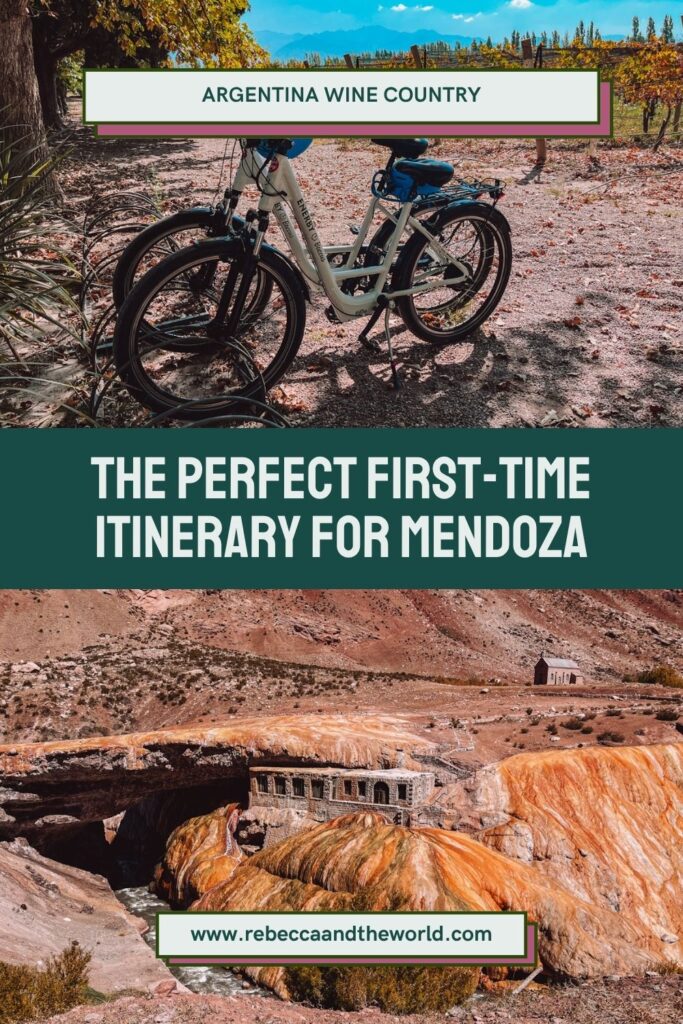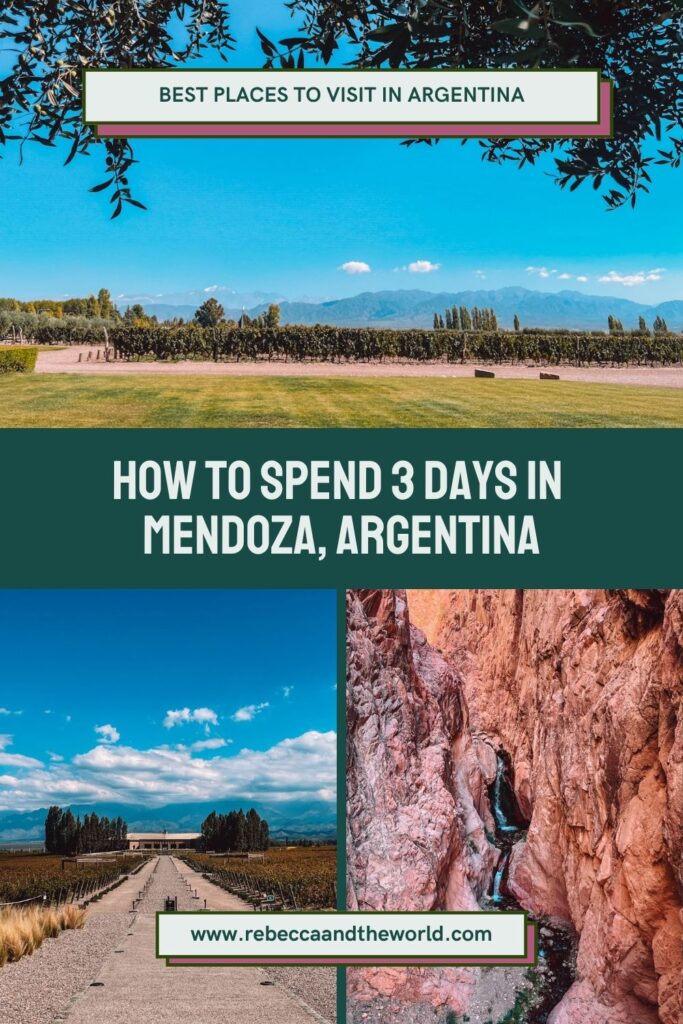

Planning 3 days in Mendoza, Argentina’s beautiful wine region? Here’s the perfect itinerary for a first-time visitor, covering wineries, scenery and the outdoors.
Mendoza is one of those places that makes you fall hard for Argentina. Yes, it’s wine country – but it’s also big skies, dusty roads edged with vines and the ever-present Andes sitting dramatically on the horizon. I love this region for both the Malbec and the landscapes, and even after two visits here, I know I’ve barely scratched the surface.
It’s a huge region with a lot of different ways to experience it, which can make planning a trip to Mendoza feel a little overwhelming – especially if you want to balance winery visits with the best of Mendoza beyond the vines.
If you’re weighing up how to spend your limited time, this 3-day itinerary will help you pull it all together without overthinking it.
This Mendoza itinerary is ideal for first-time visitors who want a balanced mix of wine, food and scenery – with options for outdoorsy travellers who’d happily trade a day of wine tasting for a day in the mountains.
This blog post may contain affiliate links, meaning if you book or buy something through one of these links, I may earn a small commission (at no extra cost to you).
Mendoza itinerary at a glance
Day 0 – Arrive in Mendoza: I’m being sneaky here! But try to arrive the day before your first proper day of exploring – you’ll want three full days to do Mendoza justice.
Day 1 – Winery day in Luján de Cuyo or Maipú: Start the Mendoza 3-day itinerary with a day of wine tasting in one of the wine regions closest to the city. Enjoy the cellar doors, have a long lunch and be wowed by your first views of the Andes.
Day 2 – Winery day in the Uco Valley: Head further out for big scenery and some of Mendoza’s most lavish wineries. This is the day for dramatic mountain backdrops, top-notch tastings and a fancy winery lunch.
Day 3 – Andes day trip: Swap vineyards for mountains. Take a drive out into the Andes for huge landscapes, fresh air, historic sights and views of Aconcagua, the tallest mountain in the Americas.
Before you go: Mendoza travel tips
How many days in Mendoza?
If you can, give Mendoza at least 3 full days – it’s one of the best places to visit in Argentina. That’s the sweet spot for two days of wine tasting (in different regions) plus a day in the Andes. On our last visit we spent 5 days in Mendoza and honestly could have kept going. Mendoza is one of the places I recommend visiting if you have two weeks in Argentina.
Best time to visit Mendoza
You can visit Mendoza year-round, but the experience changes a lot by season. We’ve visited in both July (winter) and March (autumn), and had completely different experiences (spoiler: both trips were incredible).
- Summer (Dec-Feb): Days can be very hot (sometimes hitting 40 degrees Celcius). Book a hotel with a pool!
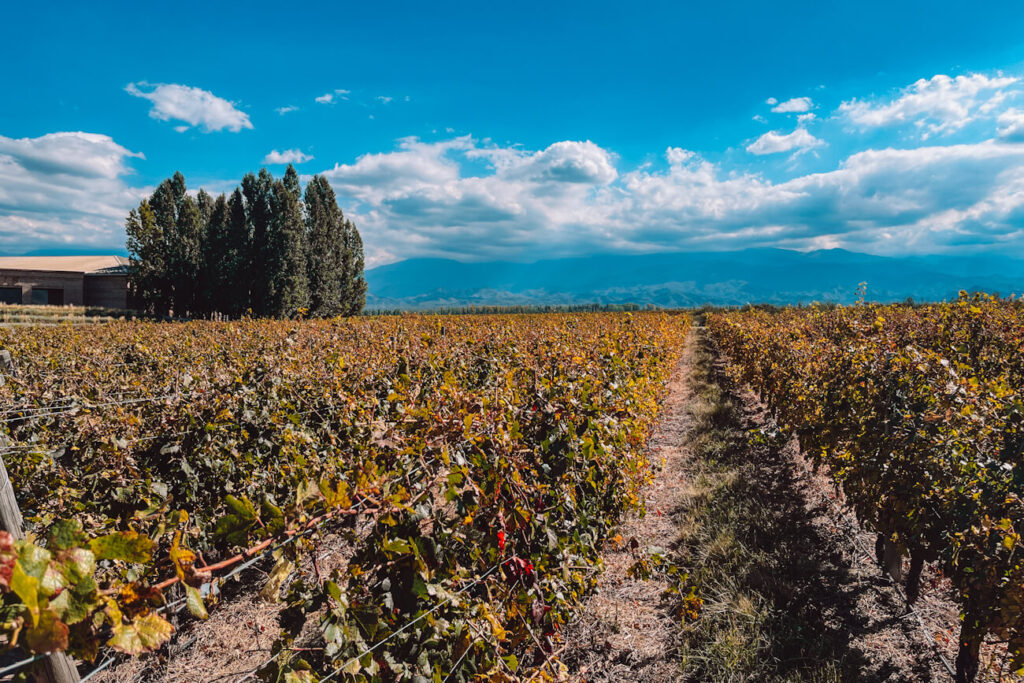
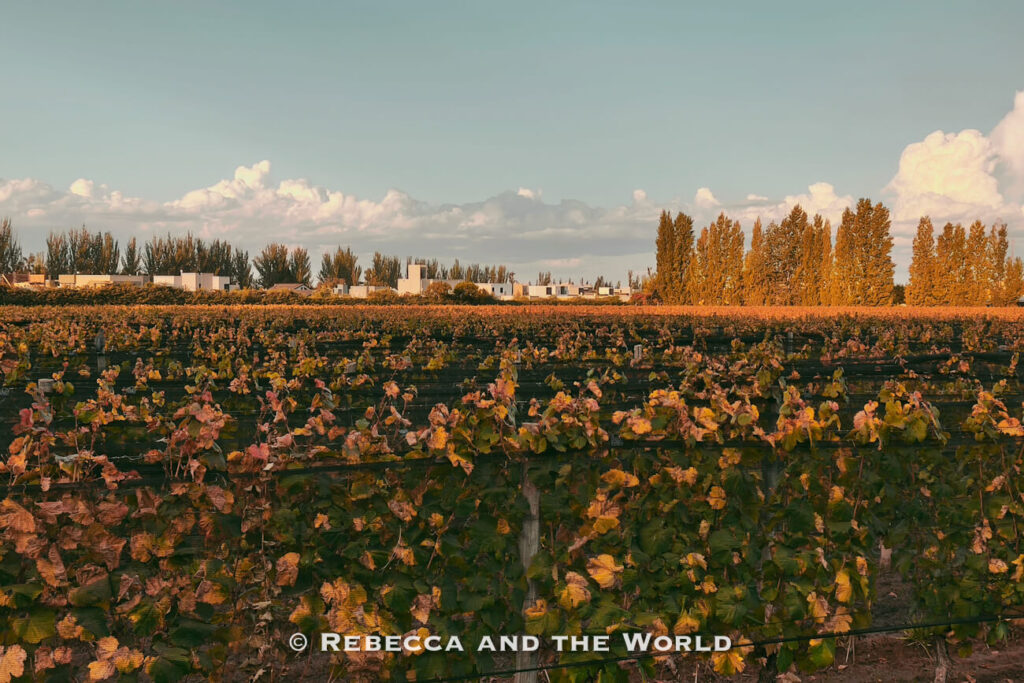
- Autumn (Mar-May): A favourite for many travellers. Harvest season usually falls around late summer into early autumn, and you’ll often get warm days, cooler nights and beautiful colours in the vines. There are harvest festivals in March that are worth planning a visit around.
- Winter (Jun-Aug): Cooler, quieter and often crisp and sunny. The big bonus is the snowy Andes backdrop, but the vines have lost their leaves.
- Spring (Sep-Nov): Fresh, green vineyards and comfortable temperatures. This is a great shoulder season if you want fewer crowds.
How to get to Mendoza
Most travellers arrive from Buenos Aires in one of two ways:
- Fly: Aerolineas Argentinas has multiple flights a day from Buenos Aires. There are also seasonal connections to Salta and Bariloche. Check Skyscanner for flight options.
- Bus: Cheaper, but it’s a long journey. Good option if you’re travelling slowly or on a budget. Check bus timetables and pricing here.
Mendoza’s airport is also connected to international destinations in Latin America, including Santiago, Rio de Janeiro, São Paulo, Lima and Panama City. Depending on your wider South America itinerary you may be able to fly into Mendoza without returning to Buenos Aires.
How to get around Mendoza
Wine obviously doesn’t mix well with driving, so what’s the best way to explore Mendoza in 3 days? Here are a few options (and I’ll suggest more specific options later for each day of the itinerary):
- Guided tours or a private driver: The lowest-stress option for visiting wineries, especially if you want to visit a few places and have a long lunch. You don’t have to think about logistics as in most cases the wineries will be pre-booked for you.
- DIY (car, taxis/remis, pre-booked transfers): Totally doable, but requires more organisation to decide on and book wineries. If you’re self-driving, plan tastings sensibly and prioritise one or two wineries you really care about rather than trying to cram in too much.
- Bus Vitivinícola: A hop-on/hop-off style wine bus that runs set routes through Mendoza’s wine regions, with fixed stops and schedules.
- Wine Pass: A build-your-own winery day option where you can choose from participating wineries and experiences (tastings, tours, lunches) and create your own itinerary.
- Biking: Fun option in Maipú and Luján de Cuyo, where the wineries are closer together. Can go solo or with a guide.
Where to stay in Mendoza
Mendoza is a huge region – there’s the city and then three different wine areas: Maipú, Luján de Cuyo and Valle de Uco. I have a full guide to where to stay in Mendoza with hotel recommendations, but here’s a quick rundown:
- Mendoza City: Easily accessible, lots of restaurants and bars. Being a city, you’re obviously not right in the vineyards. Top Mendoza hotels: Park Hyatt Mendoza for luxury accommodation or Huentala Hotel for a great location and pool.
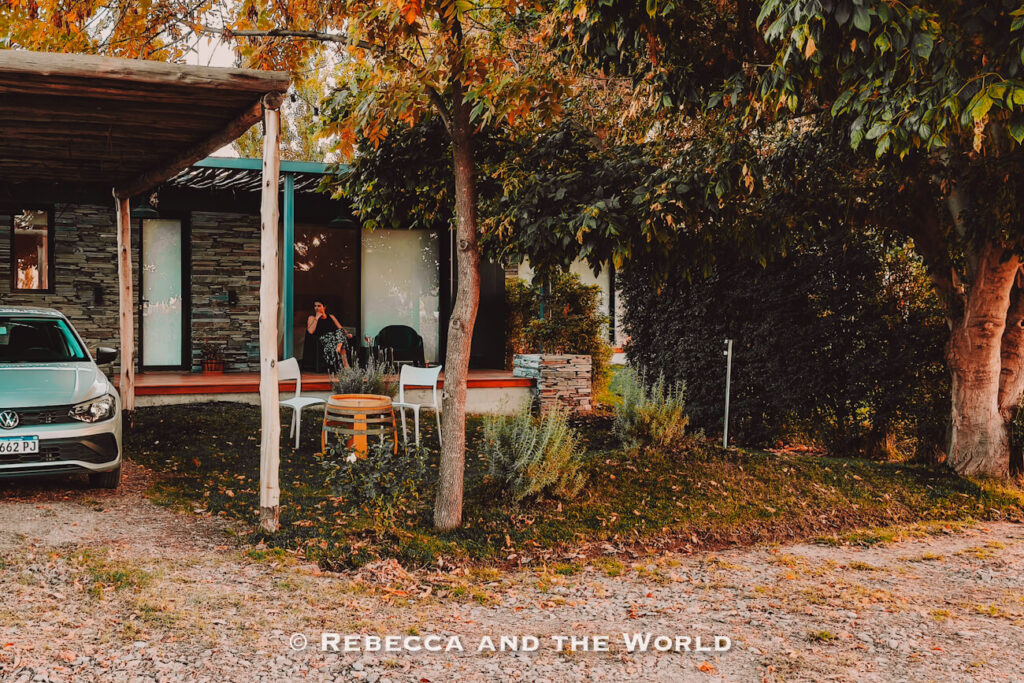
- Chacras de Coria: Right in the heart of Luján de Cuyo, this area is also centrally located to reach Maipú and Valle de Uco. This is my preferred place to stay. It’s a small town with wineries and bodegas tucked in between homes. You can bike between vineyards. My hotel picks: Lodwine Lodges for self-contained accommodation (where we stayed) or Finca Adalgisa Wine Hotel for a beautifully renovated country home – both are located right in vineyards.
- Uco Valley: Further out (about an hour from Mendoza City) with dramatic scenery and some of the most lavish winery experiences. This is where I always recommend people plan to stay on a honeymoon in Argentina. Staying out here can be incredible, but it’s more of a destination in itself and you’ll want to plan transport. My favourite hotels: The Vines Resort & Spa for ultra-luxe accommodation or Casa de Huéspedes La Azul for a smaller, more personal guesthouse experience
→ READ NEXT: Where to Stay in Mendoza, Argentina
Extra travel tips for Mendoza
- Book wine tastings in advance. Many wineries operate by appointment only, particularly in Uco Valley. You generally can’t just turn up. You’ll also often need to pre-pay or put down a credit card to reserve a tasting.
- Wine tastings aren’t super cheap. Wine tastings have become quite expensive in Argentina – don’t be surprised to pay up to US$60 for two people for a wine tour and tasting. Don’t worry, there are still some free tastings! And you can always skip the tour and grab a glass of wine instead of doing a tasting.
- Check what your tour includes. Coming off my previous point, if you’re booking a tour, check what it includes: Wine tastings? Lunch? These costs can all add up.
- Build in buffer time between bookings – distances can be longer than they look, and you’ll enjoy it more if you’re not racing the clock. Plan two to four wineries max a day (three is ideal, I think!).
The itinerary: 3 days in Mendoza
This 3 days in Mendoza itinerary assumes you have three full days here. If you don’t, you’ll just need to slightly adjust what you can do each day.
Day 0 – Arrive + get your bearings in Mendoza City
If you can, aim for an early or mid-afternoon flight so you’ve still got a decent chunk of daylight left. Check in, freshen up, then head straight out for a wander to get oriented.
Mendoza’s grid layout makes it easy to explore on foot. Here are some ways to fill a few hours:
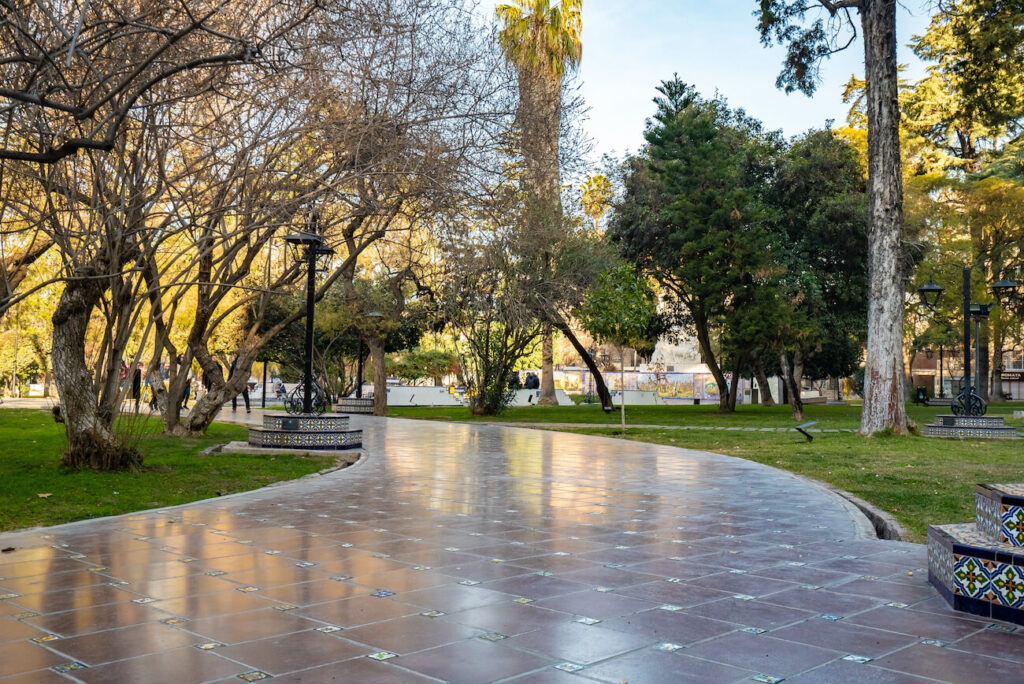
- Wander the plazas and leafy streets. Plaza Independencia is the obvious starting point, but the smaller plazas nearby are also lovely for a slow lap and a coffee stop.
- Mercado Central is great for a stroll. Wander the aisles and check out the cheeses, salamis, hams, spices, chocolates, fresh produce and, of course, wines.
- Take a walk around Parque General San Martín. Designed by Carlos Thays (who has also built parks in Buenos Aires), it’s filled with hundreds of species and plants, statues, fountains, an artificial lake and a rose garden.
In the evening, there are plenty of great dinner options:
- Azafrán – meaning “saffron” in English, this restaurant has one Michelin Star and focuses on modern cuisine with local ingredients. Book ahead for one of the set menus.
- 1884 (Francis Mallmann) – the set menus feature Argentine produce like lamb, Patagonian crab and of course steak.
- Mercado Central – for something casual, choose from the hot-food vendors or cobble together a delectable charcuterie board.
- Fuente y Fonda – come hungry and ready to share big platters of homemade food, made the way grandma used to make it.
Day 1 – Wine tasting in Maipú or Luján de Cuyo
Today is all about wine – what you came to Mendoza for! But you have a choice to make: will you visit Luján de Cuyo or Maipú?
Both are fantastic wine regions, with polished bodegas, iconic names and hundreds of wineries to choose from. It will really come down to which wineries you want to visit. Don’t attempt to do both regions in one day – it’s quite a drive between the two.
Below, I’ve suggested a few wineries plus how you can visit each wine region.
→ READ NEXT: The best wineries in Mendoza, Argentina
Option A: Luján de Cuyo

Luján de Cuyo is Mendoza’s classic Malbec heartland, known for producing rich, plush reds. It sits close to Mendoza city and has a long winemaking history, with some of the region’s most established, traditional bodegas.
Choose 2-4 wineries below and make a day of it. Most wineries also have restaurants, and I’ve listed some of the best lunch options.
Great winery picks in Luján de Cuyo
- Bodega Catena Zapata – one of the region’s big names, this family-owned winery has been around since 1902. They have some really interesting wine experiences, including “blending games”, wine and music (pairing wines with music), wine meditation and a tasting that tells the history of the Catena Zapata family.
- Durigutti Family Winemakers – set on a sprawling estate, this is a modern boutique winery experience, with visits and tastings you can book online. The Restaurant 5 Suelos is Michelin recognised, and has a beautiful set menu.
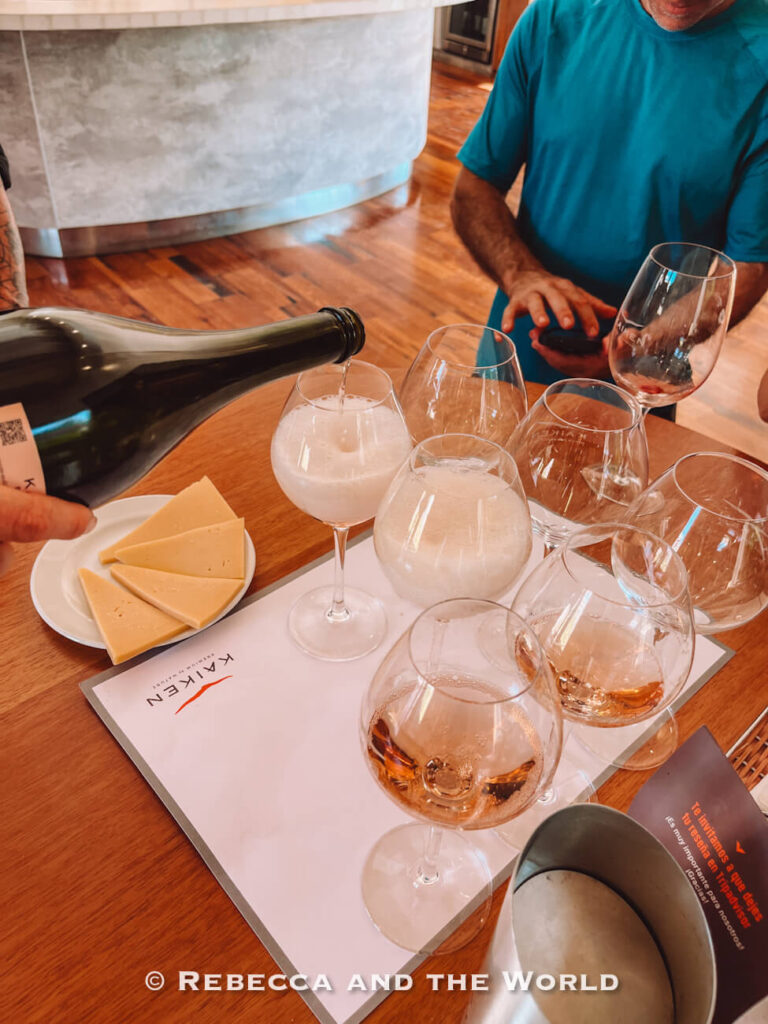
- Bodega Kaiken – a well-run, scenic stop that’s set up for tastings and tours. The winery tastings are some of the best in the region (I think). Sit under the shaded areas to enjoy a lunch at Francis Mallman’s Ramos Generales restaurant.
- Clos de Chacras – a lovely, smaller-scale option that feels intimate and relaxed. Come here for the excellently priced set menu for lunch, which includes a tour of the facility.
- Carmelo Patti – this is one of the more personal winery experiences you can have in Luján de Cuyo – a tour with Carmelo Patti himself. He’s a legend in the area. Tours are only in Spanish, but they are free.
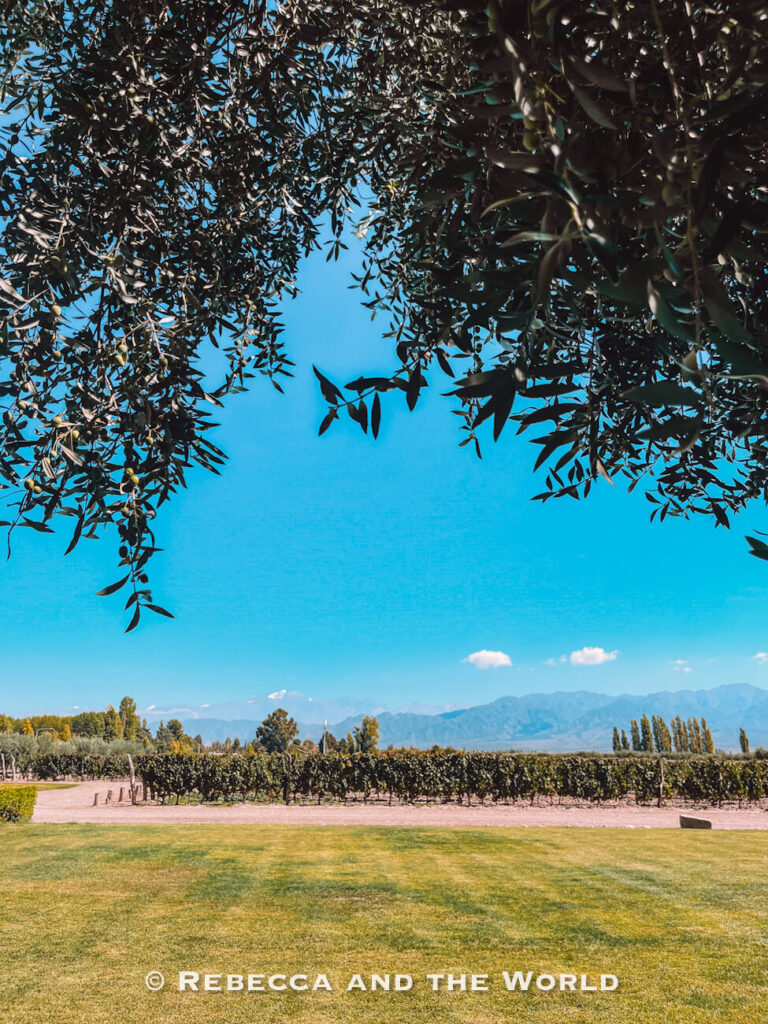
- Nieto Senetiner – another well-known name in a beautiful olive tree-lined location. Enjoy a tasting on the back patio or lunch with views of the Andes.
- Bodega Vistalba – we loved our casual lunch here, sitting under the olive trees with the Andes in the background. The menu is simple but delicious – sandwiches, charcuterie boards, quiche and salads. Take a brief tour after lunch.
How to visit Luján de Cuyo
Here are some options for getting around Luján de Cuyo:
Join a tour. Joining a group tour is the easiest way to get around Luján de Cuyo. They’ll do the planning and organising, so all you need to do is sit back and enjoy the experience. This small-group Mendoza wine tour is run by well-known company Trout and Wine and includes visits to 3-4 wineries in Luján de Cuyo and a five-course lunch.
Hire a private driver. If you’d prefer to have your own driver and operate at your own schedule, visiting the wineries you want to visit, then a private driver is a great option. You can ask them to book everything for you or do the wine bookings yourself. This tour is a great private driver option (and includes lunch at a Michelin-recognised restaurant), or you can book a driver through Wine Pass (see below).
Ride a bike between vineyards. We’ve done winery bike tours on both our visits to Mendoza. On our most recent trip we hired e-bikes through Baccus Biking (I recommend messaging them on Whatsapp for quickest response) and they were excellent – they’ll give you a map and suggested routes, using bike paths along the roads they recommend. They even delivered the bikes to us in the morning and picked them up later that evening. Just know you’ll need to pre-plan your route, choose wineries, and book your tastings ahead of time. I recommend making a list of all the wineries that interest you and then plotting them on Google Maps. That way, you can see which ones are close-ish together and then start booking tastings.
- If you’d prefer to bike with a guide, this tour is an excellent option, and this tour comes highly recommended
Mendoza bike tour itinerary inspiration
Want to copy our Luján de Cuyo itinerary? Here’s how we spent a day on hired e-bikes:
- 10am – Danny from Baccus Biking dropped our bikes off at our accommodation
- 11am – Wine tasting at Nieto Senetiner
- 1pm – Lunch at Bodega Vistalba
- 3.30pm – Wine tasting at Kaiken
This was the perfect number of wineries to visit across a day.
Bus Vitivinicola. The Bus Vitivinicola is a hop-on hop-off bus that has set routes and times for wineries. This is another great way to see several wineries without having to pre-plan or pre-book yourself (we used the bus for a trip to Valle de Uco). There’s a host on the bus who makes sure everyone gets to where they need to go (they speak both English and Spanish). For Luján de Cuyo, they currently offer different routes on Thursdays and Fridays. Note that the price of the bus doesn’t include the tastings and lunch, so you’ll need to factor that into your budget as well (their website lists all the prices so there are no surprises).
Wine Pass. I haven’t used Wine Pass yet, but it’s another way to organise your winery visits. You can choose your own wineries and create your own schedule or buy one of their curated itinerary packages, some of which include lunch. You don’t do the regular tasting or tour at the wineries, instead you get a glass of wine at each one you choose, so it’s a great option if you’re more about the wine tasting than the touring. You can even book a driver through Wine Pass.
Self-drive. Rent a car (I like renting cars through DiscoverCars) and plan out a day based around the wineries you want to visit. Argentina has a 0% blood alcohol limit, however Mendoza has retained the 0.05% limit. Having said that, make sure you have a responsible designated driver and stay safe! Read my full guide to renting a car in Argentina.
Option B: Maipú
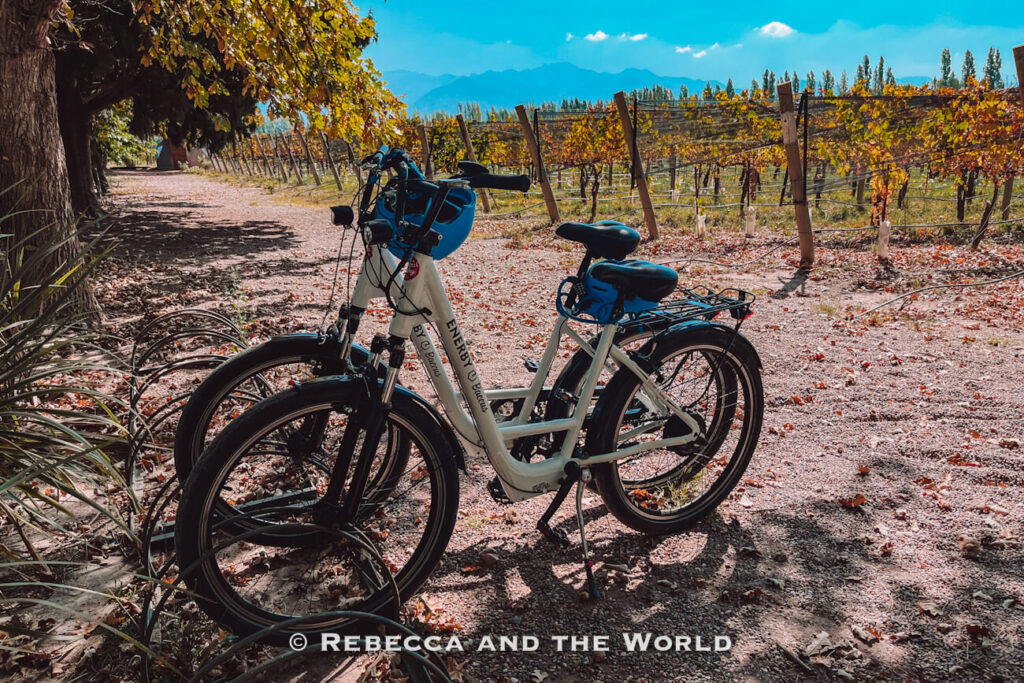
Maipú is Mendoza’s most accessible wine region, sitting close to the city. It’s one of the province’s oldest winemaking areas, with plenty of traditional bodegas and tree-lined roads. You’ll also notice olive groves everywhere, and many wineries here produce olive oil alongside wine, so you can taste some olive oil as well or pick up a bottle to take home.
Pick a few wineries and make sure to schedule a leisurely lunch.
Best wineries in Maipú
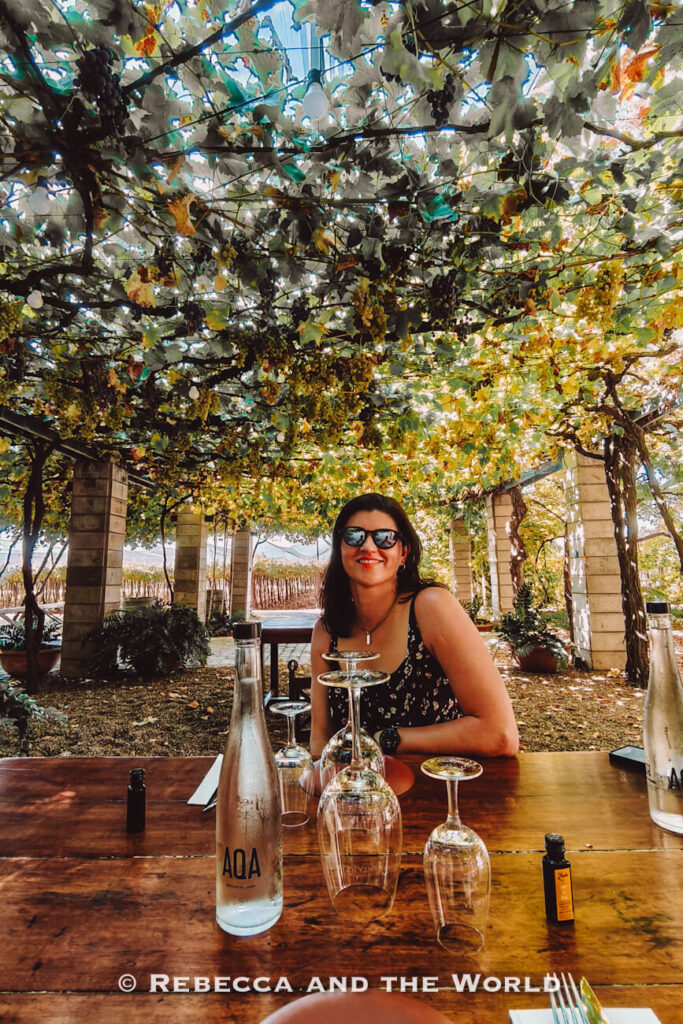
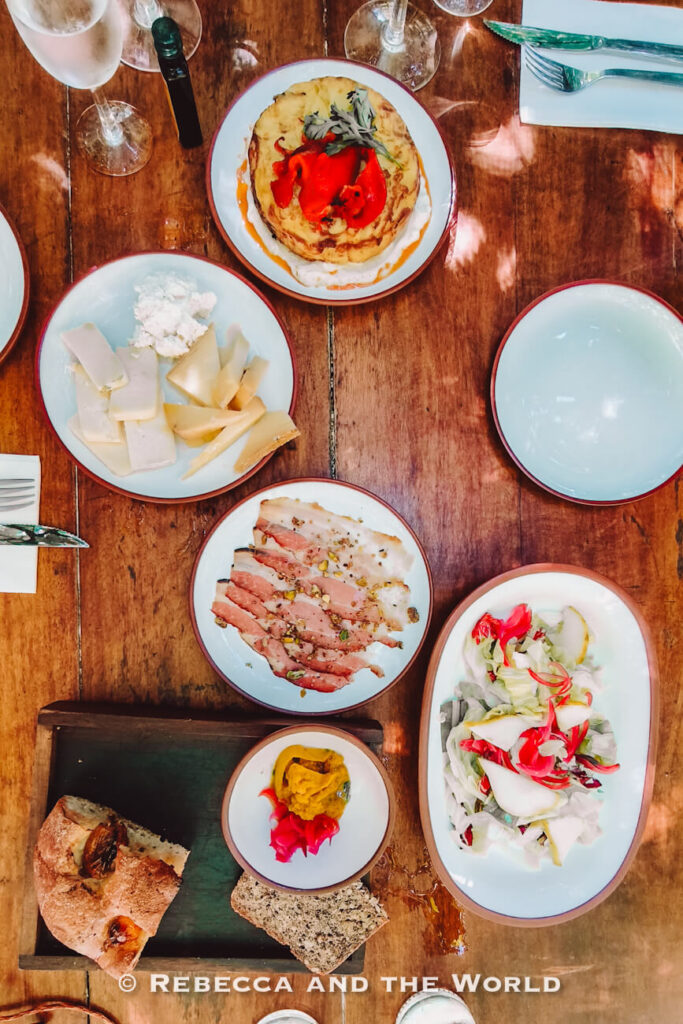
- Santa Julia (Familia Zuccardi) – a super friendly winery with some of the most well-known wines in the country. I highly recommend booking the picnic lunch, where you’ll sit outside under the vines and enjoy a spread of cheese, bread, salads, hot sandwiches, desserts and a bottle of wine – you’ll need a nap afterwards! Also famous for their olive oil.
- Trapiche – a big-name bodega that’s set up for visits, tastings, and a broader tourism experience. They have a huge range of tasting options (check times for English tours), as well as two restaurants: Espacio Trapiche for a fancier set menu, and Trapiche Estacion 83 (in an old train carriage) for more casual plates and glasses of wine.
- Antigal – an award-winning winery known for tours and tastings that include a full visit through the winery and end in underground cellars.
- Bodegas López – traditional and long-established, with tours that cover the winery’s classic wines as well as their sparkling wine plant. Their restaurant – Rincón de Lopez – has excellently priced a la carte and set menus.
- Familia Cecchin – a smaller, organic winery that’s great value.
- El Enemigo (Casa Vigil) – Casa Vigil, of the El Enemigo label, is a brilliant add if you want something really special. The restaurant is the star here – book a long lunch (but you’ll need to book well in advance).
- Bodega Los Toneles – a stunning winery that’s more than 100 years old, where you’ll be snapping photos left and right. Tours include tastings of both wines and olive oils.
How to visit Maipú
Here are some options for getting around Maipú:
Join a tour. Joining a group tour of Maipú is the easiest way to get around, with someone else doing the planning and organising. This is a fun tour that includes visits to wineries and the opportunity to blend your own wine. This half-day tour is very affordable and includes visits to three different wineries and an olive oil factory.
Hire a private driver. If you’d prefer to have your own driver and operate at your own schedule, visiting the wineries you want to visit, then a private driver is a great option. You can book a driver through Wine Pass (see below).
Ride a bike between vineyards. Like Luján de Cuyo, it’s possible to ride a bike between the wineries in Maipú. You can hire a bike through Wine and Ride or Wine Pass (see below for more on Wine Pass). Both of these don’t include a guide – you’re riding solo (which I personally prefer).
Bus Vitivinicola. The Bus Vitivinicola is a hop-on hop-off bus that has set routes and times for wineries in Maipú. Maipú schedules operate on Mondays, Tuesdays and Saturdays. Note that the price of the bus doesn’t include the tastings and lunch (their website lists all the prices so you can plan your budget).
Wine Pass. I haven’t used Wine Pass yet, but it’s another way to organise your winery visits. You choose your own wineries and create your own schedule or buy one of their curated itinerary packages, some of which include lunch. You don’t do the regular tasting or tour at the wineries, instead you get a glass of wine at each one you choose, so it’s a great option if you’re more about the wine tasting than the touring.
Self-drive. Rent a car (I like renting cars through DiscoverCars) and plan out a day based around the wineries you want to visit. Argentina has a 0% blood alcohol limit, however Mendoza has retained the 0.05% limit. Having said that, make sure you have a responsible designated driver and stay safe!
Day 2 – Visit the Uco Valley
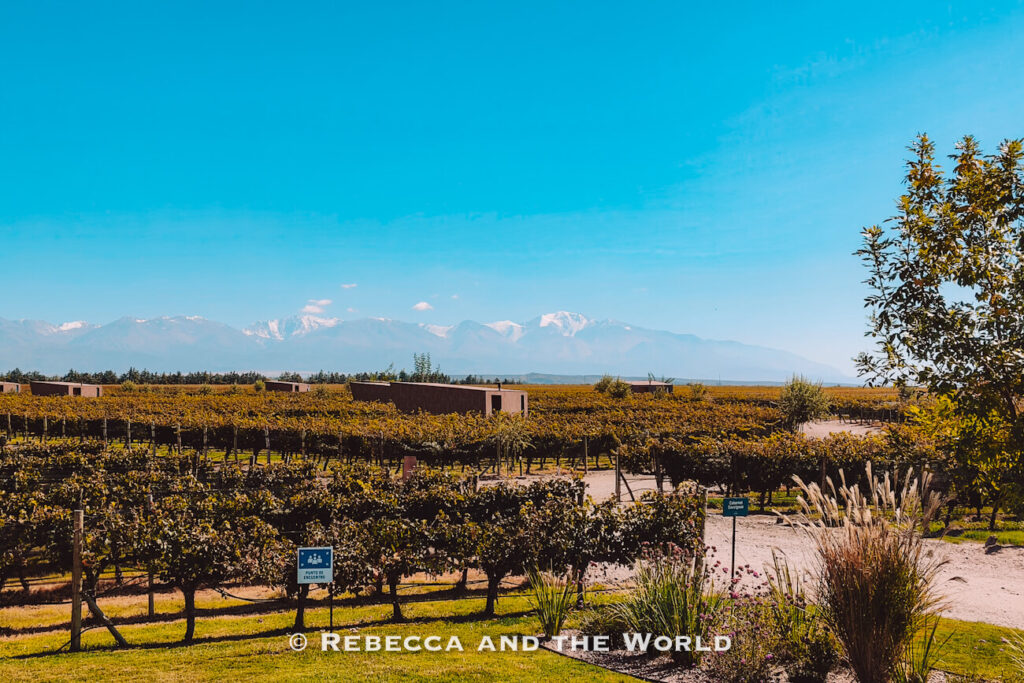
The Valle de Uco is where Mendoza turns properly dramatic – higher altitude vineyards, bolder wines, bigger Andes views and the kind of winery restaurants you could plan an entire afternoon around.
The Valle de Uco is much further out than Luján de Cuyo or Maipú, about an hour’s drive from Mendoza City.
Standout wineries in Valle de Uco
- Zuccardi Valle de Uco – one of the region’s most incredible pieces of architecture, this winery (known as Piedra Infinita – or infinite stone) is made out of tonnes of stone, all excavated to build the vineyards. The onsite restaurants, Piedra Infinita Cocina, has been recognised in the hall of fame as one of the World’s Best Restaurants.
- Bodega Salentein – an Uco icon and a brilliant all-rounder for architecture, tastings and the broader winery experience. The buildings here are absolutely astounding – sitting in the amphitheatre-style room several metres below ground is an incredible way to taste a few wines. The restaurant is also excellent. (BodegaSalentein.com)
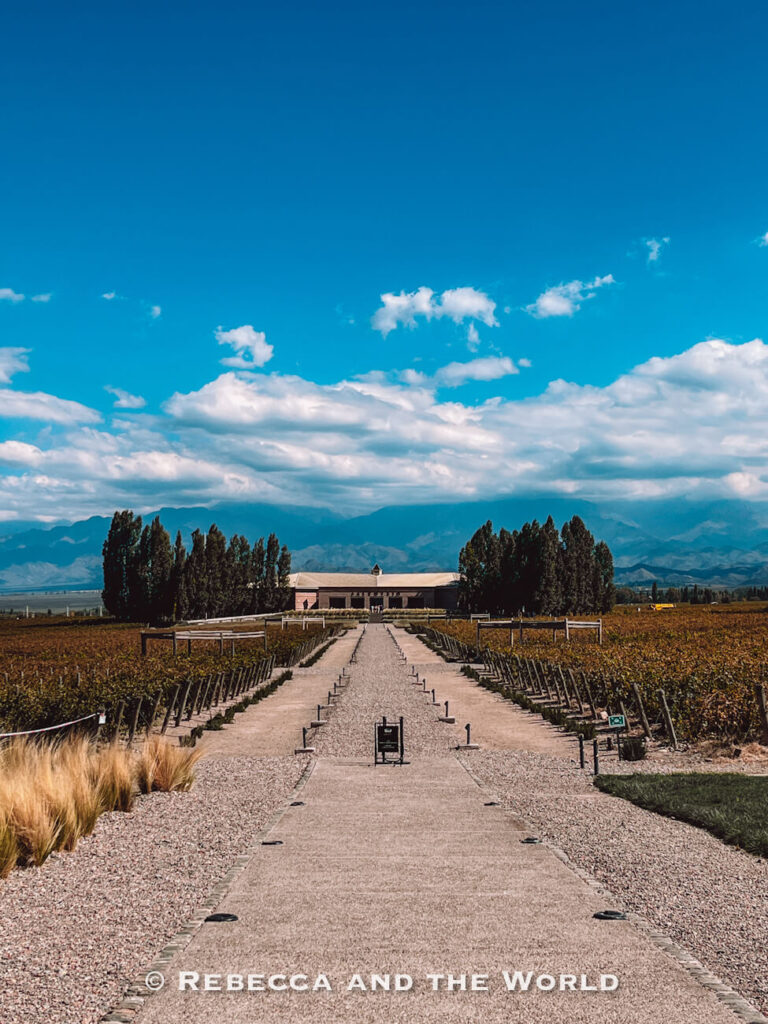
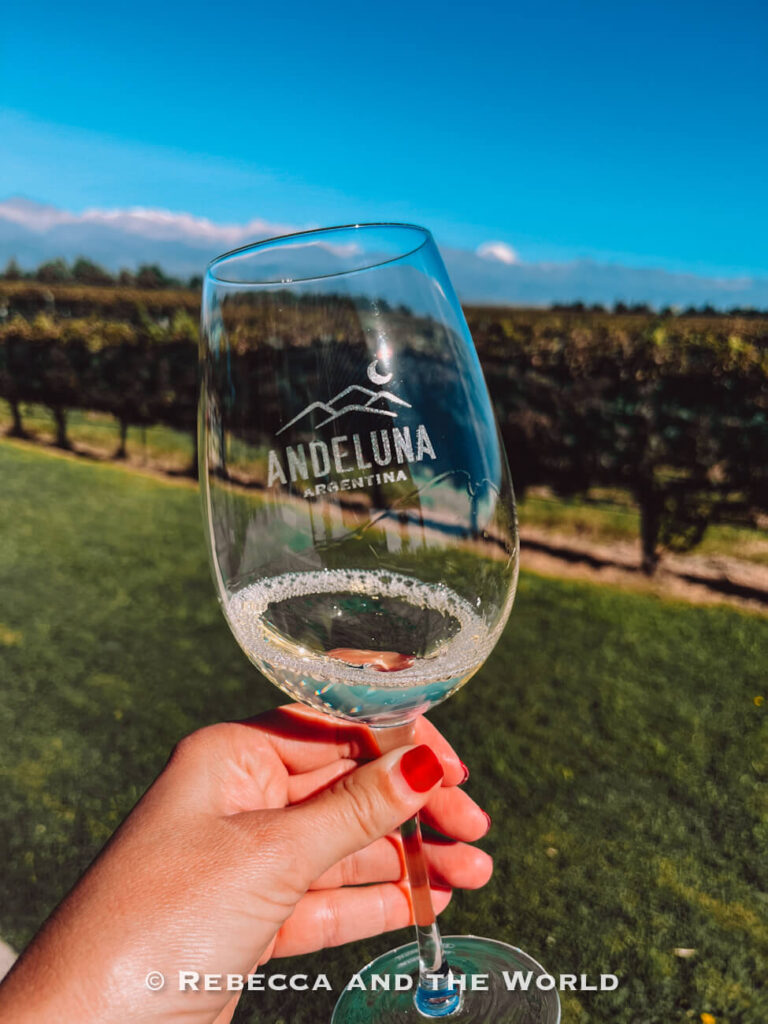
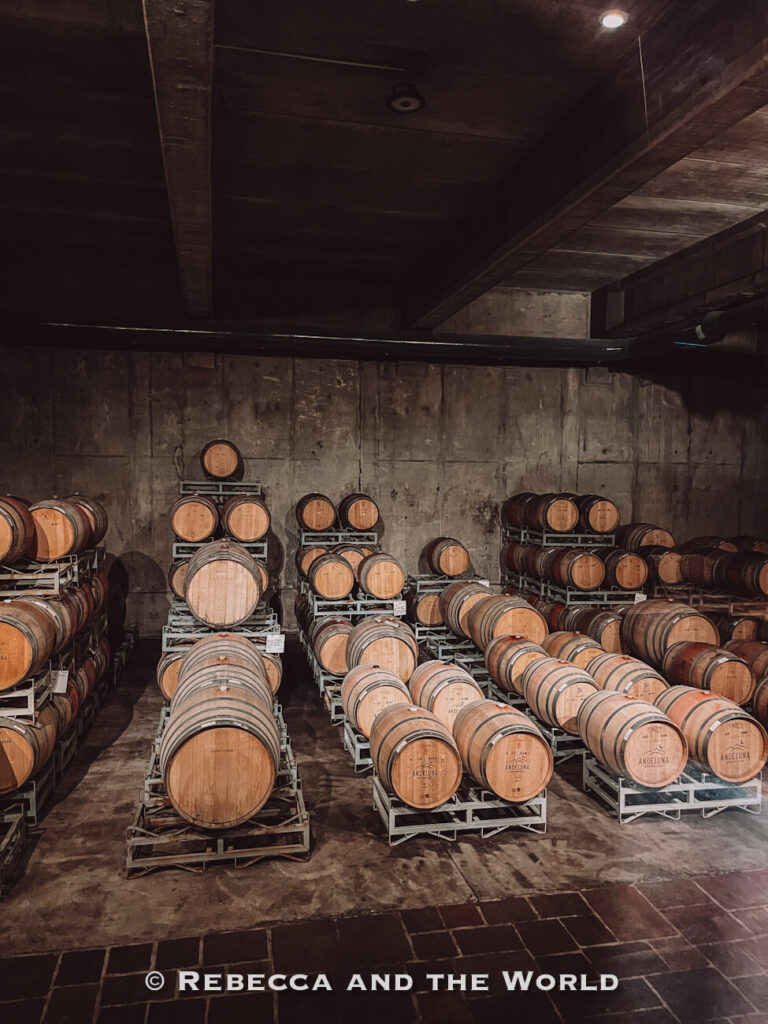
- Bodega Andeluna – a beautiful winery in a memorable setting. The winery’s iconic grape is Cabernet Franc – used mostly as a blending grape, Andeluna has long championed it as a standalone variety.
- Domaine Bousquet – well-known for organic wines. I’ve eaten lunch at the winery’s Gaia restaurant, and the four-course meal was focused on local produce (grown at the winery).
- Bodega La Azul – I haven’t been here yet but it’s high on my list – it’s popular for a relaxed, sociable winery lunch.
How to get to Valle de Uco
While the Uco Valley may be further out, there are still plenty of ways to get here.
Book a tour. Joining a group tour is the easiest way to get around Valle de Uco. Because the distances between wineries are longer, leave the planning to an expert – they can pre-book everything (including lunch) for you. This small-group tour visits Bodega La Azul and Domaine Bousquet.
Hire a private driver. Private drivers are more than happy to drive visitors out to the Valle de Uco. This is an ideal option if you’ve got specific wineries you want to prioritise. This private driver comes highly recommended, or you can book a private driver via Wine Pass.
Take the Bus Vitivinícola. We did this on our most recent trip and had a great day visiting three incredible wineries in the Uco Valley. You don’t need to plan anything beyond choosing your day and route – the bus has confirmed spots at the wineries it stops at (you pay for tastings and lunch separately). For Valle de Uco, their full-day routes run on Wednesdays and Sundays.
Rent a car. Renting a car means you can plan a whole day around your own interests, but make sure you have a responsible designated driver.
Day 3 – Andes day trip
Today is your reminder that Mendoza isn’t just wine country. Within a couple of hours, you can be deep in the Andes with rugged peaks, strange mineral bridges and vast, dry landscapes that make you feel very small.
I recommend renting a car to do this drive, but there are day tours that mean you can leave the driving in someone else’s hands and spend more time snapping photos out the window.
- This tour is a long day but it’s a well-organised way to see the natural beauty of the Andes mountains. The trip includes Potrerillos Dam, Puente del Inca and photos at Aconcagua. Book here
- This full-day, small-group tour includes a hike in Aconcagua National Park, a visit to Puente del Inca and a traditional asado lunch. Book here
If you’re driving yourself, aim for an early start so you’ve got time to linger at the viewpoints without racing daylight. Head out on Route 7 towards Uspallata.
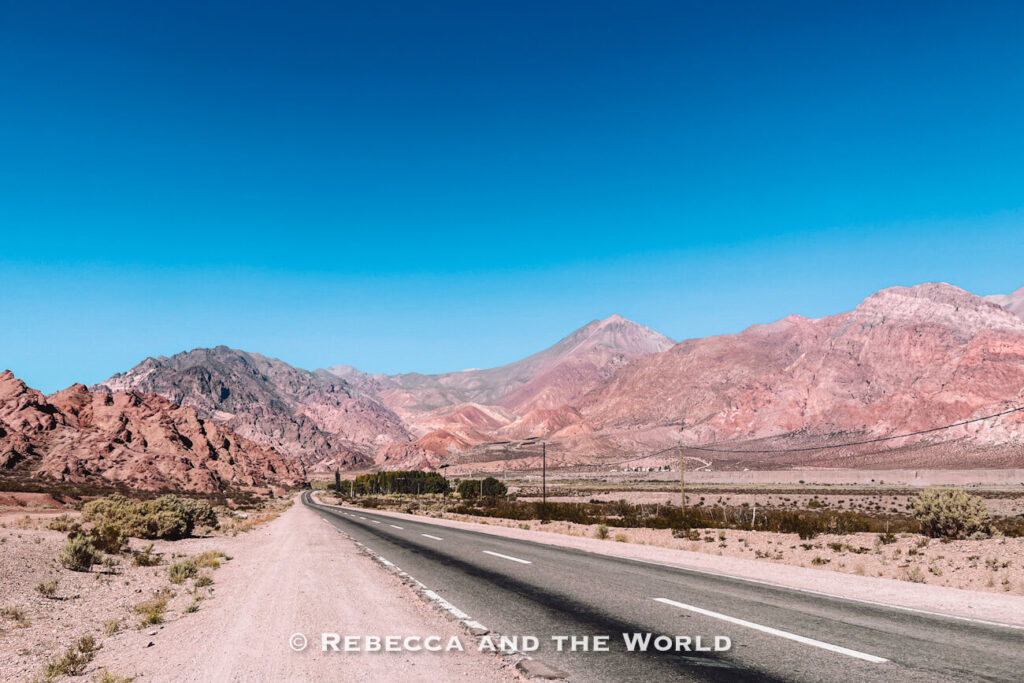
It doesn’t take long for the rows of green vineyards to be replaced with ochre-coloured mountains. This scenery reminds me of the Grand Canyon in Arizona or of our road trip in north Argentina – one of my favourite parts of the country. If you can’t make it to north Argentina, then this is your next best option for landscapes.
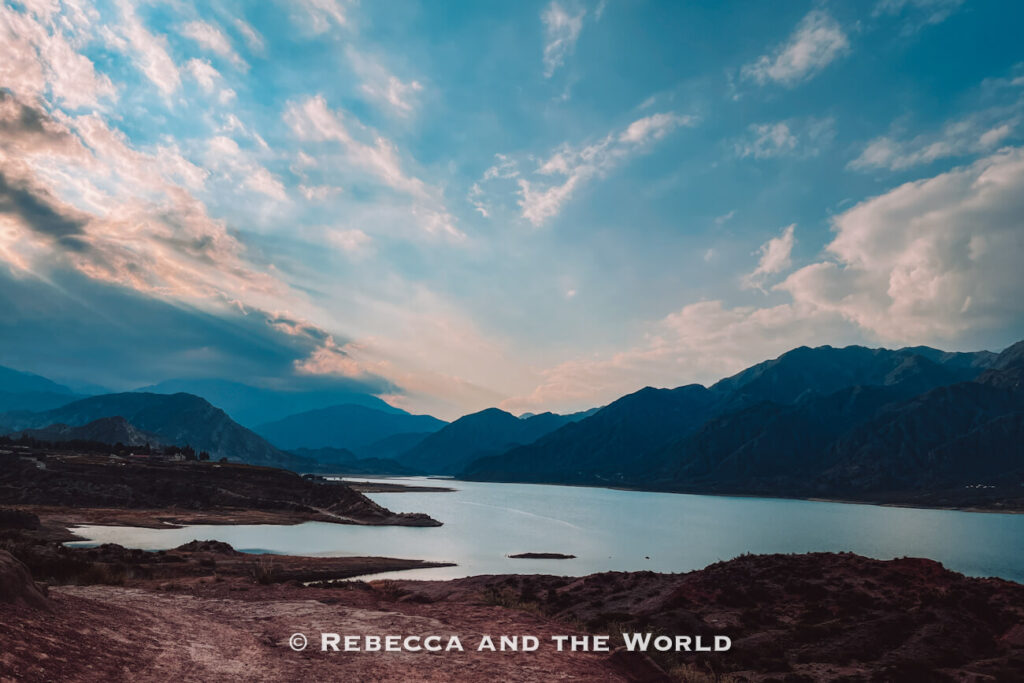
The first town you’ll reach is Potrerillos, known for being the home of whitewater rafting in this area. There’s a huge dam here that sparkles under the sunlight. The reservoir is lined with small beaches, many with bars and shaded tents set up for rent.
Stop for some photos. But if the sun’s directly overhead, don’t worry as you’ll be coming this way again as you return to Mendoza (and the light is far nicer in the late afternoon).
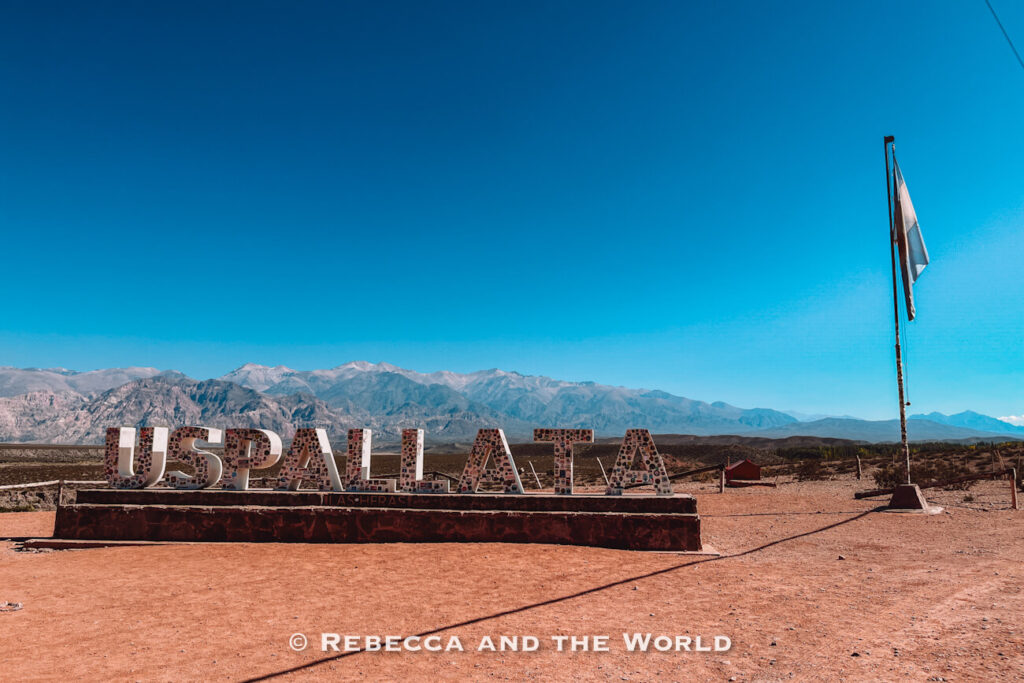
Make sure you stop for a photo at the Uspallata sign, with the Andes proudly in the background. Rolling into town, the landscape here is unexpected, with poplar trees lining the streets, a sharp contrast to the barren expanses you’ve just driven through.
Stop for a coffee in the town of Uspallata, a peaceful spot. We stopped at a bakery/café called Salen Dos for a coffee, a submarino (a type of hot chocolate where you melt a whole bar of chocolate in the milk) and a salami sandwich.
Here, you’re just 250km from Santiago in Chile.
Continue on through the arid landscape, marvelling at the colours of the rocks, which vary from moss green, ochre, rusty brown and mustard yellow. There are a series of small tunnels to drive through, and you’ll also pass through some ski towns (closed of course when we drove through them in March). The roads around here can be pretty rough – they’re asphalt but you’ll need to dodge some big cracks.
Next up is Puente del Inca, a natural stone bridge stained orange and yellow by mineral-rich waters. It looks almost unreal, like something painted rather than formed by nature. It’s a quick stop, but it’s one of the most memorable on this route. Here, you’re at 2,700 metres above sea level.
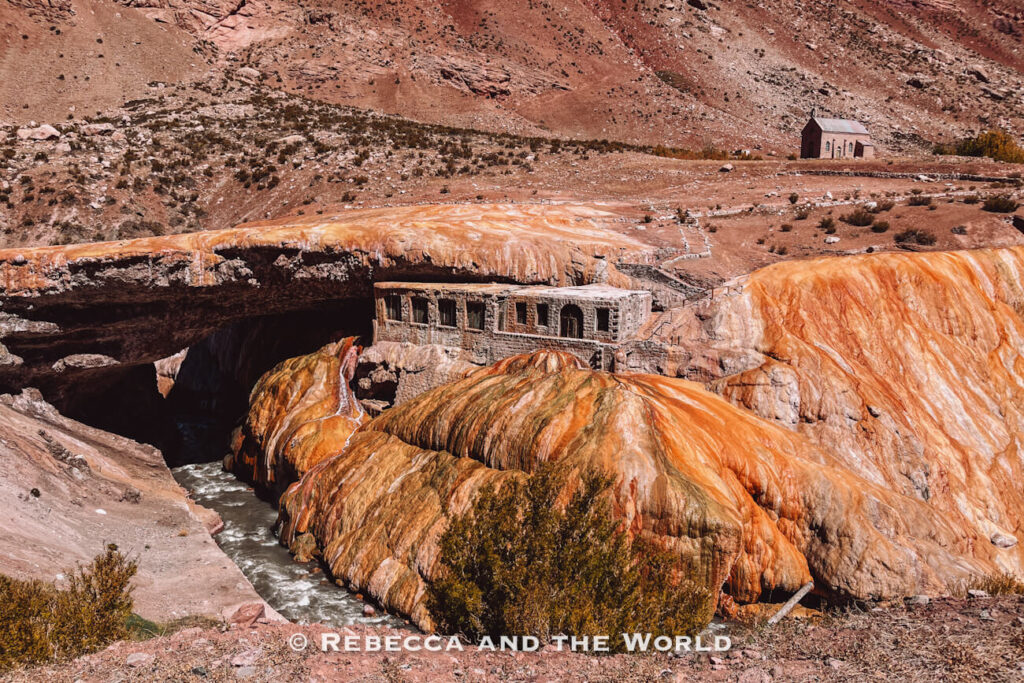
The area around Puente del Inca is touristy, filled with people selling souvenir fridge magnets, paintings, blankets, sweaters and jewellery made from gems found in the area. There are also several restaurants, and surprisingly they’re not too expensive. We shared a huge milanesa and fries at the very simple but friendly Parador del Inca.
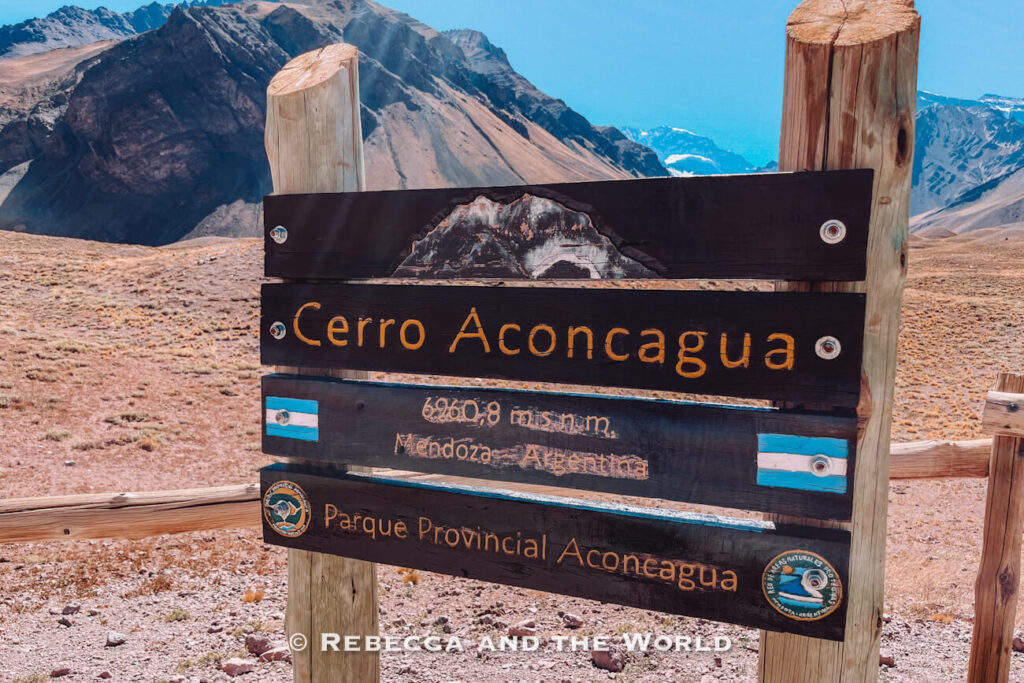
Next, continue on to the Aconcagua viewpoint, just a few kilometres further up the road. Aconcagua is the highest mountain in the Americas – 6,960.8 metres – and a key part of the Andes chain. You can take a short walk to the lookout (although we found at this time of day, early afternoon, the sun was right behind the mountains so not great for photos). It’s windy here but impressive. If you have more time, you can drive further into the national park – just remember to pay the entry fee.
It’s time to head back to Mendoza. Make your way back towards Potrerillos. Route 7 is dominated by trucks, many of which have come all the way from Brazil and are headed for Chile. It’s a windy, hilly road, so it may be slow going in both ways.
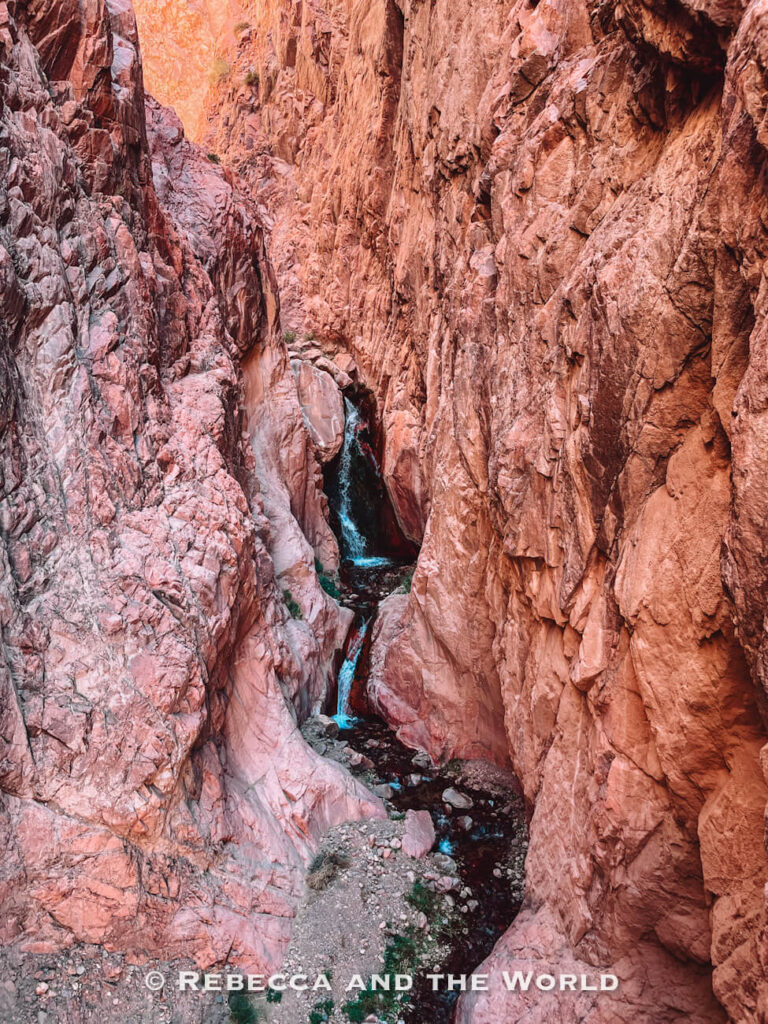
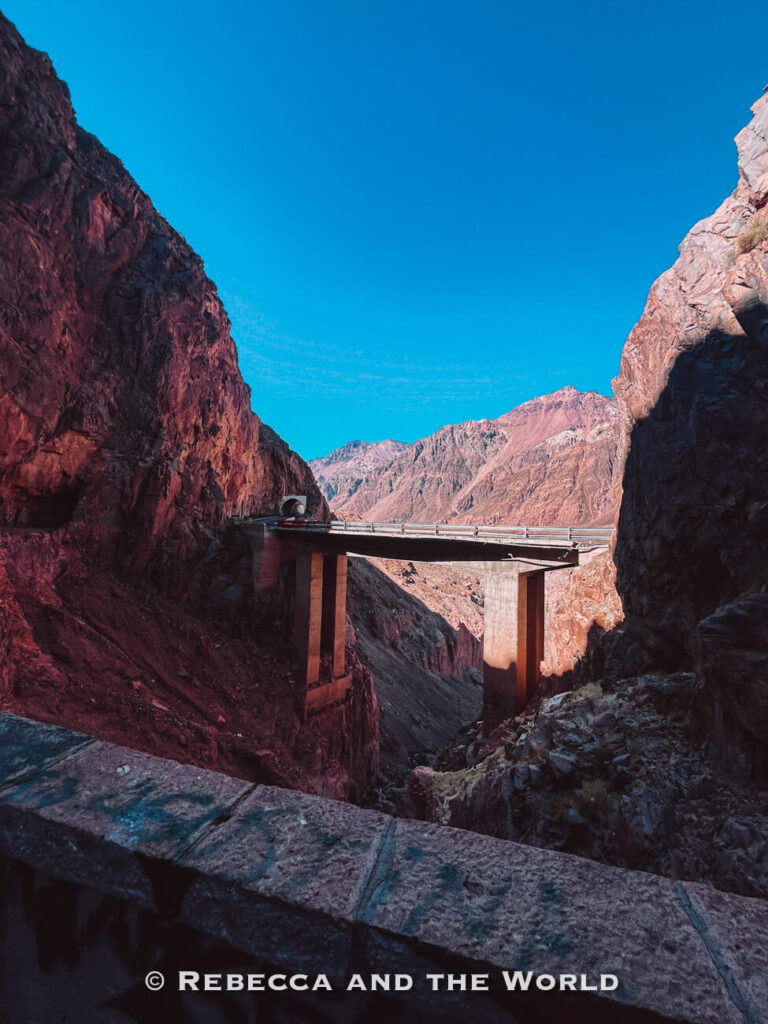
From here, divert to Route 82 to mix up the drive home. Unlike on the way out, the mountains here are greener and there are more small towns breaking up the journey.
This is a long day of driving, but it’s one of the most spectacular drives in the country.
Evening
After a full day of big scenery, keep your final night simple. Head into Mendoza City or Chacras de Coria for a final dinner and a glass of wine, or pick up some snacks from the supermarket and create an easy charcuterie board.
Not into a road trip?
If the idea of sitting in a car all day doesn’t appeal, then there are plenty of other things to do. Mendoza is well-known for its adventure activities and thermal hot springs.
Relax at Termas Cacheuta
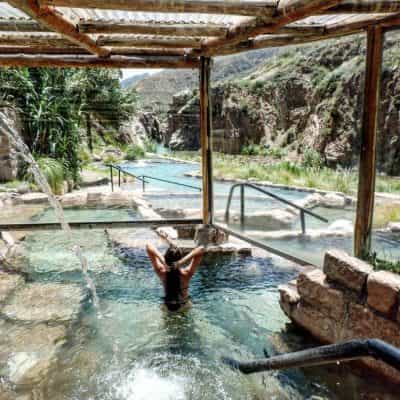
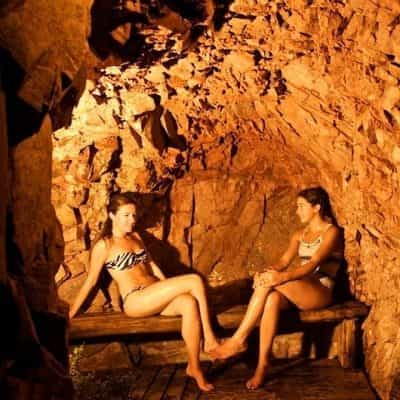
Book a morning session at Termas Cacheuta. These thermal hot springs are a great way to relax. But be aware that there are two parts to Cacheuta – one more family friendly and another a little more upscale (we accidentally went to the family friendly spot on our first visit!). Book the hot springs spa here and book the water park (family friendly!) here.
See the Andes from horseback
Wander through the Andes on horseback, enjoying the views from the saddle. You might even see wild animals like guanaco (like llamas), condors and foxes. This tour includes a full asado dinner and wine after the horseriding.
Learn how to make asado
Learn the art of asado in a home in Mendoza. In this experience, over four hours you’ll make empanadas and learn how to cook chorizo, matambre (pork flank) and beef. There’s a lot of wine, too!
Go whitewater rafting
Need some adrenaline? Go whitewater rafting on the Mendoza River from the town of Potrerillos. There’s rapids of different levels, and the guides will make sure everyone is safe and at a level suitable to their experience.
3 days in Mendoza: Final thoughts
Argentina makes it very hard to choose – between the cities, the north, Patagonia, and everything in between, there’s no shortage of “must-see” places. But Mendoza is worth carving out time for because it delivers such a satisfying mix in a short space: world-class wine experiences, memorable food and those huge Andes landscapes.
In three days you can see a lot of Mendoza – a few days tasting wines and enjoying long lunches in the different wine regions and an escape into the Andes towards Aconcagua and Potrerillos. I can guarantee you’ll be itching to return!
FAQs: Mendoza itinerary
Do you need to book wineries in Mendoza?
Yes – for most wineries tastings are often by appointment only. In high season, lunch bookings can also be at a premium, so make sure you plan ahead.
Is a Mendoza wine tour worth it?
Often, yes. A tour (or private driver) takes all the friction out of Mendoza. You don’t have to organise the tasting schedule or navigate or worry about who’s driving after tastings. It’s particularly worth it for Valle de Uco, where distances are longer. If you’re confident in organising bookings and transport, DIY (either by self-driving or biking between wineries) can work well too – just be realistic about timing and don’t overcommit to too many wineries in one day.
Can you bike between wineries safely?
In the right area, yes. Maipú and Luján de Cuyo are well set up for bike riding. Bike hire companies can provide maps and provide recommendations for the safest routes between wineries.
What’s the best neighbourhood to stay in Mendoza without a car?
Mendoza City is the easiest base without a car. You can walk to restaurants and wine bars, and it’s simple to organise tours, drivers, and pick-ups from accommodation. You can also easily stay in Chacras de Coria without a car, but you’ll rely more on taxis/rideshares for dinners and getting around.
Did you find this article helpful? Consider buying me a coffee as a way to say thanks!
How are you planning to spend your 3 days in Mendoza? Let me know if you need any help in the comments below.
Need help planning your Argentina trip? 🇦🇷
Feeling overwhelmed about planning your trip to Argentina? I get it. And I can help! I offer one-to-one travel consultation calls to help you plan your trip to Argentina. In an hour, we can map out a realistic itinerary or work through your specific questions so you can book an incredible trip. Save hours of your time with my local knowledge and expertise.
Read next
Before you go, you might like these South America travel posts.
- 10 Incredible Wineries in Mendoza, Argentina
- Where to Stay in Mendoza: The Best Areas + Hotels for Every Budget
- How to Plan a Maipo Valley Day Trip from Santiago
- 50 Incredible Things To Do in Argentina
- How to Plan a Trip to Argentina
- 19 Argentina Travel Tips for First-Time Visitors
ARGENTINA TRIP ESSENTIALS
- Book your flight to Argentina online with Skyscanner. I like how this site allows you to find the cheapest days.
- One thing I always purchase is travel insurance! Travel Insurance Master allows you to compare across multiple policy providers, while SafetyWing is great for long-term travellers and digital nomads.
- Wise is my choice for sending and receiving money and spending money overseas (you can get a digital and physical card).
- Find a great hotel in Argentina. Check prices on Booking.com and Expedia online.
- Check out the huge range of day tours throughout Argentina on GetYourGuide or Viator. I love a good food tour in particular!
- Saving money? Check out the range of free walking tours across Argentina with GuruWalk (don’t forget to tip!).
- How to get around? I use DiscoverCars for car hire, or Motorhome Republic and Jucy for campervan/RV rental. For buses, trains and ferries, I use 12GO, Busbud and Omio.
- Grab an e-sim to stay connected while on the road.
- A copy of the Lonely Planet guide to Argentina will be handy. Also pick up a Spanish language phrasebook to help you navigate your visit.
- Keep those bottles of wine you’ll be buying safe in these wine bags.
- Check out my Amazon shop for my fave travel items – everything from backpacks and suitcases to travel adapters and beauty products.
PIN IT FOR LATER: 3 DAYS IN MENDOZA ITINERARY
Save this guide to 3 days in Mendoza to Pinterest so you can plan your trip later!