
Looking for the best wineries in Mendoza to plan some tastings? Here are my 10 favourite wineries in this stunning region.
Mendoza is Malbec country and undoubtedly one of the most beautiful places to visit in Argentina. The catch is that there are hundreds of wineries spread across three main regions – so how do you decide which ones to visit? It can be overwhelming!
To make it easier, I’ve pulled together a list of my favourite wineries in Mendoza. They cover all three of the Mendoza wine regions (Luján de Cuyo, Maipú and the Uco Valley) and a variety of experiences, from hyperlocal, family-owned vineyards to architecturally designed bodegas that ship millions of litres of wine a year.
Drinking wine is one of the best things to do in Argentina, so let’s go wine tasting!
This blog post may contain affiliate links, meaning if you book or buy something through one of these links, I may earn a small commission (at no extra cost to you).
Need help planning your Argentina trip? 🇦🇷
Feeling overwhelmed about planning your trip to Argentina? I get it. And I can help! I offer one-to-one travel consultation calls to help you plan your trip to Argentina. In an hour, we can map out a realistic itinerary or work through your specific questions so you can book an incredible trip. Save hours of your time with my local knowledge and expertise.
Mendoza wineries: Need to know before you go
Before you start planning the wineries you want to visit, here are a few things you need to know about visiting Mendoza (one of my favourite places to visit in Argentina).
You’ll need to book ahead for most tastings and lunches. In Mendoza, walk-ins are the exception, not the rule. Most wineries take bookings through their website (although I’ve found WhatsApp is often the quickest way to get a response, particularly if you’re booking close to your visit date or have a question). You may need to pre-pay for the tasting or put down a credit card to guarantee a booking, which reduces the flexibility if you decide you want to visit a different winery later on.
Tastings aren’t cheap. Some Mendoza wine tastings can be upwards of US$25 per person, so check this before booking so you can plan your budget.
Don’t underestimate travel times between wineries and regions. My best advice is to drop every Mendoza winery you’re considering into Google Maps first, then plan your days based on geography.
Don’t try to cram in too many wineries in one day. It’s tempting to book tastings back-to-back, but it catches up with you fast. You’ll either end up exhausted, rushing through experiences, or… well, drunk. In most cases, two wineries plus a long lunch is the sweet spot, especially if one of those stops includes a tour of the winery.
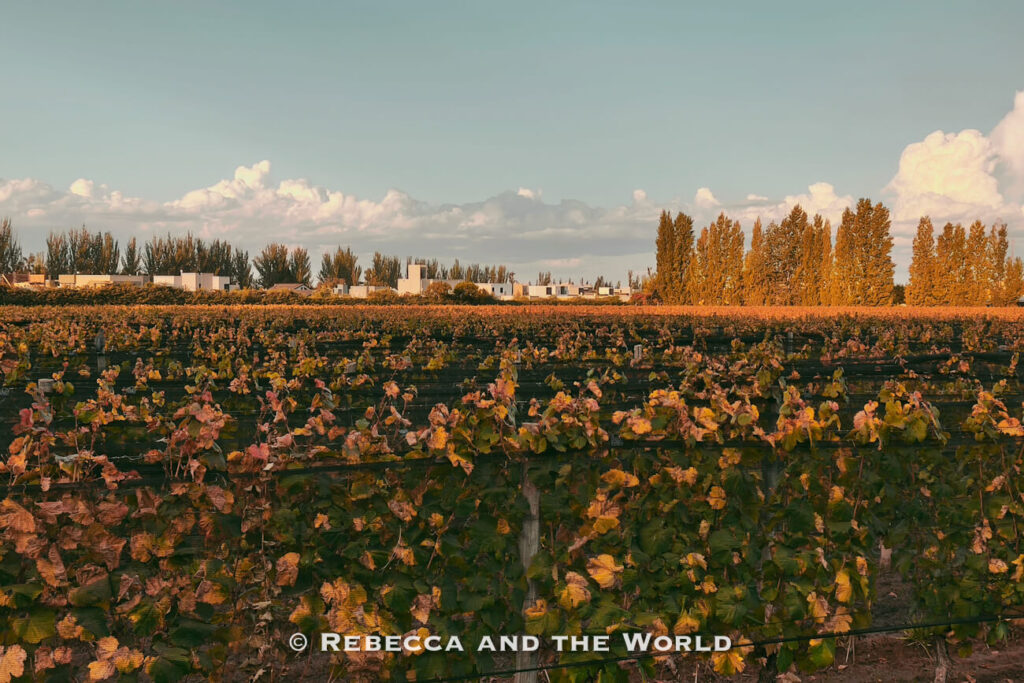
How to visit wineries in Mendoza
Mendoza’s wine regions are large – and as we all know, drinking doesn’t mix with driving. Luckily, there are plenty of options for visiting the wineries. Here are the main ways to get around.
Join a tour
If you want the easiest option, a small group tour is hard to beat. They’ll handle transport, bookings and timing. This group tour is a fantastic way to visit a few wineries in Luján de Cuyo.
Hire a private driver
With a private driver, you’ll keep the flexibility of choosing wineries and timing, but you won’t have to worry about drinking and driving or navigating between regions. It’s also a great option for couples or small groups because the cost can work out surprisingly reasonable when split. Some private drivers have planned itineraries you can follow or you can plan a trip around the wineries you’re keen to visit. This private driver comes highly recommended.
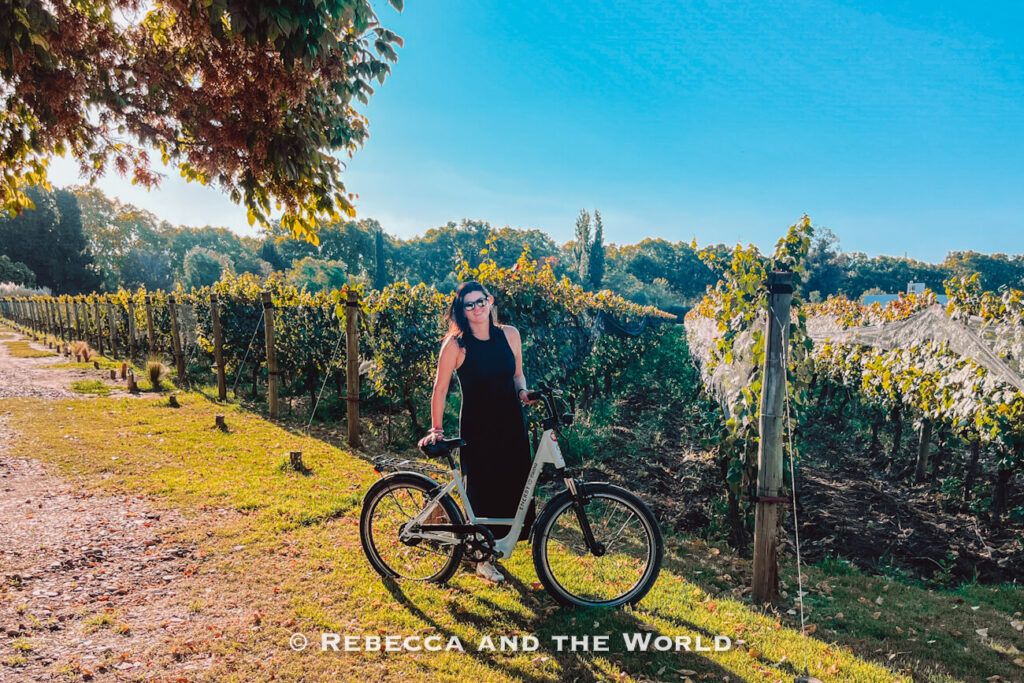
Bike between wineries
Biking is popular in Maipú and Luján de Cuyo, where wineries are closer together and the terrain is fairly flat. It’s a fun way to visit the wineries. In Maipú, rent a bike through Wine and Ride, and in Luján de Cuyo, Baccus Biking can hire you a bike (I recommend an e-bike!). You can also join a winery bike tour with a guide.
Bus Vitivinícola
Bus Vitivinícola is Mendoza’s hop-on-hop-off wine bus. It follows set routes through the different wine regions. You’ll need to pay for the wine tastings and lunch separately. We did this on our most recent trip and visited the most incredible wineries in Valle de Uco – without having to plan a single thing.

Wine Pass
With Wine Pass, you can choose your own wineries and create your own schedule or buy one of their curated itinerary packages, some of which include lunch. You don’t do the regular tasting or tour at the wineries, instead you get a glass of wine at each, so it’s a great option if you’re more about the wine tasting than the touring. You can even book a private driver through Wine Pass.
Self-drive
Rent a car (I like renting cars through DiscoverCars) and plan out a day based around the wineries you want to visit. Argentina has a 0% blood alcohol limit, however Mendoza (and some other provinces) has retained the 0.05% limit. Having said that, make sure you have a responsible designated driver and stay safe! Read my full guide to renting a car in Argentina.
→ READ NEXT: 3 Days in Mendoza: The Perfect Wine Country Itinerary
Best wineries in Mendoza
Here are some of my favourite wineries in Mendoza. As you’ll see, they’re mostly clustered around the Lujan de Cuyo and Valle de Uco regions – I just love these regions for the landscapes. I clearly need to spend a lot more time in Maipú, however – and will make sure I do that research for you all on my next trip to Mendoza! You can easily visit most of these wineries if you have 3 days in Mendoza.
Mendoza winery map
Below you’ll find a map of the wineries in Mendoza that I love (in red), plus a very long list of wineries that are on my wishlist (green). I would have loved to visit all of these on our most recent visit, but clearly I was far too ambitious!
Wineries in Luján de Cuyo
Luján de Cuyo is Mendoza’s classic Malbec heartland, known for producing rich, plush reds. It’s close to Mendoza city and has a long winemaking history, with many older vineyards and some of the region’s most established, traditional bodegas. The area’s warm days, cooler nights and well-drained alluvial soils (fed by Andean meltwater) make it especially reliable for Malbec, as well as Cabernet Sauvignon and blends.
Clos de Chacras
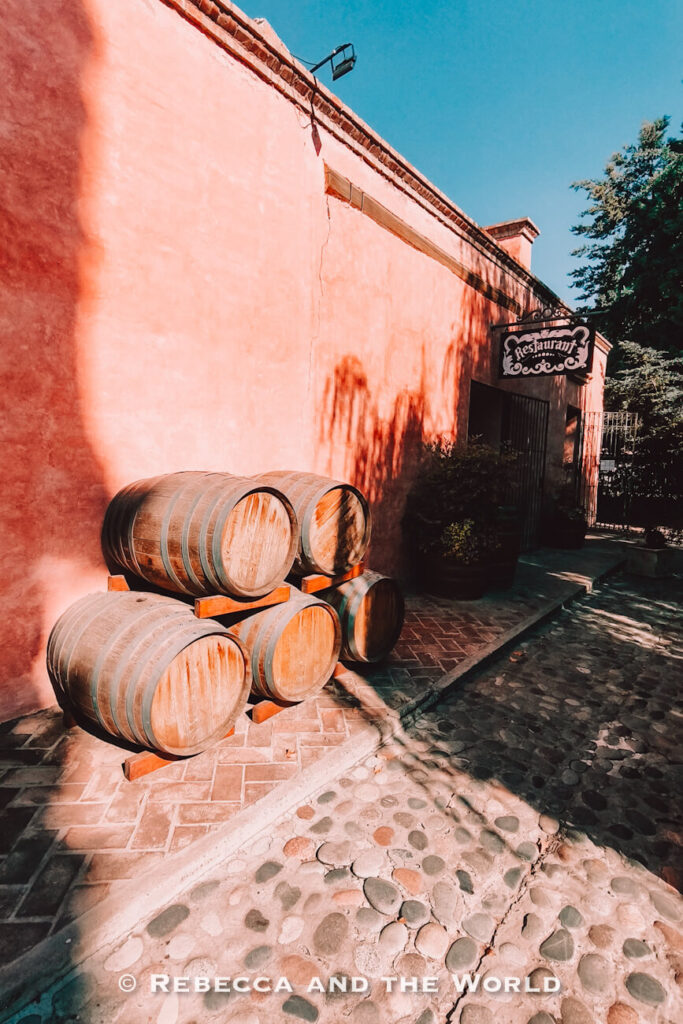
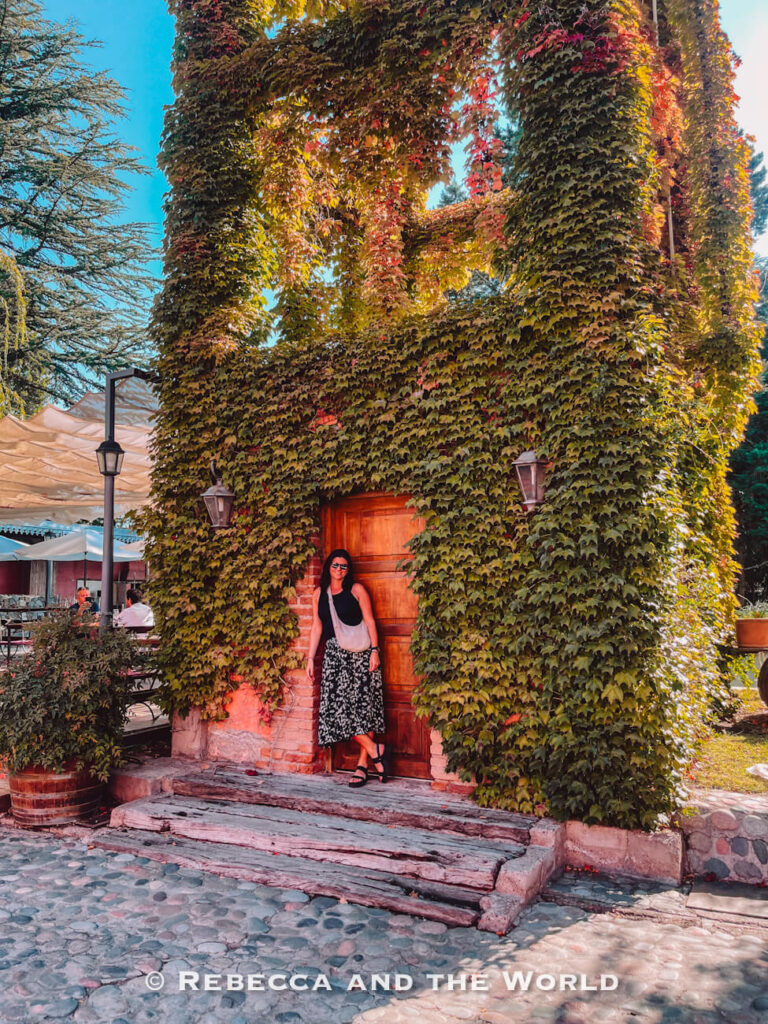
The origins of this family-owned vineyard go back to 1883, when the founder – Bautista Gerónimo Gargantini – arrived in Argentina from Switzerland. While Clos de Chacras has changed hands a few times over the years, it’s now under the care of Gargantini’s granddaughter and her husband, who have lovingly restored the estate.
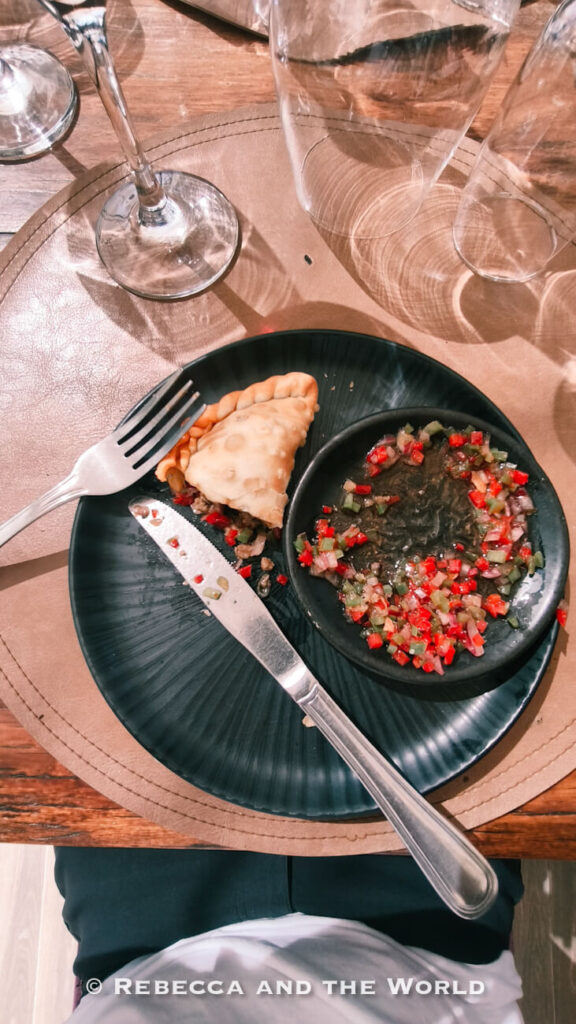
The dusty rose-coloured winery sits next to a small lake filled with koi fish. We had a beautiful four-course lunch here on our most recent trip back to Mendoza and it was delicious – classic dishes like empanadas and provoleta are elevated with fresh produce. The meal was accompanied by four wines, each very generously poured (I had to say no at a few points!). Their Malbec rosé is refreshing – we bought a bottle to take home with us.
The winery also has some of the more affordable tastings in the region – from ARS$25,000 per person for three wines, including a visit through the atmospheric, cave-like bodega. Bookings are necessary and can be made online.
Nieto Senetiner
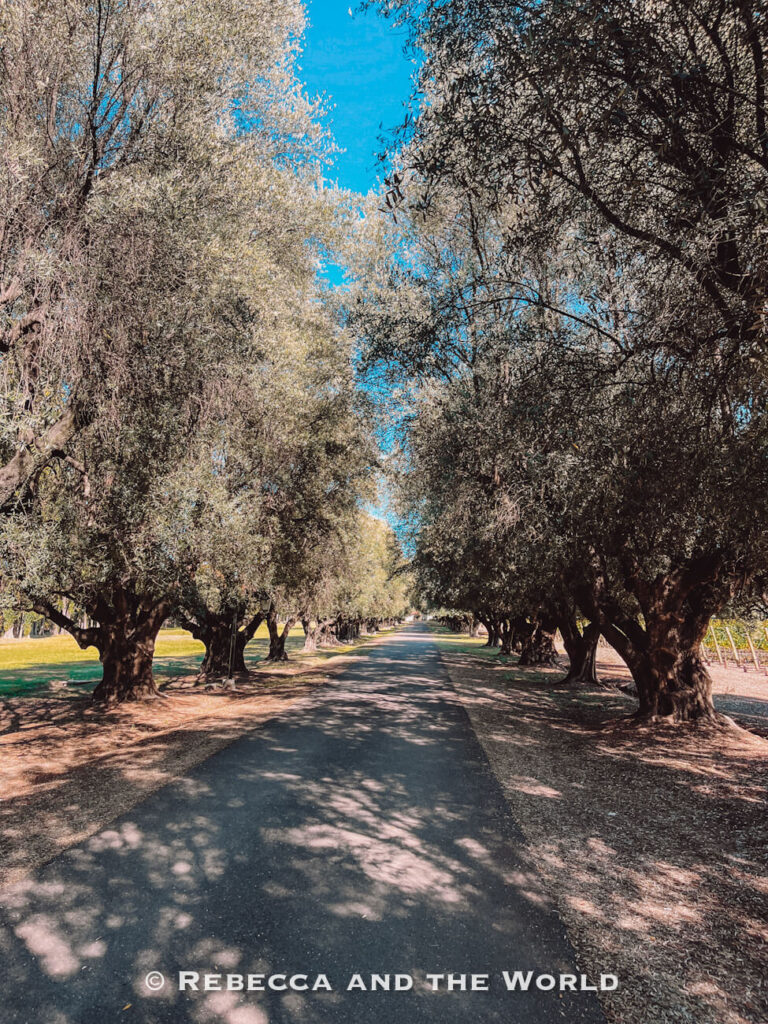
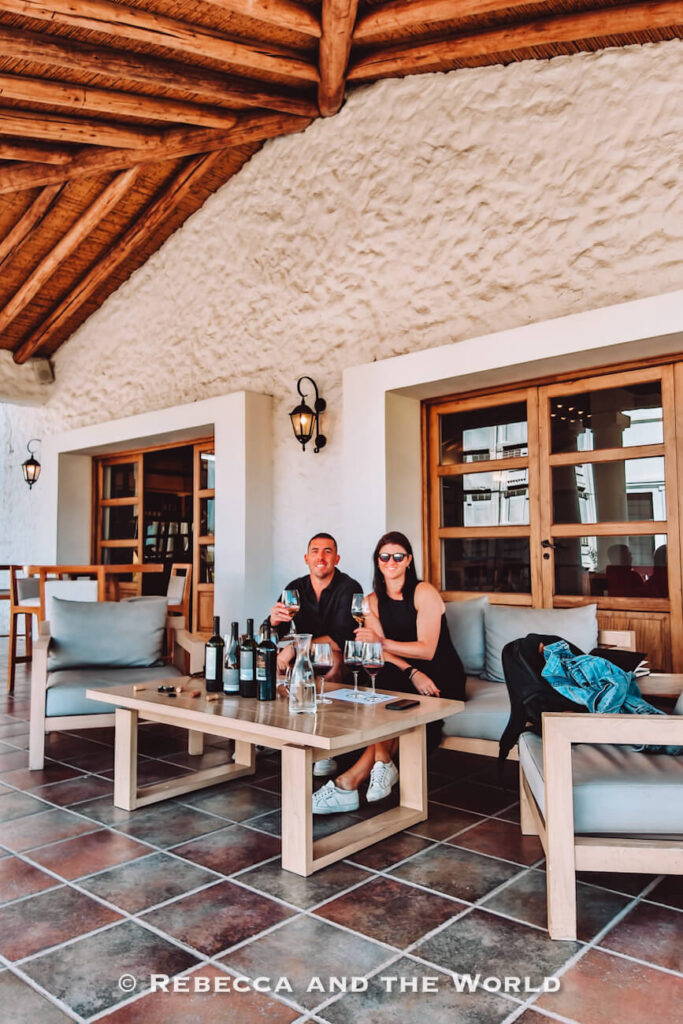
Established in 1888, even arriving at Nieto Senetiner is a bit of an experience. The entry road is a long, dusty stretch lined with olive trees, opening out into wide grounds that feel more like an estate than a tasting room. When we visited, a very friendly dog padded over as if it was his job to welcome everyone in.
From the tasting area, the vineyards roll out towards the horizon and the Andes sit dramatically in the background. The winery has an on-site restaurant and we actually ate here on our first trip to Mendoza back in 2015. If you’re sitting outside on a sunny day, it’s hard to imagine a better place for a long lunch.
On our most recent visit, things didn’t start quite as smoothly. There was a mix-up with the 11am tasting we’d booked, and it was cancelled while we were literally biking our way there (which was frustrating, to say the least). To their credit, the staff did try to make it right, and they poured us a taste of their Malbec that they produce in tiny quantities: just 2,000 bottles a year. It was a seriously delicious drop, and a pretty decent consolation prize.
Bodega Vistalba
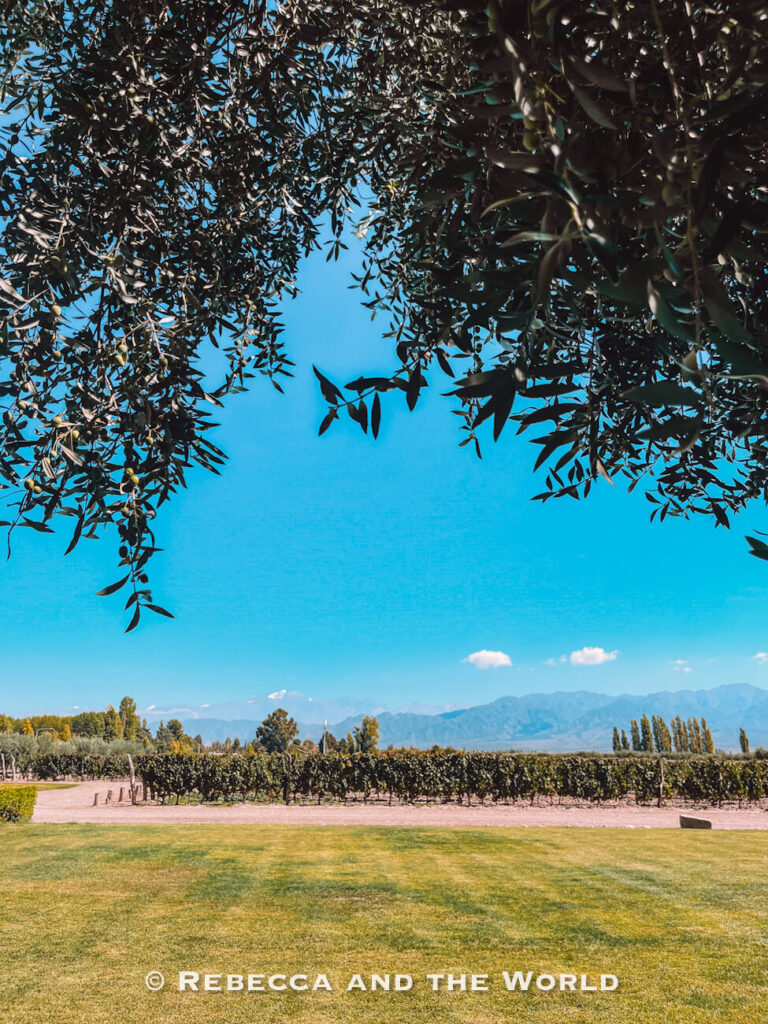
Bodega Vistalba is tucked right into a residential area in Luján de Cuyo, which feels a bit odd as you pull up. But once you’re through the gates, you’d never know you’re so close to suburbia. The vines stretch out in front of you and the Andes rise up behind them.
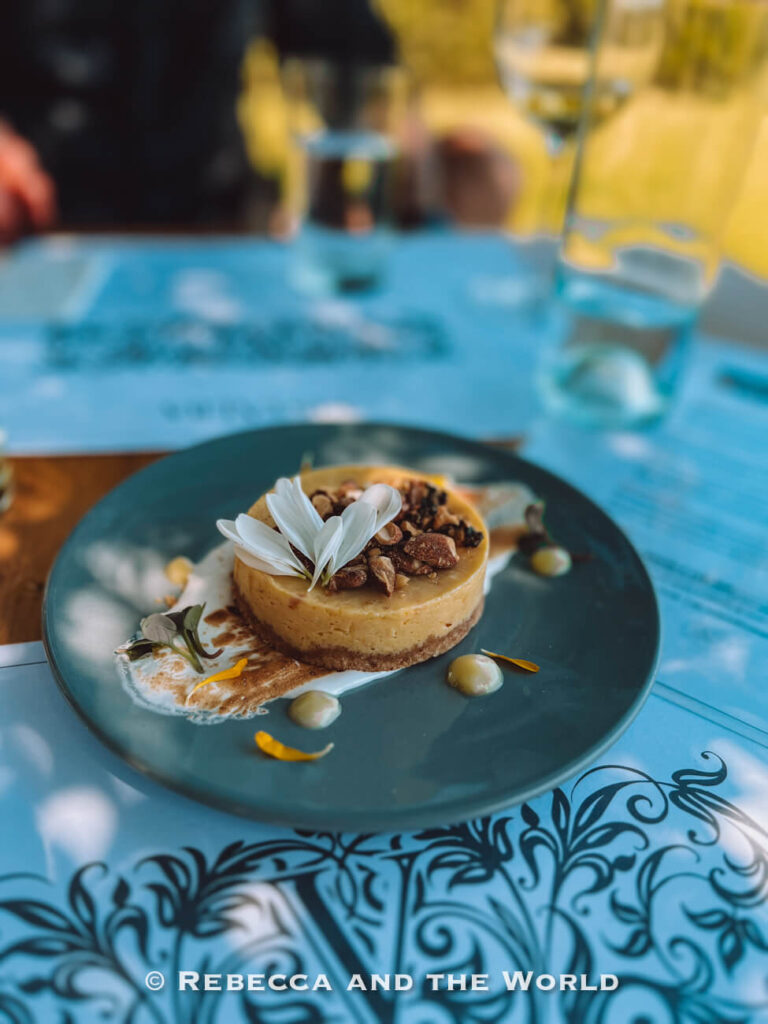
We came here for lunch and it was exactly what I wanted while biking through the vineyards: simple, relaxed and tasty. The menu leans towards easy dishes like sandwiches, quiches and charcuterie platters. We ordered a cheese plate and an Italian sandwich packed with mortadella, mozzarella, fresh pesto and olive oil, then finished with a slice of key lime pie. My tip is to skip buying wine by the glass and order a bottle instead. It’s usually better value, and if you don’t finish it you can take it with you anyway.
If you order lunch, you can join one of the bodega tours afterwards. Vistalba has a few different options, including a fun blending game where they teach you how to combine different varietals to create your own blend. If you want to really test yourself, there’s also the Cata a Ciegas, a blind tasting designed to sharpen your senses and see if you can work out what you’re drinking.
We sat outside under the olive trees, and I loved learning that they actually harvest olives from the very trees shading the tables and make their own olive oils. You can only buy them on site, so it’s worth leaving a bit of room in your bag.
Kaiken
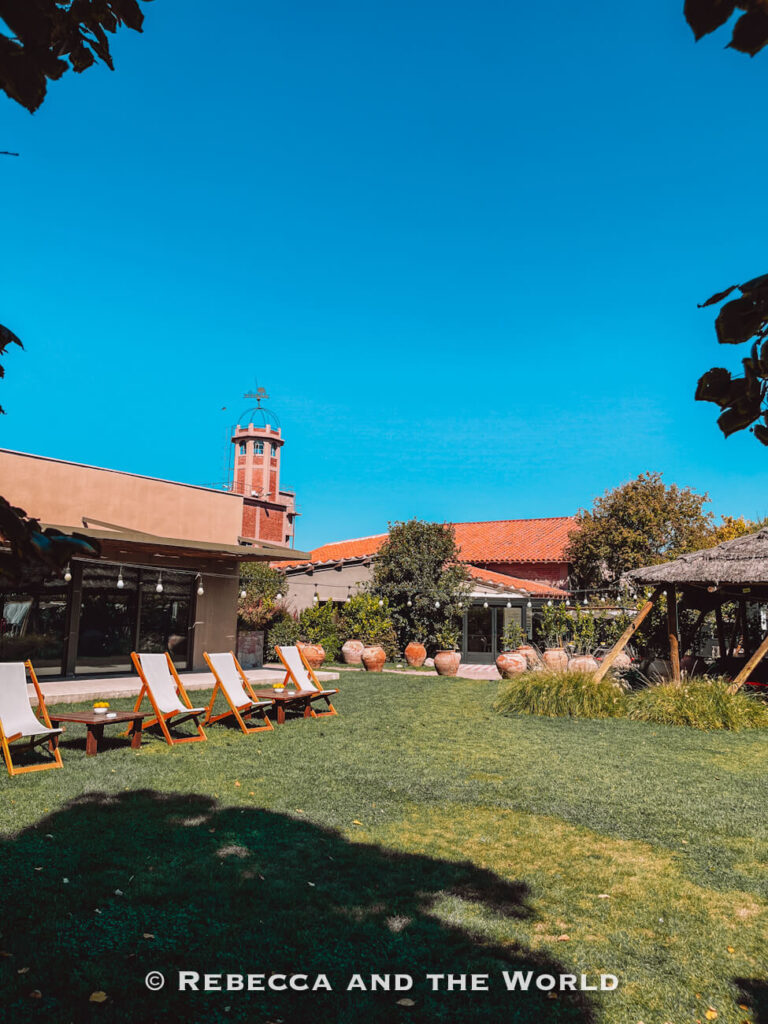
Kaiken is down a dirt road in Vistalba, but it’s one of the most relaxing and beautiful bodegas we’ve visited in Mendoza. It’s also home to Francis Mallmann’s Ramos Generales, one of the best winery restaurants in Mendoza, where guests sit outside under cover and settle in for a long, fire-focused lunch.
Kaiken was founded in 2002 by Chilean winemaker Aurelio Montes, who crossed the Andes to make wine in Mendoza. The production facility itself dates back to 1920 and today the winery has the capacity to produce around 7 million litres.
We booked a tasting and it ended up being one of the loveliest we’ve done, mostly because it didn’t follow the usual format. Instead of touring first and then sitting in a tasting room at the end, we did a progressive tasting with our guide Catalina, stopping along the way for different wines. There were only four of us in the group, which was also nice. One of my favourite stops was inside the huge shed where the concrete tanks are stored, tasting a light but earthy Pinot Noir while standing right among them.
The most surprising part of the visit is underground. In the cellar, Gregorian chants play softly through the space, something we were told the owner believes helps the wine evolve faster thanks to the vibrations.
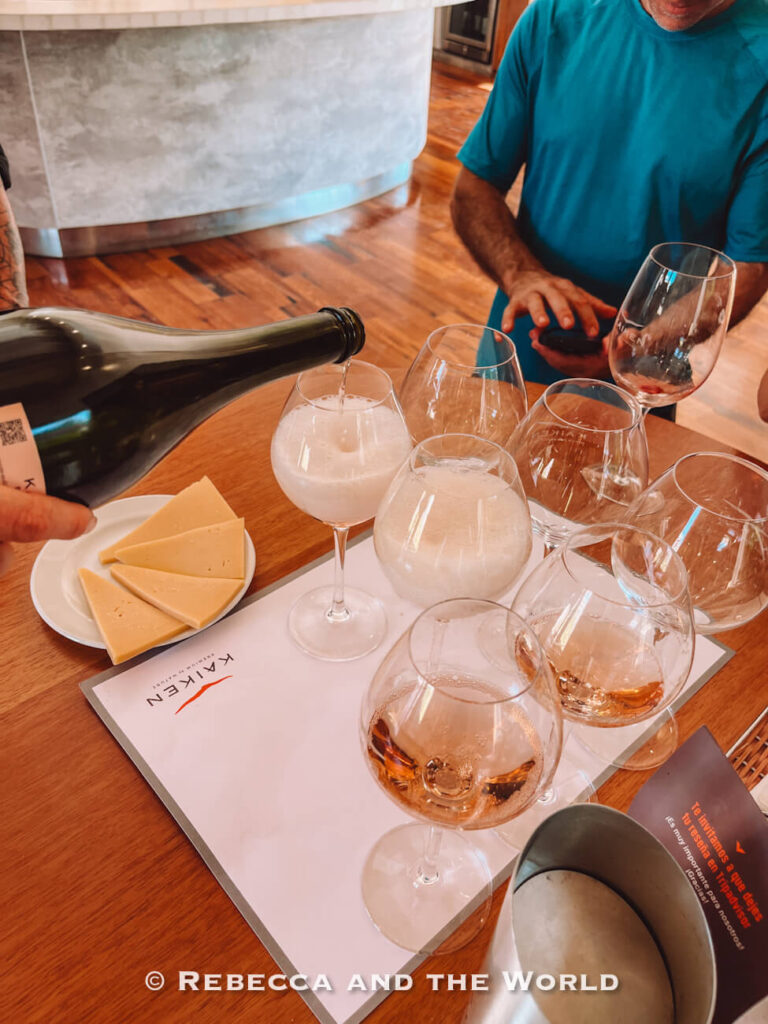
We finished with a small cheese tasting with our final wine (a sparkling made in the champagne method), which was a nice way to round out the experience.
The tastings here are on the more expensive side – we did the cheapest option, Descubriendo Kaiken, which was US$30 per person.
Hacienda del Plata
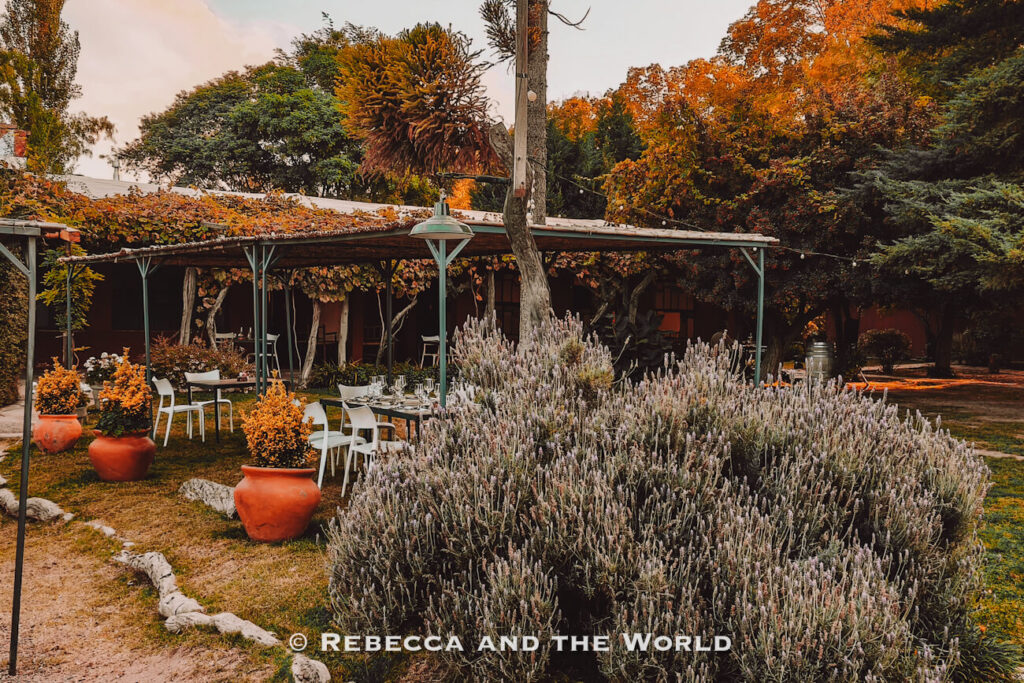
Hacienda del Plata is one of those places that reminds you why Chacras de Coria is such a great base in Mendoza. It sits right on a main road, but once you drive through the gates the noise disappears. We actually stayed here, in accommodation tucked away at the back of the property with views straight over the vines. (Read my full guide to Where to stay in Mendoza.)
This is a small operation by Mendoza standards. The main vineyard in Chacras de Coria is just 4.5 hectares, and they also have another 8 hectares in nearby Carrodilla, still within Luján de Cuyo. Together, the vineyards feed a boutique production that’s much more about quality than scale.
One of the things I loved most was how relaxed a visit to this winery feels. You can wander around the vines by yourself and follow the signs, scanning QR codes as you go to learn more about the property and what they’re growing.
But the best thing about the tour is topping up your glass directly from a tap on the wall connected to a wine tank. Yes please!
There’s a great list of wines to try and a lovely restaurant, too. It feels very homely – in the tasting room there are pictures of the family all over the wall.
Carmelo Patti
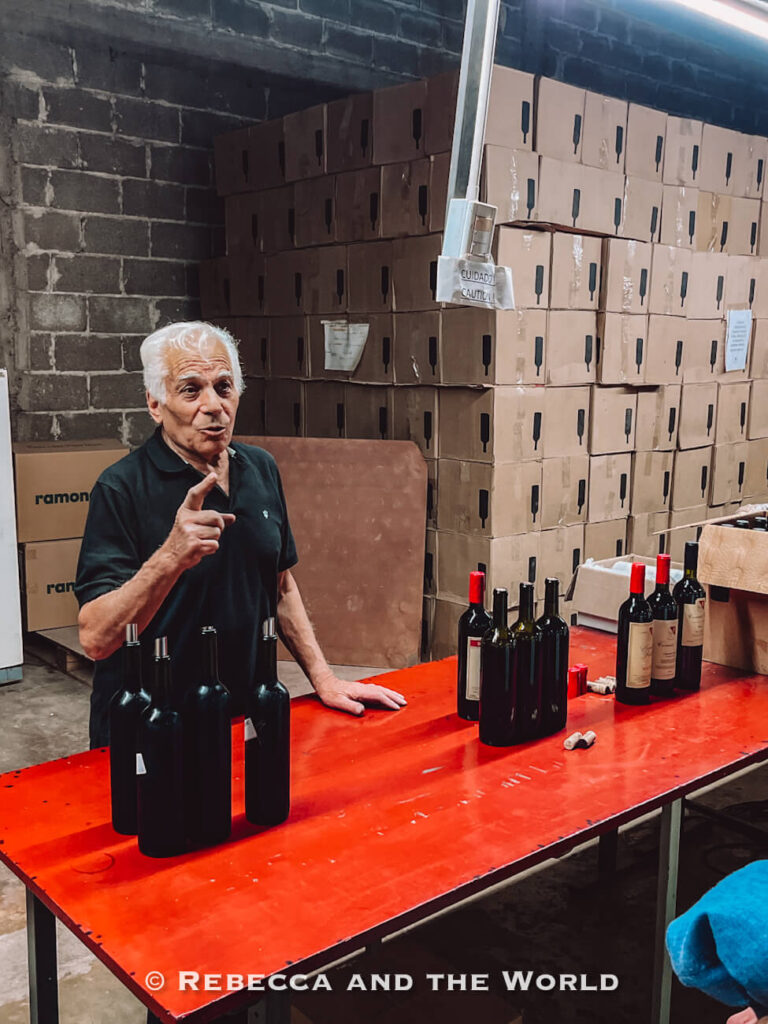
Carmelo Patti is a legend in these parts – Carmelo himself is the reason you come to his winery.
Born in Italy, he’s a proper character in the Mendoza wine world. He’s been making wine since the 1970s, later founding his own boutique bodega in Luján de Cuyo. He has a focus on natural wines, with no chemicals added.
The tasting here feels more like being invited into someone’s working life than a polished tourism experience, and you’ll leave with as many tips as tasting notes. He has strong opinions on everything from storage to serving temperatures – including that 14-16°C is the sweet spot for reds – and he’ll happily show you what to look for in a cork and why you should never store bottles standing upright.
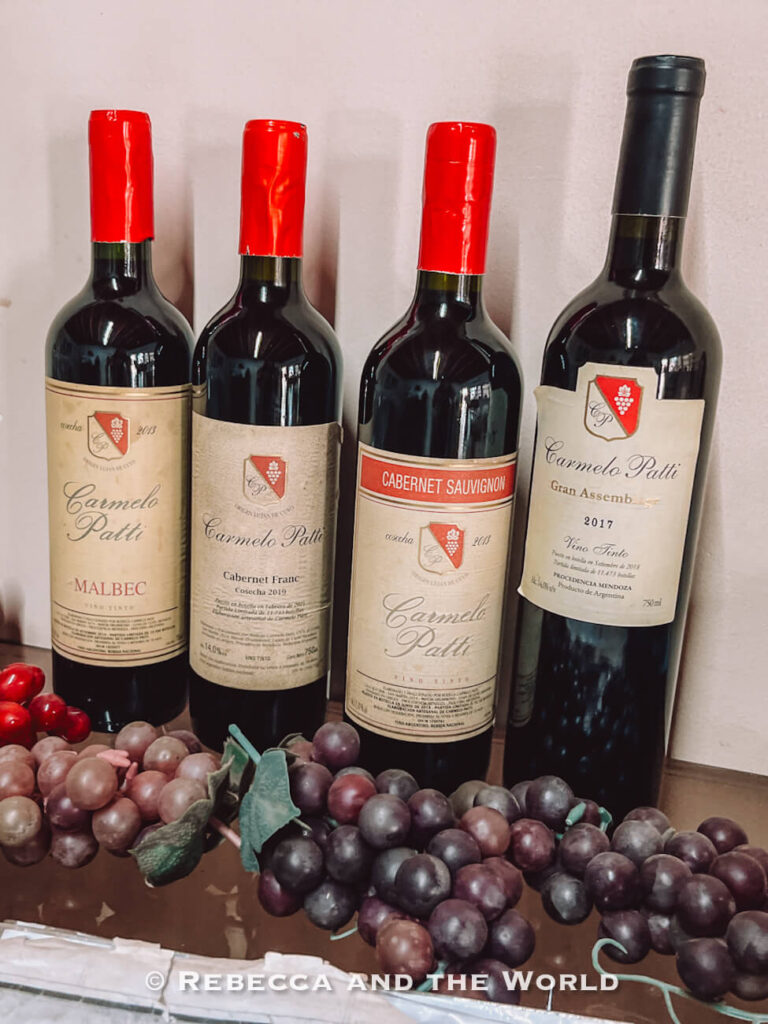
These days, his daughter Claudia helps lead tours, but Carmelo still holds court. We tasted four wines: a 2021 Cabernet Franc, 2019 Malbec, 2018 Cabernet Sauvignon (with serious time behind it) and the 2018 Gran Assemblage, a blend where each varietal is harvested and fermented separately before being blended together.
We bought a bottle of the Malbec to take home, partly because it was excellent and partly because these wines are hard (really: impossible) to track down outside Argentina.
This was our second visit, and it was just as memorable as the first time back in 2015 – we even showed Carmelo the photo we took with him then, and of course had to take an updated one.
Bonus: tastings are free!
Wineries in Valle de Uco
The Valle de Uco is a little further out from Mendoza City and comprises three different areas: Tupungato, San Carlos and Tunuyán. The Uco Valley sits higher than Mendoza’s other wine regions, with many vineyards planted at altitude along the foothills of the Andes. That elevation brings cooler temperatures and big day-night swings, which helps grapes ripen more slowly and hold onto their acidity, giving wines a bolder flavour. The intense sunlight at altitude also encourages thicker grape skins, which can mean deeper colour, more tannin and more concentration in the glass.
There are wineries out here with accommodation worthy of planning a honeymoon in Argentina. Here are my favourite wineries in the Uco Valley.
Andeluna
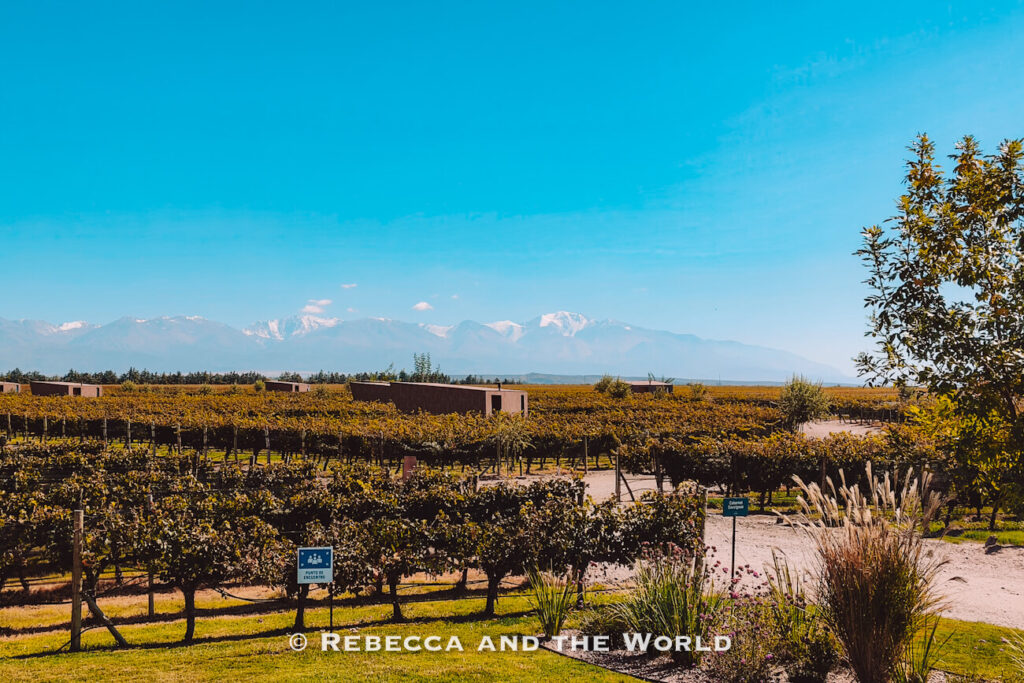
Andeluna is one of those Uco Valley wineries where the setting is almost as memorable as the wines. The name is a simple mash-up of its surroundings – Ande for the Andes and luna for the moon – and it suits the place perfectly once you see those jagged peaks sitting behind the vines.
The winery sits at over 1,300 metres above sea level, and the altitude really shapes what ends up in the glass. Andeluna’s vineyards cover around 80 hectares, with the first plantings in the late 1990s and the first harvest a few years later. Today, they produce in much larger volumes than many visitors expect from such a remote-feeling place, with a strong export focus.
We visited for a tasting and tour, moving through different parts of the bodega and trying four wines as we went – tanks, cellar, then finishing in the tasting space. Cabernet Franc is the star here. It’s often used as a blending grape, but Andeluna has long championed it as a standalone varietal, including a flagship 100% Cabernet Franc that’s frequently credited with helping push the variety forward in Argentina.
With the Andes looming so close and the vineyard stretching out in front of you, it feels like you’re in the middle of nowhere, in the best way. On a clear night, I can only imagine how good the stargazing would be if you stayed on site – which you can do at Andeluna Winery Lodge.
Domaine Bousquet
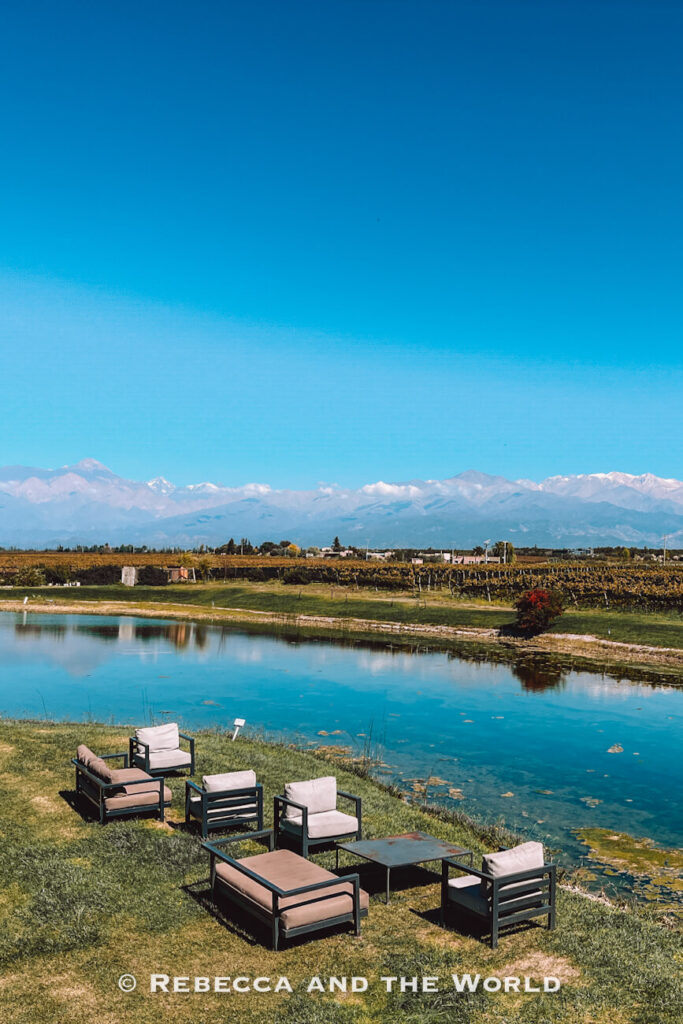
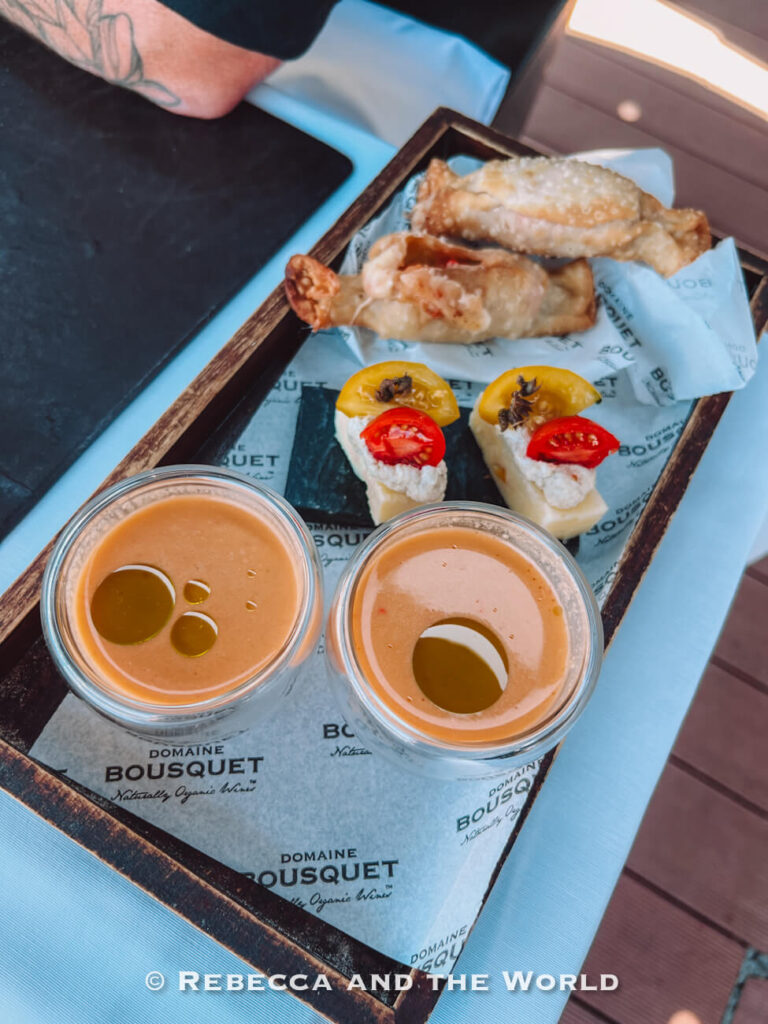
We still haven’t done a full winery tour at Domaine Bousquet, but we have eaten at their restaurant, Gaia, and I’d happily go back just for that. The name is a nod to Gaia, the figure from Greek mythology who personifies the Earth, which feels fitting given Domaine Bousquet’s strong focus on organic winemaking in the Uco Valley.
Lunch at Gaia is designed for lingering. We did the four-course menu with matching wines, and it stretched out over a lazy two hours (we were worried the Bus Viniviticola might leave without us!). The standout dishes for us were the salmorejo (a cold, tomato-based soup from the Córdoba region of southern Spain) to start, then a smoky eggplant dish finished with olive oil – all simple flavours done really well.
The setting is a big part of the appeal. The restaurant looks out over a small lake, with vineyards and the Andes as the backdrop.
If you’re putting together a day trip to the Uco Valley and only have time for one long lunch, Gaia is an excellent choice.
Salentein
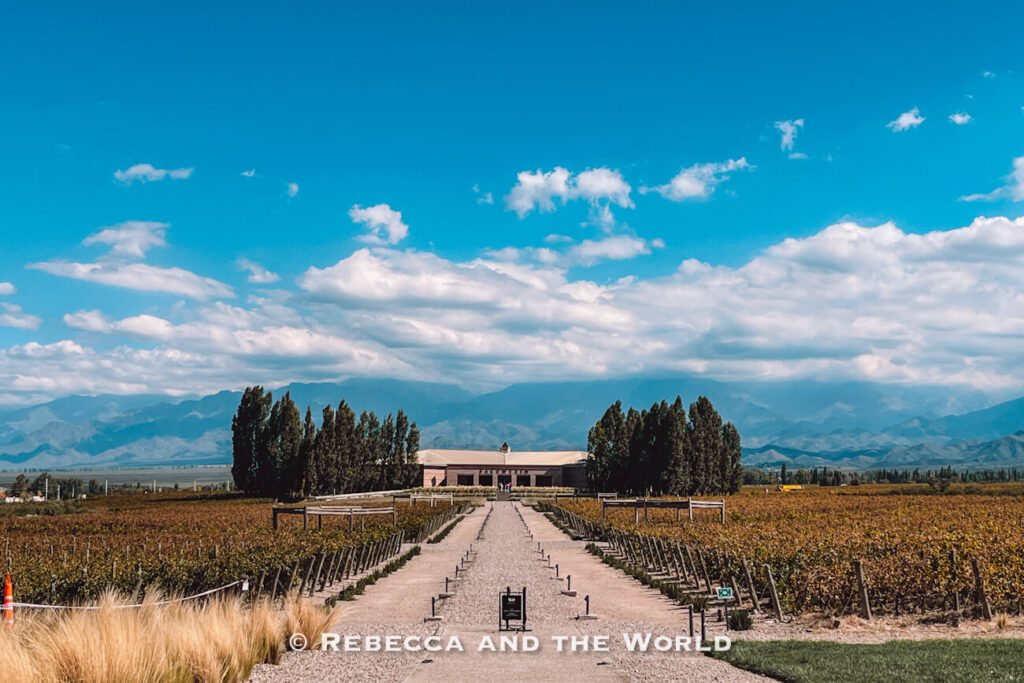
If I had to sum up Salentein in one word, it would be “wow”. This is the winery you’ll often see in photos of Mendoza’s Uco Valley and in person it’s even more impressive. Salentein was founded in the mid-1990s by Dutch entrepreneur Mijndert Pon, and it’s often credited as a Uco Valley pioneer.
The main winery building is designed to blend into the landscape and support a gravity-fed winemaking system, so it feels both architectural and purposeful.
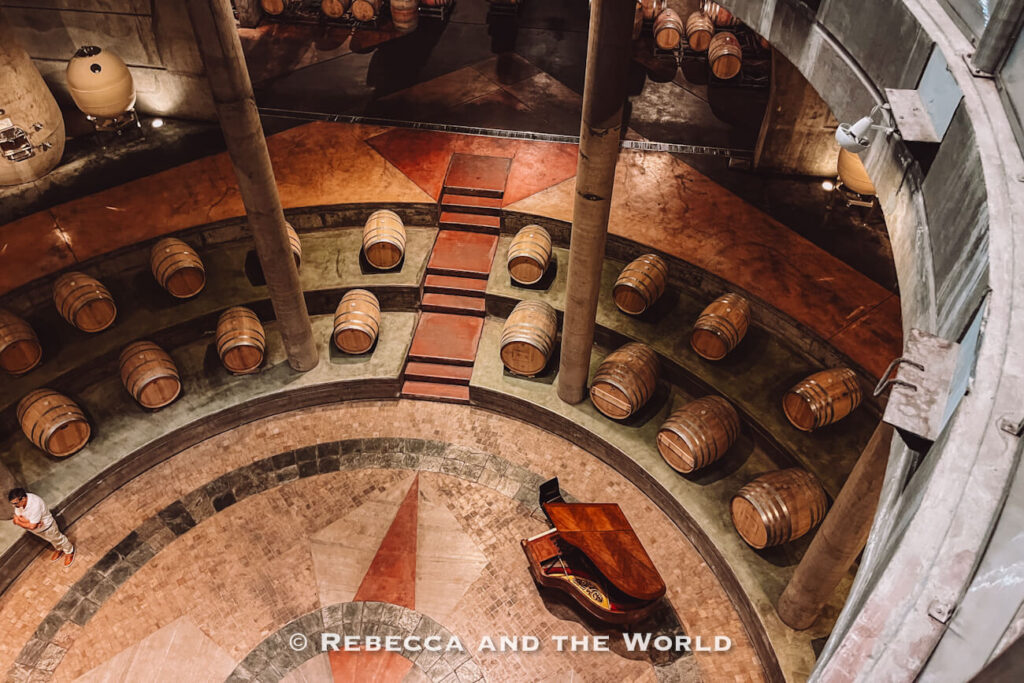
The experience begins at Killka, Salentein’s gallery and cultural space, which opened in 2006. It’s a beautiful start to a visit, and it sets the tone that this is a place aiming for more than just a quick tasting. From there, you walk across an open area with vineyards on either side to the winemaking building, where the first floor houses the fermentation area and everything feels grand in scale.
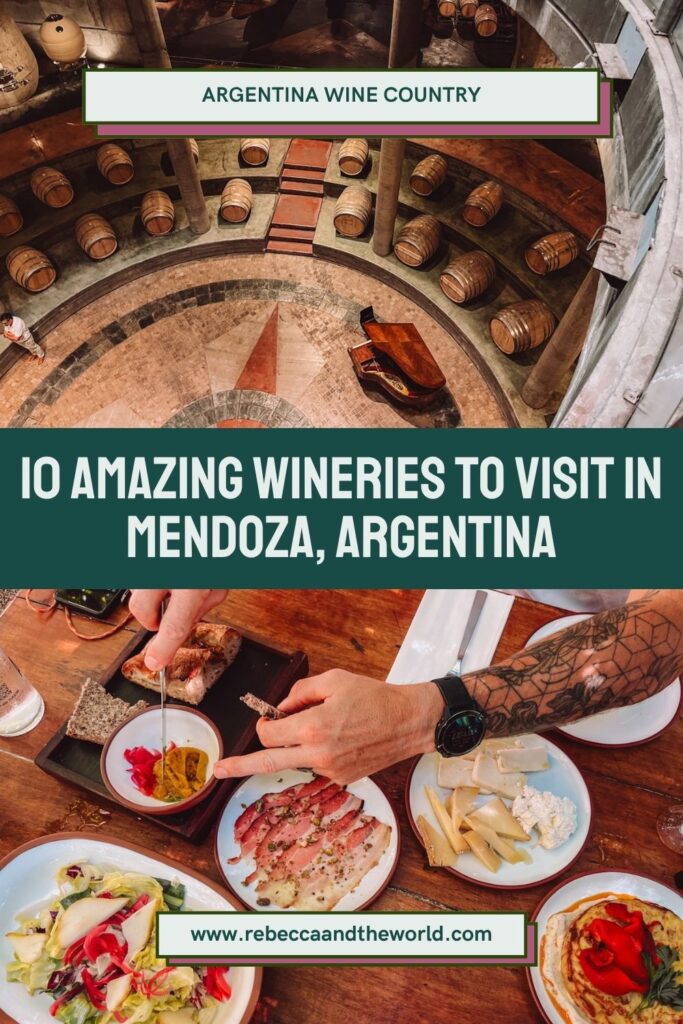
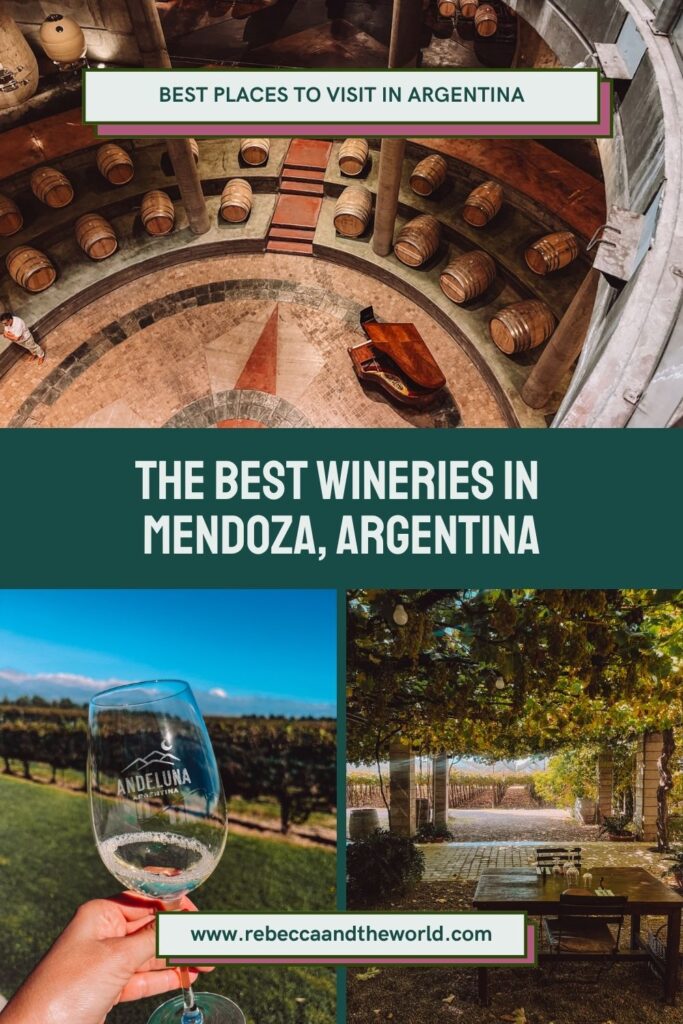
Then you head down, around nine metres below ground, and the temperature change hits immediately. The underground cellar is the showstopper. It’s designed like an amphitheatre, with incredible acoustics, and if you stand in the right spot even a whisper seems to travel. The cellar sits at a constant cool temperature, which makes it ideal for ageing and storage.
This was also where we tasted three wines, paired with snacks and guided by Paula, who brought the whole place to life with context and detail.
This was the standout winery in Valle de Uco for me – an incredible experience in a mind-blowing location. As you can imagine, tastings aren’t cheap here (they start from around US$57) but it is an experience you won’t forget.
There’s a restaurant onsite, but it’s a short drive from the winery. There’s also country-style accommodation at the nearby farm.
Wineries in Maipú
Maipú is Mendoza’s most accessible wine region, sitting close to the city. It’s one of the province’s oldest winemaking areas, with plenty of traditional bodegas and tree-lined roads. You’ll also notice olive groves everywhere, and many wineries here produce olive oil alongside wine. Because distances between stops are often shorter, Maipú is one of the best regions for getting around by bike or using a hop-on-hop-off style bus service.
Bodega Santa Julia
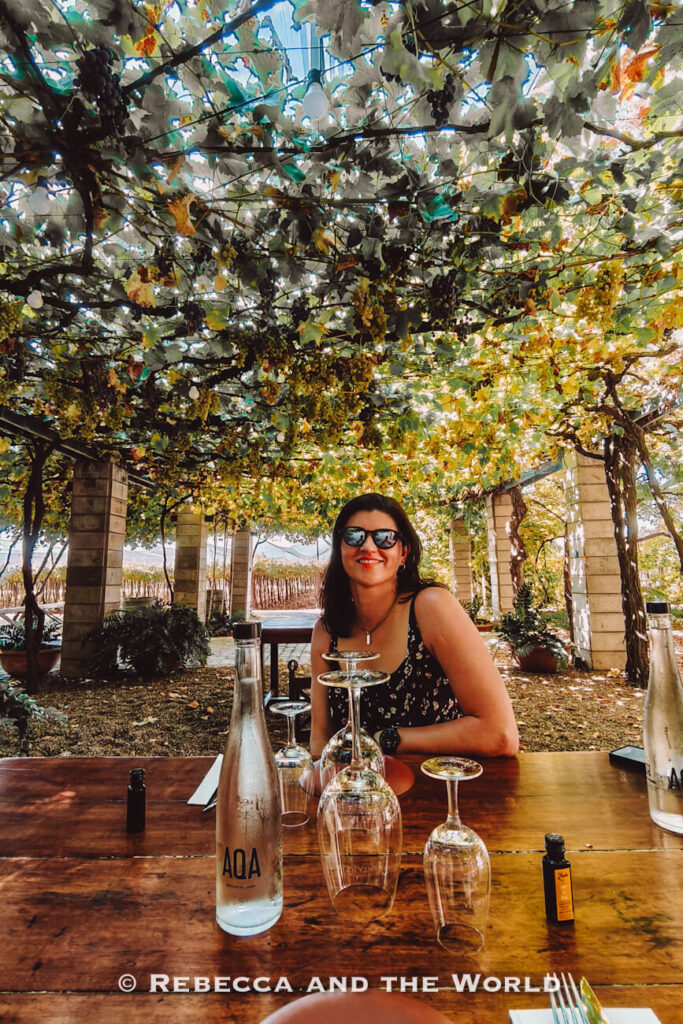
Bodega Santa Julia is part of the Zuccardi family, one of the best-known wine labels in Argentina. This winery produces natural and organic wines, and visiting here isn’t a stuffy, formal experience at all.
We booked the picnic in the garden and it was exactly as peaceful as it sounds: lunch under the vines with clusters of grapes hanging overhead. They set you up with a picnic basket so you can carry everything out into the garden, or you can remain at your own table.
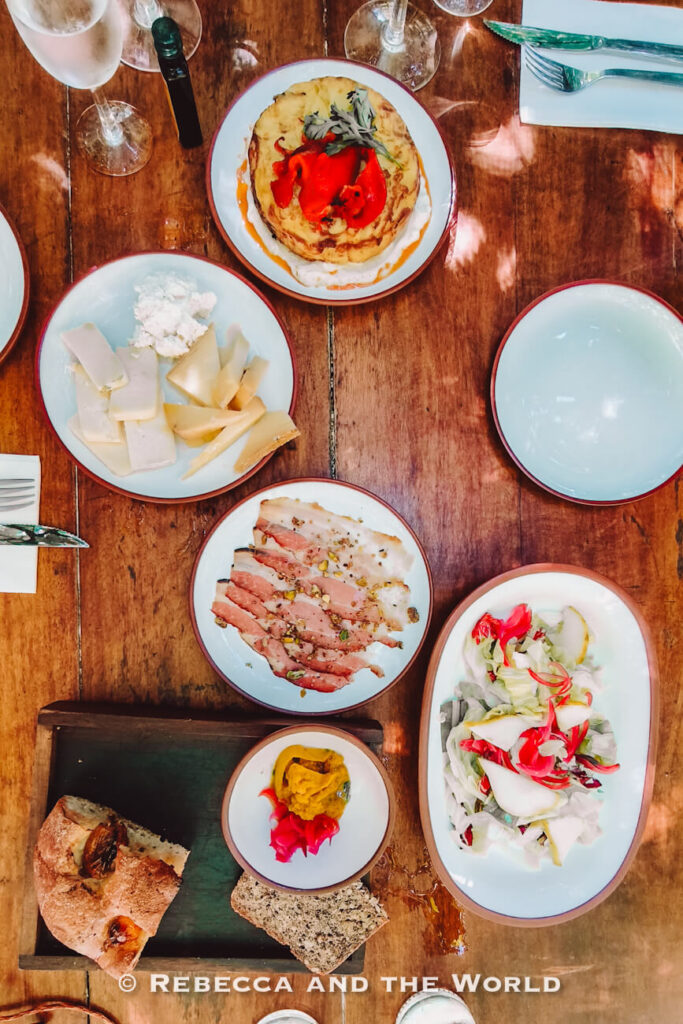
The food is generous. Ours started with a spread of cheese, bread, salads and a papa tortilla, plus pancetta topped with candied pistachios. Just when we thought we’d peaked, a second course of hot sandwiches arrived (salchichón and pastrami with pickles), and then dessert was a tarta de coco and a giant alfajor (one of my favourite things to eat in Argentina). It was so much food we ended up taking the sweets away with us.
The picnic also included a bottle of wine, sparkling water and an extra glass of bubbly at the end. We needed the two hours we had to work our way through it all.
As well as wine tastings, Santa Julia has some more hands-on activities, including a bike wine tour through their vineyard (with empanadas to end) and a cooking class with their onsite chefs (wine included, of course!).
Santa Julia is also big on olive oil. You can buy some bottles of the Zuccardi olive oil in their shop (as well as their fun wines in cans and boxes).
→ READ NEXT: Where to Stay in Mendoza, Argentina
Final thoughts: Best wineries in Mendoza
Mendoza is the kind of wine region that rewards a little planning. There are a lot of wineries to choose from, but once you’ve worked out which area you want to focus on – Luján de Cuyo, Maipú or the Uco Valley – it becomes much easier to build a day around a few vineyards.
I’ll keep adding to this list as I visit more bodegas, but I hope these favourites help you narrow down where to start. If you’ve got a winery you loved in Mendoza, leave it in the comments – I’m always looking for the next place to put on the research list.
FAQs: Visiting Mendoza wineries
Do you need to book wineries in Mendoza in advance?
Yes, for most wineries you should book ahead, especially if you want a tour, a tasting or lunch.
How many wineries should you visit in one day in Mendoza?
Two wineries in a day is the sweet spot for most people, particularly if you are adding lunch. A realistic format is one morning tasting, a long lunch with wine, then either a second tasting or a shorter, more casual stop. Three wineries can work if they are close together and at least one visit is relatively quick, but it can start to feel rushed. Four is usually too many unless you are doing very brief tastings and not taking tours.
What’s the best Mendoza wine region to visit?
How can I choose?! It depends on what you want from the day. Luján de Cuyo is a great all-rounder. It’s close to Mendoza city and home to some of the region’s most established wineries. Maipú is the most convenient and often feels more local and traditional. The Uco Valley is the most dramatic in terms of scenery and the altitude helps create some amazing wines. If you can, spend a few days in Mendoza and visit all three!
Is it safe to self-drive to wineries in Mendoza?
In terms of roads and navigation, yes, it’s generally straightforward around Luján de Cuyo and Maipú, and many people do it. Renting a car in Argentina is easy. The bigger issue is alcohol. If you are tasting properly, self-driving is not the safest choice. Argentina has a 0% blood alcohol limit, however Mendoza (and some other provinces) has retained the 0.05% limit. Having said that, make sure you have a responsible designated driver and stay safe!
What’s the best time of year to visit Mendoza?
The most popular time is late summer to early autumn, when harvest happens. Harvest timing can shift year to year, but it’s generally around February to April depending on the varietal and the sub-region. Spring is also a beautiful time to visit, with mild weather and green vines, and it’s often a little less busy. Winter can be surprisingly lovely for winery lunches and clear mountain views, and you will sometimes see snow on the Andes, but there are no leaves on the vines.
Can you visit Mendoza wineries without speaking Spanish?
Yes. Many wineries cater to international visitors and can offer tours and tastings in English, particularly larger or more tourism-focused bodegas. That said, not everywhere has English-speaking staff available for every time slot, so it’s worth checking when you book.
Are Mendoza wineries family-friendly or adults-only?
It varies. Some wineries are very adult-focused, especially those that run formal tastings or multi-course wine pairings. Others are more relaxed and welcoming for families (Argentina is generally a very family-friendly destination). Websites will usually be clear if they don’t accept children on tours or tastings.
Did you find this article helpful? Consider buying me a coffee as a way to say thanks!
What are your favourite wineries in Mendoza? Drop your recommendations or questions in the comments below.
Need help planning your Argentina trip? 🇦🇷
Feeling overwhelmed about planning your trip to Argentina? I get it. And I can help! I offer one-to-one travel consultation calls to help you plan your trip to Argentina. In an hour, we can map out a realistic itinerary or work through your specific questions so you can book an incredible trip. Save hours of your time with my local knowledge and expertise.
Read next
Before you go, you might like these South America travel guides.
- 3 Days in Mendoza, Argentina: The Perfect Wine Country Itinerary
- Where to Stay in Mendoza: The Best Areas + Hotels for Every Budget
- How to Plan a Maipo Valley Day Trip from Santiago
- 50 Incredible Things To Do in Argentina
- How to Plan a Trip to Argentina
- 19 Argentina Travel Tips for First-Time Visitors
ARGENTINA TRIP ESSENTIALS
- Book your flight to Argentina online with Skyscanner. I like how this site allows you to find the cheapest days.
- One thing I always purchase is travel insurance! Travel Insurance Master allows you to compare across multiple policy providers, while SafetyWing is great for long-term travellers and digital nomads.
- Wise is my choice for sending and receiving money and spending money overseas (you can get a digital and physical card).
- Find a great hotel in Argentina. Check prices on Booking.com and Expedia online.
- Check out the huge range of day tours throughout Argentina on GetYourGuide or Viator. I love a good food tour in particular!
- Saving money? Check out the range of free walking tours across Argentina with GuruWalk (don’t forget to tip!).
- How to get around? I use DiscoverCars for car hire, or Motorhome Republic and Jucy for campervan/RV rental. For buses, trains and ferries, I use 12GO, Busbud and Omio.
- Grab an e-sim to stay connected while on the road.
- A copy of the Lonely Planet guide to Argentina will be handy. Also pick up a Spanish language phrasebook to help you navigate your visit.
- Keep those bottles of wine you’ll be buying safe in these wine bags.
- Check out my Amazon shop for my fave travel items – everything from backpacks and suitcases to travel adapters and beauty products.
PIN IT FOR LATER: BEST WINERIES IN MENDOZA, ARGENTINA
Save this guide to Mendoza wineries to Pinterest so you can plan your trip later.