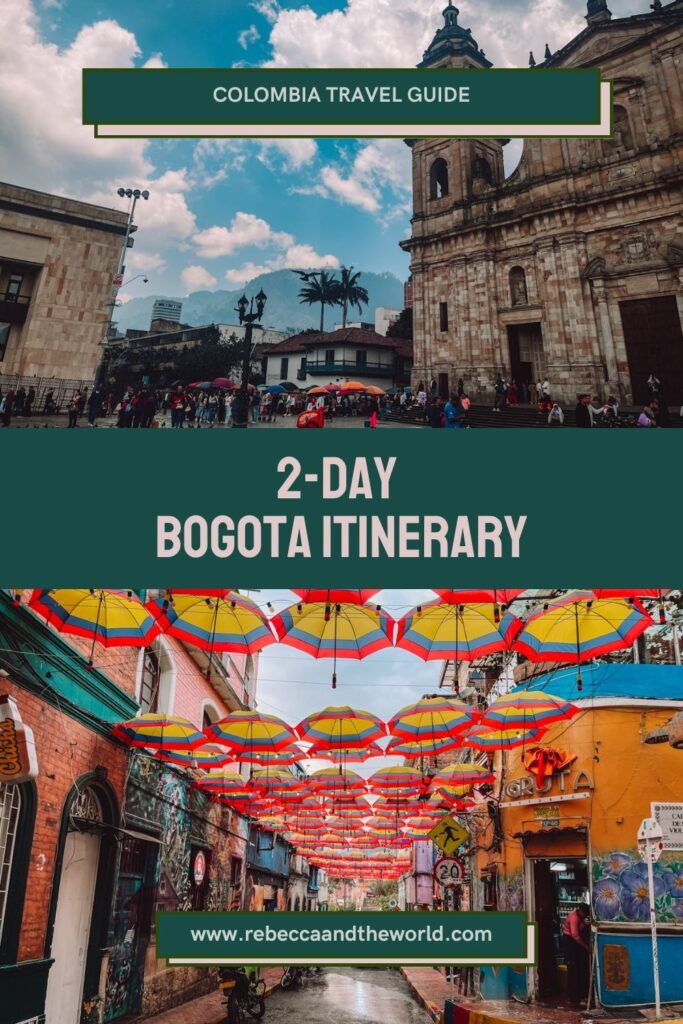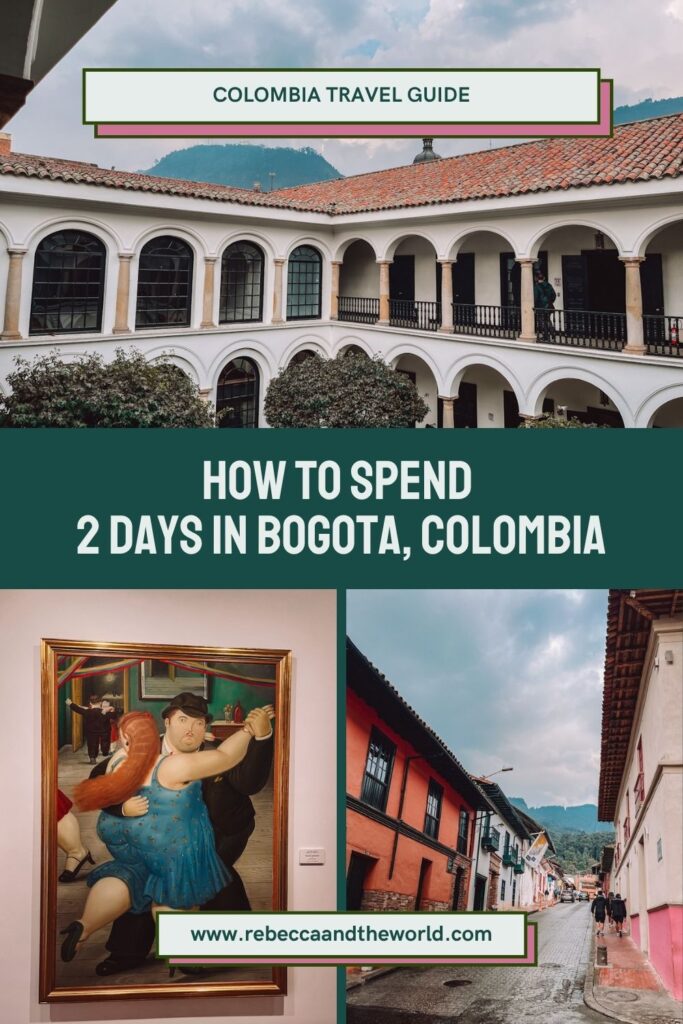

Only got 2 days in Bogotá? Here’s a first-timer’s itinerary that hits the highlights: history, culture and food.
Bogotá tends to divide people. Some travellers breeze through on their way to Cartagena or the coffee region and write it off as grey, hectic and rainy. I get it, because it can feel big and a bit overwhelming at first.
But if you give it 2 days – and plan those 48 hours well – Bogotá is a fascinating city. It’s green, packed with serious history and one of the best places in Colombia to eat well.
This 2 days in Bogota itinerary is designed for a first-time visit and includes a mix of the historic centre, one standout museum and a couple of memorable meals without running yourself into the ground. Two days is enough time to get your bearings and see the highlights, as well as eat some great food.
This blog post may contain affiliate links, meaning if you book or buy something through one of these links, I may earn a small commission (at no extra cost to you).
Snapshot: 2-day Bogotá itinerary
Day 1: La Candelaria walking tour + museum time + dinner in Chapinero
Day 2: Museum + afternoon food tour + Monserrate for sunset + evening out
Important! Many of Bogotá’s museums are closed on Mondays, so if your 2 days in Bogota include a Monday you’ll want to reshuffle the order of the days. The Botero Museum is closed on Tuesday, so that may affect your plans, too.
Map of Bogotá
Everything on this 2-day Bogota itinerary is laid out on the map below, with Day 1 sights in light blue and Day 2 in dark blue. Click the arrow in the top left-hand corner to expand the list.
Day 1: Historic Bogotá
Morning
Start your first morning with breakfast at your hotel or a café close by. Bogotá sits at 2,640 metres above sea level, and even if you don’t feel the altitude straight away, it can show up as a mild headache or that slightly puffed feeling when you’re walking uphill. Drink plenty of water!
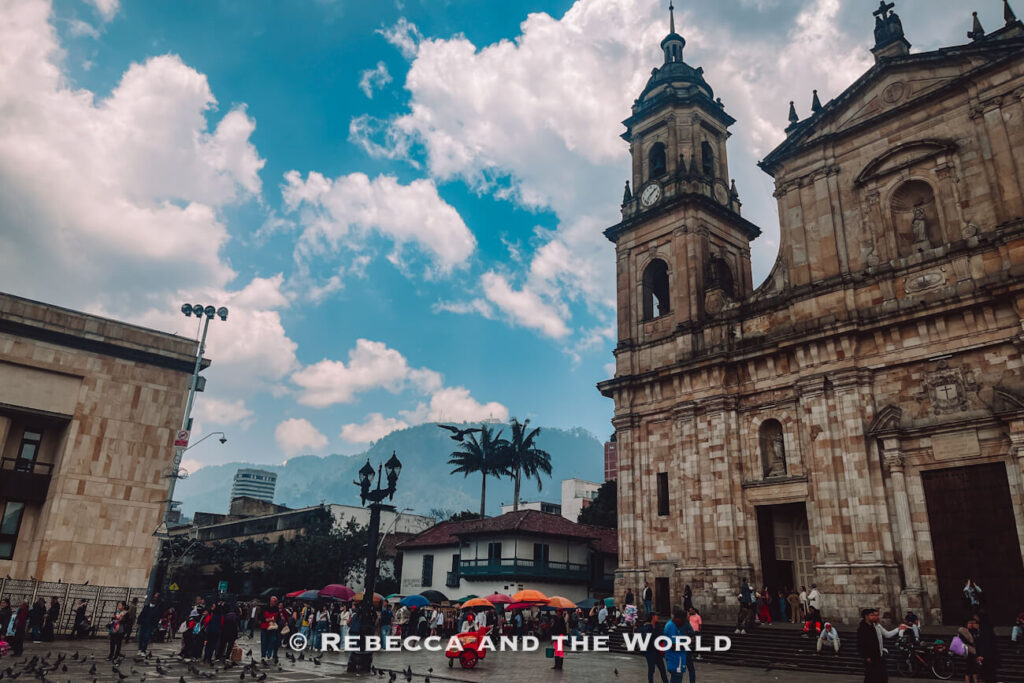
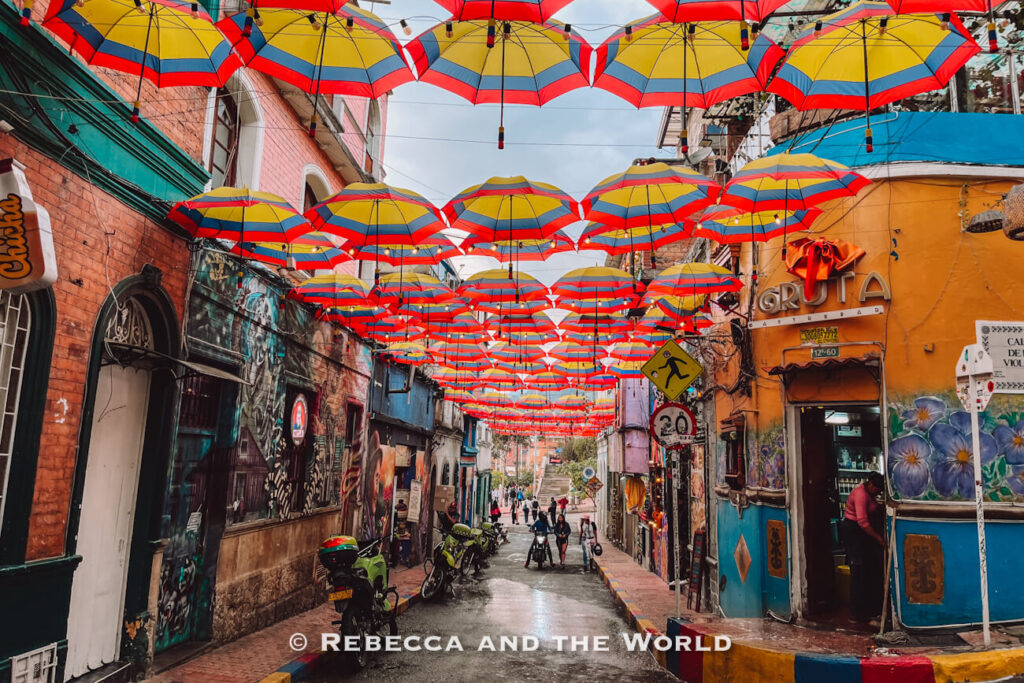
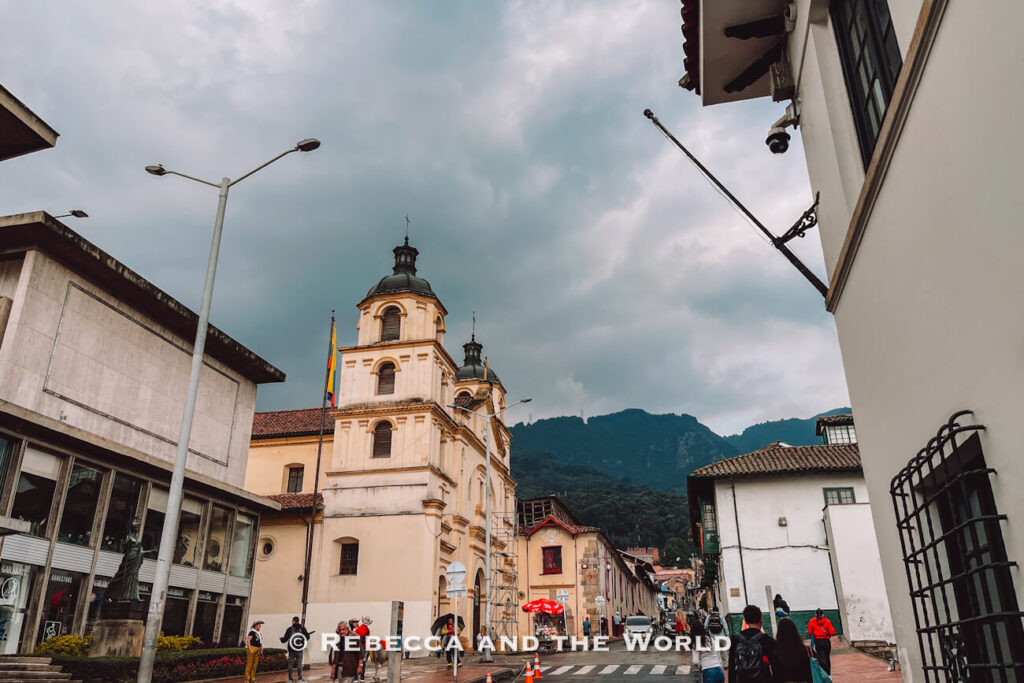
By mid-morning, head into La Candelaria, Bogotá’s historic heart. The best way to get your bearings here is with a walking tour. Not only will you cover the key sights efficiently, you’ll also get context that goes well beyond the usual Colombia headlines.
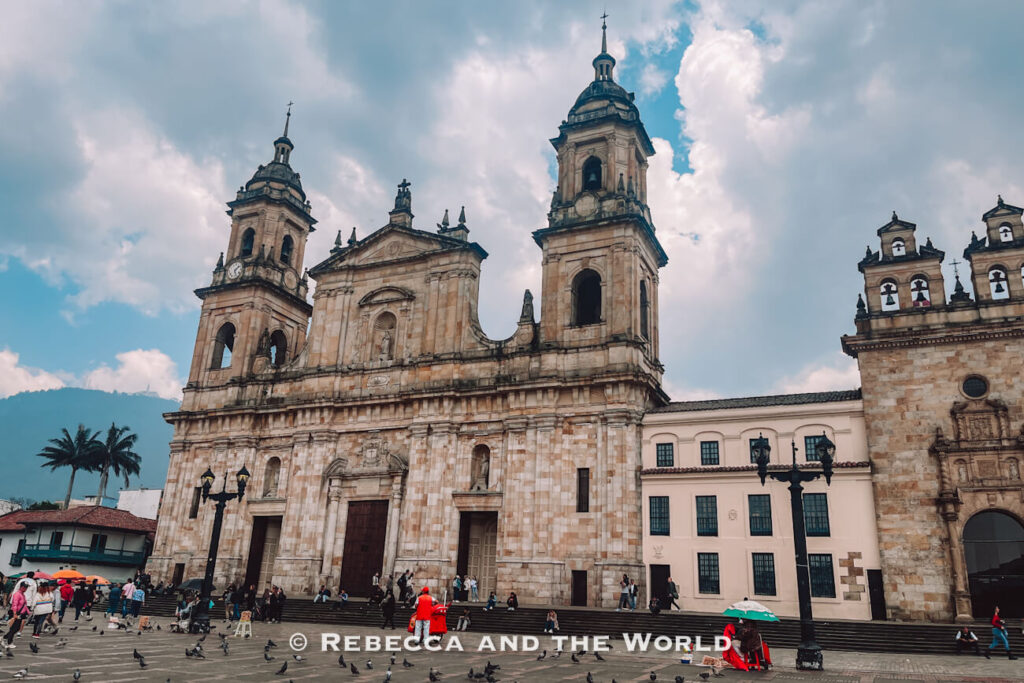
We did this free Bogota walking tour (and loved it). It starts at the Gold Museum and finishes at the Gabriel García Márquez Cultural Centre, and along the way you’ll hit the big landmarks (like Plaza Bolívar) plus plenty of smaller streets and corners that you’d likely miss on your own. It even included a chicha tasting.
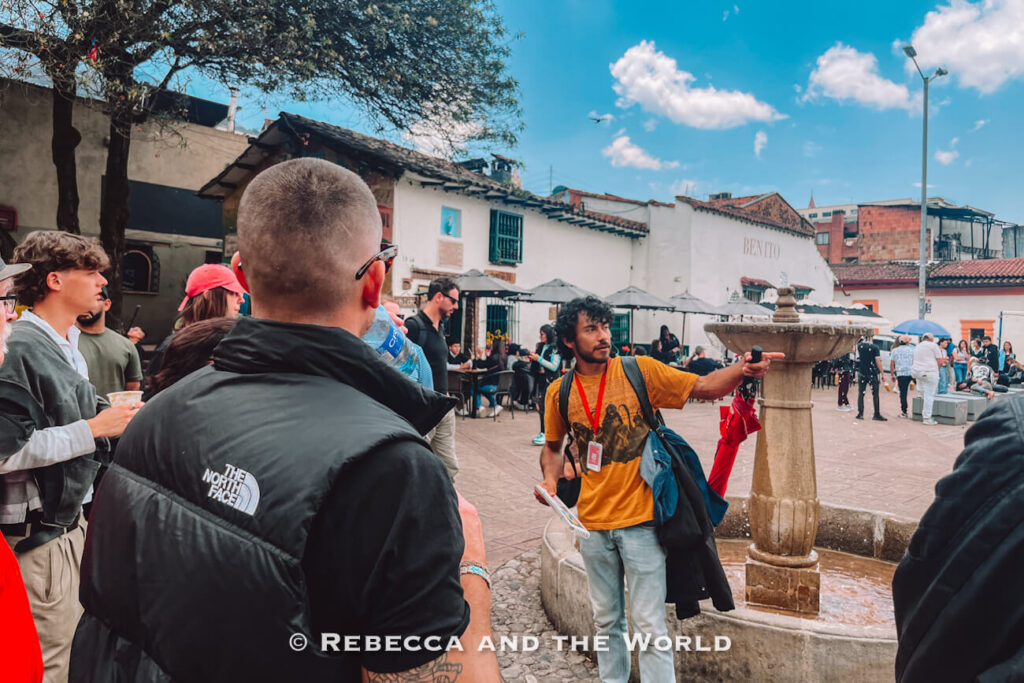
Our guide Daniel was brilliant – equal parts history, fascinating stories and dry humour – and happy to answer all the random questions we threw at him. He turned some of the stereotypes about Colombia on their head and explained why the TV show Narcos glorified Pablo Escobar, describing narcotrafficking as a “cancer to Colombia” that has resulted in violence and corruption.
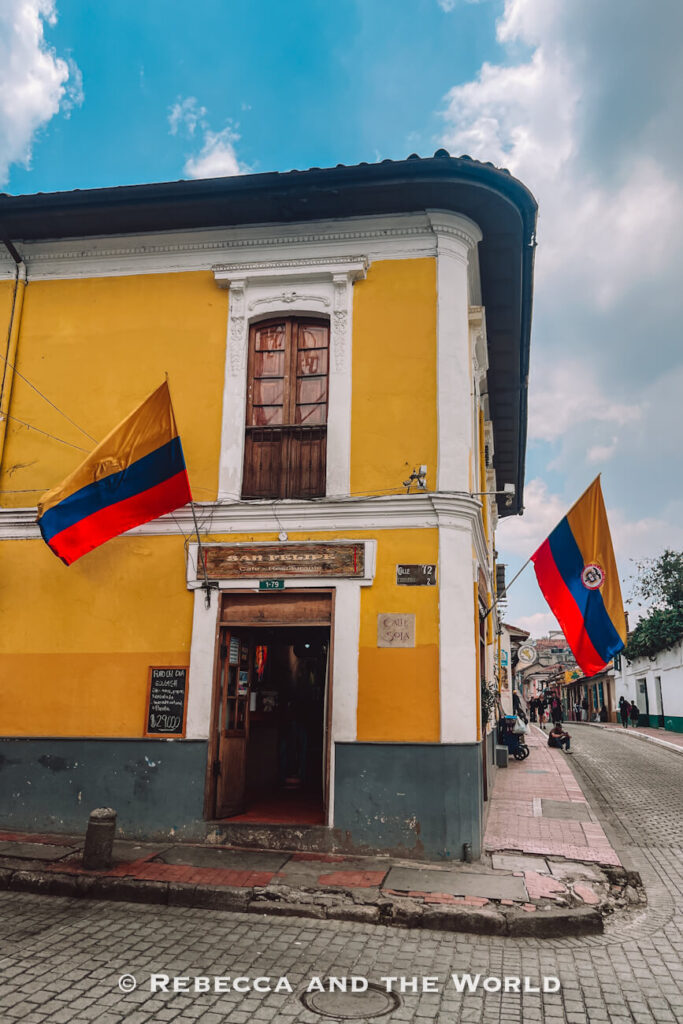
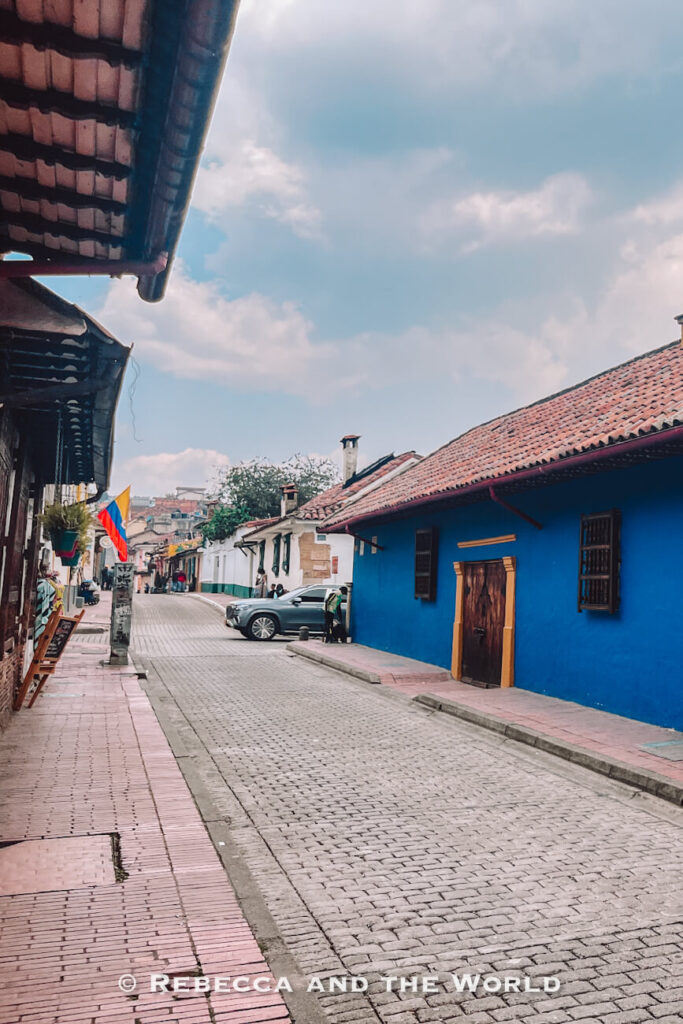
Booking tip: Even though these are “free” tours (you tip at the end), you’ll need to reserve a place online so the guides can plan for numbers.
Afternoon
After the walking tour, you’ll be perfectly placed for a late lunch in the historic centre. Head to La Puerta Falsa, one of Bogotá’s classic old-school eateries. It’s tiny and it’s popular, so expect a line around peak lunchtime.
This is a good spot to try ajiaco, Bogotá’s signature soup made with chicken, potatoes and corn, usually served with capers and cream on the side. It’s warming, filling and exactly what you want at altitude, especially if the weather has turned moody.
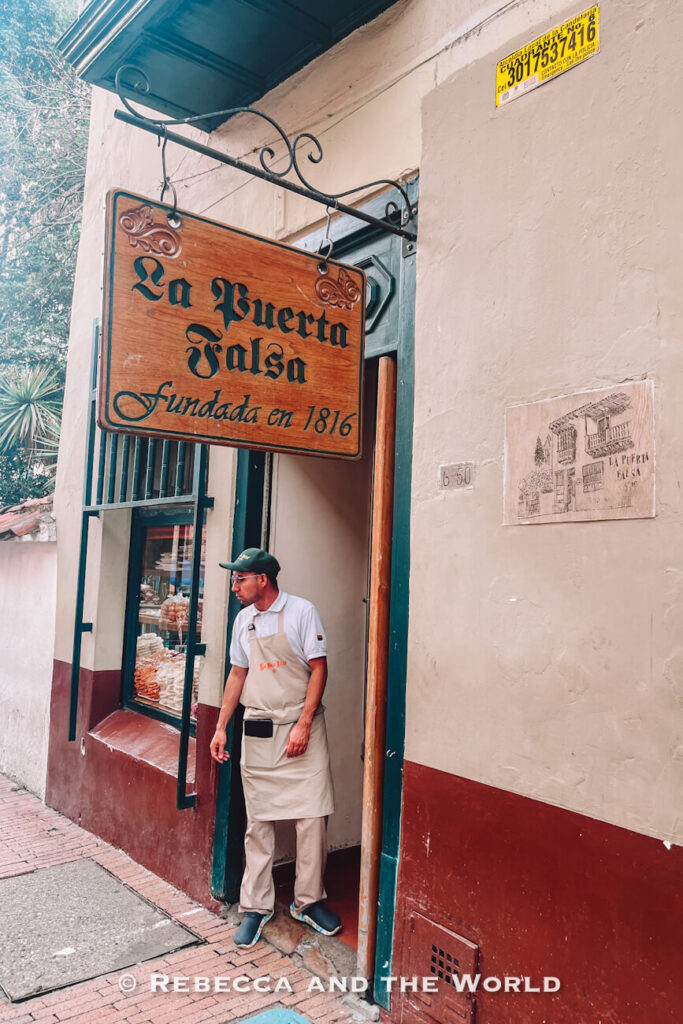
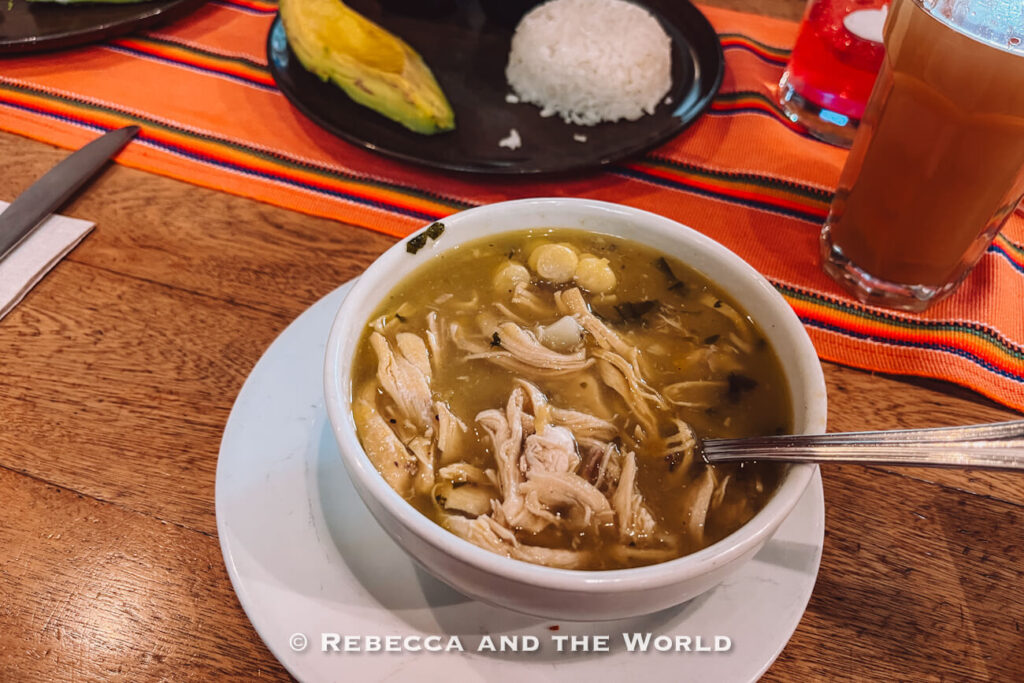
From here, pick one main afternoon activity depending on your interests and the day of the week. The key is not to do everything. Choose one and enjoy it properly, then keep a little breathing room for wandering, coffee or simply taking in La Candelaria’s streets.
Option A: Botero Museum
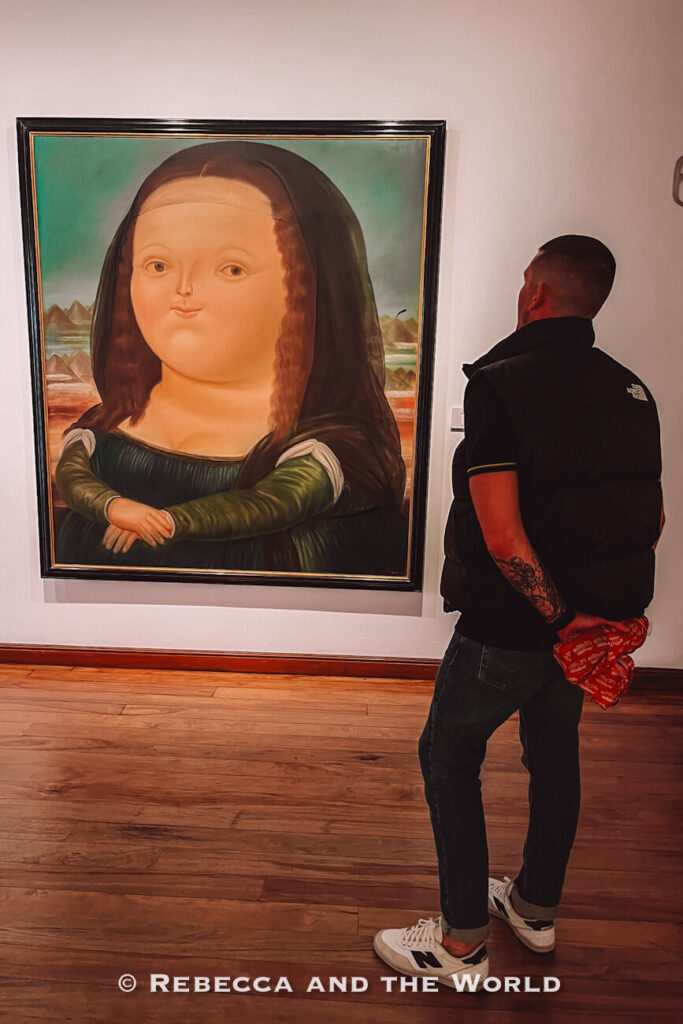
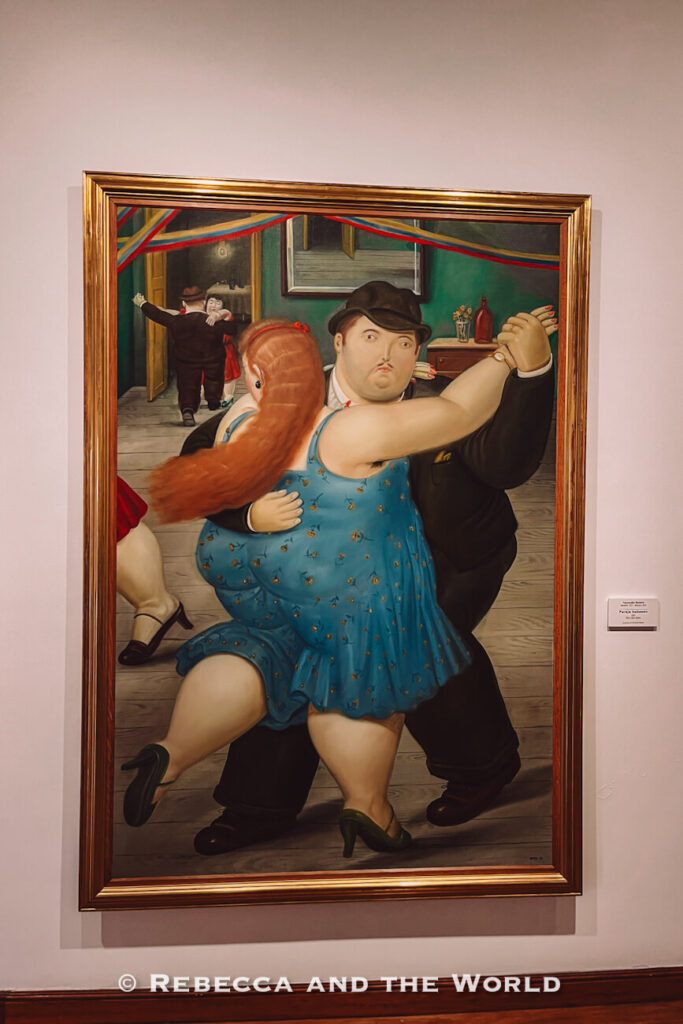
If you only do one museum in Bogotá, this is the one I’d choose. Fernando Botero is arguably Colombia’s most famous artist, known for his rounded, chubby style. The collection here comes from a major donation he made in 2000, and it includes his own paintings, drawings and sculptures, alongside works by artists like Picasso, Klimt and Renoir.
I’m not usually a huge fan of art galleries – I much prefer interactive museums – but I absolutely loved the Botero Museum. His style is so interesting and quirky, and many of his paintings are about key events in Colombian history.
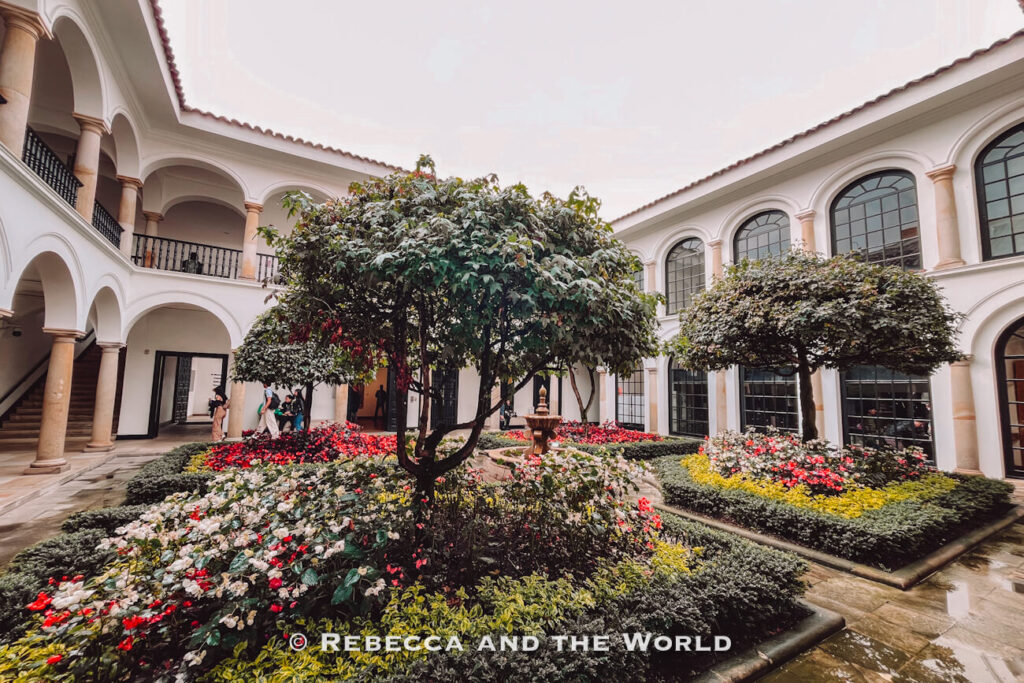
The museum is free to visit. Just note that it’s closed on Tuesdays.
Option B: Museo del Oro (Gold Museum)
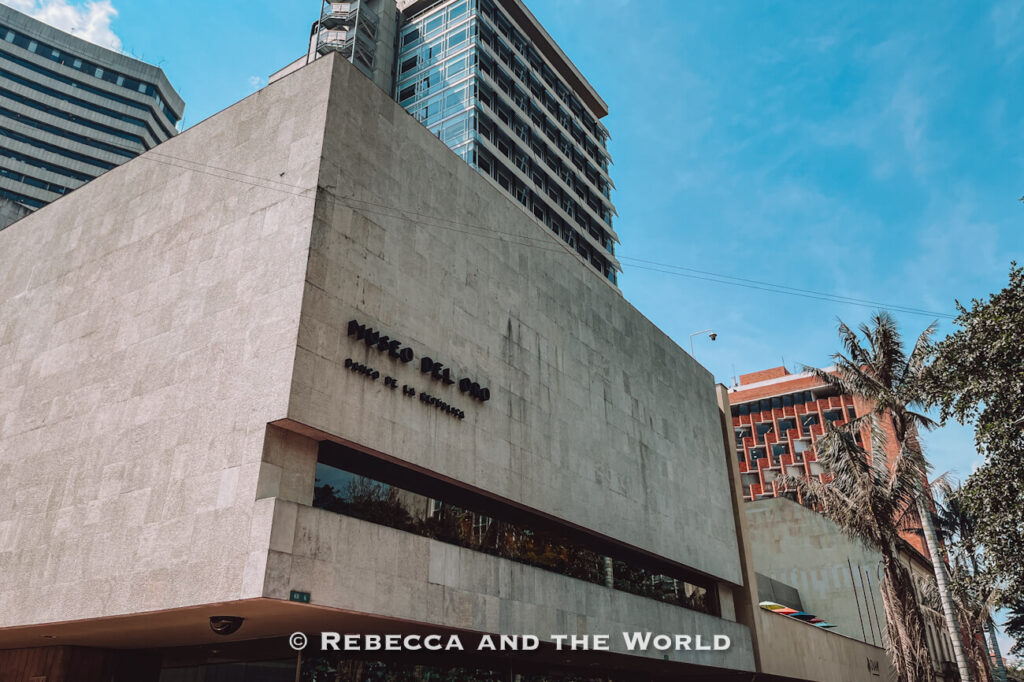
If you want more historical context, the Gold Museum is also excellent. It’s an easy add-on after a La Candelaria walking tour and it gives you a stronger understanding of Colombia’s pre-Hispanic cultures, including the Muisca people who lived in the region long before the Spanish arrived.
Make sure you seek out two key pieces: El Dorado and the Poporro Quimbaya. They’re the standouts, and they help connect the famous “gold” narrative to real objects and rituals rather than just a vague legend.
Keep in mind the museum is closed on Mondays, so you may need to shuffle this part of the itinerary if your 48 hours in Bogotá includes a Monday.
Option C: Graffiti tour
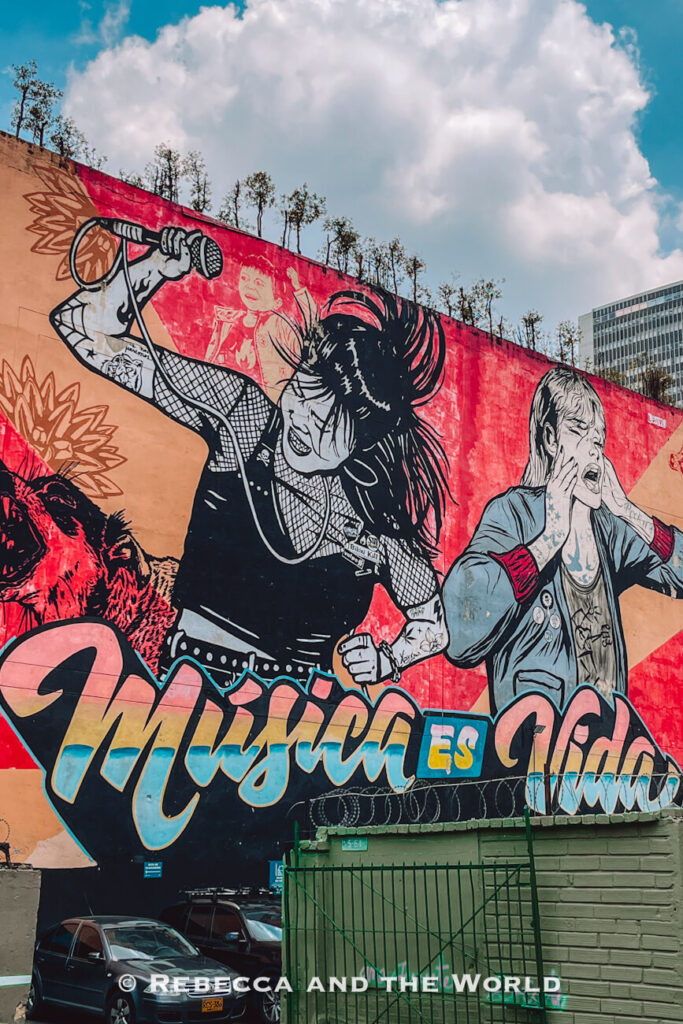
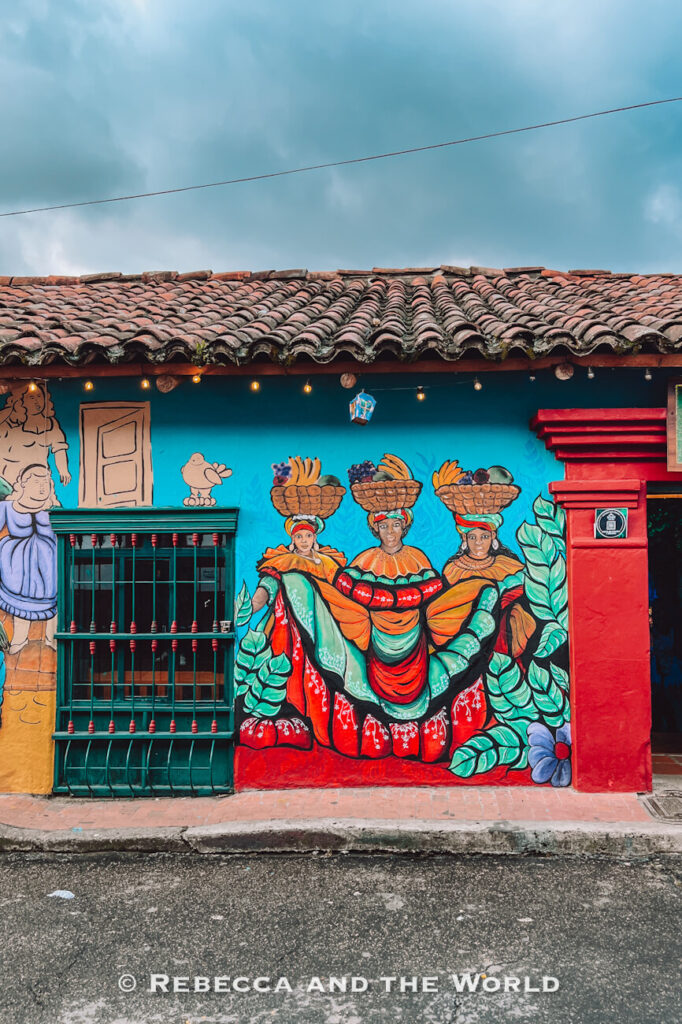
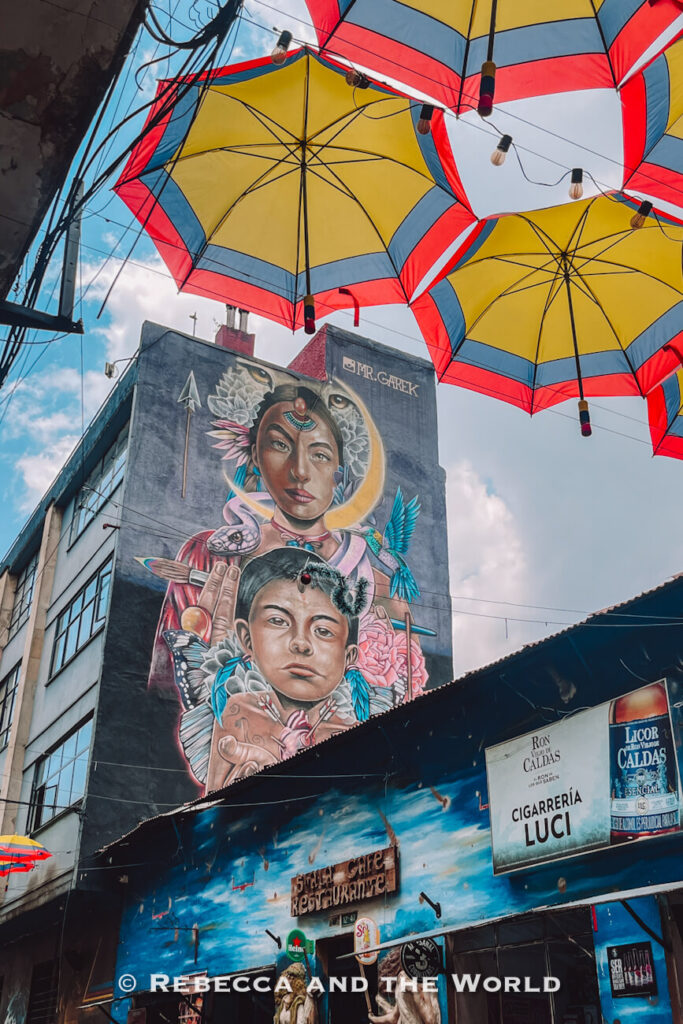
If you’re feeling museum-ed out, or you want something that feels more contemporary, do a graffiti tour instead. Bogotá is basically an open-air gallery and street art is one of the best ways to understand the city’s creativity and politics.
Two tours that come highly rated are:
- Bogota street art tour – The guides are artists themselves (very cool!), so you’ll get a unique insight into street art in Bogota | Check availability and pricing here
- La Candelaria graffiti tour – A guide will take you to some of the city’s essential murals in the La Candelaria urban art district | Check availability and pricing here
Note that both these tours start at 2pm, so you’ll need to eat lunch fairly quickly after the morning walking tour to make it work.
Evening
After a full day on foot in La Candelaria, I’d suggest heading back to your hotel for a short break before dinner. Tonight, head out to Chapinero, which has a great food scene. It’s a nice contrast to the historic centre, with more of a modern, creative energy.
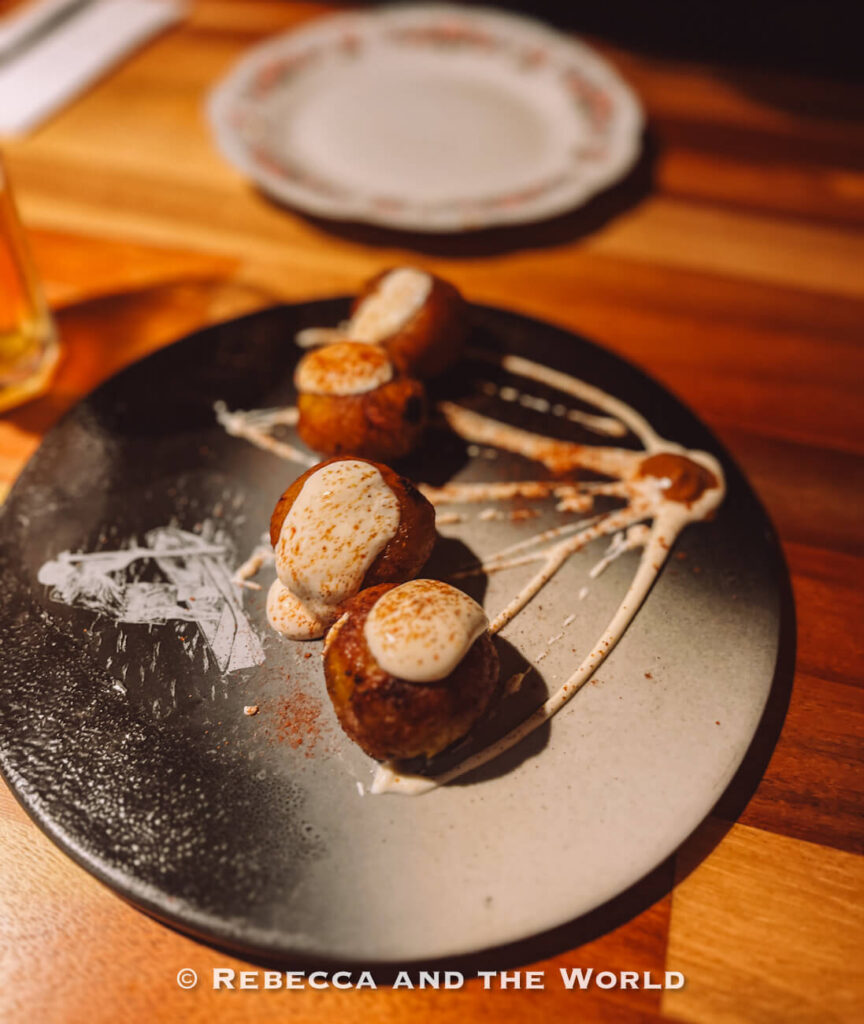
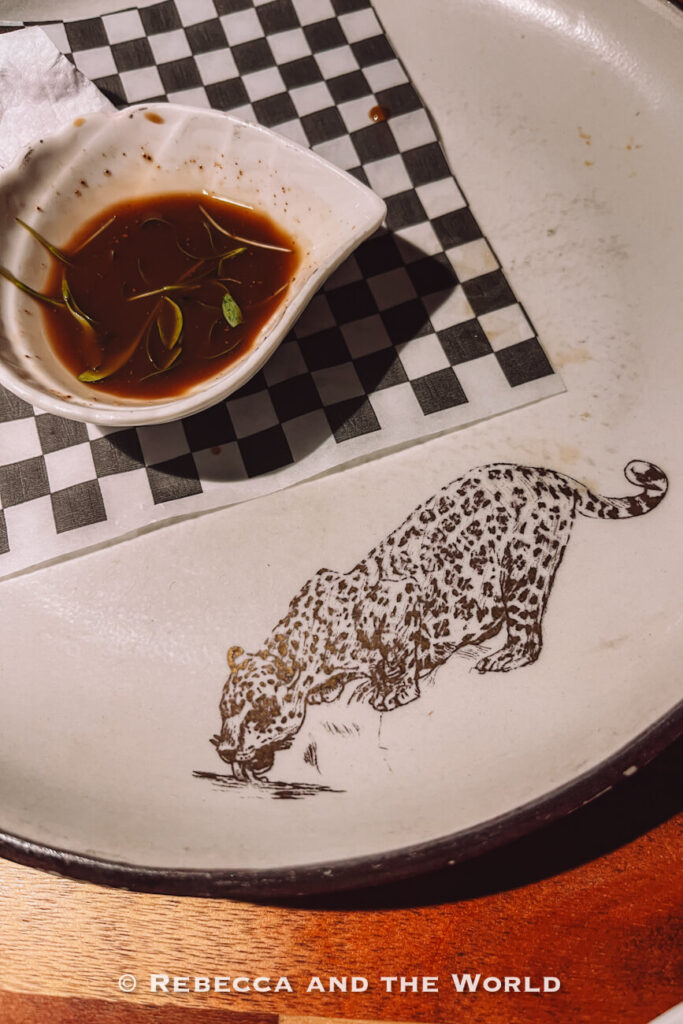
Mini Mal is one of my favourite restaurants in Bogotá. The menu celebrates Colombia’s diversity, and you’ll see ingredients you may not have come across before, presented in a way that still feels grounded and approachable. It’s also a fun space to eat in – a repurposed former apartment complex with quirky details, including kitchen utensils turned into light fixtures. They also have a really interesting cocktail menu.
It’s worth booking ahead for dinner, especially if you’re visiting on a Friday or Saturday. If you’re here midweek, you may have more luck walking in.
Day 2: Bogotá food tour + Monserrate
Morning
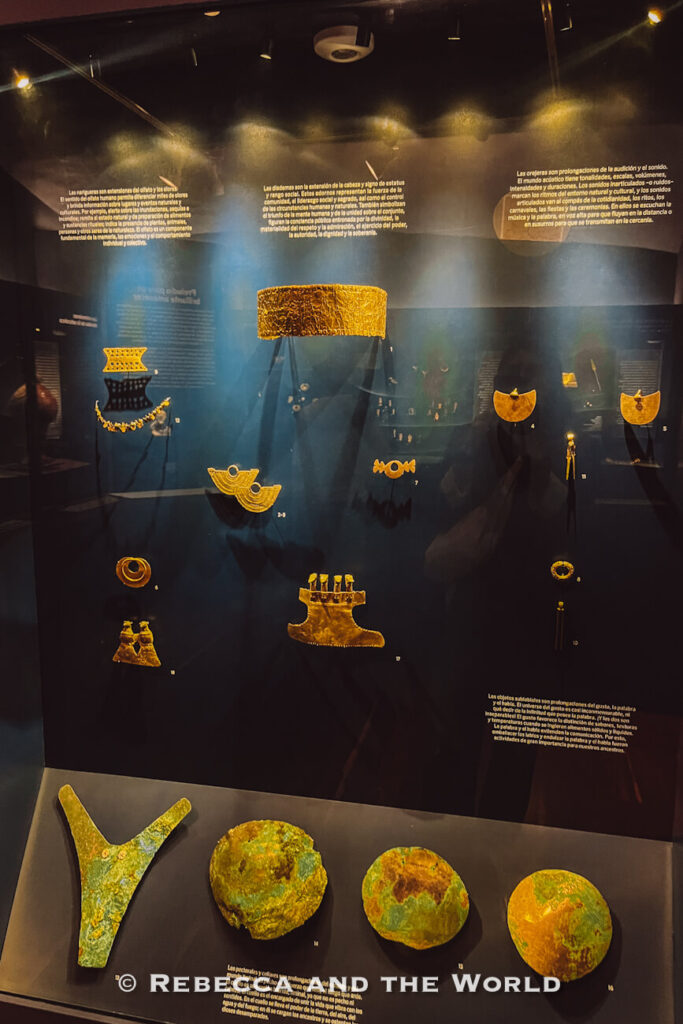
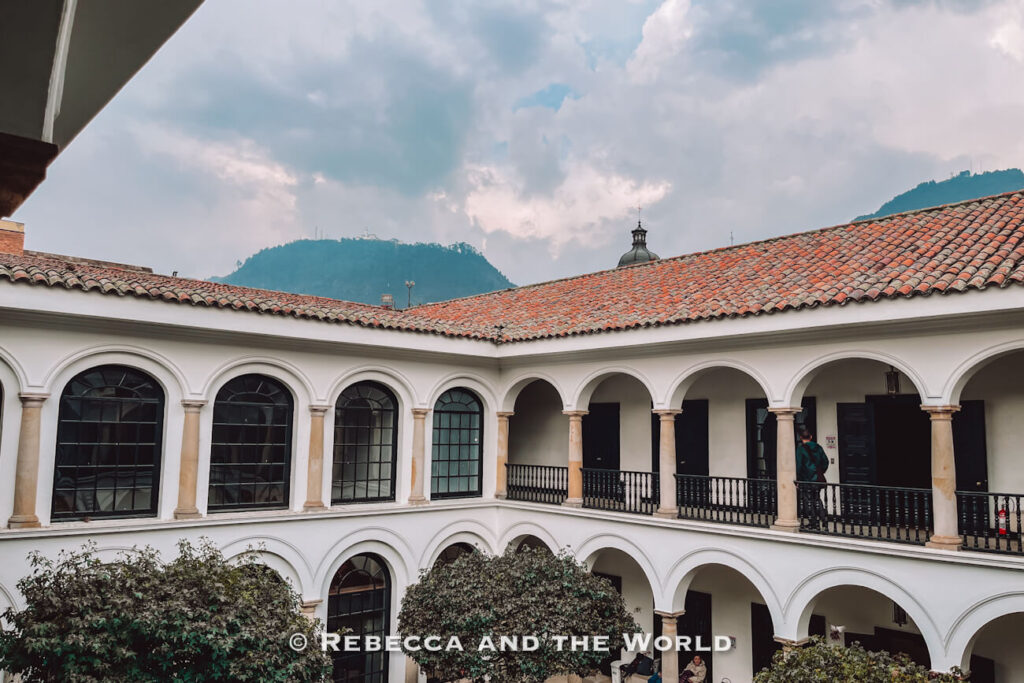
Start the second day of your Bogotá itinerary with an early breakfast, then head to the Museo Nacional de Colombia for an introduction to the country’s history and culture. You can visit the museum in 60 to 90 minutes.
The museum is located in a former prison, which adds to the atmosphere. Museum signs are generally in English, but some of the interpretive text for artefacts is Spanish only – but you’ll still find some fascinating exhibits to explore. It costs COP$15,000 for foreigners – but it’s entirely free on Wednesdays.
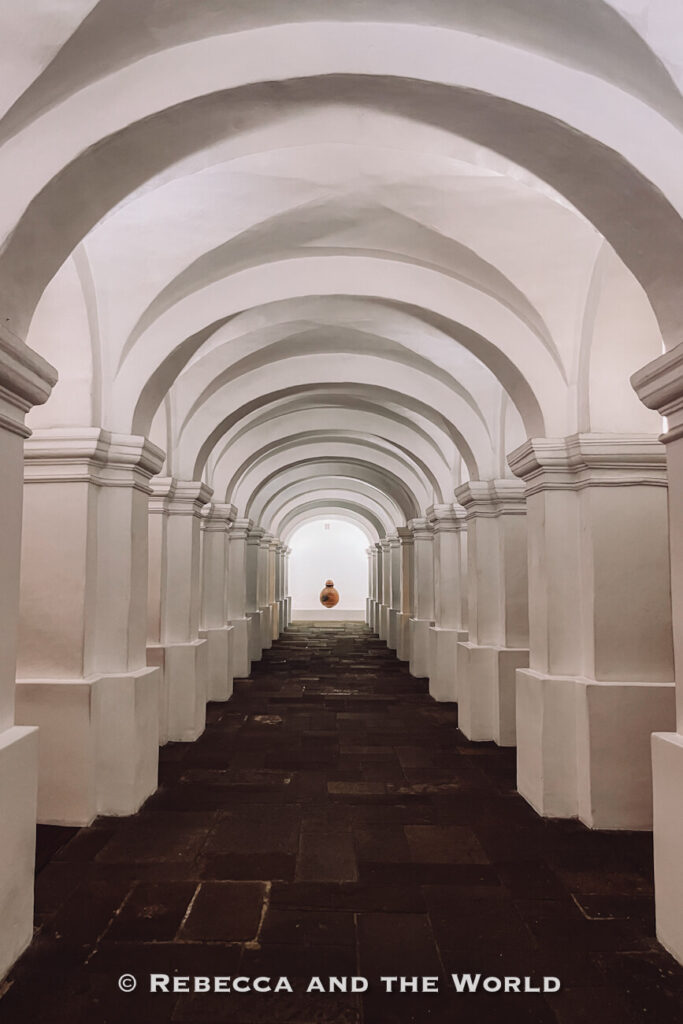
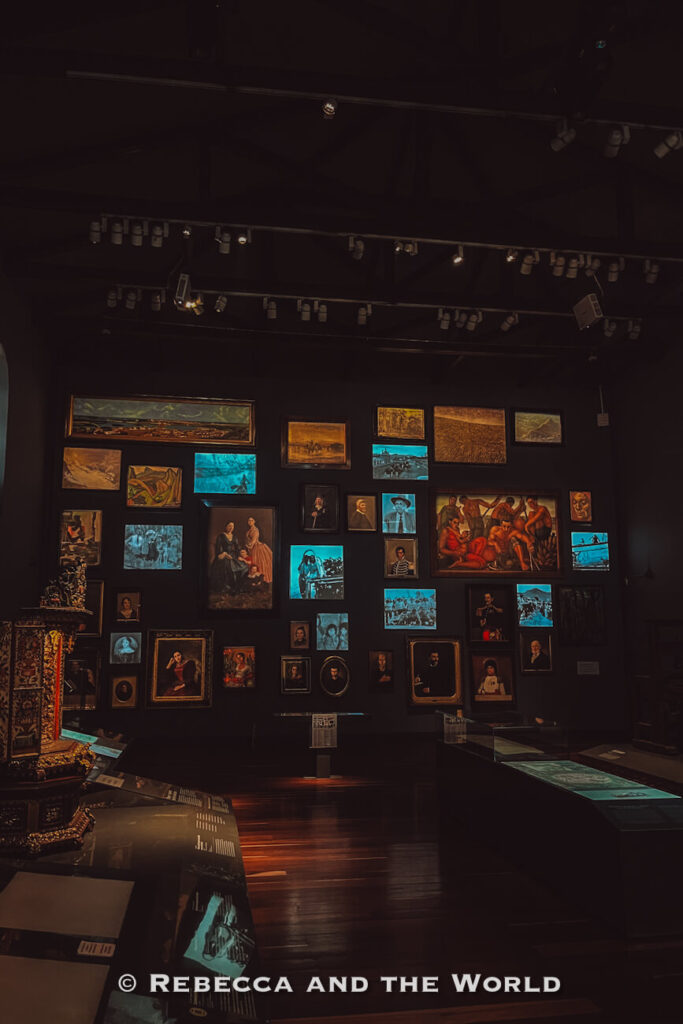
Your food tour meeting point is only a short walk away, so you won’t be rushing across the city to make a midday start.
Afternoon
At midday, head to La Perseverancia Market to begin a fantastic Bogotá food tour.
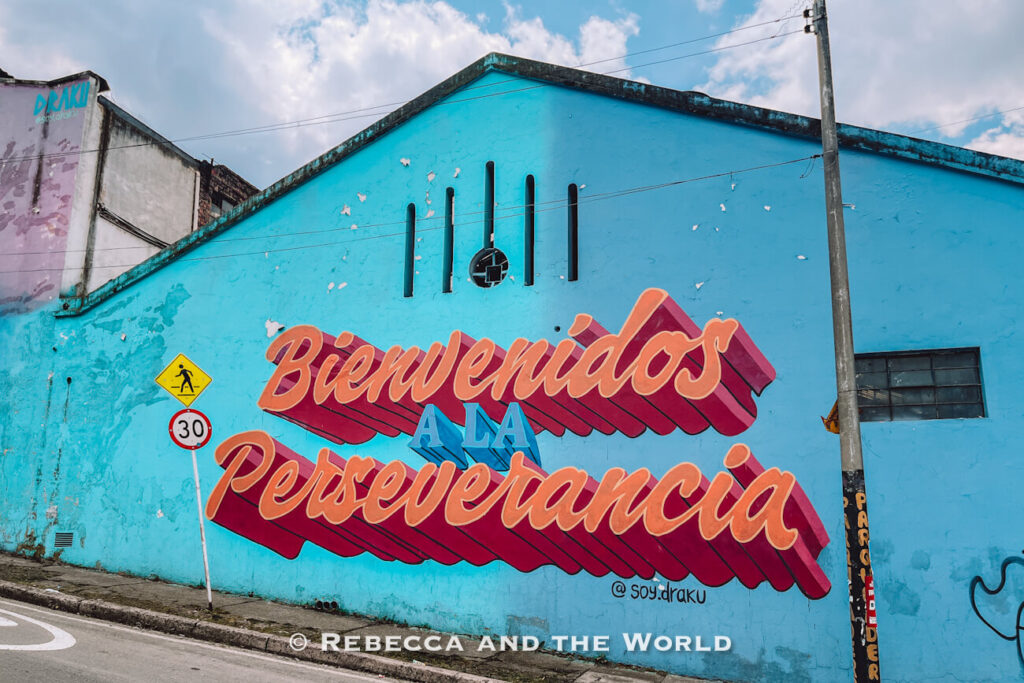
I’m a huge fan of A Chef’s Tour and have done their food tours in Kuala Lumpur, Bangkok and Santiago. In Bogotá, they run the “Viejo Bogotá” food tour from 12-4pm. It’s a small group experience, and with only around eight people in a group (we actually only had four people) it doesn’t feel like you’re being herded from place to place.
Over four hours, you’ll try a good cross-section of Colombian food. Expect dishes like ajiaco, lechona, arequipe, tamales and even cheese dipped in hot chocolate, which sounds odd until you try it. There was so much food – I was absolutely stuffed by the end of the tour.
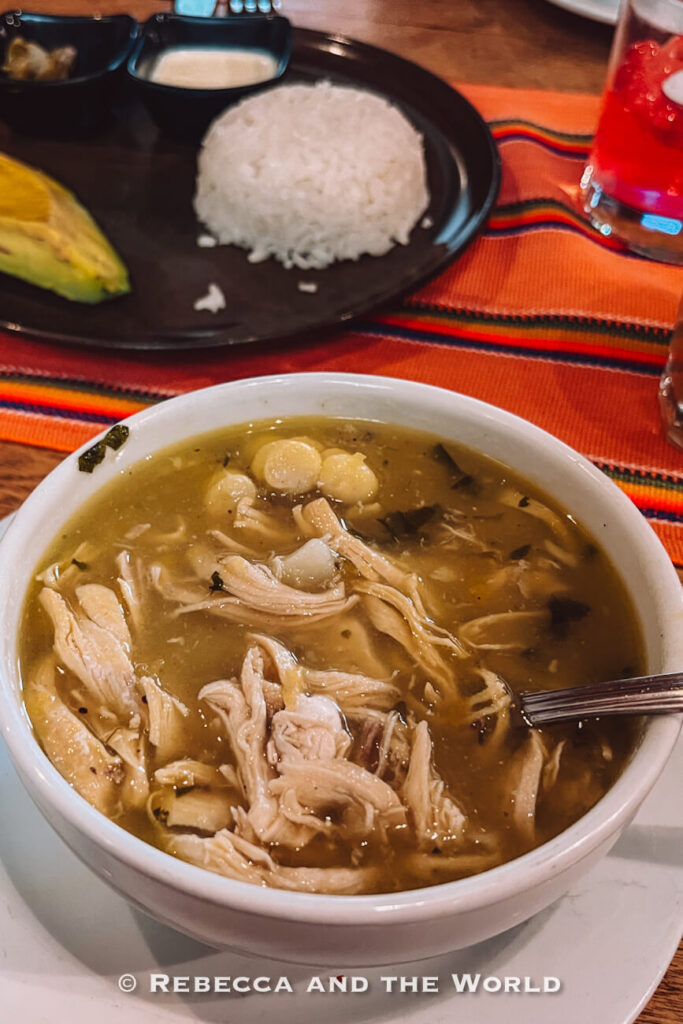
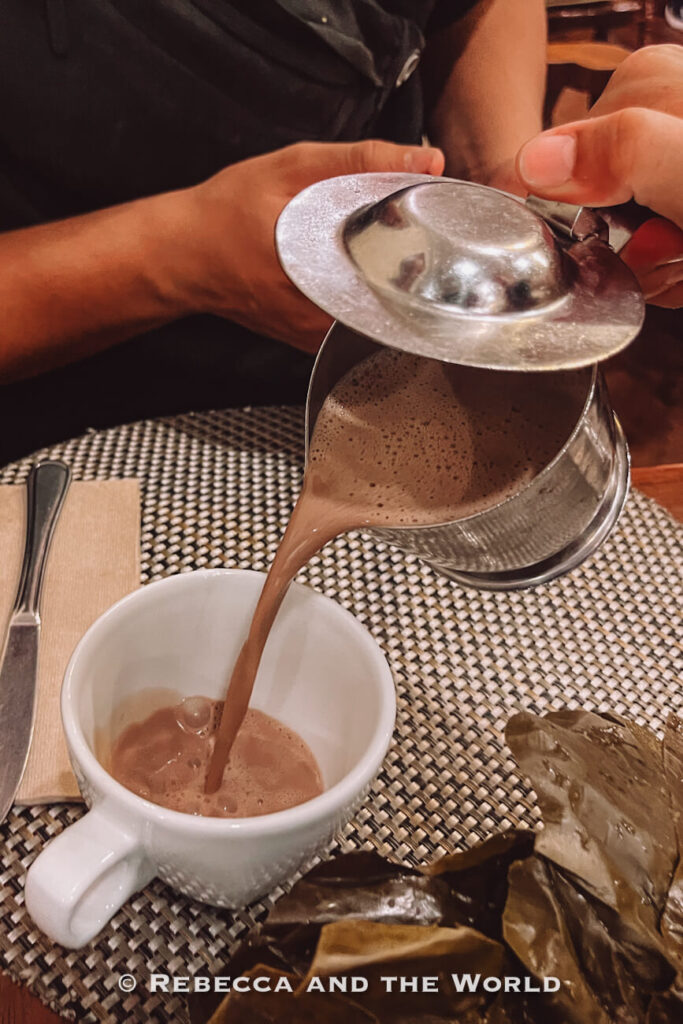
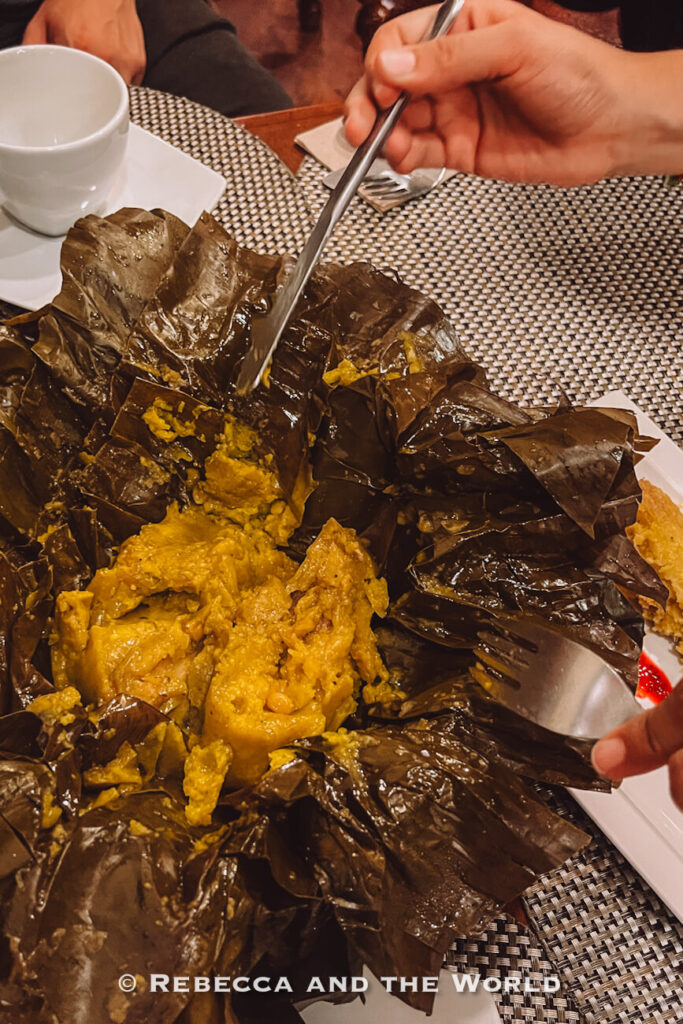
Our guide Juliana has a degree in gastronomy and she was a big part of what made the tour so enjoyable. She came with stories, context and the kind of detail that helps you understand why these dishes matter, not just what’s in them.
Late afternoon
After the tour finishes, head to Monserrate for sunset. Once you’re up there, you’ll quickly see why Monserrate is such a Bogotá icon. Cerro de Monserrate is a mountain that overlooks the city, and the summit sits at around 3,152 metres above sea level. At the top you’ll find the Monserrate sanctuary, a long-standing pilgrimage site devoted to El Señor Caído (The Fallen Lord), as well as viewpoints, gardens, souvenir stalls and a handful of restaurants.
It’s worth remembering that Bogotá itself is already high, so going up to Monserrate adds another layer of altitude. Even if you’ve felt fine in the city, you may notice the thinner air at the top, especially if you’re walking briskly or tackling stairs. Take it slowly and drink lots of water.
If you’re visiting after the food tour, you’ll need to take the cable car or funicular up. The walking trail is only open for ascending in the morning and early afternoon, so it won’t work for sunset.
Aim to arrive with enough time to wander before golden hour. On a clear evening, the views across Bogotá are spectacular and give you a real sense of the city’s scale and how green it is, framed by mountains.
It’s usually cooler and windier at the top than people expect, so pack a light jacket even if the city feels mild.
Evening
After sunset at Monserrate, head to Zona G for dinner. This is one of Bogotá’s hipper pockets, known for excellent restaurants packed into a few walkable streets, plus a lively evening atmosphere. It’s a great place to end your 2 days in Bogotá because you can eat really well.
If you’re choosing just one restaurant tonight, these are all excellent options, depending on what you feel like:
- Débora for a creative, modern menu
- Leo if you’re keen for a splurge meal in Bogotá
- El Chato for a contemporary take on Colombian flavours in a buzzy setting (another splurge!)
Once dinner’s done, finish with one good drink nearby. Jardín Tragos y Pasteles is a fun choice if you want cocktails with a slightly whimsical vibe (and perhaps another dessert), while La Sala de Laura is a great option for a more intimate, sit-and-chat end to the night in a beautiful space.
And with that, two days in Bogotá are done!
Visiting Bogotá: Need to know
Best time to visit Bogotá
Because of the altitude, Bogotá stays fairly “spring-like” year round, with daytime temperatures hovering around the high teens (Celsius) and cooler nights. What changes most is rainfall – it rains on more than 200 days of the year! However, rain is usually in the morning and evenings, and daytime downpours are usually heavy but short lived.
December to March tends to be one of the best windows, with less rain and clearer days. July to August is often another relatively dry period in the Andes region, including Bogotá. Of course, these drier months overlap with busier travel periods, so you may see higher accommodation prices and more crowds.
Getting to Bogotá
Bogotá is well connected by air. Most travellers arrive into Colombia via El Dorado International Airport, which you’ll see listed as BOG when you’re booking flights.
There are direct connections to cities to North America (including Atlanta, Dallas-Fort Worth, Chicago, Washington DC, Boston and Toronto), South America and Europe (including Madrid, London Heathrow, Amsterdam, Frankfurt and Istanbul).
✈️ CHECK FLIGHTS TO BOGOTA HERE ✈️
From the airport, getting into the city is straightforward, but Bogotá traffic can be slow-moving at the best of times. You can take a taxi from the airport or arrange a pre-booked transfer.
🚘 BOOK AN AIRPORT TRANSFER HERE 🚘
If you prefer public transport, Bogotá’s TransMilenio system can be a budget-friendly way to get into the city, but it’s not always the most convenient choice with bags, particularly at night.
How to get around Bogotá
For a short stay, the easiest way to get around Bogotá is by rideshare. It’s convenient and very affordable. We used a mix of Uber and Cabify to get around Bogotá. While Cabify is authorised, Uber operates in a bit of a grey area. Uber will always give you a pin (and is connected to taxis). Just be aware that driving in Bogotá is chaos – I would never risk driving here as a visitor!
You’ve also got public transport options, and it’s worth knowing what they are even if you don’t end up using them.
For public transport, a metro is underway but it’s not scheduled to open until 2028. Bogotá’s mass transit system is TransMilenio, a bus rapid transit network. It’s useful for getting across the city on a budget, but it can be crowded, and it’s not always the most comfortable option if you’re carrying bags or travelling at peak times.
Within La Candelaria, walking is the easiest option – and the best way to see the neighbourhood. Most of the historic centre sights are close together, and you’ll see much more by wandering than you will hopping in and out of cars. Outside of that area, distances add up quickly, so it’s usually better to pair walking with short rideshare hops.
Where to stay in Bogotá
For this 48-hour itinerary, I’d base yourself in one of three areas.
La Candelaria
Best if you want to be able to walk to most Day 1 sights, and you like staying somewhere with history and atmosphere. Nights are quieter here – except in Plazoleta Chorro de Quevedo, which is like a circus every night.
- Hotel de la Ópera – Right in the historic centre, close to Plaza Bolívar and many of the key La Candelaria sights. It’s a great pick if you like having facilities on-site, including a spa and pool, so you can decompress after a day of walking La Candelaria. Check availability and pricing here
- Hotel Casa Deco – A small Art Deco-style boutique hotel that feels more personal than a big chain. The rooftop terrace is the drawcard, with views over Monserrate. Check availability and pricing here
Chapinero and Zona G
My favourite base for a short stay. You’re close to some of the city’s best restaurants and it’s easy to get around by rideshare.
- Holiday Inn Express & Suites Bogota DC – We had points to burn so we booked our stay here and it was great. Our room was huge and the bed was incredibly comfortable. Breakfasts are a bit lacklustre but filling. Check availability and pricing here
- Casa Lelyte – A small boutique hotel set in a reimagined 1950s house. Expect a warm, lived-in vibe rather than a standard hotel feel, with a garden and terrace for downtime, plus an on-site restaurant and bar. Check availability and pricing here
- Hilton Bogotá – A reliable, comfortable base that makes logistics easy, especially if you want facilities like a heated outdoor pool, a solid gym and a rooftop bar for a nightcap without going anywhere else. Check availability and pricing here
Zona T and Zona Rosa
More local area with shopping, cafes, bars and lots happening in the evenings. It’s also got plenty of hotel options.
- Four Seasons Hotel Bogotá – Right in the heart of Zona T, so you can step out to restaurants, bars and shopping. The big perk here is having the full Four Seasons setup on site, including a spa, plus a 24-hour fitness centre with steam room and all-day dining. Check availability and pricing here
- Sofitel Bogotá Victoria Regia – A polished option in Zona Rosa, with marble bathrooms, pillow menu and good in-room amenities. It’s a convenient base if you want to be close to Zona T without staying right in the thick of it. Check availability and pricing here
Safety in Bogotá
If you’re planning a trip to Colombia, there’s a good chance you’re coming in with preconceived ideas about safety. For a lot of people, “Colombia” still brings up old headlines, and Bogotá can feel intimidating because it’s such a big capital city.
The reality is more nuanced. Most trips go smoothly, but it’s not a destination where you want to switch your brain off. Government travel advisories for Colombia consistently flag crime risks, and in cities like Bogotá that’s usually opportunistic theft and occasional muggings.
Like most major cities:
- Be phone-smart. Bogotá is one of those places where walking around with your phone out makes you an easy target. If you need directions, duck into a shop or stand with your back to a wall rather than checking your screen on the street.
- Keep valuables out of sight, especially in busy tourist areas and outdoor cafés.
- Use rideshare at night.
- Be more cautious after dark in La Candelaria. It’s a fantastic area to explore during the day, but it’s not where I’d recommend wandering aimlessly at night.
- Don’t resist if something happens. It’s unpleasant to write, but it’s practical advice: if you’re threatened in a robbery, hand things over.
2 days in Bogota: Final thoughts
Bogotá is often treated as a quick stopover, which is a shame. Yes, it’s big and the weather can be moody, but it’s also green, creative and full of history. If you spend two days here you’ll see that it’s a fascinating city – and it might even be enough to convince you to come back and explore further.
FAQs: Bogota itinerary
Is 2 days in Bogotá enough?
Yes, as long as you plan it well. In two days you can cover La Candelaria, do one major museum, eat really well, join a walking tour and still make time for Monserrate. The trick is grouping sights by neighbourhood rather than trying to cross the city multiple times a day.
Is Monserrate better at sunrise or sunset?
Sunrise is quieter and can feel more peaceful, but it requires an early start. Sunset is my pick for a first visit because the city lights coming on is hard to beat. Just remember that if you’re going for sunset, you’ll need to take the cable car or funicular rather than walking up.
Is La Candelaria safe at night?
La Candelaria is fantastic during the day, but it’s not the area I’d recommend for wandering at night. If you’re staying there, take rideshare to and from dinner and keep evenings simple. If you want a livelier night out, Chapinero, Zona G and Zona T are generally easier and more practical bases.
Do I need cash in Bogotá?
It’s worth carrying some cash for small purchases, tips and anywhere that’s cash-only (or where card machines mysteriously stop working). For restaurants and rideshare you’ll often be fine with card, but having backup cash saves hassle.
What should I pack for Bogotá?
Bogotá’s weather can change quickly and evenings can feel chilly thanks to the altitude. Pack a light rain jacket and/or an umbrella, a warm layer for nights, comfortable walking shoes with decent grip (the pavements can be slippery after rain), sunscreen (you’re high up, even when it’s cool) and a reusable water bottle.
Did you find this article helpful? Consider buying me a coffee as a way to say thanks!
How would you spend 2 days in Bogotá? I hope this 48-hour itinerary has helped you plan a short trip here.
Related posts
Before you go… you might like these Colombia travel articles:
- Bogotá Food Tour: 10 Colombian Dishes to Try in the Capital
- 3 Days in Cartagena Itinerary: Plan Your First Trip to This Colourful Colombian City
- Cartagena Street Food Tour: 10 Colombian Foods to Try
- What to Expect on Colombia’s Lost City Trek + An Honest Expotur Review
- Is Santa Marta Worth Visiting? A Guide to Colombia’s Caribbean Gateway
- Is Palomino Worth Visiting? A First-Timer’s Guide + Tips for Planning Your Stay
COLOMBIA TRIP ESSENTIALS
- Book your flight to and around Colombia online with Skyscanner. I like how Skyscanner allows you to find the cheapest days to travel and compares multiple airlines at once.
- One thing I always purchase is travel insurance! Travel Insurance Master allows you to compare across multiple policy providers, while SafetyWing is great for long-term travellers and digital nomads.
- Wise is my choice for sending and receiving money and spending money overseas (you can get a digital and physical card).
- Find great hotels across Colombia. Check prices on Booking.com and Expedia online.
- Check out the huge range of day tours throughout Colombia on GetYourGuide or Viator. I love a good food tour in particular!
- Saving money? Check out the range of free walking tours in Colombia with GuruWalk (don’t forget to tip!).
- How to get around? I use DiscoverCars for car hire, or Motorhome Republic and Jucy for campervan/RV rental. For buses, trains and ferries, I use 12GO, Busbud and Omio.
- Grab an e-sim to stay connected while on the road.
- A copy of the Lonely Planet guide to Colombia will be handy. Also pick up a Spanish language phrasebook to help you navigate your visit.
- Check out my Amazon shop for my fave travel items – everything from backpacks and suitcases to travel adapters and beauty products.
PIN IT FOR LATER: 2 DAYS IN BOGOTA
Save this Bogotá itinerary to Pinterest so you can plan your Colombia trip later.