
Planning a visit to Santa Marta? This Santa Marta travel guide covers whether the city is worth visiting, the best things to do and practical advice like the best time to visit and where to stay.
Before I arrived in Santa Marta, I’d heard a lot of people dismiss it. Too hot. Too gritty. Not much to do. I was prepared to feel the same way, but the city actually ended up immediately winning me over.
Santa Marta is a practical base for some of the best experiences on Colombia’s Caribbean coast. We used it as a jumping off point for the Lost City trek, and you can easily make day trips to Tayrona National Park and Minca.
The city itself doesn’t have swimmable beaches right on its doorstep. It’s hot, busy and a little rough around the edges in parts. But it’s calmer than Cartagena, has real history and the historic centre has a lively, colourful atmosphere that makes it enjoyable to wander, especially early in the day and again in the evening.
This guide covers what to do in Santa Marta, how long to spend here, where to stay and the day trips that make it worth adding to your Colombia itinerary.
So, don’t immediately dismiss this city – come and make up your own mind!
This blog post may contain affiliate links, meaning if you book or buy something through one of these links, I may earn a small commission (at no extra cost to you).
How many days in Santa Marta?
You can see the highlights of Santa Marta in a few days, or you could easily spend a week here using it as a base to take day trips to some pretty cool places nearby. We spent two full days here and had plenty to do (and importantly, had plenty of downtime to get out of the hot midday sun).
Things to do in Santa Marta
Here are the best things to do in Santa Marta – and I’ve laid everything out on a map as well.
Map of Santa Marta
Explore Museo del Oro Tairona
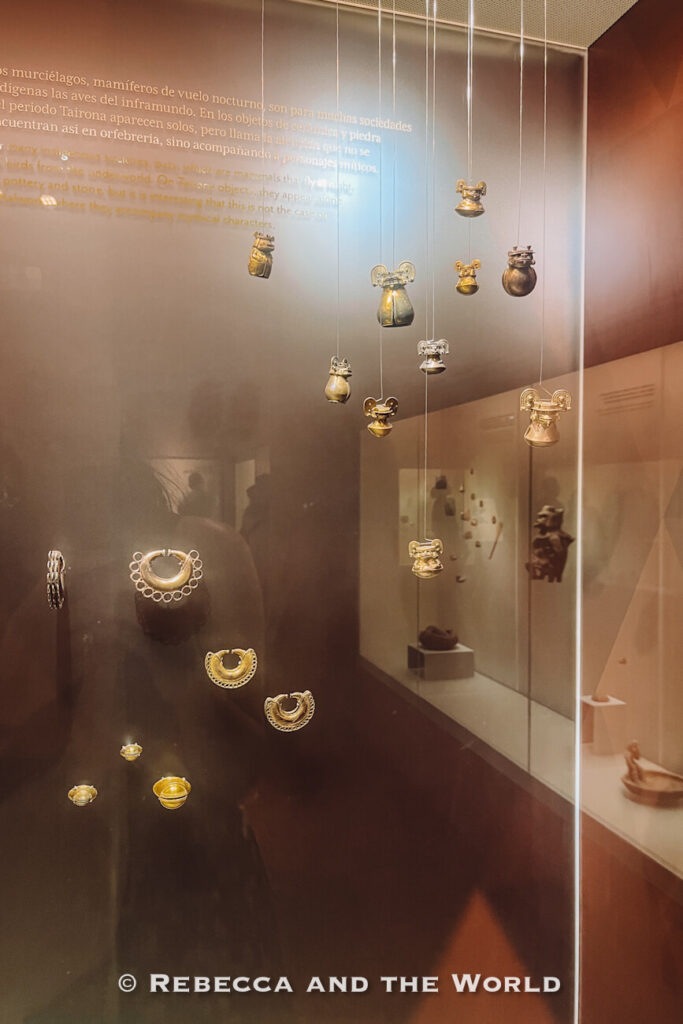
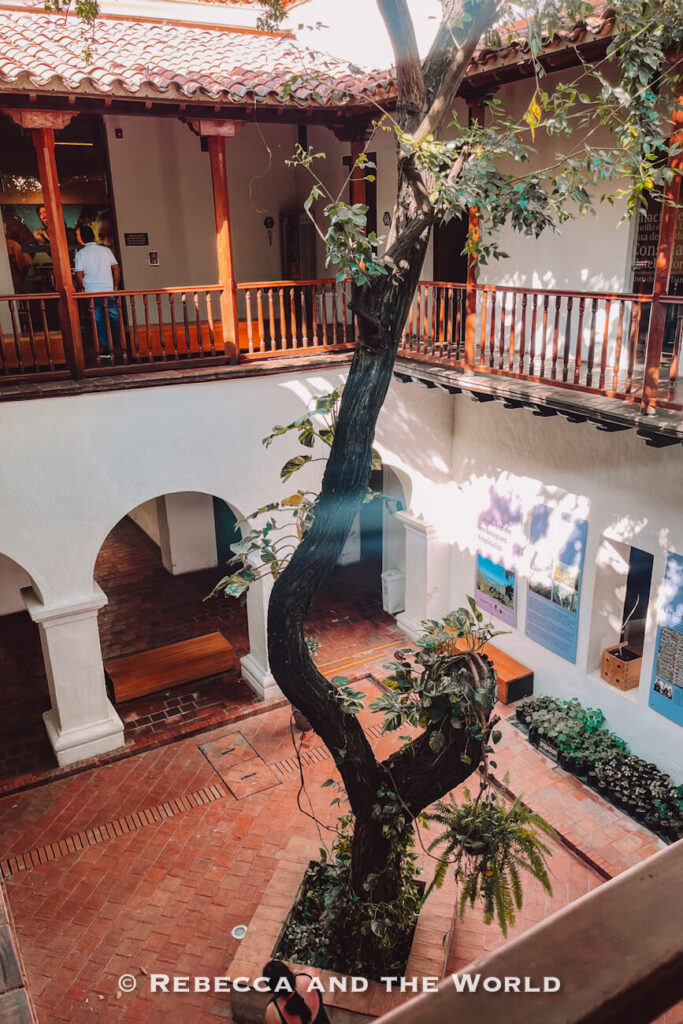
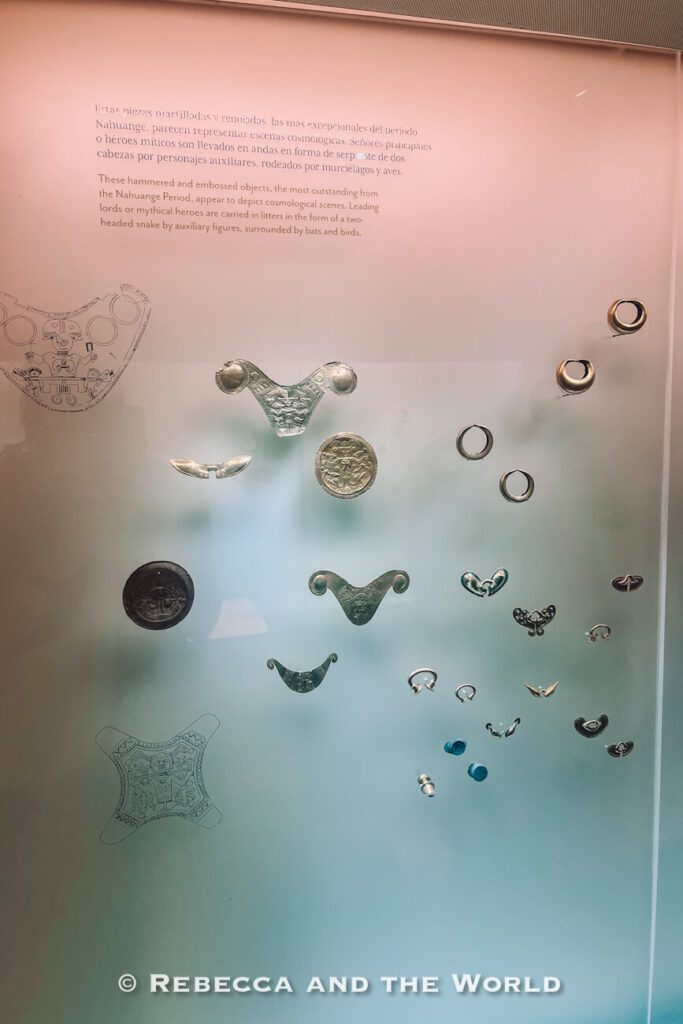
A surprisingly excellent museum, the Museo del Oro Tairona is small enough to fit into an hour or so, but it adds helpful context for everything else on the Caribbean coast – especially if you’re heading to Tayrona National Park or doing the Lost City hike later.
The museum is housed inside the Casa de la Aduana, the former customs house, right by Parque Simón Bolívar in the historic centre. That location makes it an easy stop to pair with a wander around the plazas and the waterfront.
Inside, the focus is on archaeological and ethnographic pieces from the region, including goldwork, ceramics and objects connected to the cultures of the Sierra Nevada. It’s not a huge museum, but it’s well curated with excellent descriptions.
Bonus – it’s free to visit. It’s also airconditioned, so it’s great for an educational escape from the heat.
So, even if museums aren’t one of your favourite things, this one is definitely worth adding to your Santa Marta itinerary.
Take a rest at Plaza de Bolívar
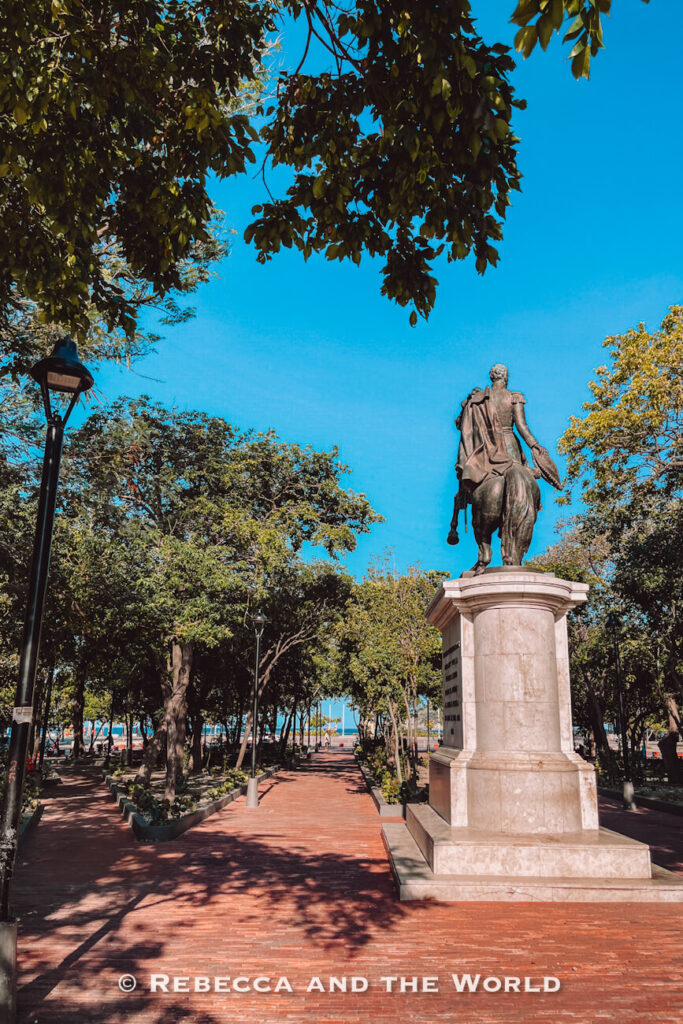
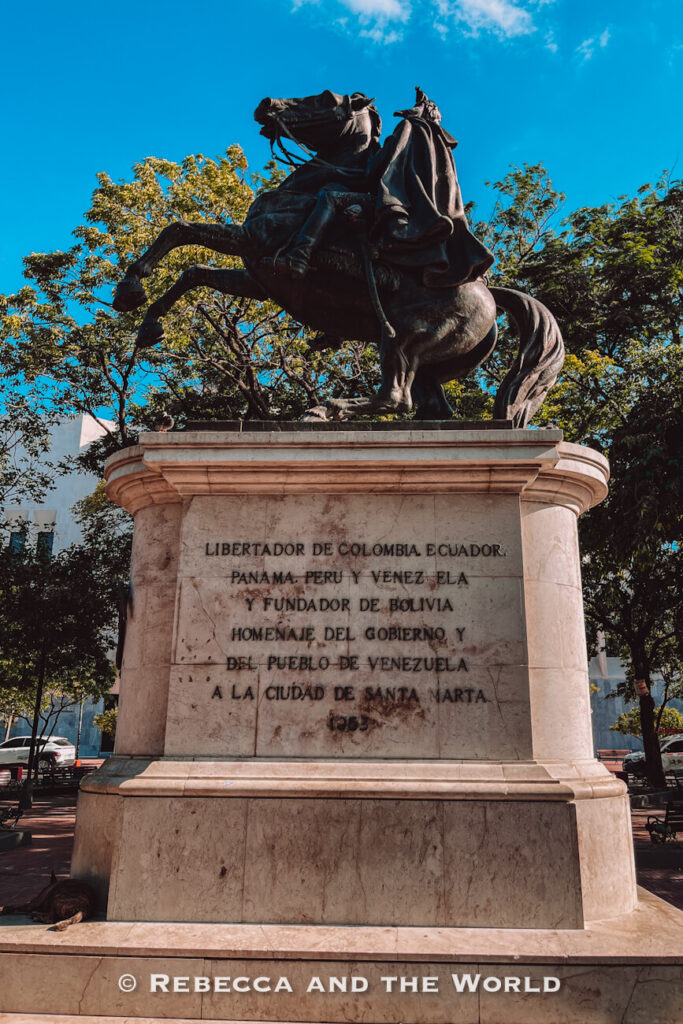
All good cities in this part of South America must have a plaza dedicated to Simon Bolívar (the “Great Liberator”) – and Santa Marta is no different.
This is one of the nicest places to pause in the historic centre, partly because it sits right on the edge of the bay. It’s a small square with plenty of shade and benches, and it connects neatly with a few of Santa Marta’s key sights, so you’ll likely pass through it more than once.
The plaza is named for Simón Bolívar and the statue in the square is the obvious focal point. There’s a strong Bolívar link in Santa Marta more broadly because he died nearby at Quinta de San Pedro Alejandrino in December 1830, and the city has several sites tied to his final days.
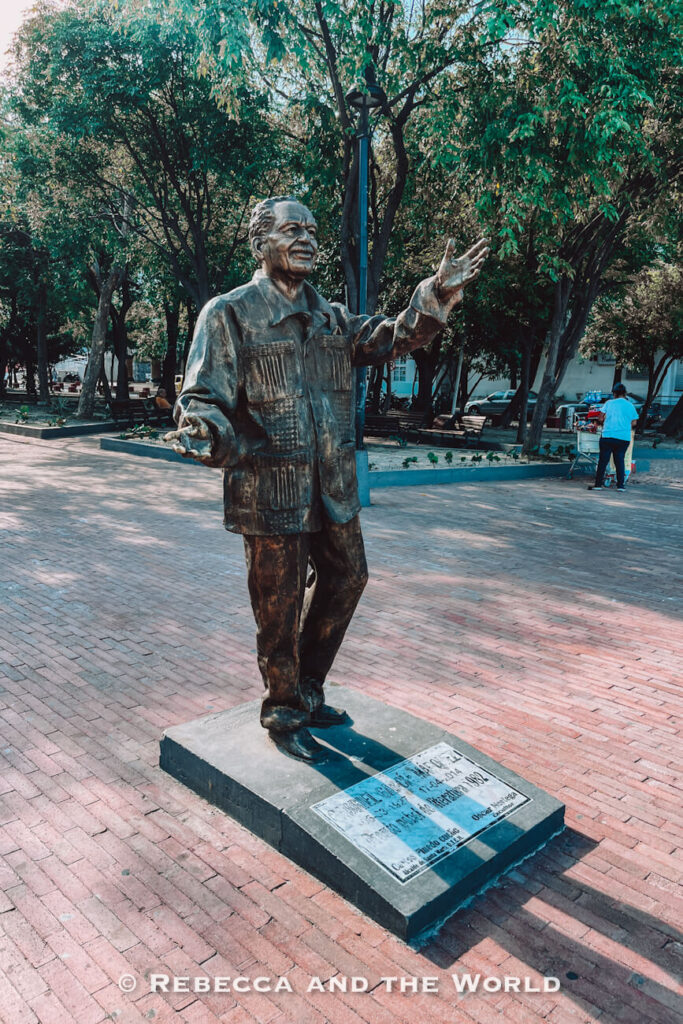
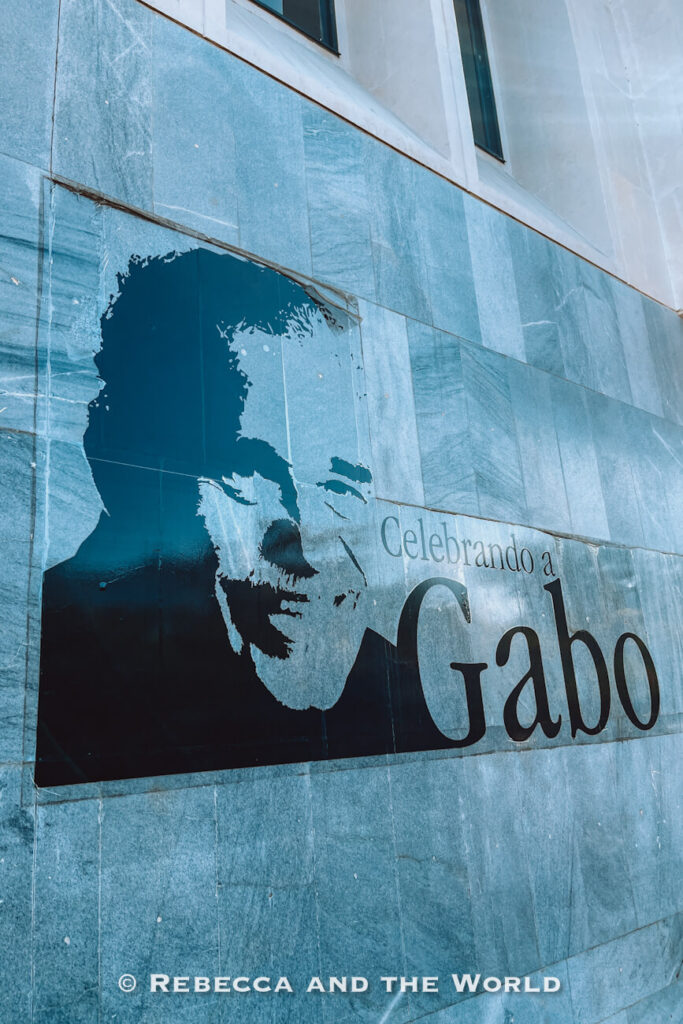
Towards the water, there’s also a statue of Colombia’s literary king, Gabriel García Márquez, who grew up not far from here.
Take a bike tour of the historic centre
If you want to get your bearings in Santa Marta quickly, a short bike tour of the historic centre is an easy way to do it. This tour runs for around two hours and is timed for late afternoon, which also means you get better light and slightly cooler temperatures than you would in the middle of the day.
Being on bike means you can explore a little further out of the city, but the ride isn’t overly strenuous. The tour visits key sites like Plaza Bolívar, the marina and Los Cocos beach.
Group size is capped at 10 people, and the bike, water and guide is included.
Walk along the malecón
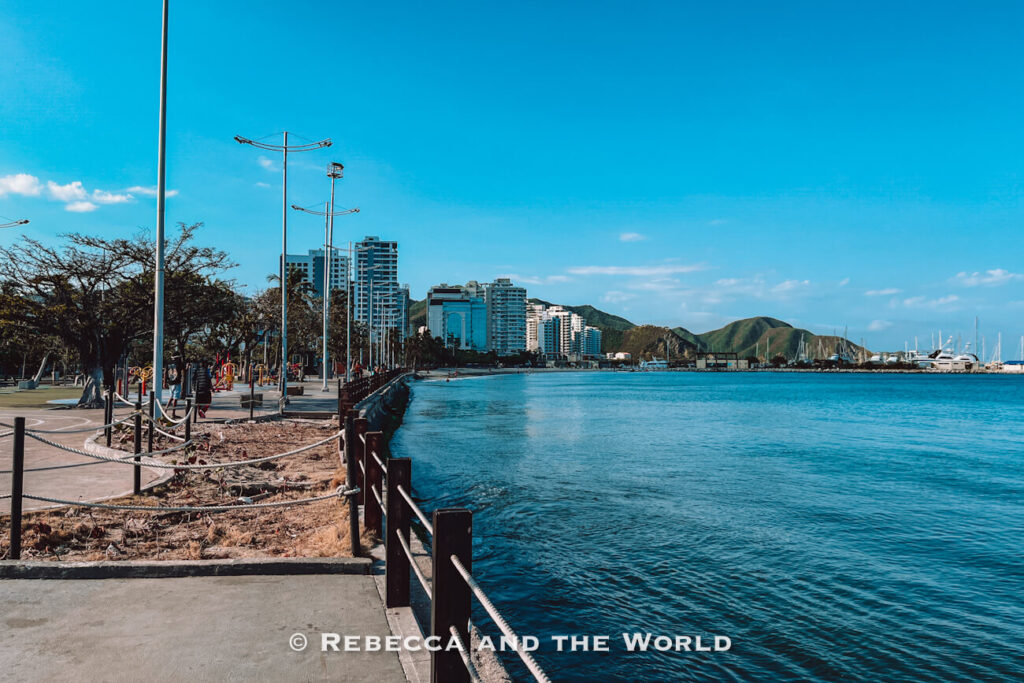
A stroll along the malecón is one of the most enjoyable things to do in Santa Marta in the evening. Walk this path ideally around sunset, when the light is softer and the heat finally eases. (During the day it’s very, very hot, and there’s little shade.)
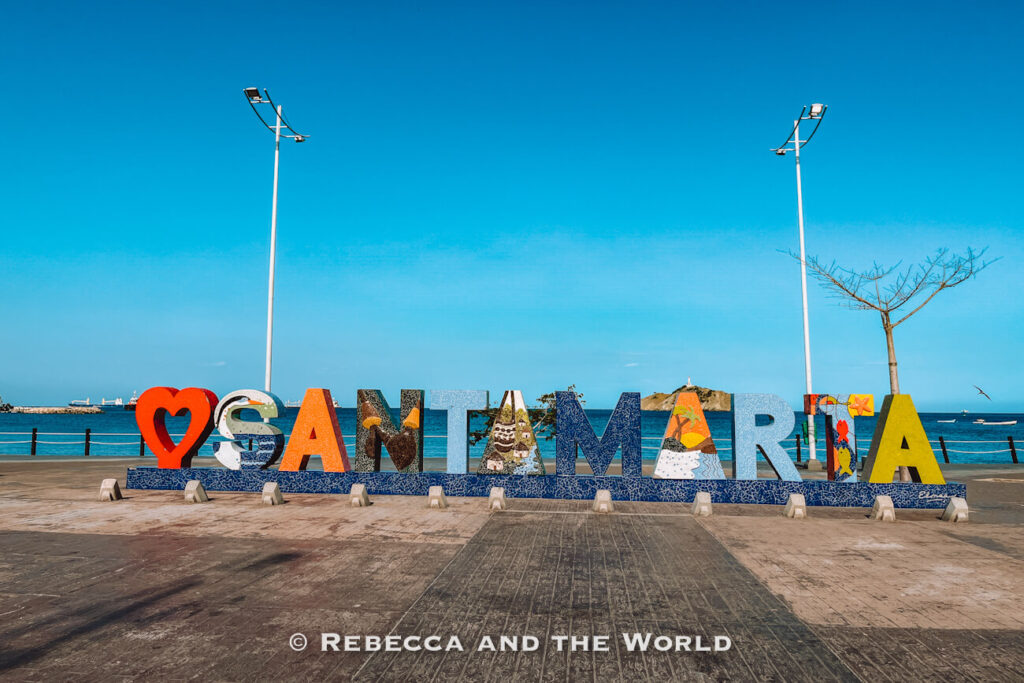
Start near the historic centre and wander along at an easy pace. Along the way, stop for a photo in front of the Santa Marta letters.
While the port end isn’t particularly pretty, it’s a pleasant waterfront stroll.
Visit the Plaza de Catedral (Catedral Basílica de Santa Marta)
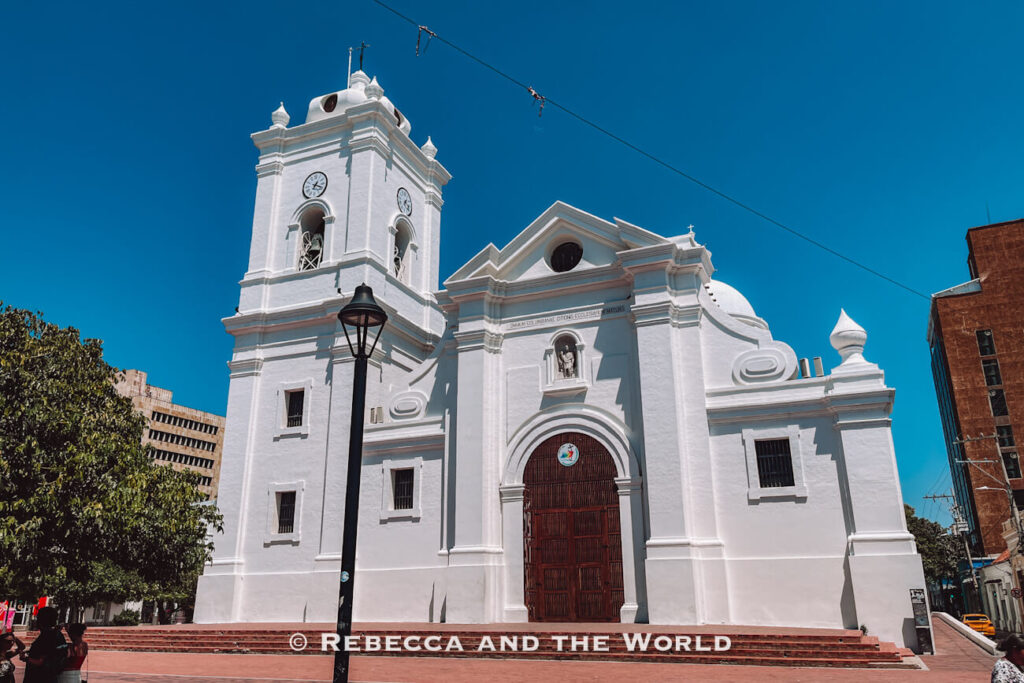
The Plaza de Catedral is one of the prettiest parts of the historic centre for a slow wander and a bit of people watching. The cathedral itself is a gleaming white building that stands out against Santa Marta’s pastel streets, and the square in front has a typical stream of people passing through, sitting in the shade and stopping for photos.
If you can get inside the church, Bolívar’s remains were apparently kept here until 1842, and there are plaques near the altar marking the spot where his heart allegedly still remains.
But, unfortunately, when we visited, the church was never open! If you do spot it open, it’s worth popping in to look for those plaques.
Check out street art
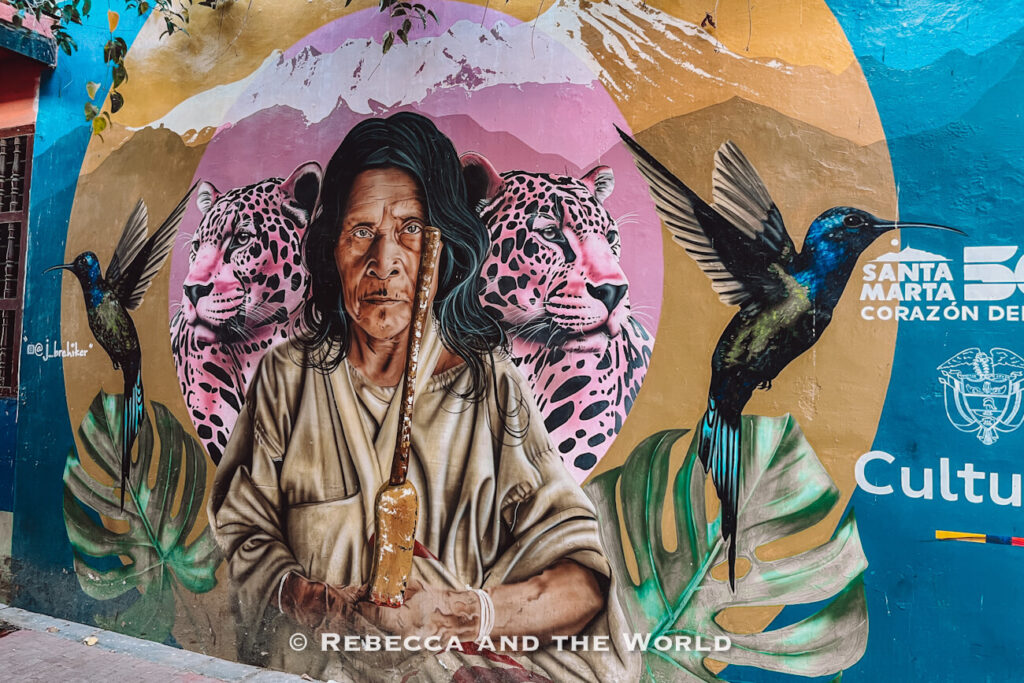
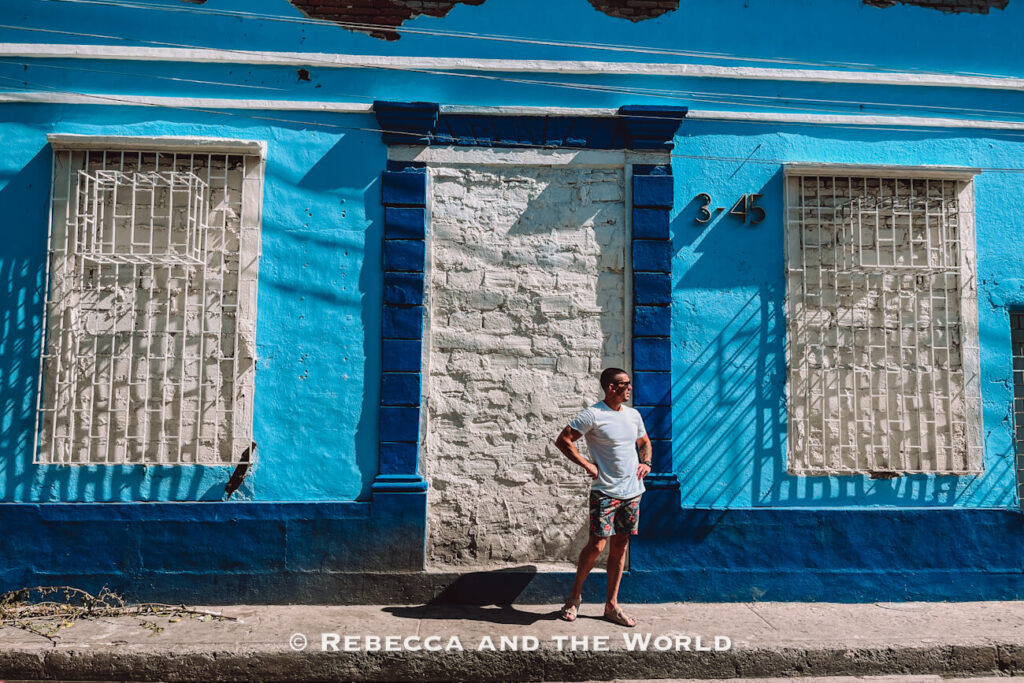
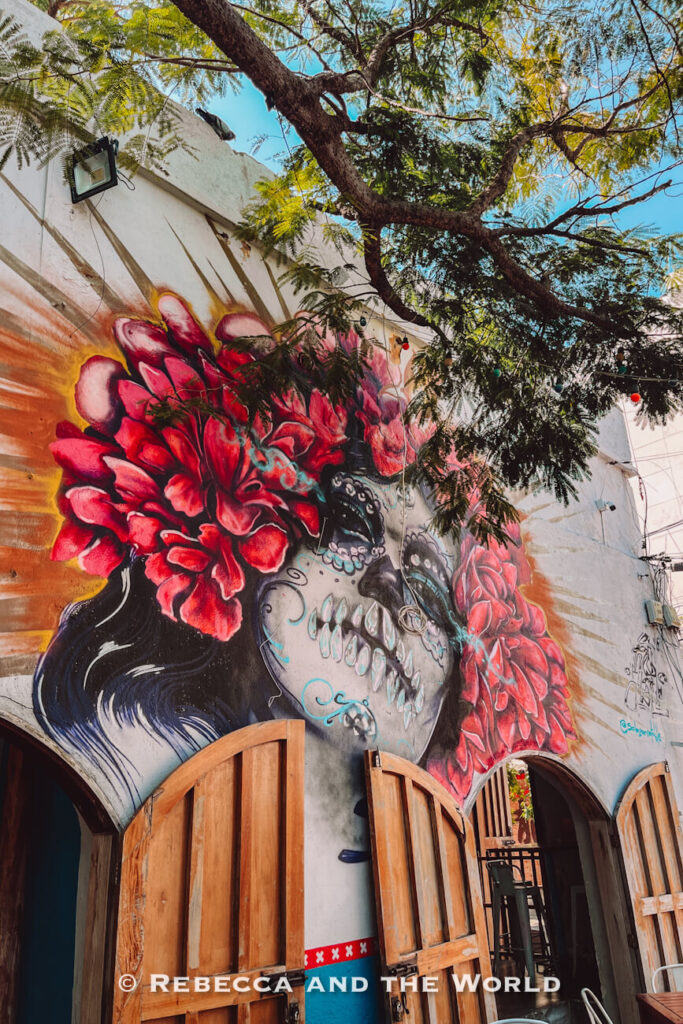
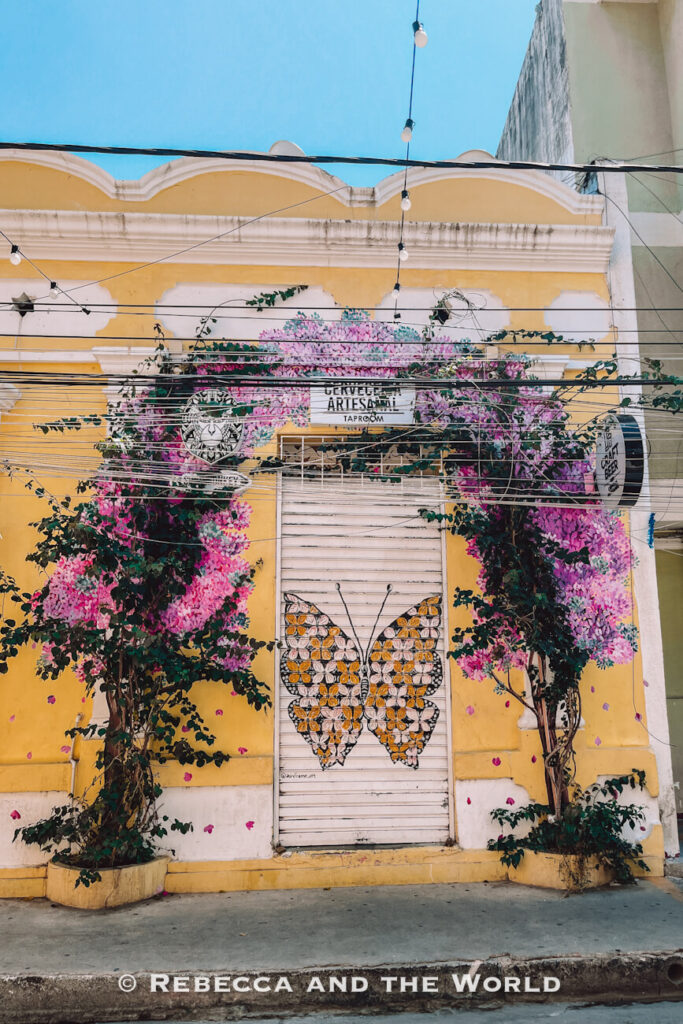
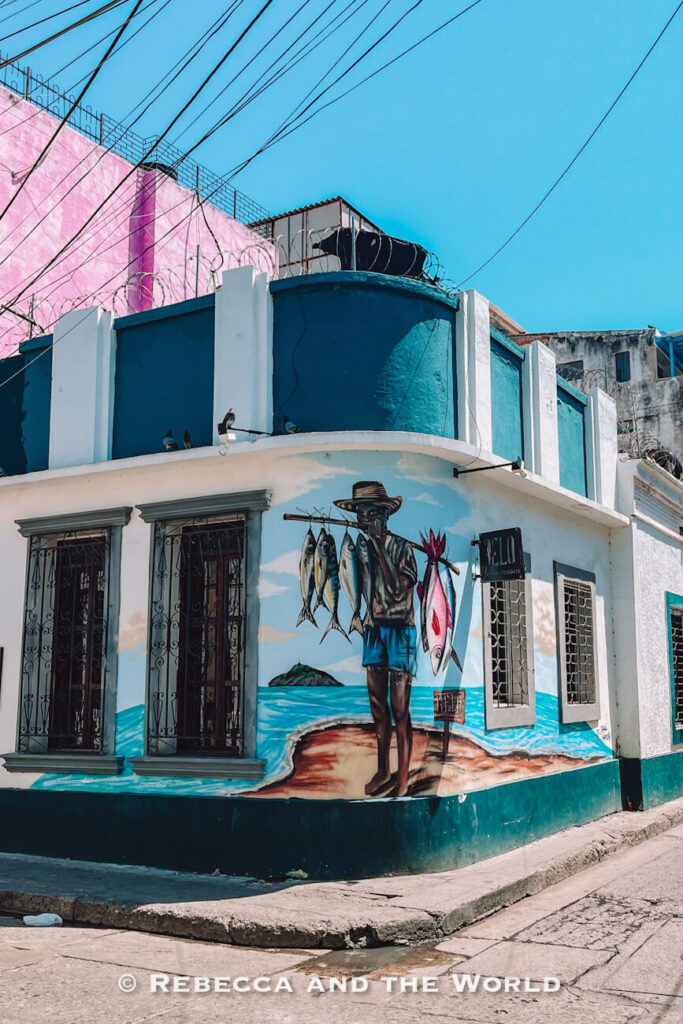
While Santa Marta isn’t as colourful as, say, Cartagena (check out my Cartagena itinerary), it still has its charm. Part of that comes from the street art and the bright, photogenic buildings scattered through the historic centre. You don’t need to track down a specific “mural district” to see it either. Some of the best pieces are simply woven into the streets you’ll already be walking.
Duck down side streets, look up at balconies and facades, and you’ll spot murals tucked beside cafes, on shopfronts and across otherwise unremarkable walls.
If you’re taking photos, aim for early morning or late afternoon when the light is softer and the heat is less relentless.
See history at Quinta de San Pedro Alejandrino
If you’ve spent any time travelling in South America, you’ll have heard Simón Bolívar’s name more than once. He is the Great Liberator, and his story is woven through the continent.
Santa Marta’s biggest historical claim is that this is where he died, at the age of 47, on 17 December 1830. And one of the best things to do in Santa Marta is visit Quinta de San Pedro Alejandrino – the place where he died. It’s worth visiting, even if you only have a short time in the city.
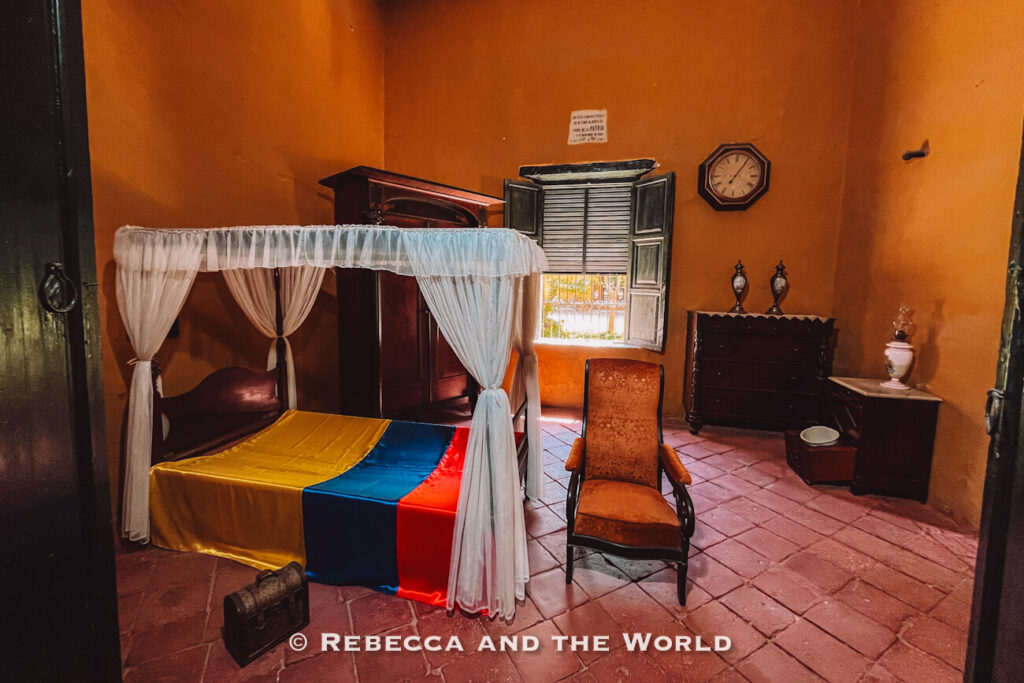
The quinta is a former sugar plantation, now a museum complex. It’s set up in a way that makes the history easy to follow, with signage explaining what each building was used for and rooms arranged as they would have been at the time of Bolívar’s death, including spaces like the kitchen and dining areas. There are guided tours (in Spanish) if you want more detail, but you can also take your time and move through at your own pace.
After you’ve seen the historical buildings, give yourself time to wander the grounds. They’re lush and peaceful, and it’s a welcome break from the heat and traffic of the city. Keep an eye out for the huge iguanas!
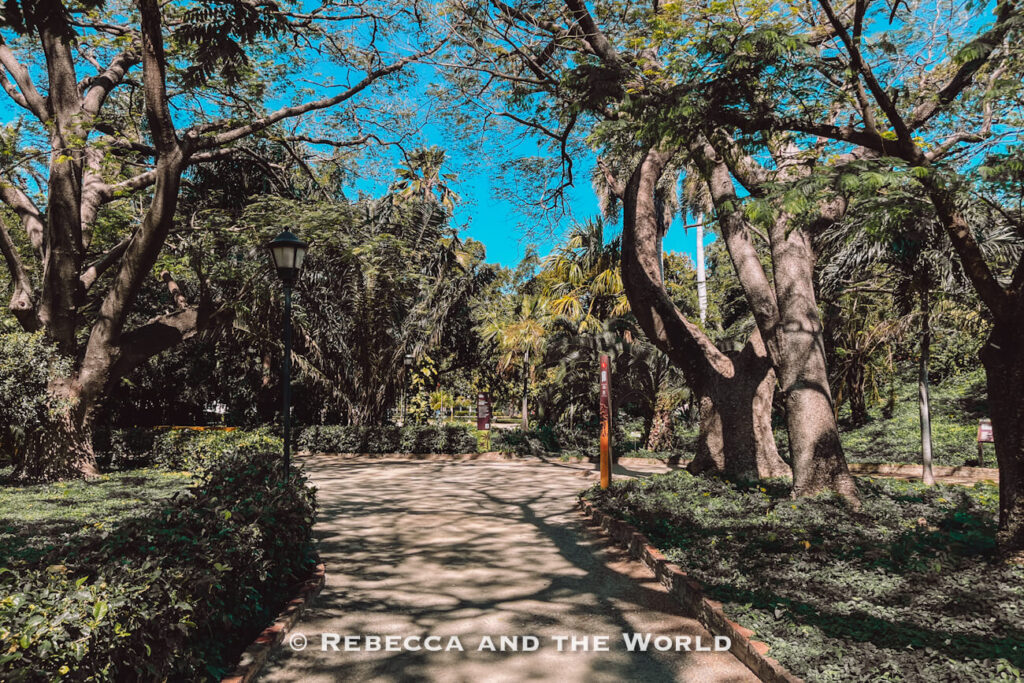
It costs COP$30,000 for foreigners, and it’s open daily 8.30am to 5pm (9am to 4.30pm in low season).
Hang out in Carrera 3 at night
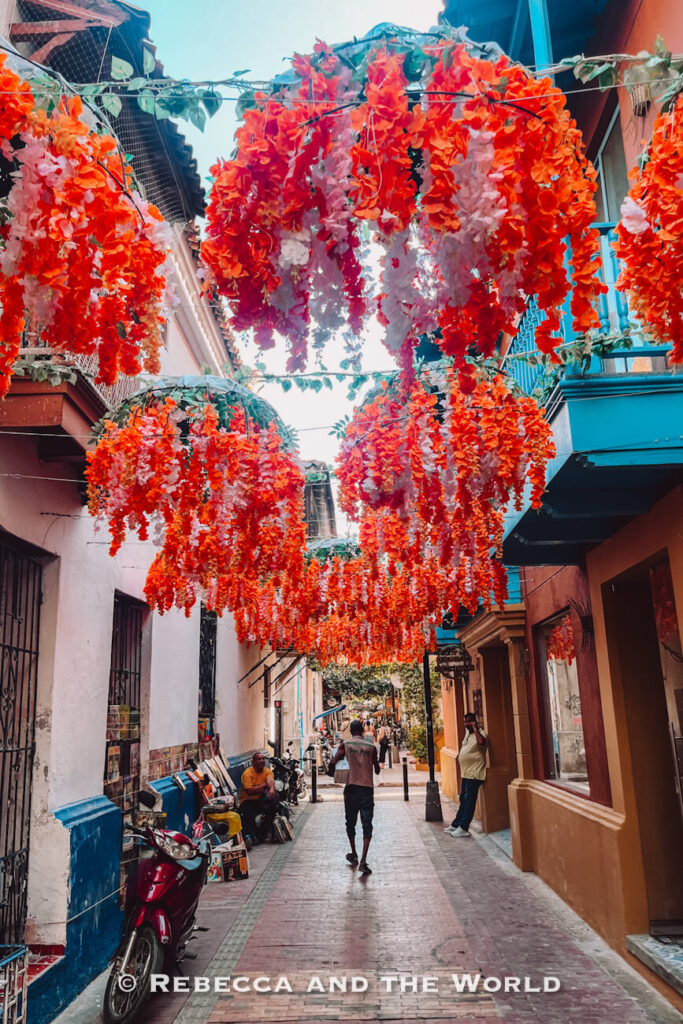
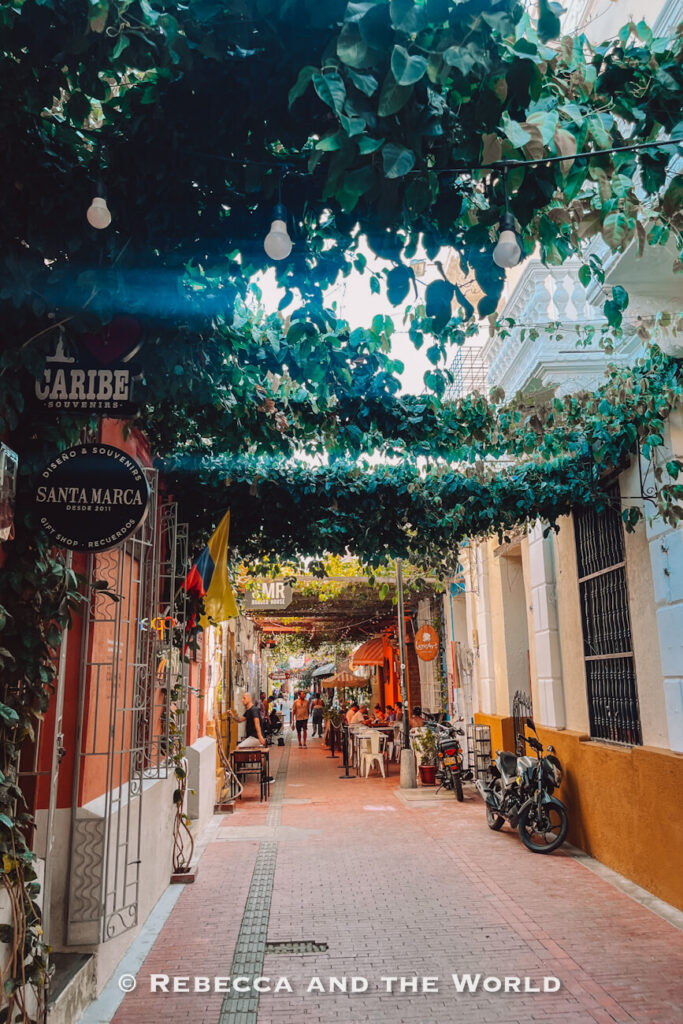
If you want to see Santa Marta at its most fun, head to Carrera 3 in the evening. It’s a pedestrian street lined with bars and restaurants, and there always seems to be music somewhere along the strip.
We were sitting down to eat while two performers played nearby, one on drums and one on guitar, when a random guy walking past picked up the maracas and a cowbell and joined them. He then poured the musicians a cup of aguardiente each before continuing on his way!
It’s also a good place to take advantage of happy hour – most bars and restaurants along here have some sort of drinks deal if you come around 5pm or 6pm.
Stroll through Parque de los Novios
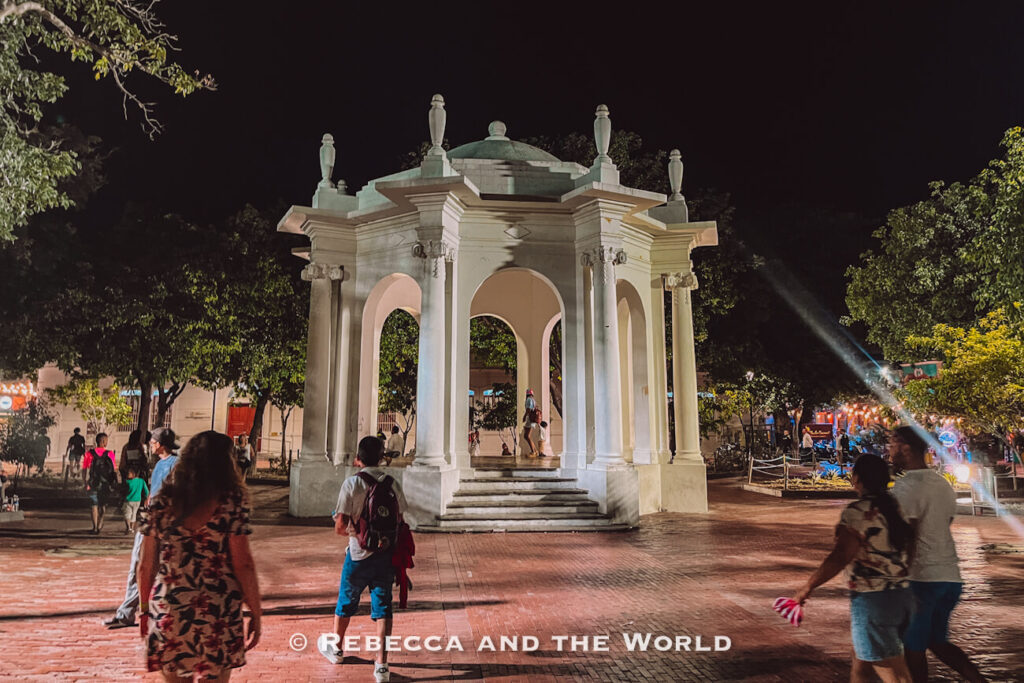
Parque de los Novios, or Lovers Park, is another great place to spend an evening in the historic centre. At night it has a great energy, with people filling the space, music drifting through the square and street performers drawing small crowds.
The white rotunda in the park is the focal point, and when we visited there were dancers performing there, lit up against the bright white backdrop.
Take a street food tour
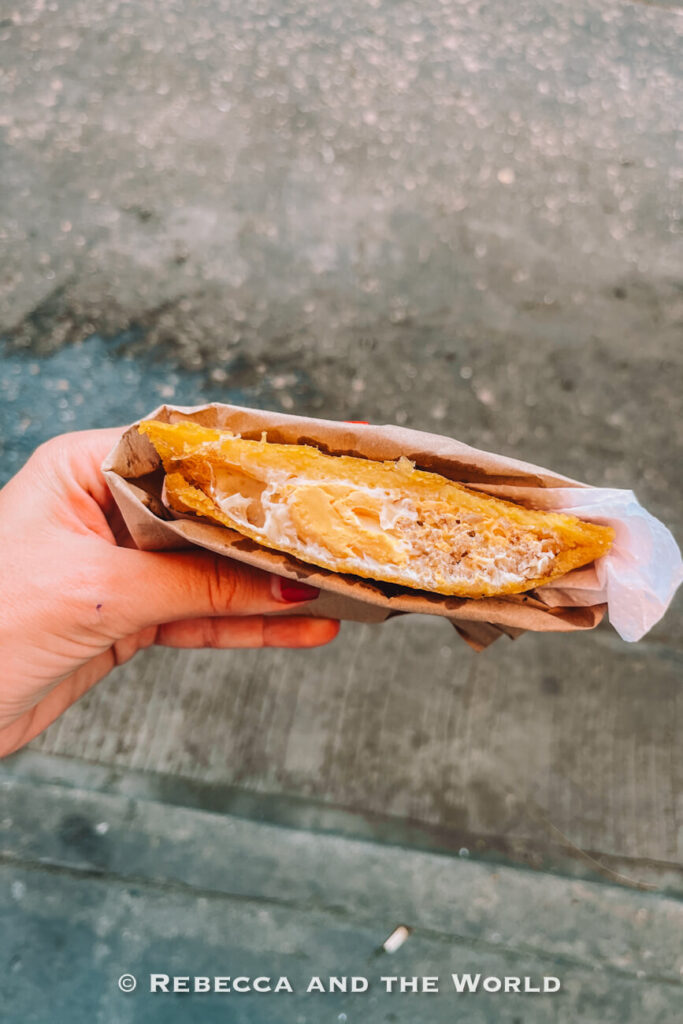
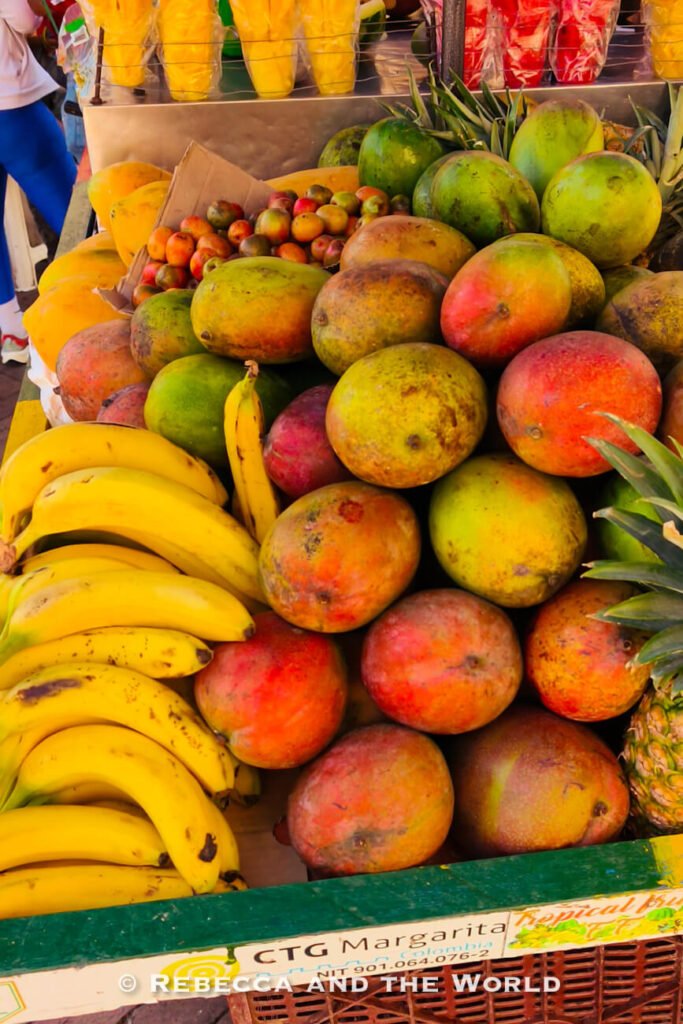
Having taken a street food tour in Cartagena and a food tour in Bogota, I’m convinced that this is one of the best ways to understand a city quickly. You get a crash course in what people actually eat, pick up some interesting historical and cultural facts, and know exactly what to order when you’re wandering around by yourself later on.
A good option in Santa Marta is this small-group food tour through the historic centre. It runs for around 3-4 hours and includes seven different food and drink stops, with enough tastings to count as a full meal.
Expect a mix of classic costeño flavours and staples like arepas, patacones and cayeye, plus Colombian coffee and fresh juice.
🍍 BOOK THE SANTA MARTA STREET FOOD TOUR HERE 🍍
Beach trip to El Rodadero
Santa Marta doesn’t really have swimmable beaches right on its doorstep, so if you’re craving a proper beach day with calm water, El Rodadero is the next best thing. It has more of a resort feel than the historic centre, with a busier, beachy vibe and plenty of places to grab food and drinks nearby.
The beach itself is fine rather than spectacular, but the water is calm and good for swimming, which is what most people come here for.
If you’ve been wandering the hot streets of the old town for a day or two, El Rodadero is an easy way to break things up with a few hours by the water. But honestly, I’d save beach time for when you get to somewhere like Cartagena or Palomino.
Take a day trip to Tayrona National Park
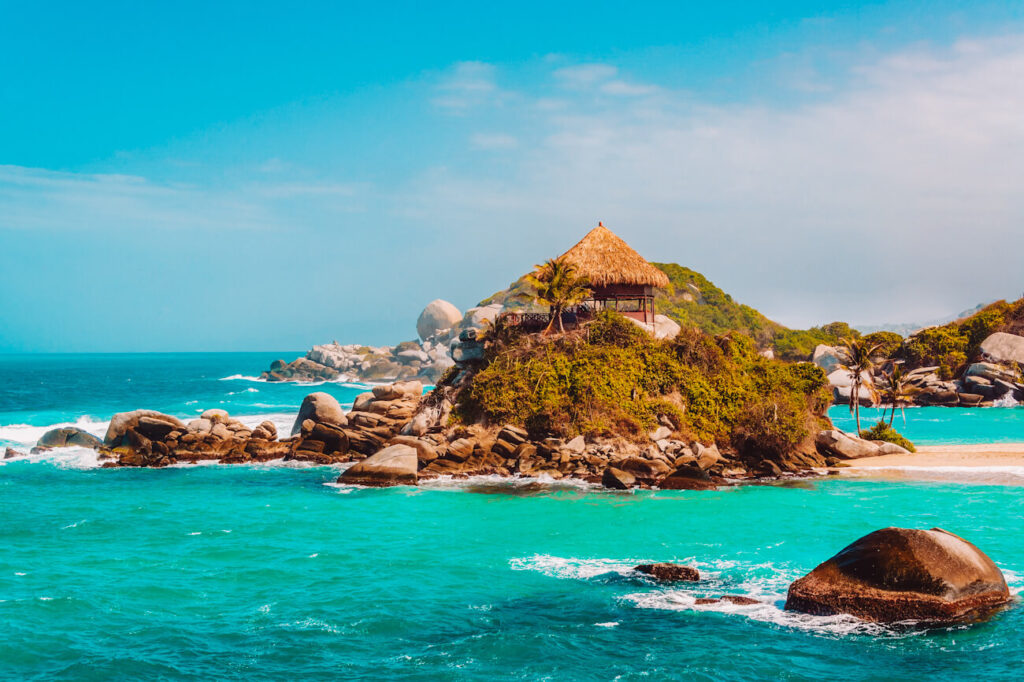
Stunning Tayrona National Park is where the jungle meets the Caribbean, with hiking trails that link a string of white-sand beaches and viewpoints. Santa Marta is an ideal base for a day trip because the main entrance at El Zaino is roughly 45 minutes away by road.
While you can spend a few days in Tayrona National Park, it can be more convenient to do a day trip from Santa Marta.
You’ll need to start early to make the most of the day and avoid the queues entering the park. Tayrona is hot and humid, and the walk is much more enjoyable before midday. Aim to be at the gate before it opens at 7am (8am in low season). You’ll also need to exit by 6pm.
Spend the day walking between beaches, having a picnic, sunbathing – but don’t plan on swimming much. The waters here are very rough and drownings do happen (on some beaches, swimming is forbidden).
Take a bus from Santa Marta to the entrance, or you can book a taxi or Uber to drive you there.
Can’t be bothered dealing with the logistics of getting to Tayrona? There are several day tours you can join.
⛵️ Join this sailboat cruise to Bahía Concha, one of Tayrona’s beautiful beaches! ⛵️
🥾 Or this beach and hike tour includes transport to Tayrona National Park. You’ll hike with a guide to different beaches, learning about all the flora and fauna on the way. 🥾
It costs foreigners between COP$81,000 and COP$96,500 to enter, depending on the season. It’s easiest to book your tickets online before you arrive. You’ll also have to separately pay for insurance to enter.
The park closes several times a year for ecological and Indigenous cultural reasons, usually the start of February and June and the last two weeks of October – you can check closures online here.
Take a day trip to Minca
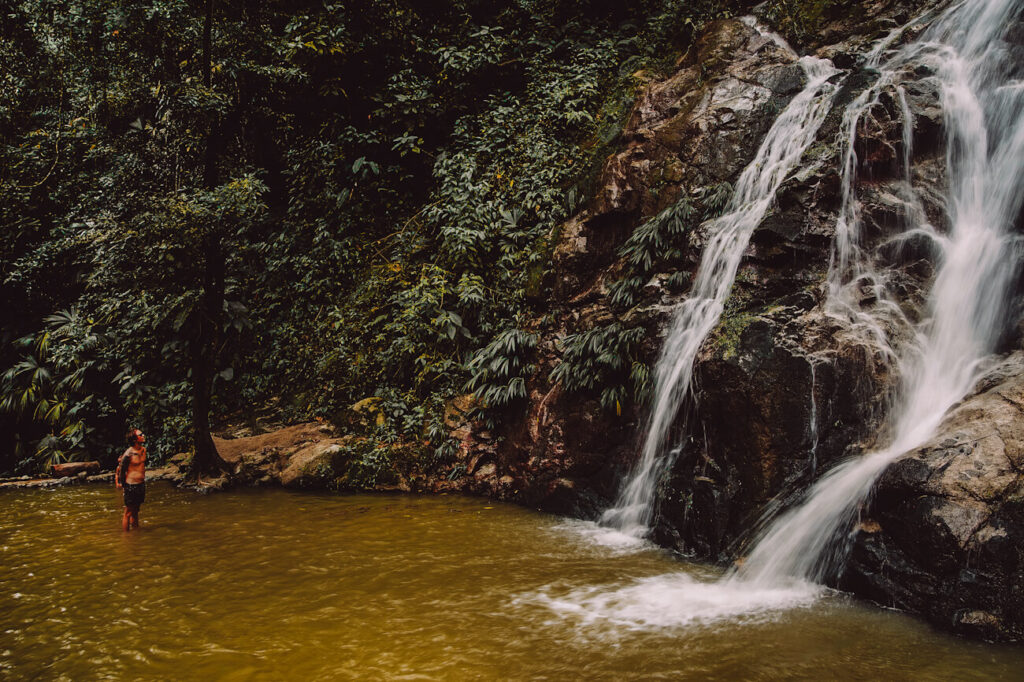
If you need a break from Santa Marta’s heat and humidity, take a day trip to Minca. Sitting in the foothills of the Sierra Nevada, it’s noticeably cooler than the coast and feels a world away, even though it’s close enough to visit in a day.
There are plenty of things to do in Minca, and it’s a great day trip from Santa Marta. You can keep it simple with a viewpoint and a long lunch, or turn it into an active day of waterfalls and short hikes. The most popular activities revolve around coffee and cacao farms, waterfalls like Pozo Azul and Cascadas de Marinka, and viewpoints over the jungle canopy.
You can take a bus or taxi; the drive is around 40 minutes to an hour.
Pack swimmers and a towel if you’re planning to visit the waterfalls, sun protection and insect repellent – the mosquitoes and bugs here are vicious.
Like Tayrona, if you don’t want to deal with the hassle of logistics, there are also guided tours from Santa Marta that bundle together a coffee farm and a waterfall stop. This tour includes a visit to a waterfall that’s considered sacred by local Indigenous people, learning about bamboo building and the chance to make your own cacao bar at a cocoa farm. Similarly, this tour includes a stop at one of Minca’s most famous viewpoints, a trip to a waterfall and a chocolate-making workshop.
Tackle the Ciudad Perdida (Lost City) trek
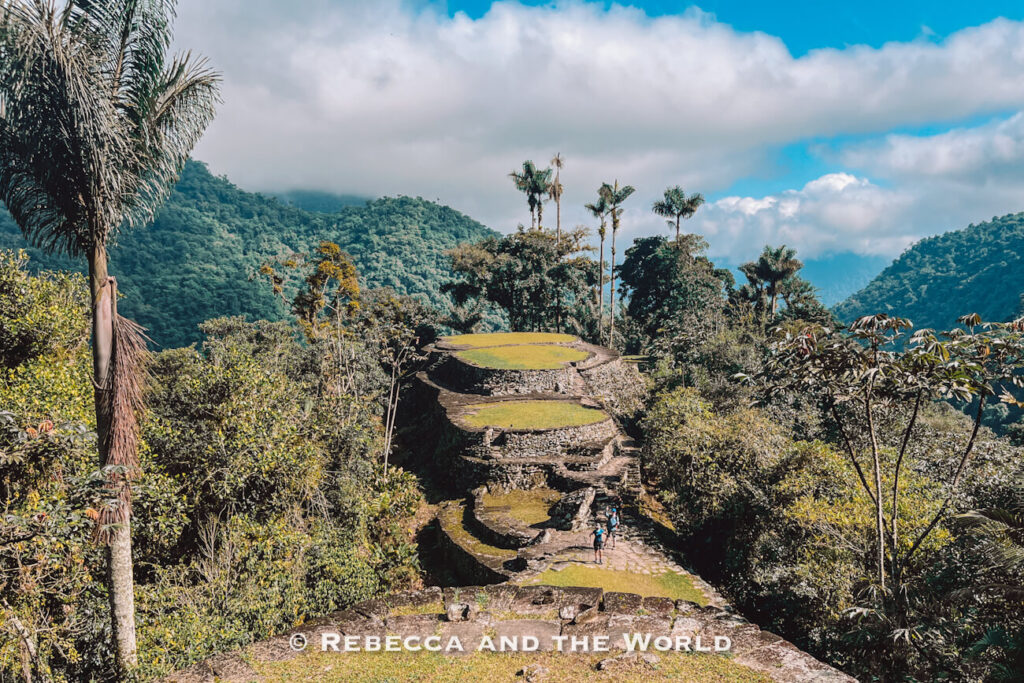
If the Lost City trek is on your Colombia wish list, Santa Marta is where it all begins. Tours to Ciudad Perdida depart from here, and we based ourselves in Santa Marta to start our trek with Expotur (read my full review of the Lost City hike experience here).
Most people do the trek over multiple days, with four days the most popular option. It’s a beautiful hike through jungle and Indigenous villages, with river crossings and water holes to swim in. But it’s a tough hike – the humidity, heat and steep climbs are no joke, and accommodation is basic.
Arriving at Ciudad Perdida more than makes up for it. This site is believed to have been founded around 800 AD, which means it predates Machu Picchu by about 650 years.
The Tayrona people built it high in the Sierra Nevada de Santa Marta as a major spiritual and political centre, with stone terraces carved into the mountainside, circular plazas, and a network of paths and staircases linking everything together. Even today, it feels incredibly remote. And what you see is only a small part of what’s out there: only a small portion of the wider archaeological sites in this region have been explored.
As well as a guide to hiking the Lost City, I have a Lost City packing list. You can book directly with Expotur here (arguably the best company to do the Ciudad Perdida with).
Santa Marta travel guide
Here’s everything you need to know about visiting Santa Marta – when to visit, how to get here, where to stay and where to eat.
Best time to visit Santa Marta
Santa Marta is hot year-round, so the best time to visit comes down to how much humidity and rain you can tolerate. The most comfortable time weather-wise is generally the drier season from December to April, when you’re less likely to deal with heavy downpours and the air feels a little less oppressive. This is also peak travel season on Colombia’s Caribbean coast, so prices and crowds tend to rise, especially around Christmas and New Year.
If you want a good compromise, June to August is often another solid window. It’s still warm, but rainfall is typically lower than the wetter months.
The rainiest stretch is usually September to November, with October often the wettest month.
How to get to Santa Marta
Most travellers arrive by plane or bus. Santa Marta has its own airport, Simón Bolívar International Airport (SMR), about 14 km south of the city. There are plenty of daily connections to Bogotá (check out my 2-day Bogota itinerary).
Santa Marta airport is a quick taxi ride to the city. We used the official VIP taxi setup at the airport, where the rates are listed on the wall and you can pay by credit card or cash, which takes a lot of the hassle out of arrival.
Arriving by bus is also straightforward if you’re travelling along the Caribbean coast. There are regular services between Cartagena and Santa Marta, and while schedules vary, the journey is usually around 4-6 hours depending on traffic and stops. Palomino is also only a 2-hour bus journey away.
🚌 CHECK BUS SCHEDULES AND TICKET PRICES HERE 🚌
Alternatively, you can take a private transfer from Cartagena, which will be quicker than the bus. This is handy if you’re a group or have lots of luggage.
Tip! If you take a private transfer from Cartagena, ask the driver to stop for a pic in Barranquilla where you’ll see the golden statues of Shakira and Sofía Vergara!
How to get around Santa Marta
If you’re staying in the historic centre, most of the sights in this guide are walkable. Just plan your walking for the right times of day – mornings and evenings are far more pleasant, while the sun in middle of the day can feel relentless. Noon is a great time to have some lunch and then a siesta!
For anything beyond the central grid, taxis and ridesharing are the simplest option. We used Uber to get to places like Quinta de San Pedro Alejandrino. There are plenty of drivers, and you’ll usually be given a pin.
For taking day trips from Santa Marta, a local bus is your best option or you can join a tour. Bring cash in small notes to pay for bus tickets.
Where to stay in Santa Marta
Historic centre
This is the best area if you want to be able to walk everywhere and have restaurants and bars on your doorstep at night.
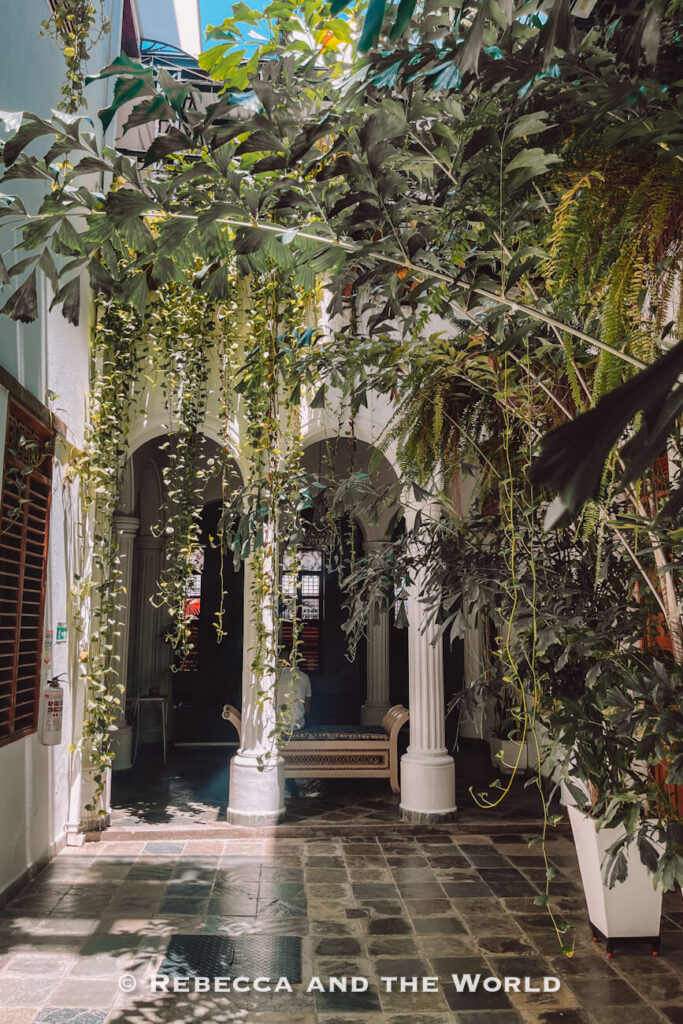
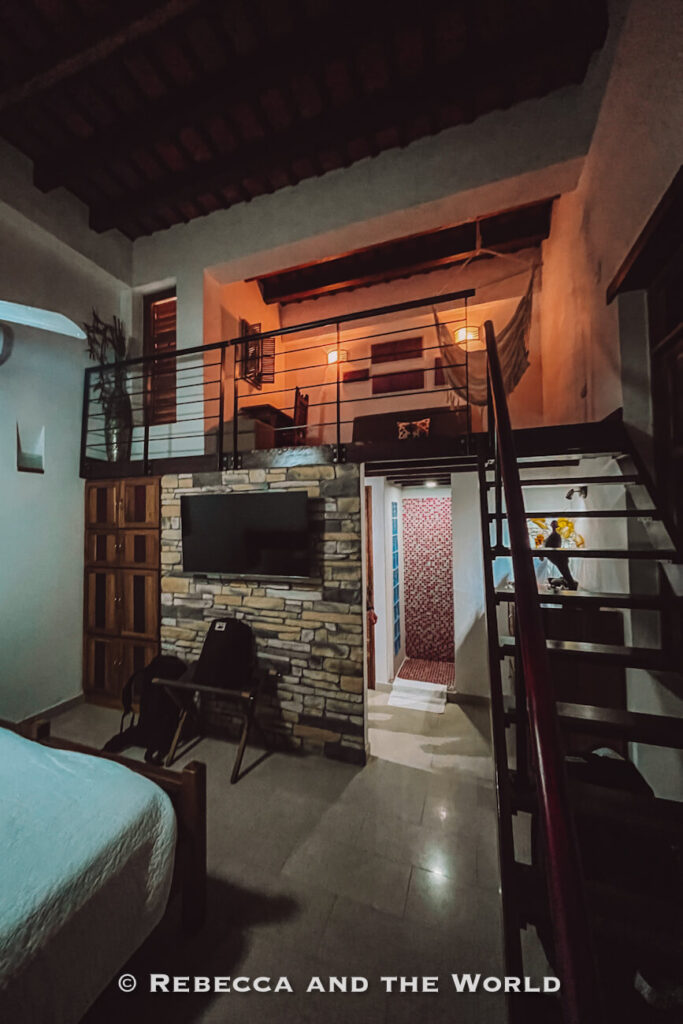
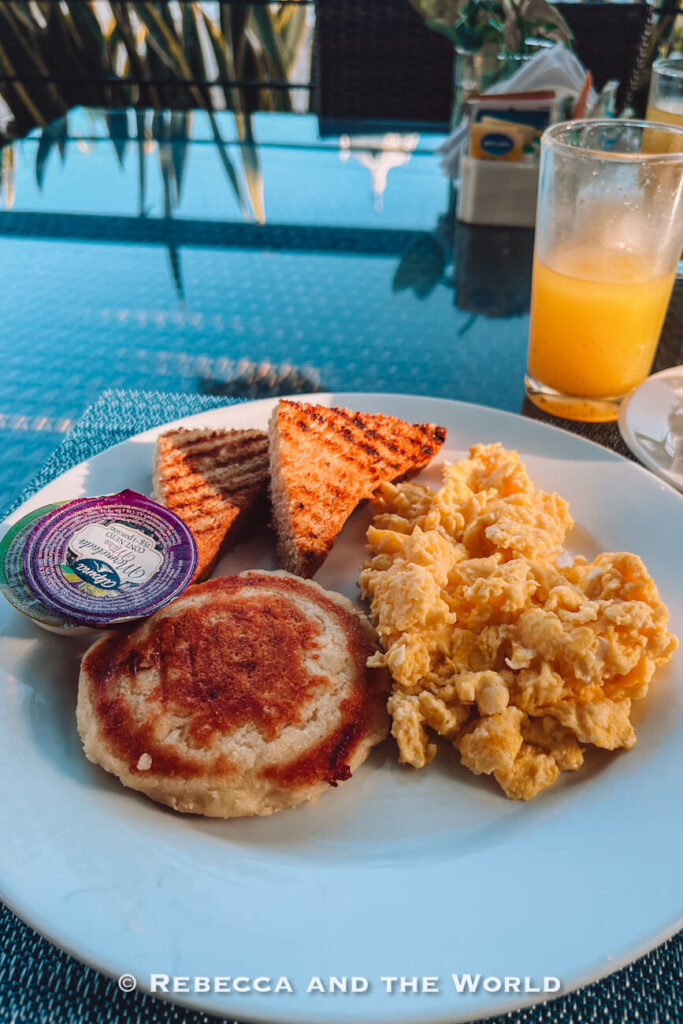
- Casa de Leda, a Kali Hotel – This is where we stayed, and I’d happily recommend it as a base in the historic centre. Our room was huge and even had a loft area, and the whole place is built around plant-filled patios. Breakfast was fantastic and the staff were genuinely helpful. Check availability and pricing here
- Hotel Boutique Casa Carolina – A lovely boutique hotel with a rooftop restaurant, pool and spa facilities. It’s just a few blocks walk from the Malecón and Parque Bolívar. Check availability and pricing here
- Masaya – Santa Marta has a backpacker vibe, so there are plenty of hostels. Masaya is a little more upscale, with a mix of dorms and private rooms. There’s an excellent terrace and pool. Check availability and pricing here
El Rodadero
If you’re just in Santa Marta for a few days, I’d recommend staying in the historic centre. But if you really want beach views, then El Rodadero is an alternative. It’s more resort-like than the historic centre, with beach access and a busier holiday vibe, but you’ll trade character for convenience.
- Hotel be La Sierra – A beachfront hotel right by Rodadero Beach, which makes it an easy, no-fuss option if you want to step out of your hotel and be straight on the sand. Check availability and pricing here
- Tamacá Beach Resort Hotel by Sercotel – Another solid beachfront pick in the Rodadero area, positioned right on the beach. It’s a good option if you want a classic beach-resort setup rather than a small boutique stay. Check availability and pricing here
Where to eat and drink in Santa Marta
Santa Marta has plenty of solid places to eat in and around the historic centre. These were our go-tos.
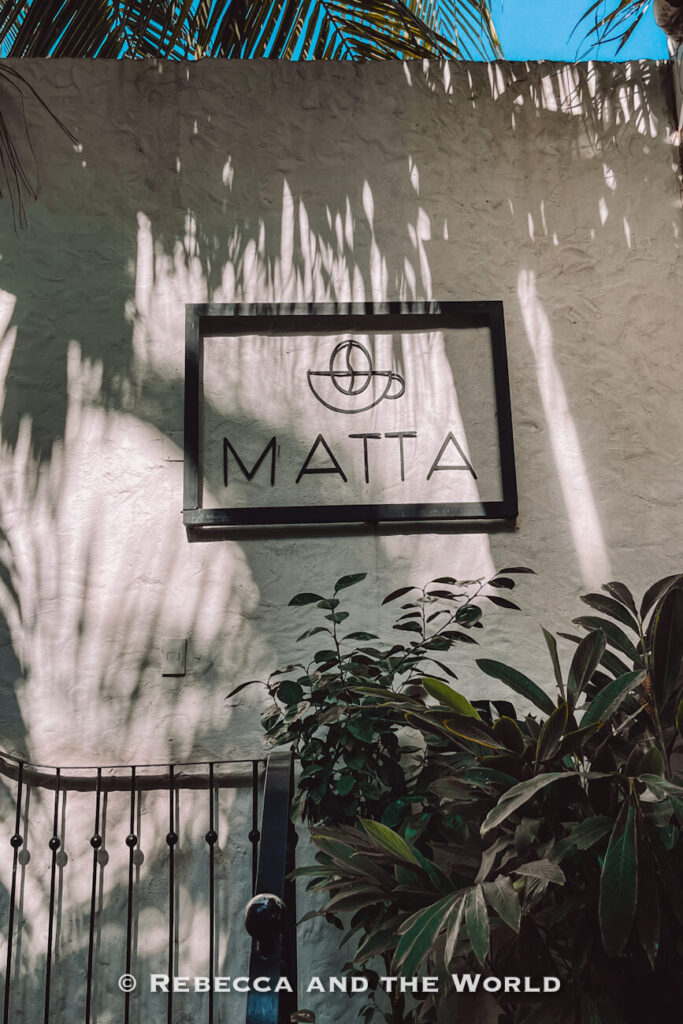
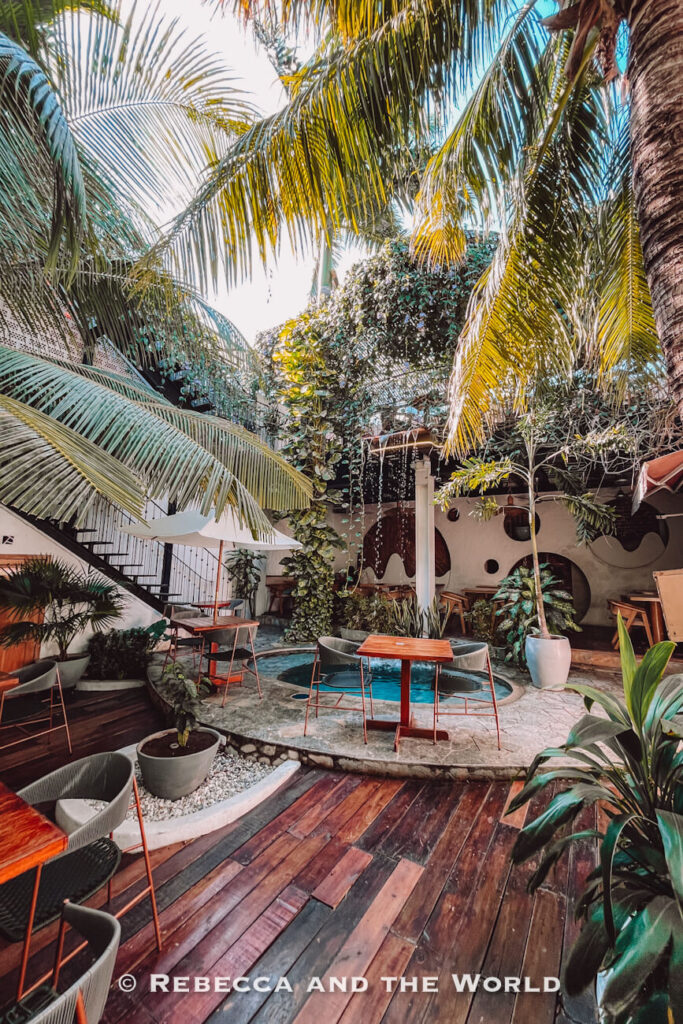
Matta Café
This was my favourite spot for a coffee break. The space is gorgeous, with palm trees and a water feature that makes it feel like a little oasis in the middle of the city. It’s where I tried my first limonada de coco – a dreamy, creamy coconut drink that I couldn’t stop drinking. Location
Lulo
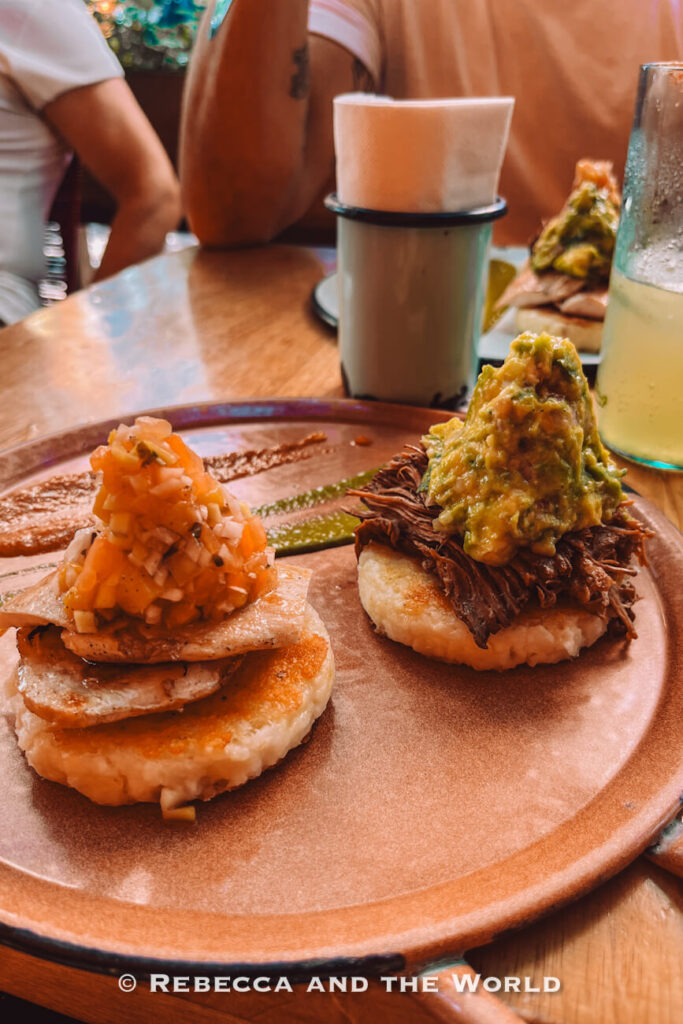
Lulo does great arepas topped with shredded meats and guacamole or mango salsa, and their fresh lemonade is exactly what you need in Santa Marta’s heat. Location
LamArt Bar
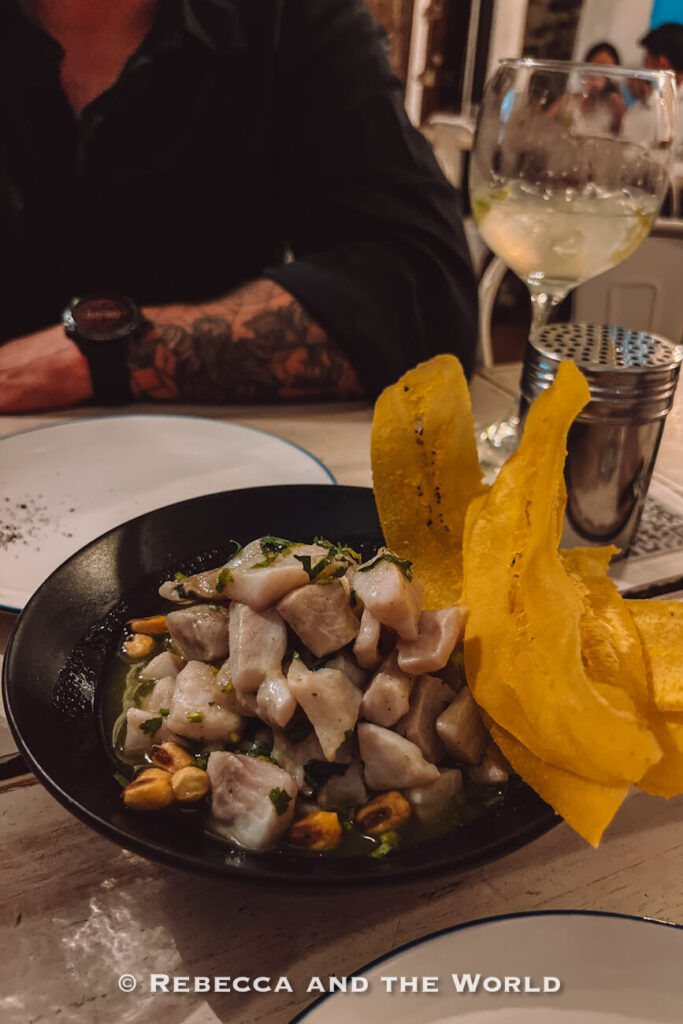
If you’re craving seafood, LamArt is the place – the ceviche servings are huge. They also have a good happy hour. Location
El Mexican
Perfect for a budget-friendly feed. Cheap tacos, easy drinks and a laidback vibe. Location
Ouzo Santa Marta
A good option if you’re ready for something different from Colombian and coastal classics. The menu is Greek food and woodfired pizzas. Location
Safety and scams
Santa Marta has a reputation for being a little sketchy, but we honestly didn’t see it. We had no issues walking around the historic centre, including at night. Like anywhere, I always had my wits about me, but I didn’t need to be constantly on edge.
The most common annoyance was “raperos”. If you’ve been to Cartagena, you’ll know the type: guys approaching tourists offering a quick rap or performance and then asking for money. We saw the same thing in Santa Marta. The easiest way to deal with it is to keep walking with a polite no, and avoid engaging.
Final thoughts: Santa Marta travel guide
Santa Marta surprised me. I’d gone in expecting to grit my teeth through a gritty, sweaty stopover, but it ended up winning me over.
Yes, it’s hot, it’s not as polished as Cartagena, and it doesn’t have swimmable beaches right in the centre. But there are colourful buildings, interesting historical sites and fantastic museums, making it an enjoyable place to spend a day or two.
FAQs: Things to do in Santa Marta
Is Santa Marta worth visiting?
Yes – come here and make up your own mind. It’s got interesting historical sites and it’s a great base for tackling the Lost City trek or taking day trips to Tayrona National Park and Minca.
Is Santa Marta safe?
We had no issues walking around the historic centre, even at night. Basic common sense still applies, but it didn’t feel like a destination where we needed to be constantly on guard.
Can you swim at the beaches in Santa Marta?
Not really in the central areas. If swimming is the priority, head to El Rodadero or Bello Horizonte, where the water is calmer.
Should I visit Santa Marta or Cartagena?
Santa Marta and Cartagena offer different experiences. Cartagena is more polished and visually striking, but busier and often more intense in terms of crowds and touts. Santa Marta feels rougher around the edges, but it’s quieter, easier as a base for day trips and has a more backpacker-leaning energy. If you can visit both (as we did), they complement each other well.
Did you find this article helpful? Consider buying me a coffee as a way to say thanks!
Did this Santa Marta travel guide help with planning your trip? Leave any questions or tips in the comments section below.
Related posts
Before you go… you might like these Colombia travel articles:
- What to Expect on Colombia’s Lost City Trek + An Honest Expotur Review
- Lost City Trek Packing List: What to Pack and What to Leave Behind
- Is Palomino Worth Visiting? A First-Timer’s Guide + Tips for Planning Your Stay
- 3 Days in Cartagena Itinerary: Plan Your First Trip to This Colourful Colombian City
- 48 hours in Bogotá, Colombia: The Perfect 2-Day Itinerary for First-Time Visitors
COLOMBIA TRIP ESSENTIALS
- Book your flight to and around Colombia online with Skyscanner. I like how Skyscanner allows you to find the cheapest days to travel and compares multiple airlines at once.
- One thing I always purchase is travel insurance! Travel Insurance Master allows you to compare across multiple policy providers, while SafetyWing is great for long-term travellers and digital nomads.
- Wise is my choice for sending and receiving money and spending money overseas (you can get a digital and physical card).
- Find great hotels across Colombia. Check prices on Booking.com and Expedia online.
- Check out the huge range of day tours throughout Colombia on GetYourGuide or Viator. I love a good food tour in particular!
- Saving money? Check out the range of free walking tours in Colombia with GuruWalk (don’t forget to tip!).
- How to get around? I use DiscoverCars for car hire, or Motorhome Republic and Jucy for campervan/RV rental. For buses, trains and ferries, I use 12GO, Busbud and Omio.
- Grab an e-sim to stay connected while on the road.
- A copy of the Lonely Planet guide to Colombia will be handy. Also pick up a Spanish language phrasebook to help you navigate your visit.
- Check out my Amazon shop for my fave travel items – everything from backpacks and suitcases to travel adapters and beauty products.
PIN IT FOR LATER: SANTA MARTA TRAVEL GUIDE
Save this Santa Marta travel guide to Pinterest so you can plan your trip later.