

Looking for the best things to do in Cape Tribulation? This guide covers the best beaches, rainforest walks and swimming holes, as well as recommendations on where to eat and where to stay.
If you’re wondering what there is to do in Cape Tribulation, the short answer is: more than you’d expect from somewhere this remote. We just returned from a week-long road trip up to Cape Trib, and I’m already thinking about when I can get back here.
Cape Tribulation is the only place in the world where two World Heritage sites meet: the Daintree Rainforest and the Great Barrier Reef, tumbling into each other along a stretch of ruggedly beautiful coastline. It’s home to wide, impossibly soft beaches where you can walk for twenty minutes without seeing another soul, framed by rainforest that’s been growing here for longer than almost anywhere else on Earth.
This is remote. Phone signal drops out not long after you cross the Daintree River. The nearest big towns are a couple of hours away. You’re reliant on the Daintree River ferry to get here – and it can break down. The grocery stores may not be fully stocked with everything you need. But this is all part of the appeal, in my opinion, of visiting such a beautiful part of Australia.
So, if you’re planning a trip to Cape Tribulation, plan for the unexpected – and plan to spend a few very refreshing days in one of Australia’s most gorgeous places.
Here’s my best guide to the best things to do in Cape Tribulation and around, as well as where to eat and sleep.
This blog post may contain affiliate links, meaning if you book or buy something through one of these links, I may earn a small commission (at no extra cost to you).
Where is Cape Tribulation?
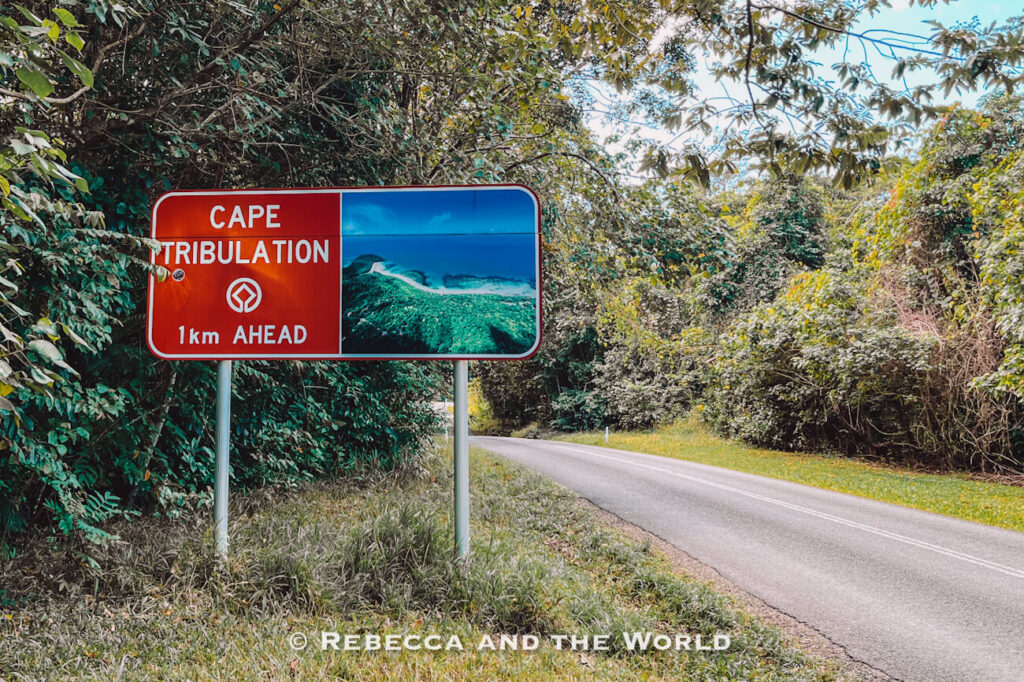
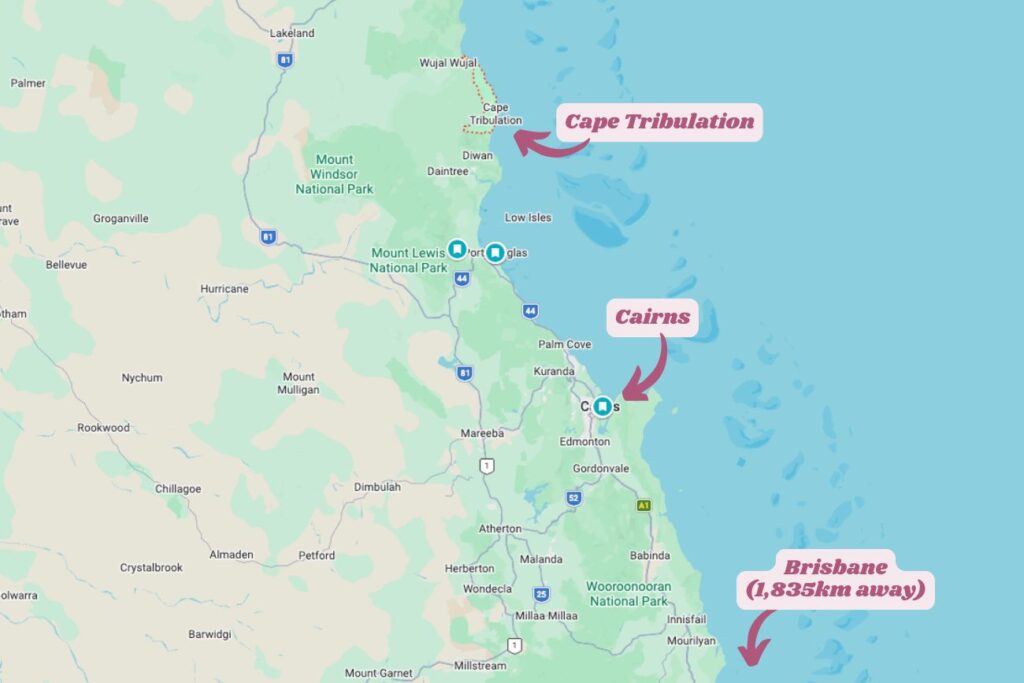
“Cape Tribulation” technically refers to the headland itself, but in this guide I’m taking a bit of liberty with the name, the same way most visitors do. In this guide I’m covering the stretch north of the Daintree River ferry crossing up to Cape Tribulation, including Cow Bay, Thornton Beach and the boardwalks in between, since that’s the area most people mean when they say they’re “heading to Cape Trib.”
It’s a 2.5-hour drive from Cairns if you drove straight through – but you’ll definitely want to make plenty of stops as you make your way up here.
This is Kuku Yalanji country, and the Eastern Kuku Yalanji people have lived here for more than 65,000 years.
→ READ NEXT: Plan a 7-day Cairns to Cape Tribulation road trip (COMING SOON)
Best things to do in Cape Tribulation
Here are my picks for the best things to do in and around Cape Tribulation. Plan to spend at least 2-3 days here (its beauty will easily suck you in for a longer stay).
Best beaches around Cape Tribulation
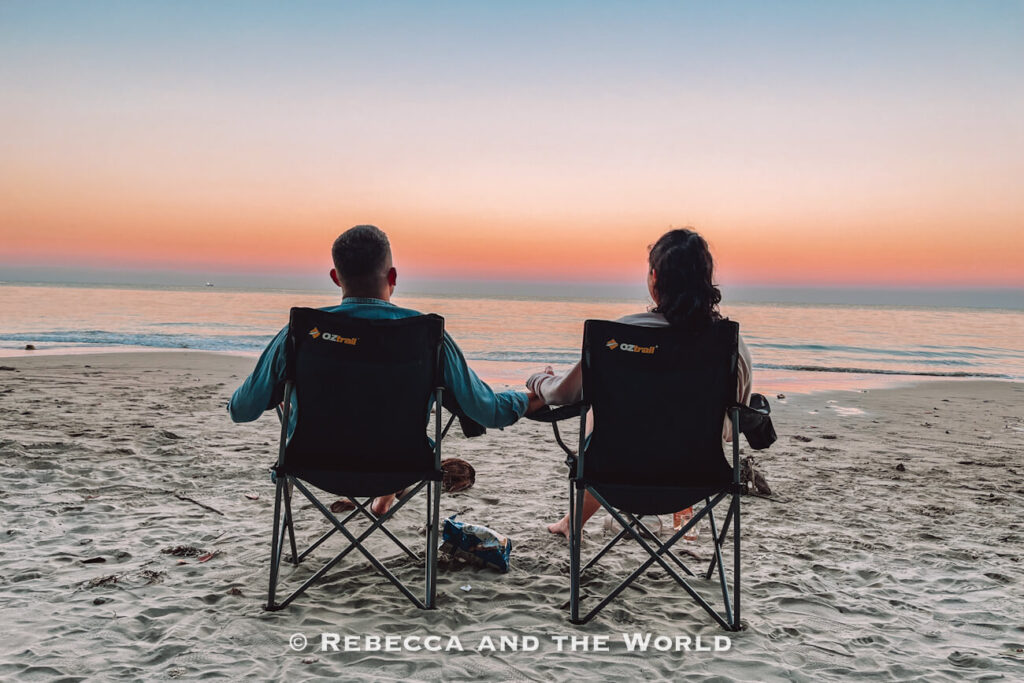
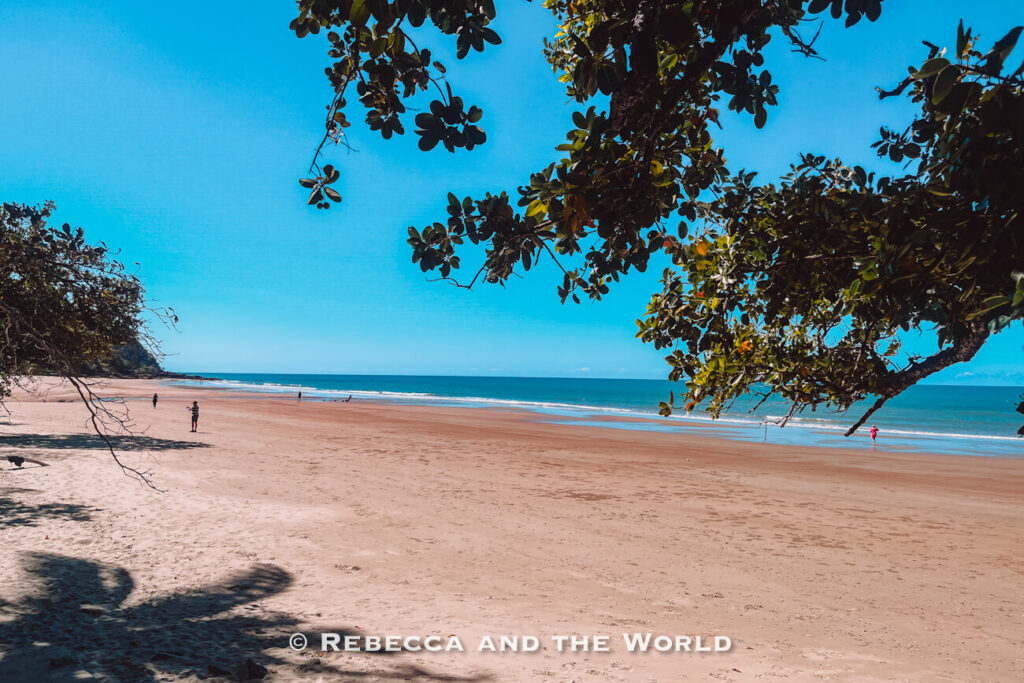
The sand up here is something else – much finer than what you’ll find at Four Mile Beach in Port Douglas, for example. Of course, this is croc country, so you’ll see a lot of warning signs. Unless you’re willing to risk it, treat these beaches as places for walking, photos and sunset watching rather than a dip. (Unlike when I was in Darwin, I didn’t even take a quick dip here!) Marine stingers are also an issue during the summer months.
Cow Bay Beach
This is a great beach to stop at as you make your way north to Cape Tribulation. The Indigenous name is Kaba-Kada, which means “rains a lot.”
You can’t drive on the beach or camp here, but there are a few covered, shaded picnic tables that make it a great lunch stop. We cooked up lunch from our van here and had the place almost to ourselves.
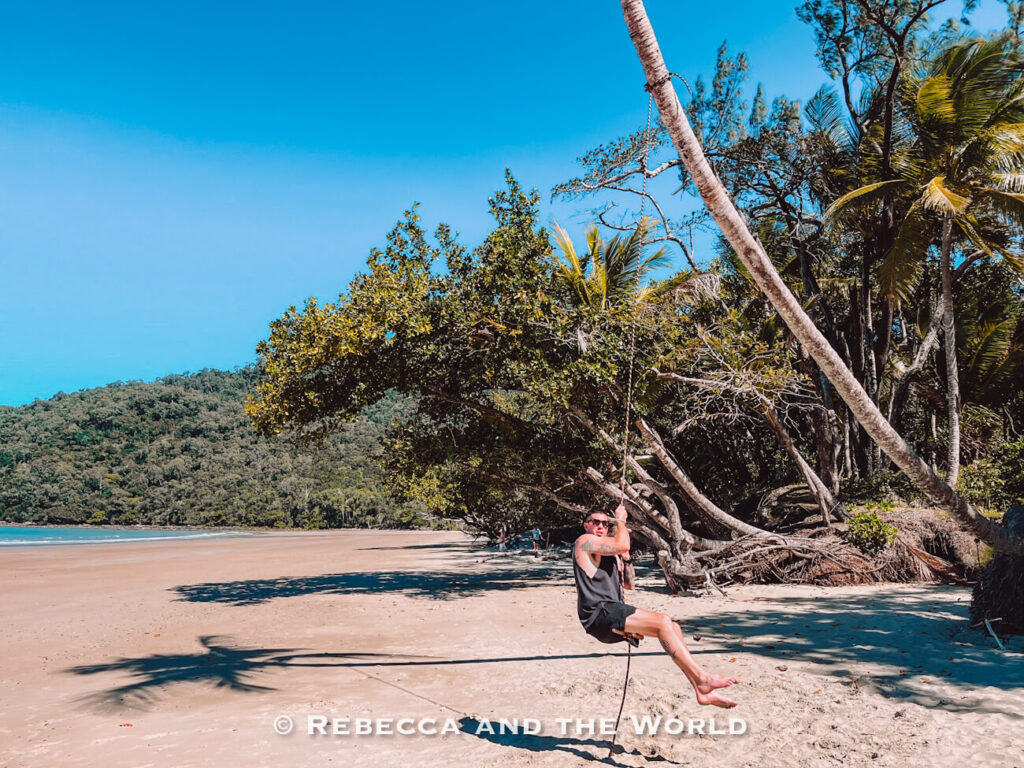
There’s also a tree swing that my husband had fun on!
Thornton Beach
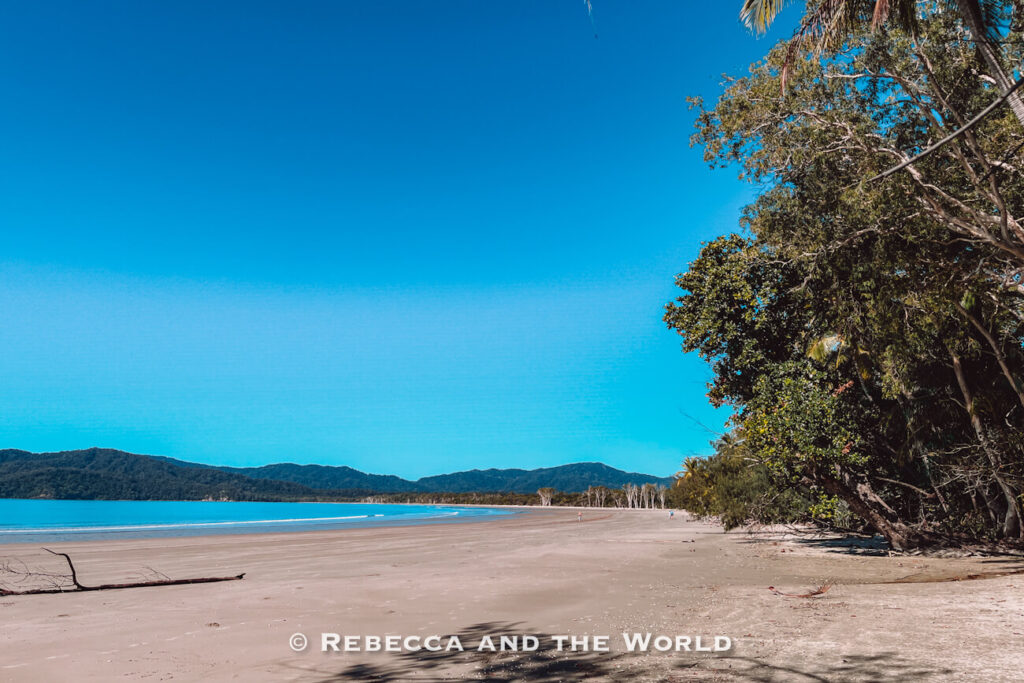
Another wide, sandy beach with barely another person in sight (this will become a theme throughout this article…), and home to lots of little hermit crabs scuttling around.
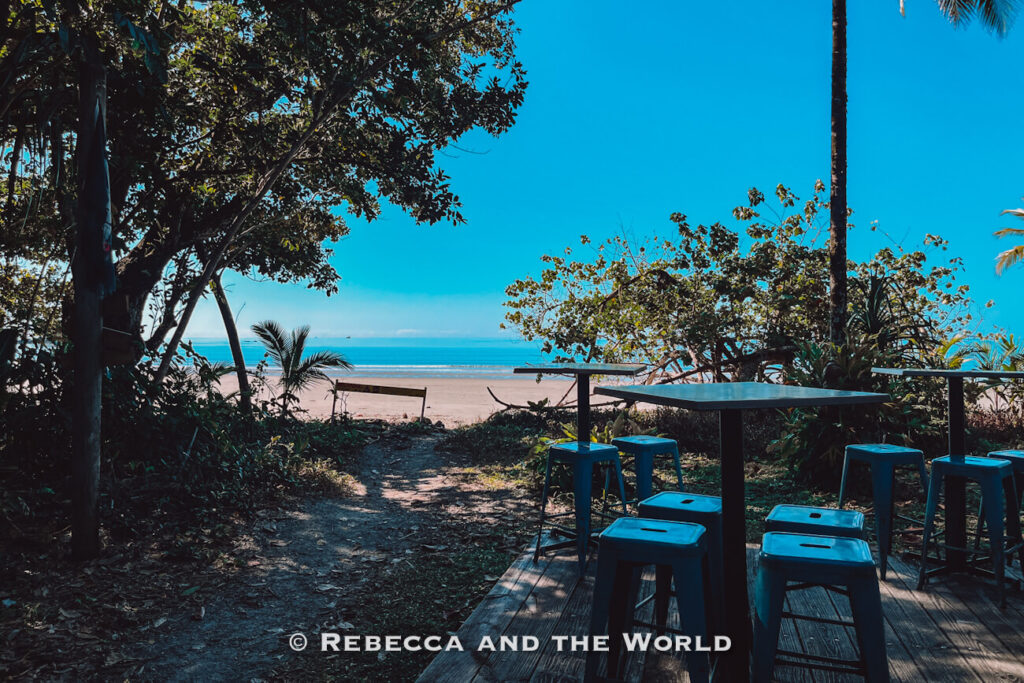
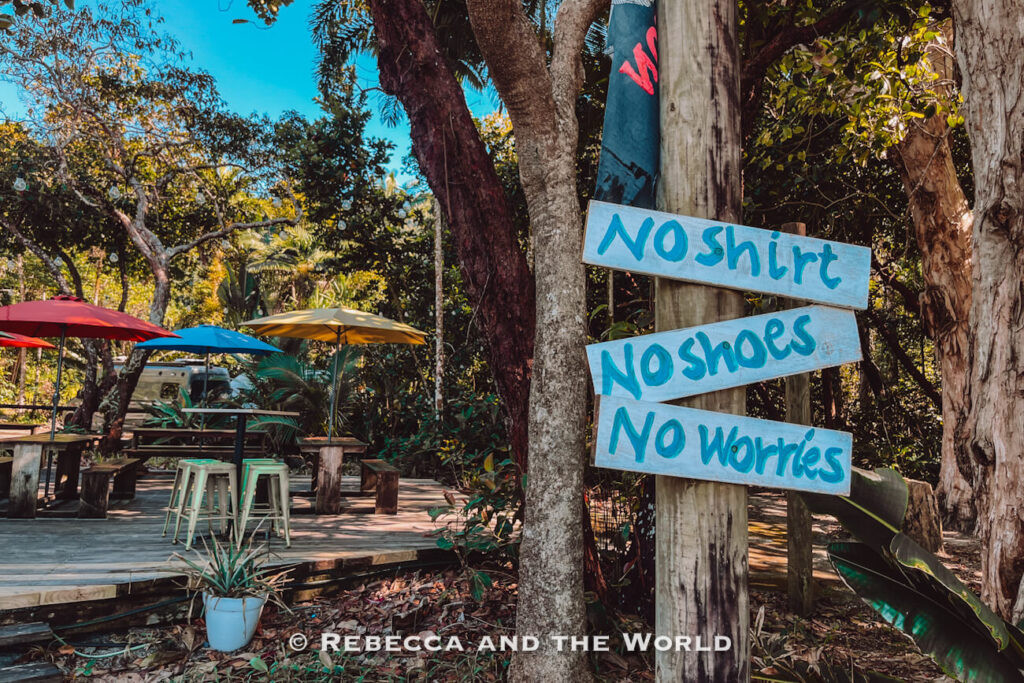
There are covered picnic tables here, plus a nice little café with an outdoor deck where you can grab coffee, ice cream, cakes or brunch.
Noah Beach
A lovely beach, and one of the few places along this stretch where you can camp, just 50 metres back from the sand. The campsites are well spaced out and shaded, though it’s not suitable for caravans. This is a better site if you’re tent camping or have a camper trailer or small campervan. There are non-flushing toilets. You’ll need to book online ahead of time.
Coconut Beach
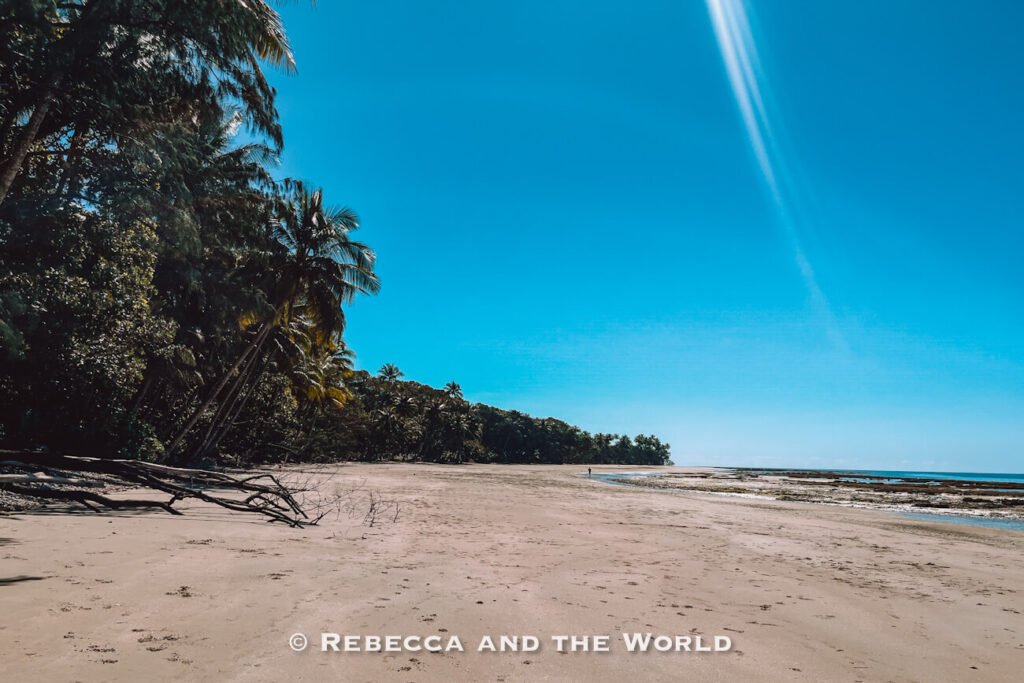
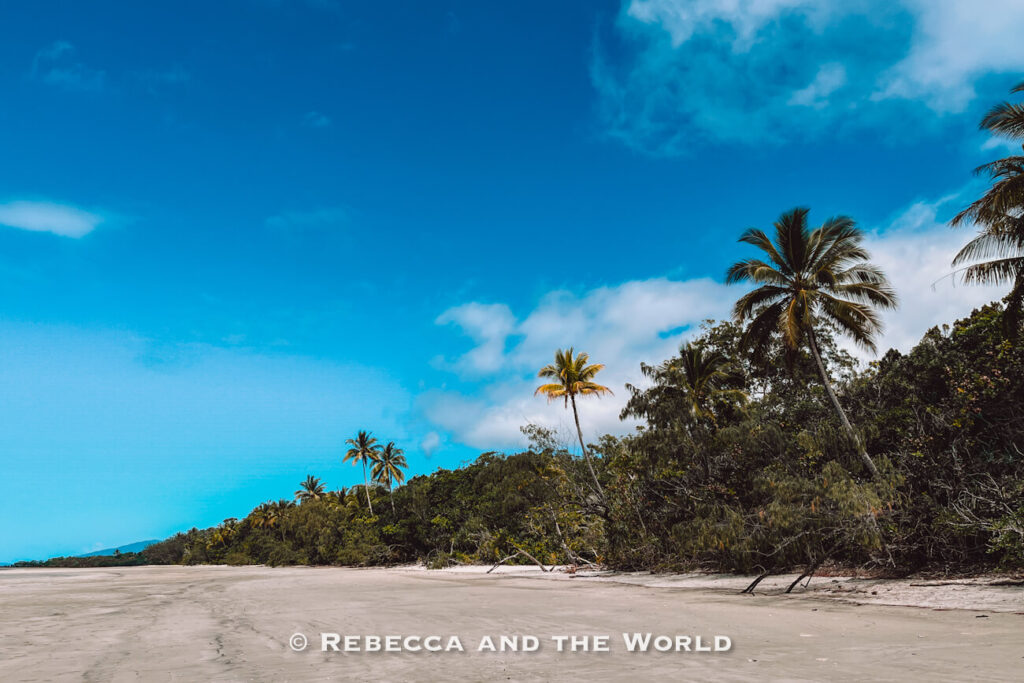
I feel like I’m repeating myself, but this is another soft-sand beach, with – yet again – barely a soul to be seen as you stroll along the shore.
It’s just a 5-minute drive south of Cape Tribulation. To reach the beach, there’s a very small parking area near where the road forks in two, so take care with oncoming traffic here and avoid parking on the roadside.
And yes, there really are coconuts scattered along the beach!
Cape Tribulation Beach
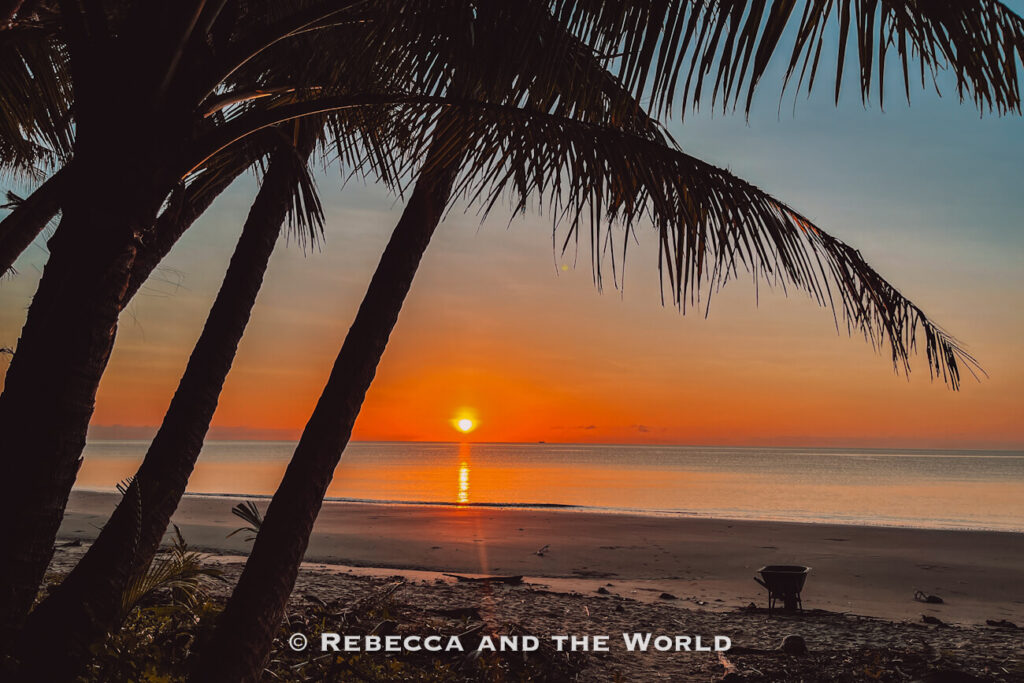
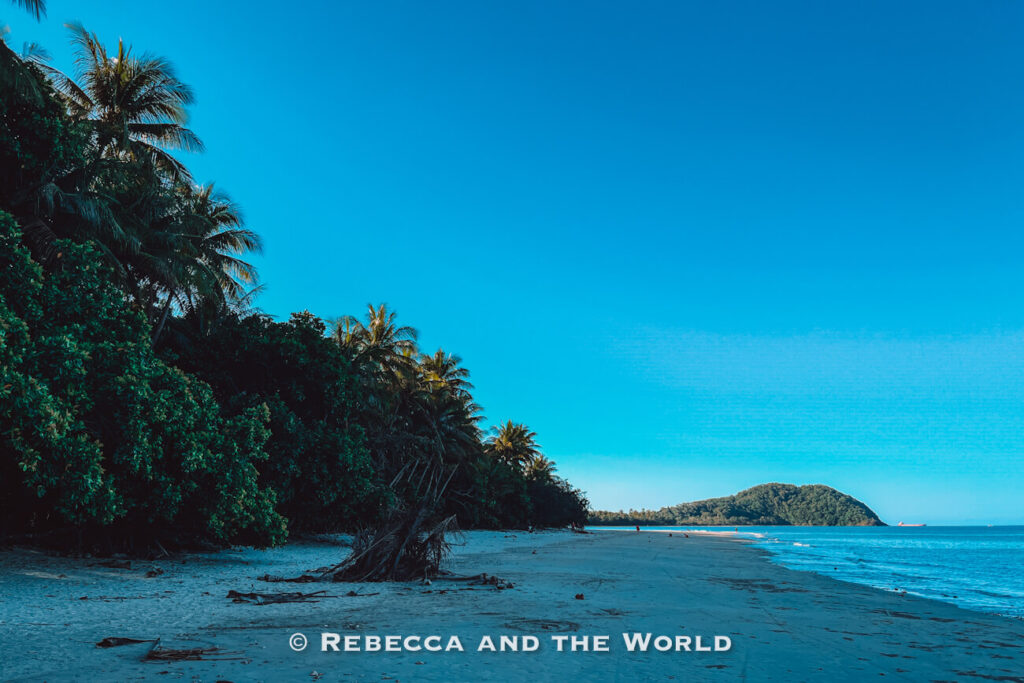
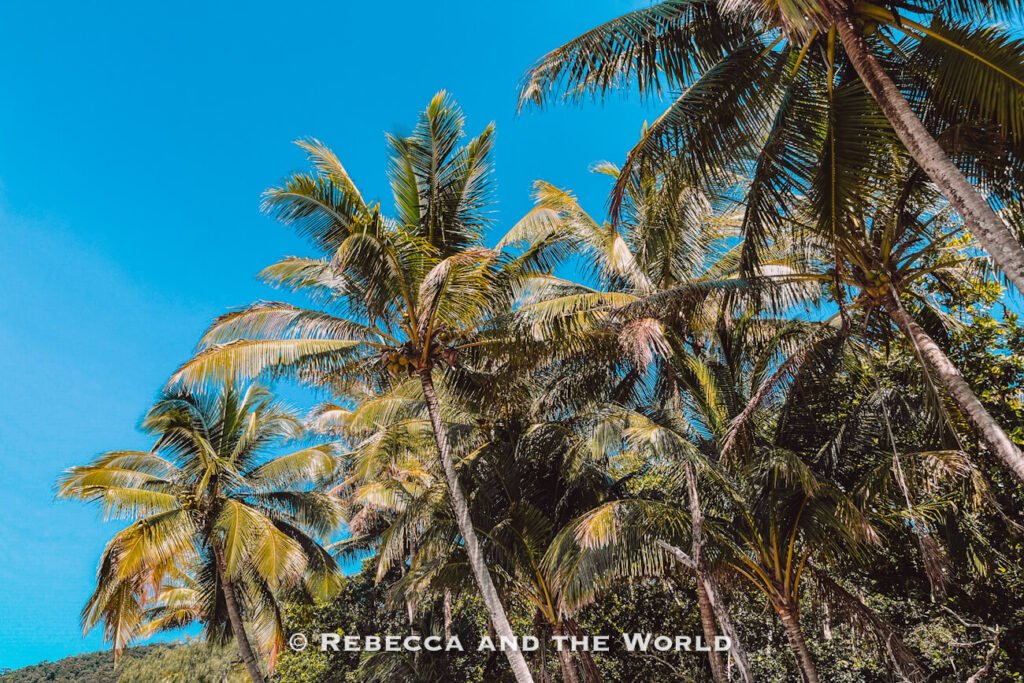
Fringed by palm trees and one of the best spots along this coast for sunset and sunrise, Cape Tribulation Beach is a beautiful spot. The sand is incredibly soft and fine.
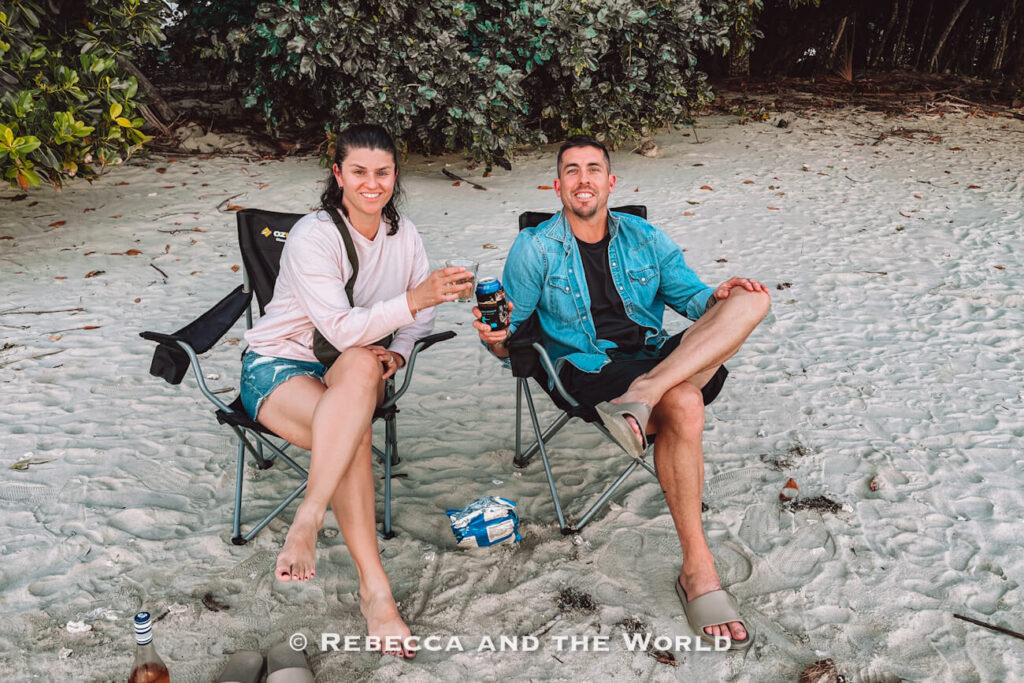
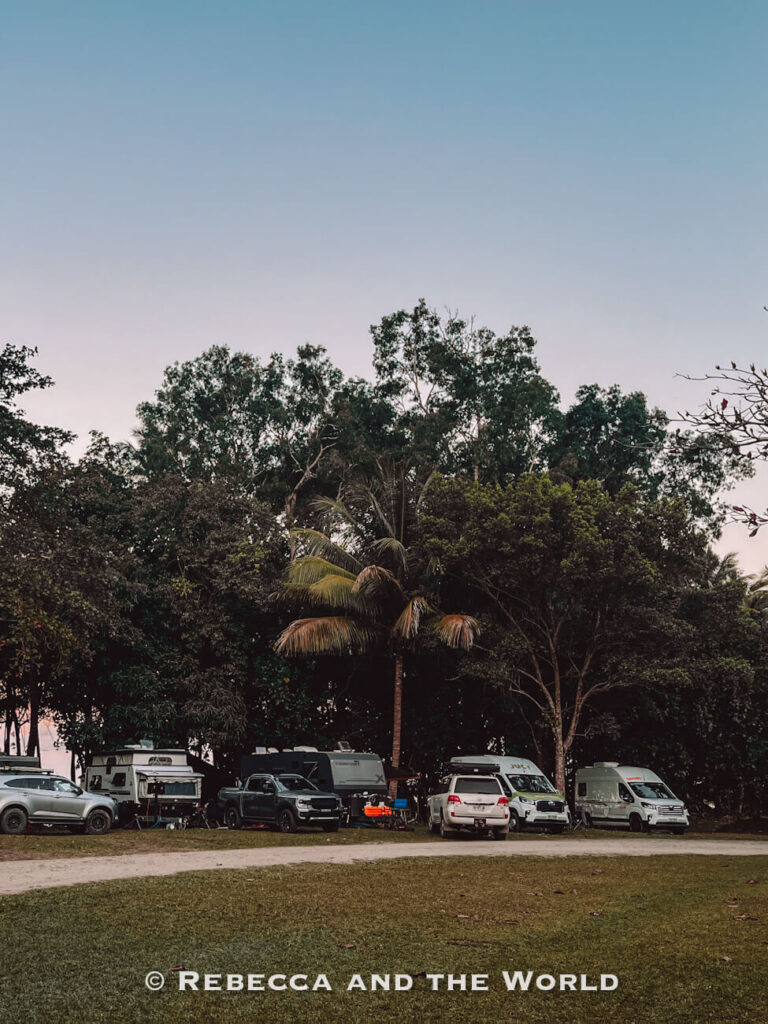
We stayed at Cape Tribulation Camping, which meant we could wander out here first thing every morning. Plenty of people light campfires along the beach in the evenings and the fitter among us can be found running along its full width most mornings.
Myall Beach
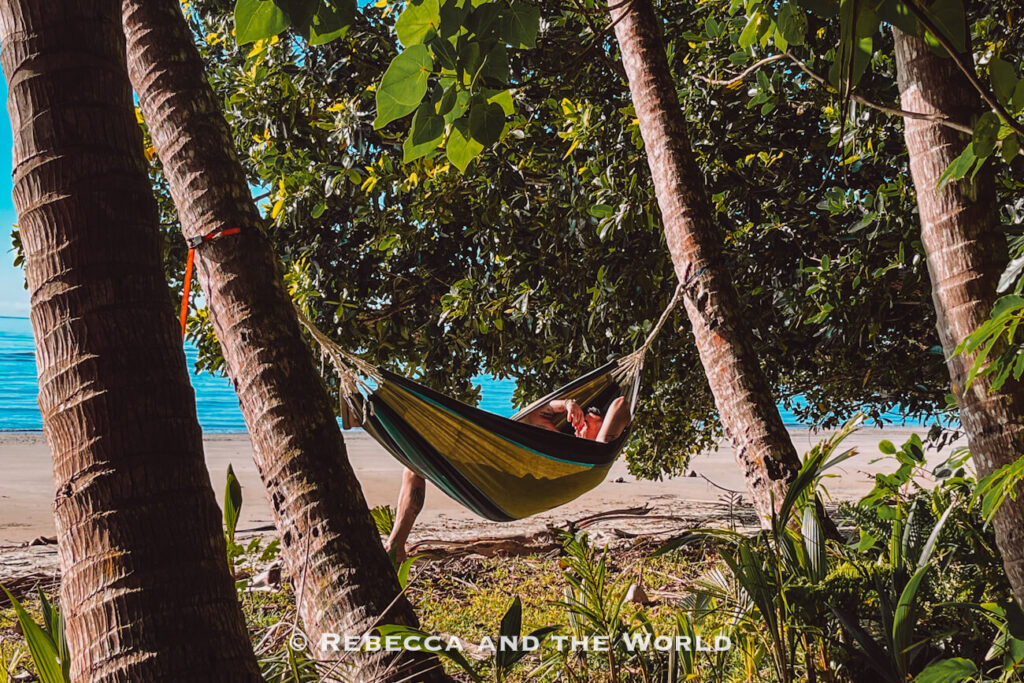
Another wide beach which can be reached directly or via the Dubuji Boardwalk (more on that below). Pack a picnic and enjoy lunch here in the shade.
People we talked to at the visitor centre said they saw a minke whale from here as well as a huge ray, so get out on the rocks and see what marine life you can spot.
→ READ NEXT: The best thing to do in Port Douglas
Cape Tribulation walks, boardwalks and lookouts
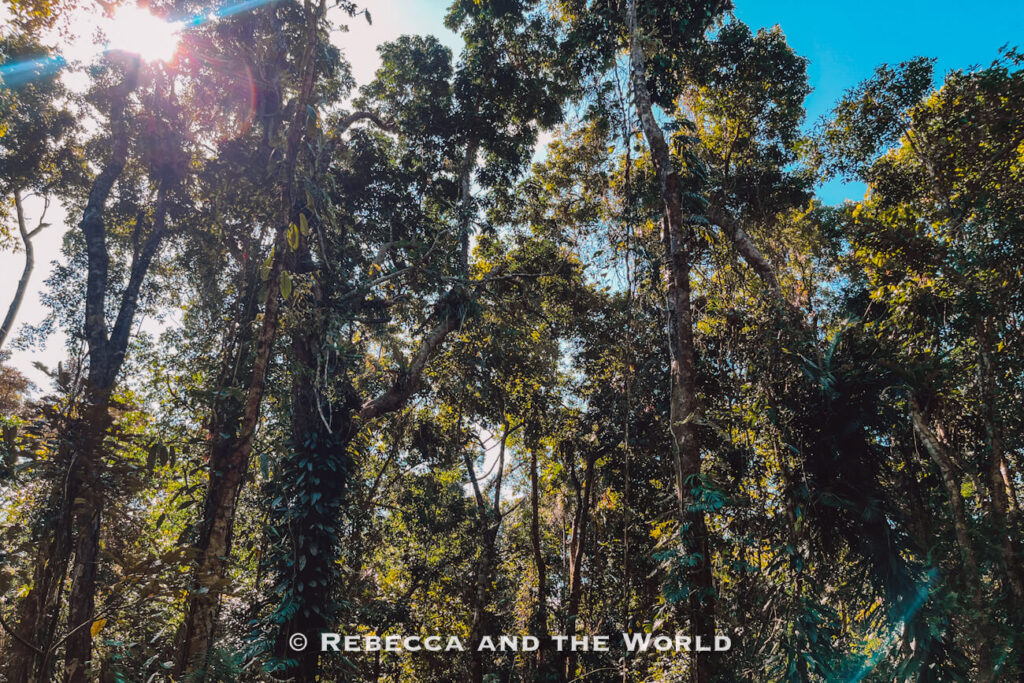
This is the heart of the Daintree Rainforest (full guide COMING SOON), and there are some great walks here to see the flora and fauna up close. I’ve listed these from south to north. For such a remote area, I was really impressed with the quality of the boardwalks and trails as well as with the informational signage along the paths.
I learned from one of those signs that this stretch of rainforest is the oldest continuous living tropical rainforest in the world and home to the largest range of plant and animal species that are rare or threatened anywhere on Earth. Around 30% of Australia’s frog and mammal species and 21% of its reptile species live here, alongside 60% of the country’s butterfly species. More than 370 bird species have been recorded in the Wet Tropics, 13 of which exist nowhere else in the world.
Take care as you walk through it – you’re moving through something irreplaceable.
→ READ NEXT: What to see and do in the Daintree Rainforest (COMING SOON)
Walu Wugirriga / Mount Alexandra Lookout
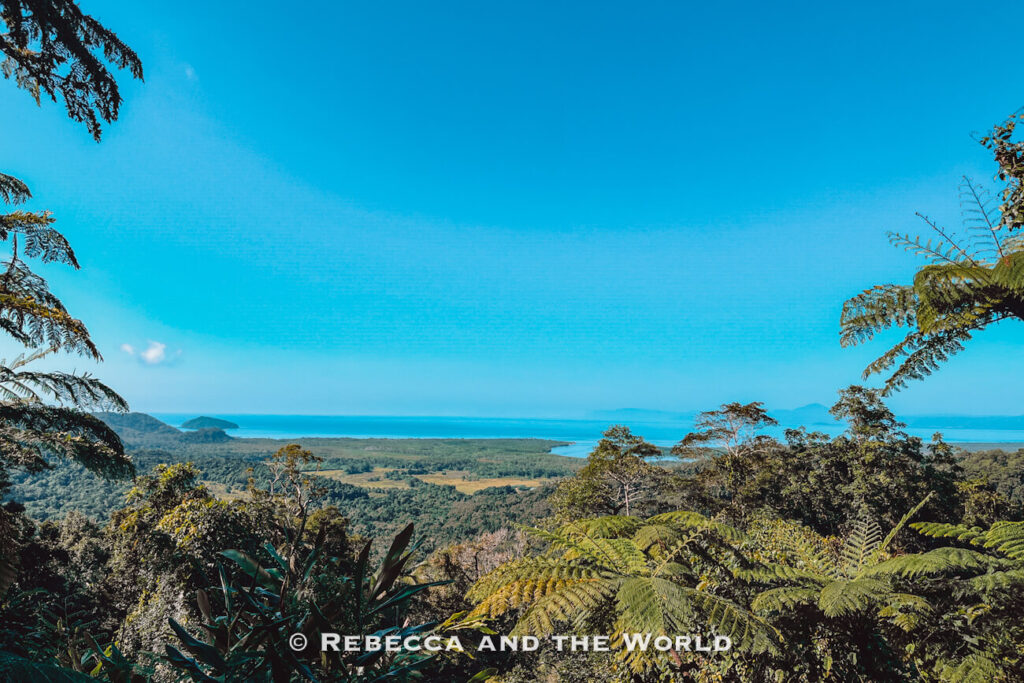
After you cross the Daintree River, this is one of the first stops you should make. There are sweeping views over the coast, including the mouth of the Daintree River, Snapper Island and Low Isles (with signs pointing all of these out).
There’s a decent-sized car park, with plenty of space even if you’re towing a caravan.
Jindalba Boardwalk
Jindalba means “foot of the mountain” in Kuku Yalanji, and this boardwalk takes you through the lowland rainforest at the foothills of Walu Wugirriga (Mount Alexandra).
There are three tracks here:
- Rainforest Walk (80m return) – fully accessible, a good option if you’re short on time or mobility is a factor. You’ll see some huuuugggeeee trees and hopefully spot (or at least hear) some wildlife.
- Boardwalk Loop (650m loop) – an extension of the Rainforest Walk, this is entirely boardwalk but with some stairs. There’s a lookout about 100m off the main path that overlooks the rainforest canopy.
- Circuit Track (3km loop) – at times it feels like there’s barely a path here, so stay alert. It’s stony with plenty of roots to catch your feet, and you’ll sometimes need to cross creeks, so wear shoes you don’t mind getting wet. But it’s definitely worth the extra effort.
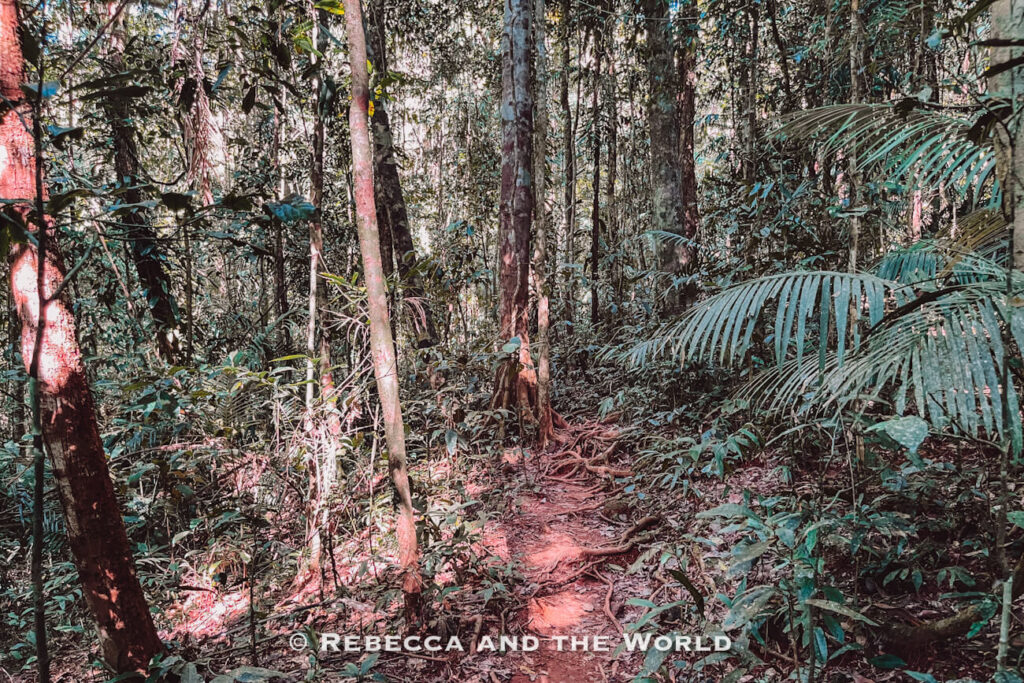
While walking these tracks, I felt so small and insignificant standing among trees that are thousands of years old!
There are plenty of information signs telling you what to look and listen for, including flying foxes, birds and various marsupials (what I would give to see a tree kangaroo in the wild!).
There’s a huge, shady car park and toilets on site.
Madja Boardwalk
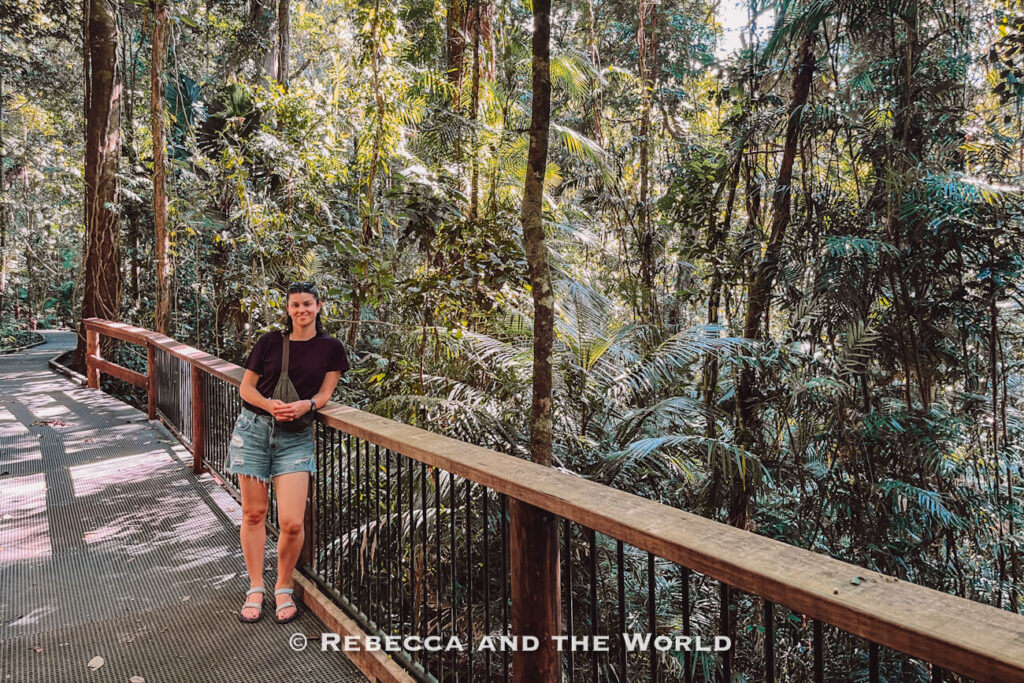
The Madja Boardwalk was my favourite walk – mainly because we spotted a musky rat-kangaroo foraging along the ground right at the end of the trail! I thought it was a rat at first until it started hopping along. Such a cute little animal (unfortunately he was pretty well camouflaged so I have no photo evidence).
The walk here is a 1.2km stroll along a mix of concrete paths and boardwalk, crossing Oliver Creek and running alongside the freshwater stream for part of the way.
The rainforest canopy is really thick, and there’s plenty of signage covering the trees and plants, including Hope’s Cycads (recognised by Guinness World Records as the world’s tallest cycad species, which have been around since long before flowering plants existed), ribbonwood trees (which I learned were thought to be extinct until they were rediscovered in 1971) and silky oaks. I loved the fan palms, which can grow up to 2m in diameter.
There are also mangroves alongside the creek. We visited at low tide and could see the tangle of mangrove roots along the muddy floor – it would be interesting to do this walk again at high tide.
It’s also a great spot for birdlife, and we saw a few visitors with binoculars keeping an eye out for bridled honeyeaters and various pigeon species.
This boardwalk has a small car park, but you can pull up alongside the road opposite if there are no parking spaces available. There are no toilets here, so plan for a bathroom break elsewhere.
Dubuji Boardwalk
Dubuji means “the place of spirits” in the language of the Eastern Kuku Yalanji people who have lived in this area for more than 65,000 years.
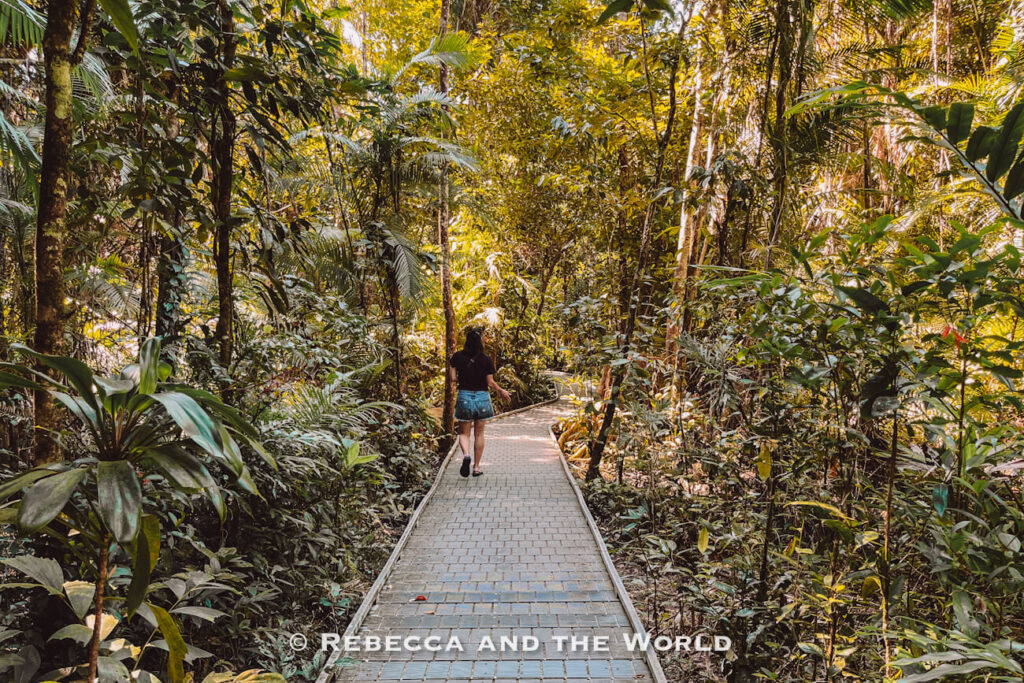
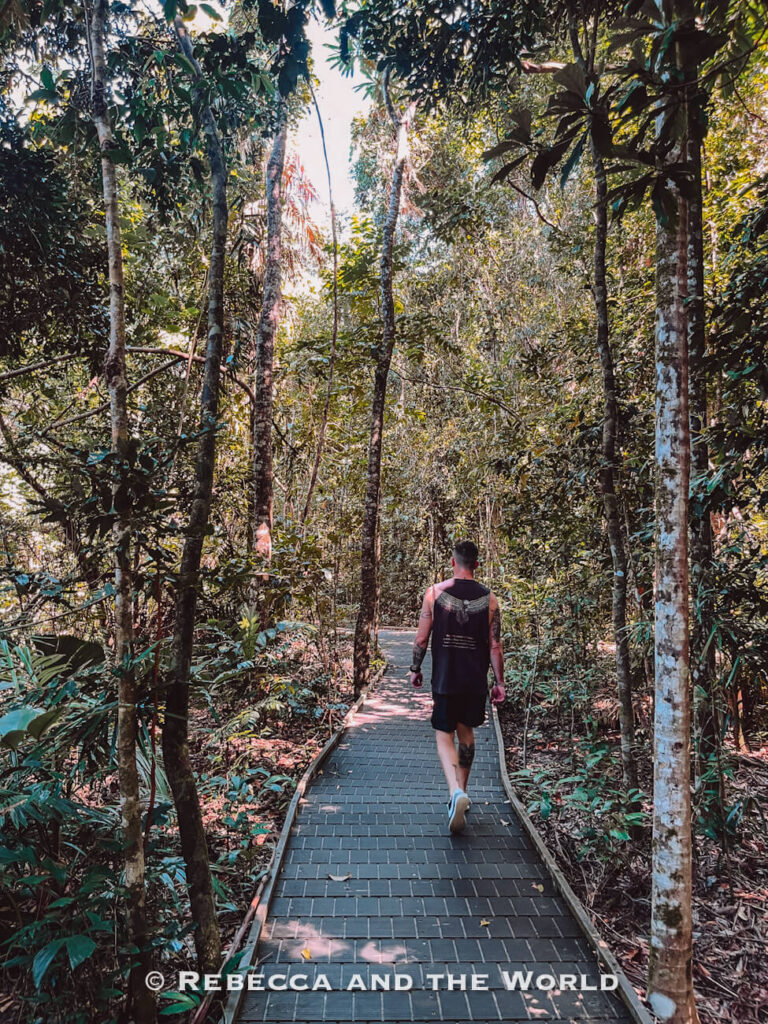
This was probably the busiest boardwalk we visited – although when I say “busy” I mean we saw about a dozen people. This is a great location, because you combine the rainforest walks with the beach.
There are three linked tracks here, so it really depends on how much time you have and how far you want to walk:
- Dubuji Boardwalk – 1.5km circuit
- Short Loop – 740m, leading to Myall Beach
- Myall Beach Track – 740m return (can be done at the end of the full Dubuji Boardwalk trail)
All three are wheelchair accessible with assistance.
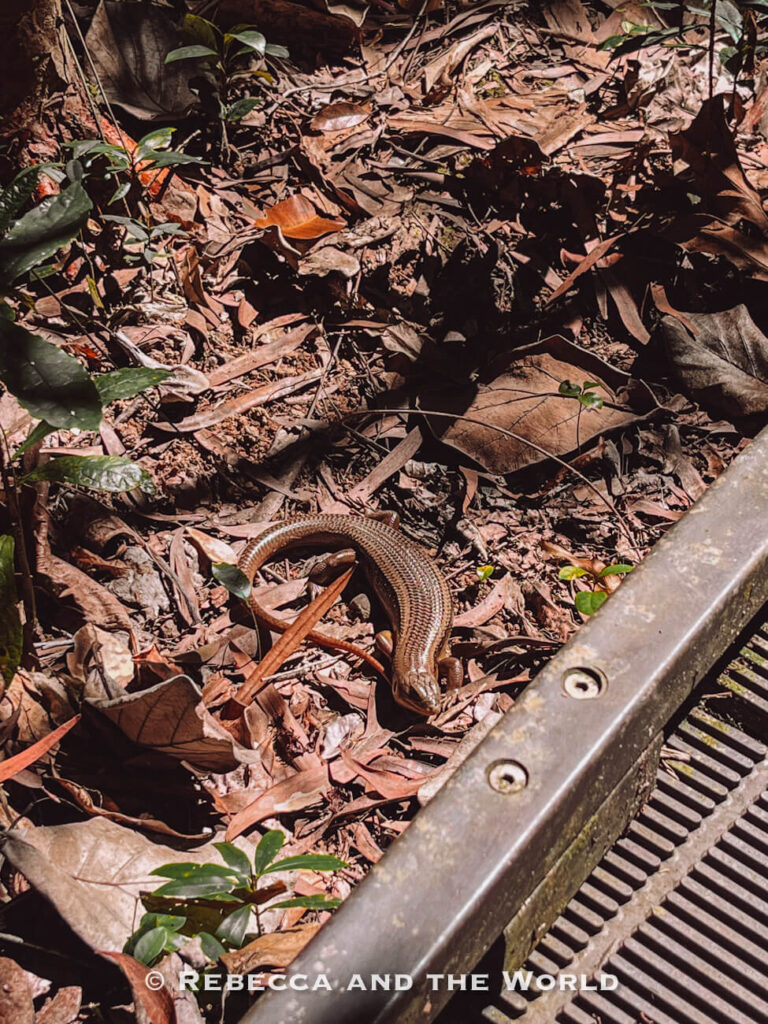
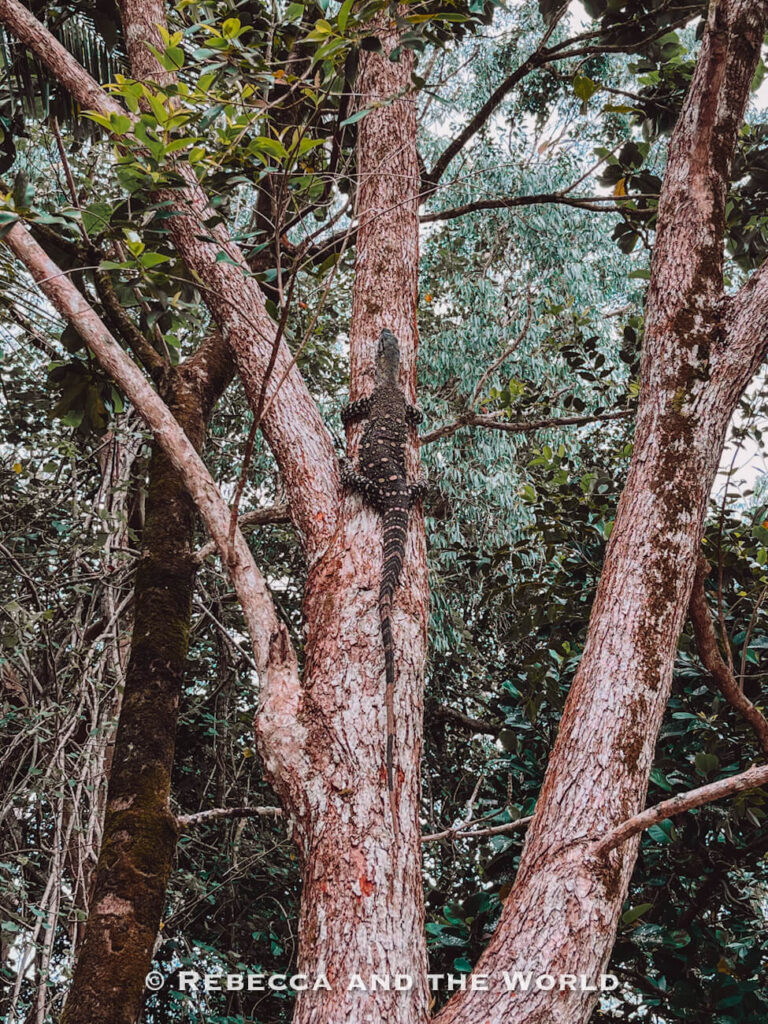
On the day we visited, there was a sign warning of a recent crocodile spotting near Myall Beach (though we weren’t sure how long the sign had been up), and other visitors told us they’d spotted a minke whale offshore that same day. We spotted a blue-tongue lizard here, doing its best impression of a leaf and staying very, very still beside the boardwalk.
There’s a great shady picnic area at the back of the visitor centre, or you can pack a picnic and eat it on the beach instead. Toilets are on site, and there’s plenty of parking, even for campervans, buses and cars towing caravans.
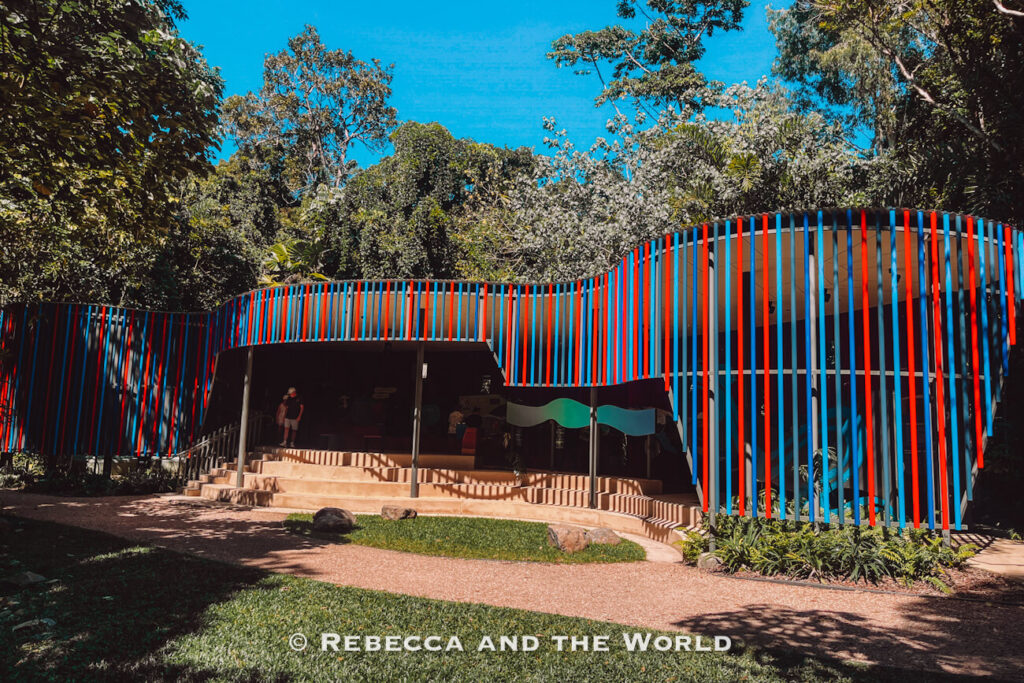
There’s a relatively new visitor centre here, the Bamanga Muruku Tourism Hub, with excellent information about Kuku Yalanji people and culture and their relationship with nature and the weather. It’s well worth reading through the stories. There’s also a small store selling tote bags, t-shirts, caps and similar. Free guided boardwalk tours run Monday to Friday at 10.30am and 12.15pm – unfortunately we arrived just after one started, but this would be a great way to learn even more about this area than what’s on the useful signage.
Kulki Boardwalk / Lookout
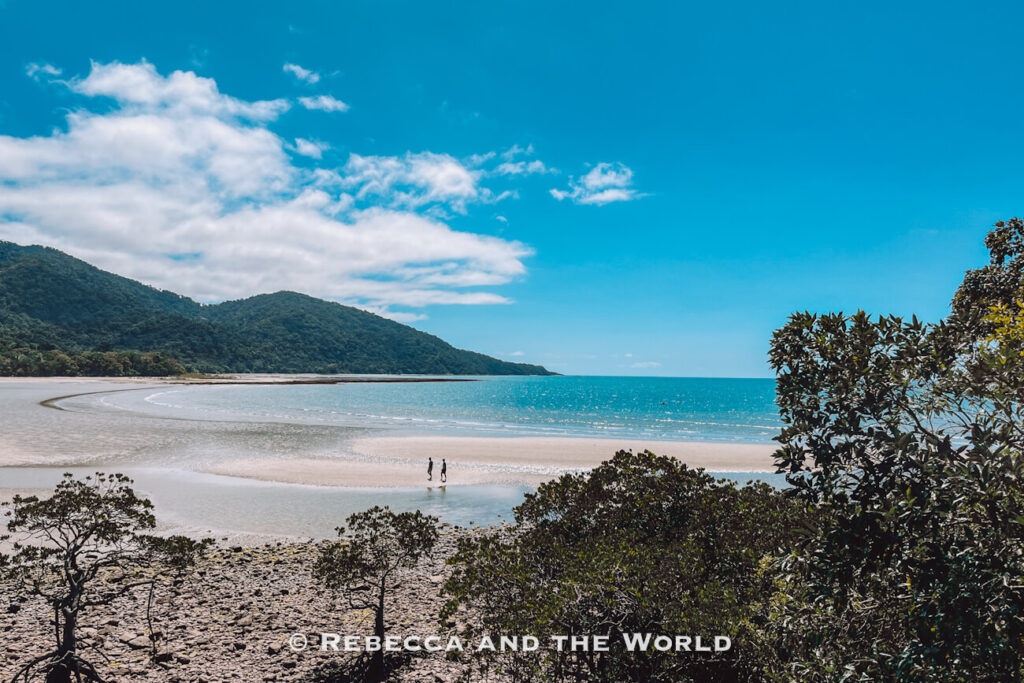
The Kulki Boardwalk is the most northerly lookout along Cape Tribulation. It’s a short walk (600m return) to a lookout over the ocean and beach. It’s accessible, with a mix of concrete path and boardwalk. The concrete is a bit rough in parts but is still manageable for a wheelchair.
It’s fairly exposed at the lookout itself, so aim for morning or late afternoon for nicer light (we were there right about midday and the light was quite harsh). The walk runs right alongside the beach and mangroves, and you can walk straight down onto Cape Tribulation Beach once you’ve taken in the view from the lookout.
There are picnic tables and a toilet on site.
Mount Sorrow
If you’re after a proper challenge, the Mount Sorrow Ridge Trail is a 7km return walk with a tough reputation. You’ll need around 6-7 hours to tackle this Grade 4 trail (meaning it’s for experienced, above-average-fitness hikers only). Start early if you do want to give it a go.
The payoff is meant to be big views over the coast, though we didn’t have time to do it ourselves on this trip (it’s on the list for next time).
Cape Tribulation swimming holes
If you’re worried about the crocs (rightly so!), then skip the beach and head to one of the freshwater swimming holes instead.
Mason’s Swimming Hole is part of Mason’s Café. There’s a small donation to use the swimming hole.
Emmagen Creek is about 5km north of Cape Tribulation. This is a natural swimming hole that looks so peaceful – alas we couldn’t visit because the road was too rough! This is the start of the 4WD Bloomfield Track, which leads up toward Cape York. We were told it would be fine to reach Emmagen Creek in a 2WD, but got nervous about the rocky, potholed road (plenty of sharp rocks too) in our rented Jucy campervan and turned back before reaching the creek. Locals do also caution about crocodiles further upstream and downstream, so it pays to ask locally about current conditions.
→ READ NEXT: What to know before you book a Jucy campervan (COMING SOON)
Guided night walks
There are lots of critters and creepy crawlies in the Daintree Rainforest, from possums to frogs to spiders – but many of them don’t come out until night. Jungle Escapes runs a two-hour guided night walk (7:30pm-9:30pm) through old-growth rainforest on exclusive bush trails you won’t find on a map.
The walks are led by a biological scientist guide with 27 years’ experience in the Daintree, and you use thermal imaging gear alongside spotlights to track down nocturnal wildlife that’s next to impossible to spot in daylight. Book online here.
Horse riding on the beach
If you’ve ever dreamed about galloping along a remote beach, the wind blowing in your hair, Cape Trib is the place to do it!
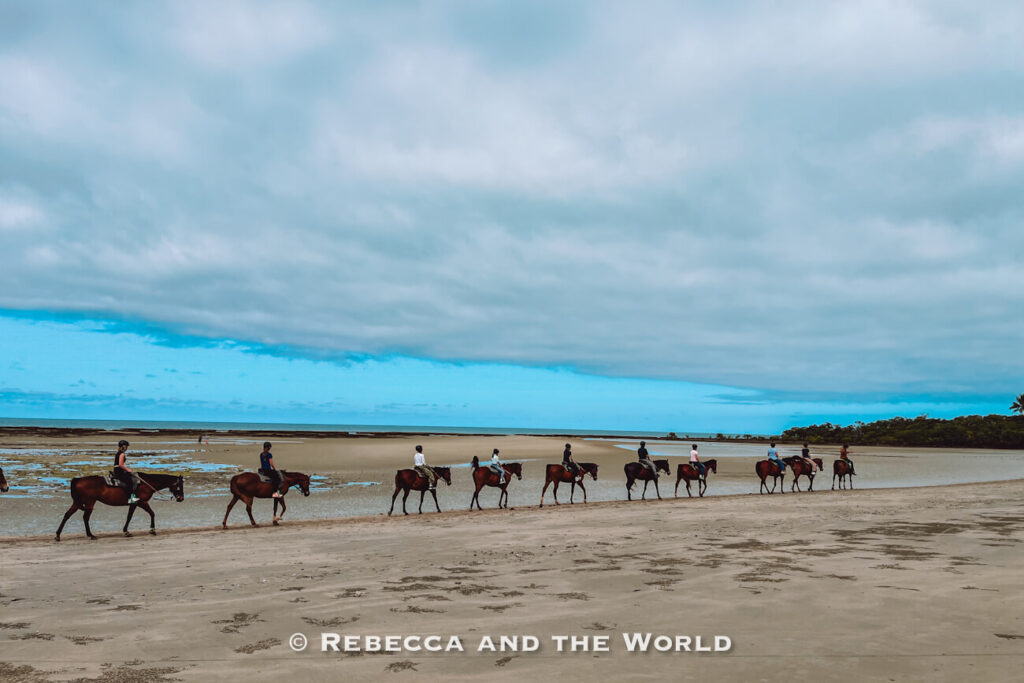
Cape Trib Horse Rides takes you through the rainforest and out onto Myall Beach, with the Great Barrier Reef as your backdrop and the horses sometimes wading into the shallows. No previous riding experience is needed.
This is a great family activity (kids aged 10 to 14 can join if accompanied by an adult) but this is seasonal and only operates during the dry season.
Daintree Ice Cream Company
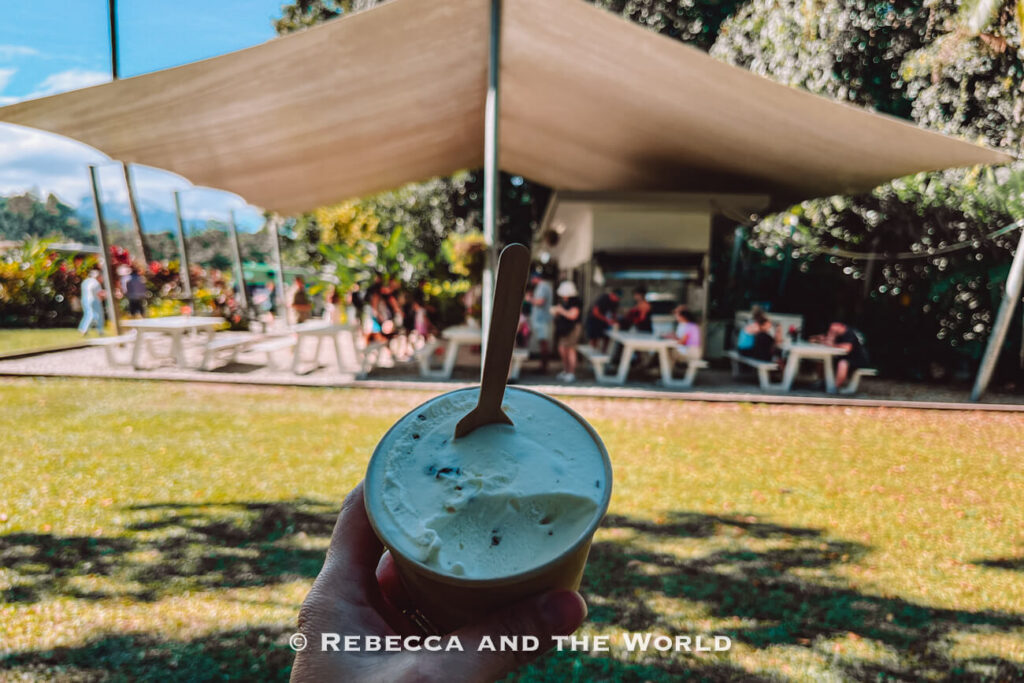
This huge property has become something of an institution up here. While the ice cream comes pre-packaged in cups rather than freshly scooped, which unfortunately means no tastings, the flavours are really interesting. They range from the familiar (vanilla, chocolate, mint choc chip) to the distinctly local (wattleseed, jackfruit, yellow sapote and seasonal specials like durian).
Every tour bus seems to stop here, so it can get busy, but there’s a nice undercover seating area and a grassy patch if you want to enjoy your ice cream away from the crowd. Open daily, 9am to 5pm.
Great Barrier Reef trip from Cape Tribulation
While Cairns and Port Douglas are the most popular places to visit the Great Barrier from (read my full Port Douglas Great Barrier Reef trip review here COMING SOON), you don’t actually need to backtrack south for it. Ocean Safari runs half-day trips to the reef straight from Cape Tribulation.
It’s a fast 25-minute ride out to Mackay Reef and Mackay Coral Cay, followed by two hours in the water snorkelling and swimming with turtles, with a guide on hand for instruction and reef interpretation. Snorkelling gear is included (wetsuits are an $8 rental), there’s a fruit platter on board, and boats are capped at 25 passengers.
There are two trips a day: the morning tour is from 7.30am to 12.30pm, while the afternoon tour runs 11.30am to 4.30pm, so you can easily fit in more things to do in Cape Tribulation around the rest of your day. Book a Great Barrier Reef tour from Cape Tribulation here.
→ READ NEXT: Sailaway Port Douglas Great Barrier Reef day trip review (COMING SOON)
Zip lining
It’s hard to really understand how tall these ancient trees are, so the best way to find out is to get up amongst them. Treetops Adventure runs a rainforest zipline course with nine ziplines ranging from 15 to 130 metres, connected by timber walkways up to 15 metres above the ground, taking around two hours all up.
We didn’t do this ourselves, but we met other travellers who did and they had an absolute blast. It suits ages four and up (max weight 120kg), though you’ll need a moderate level of fitness and a head for heights – there’s a steep 200m gravel walk just to reach the course, plus stairs and uneven terrain once you’re on it. Book a zipline experience here.
Fruit tasting at Cape Trib Farm
This part of Australia is famous for tropical fruits. Of course, you know mango and pineapple, but there are things well beyond the supermarket fruit bowl – think chocolate pudding fruit, mamey sapote, breadfruit chips, carambola and durian, depending on the time of year.
If you don’t know what these fruits taste like, then Cape Trib Farm runs a 90-minute guided fruit tasting tour through their orchard, where you’ll sample whatever’s in season alongside stories about each fruit’s origin and local folklore.
It’s $60 for adults and $42 for kids aged 4–14, with a family rate available, and bookings are essential. Tours run 2pm-3:30pm, Easter through October, on Mondays, Wednesdays, Fridays and Saturdays.
Where to stay in Cape Tribulation
Accommodation options in Cape Trib range from campgrounds to backpackers to eco-lodges, and most sit right among the rainforest. Here are my recommendations.
- Cape Tribulation Camping – where we stayed, right by Cape Tribulation Beach, with the on-site Sandbar restaurant a few steps from your tent or camper. This is one of the best campsites I’ve stayed at in Australia | Check rates and availability
- Cape Trib Beach House – private rainforest cabins just 20-30 metres from the sand, with air conditioning, ensuites and an on-site restaurant | Check rates and availability on Booking.com and Expedia
- PK’s Jungle Village – great backpacker option, with private cabins, dorms and camping, a big pool and the well-known Jungle Bar for evenings | Check rates and availability on Booking.com
- Cape Trib Farm – five off-grid cottages on an 80-acre fruit farm, with private decks, a daily tropical breakfast and private access to Myall Beach | Check rates and availability on Booking.com and Expedia
- Safari Lodge – ensuite cabins plus powered and unpowered campsites, with a pool and camp kitchen | Check rates and availability on Booking.com and Expedia
- Ferntree Rainforest Lodge – a 28-acre eco-resort with split-level loft rooms, a nature pool and the Cassowary Bar and Restaurant | Check rates and availability on Booking.com and Expedia
- Thornton Beach Bungalows – just 40 steps from Thornton Beach, with two ensuite bungalows for couples and a larger three-bedroom option for families | Check rates and availability on Booking.com
- Daintree Secrets – a private eco-retreat on 4 acres with its own croc-free swimming hole and waterfall, no phone signal or wifi and a minimum three-night stay | Check rates and availability on Booking.com
Where to eat in Cape Tribulation
- The Sandbar – the restaurant and bar at Cape Tribulation Camping, with woodfired pizzas alongside the usual pub fare (parmas, burgers and the like), and a great, easy-going vibe with a mix of campers and passers-by
- Thornton’s Café – coffee, lunch, brunch, cakes, ice cream and drinks, all right by the beach
- Daintree Ice Cream Company – must-try ice cream, dare yourself to try one of the more exotic flavours
- Mason’s Café – known for its crocodile burger!
- Turtle Rock Café – gourmet salads, burgers and fresh local fish and chips, with good coffee and tropical outdoor dining under the rainforest canopy
- On the Turps Restaurant – the restaurant at Heritage Lodge, an open-air setting on Cooper Creek with candles and flaming torches lighting up dinner service
- The Jungle Bar & Bistro at PK’s – casual pub-style food
- Whet Café Bar Restaurant – a family-run spot doing fresh, locally sourced food including curries and Buddha bowls, with their own sauces and dukkas made on site
What to know before you visit Cape Tribulation
Best time to visit Cape Tribulation
The best time to visit Cape Tribulation is during the dry season, roughly April to October, when you’ll get more reliable weather, lower humidity and stinger-free swimming at the reef. It’s also when most of the seasonal activities run. We visited at the start of August and had beautiful sunny days with cool evenings (great, since we didn’t have AC in our campervan).
The wet season (November to April) brings heat, humidity and the chance of monsoonal downpours (and even cyclones), plus marine stinger season offshore. It’s quieter and cheaper if you don’t mind the conditions, and the rainforest is at its lushest, but some tours and campsites scale back or close altogether.
The Daintree River ferry to Cape Tribulation
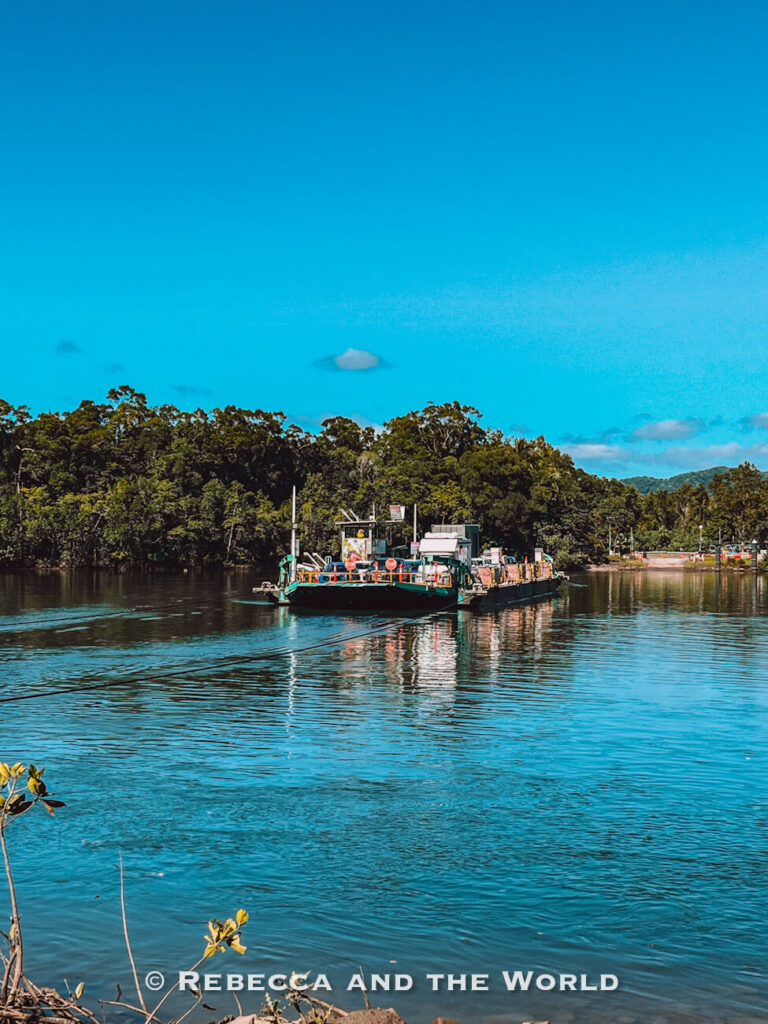
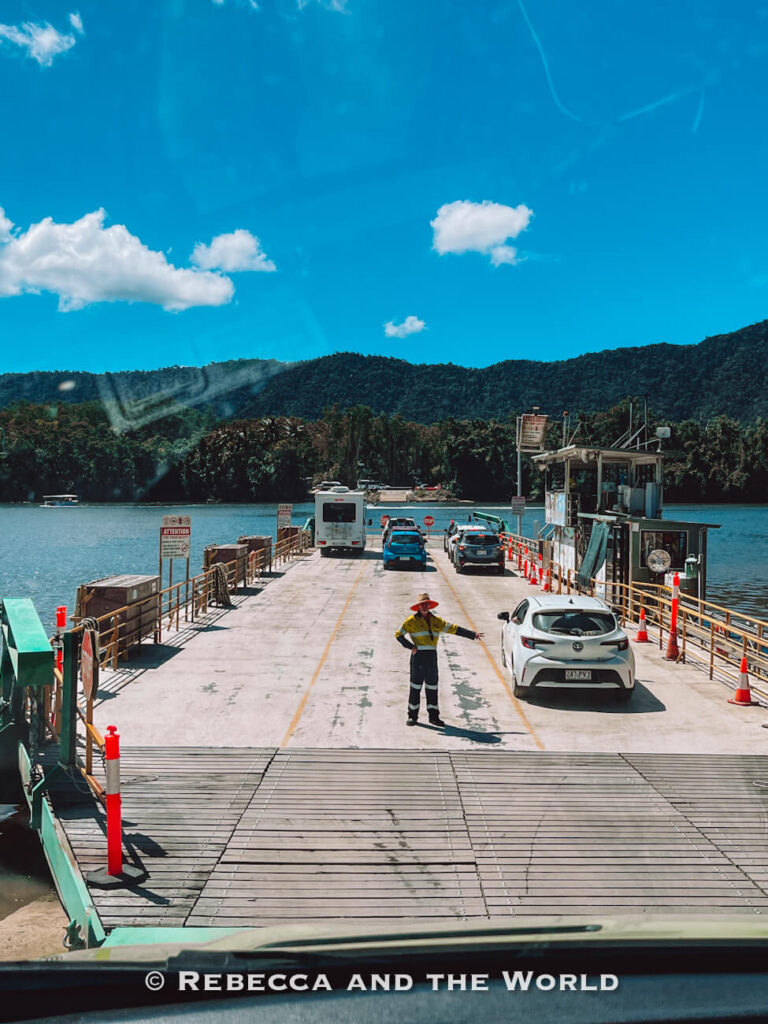
To reach Cape Tribulation, you need to cross the Daintree River, and the only way to do that is via the cable ferry. It’s a 40-vehicle ferry operating from 5am to midnight every day (except Christmas Day). The crossing itself only takes about five minutes, but it can get busy during peak periods (9am-midday and 2pm-5pm).
It costs $31 one-way (or $51 return) for a car, and $13 one-way (or $19 return) for a trailer or caravan – not a cheap crossing, but the only option.
The ferry can also break down, which we found out firsthand: there was a broken hydraulic cable on our way back from Cape Trib to Cairns, and we were told it could take up to an hour to fix (in the end it was back running in about 20 minutes). Definitely keep this in mind as a potential obstacle – I wouldn’t drive straight from Cape Trib to Cairns Airport with no buffer, for instance.
Phone signal
Phone signal is spotty up here and cuts in and out frequently, so download offline maps and save any important information before you cross the ferry.
Fuel
The last reliable fuel stop is around the blink-and-you’ll-miss-it town of Diwan, so fill up before you get much further north.
What to pack
Insect repellent is worth packing, though we were surprisingly untroubled by mosquitoes or other bugs during our visit in August – your experience may vary depending on the season.
- Light clothes – stay cool by wearing light cotton or linen clothes
- Insect repellent – worth having on hand, though we were surprisingly untroubled by mosquitoes and other bugs during our August visit; your experience may vary depending on the season
- Reef-safe sunscreen – if you’re planning a Great Barrier Reef trip from Cape Tribulation, several operators require it, and it’s kinder to the reef regardless
- Cash – some of the smaller stops up here (honesty-system fruit stalls, smaller cafés) don’t always have reliable EFTPOS, so it’s worth carrying some as a backup
- Offline maps – download these before you cross the Daintree River ferry, since phone signal drops out regularly once you’re north of it
- Sturdy, closed-toe shoes – several of the boardwalk tracks get stony or root-covered underfoot, and you’ll want proper shoes rather than thongs for walks
- A swimsuit – for the freshwater swimming holes or your accommodation pool, you’ll definitely want to cool down up here
- A light rain jacket – even in the dry season, the Daintree is one of the wettest parts of Australia, so a downpour is never far away
Wildlife
Being a rainforest area, there’s a lot of wildlife up here – some cute, some crawly and some downright dangerous.
Cassowaries
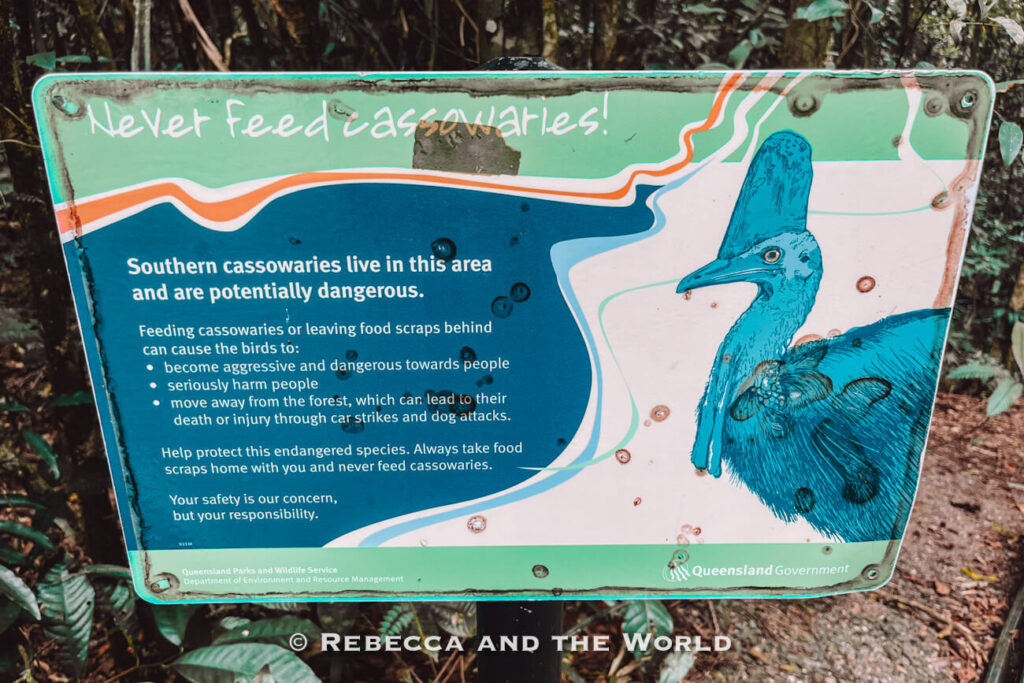
Cassowaries are endangered – and unfortunately (or fortunately) you’ll rarely spot these guys in the wild. Don’t ever feed them (or any wildlife for that matter). Be wary on the road and drive slowly – cars kill cassowaries. If you do see one, keep your distance and observe from afar. They’re capable of using their clawed feet as weapons, and can also peck, barge or headbutt when they feel threatened. If you do encounter an agitated cassowary, don’t run: back away slowly, try to get behind a tree, or hold an object in front of you as you retreat, but don’t turn your back on it.
Crocodiles
You’ll see signs throughout this area warning you to stay out of the ocean, since croc sightings are common up here and these are saltwater crocodiles (ie. the ferocious kind!). There are a few freshwater watering holes safe for swimming, but always check current conditions locally before you get in.
Snakes
It probably goes without saying, but snakes do live up here, so keep an eye on the ground as you walk, particularly on tracks with longer grass.
Final thoughts
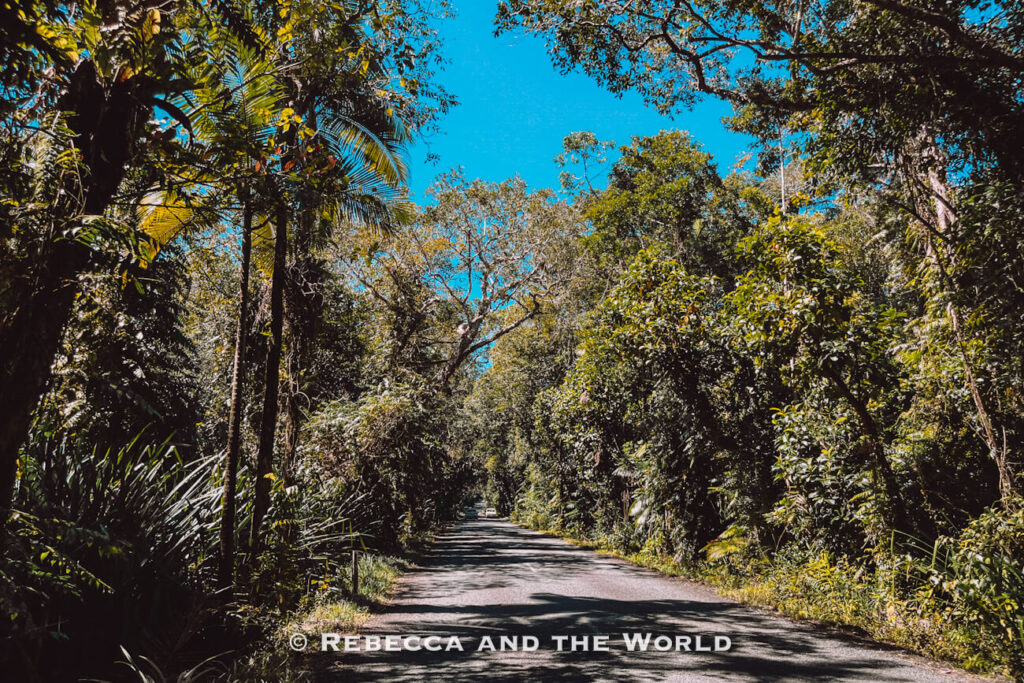
Cape Tribulation is one of those places that’s hard to describe until you’re standing there yourself, somewhere the rainforest quite literally runs down to meet the reef. Between the beaches, the boardwalks, the swimming holes and the sheer age of what you’re walking through, there’s no shortage of things to do in Cape Tribulation, and it’s worth building at least a couple of days into your itinerary rather than treating it as a quick drive-through.
Yes, it’s remote, and yes, your phone will stop working – but that’s exactly what makes it worth the trip!
FAQs
Do you need a 4WD to get to Cape Tribulation?
No. The road is sealed the whole way to Cape Tribulation itself. You’ll only need a 4WD if you’re continuing further north onto the unsealed Bloomfield Track.
Is it safe to swim at the beaches in Cape Tribulation?
No, the ocean here isn’t entirely safe for swimming because of crocodiles and marine stingers. Stick to the beaches for walking and photos, and head to one of the freshwater swimming holes if you want to cool off.
How many days should you spend in Cape Tribulation?
I think you need at least two days up here to properly cover the beaches, a few boardwalks and other activities. Ideally, you’d have 3-4 days or even a week.
Can you visit Cape Tribulation without crossing the Daintree River ferry?
No, the ferry is the only way to reach Cape Tribulation by road, since there’s no bridge across the Daintree River (a deliberate choice to limit development pressure on the rainforest).
Is there phone signal in Cape Tribulation?
Signal is patchy and cuts out frequently once you cross the Daintree River, so download offline maps and save any essential information before you head north.
Did you find this article helpful? Consider buying me a coffee as a way to say thanks!
I hope my guide to the best things to do in Cape Tribulation has helped you plan a trip to one of Australia’s most beautiful places. What are you keen to do? Let me know in the comments below.
Read next
Before you go, you might like these Australia travel articles:
- 13 Epic Australian Road Trips for Your Bucket List
- Cairns to Cape Tribulation Road Trip: The Ultimate 7-Day Itinerary (COMING SOON)
- Things to Do in Port Douglas: What to See, Do and Eat in Australia’s Favourite Town
- What to Know When Booking a Jucy Campervan (COMING SOON)
- Tips for Renting a Campervan in Australia + Making the Most of Your Trip
AUSTRALIA TRIP ESSENTIALS
- Book your flight to Australia online with Skyscanner. I like this site because it shows me which dates are cheaper.
- One thing I always purchase is travel insurance! Travel Insurance Master allows you to compare across multiple policy providers, while SafetyWing is great for long-term travellers and digital nomads.
- Wise is my choice for sending and receiving money and spending money overseas (you can get a digital and physical card).
- Find a great hotel in Australia. Check prices on Booking.com and Expedia online.
- Check out the huge range of day tours throughout Australia on GetYourGuide or Viator.
- Saving money? Check out the range of free walking tours across Australia with GuruWalk (don’t forget to tip!).
- How to get around? I use DiscoverCars for car hire, or Motorhome Republic and Jucy for campervan/RV rental. For buses, trains and ferries, I use 12GO, Busbud and Omio.
- Grab an e-sim to stay connected while on the road.
- A copy of the Lonely Planet guide to Australia will be handy.
- Pack sunscreen (look for SPF50 or higher), a hat and sunglasses to protect your eyes and skin.
- Check out my Amazon shop for my fave travel items – everything from backpacks and suitcases to travel adapters and beauty products.
PIN IT FOR LATER: BEST THINGS TO DO IN CAPE TRIBULATION
Save this guide to the best things to do in Cape Tribulation to Pinterest so you can plan your trip later.