
Planning a visit to Palomino, Colombia’s chill beach town? This Palomino travel guide covers the best things to do, where to stay and where to eat.
Palomino is the kind of place you come to exhale.
At least that’s what we did. After four days hiking the very tough walk to Ciudad Perdida (the Lost City trek), it was a relief to swap hiking boots for bare feet and spend a few days swimming, sunbathing and reading.
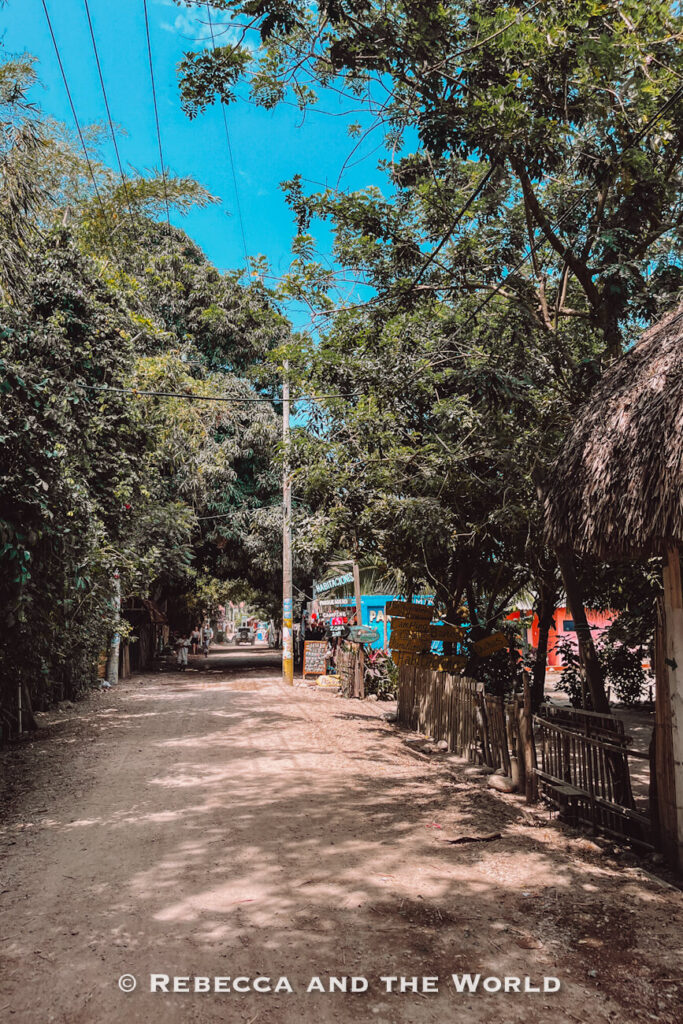
On Colombia’s Caribbean coast, this small beach town has a sleepy, scruffy charm: dusty roads, low-key hotels and hostels tucked behind palm trees, and dogs that want to be your best friend. It’s not a glossy resort destination, and it’s not trying to be. Instead, Palomino still has that backpacker vibe and is all about slowing down – although gentrification has still found its way here.
That said, it helps to arrive with the right expectations. As an Australian, I didn’t find Palomino’s beaches “wow” in the way some Caribbean coastlines can be. The sea here can be rough, and erosion is a very real problem. But if you’re looking for a simple, friendly place to do very little (in the best possible way), Palomino delivers.
In this guide, I’ll cover what Palomino is really like, how long to stay, the best things to do, where to eat and sleep and some useful travel tips.

This blog post may contain affiliate links, meaning if you book or buy something through one of these links, I may earn a small commission (at no extra cost to you).
How many days in Palomino?
Palomino is a great place to pause. You don’t need a lot of time here to enjoy it, but it’s very easy to stay longer than planned once you settle into the slower rhythm. If you’re moving around Colombia at a steady pace, 2-3 days in Palomino is enough for a proper break. If you’re craving a slower stretch – or you’re the kind of traveller who loves a beach town routine – you could easily spend a week or longer in Palomino.

ATMs and cash in Palomino
Even though plenty of restaurants and tour operators accept card, Palomino is still a cash-friendly town and it’s worth arriving with enough pesos to last your stay. There’s one ATM on the main road, and if it’s out of service (it happens), your backup option is the local “human ATM” set-up – people who will exchange money for you, usually for a commission. Going rates are 5% for Wise/Revolut exchange and 10% to get money using your credit card.
Best things to do in Palomino
Here are the best things to do in Palomino, Colombia. And I’ve laid everything out on a map as well.
Map of Palomino
Chill out


The best thing to do in Palomino is, honestly, absolutely nothing at all.
This is a town made for down time. Days are slow, the vibe is relaxed and it’s the sort of place where you can happily spend hours drifting between the pool, a shady chair with a book and a wander into town when you get hungry.
For us, Palomino was exactly the break we needed after hiking Ciudad Perdida. After days of early starts and being constantly on the move, it felt so good to swap trekking clothes for swimmers and spend our time swimming, reading by the hotel pool and grazing our way through town. That’s exactly how we spent three days here.
If you’re travelling Colombia at a fast pace, I would actually plan Palomino as a deliberate buffer – a few days where you don’t book much at all.
Spend some time on the beach
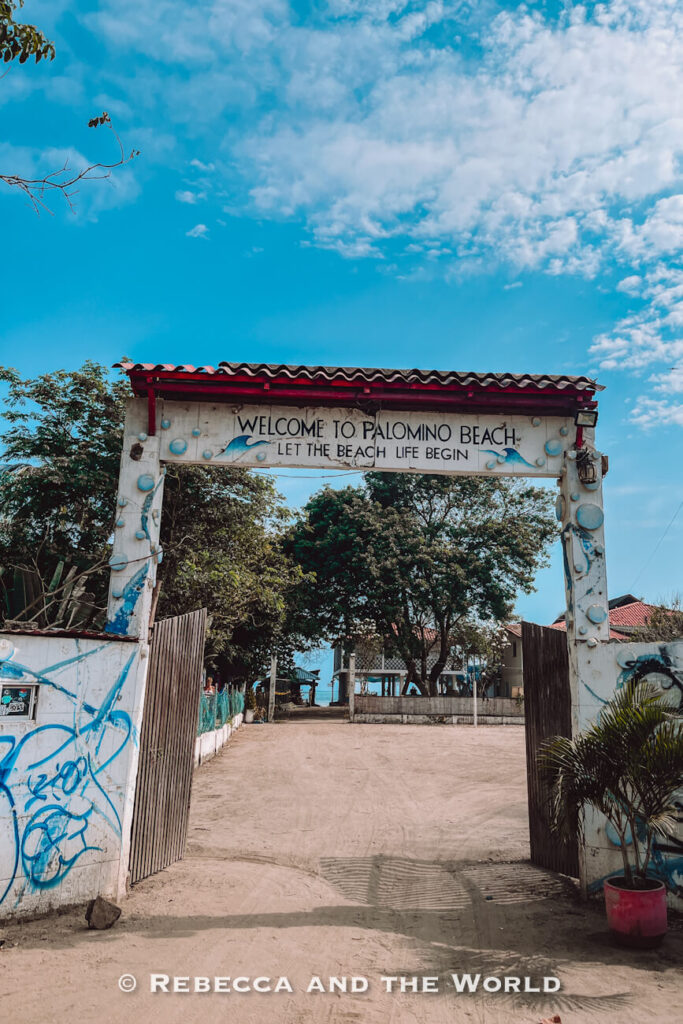
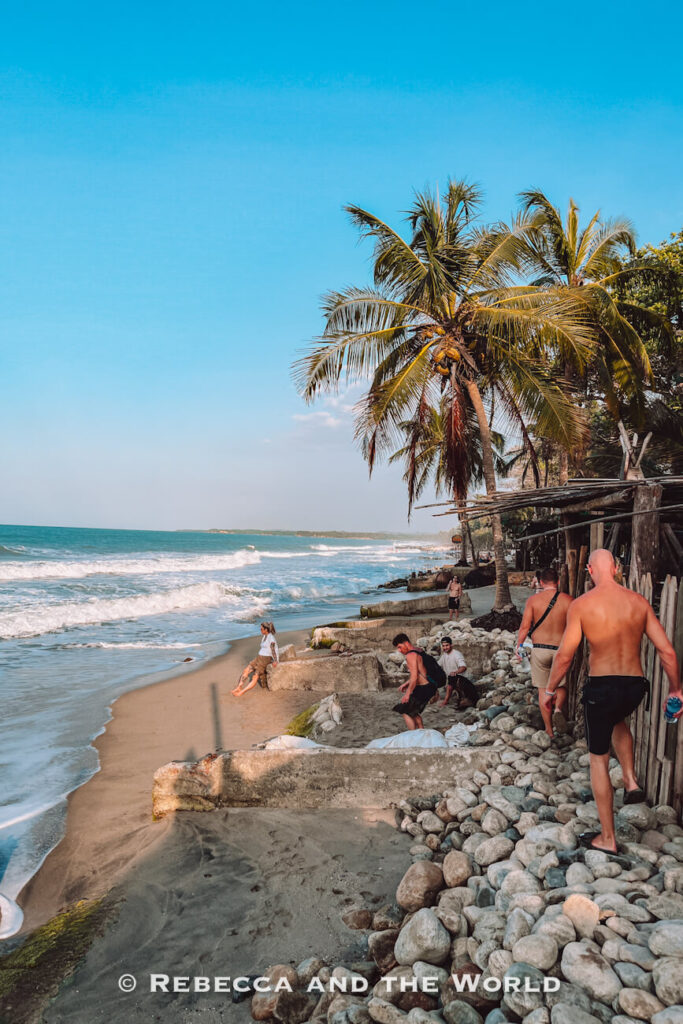
Palomino is a beach town, so you’ll almost definitely end up spending time on the sand. The beach is wide and easy to access from town, and it’s a lovely spot for a walk, especially early in the morning or later in the afternoon when the heat eases off.
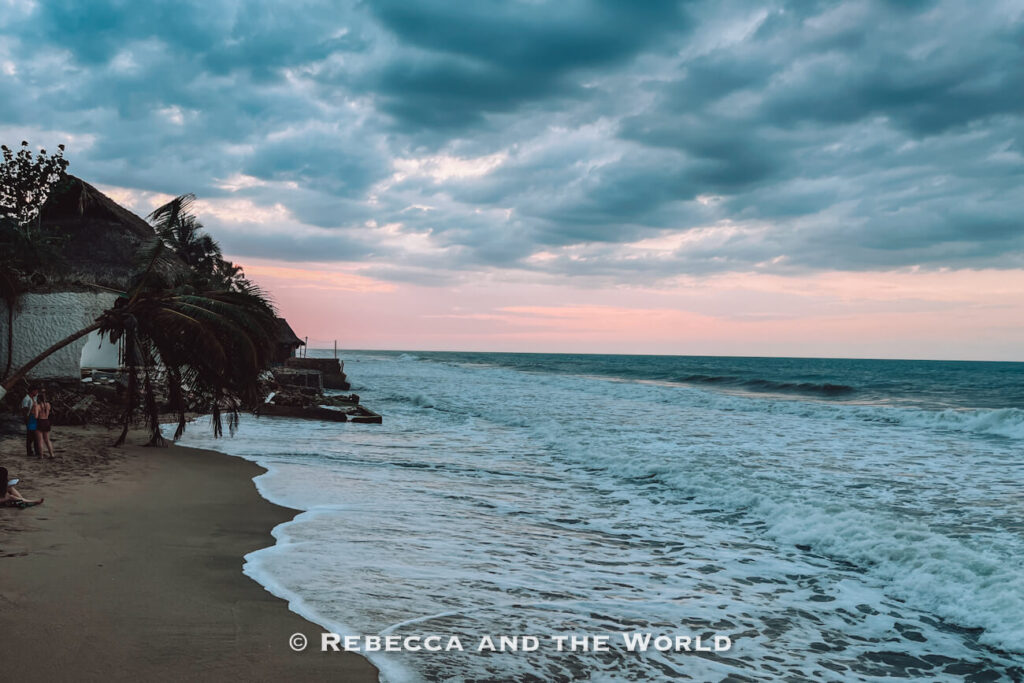
A quick expectation-setter, though: as an Australian, I was not blown away by Palomino’s beach itself. It’s not the white-sand beach I imagined of the Caribbean coast, and the water here can be rough so swimming isn’t really appealing.
Erosion is also a major issue in Palomino, and you’ll see it straight away – many beachfront hotels and restaurants have installed huge sandbags to protect their buildings.
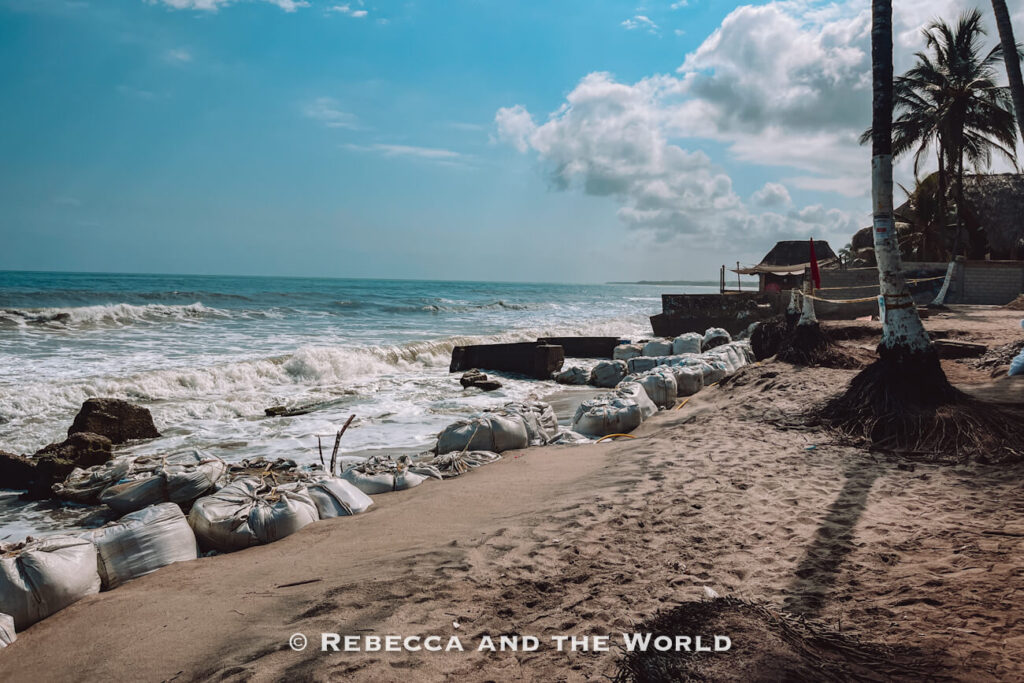
Still, the beach is worth your time. Come for a walk, take in the Caribbean coast vibe, and treat the sea with respect. If the surf looks intense, keep your swim short (or skip it altogether) and save your water time for the river, or the pool back at your accommodation.
Walk along the river
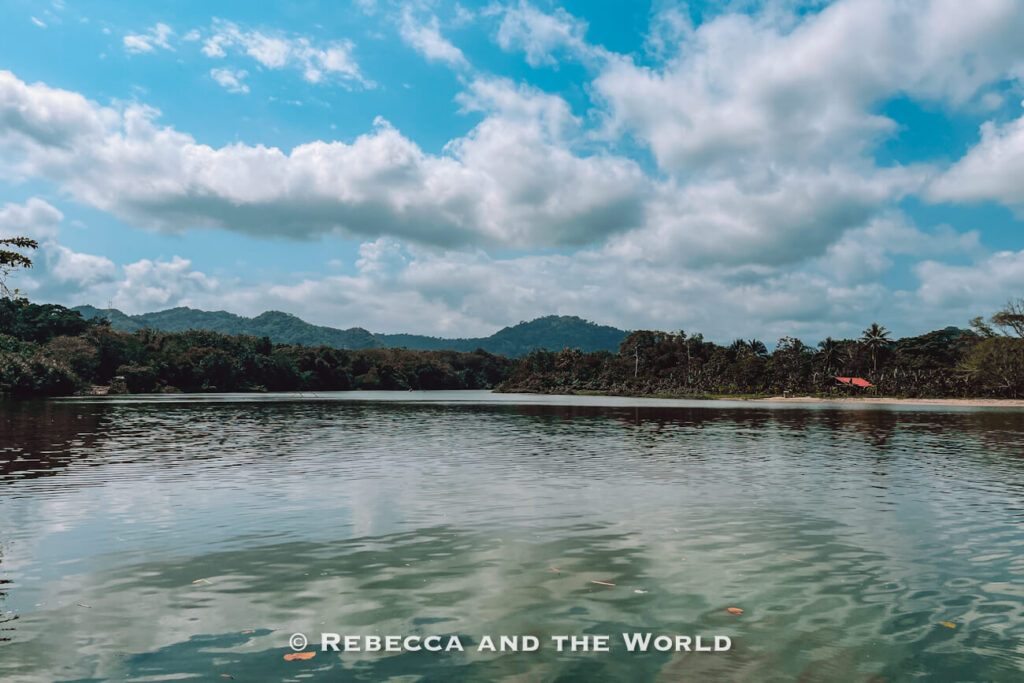
One of my favourite things to do in Palomino is walk out to the river mouth. It’s an easy way to see a different side of town and it feels a bit more interesting than just doing another lap of the beach.
Start in town, turn left on the beach and head towards where the river meets the sea. You’ll weave through a patch of mangroves along the way, so it’s worth checking the tide first so you don’t end up hemmed in by water. Once you reach the river mouth, you can walk back into town along the river instead, through farmland and shady paths that provide relief after the full sun on the beach.
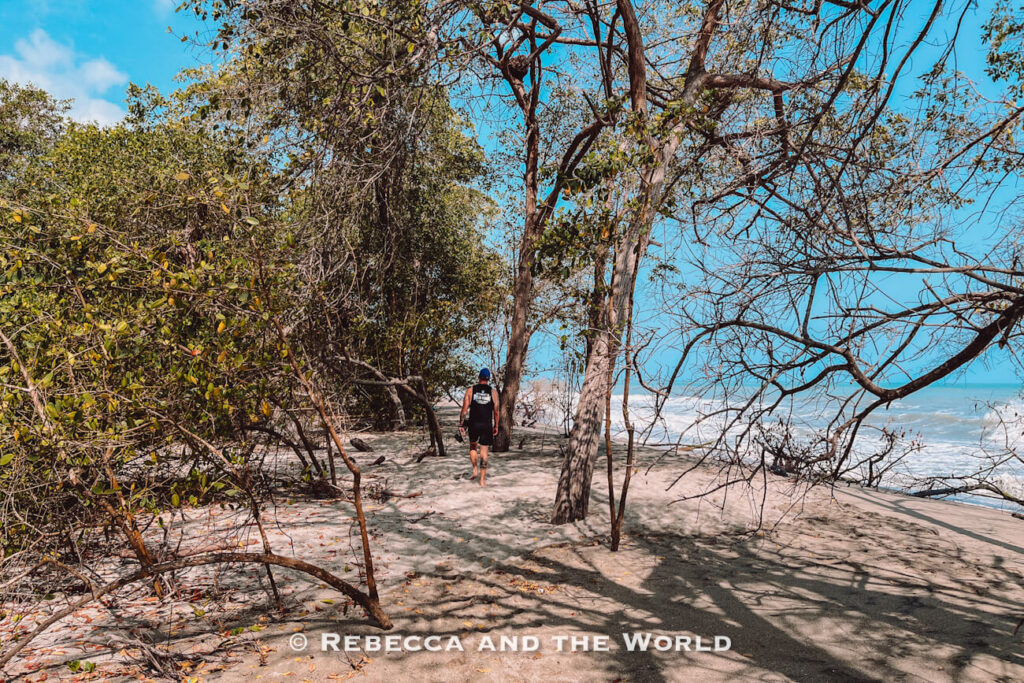



There are some beach restaurants and shops up near the river mouth. They can be quite pushy, and prices tend to be higher than in town. Some places don’t automatically bring a menu, so ask for one before you order so you actually know what the prices are. We didn’t and got a bit of a shock when the bill for our limonada de coco was brought to us!
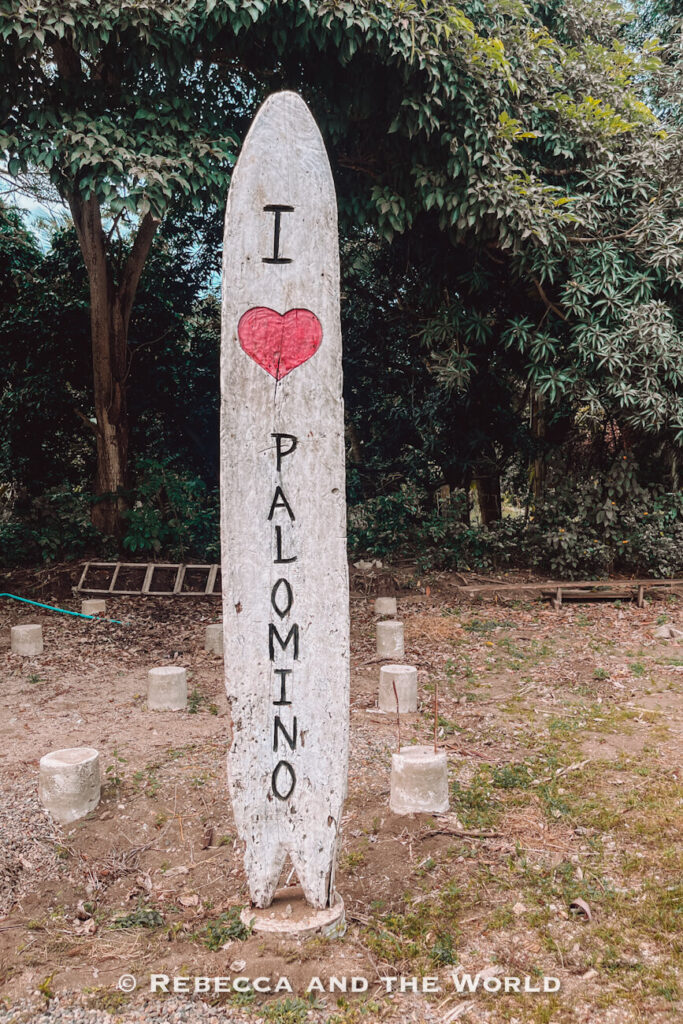
If the tide is low, you can walk across to the other side of the river mouth. This is where you’ll find the Palomino letters, and there’s sometimes a lifeguard around as well.
Go river tubing
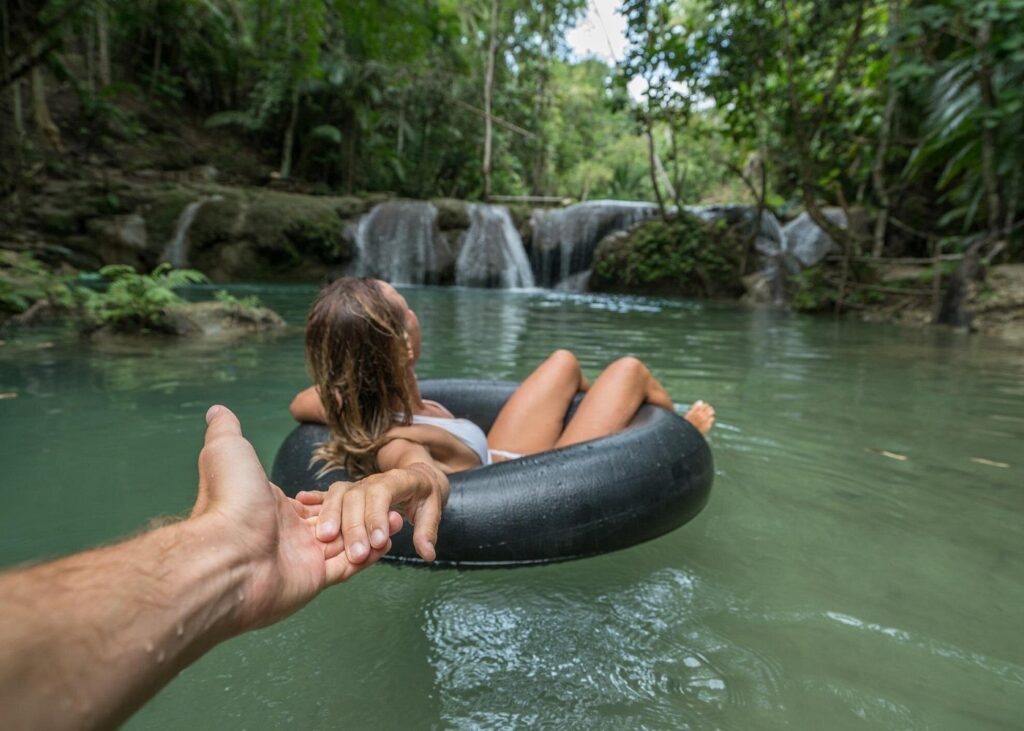
A lot of people come to Palomino for river tubing. It’s a really fun way to spend a few hours.
Most hotels can organise tubing for you, or you can book directly with one of the many providers along Carrera 6a, Palomino’s main street. If you prefer to pre-book, there are also tours online (for example, this tour).
Once you’ve booked, you’ll head upstream (usually by motorbike or a small truck) – how far depends on the tour you’ve picked and how long you want to tube for. Then you hop in the inflatable tube and float back down towards town. You mostly just drift along, with a few gentle sections where you might need to paddle with your hands a bit to steer yourself. There are a few spots where you can pull into a beach, and some providers will supply beers or drinks.
Pack a dry bag for your phone and valuables and wear river shoes or sandals that strap on (Tevas are ideal). You’ll definitely need sunscreen (the sun is brutal here) and a rash vest if you burn easily.
Learn to salsa dance


A few nights a week, Timbal (a bar on the main street) runs salsa dance lessons, and it’s such a fun way to spend an evening in Palomino. The space is small and it fills up quickly, with a real mix of people – total beginners, travellers who are giving it a go for the first time and a few who clearly know how to move.
It’s lively and social, but the class is also fast-paced. I managed a handful of steps before tapping out because I just could not keep up, but even watching everyone else while having a drink at the bar is part of the fun.
If you want to join in, aim to get there early so you can actually find a spot on the dancefloor.
Hang out with dogs at Dog Shelter Palomino
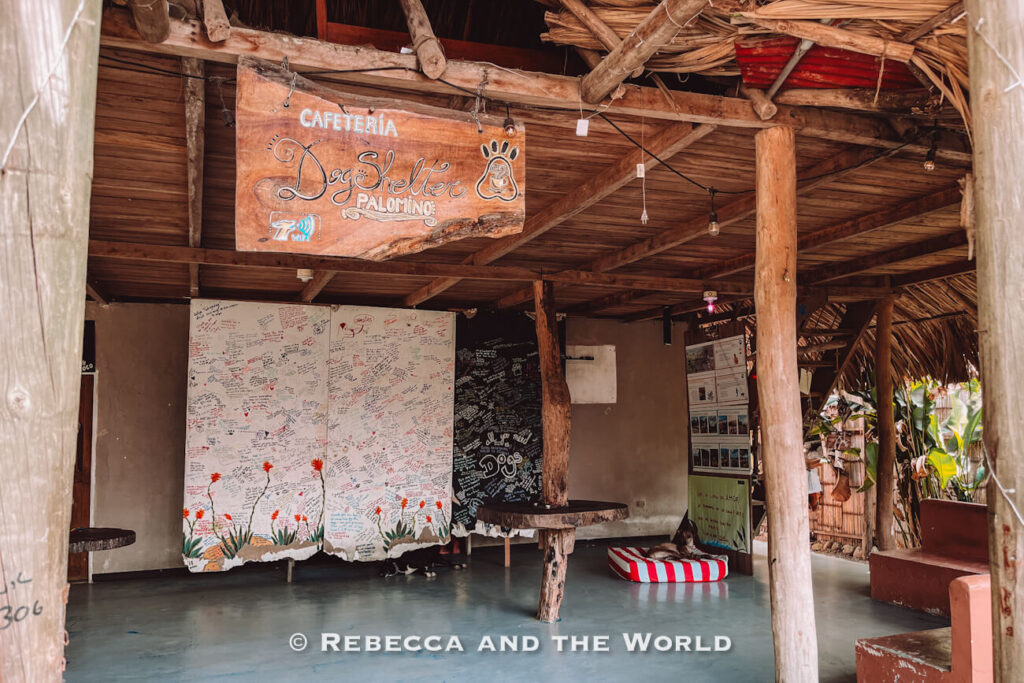
Stray dogs are a real issue in this part of Colombia – you’ll see dogs everywhere in Palomino – Dog Shelter Palomino is doing important work. They take in stray dogs, help arrange adoptions and organise sterilisation campaigns – all with support from donations and volunteers.
Dog Shelter Palomino is set up so visitors can actually spend time with the dogs. There’s a small cafe (right next to Casa Pavo Real, the hotel we stayed at), and you can also join activities that help support the shelter, like taking a dog for a walk. They also offer more involved experiences, including hiking and river tubing with the dogs. If you’re missing your dog (like we always are), this is a great way to get some canine cuddles.
Even if you only drop in briefly, it’s a nice way to do something that feels positive while you’re in town – and if you’re anything like me, you’ll leave wishing you could smuggle one or two home.
Take a surfing lesson
You’ll see surf lessons advertised around town, and if you’re keen to get in the water (or you just want to try something new), Palomino can be a place to give it a go.
That said, I would not call it an easy spot to learn. The water can be rough, and the swell often breaks quite close to the beach, which makes it harder to find your footing and get up on the board. Our friends did a lesson here and still had a fun day, but it looked like more of a challenge than a gentle beginner surf experience.
Still, if you’re up for a challenge, go for it! If you’re dreaming of calmer, more beginner-friendly waves, you might prefer to save your first lesson for somewhere with mellower conditions.
Take a day trip to Tayrona National Park
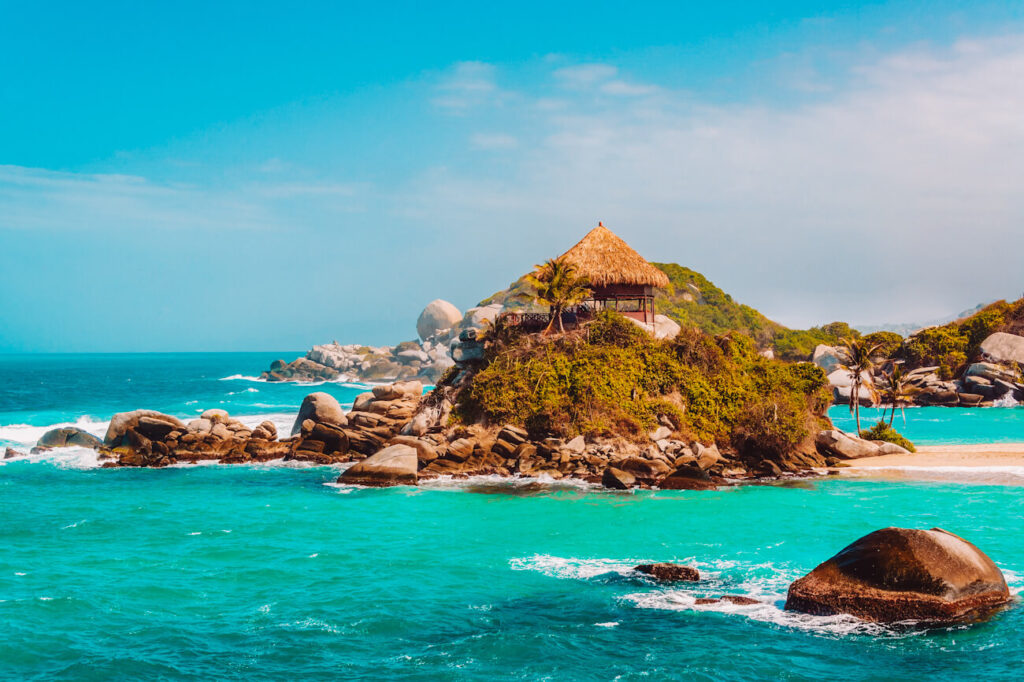
Palomino is close enough to Tayrona National Park that a day trip is doable, especially if you want to see Tayrona but don’t want to move accommodation again.
The trade-off is that it’s a long day. You’ll need an early start to get to the gate before the crowds descend. I recommend aiming to be at the gate at El Zaino before it opens at 7am (8am in low season). You’ll also need to exit the park by 6pm.
Spend the day walking between beaches, having a picnic, sunbathing – but don’t plan on swimming much. The waters here are very rough and drownings do happen (on some beaches, swimming is forbidden).
You can catch a bus from Palomino to El Zaino (the main Tayrona entrance) – they depart regularly, on the way to Santa Marta – or ask your hotel to organise a transfer or day trip if you prefer something more straightforward.
A practical tip: if you’re planning Tayrona as a day trip, it’s worth choosing your Tayrona route carefully so you’re not trying to cram too much in. Pick one beach or one main walk, and keep the day realistic so it stays enjoyable rather than exhausting. Walks through the jungle and along the beach are hot and sweaty and will drain you.
It costs foreigners between COP$81,000 and COP$96,500 to enter, depending on the season. It’s easiest to book your tickets online before you arrive. You’ll also have to – inconveniently – separately pay for insurance to enter.
The park closes several times a year for ecological and Indigenous cultural reasons, usually the start of February and June and the last two weeks of October – you can check closures online here.
See flamingoes

If you want to break up the beach time with something a bit different, consider a trip to the nearby town of Camarones to visit Los Flamencos Sanctuary. This is one of the best chances in the region to see flamingoes in their natural habitat, usually as part of a lagoon trip in a traditional cayuco boat.
Most visits combine the lagoon with a quick look around Camarones itself, which gives you a glimpse of local life beyond Palomino’s touristy (in comparison) strip. This tour comes highly recommended, and includes pick-up from Palomino.
Because the trip is mostly in a boat and there’s little shade on the lagoon, bring sun protection (hat, sunglasses, sunscreen and long-sleeve shirt) and plenty of water.
Palomino travel guide
Here’s everything you need to know about visiting Palomino – when to visit, how to get here, where to stay and where to eat.

Best time to visit Palomino
Palomino is hot year-round, but, like the rest of the Caribbean coast, there’s usually a drier period at the start of the year and a wetter stretch through the middle and later months.
For Palomino, the driest and most reliably sunny months are usually December to April. This is when you’re most likely to get blue-sky days and easier planning for beach time and outdoor activities. We visited in mid-March and had great, sunny weather and no rain.
The wetter period typically runs from May to November. Rain often comes as short, heavy downpours rather than day-long drizzle, but humidity is higher. I can imagine Palomino’s dusty streets quickly turn to mud during these months! A lot of places also close down during the low season.
How to get to Palomino
Palomino sits on Colombia’s Caribbean coast, on the main highway between Santa Marta and Riohacha. Most transport options leave you on that highway, then you either need to walk or take a moto-taxi into town.
After the Lost City trek, we got to Palomino the simplest way possible – we stood at the bus shelter near where we were dropped off, waved the bus down when it came and paid COP$7,000 each. The drivers are definitely on a mission, so hold on and expect a fast ride.
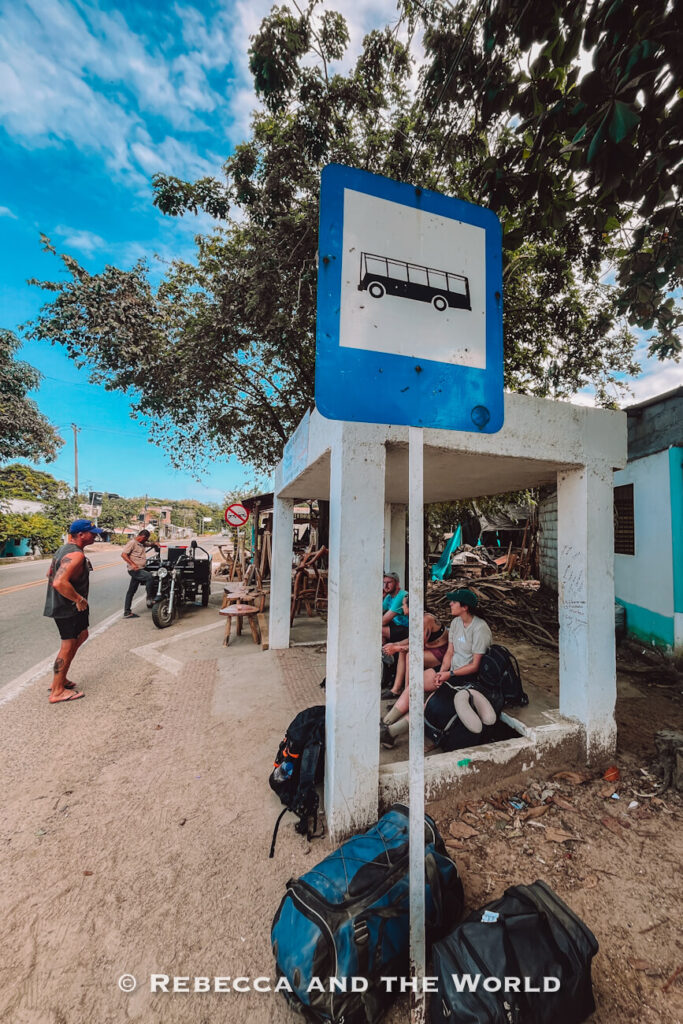
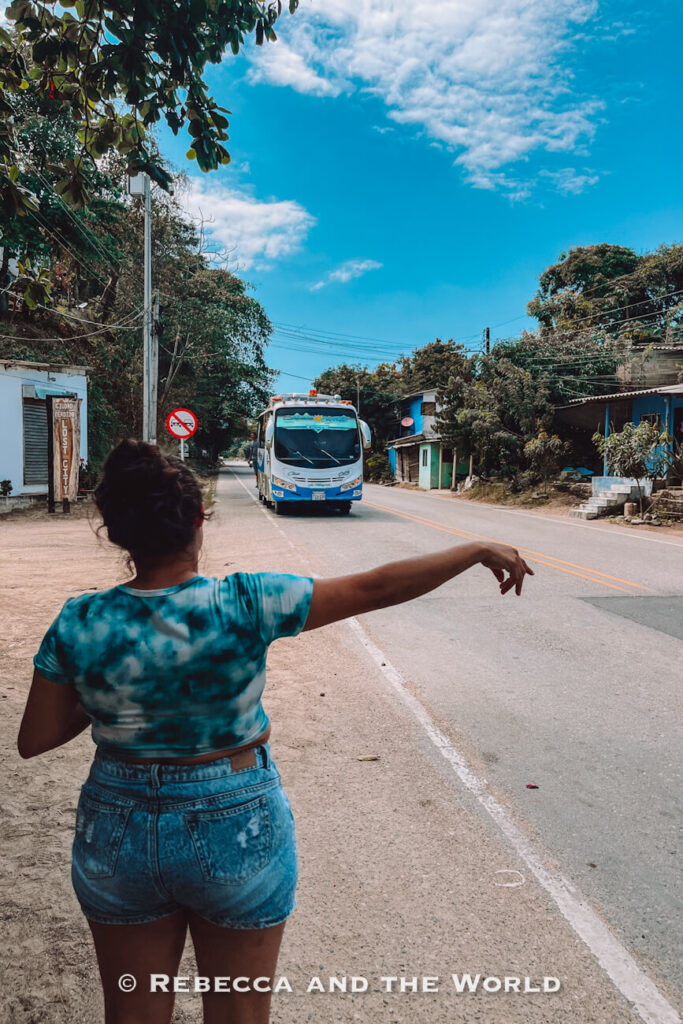

From Santa Marta, local buses run regularly and the trip is roughly 1.5-2 hours, depending on traffic.
There are also private transfers available, if you’d prefer not to have your life in the hands of a crazy bus driver. Book a transfer here.
From Cartagena, there are buses to Palomino by bus that take around 5-6 hours.
🚌 CHECK BUS SCHEDULES AND TICKET PRICES HERE 🚌
If you’re travelling with a lot of luggage or just want the easiest option, paying for a private transfer can be worth it. That’s what we did from Palomino to Cartagena because we couldn’t be bothered with multiple buses and waiting around. Book a private transfer here.
Tip! If you do take a private transfer, ask the driver to stop for a pic in Barranquilla where you’ll see the golden statues of Shakira and Sofía Vergara!
Getting around Palomino
Palomino is small and easy to navigate on foot. You can walk almost everywhere in town, and if your accommodation is central you might not need transport at all. Just expect dusty roads and dusty shoes, especially if it hasn’t rained recently.

If you need to go a bit further – or you simply can’t face walking in the midday sun – moto-taxis are the easiest option. They’re like tuk-tuks and they’re everywhere. Most have a list of prices stuck inside, so you know what you should be paying before you hop in.
If you’re staying for more than a couple of days, you can rent a bike or motorbike. Some hotels also have bikes for free use or to rent.
Where to stay in Palomino
Palomino accommodation is mostly low-rise and low-key – think boutique hotels, small hostels and a handful of private villas rather than big resorts. Things are changing, though, so I’ll be interested to see what this town looks like in a few years.
Casa del Pavo Real – This is where we stayed, and it was exactly what we wanted in Palomino. It’s a mix of hostel dorms and private rooms, with a beautiful pool area. We booked a private room with its own small pool, which felt wildly indulgent after trekking, but even the main pool is a treat. Breakfasts were fantastic. It’s a boutique hotel in a garden setting, a short walk from the beach, and it has an on-site vegetarian restaurant. Check availability and room prices here

Makao Hotel – If you want to stay right on the beach, Makao is one of the best-known options in Palomino. This was our second choice, but I wanted the pool that Casa Pavo Real has. Rooms here are modern and some have balconies. Check availability and room prices here
Dreamer Hostel – One of the most popular hostels in Palomino, it’s on the main street and a short walk to the beach. There’s a huge pool and a social vibe. Check availability and room prices here
Casa Ita – For a quieter, more private stay, Casa Ita is a set of private villas, each with its own pool. It’s a self-contained option that’s a great choice if you’re travelling as a couple or with friends and want your own space. It’s opposite Casa del Pavo Real (I believe you can get breakfasts delivered from the hotel) and only a short walk from the beach. Our friends stayed here and loved it. Check availability and room prices here
Where to eat and drink in Palomino
Palomino has plenty of places to eat and drink – I was surprised by the variety. But, opening hours can be… flexible. A place might say it’s open and then it’s very much not when you turn up there. Power outages also happen, so don’t be surprised if the lights go out mid-meal. It’s all part of the go-with-the-flow vibe here.
One other Palomino constant: dogs. At most restaurants and bars, you’ll have a little entourage of very polite (and hopeful) dogs, plus the occasional cat. They’re usually well behaved.
El Jardín del Pavo Real
We ate here more than once, because it was our hotel’s restaurant. Great vegetarian food, and their veggie club sandwich is a standout. Breakfasts are huge and healthy. Location
La Cevicheria

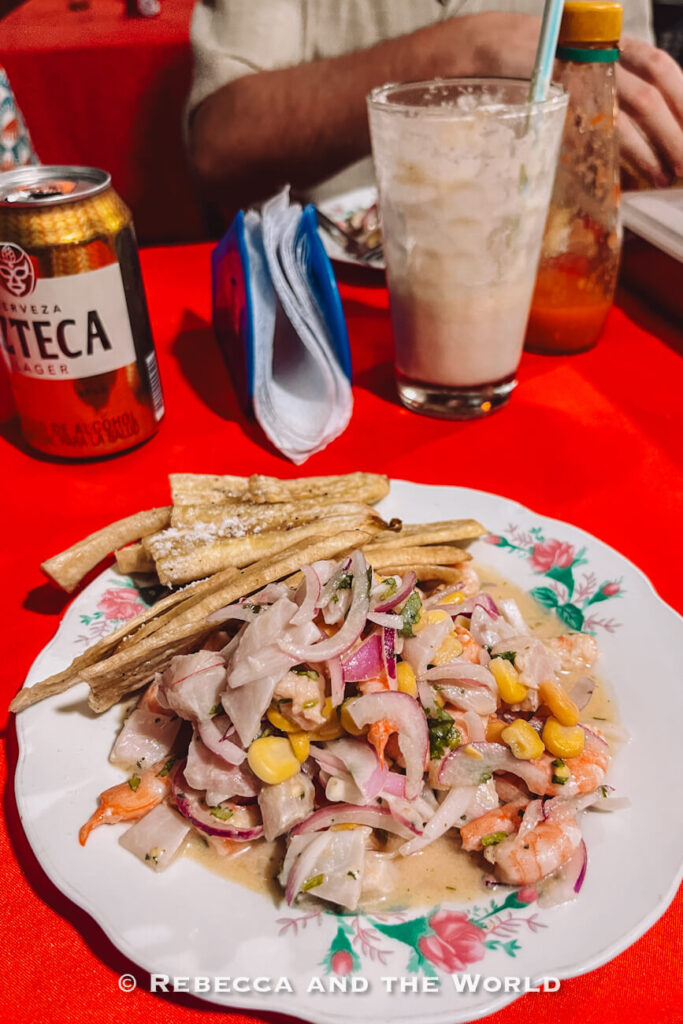
This is a proper hole-in-the-wall spot – basically inside a family’s lounge room – and I probably would have walked straight past if I hadn’t known about it. I’m glad we didn’t. It was the best ceviche I’ve had in a long time. Be prepared for some friendly cats! Location
El Fuego
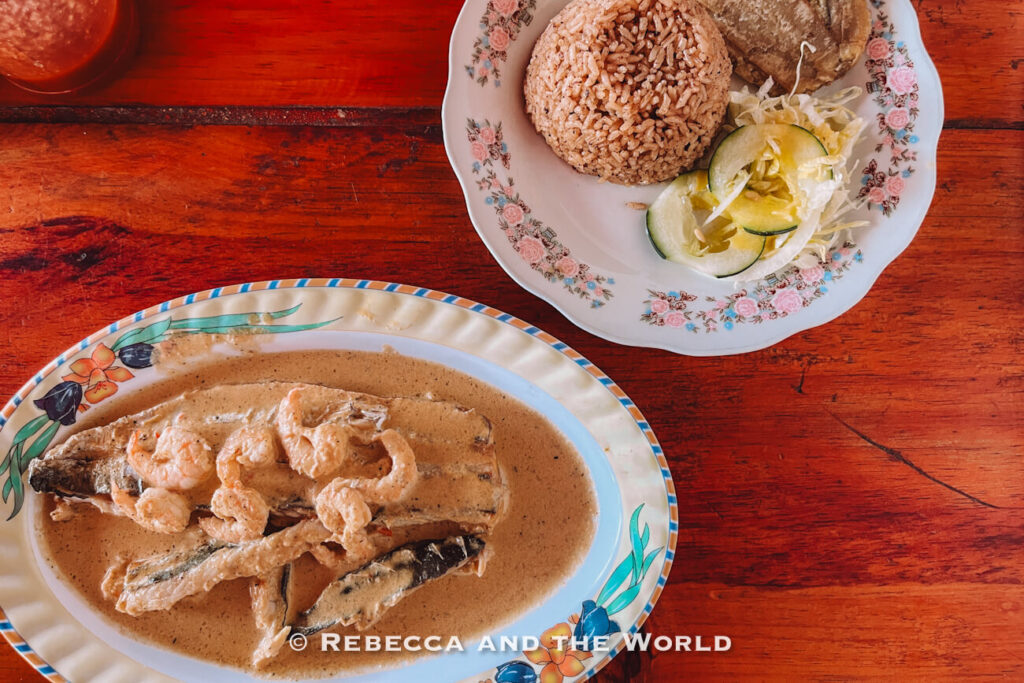
Always busy, and for good reason. The prices are excellent, especially the menu del día at lunch. Location
Zarimar


Surprisingly good Mexican – a nice change if you’ve been eating arepas and rice-heavy plates for a while. Location
Juntos Bar


Great chicken burger, and also a “burger” made with two huge patacones instead of a bun, filled with shredded beef, salad and cheese (it’s huge so plan to share it unless you’re really hungry). Location
Alma

A lovely little restaurant for dinner. The tostadas are delicious. Location
Mangos
Tiny spot for fresh juices made with all those Colombian fruits you’ve never heard of, plus baked goods. They’re not listed on Google Maps, but it’s on the corner of Carrera 6a and Calle 3a, sort of diagonally opposite from Juntos Bar.
Timbal
A fun bar for drinks, and they also run salsa dance lessons on some nights. Location
Finca Escondida
Right on the beach and a great sunset option. They do happy hour, and the patacones are worth ordering. Location
La Ola
Also beachfront, also excellent at sunset and another good happy hour option. Location
What to pack for Palomino
Palomino is hot, humid and very casual, so you can keep your packing list simple. You’ll definitely need:
- Sunscreen – Bring a proper SPF50+ and actually use it. The sun is brutal here – I got sunburned in 30 minutes, and I’m Australian and should know better.
- Mosquito repellent – You’ll want this for evenings, and it’s handy near the river and around any lush, garden-style accommodation.
- A rash vest – Great for river tubing, surfing, long beach walks and generally being outside without getting fried.
- Enough cash – Even if you plan to pay by card most of the time, have a cash buffer. There’s limited ATM access in Palomino.
- An eSIM – Having data makes life easier for finding places, messaging accommodation and sorting transport.
- A head torch (or use your phone light) – If you’re walking back to your hotel at night, it can be very dark on some roads.
- River shoes or sturdy sandals for tubing days – I love my Tevas
- A dry bag for the river and beach
- A light long-sleeve shirt for sun protection and mozzies
Is Palomino safe?
Palomino is a relaxed, friendly place and we were comfortable there, but it’s still worth taking a few basic precautions – especially around the ocean, at night and with health stuff like sun and mosquitoes.
The biggest safety consideration in Palomino is the ocean. The sea can be rough, and conditions change quickly. Swim where other people are. If you’re not a confident swimmer, just stay out of the water here and stick to your hotel pool instead.
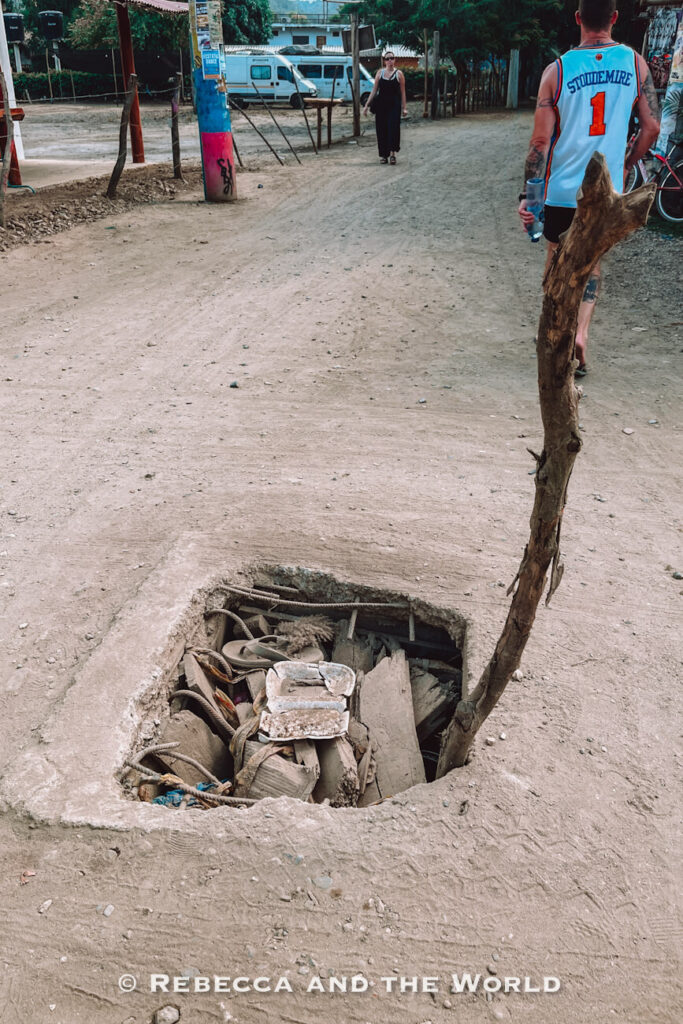
We felt comfortable walking back to our accommodation at night, even on the darker roads and when I was walking along, but stay aware. Bring a torch or use your phone light – some streets are very dim. Take a moto-taxi if you feel uncomfortable. Be careful of some dodgy roads with potholes and things you can trip over/fall in to!
Sunscreen here is non-negotiable – the sun here is brutal (my legs got burnt in 30 minutes but the parts of my body with SPF50+ were fine). Drink more water than you think you need. Use mosquito repellent and wear long sleeves if you’re prone to bites.
Visiting Palomino: Final thoughts
Palomino is a fantastic place to slow down for a few days, especially if your Colombia itinerary has been full-on. It’s friendly, relaxed and a little bit hippy, and it’s perfect for beach walks, lazy pool days and the occasional activity like river tubing.
It’s also not for everyone. If you’re picturing a polished Caribbean resort town, Palomino will feel rough around the edges. The ocean can be wild and erosion is hard to miss.
But if you arrive with the right expectations and a go-with-the-flow attitude, it’s the kind of place that suits doing very little for a while.
FAQs: Palomino travel guide
Is Palomino worth visiting?
Yes, if you’re looking for a relaxed beach town where you can slow down for a few days. Palomino is at its best as a reset stop – a place to swim, eat well and do very little. It’s friendly, safe and affordable.
Is Palomino safe?
We felt comfortable in Palomino, including walking back at night, but the biggest safety consideration is the ocean. The water can be rough, so swim cautiously (or skip it if conditions don’t look good). At night, use your phone torch on dark roads and take a moto-taxi if you’d rather not walk.
Can you swim at the beach in Palomino?
Sometimes, but it depends on conditions. The sea can be choppy and rough, and it’s not always an inviting swim. If the water looks intense, keep it to a paddle close to shore, or stick to your hotel pool.
Is Palomino good for families?
Palomino is a great, chilled-out location. Families will enjoy Palomino, but it’s worth choosing accommodation with a pool and keeping beach swimming expectations realistic due to the rough water.
Do you need cash in Palomino?
Most restaurants, bars and shops accept cash, but not all, so you’ll need to have enough cash to last your trip. ATM access is limited here, with just one ATM and a few money exchange places.
Is it worth visiting Palomino if you’re already going to Tayrona?
Yes, if you want downtime. Tayrona is more about hiking and beaches and accommodation can be pretty basic. Palomino is where you come afterwards (or in between stops) to properly rest.
Did you find this article helpful? Consider buying me a coffee as a way to say thanks!
I hope this Palomino travel guide helps with your trip planning. Let me know if you have any questions or tips via the comments below.
Related posts
Before you go… you might like these Colombia travel articles:
- What to Expect on Colombia’s Lost City Trek + An Honest Expotur Review
- Lost City Trek Packing List: What to Pack and What to Leave Behind
- Is Santa Marta Worth Visiting? A Guide to Colombia’s Caribbean Gateway
- 3 Days in Cartagena Itinerary: Plan Your First Trip to This Colourful Colombian City
- 48 hours in Bogotá, Colombia: The Perfect 2-Day Itinerary for First-Time Visitors
COLOMBIA TRIP ESSENTIALS
- Book your flight to and around Colombia online with Skyscanner. I like how Skyscanner allows you to find the cheapest days to travel and compares multiple airlines at once.
- One thing I always purchase is travel insurance! Travel Insurance Master allows you to compare across multiple policy providers, while SafetyWing is great for long-term travellers and digital nomads.
- Wise is my choice for sending and receiving money and spending money overseas (you can get a digital and physical card).
- Find great hotels across Colombia. Check prices on Booking.com and Expedia online.
- Check out the huge range of day tours throughout Colombia on GetYourGuide or Viator. I love a good food tour in particular!
- Saving money? Check out the range of free walking tours in Colombia with GuruWalk (don’t forget to tip!).
- How to get around? I use DiscoverCars for car hire, or Motorhome Republic and Jucy for campervan/RV rental. For buses, trains and ferries, I use 12GO, Busbud and Omio.
- Grab an e-sim to stay connected while on the road.
- A copy of the Lonely Planet guide to Colombia will be handy. Also pick up a Spanish language phrasebook to help you navigate your visit.
- Check out my Amazon shop for my fave travel items – everything from backpacks and suitcases to travel adapters and beauty products.
PIN IT FOR LATER: PALOMINO TRAVEL GUIDE
Save this Palomino travel guide to Pinterest so you can plan your trip later.