
One of the best things to do in Cartagena is a food tour! Here’s my review of a fantastic Cartagena street food tour – and my favourite things to eat.
Colombian food probably isn’t as well known as other cuisines – which means it definitely doesn’t get the respect it deserves. Sure, you know ceviche and perhaps you’ve had an arepa or two, but the street food scene in Cartagena is far more interesting than that.
The challenge is that Cartagena is also the kind of place where street food is everywhere, and working out what’s actually worth ordering (and where) can feel a bit overwhelming at first. Between the heat, the crowds in the walled city and the sheer number of vendors calling out as you walk past, it’s easy to default to the safest-looking option.
That’s exactly why I booked a Cartagena street food tour early in our trip. In a few hours, our guide led us to vendors he trusts and shared the stories behind what we were eating, from traditional sweets to fruits I’ve never seen before and a surprising amount of different types of arepas.
If you want to feel more confident ordering street snacks for the rest of your time in Cartagena, this is a very good place to start.
In this post, I’m sharing what we ate on the tour, what to expect and whether I think it’s worth it.
This blog post may contain affiliate links, meaning if you book or buy something through one of these links, I may earn a small commission (at no extra cost to you).
At a glance: Cartagena street food tour
- Duration: 2.5-3 hours
- Start times: 10.30am or 4pm (I did the 4pm tour, which helped dodge the worst of the heat)
- Group size: Max 12 people
- What’s included: 10 tastings of Colombian foods and drinks
- Dietary requirements: Contact the tour organiser in advance (it’s doable for some restrictions, but this is a fairly fried, wheat-and-cheese-heavy tour)
- Price: US$44 per person
- My verdict: So worth it! Do it early in your trip so you can spot the best street snacks again (and go back to your favourite vendors)
🍤 BOOK THE CARTAGENA STREET FOOD TOUR HERE 🍤
What to expect on a Cartagena street food tour
The Cartagena street food tour is run by Nexperience, a well-known tour company in the city (they also run an excellent daily free walking tour, something I also recommend doing if you have 3 days in Cartagena).
The tour stays within the Old Town, which means you’re right in the thick of Cartagena’s busiest area. It’s a true street food crawl. You’ll walk between multiple vendors, eat as you go and occasionally duck inside a bakery or shop for a welcome break from the chaos (and the heat).
Tours run twice a day and, if you can, I’d choose the 4pm start. It’s still warm, but you’re not doing the whole thing under the harshest part of the day.
Come hungry. Between the tastings, it adds up to a solid meal and for most people it’ll be enough for dinner. Our guide Robert joked that you’d have to do push-ups if you didn’t finish everything. One thing to note is that a lot of food around this region is fried – Robert told us that Cartagena even has an annual fried food festival.
One of the biggest benefits of doing a tour like this is having someone else make the calls on which vendors are trustworthy. The stops are vetted, and our guide came prepared with hand sanitiser, napkins and a bottle of water for each of us.
One thing to prepare yourself for is that the Old Town is pretty chaotic. Expect narrow footpaths, cars squeezing past, people spilling out of bars and having to step on and off the kerb regularly.
🍤 BOOK THE CARTAGENA STREET FOOD TOUR HERE 🍤
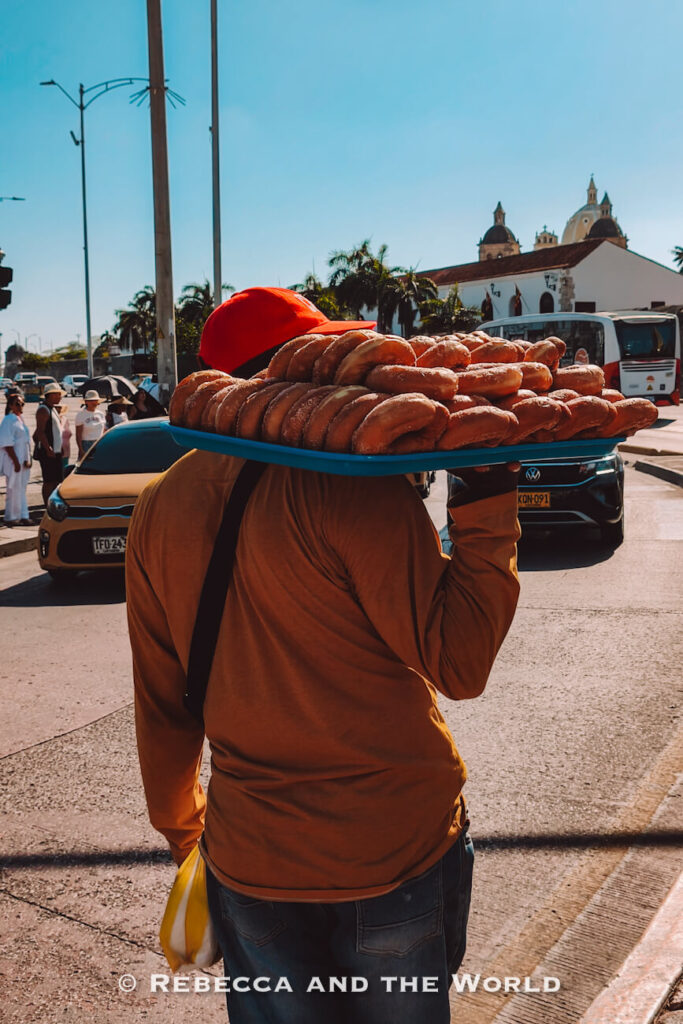
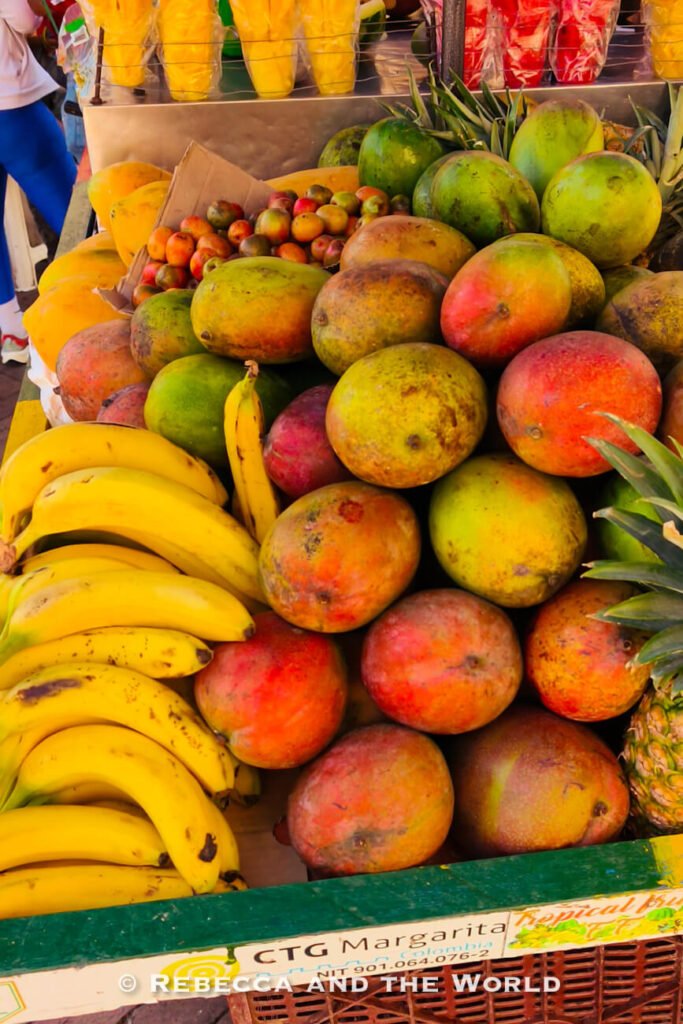
What to eat in Cartagena
One of the best parts of doing a street food tour in Cartagena is that it takes the guesswork out of ordering. Instead of wandering around the Old Town wondering whether you should try the thing sizzling in oil on the corner or if that arepa is safe to eat, you get a guided introduction to what locals actually snack on.
Obviously this isn’t an exhaustive list of everything you can eat in Cartagena. It’s a rundown of the foods and drinks we tried on this particular tour, plus a couple of extras you’ll see around the city and shouldn’t skip.
Cóctel de camarones (shrimp cocktail)
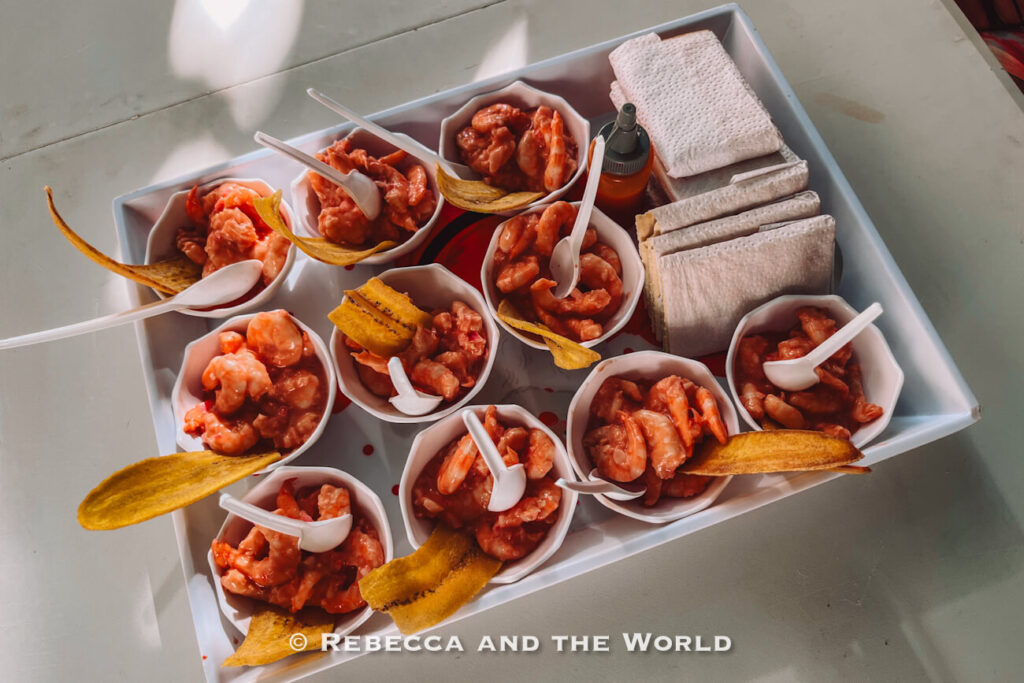
Our first stop was for cóctel de camarones at a small vendor just outside the Old Town, in an area lined with coctelerías that specialise in seafood cocktails.
Cóctel de camarones is a popular dish on the Colombian coast. It’s made of cold, cooked shrimp smothered in a tangy, tomato-based sauce. Most vendors keep their sauce a secret, but it’s often a mix of tomato/ketchup with lime, onion and sometimes a little hot sauce.
Robert told us the sauce is always “spicy”, but it was not spicy at all. Colombian food tends to be pretty mild, and heat is usually something you add yourself.
I enjoyed this – it’s light and refreshing and super easy to snack on. Obviously find a vendor that keeps their cocktails cold and has high turnover.
Kola Román
Alongside the shrimp cocktail we drank Kola Román, a neon-pink soft drink with a vanilla, sarsaparilla-ish vibe. It was created in Cartagena in 1865, and it’s believed to be the oldest soda in the world!
Dulces at the Portal de los Dulces
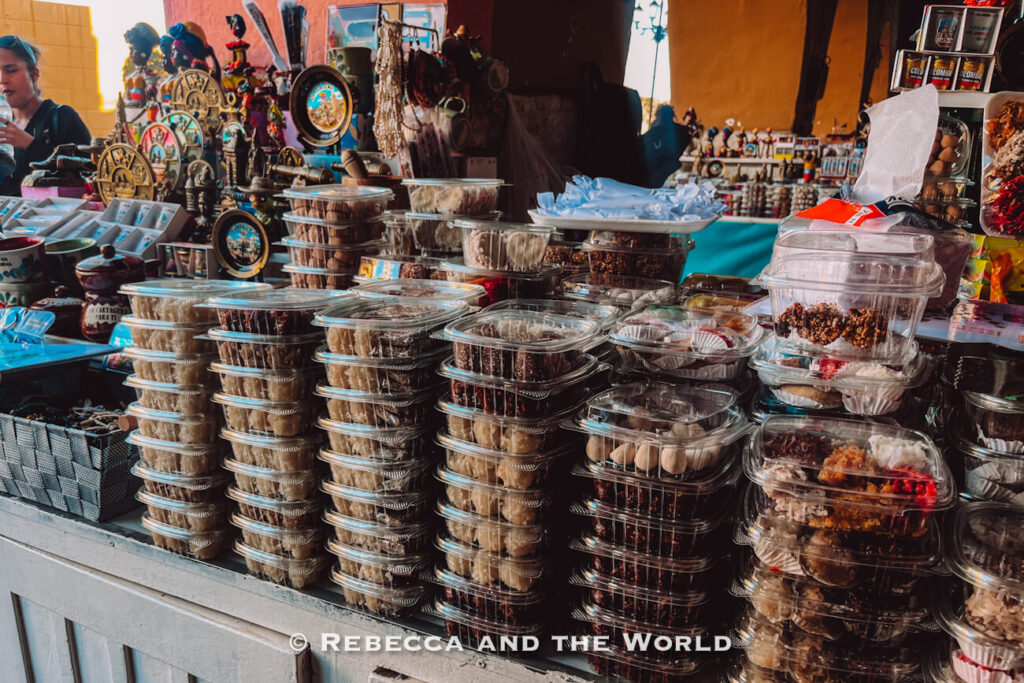
After the seafood stop, we headed into the Old Town to the Portal de los Dulces, the arcade of sweet stalls in Plaza de los Coches. Today it’s one of the most touristy corners of the walled city, but it’s also a place with a lot of history under the surface: the plaza was used as a slave market during the colonial period.
The portal itself is exactly what it sounds like: a row of small stalls selling packets of traditional sweets, many of them coconut-based. There are so many to choose from, so my advice is to buy a mixed bag and enjoy the surprises.
This is where we tried a few Cartagena classics:
- Cocadas: chewy coconut sweets made with sugar or panela, often mixed with fruit flavours like guava or pineapple – these were my favourite!
- Alegría: a traditional sweet made with panela and grains (often puffed maize), plus ingredients like coconut and anise.
- Caballitos: one of the more interesting textures, usually made with fruit (often papaya) cooked down into a soft, sticky sweet.
Later on in the evening we also tried arequipe, Colombia’s take on dulce de leche, which you’ll see in all sorts of desserts and sweets. (If you like caramel, you’ll be very happy here.)
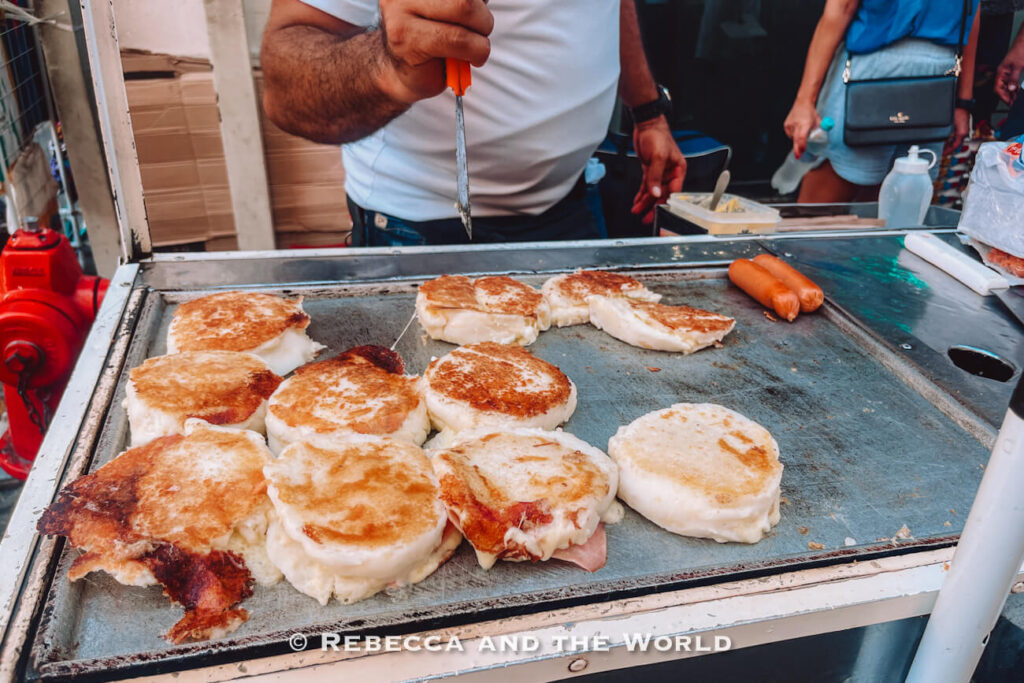
Arepas de queso (cheese arepas)
If I had to pick one thing from the whole tour to eat again immediately, it would be the arepas de queso.
An arepa de queso is exactly what it sounds like: a corn-based arepa with cheese worked into the dough (and sometimes a little extra tucked inside). In Colombia they’re often made with pre-cooked corn flour (masarepa), butter and cheese, then cooked until the outside turns golden. On the Colombian coast, the cheese they use most is queso costeño, a salty, crumbly cheese. That slightly salty cheese hit is exactly what makes these so moreish.
We bought ours from a street vendor, still hot. Texture-wise, they surprised me. It had that comforting, dense softness that reminded me a bit of mashed potato, but with a crisp, fried exterior. I could have kept eating them all night.
Pan de bono
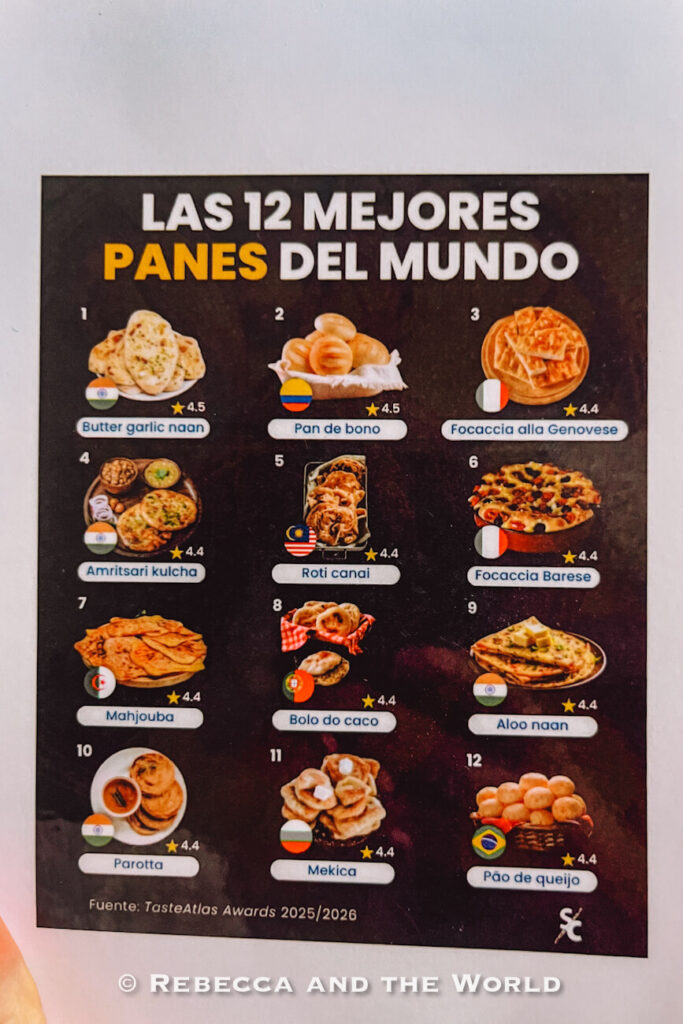
Pan de bono (you’ll also see it written as pandebono) is a small, chewy Colombian cheese bread made with a mix of starch and flour (often cassava/yuca and corn/masarepa), egg and cheese. It comes out warm, with a lightly crisp outside and an addictive, slightly elastic centre. I could have eaten 10 of these. So good.
And I’m not the only one who thinks so – TasteAtlas ranked pan de bono as the #2 bread in the world for 2026.
The bread is actually from the Valle del Cauca/Cali region of Colombia, and there are a few stories as to how it got its name. Some link the name to Hacienda El Bono near Cali, where “pan de El Bono” eventually got shortened to “pandebono”. Or there’s a popular theory about an Italian baker who made “pane del buono” (“good bread”) which was misheard over time. Either way, the bread lives up to its name – it’s really good.
We tried ours in a small bakery, alongside corozo juice. Corozo is a small, reddish-purple coastal fruit from Colombia’s Caribbean region, and the juice tastes a bit like cranberry juice but less tart.
Arepa de huevo (egg arepa)
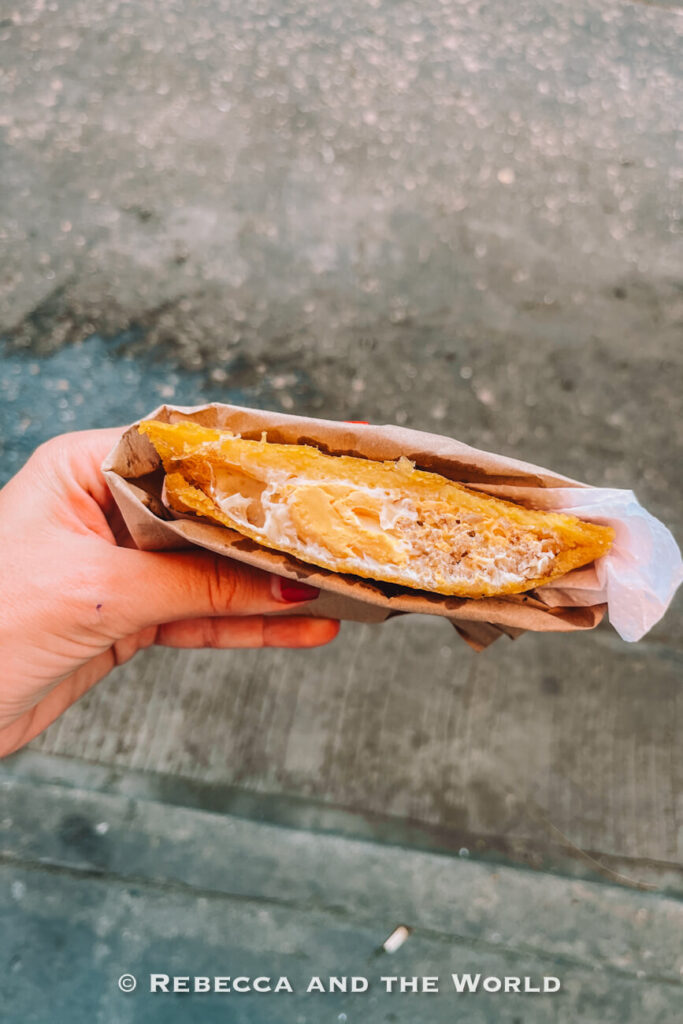
Next up was arepa de huevo, bought from a very busy street stall (always a good sign when you’re deciding where to eat on the street). This is one of the most iconic snacks on Colombia’s Caribbean coast.
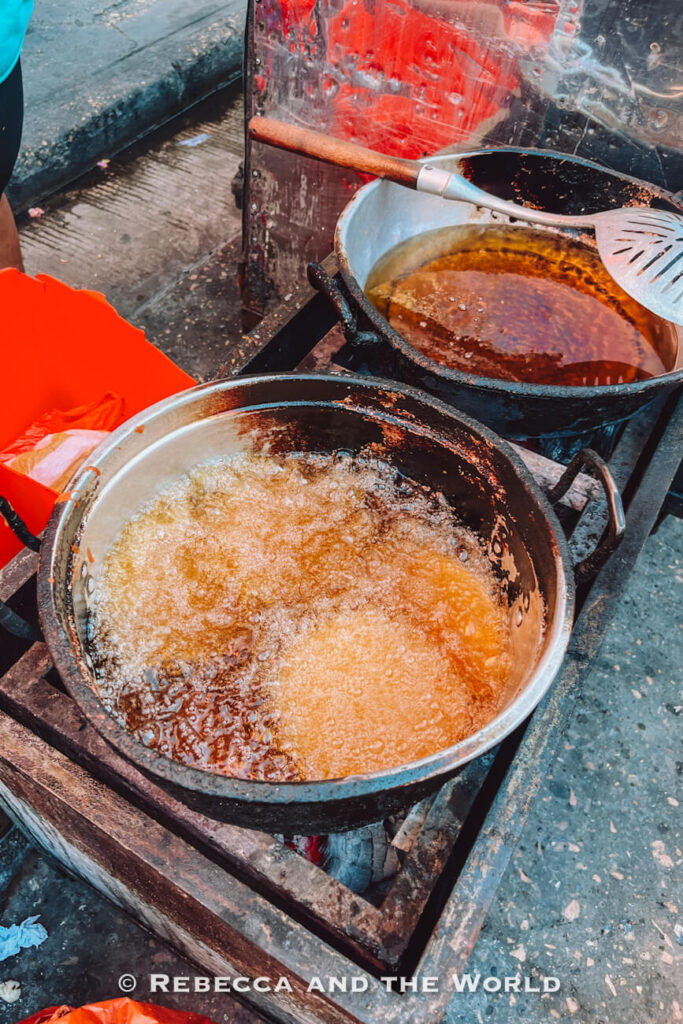
The basic technique involves a disc of corn dough (often yellow corn on the coast) deep-fried until it puffs up. It’s then cut open, filled with a raw egg and fried again so the outside turns crisp while the egg cooks inside. The double-fry is what makes it work.
You’ll also see why people argue about it. Arepas are so tied to daily life in this part of the world that there’s a long-running Colombia vs Venezuela debate over who “owns” the arepa tradition in general. But arepa de huevo in particular has a very clear coastal identity, and even within Colombia you’ll hear people point to different cities on the Caribbean coast as the birthplace.
Whichever country invented it, I applaud them. It’s a brilliant street snack: crunchy, satisfying and nicely filling.
Coffee roasting and tasting
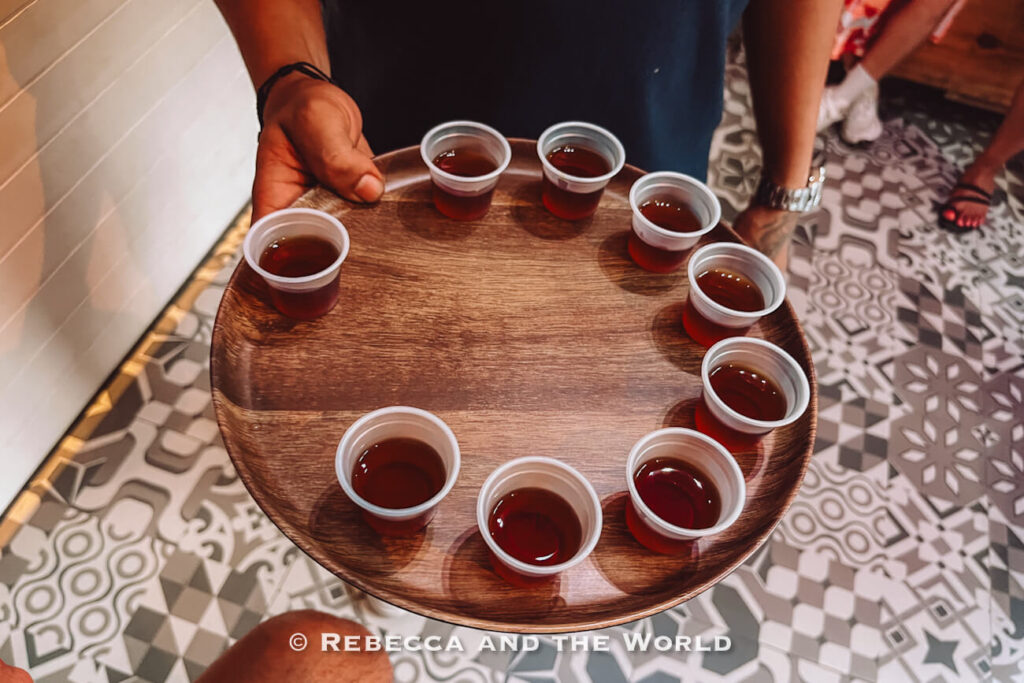
Halfway through the tour we ducked inside a coffee shop for a short coffee tasting, which was a welcome break from the heat.
Our guide talked us through the basics of how coffee is grown and harvested, then Oscar at the shop ground fresh beans and brewed it using a V60 pour-over setup.
We tried two very different coffees: a Primitivo (medium roast) and a coffee that had been co-fermented with watermelon. The watermelon one genuinely tasted like watermelon, which sounds gimmicky but was surprisingly clear in the cup.
Interestingly, while Colombia ranks among the world’s top coffee producers, many Colombians still drink coffee simply as tinto – a straightforward black coffee, often made with a basic filter or pot method.
Chicken empanadas
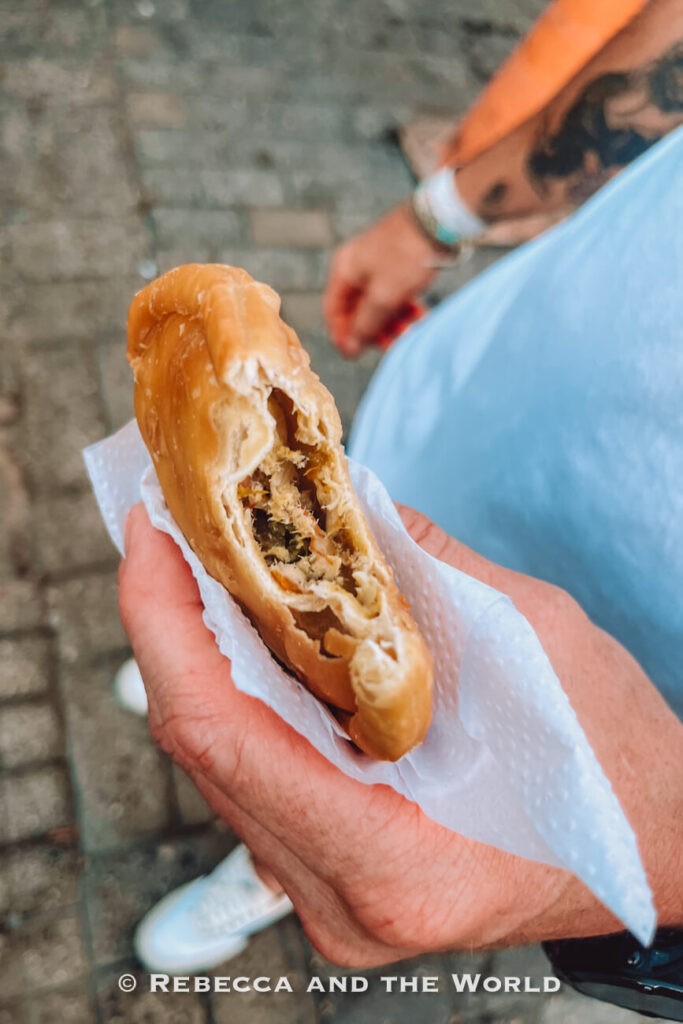
Next came chicken empanadas, and they were noticeably different to the empanadas I’m used to eating in Argentina and Chile: bigger and rounder.
In many parts of Colombia, empanadas are made with a corn-based dough and fried, rather than baked, and they’re often served with ají, a bright, herby sauce that adds flavour more than actual heat.
The ones we tried were filled with a chicken and vegetable mixture, and they were delicious: crisp outside, stuffed with filling and easy to eat while you’re standing in the middle of Cartagena’s chaos.
Fresh fruit
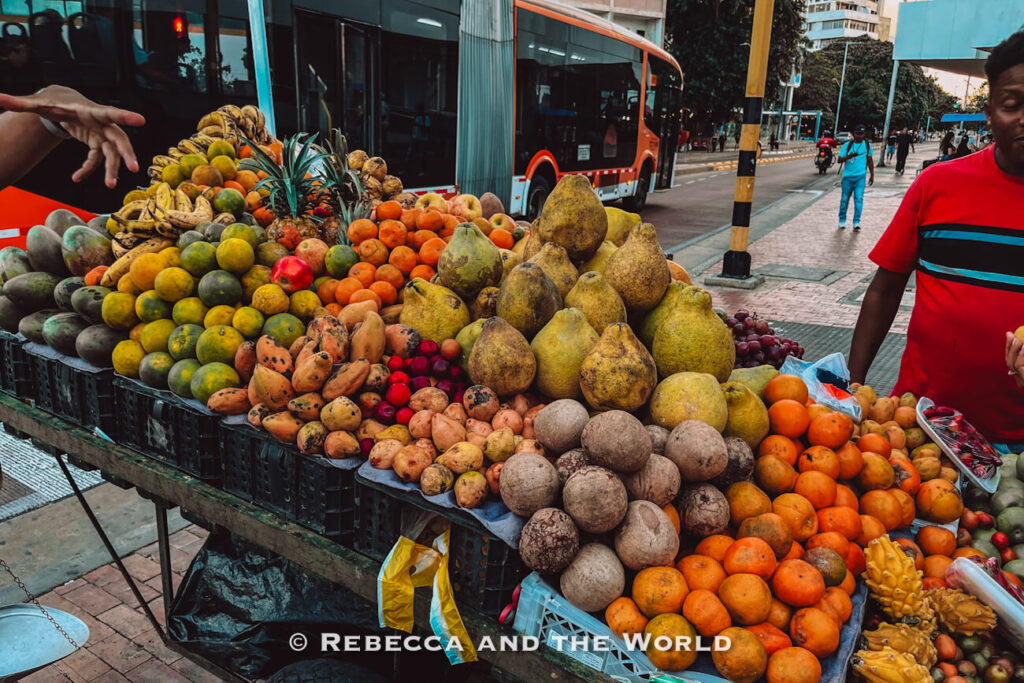
We finished the tour with a fruit tasting, which was a nice finale after all the fried, cheesy goodness.
Colombia is rich with fruits – many of which you’ve probably never seen or heard of before. Our guide summed it up perfectly: “We have more fruits than the number of days in a year.”
On our tasting, we started with sweeter fruit and worked our way towards the more sour ones. A few we tried included níspero, lulo, guayaba (guava) and local plums. We also talked about other fruits Cartagena is known for, including pittaya (dragon fruit – don’t eat too many of these, they have a laxative effect!), mamey and caimito. If you spot caimito (also called star apple), it’s worth trying at least once: slice it open and you’ll see the star shape inside that gives it its name.
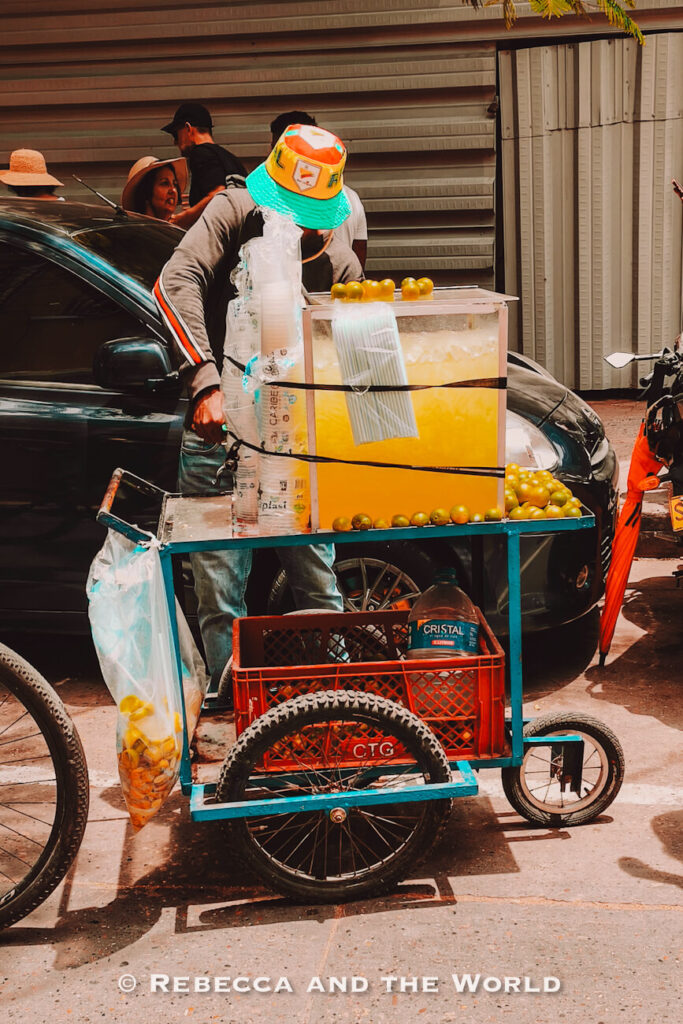
Lime juice
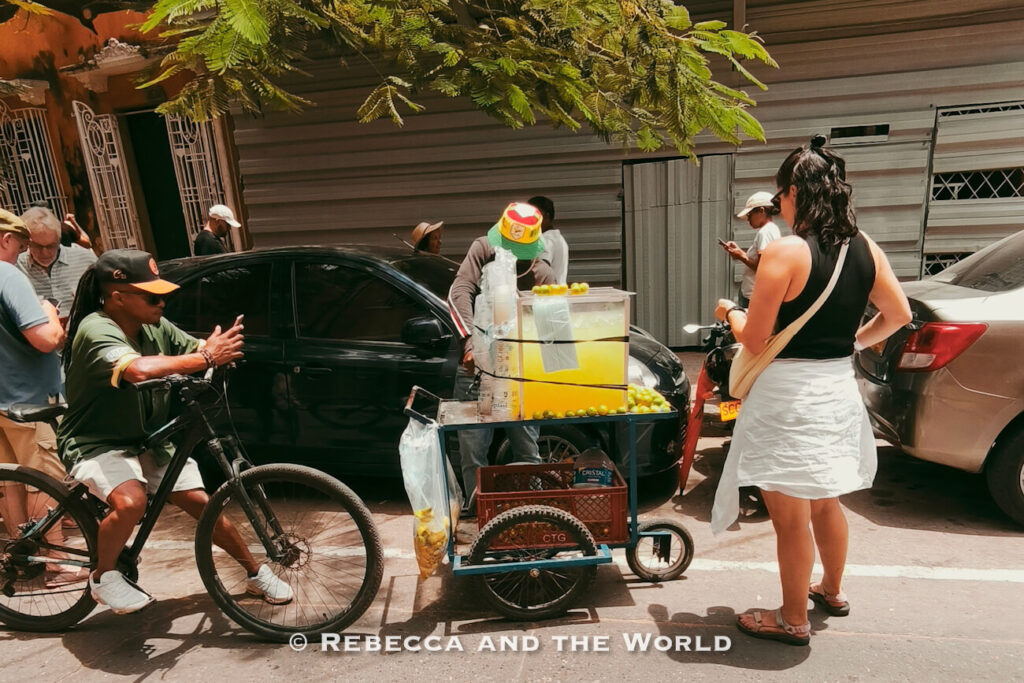
We didn’t try this on the Cartagena street food tour, but you’ll spot vendors selling fresh lime juice all over Cartagena and it’s absolutely worth grabbing on a hot day. It’s simple, sharp and so refreshing when you’re walking around the Old Town in the late afternoon.
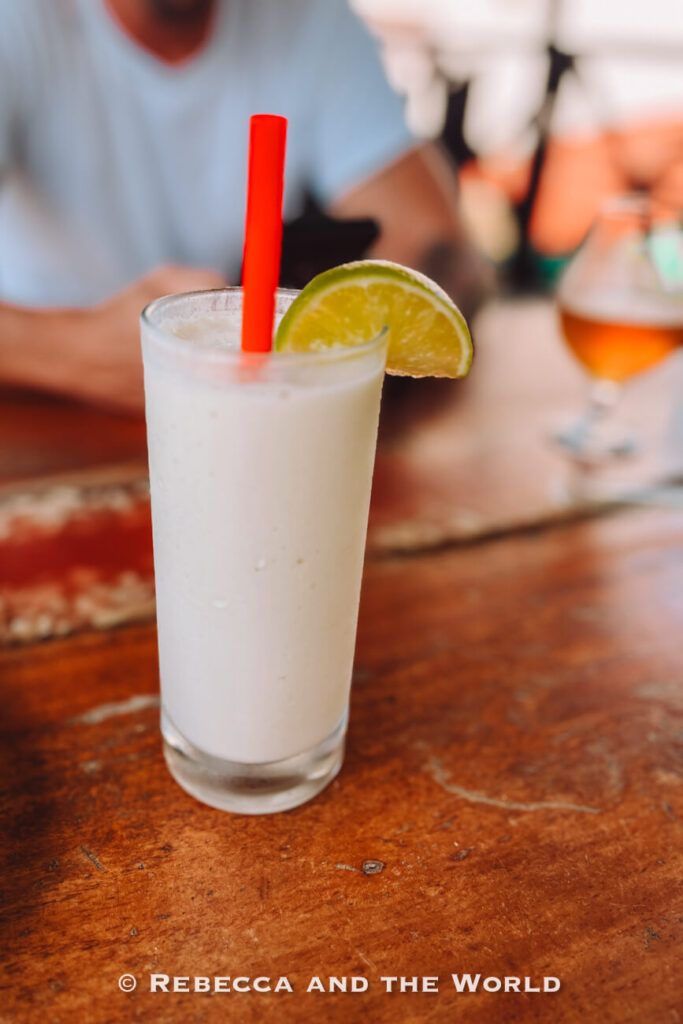
Limonada de coco
This also wasn’t part of our street food tour, but I’d be remiss not to include limonada de coco here because it’s one of my favourite drinks on Colombia’s Caribbean coast.
It’s usually made with fresh lime juice, coconut milk and sugar (or condensed milk), then blended with ice so it lands somewhere between a lemonade and a slushie. It’s sweet, creamy and exactly what you want when you need a break from the heat. Just please don’t tell me how many calories are in a glass – I don’t want to know!
Is the Cartagena street food tour worth it?
For US$44 per person, I thought this Cartagena street food tour was excellent value. It’s one thing to read “try arepas and empanadas” online. It’s another to have someone walk you to the right vendors and explain what you’re actually eating so you can order it again yourself.
What I liked
- You try foods you might otherwise skip. Street food can be overwhelming. It’s nice to have a guide nudge you (gently) beyond the obvious.
- It supports local vendors. Every stop is a small business run by people who do this daily.
- You get context, not just snacks. The stories behind the sweets, the coffee tasting and the regional ingredients add to the experience.
- It sets you up for the rest of your trip. I’d recommend doing this tour early in your Cartagena visit so you can recognise what you’re seeing on the street afterwards, return to your favourite stops and order confidently.
- It’s genuinely filling. Ten tastings sounds like a lot because it is a lot, but it’s paced well and it worked as dinner for us.
What some people might not like
- It’s a street food tour, so it’s inherently a bit chaotic. You’re eating on the move in the Old Town, and that means traffic, crowds, noise and weaving on and off footpaths. If you’re hoping for a calm experience, this isn’t it.
- Not ideal for strict dietary needs. If you’re vegetarian, coeliac or have multiple restrictions, you may find this tour tricky. The organiser may be able to adjust a couple of tastings, but many staples are fried, wheat-based or cheese-heavy. It’s worth reaching out in advance if this is you.
🍤 BOOK THE CARTAGENA STREET FOOD TOUR HERE 🍤
Cartagena street food tour: Final thoughts
I always love trying new foods in new countries, but I’m the first to admit it can feel a bit intimidating at the start, especially somewhere as busy as Cartagena’s Old Town. A street food tour takes away that initial uncertainty. You get to try regional dishes and learn the stories behind them.
If you’re visiting Cartagena and you want to eat well, I’d genuinely recommend doing this tour. Book it early in your trip, take note of your favourite stops, then spend the rest of your time in the city going back for seconds.
FAQs: Cartagena food tour
How much street food do you get?
You get 10 tastings across the tour, and for most people it’s enough to count as dinner (without being absurdly overfilling). If you’re doing the 4pm tour, I’d keep lunch fairly light so you can enjoy everything.
Is the tour mostly walking, and is there anywhere to sit down?
Yes, it’s a walking tour with multiple stops, and you’ll do a lot of eating standing up as you go. There are also a few sit-down breaks (we stopped inside a bakery, for example).
Is it safe to eat street food in Cartagena?
On this tour, the vendors are all vetted. Our guide came prepared with hand sanitiser, napkins and water. Once you’re eating independently, the simplest rule is to prioritise busy stalls with high turnover.
Do you tip on a street food tour in Cartagena, and how much?
Tipping is usually appreciated on walking tours. I’d treat it like a guide tip: a small amount per person based on how good the guide was, and a bit more if they were exceptionally informative/helpful.
Did you find this article helpful? Consider buying me a coffee as a way to say thanks!
Would you take a street food tour in Cartagena? What are your favourite Colombian foods?
Related posts
Before you go… you might like these Colombia travel articles:
- 3 Days in Cartagena Itinerary: Plan Your First Trip to This Colourful Colombian City
- 48 hours in Bogotá, Colombia: The Perfect 2-Day Itinerary for First-Time Visitors
- Bogotá Food Tour: 10 Colombian Dishes to Try in the Capital
- What to Expect on Colombia’s Lost City Trek + An Honest Expotur Review
- Is Santa Marta Worth Visiting? A Guide to Colombia’s Caribbean Gateway
- Is Palomino Worth Visiting? A First-Timer’s Guide + Tips for Planning Your Stay
COLOMBIA TRIP ESSENTIALS
- Book your flight to and around Colombia online with Skyscanner. I like how Skyscanner allows you to find the cheapest days to travel and compares multiple airlines at once.
- One thing I always purchase is travel insurance! Travel Insurance Master allows you to compare across multiple policy providers, while SafetyWing is great for long-term travellers and digital nomads.
- Wise is my choice for sending and receiving money and spending money overseas (you can get a digital and physical card).
- Find great hotels across Colombia. Check prices on Booking.com and Expedia online.
- Check out the huge range of day tours throughout Colombia on GetYourGuide or Viator. I love a good food tour in particular!
- Saving money? Check out the range of free walking tours in Colombia with GuruWalk (don’t forget to tip!).
- How to get around? I use DiscoverCars for car hire, or Motorhome Republic and Jucy for campervan/RV rental. For buses, trains and ferries, I use 12GO, Busbud and Omio.
- Grab an e-sim to stay connected while on the road.
- A copy of the Lonely Planet guide to Colombia will be handy. Also pick up a Spanish language phrasebook to help you navigate your visit.
- Check out my Amazon shop for my fave travel items – everything from backpacks and suitcases to travel adapters and beauty products.
PIN IT FOR LATER: STREET FOOD IN CARTAGENA
Save this Cartagena street food tour guide to Pinterest so you can plan your trip later!