
Planning a trip to Cartagena, Colombia’s colourful Caribbean coast city? Here’s the perfect 3 days in Cartagena itinerary for first-time visitors!
I won’t lie. I have a love-hate relationship with Cartagena.
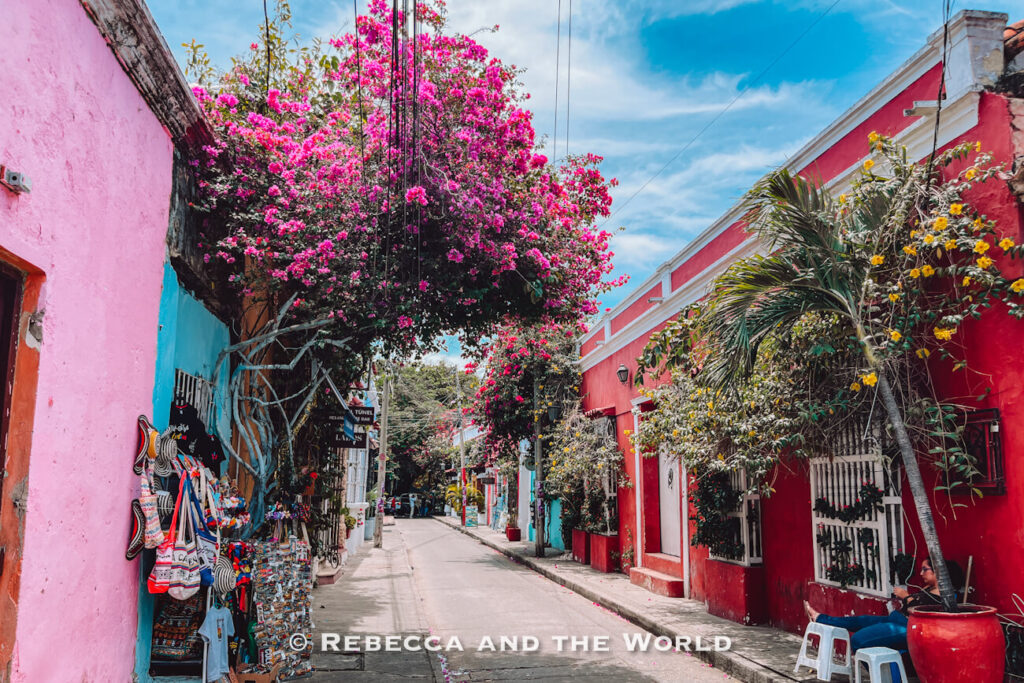
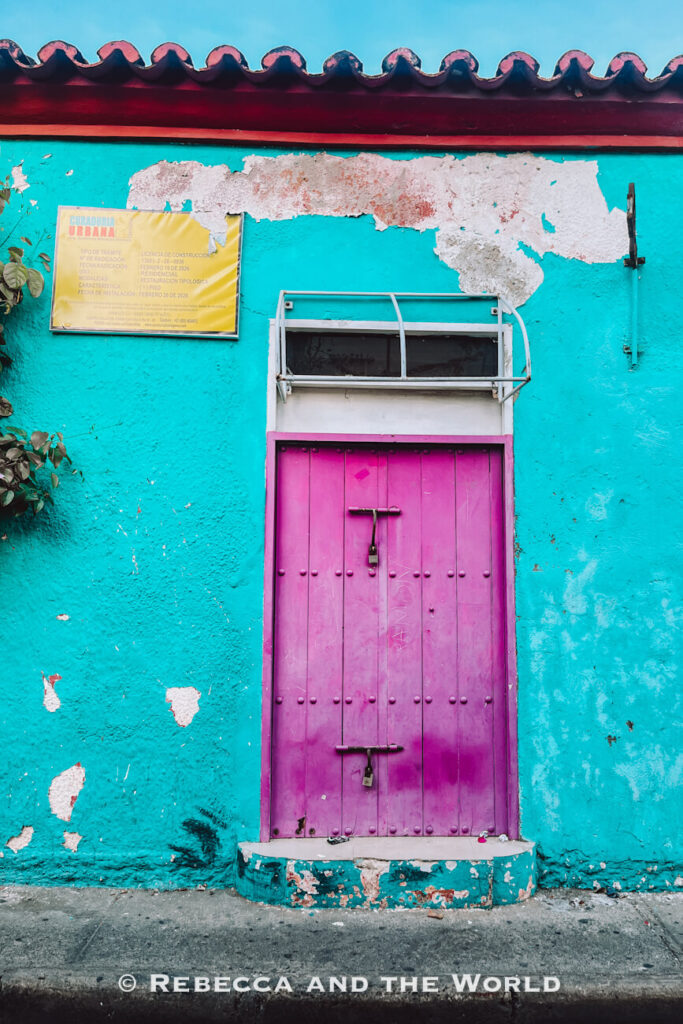
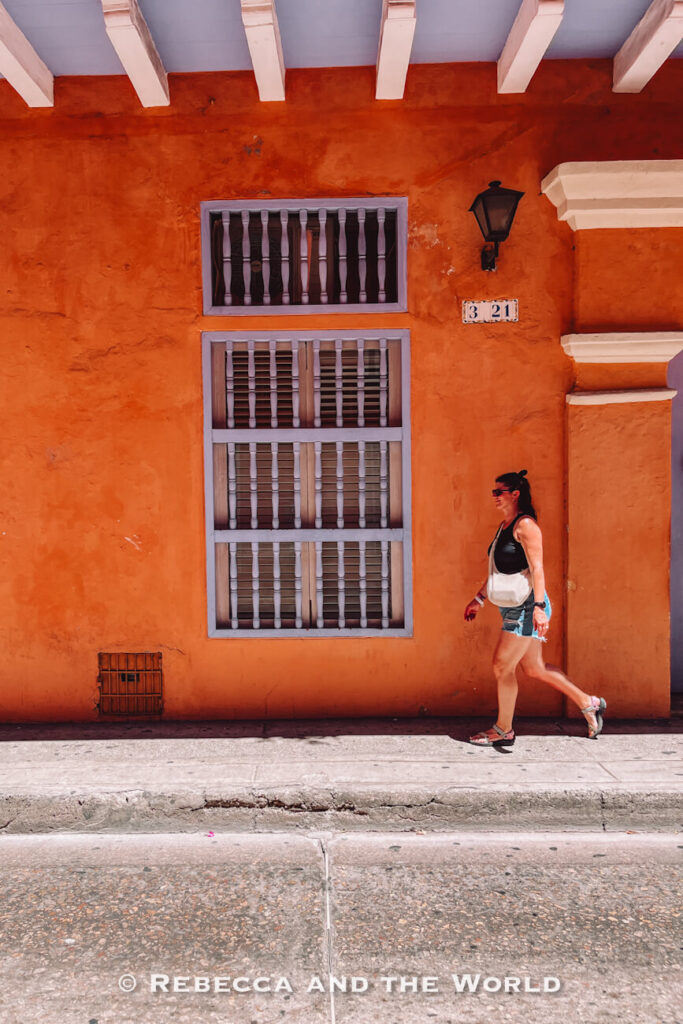
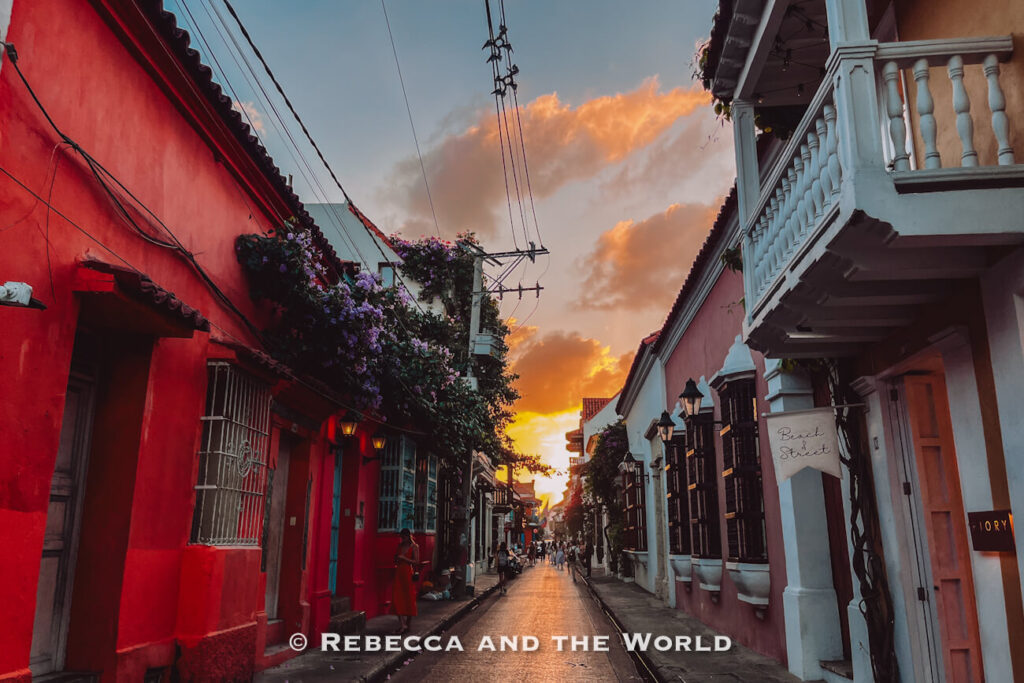
On the love side, it’s hard to beat the first impressions. The Walled City is a riot of colour, with peeling paint and bougainvillea spilling over balconies, sea breezes drifting in off the Caribbean and seafood that’s so fresh it tastes like it was pulled from the water that morning. I love the weddings that take over entire streets on weekends.
This corner of Colombia has a long, dramatic history too, shaped by pirate raids and colonial power struggles, and you can still feel those layers as you wander through plazas and along the fort walls. Add in the mix of cultures here, with Afro-Caribbean and Indigenous influences woven into the music, the food and the everyday rhythm of the streets, and there’s a lot to appreciate.
But here’s the part I didn’t fully grasp before we arrived: Cartagena is busy. People told me it was touristy, but it was beyond my expectations. Cruise-ship crowds in the daytime, hen’s parties and girls’ weekends at night (it’s an easy trip from the US) and a constant buzz that can be overwhelming.
Still, I do think Cartagena is a must-visit on your Colombian itinerary. If you’re on the Caribbean coastline, you can’t skip this city – and you can make up your own mind about it.
For your first visit, here’s a 3-day Cartagena itinerary that hits the highlights of the city: the history, the food, the culture and the best day trips.
This blog post may contain affiliate links, meaning if you book or buy something through one of these links, I may earn a small commission (at no extra cost to you).
How many days in Cartagena do you need?
You can see the headline sights in two days, but three days is a good amount of time to spend in Cartagena (officially Cartagena de Indias). Three days in Cartagena gives you enough time to properly explore the Walled City, spend an evening in Getsemaní and fit in a day trip, while also enjoying some down time out of the heat.
Cartagena itinerary at a glance
Here’s what 3 days in Cartagena looks like:
- Day 1: Free walking tour + museums + walls at sunset + dinner
- Day 2: Castillo + La Popa + street food tour + cocktails
- Day 3: Day trip from Cartagena + night out in Getsemaní
Day 1: Centro Histórico highlights and sunset on the walls
Morning
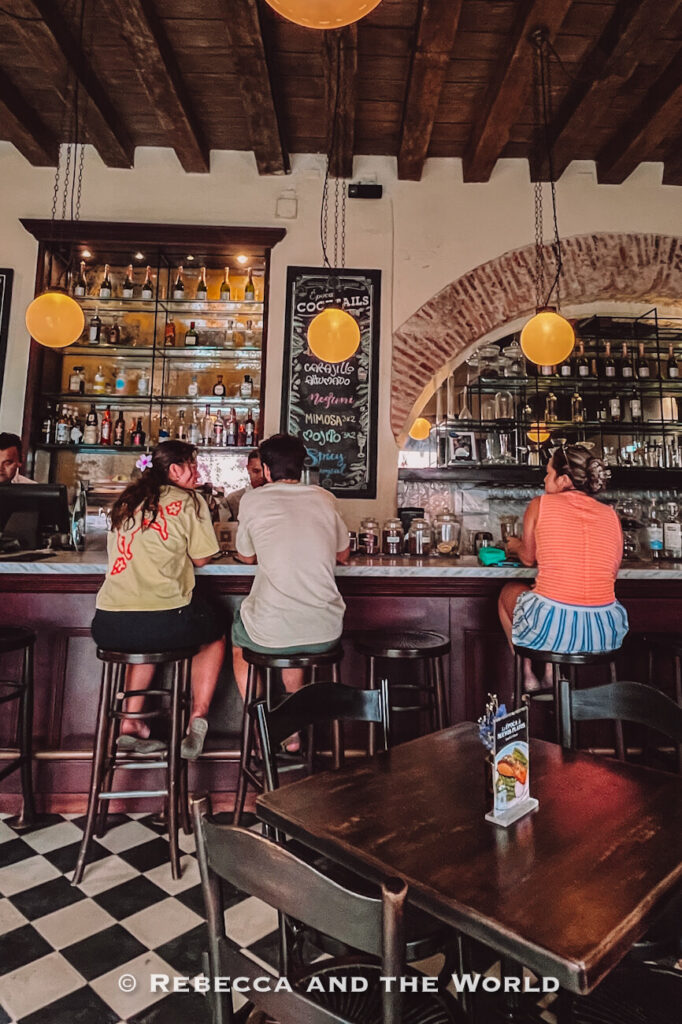
Start with breakfast at Época Café. I loved the Huevos Rotos (eggs on fries with prosciutto, paprika tapenade and a slightly spicy sauce). My husband went for the English breakfast with poached eggs, which felt positively virtuous next to my plate. They also do acai bowls and avocado toast if you’re after something lighter.
It’s super popular, so aim to arrive around 8-8.30am to nab a table.

From here, explore the UNESCO-listed Walled City on a free Cartagena walking tour, which kicks off at 10am and ends around 1pm. This is, hands down, the best way to start your first day in Cartagena because it gives you context and history and helps to orient yourself in the city.
Our guide Alvaro was excellent. Cartagena has a long, layered history and he brought it to life with stories and details that went far beyond the surface level: Indigenous roots, Spanish arrival, attacks by the French and English, the abolition of slavery and how all of that shapes the city today. He was also very conscious of the heat and kept finding pockets of shade, including ducking us into an air-conditioned spot mid-tour, which I appreciated.
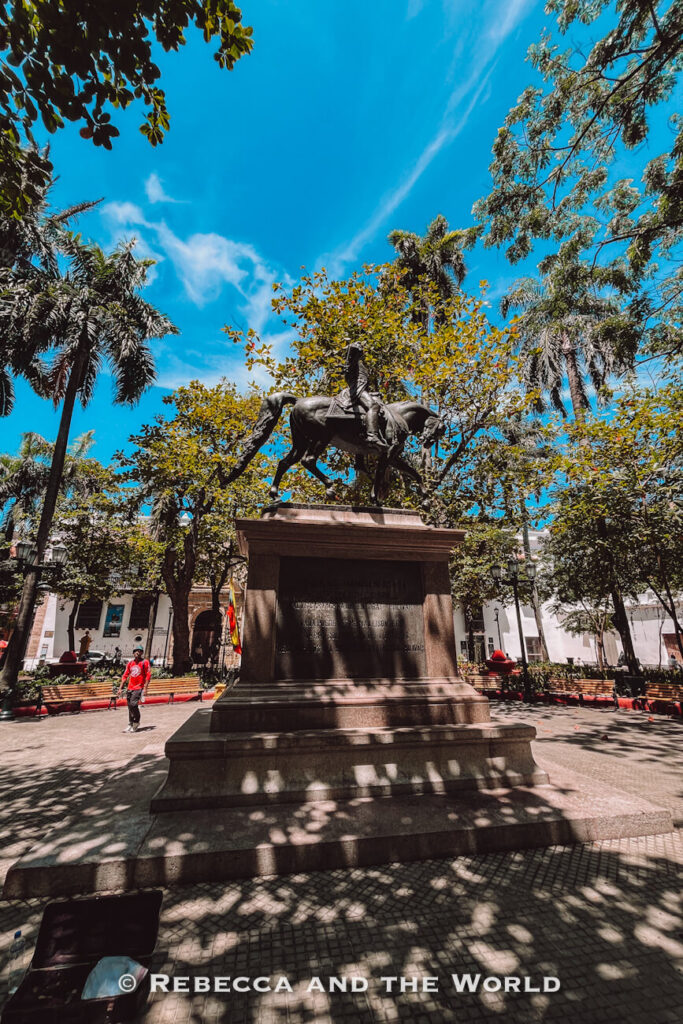
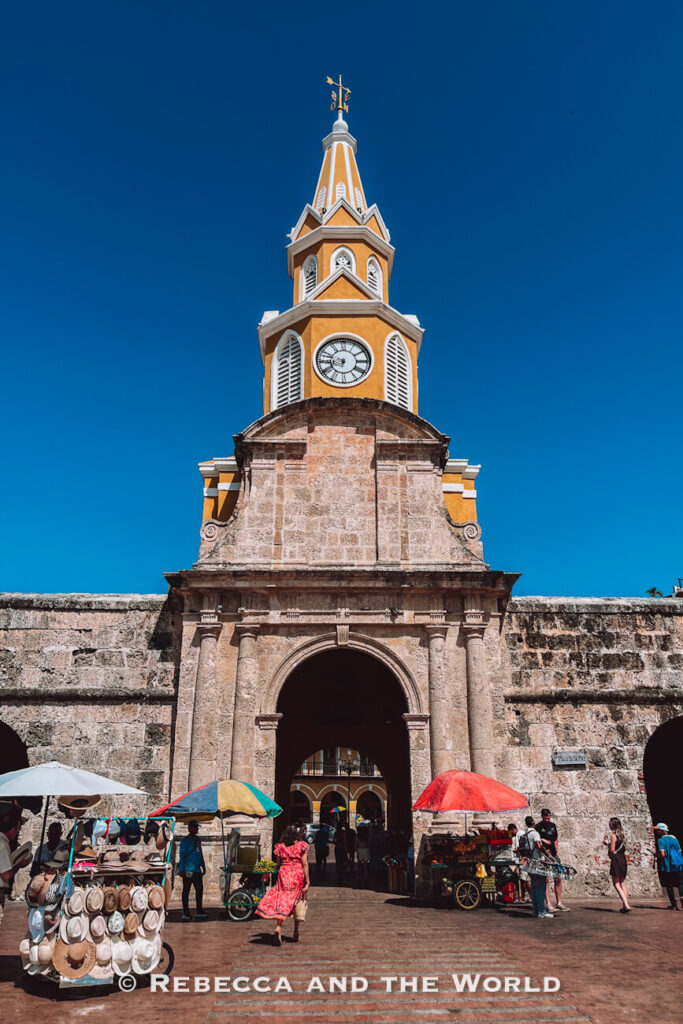
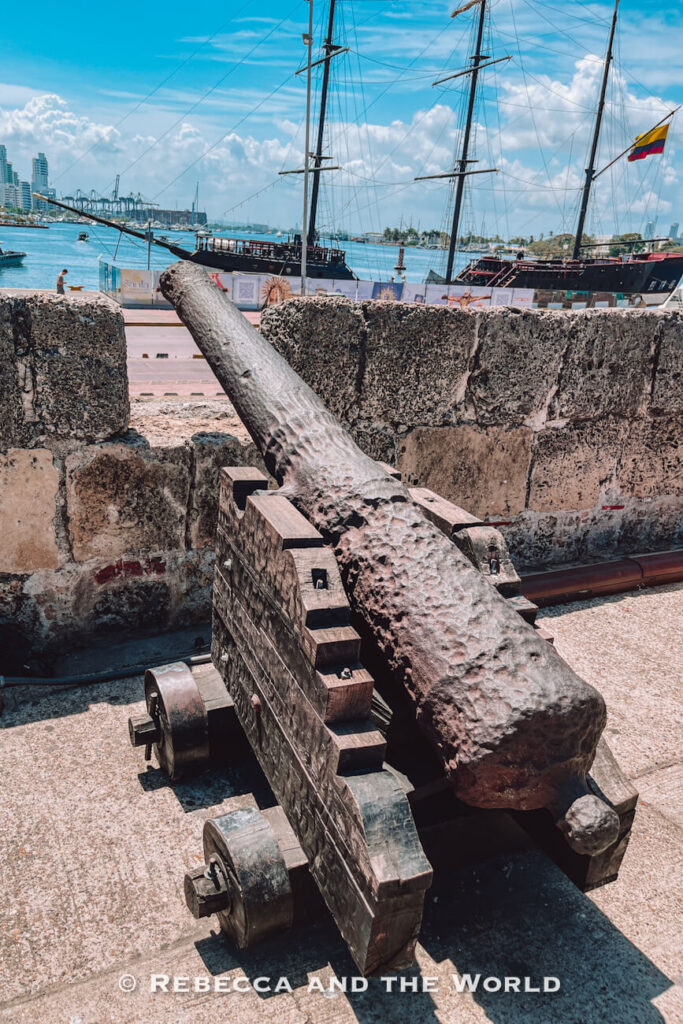
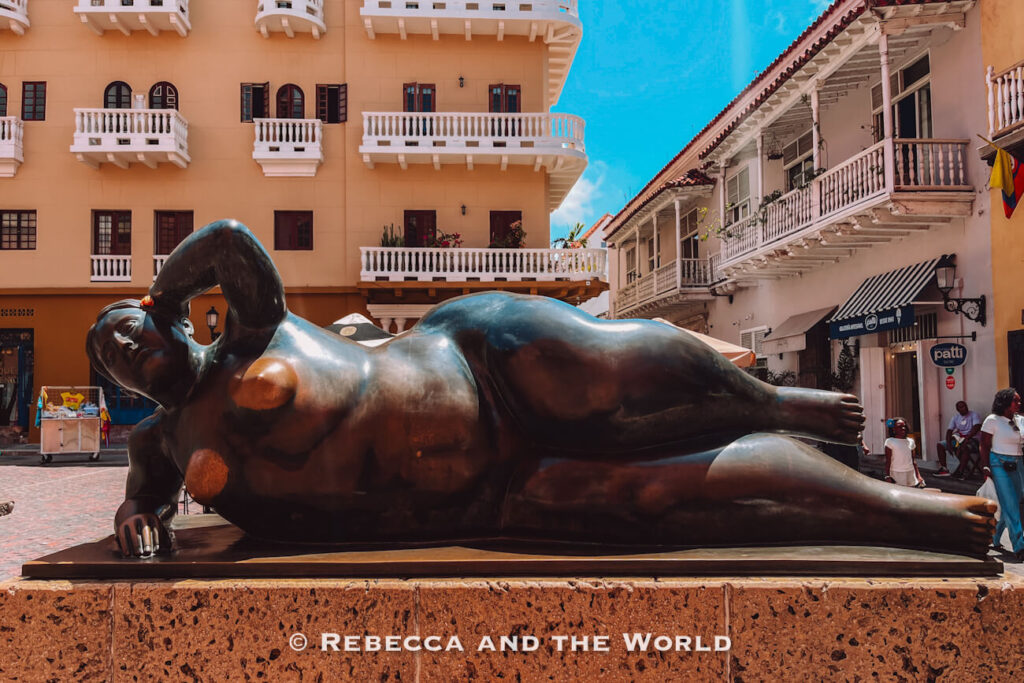
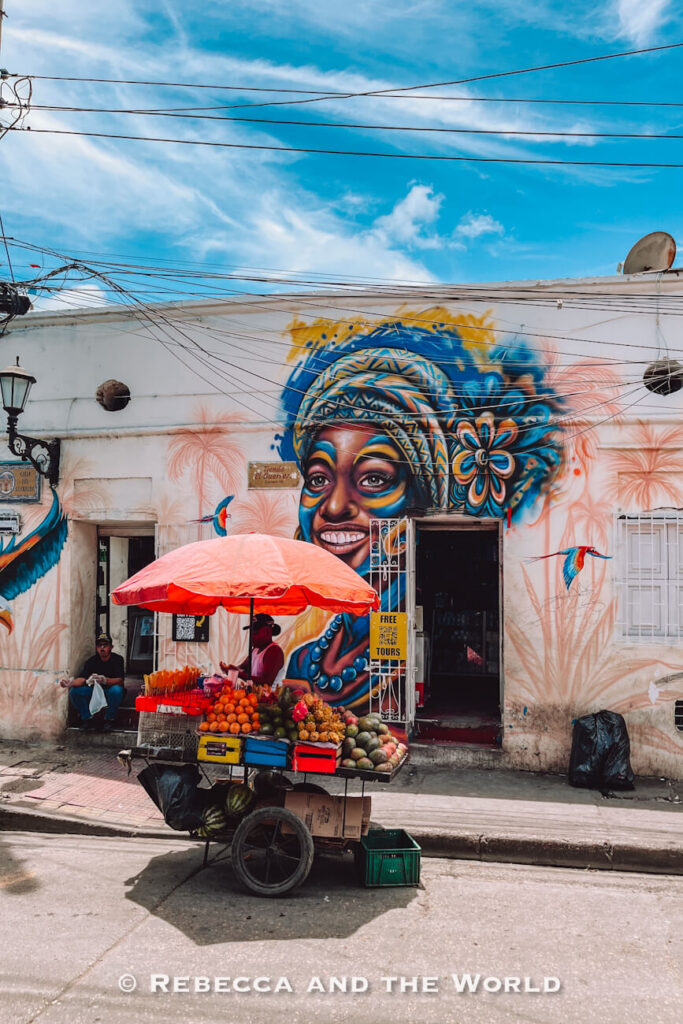
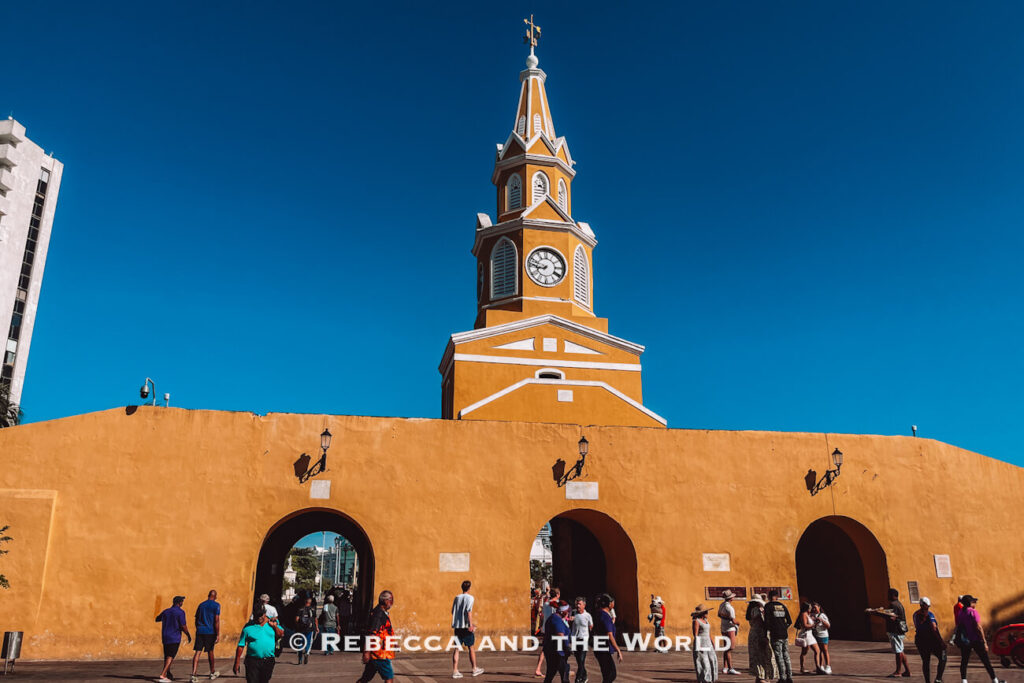
The route hits key places like the Plaza de los Coches and the Plaza de la Aduana, and more hidden places like the outdoor display of all the winners of Miss Colombia. It finishes in Getsemaní passing some of its most photogenic and colourful streets.
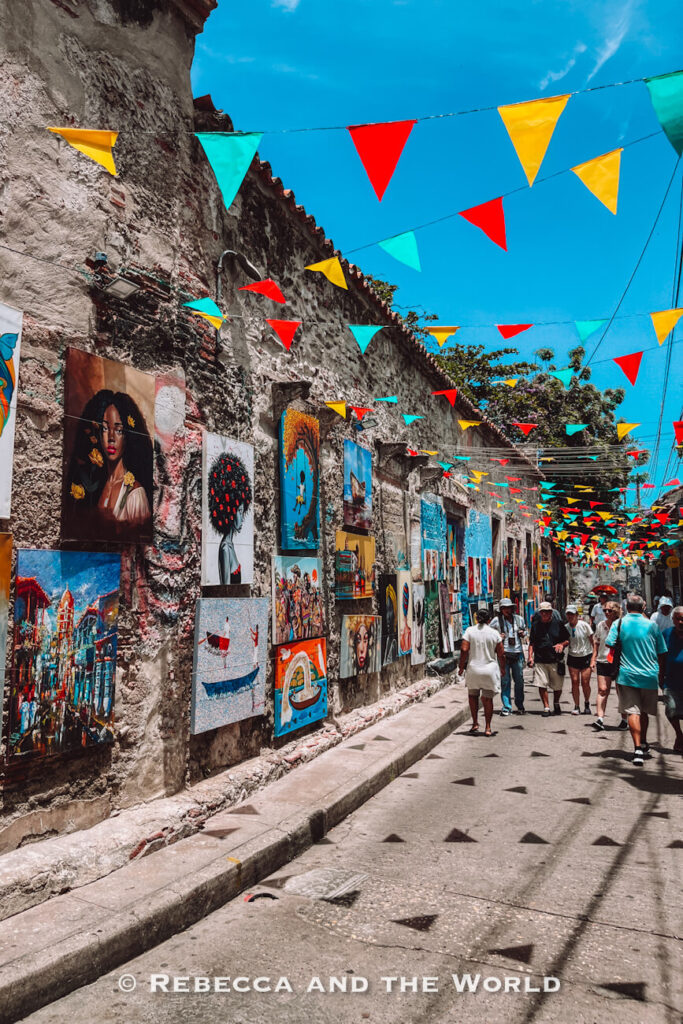

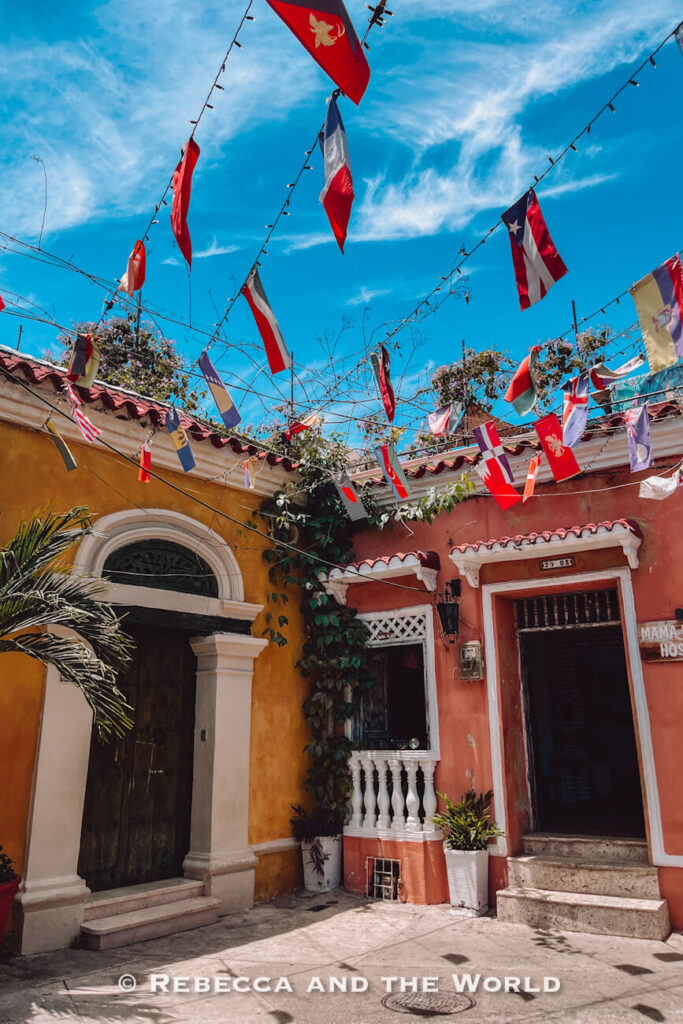
One of the highlights for me was walking through Parque Centenario, where we spotted a baby sloth and a couple of cotton-top tamarin monkeys (ridiculously cute!). Please don’t feed any of the animals!
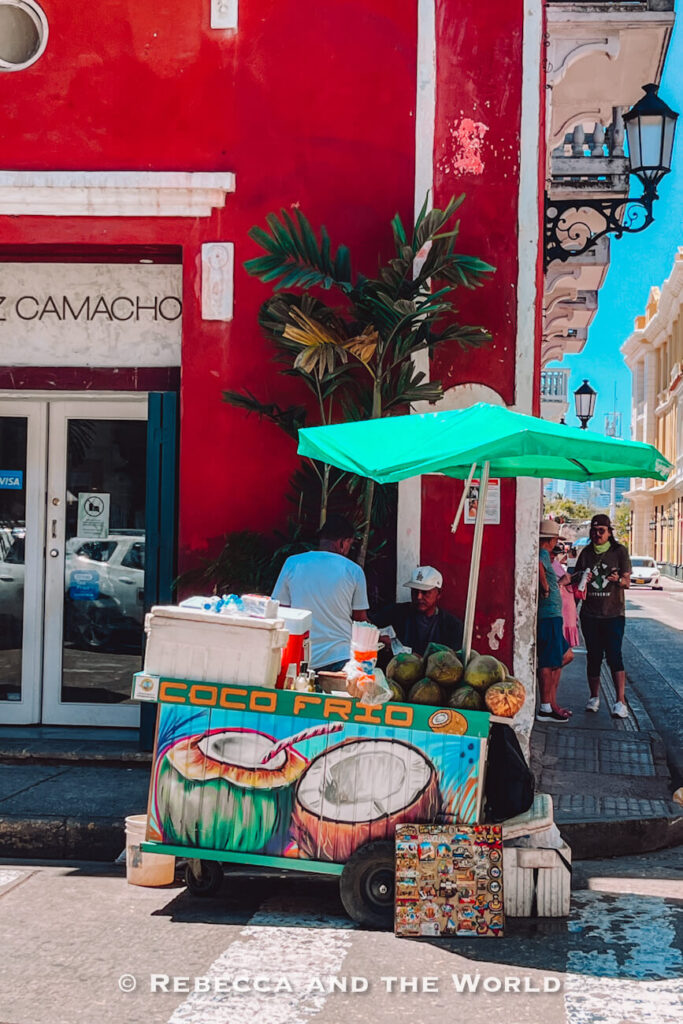
Alvaro also shared plenty of practical tips and local recommendations, and we stopped along the way to try fresh lime juice from street vendors – perfectly refreshing in the heat.
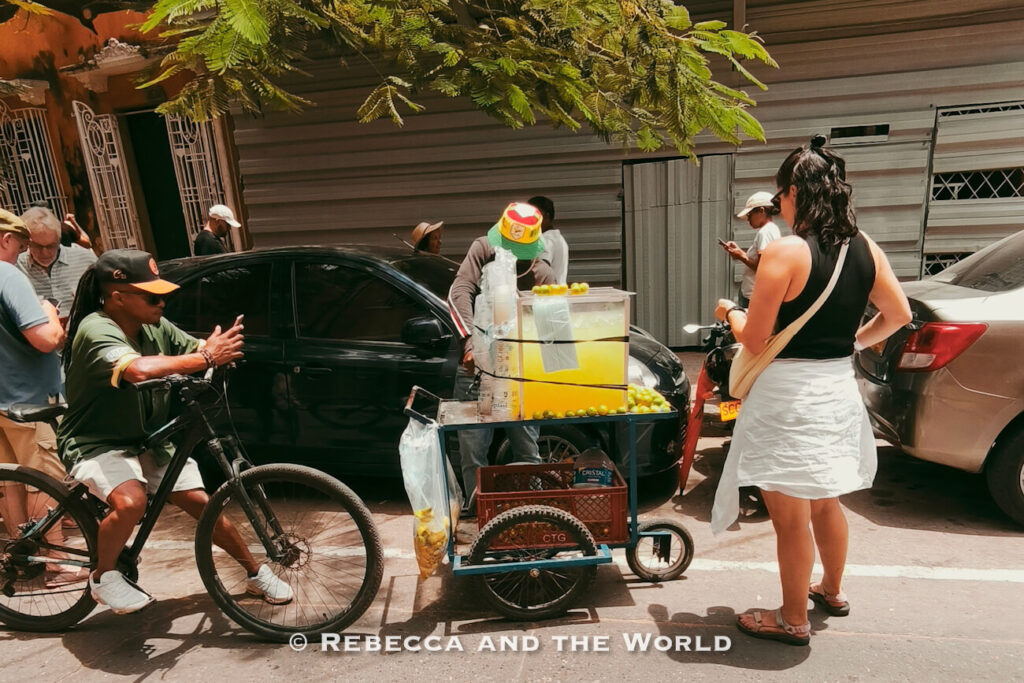
While the tour is “free”, guides work off tips. We tipped COP$50,000 each.
Bring water, a hat, sunscreen, a shirt to cover up (I got burnt despite trying to find shade!) and wear comfy shoes. The great thing is that people sell all these things on the street, so if you forget something you’ll be able to buy it along the way!
👟 BOOK THE CARTAGENA WALKING TOUR HERE 👟
Lunch
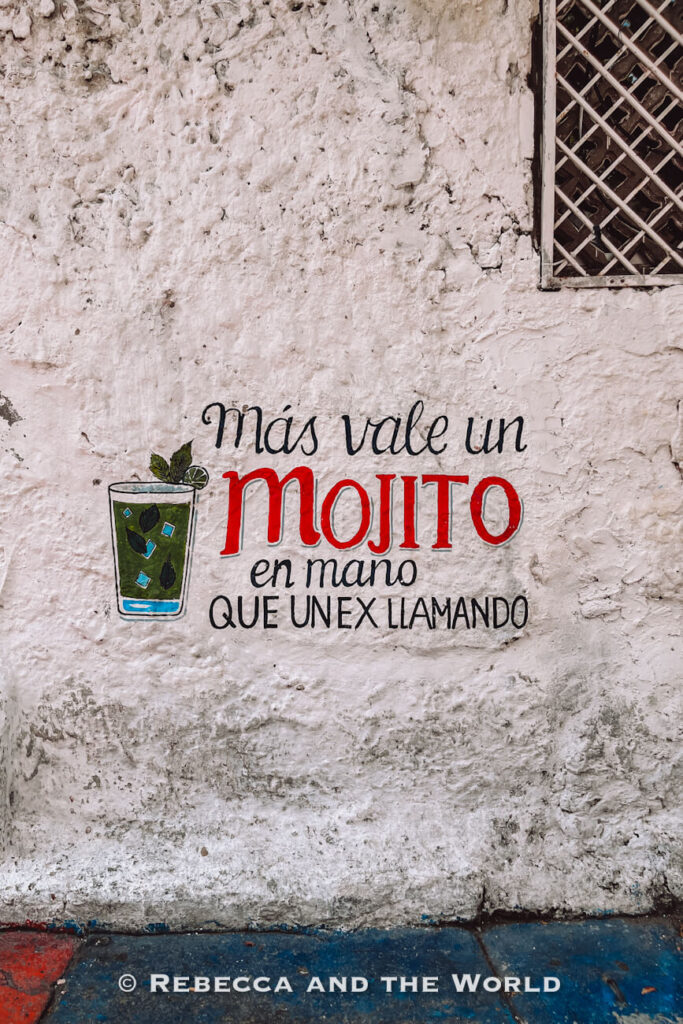
The tour finishes in Getsemaní, where there are plenty of options for lunch. There are loads of options along Carrera 10, from super casual to more polished, so you can choose based on your budget and mood. We ate at El Cabildo Gastromar. It felt fairly local but was on the pricier side, and honestly, the food wasn’t amazing. My coctel de camarones was disappointing but my husband’s patacones dish was delicious.

Afternoon
After lunch, head back to Centro Histórico and spend a few hours exploring one of the city’s many museums.
Choose from:
- Museo del Oro to learn all about gold – the museum is home to exquisite gold artefacts crafted by the Zenú people, famous for their skilled craftsmanship
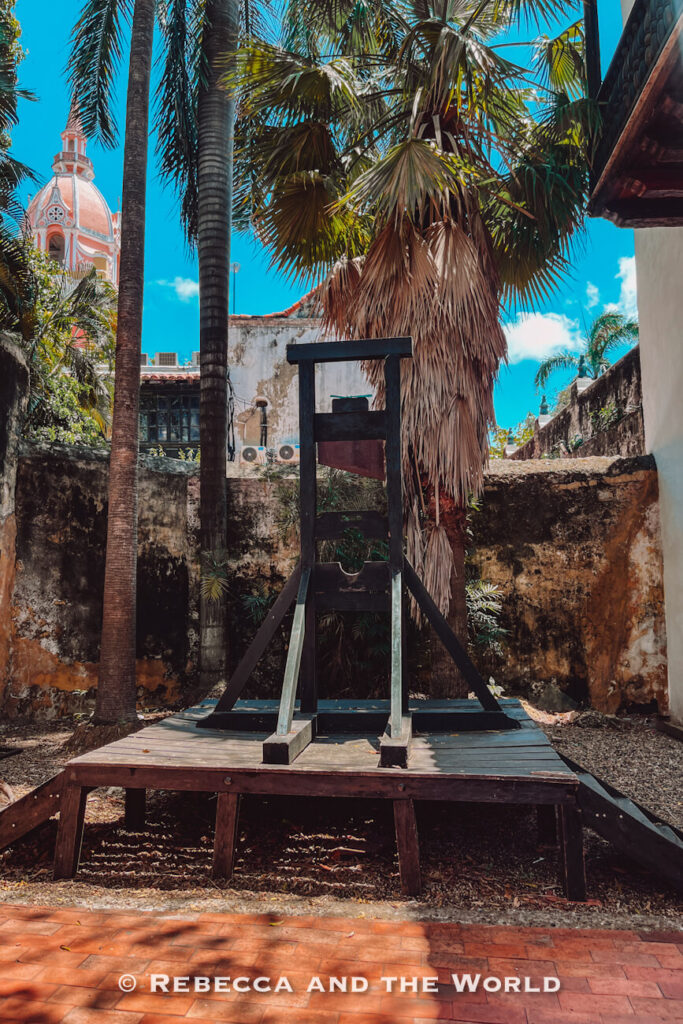
- Museo Histórico de Cartagena for a broader look at the city’s story, with a particular focus on the brutal Spanish Inquisition period in which hundreds of people were executed
- Museo Naval del Caribe if maritime history is your thing – this is one of the best things to do in Cartagena with kids as they have some fun interactive exhibits where you can pretend you’re in a submarine or flying a helicopter!


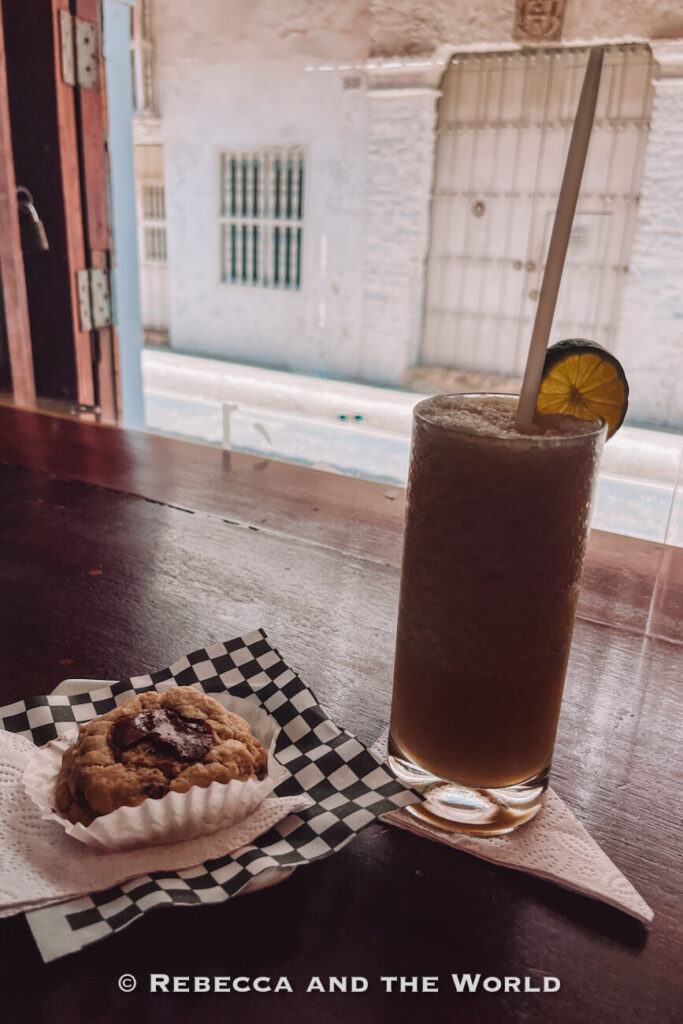
Afterwards, visit Ábaco Libros y Café, where you can hide from the sun with an iced coffee or agua de panela (sugar water) or limonada de coco.

Evening
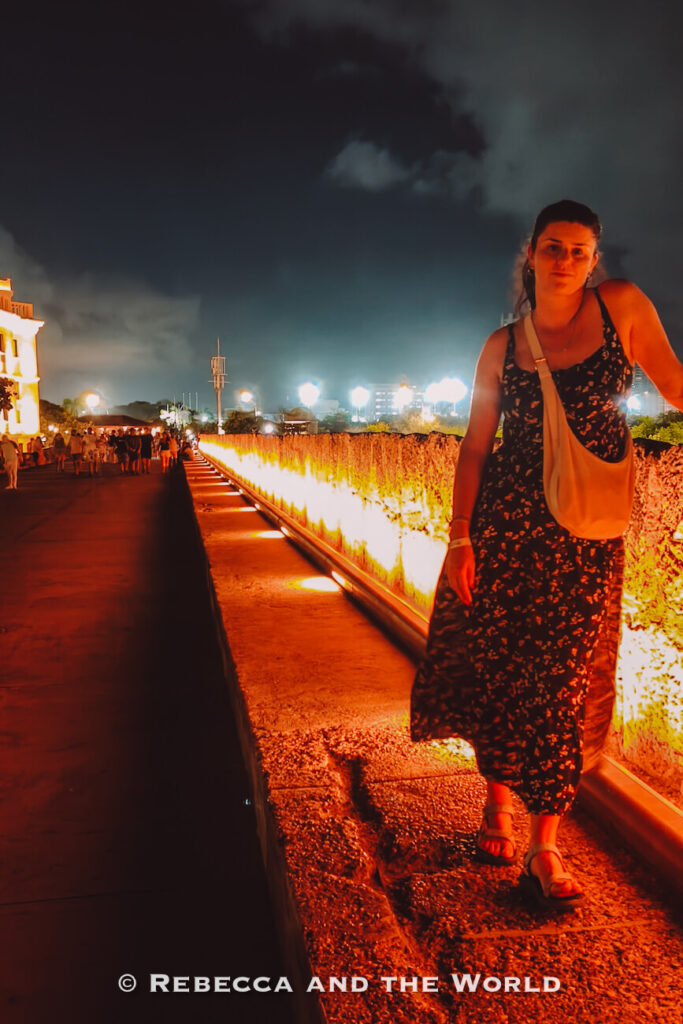
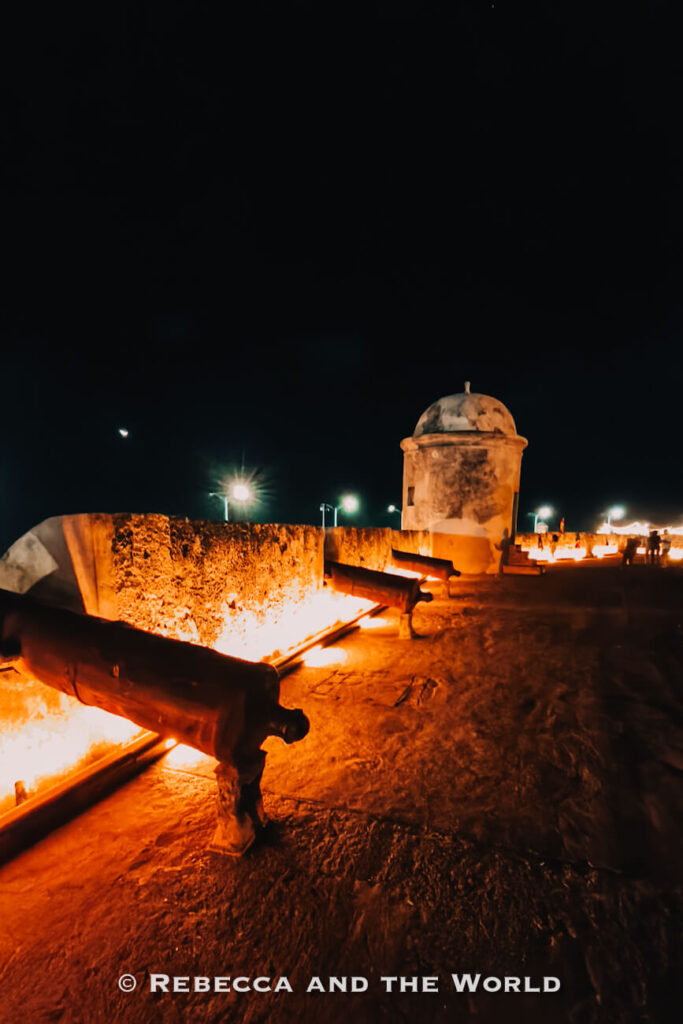
After a break and time to freshen up, head out to walk the fort walls – one of the best things to do in Cartagena at sunset. Cartagena is wrapped by around 11km of stone walls, built over nearly two centuries to protect the city from pirate attacks and invasions. It’s much easier to appreciate the scale of it all when you’re up there looking out over the Caribbean.
The views are gorgeous and, more importantly, it’s the coolest and most comfortable time to be up there. We made the mistake of doing part of the walls in the late morning (rookie move) and it was brutally hot with very little shade. Sunset is a completely different experience.
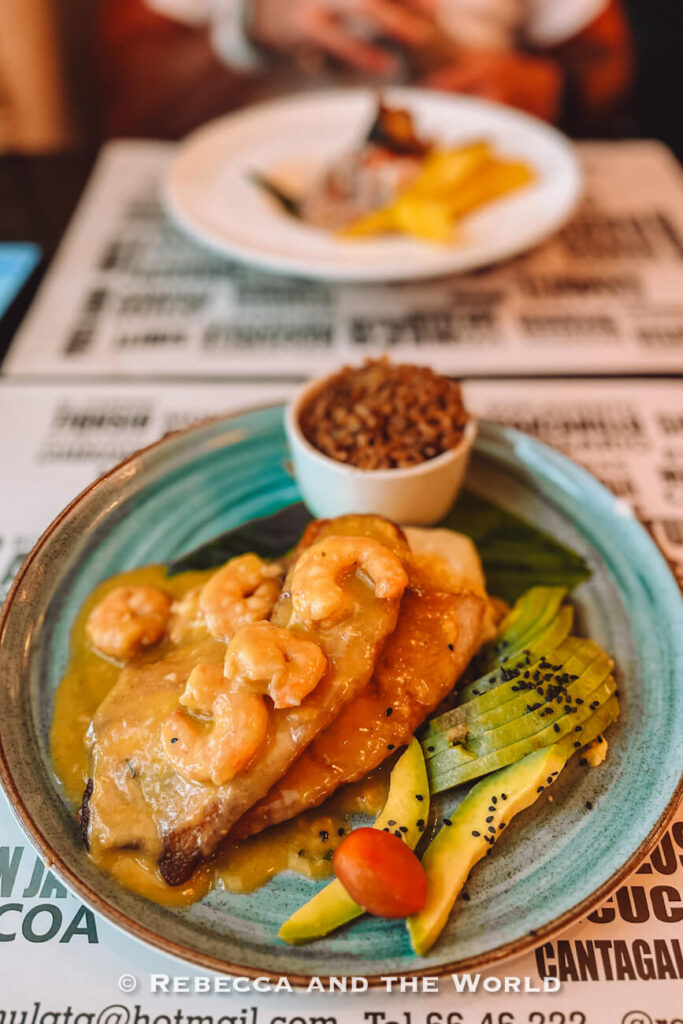
Finish your first day with dinner at La Mulata. It’s relaxed, easy and focused on local flavours. If you like seafood, order the filete camarón – a piece of firm white fish smothered in coconut sauce with prawns.

Day 2: Castles, street food and cocktails
Morning
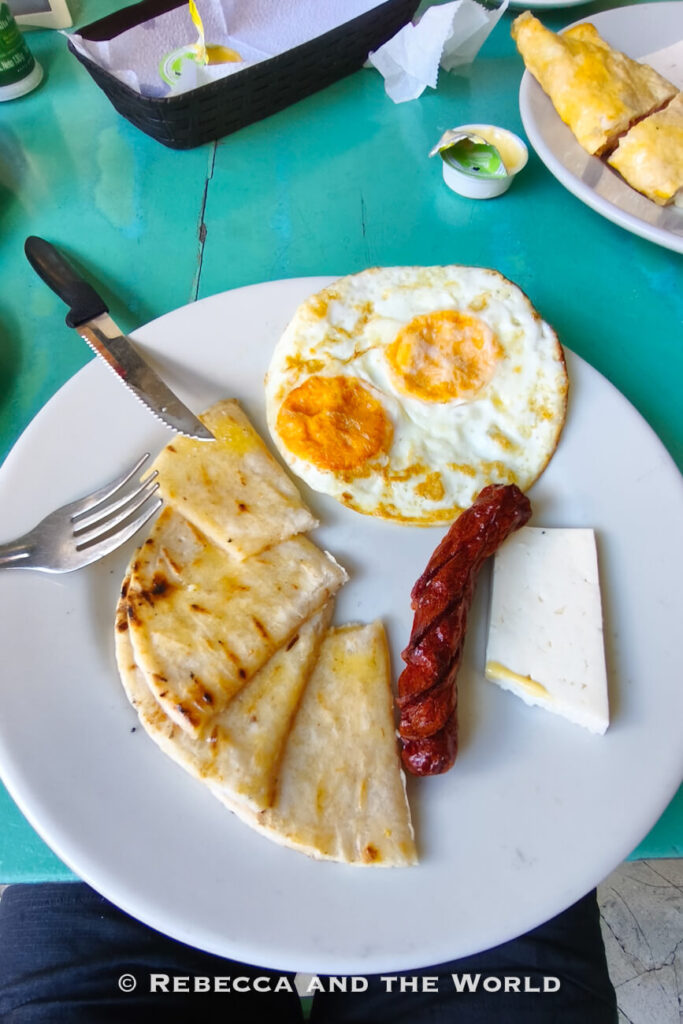
Start the day at Restaurante Bar La Estrella. It’s a super local spot in a great location, with big, tasty breakfasts at good prices. We ate here multiple times during our trip (it was around the corner from our accommodation), which is usually the best endorsement I can give a place.

From here, head straight to Castillo de San Felipe de Barajas and aim to arrive early (it opens at 7am). This is one of Cartagena’s most impressive sights, but it’s exposed and it heats up quickly, so the earlier you go, the better. This was the largest and most important fort for defending the city, built in 1657.
Inside, it’s worth giving yourself time to do more than just snap a photo and leave. Walk up for the views, then explore the tunnels and passageways that snake through the fortifications. It costs about US$10 to visit.
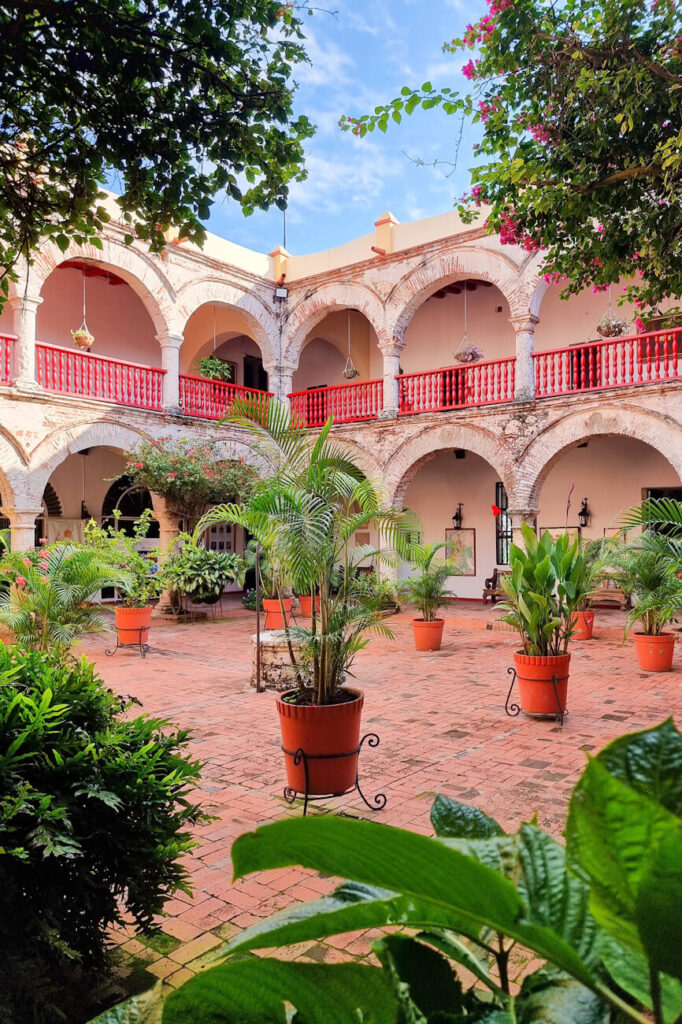
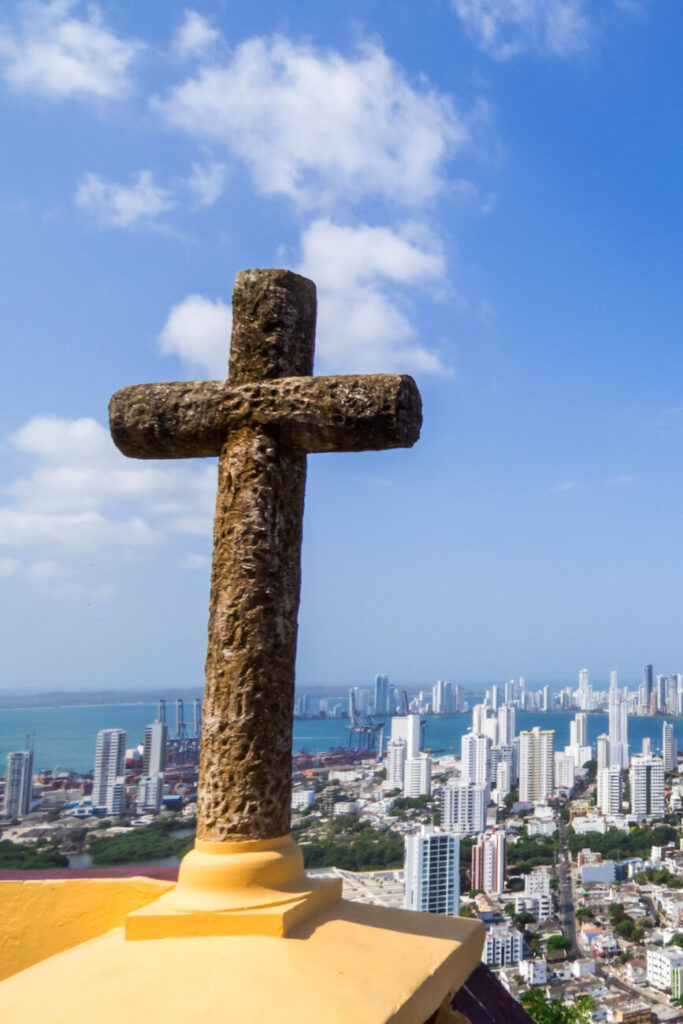
Next up is Convento de La Popa, located on top of Mount la Popa. The building and cloister are really pretty, and a visit here is worth it for the viewpoint alone. It’s also a quick, interesting history hit if you enjoy churches and city stories. Take a taxi or ride-share rather than trying to walk here, especially later in the morning when the heat is building.
Lunch
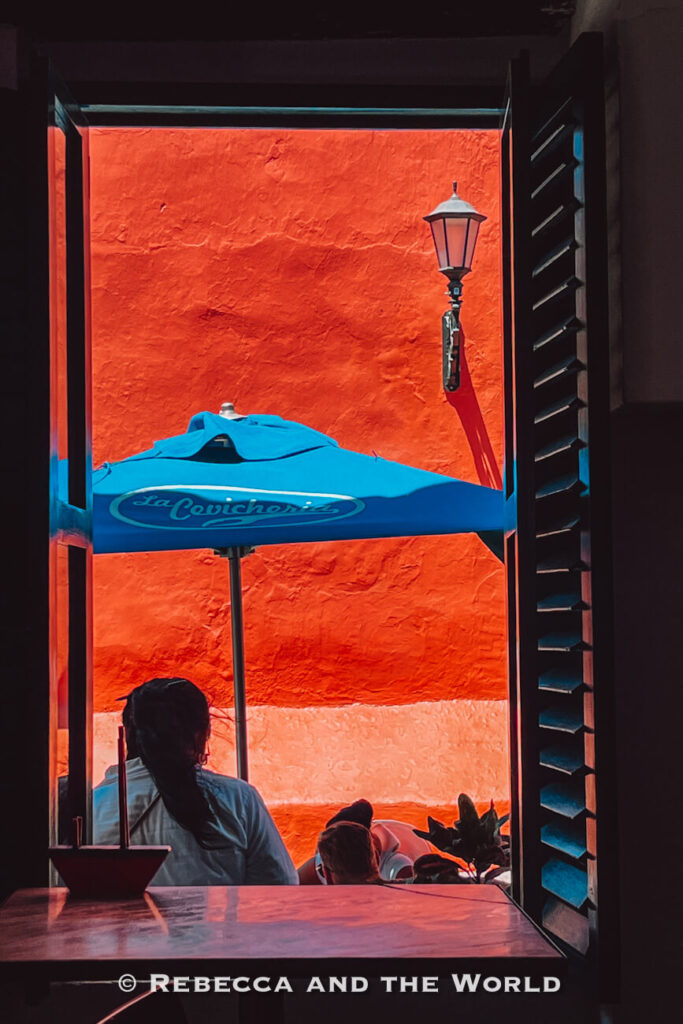
Head back into Cartagena for lunch at La Cevichería. It’s popular, however, so it’s best to aim for an earlier lunch or a slightly later one if you can.
You can order Colombian- or Peruvian-style ceviches. I loved the sweet and tangy flavour of the Ceviche Colombiano, but I was also quietly jealous of the table next to us who ordered the mixed seafood ceviche with a coconut and lime dressing. Don’t eat too much, though, because there’s a lot more food to come today!

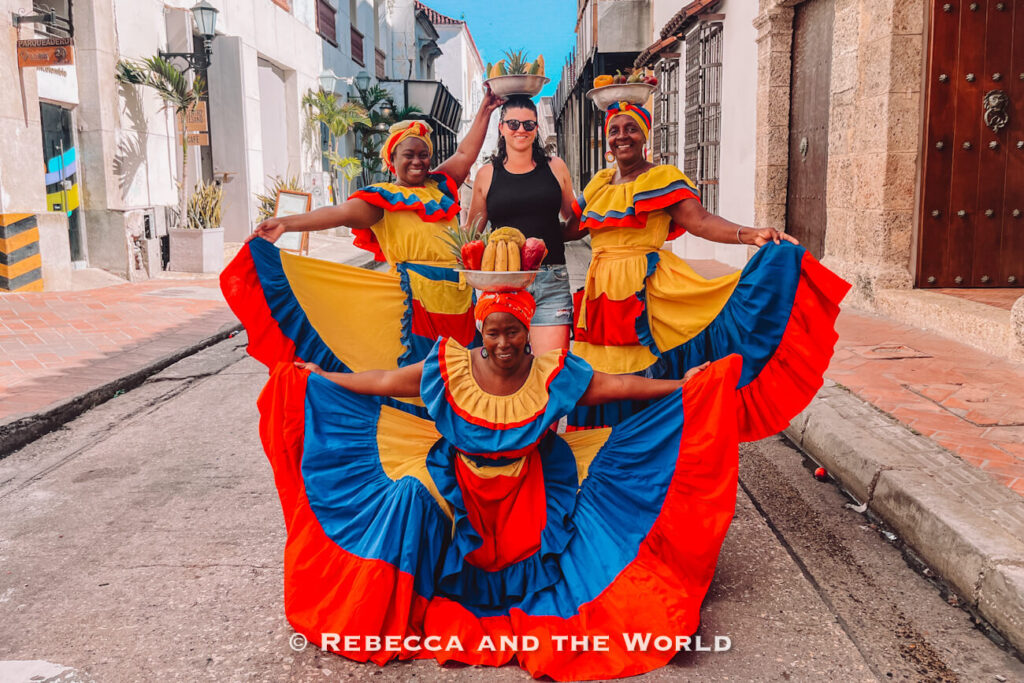
As you wander around the streets over 3 days in Cartagena, keep an eye out for the colourful Palanqueras – they’ll no doubt beckon you over for a photo. These women are the descendants of Africans who escaped slavery and founded the town of San Basilio de Palenque near Cartagena. You can pay whatever you like – anywhere from COP$20,000 upwards is acceptable.
Afternoon
Cartagena is famous for street food, and a food tour is the easiest way to try a lot of it in a short amount of time. We did this Cartagena street food tour, which introduced us to so many Colombian dishes. You can read my full street food tour in Cartagena review here.
Over a few hours we tried things like cóctel de camarón (shrimp cocktail), cheese arepas, egg arepas, chicken empanadas, plus sweets and fruits we’ve only ever come across in Colombia. It’s a fun, filling few hours and great value for what you get.
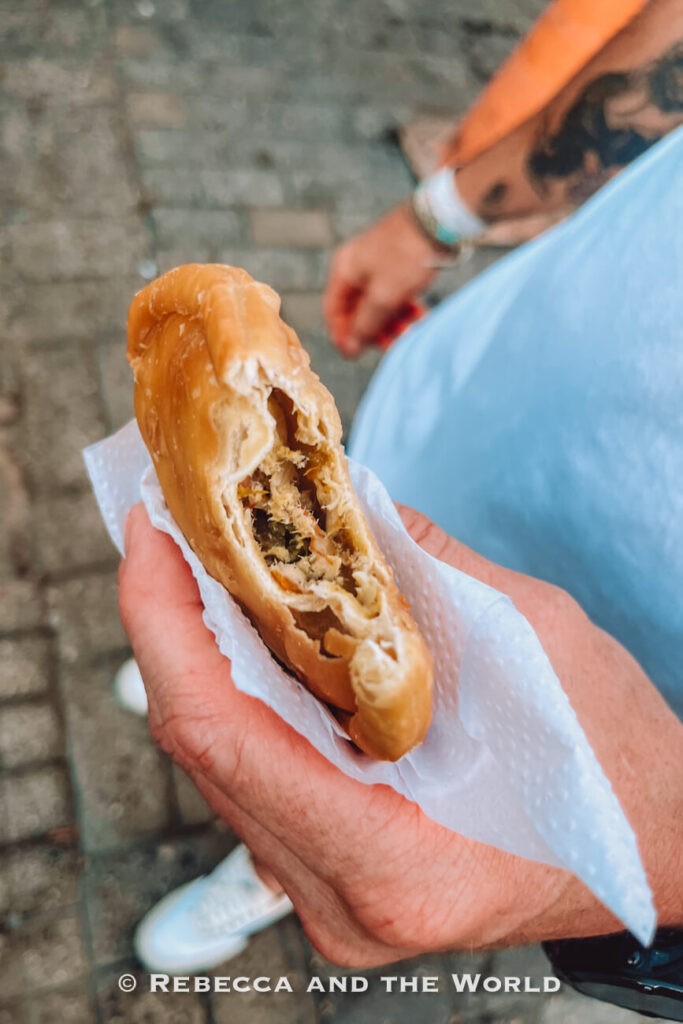
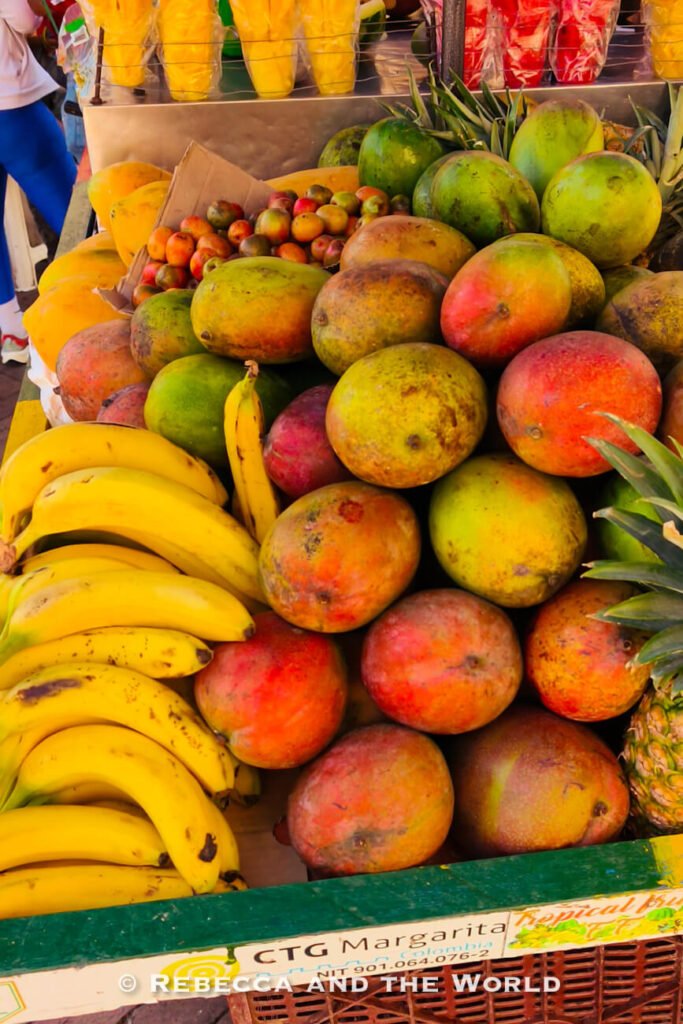
The street food tour starts at 4pm, which is perfect timing. You’ll be out when the worst of the heat has passed, and you’ll get a crash course in what’s actually worth trying – and can go back to your favourite vendors later.
🍤 BOOK A CARTAGENA STREET FOOD TOUR HERE 🍤
Evening
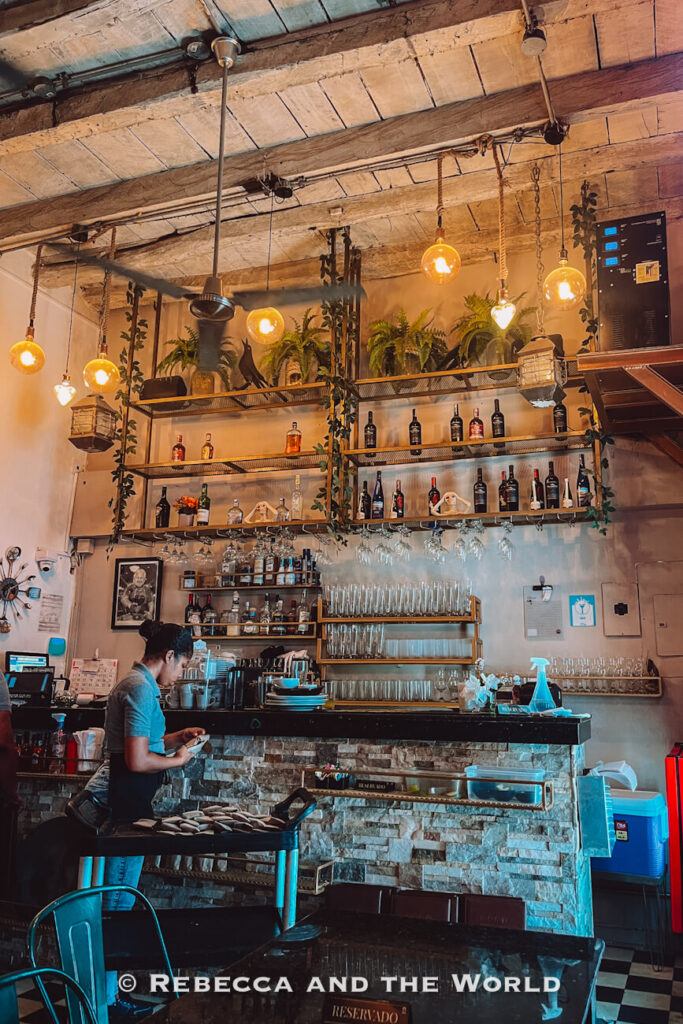
After the tour, grab a drink at one of Cartagena’s many cocktail bars. Alquímico is lively and atmospheric, spread across three levels. It’s number 11 on the list of the World’s Best Bars, so you can bet it’s busy. Try to be there at 7pm when the doors open to get a table (they don’t take reservations) because the line gets long quickly.


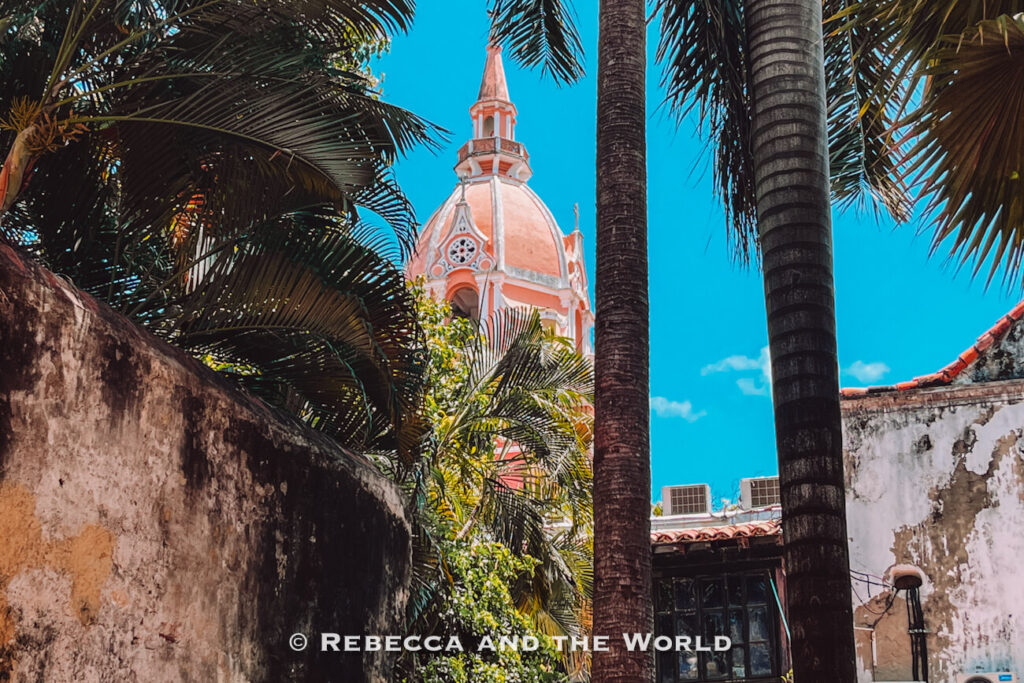
El Barón is another excellent cocktail bar. You can sit inside, where there’s only a handful of seats, or choose their larger outdoor area with views of the church.


Day 3: A day trip from Cartagena and a night out in Getsemaní
Day 3 is your choose-your-own-adventure day. By now you’ve had a solid dose of Centro Histórico and Getsemaní, so get out of the city for a change of scenery.
Option A: Rosario Islands boat trip
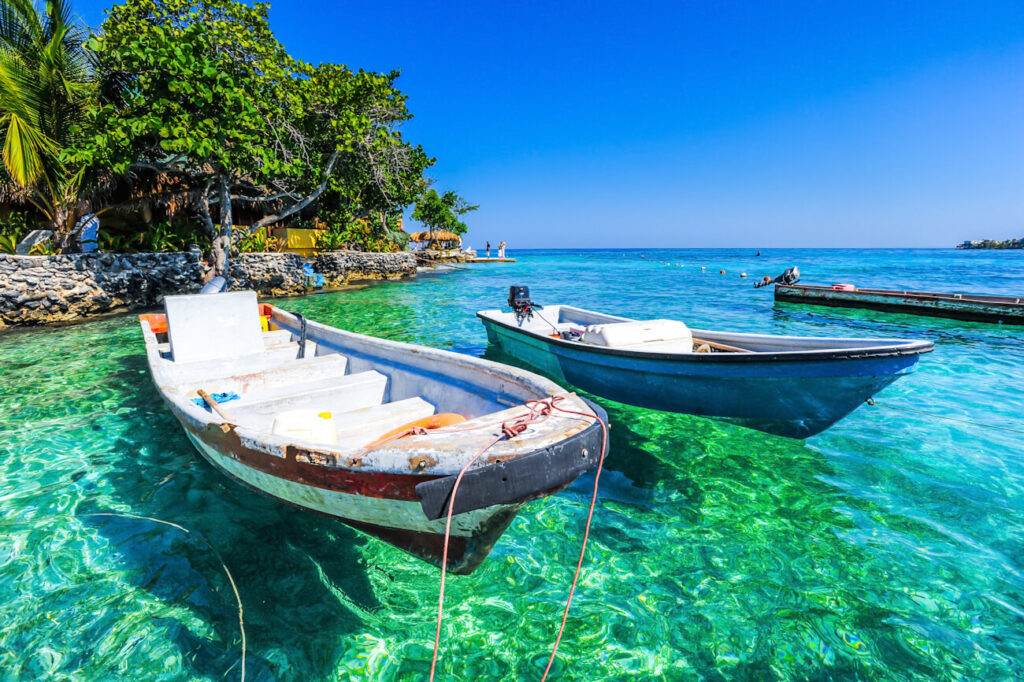
The Islas del Rosario are a small Caribbean archipelago off the coast of Cartagena, best known for turquoise water, patches of coral reef and snorkelling. Many trips focus on the marine side of things, because the islands sit within the Rosario and San Bernardo protected area, created to safeguard the coral ecosystems.
There are dozens of day trips to the islands. Some trips are multi-stop island hopping days, while others take you straight to one island or beach club where you’ll spend the day swimming, snorkelling and doing very little else. If you’ve found Cartagena intense, the second option is usually the better one.
It’s a full day with an early start. The islands are roughly one to two hours by boat depending on the type of boat and where you’re going, so it can be an early start to the day. Boat rides can also be rough, so pack some motion sickness tablets if you’re at all prone to seasickness.
Other things to take with you on the trip are reef-safe sunscreen, cash, a towel and a dry bag for your phone and valuables.
Here are some recommended tours. Just know that some can be party boats, so read the reviews carefully and decide depending on what kind of day you want!
Option B: San Basilio de Palenque

If you want a day trip that gives you deeper context about Colombia’s Caribbean coast, Palenque is a meaningful choice. San Basilio de Palenque is famous for its Afro-Colombian heritage and living traditions, and UNESCO recognises the “cultural space of Palenque de San Basilio” for its rich oral traditions, music, social practices and community cultural life.
A Palenque day trip is a full-day outing from Cartagena. You’ll visit key monuments, learn about local traditions and music and share a meal. This is not a place to rush through for photos. The best visits feel more like being welcomed into a community than ticking off an attraction, so it’s worth choosing a tour like this one that’s clear about how the visit supports local people.
Option C: La Boquilla

If Palenque feels like too big a day or you want something close to Cartagena that still feels different from the Walled City, La Boquilla is a great alternative. It’s a fishing village just 15 minutes outside the city with strong Afro-Caribbean roots, and it’s known for its mangrove ecosystems and community-led experiences.
This is where you can swap crowds for nature and culture. You can explore the mangroves with a local fisherman, go fishing for crabs and cook them up, or take a hands-on traditional drumming and dance workshop.
It’s an excellent option if you want to see more of everyday life on the coast and spend time on the water without committing to a full boat day out to the islands. It can also be a really nice way to take a break from intense Cartagena, because the pace is slower and the focus is on the environment and community rather than sightseeing.
Option D: Totumo Mud Volcano (mud baths)
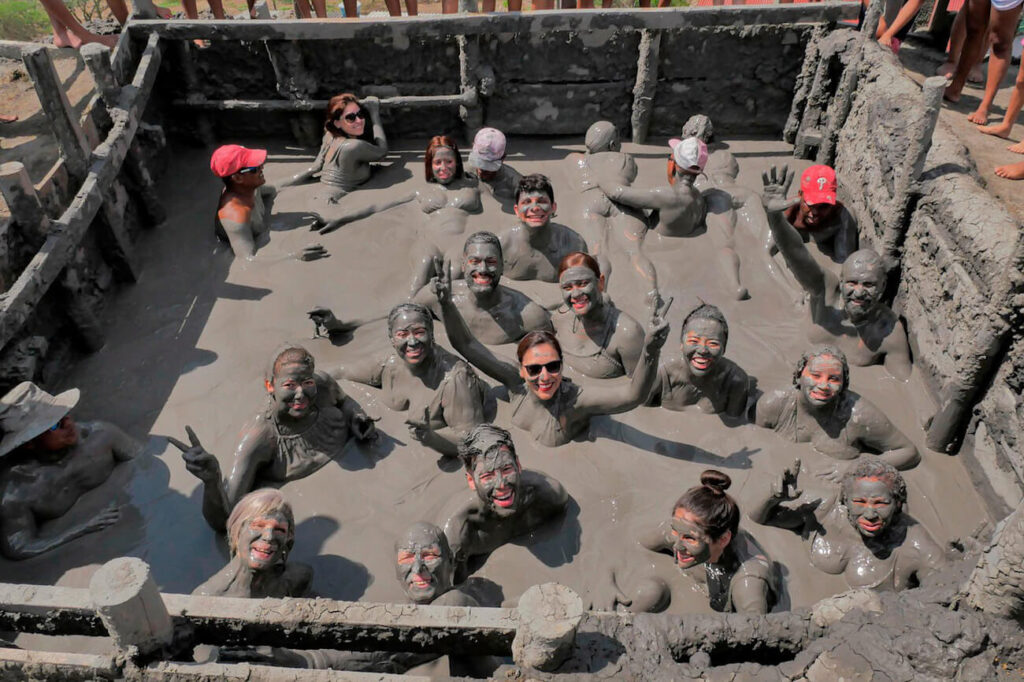
Want to slather yourself in volcanic mud? You can do that! Take a day trip from Cartagena to Volcán de Lodo El Totumo, usually just called the Totumo Mud Volcano. It’s a small mud volcano about an hour or so from Cartagena, where you climb a short staircase to the top and then climb down into a crater filled with warm, thick mud. The mud is so dense you basically float.
Wear swimmers you don’t care about (the mud gets everywhere), bring a change of clothes, and pack a small dry bag for your phone and valuables. After you’ve had your fill of floating, you usually rinse off in a nearby lagoon, and there are attendants who help you in and out. Tipping is part of the routine here, so it’s worth having small notes on hand.
Back in Cartagena
However you spend the day, plan to get back in the late afternoon or early evening and properly reset. Shower, pool (if your hotel has one), short nap, cold drink.
Evening
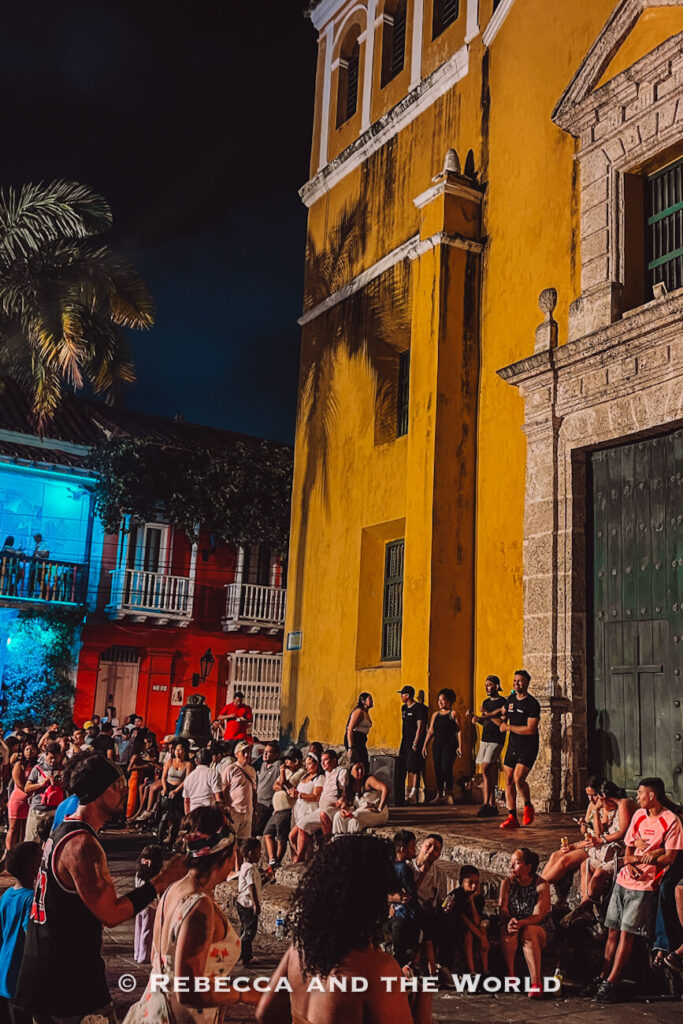
Head to Getsemaní for your final night. Start at Plaza de la Trinidad and just soak it up. It’s people-watching central, with every kind of street food within arm’s reach. When we were there we even saw groups running dance classes in the plaza. I could not keep up with their moves, but it was very entertaining to watch.
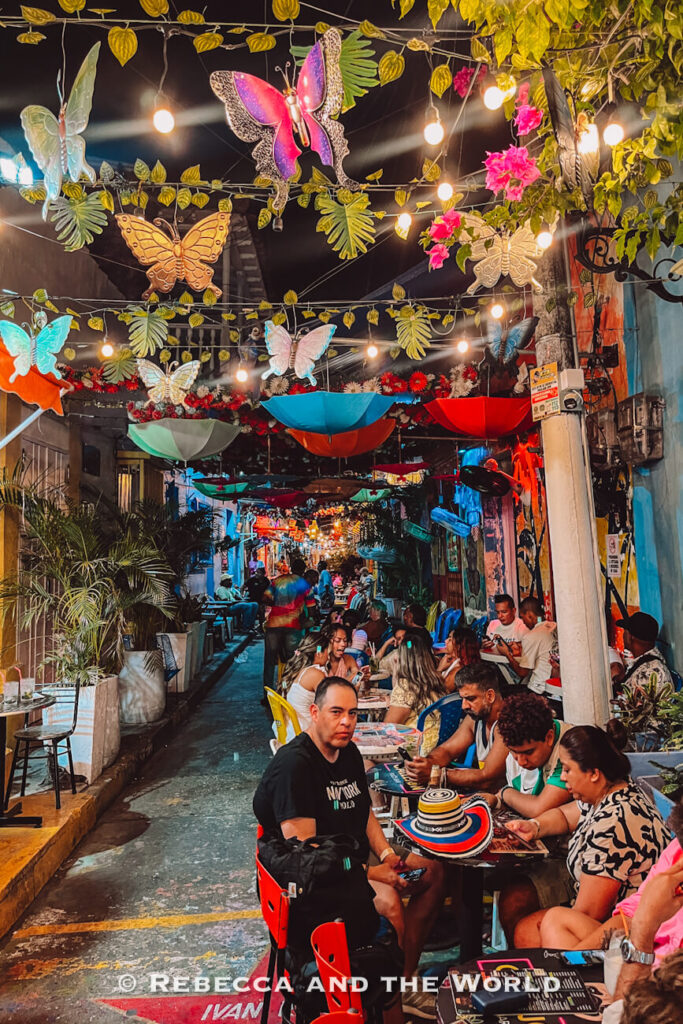
If you’d rather a sit-down dinner, book Celele. It’s ranked 48 on the World’s Best Restaurants, and the flavour combinations we ate here were unlike anywhere else.

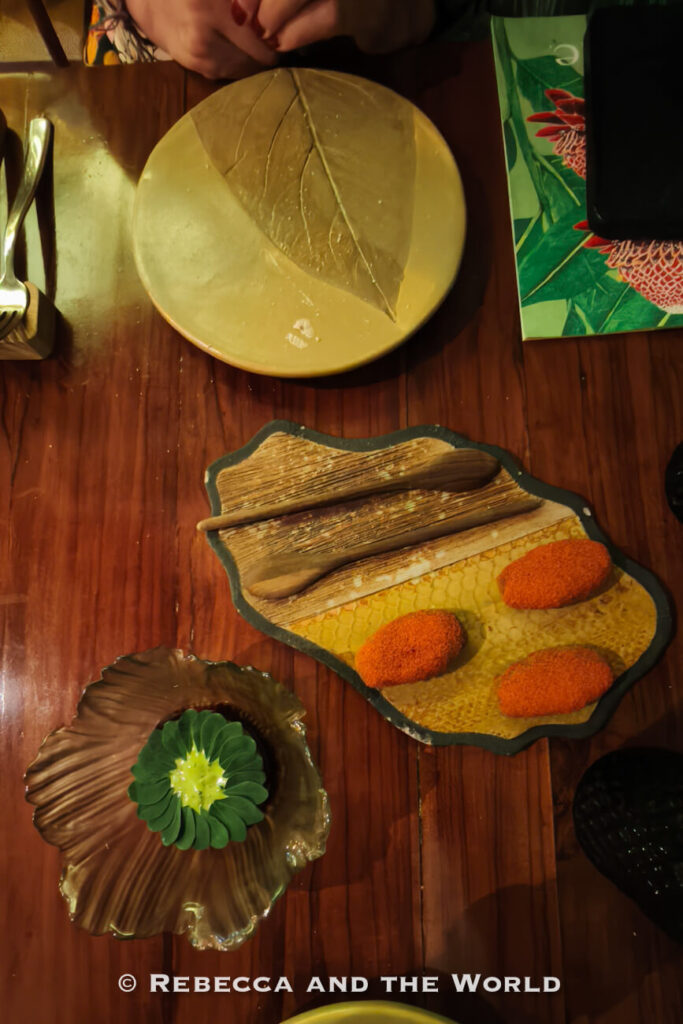
Finish the night at Café Havana with some dancing. It’s famous for its live salsa bands and the sweaty, joyful energy that comes with a packed room of people dancing. Even if you’re not a dancer, it’s still worth going for the atmosphere alone. You can stand near the edges with a drink and watch the locals absolutely own the dance floor.
Where to stay in Cartagena
For this 3 days in Cartagena itinerary, I’d base yourself either in inside the Walled City or Getsemaní. Both keep you walking distance from most of what you’ll do on Days 1 and 2, and you can still easily bounce between the two neighbourhoods in the evenings. Accommodation is generally more expensive than in Getsemaní.
Centro Histórico (Walled City)
If it’s your first time in Cartagena, staying inside the Walled City makes everything easy. You can walk to most major sights, dip back to your hotel for a break, and be out again for sunset and dinner within minutes. This is where we stayed so we could be close to everything, but still walk to Getsemaní at night.
Best hotels in Cartagena historic centre:
- Budget: Casa Movida – A social, colourful hostel right within easy walking distance of the Clock Tower and the main sights. It has air-conditioned rooms (including private rooms if you’re not keen on dorms) plus a small pool and a rooftop area. Check prices and availability at Casa Movida.
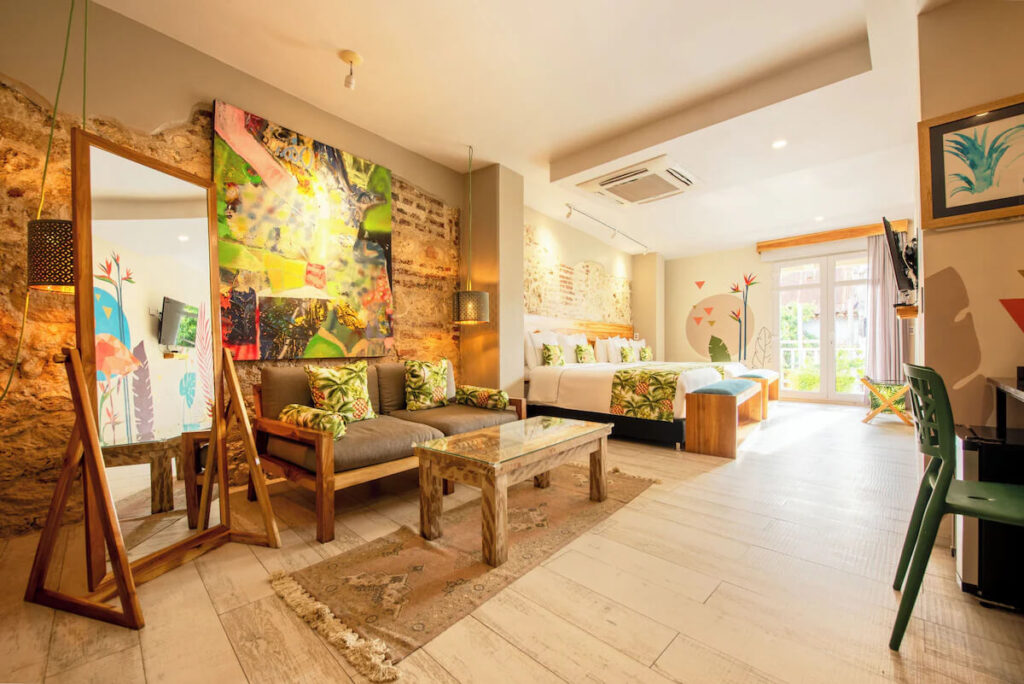
- Mid-range: Townhouse Boutique Hotel – A fantastic option with a pool. The rooms are filled with Colombian art, and there’s a rooftop bar and jazz club. Check prices and availability at Townhouse.
- Treat: Movich Hotel Cartagena de Indias is a popular splurge stay in the Walled City, with a rooftop pool with amazing views over the city’s historical buildings. Check prices and availability at Movich Hotel.
Getsemaní
Getsemaní is more local and more lived-in, with street art, small bars, and plenty happening after dark. It’s great if you want to end your nights around Plaza de la Trinidad, but you do need to choose accommodation carefully – some streets are noisy.
Best hotel in Getsemaní:
- Budget: Maloka Boutique Hostel – Design-led hostel with a rooftop terrace and free breakfast, in a quieter spot between Getsemaní and the historic centre. While it’s a hostel, there are only private rooms available. Check prices and availability at Maloka.
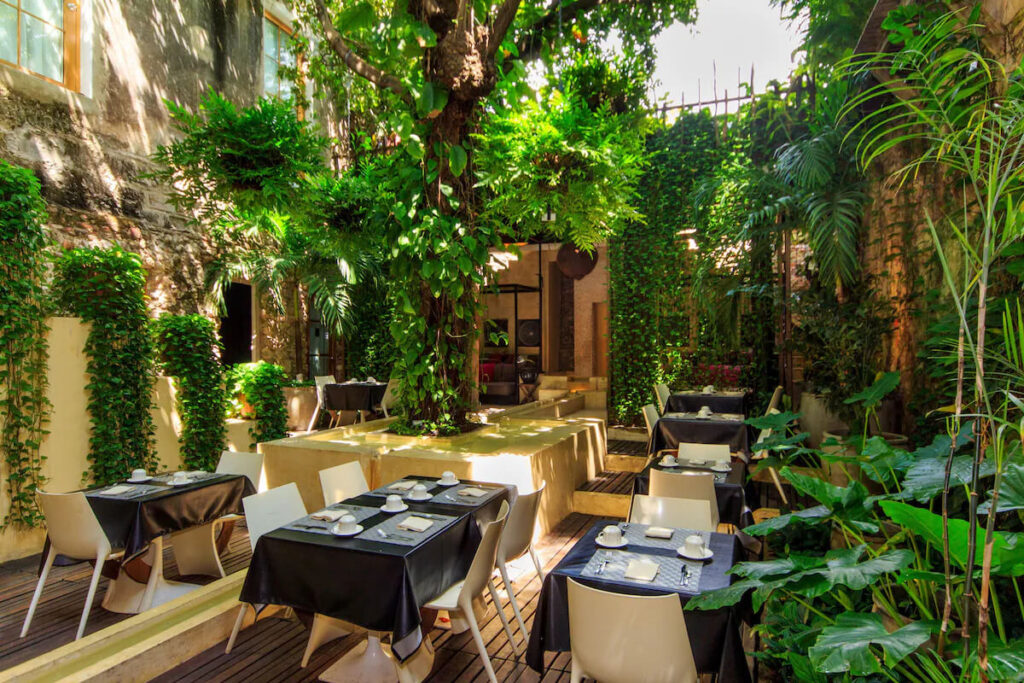
- Mid-range: Hotel Casa Pizarro – Boutique stay with a courtyard pool and breakfast served on the rooftop terrace. Rooms are huge, and most have balconies overlooking the patio. Check prices and availability at Hotel Casa Pizarro.
- Treat: Hotel Casa Lola Deluxe Gallery – Gorgeous boutique hotel in a pastel-coloured building with a patio filled with plants. It’s super stylish and close to restaurants and bars. Check prices and availability at Hotel Casa Lola.
Bocagrande
Bocagrande is the modern high-rise strip by the water. It’s got bigger hotels, beach access and resort-style facilities, but it’s much less atmospheric than the old town. You’ll also be relying on taxis or ride-shares to get into Centro Histórico and Getsemaní.
Best hotels in Bocagrande:
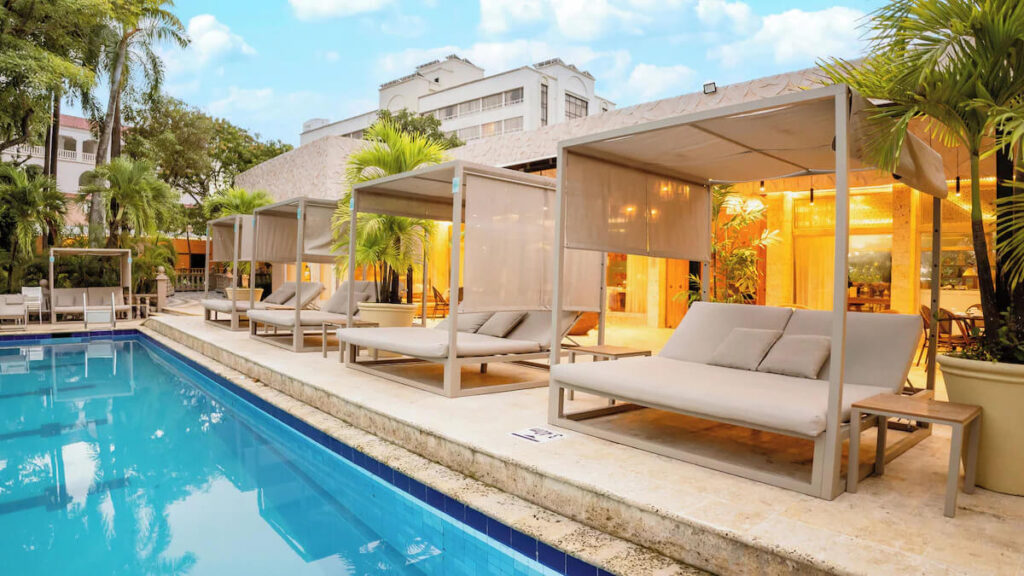
- Mid-range: InterContinental Cartagena De Indias – The hotel brand you know and love, right by the beach. There’s a poolside bar, rooftop terrace and on-site spa. Check availability and pricing at InterContinental Cartagena.
- Mid-range: Hotel Caribe by Faranda – Huge, resort-style hotel with a private beach. Rooms are modern and spacious – book one with an ocean view. Check availability and pricing at Hotel Caribe.
Visit Cartagena: Know before you go
When to visit Cartagena
Cartagena is hot and humid year-round. The driest, sunniest period is generally December to April, which also happens to be peak season, so expect higher prices and bigger crowds. The wetter season is usually May to November, with more humidity and heavier downpours. It can still be a great time to visit if you’re happy to plan around rain showers.
How to get to Cartagena
Cartagena’s airport is Rafael Núñez International Airport (CTG), and it’s connected domestically to Bogotá, Medellin and Calí. There are international flights to Lima, Atlanta, Miami, Madrid, Amsterdam and Milan.
✈️ CHECK FLIGHTS TO CARTAGENA HERE ✈️
The airport is close to the historic centre, so transfers are usually quick unless traffic is crawling. The simplest options are an official taxi from the airport rank, a ride-share, or a pre-booked private transfer. If you use a ride-share from the airport, follow the in-app pickup instructions carefully, as pickup points can vary. Uber will usually require a pin code.
There are also plenty of buses to Cartagena from Santa Marta and Palomino. Long-distance buses run between Cartagena and Medellin (12 hours) and Cartagena and Bogota (22 hours).
🚌 CHECK BUS SCHEDULES AND PRICING HERE 🚌
Getting around Cartagena
Within Centro Histórico and Getsemaní, walking is often the best option. The streets are narrow and busy, and traffic congestion can make short drives surprisingly slow. It can genuinely be quicker to walk than to get in a car and crawl around the old town.
That said, footpaths can be narrow and crowded, so you may find yourself stepping briefly onto the road to pass slower groups, especially at peak times.
For longer distances, or for anything uphill and exposed like La Popa, taxis or ride-shares make life easier in the heat. Uber and Cabify operate in Cartagena, and taxis are everywhere.
Start early, hide midday
Cartagena is hot. This itinerary is built around Cartagena’s daily rhythm for a reason. Do your sightseeing in the morning. In the afternoon, plan a proper break: long lunch, a nap or your hotel pool. Then go back out for sunset, dinner and drinks when the city is cooler and more manageable.
Is Cartagena safe?
Cartagena can feel intense in tourist-heavy areas, mostly because you’re approached constantly. Expect touts, “helpful” strangers, being offered drugs and menus without prices in some places.
My default approach is boring but effective: keep walking, smile and don’t engage. If someone starts with “Where are you from?”, you don’t owe them an answer. This is especially true with the freestyle rappers you’ll see around the historic centre, who can be pushy if you stop. You’ll also likely be offered drugs at some point, particularly at night. The easiest response is no eye contact, no conversation and keep moving.
Overall, however, the city is generally safe. As one of Colombia’s most touristed cities, there’s a strong police presence. Keep an eye on your drinks and don’t flash valuables around. Take an Uber if you’re uncomfortable walking at night.
Money, cards and tipping
Cards are accepted in most restaurants and bars you’ll visit on this Cartagena itinerary, but it’s still worth having cash on you for small purchases like a lime juice and for tips on tours.
In restaurants, you’ll often be asked if you want to add a voluntary service charge, usually 10 percent, known as propina voluntaria. You can say yes or no.
What to pack for Cartagena
A reusable water bottle makes a big difference. I use a LifeStraw Go water bottle, which has a membrane microfilter that’s designed to remove bacteria and parasites (and it also filters microplastics), so I can fill up from any tap.
Beyond that: sunscreen and a hat (the sun is no joke), a shirt to protect yourself from the sun, comfortable shoes for cobblestones and mosquito repellent.
Final thoughts: 3 days in Cartagena, Colombia
Cartagena can be a tricky city to “love” in the way Instagram suggests you should. It’s beautiful and full of history, but it’s also busy, hot and relentlessly touristy in parts. The good news is that three days is enough time to see what does make it special.
If you follow this itinerary, you’ll start with the context that makes the Walled City more than just a pretty backdrop, tick off the big sights without doing them in the worst heat of the day, eat extremely well (especially if you do the street food tour) and still have a night out in Getsemaní to finish on a high.
And if, by the end, you’re a little overwhelmed, that’s normal too. Cartagena is intense. But with a plan that builds in breaks and gets you out of the city for a day, it becomes much easier to appreciate the colour, the stories and the moments that make it worth including on a Colombia itinerary.
3 days in Cartagena itinerary: FAQs
Is 3 days in Cartagena enough?
Yes. Three days is enough to spend two solid days exploring Centro Histórico and Getsemaní, then add a day trip to break things up. Any less than three days and it can start to feel rushed, especially once you factor in the heat and the need for midday downtime.
Is Cartagena worth visiting?
Yes, particularly if you enjoy history, colourful architecture, and a strong food and bar scene. Just go in with realistic expectations. Cartagena is very touristy and can feel relentlessly busy in parts, and the heat and humidity can make long sightseeing days hard.
Where should I stay: Centro Histórico or Getsemaní?
For a first trip, Centro Histórico is the easiest base. You can walk everywhere, dip back to your hotel for a break and still stroll to Getsemaní for dinner or drinks. Getsemaní is a great choice if nightlife and a more local-feeling vibe are priorities, but it can be noisy, so pick your accommodation wisely.
Is Cartagena safe for tourists?
Cartagena is a well-trodden tourist city, and most visitors are fine, especially in Centro Histórico and Getsemaní. The bigger issue tends to be constant approaches from touts and people trying to sell you things. The simplest approach is to keep walking, don’t engage and avoid flashing valuables. At night, stick to well-lit busy areas, take a taxi or ride-share if you’re heading further, and don’t feel obliged to be polite to anyone who’s making you uncomfortable.
How hot is Cartagena?
Hot. And humid. In January (dry season), Cartagena averages around 31°C (88°F) during the day. In May (wetter and more humid), the average daytime high is about 32°C (90°F) and nights sit around 26°C (79°F), with the extra humidity making it feel heavier. Plan sightseeing for early mornings and late afternoons, then take a proper break in the middle of the day.
Did you find this article helpful? Consider buying me a coffee as a way to say thanks!
What will you do with 3 days in Cartagena? Let me know your favourite things to do in Cartagena via the comments below!
Related posts
Before you go… you might like these Colombia travel articles:
- Cartagena Street Food Tour: 10 Colombian Foods to Try
- 48 hours in Bogotá, Colombia: The Perfect 2-Day Itinerary for First-Time Visitors
- Bogotá Food Tour: 10 Colombian Dishes to Try in the Capital
- What to Expect on Colombia’s Lost City Trek + An Honest Expotur Review
- Is Santa Marta Worth Visiting? A Guide to Colombia’s Caribbean Gateway
- Is Palomino Worth Visiting? A First-Timer’s Guide + Tips for Planning Your Stay
COLOMBIA TRIP ESSENTIALS
- Book your flight to and around Colombia online with Skyscanner. I like how Skyscanner allows you to find the cheapest days to travel and compares multiple airlines at once.
- One thing I always purchase is travel insurance! Travel Insurance Master allows you to compare across multiple policy providers, while SafetyWing is great for long-term travellers and digital nomads.
- Wise is my choice for sending and receiving money and spending money overseas (you can get a digital and physical card).
- Find great hotels across Colombia. Check prices on Booking.com and Expedia online.
- Check out the huge range of day tours throughout Colombia on GetYourGuide or Viator. I love a good food tour in particular!
- Saving money? Check out the range of free walking tours in Colombia with GuruWalk (don’t forget to tip!).
- How to get around? I use DiscoverCars for car hire, or Motorhome Republic and Jucy for campervan/RV rental. For buses, trains and ferries, I use 12GO, Busbud and Omio.
- Grab an e-sim to stay connected while on the road.
- A copy of the Lonely Planet guide to Colombia will be handy. Also pick up a Spanish language phrasebook to help you navigate your visit.
- Check out my Amazon shop for my fave travel items – everything from backpacks and suitcases to travel adapters and beauty products.
PIN IT FOR LATER: 3 DAYS IN CARTAGENA ITINERARY
Save this guide to planning 3 days in Cartagena to Pinterest so you can plan your trip later!