

Planning on visiting Iguazu Falls? This guide covers both the Argentina and Brazil sides and has all the info you need to know for your visit.
When I first started planning our visit to Iguazu Falls, the thought of spending two days looking at waterfalls seemed absurd. Surely no waterfall could be so impressive that it deserved an entire weekend?
I was completely wrong.
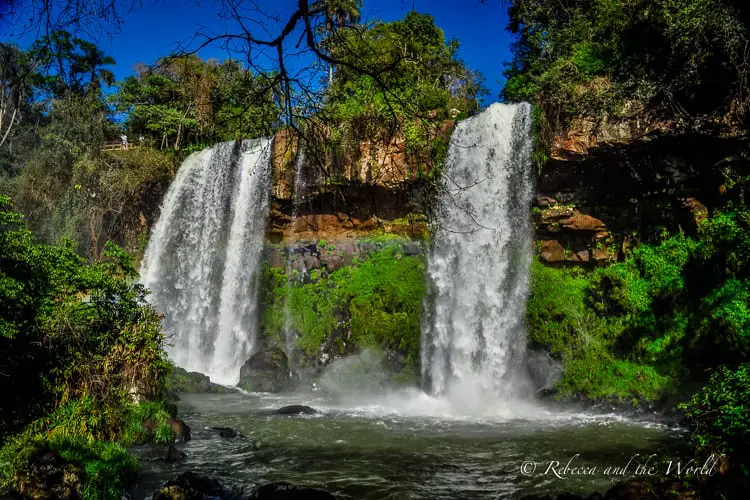
Stretching nearly 3 kilometres across the border between Argentina and Brazil, Iguazú Falls is made up of almost 300 individual cascades that thunder over the edge at an astonishing rate. Whether you’re standing beside the roaring Devil’s Throat, taking in the panoramic views from Brazil or getting drenched on a boat ride beneath the falls, it’s an unforgettable experience.
One of the biggest questions travellers have is whether they should visit the Argentina side, the Brazil side or both. The answer is that each offers a completely different perspective, and if your itinerary allows, I highly recommend experiencing both.
In this guide, I’ll walk you through everything you need to know about visiting Iguazu Falls, including how many days to spend here, which side is better, how to cross the border, what to see and do, where to stay and practical tips to help you plan your trip.

This blog post may contain affiliate links, meaning if you book or buy something through one of these links, I may earn a small commission (at no extra cost to you).
At a glance: Visiting Iguazú Falls
| What to know | My recommendation |
| How many days do you need at Iguazu Falls? | 2 days is ideal: one day on the Argentina side and one day on the Brazil side. |
| Is Iguazu Falls worth visiting? | Absolutely. It’s one of the most spectacular waterfalls in the world. |
| Which side is better? | Argentina offers a more immersive experience; Brazil has the best panoramic views. |
| Can you visit both sides? | Yes, and I highly recommend it if you have two days. |
| Where should you stay? | Puerto Iguazú is the best base for most travellers. |
| Do you need a visa for Brazil? | Australians, Americans and Canadians currently require an eVisa to enter Brazil. Check requirements here. |
| When’s the best time to visit? | Iguazu Falls can be visited year-round, but April to September are usually easier to manage (although you can still expect humidity!). |
Is visiting Iguazu Falls worth it?
100% YES. There’s nothing quite like visiting Iguazu Falls – one of the country’s natural wonders. The thundering waters cascading down, the smell and sounds of the jungle, the wildlife – it’s one of the best places to visit in Argentina.
Even if you think you’re not normally into nature, I dare you not be in awe of this place.

Planning your visit to Iguazú Falls
Where is Iguazu Falls?
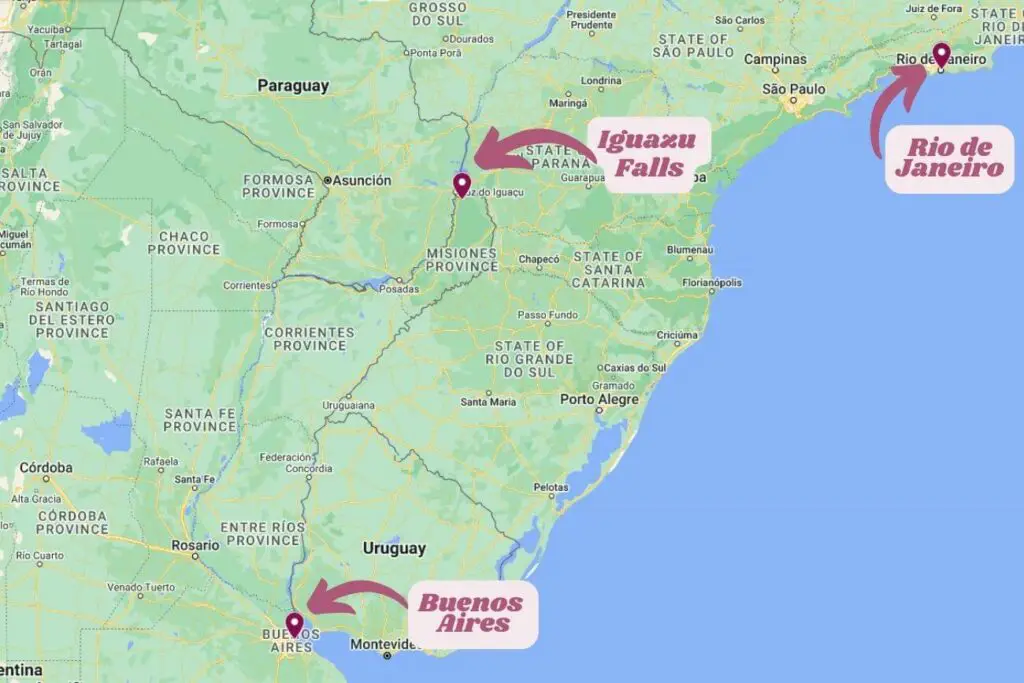
Iguazu Falls is a spectacular set of waterfalls that straddles the border of Brazil and Argentina. Located in northwest Argentina, about a 3.5-hour flight from Buenos Aires, it’s one of the largest waterfalls in the world.
How do you get to Iguazu Falls?
The gateway towns for visiting Iguazu Falls are Puerto Iguazú (IGR) in Argentina and Foz do Iguaçu (IGU) in Brazil. Both have airports with regular domestic flights and are less than 30 minutes from the falls.
Most travellers arrive by plane – it’s the quickest way. Direct flights connect Puerto Iguazú with Buenos Aires, while Foz do Iguaçu has frequent flights from Rio de Janeiro, São Paulo and other major places in Brazil.
If you’re visiting Argentina, I’d generally recommend flying into Puerto Iguazú and basing yourself there. If you’re travelling through Brazil, flying into Foz do Iguaçu may make more sense.
How many days do you need at Iguazu Falls?
I recommend spending two days at Iguazu Falls as part of your Argentina itinerary.
The Argentina side is much larger and has multiple walking trails, viewpoints and experiences, including the spectacular Devil’s Throat. Most travellers will want a full day here. Having said that, you could easily spend two days just on the Argentina side!
The Brazil side is more compact and can be visited in half a day, but it’s worth allowing a full day if you also want to visit the Bird Park, take a boat ride or simply enjoy the views at a more relaxed pace.

Which side of Iguazu Falls is better: Argentina or Brazil?
One of the most common questions travellers ask is which side of Iguazu Falls is better.
The truth is that they’re completely different experiences. I loved both sides, for different reasons.
The Argentina side puts you right on top of the waterfalls. You’ll walk along trails that weave through the rainforest and lead you to the edge of the cascades, including the jaw-dropping Devil’s Throat.
The Brazil side offers the iconic panoramic views that you see in photographs. From here, you can appreciate the full scale of the falls stretching across the horizon.
If you only have time for one side, I’d choose Argentina. But if your 2 weeks in Argentina itinerary allows, visiting both sides gives you the most complete experience and is absolutely worth the extra effort. (Full disclosure: I’m completely biased, because I lived in Argentina for two years, but I honestly do think that the Argentine side is better!)
| Argentina side | Brazil side |
|---|---|
| Best for immersive views | Best for panoramic views |
| Full day recommended | Half day to full day |
| Devil’s Throat | Best overall photo opportunities |
| More walking trails | Easier to visit |
| Better if you only have one day | Essential if you have two days |
Can you visit Argentina and Brazil sides in a day?
If you’re short on time, you can visit both sides in a single day, but you’ll spend much of that time rushing between attractions and crossing the border. I’d only do this if you really can’t spare two days and you’re intent on seeing both sides. Otherwise, stick to just one side to experience it properly.

Best time to visit Iguazu Falls
The great news is that it’s possible to visit Iguazú Falls all year round. Depending on when you go, the river and waterfalls may have swelled to almost 300 waterfalls, or may be drier with fewer and smaller waterfalls.
The wet season – and hence when the waterfalls are at their most powerful – is from December to March. These are also the hottest months and the rainiest. There’s the risk that some parts of the parks may close if the rains are too heavy. Flash flooding in the area does happen. (You can check the park status online here.)
January and February are the busiest months to visit, with both Argentines and Brazilians on summer holidays.
While it rains throughout the entire year at Iguazu Falls, May to August are the drier months. The weather is also a little cooler, so this is the best time to visit Iguazu Falls.
Our last visit was in late August and we had a bit of rain but nothing that hampered our plans. In fact, I think the waterfalls made us wetter than any rain could! I was in awe of the waterfalls at that time, so I can only imagine how incredible they are in the peak of the wet season.

2-day Iguazu Falls itinerary
If you have two days to spend at Iguazu Falls, I recommend dedicating one full day to the Argentina side and one day to the Brazil side. This gives you enough time to experience the falls from multiple perspectives without feeling rushed.
Day 1: Explore the Argentina side
Start early and head straight to Iguazú National Park when it opens. The Argentina side is much larger than the Brazil side, with several walking circuits and viewpoints that can easily fill an entire day.
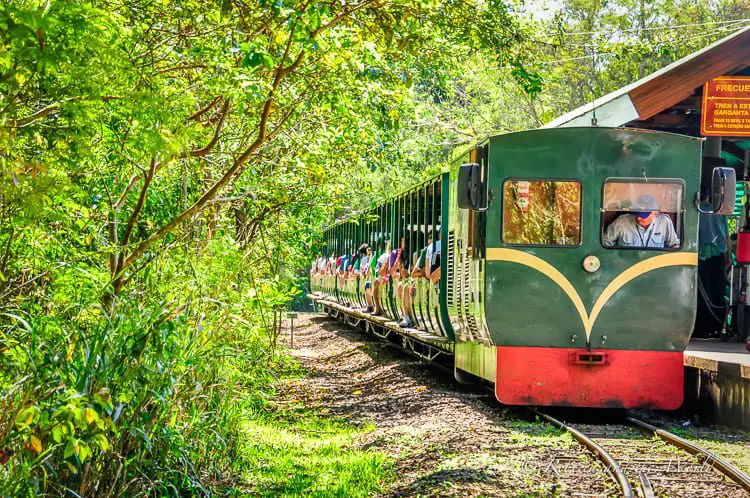
Begin your visit with the spectacular Devil’s Throat (Garganta del Diablo). The park train takes visitors to the start of the walkway, which stretches out over the river to the edge of the most powerful section of the falls. Arriving early means smaller crowds and a more enjoyable experience.
Next, explore the Upper Circuit, where a series of elevated walkways provide incredible views looking down over the waterfalls.
After lunch, tackle the Lower Circuit, which brings you closer to the cascades and offers some of the park’s best photo opportunities.
If you’re looking for an adrenaline rush, finish the day with the Gran Aventura boat ride, which takes you right beneath the waterfalls. You’ll get completely soaked, but it’s one of the most memorable experiences at Iguazu Falls.
Day 2: Explore the Brazil side
The Brazil side is smaller, but it delivers the iconic panoramic views that Iguazu Falls is famous for.
Arrive early and follow the Path of the Falls (Trilha das Cataratas), a scenic walkway that gradually reveals more and more of the waterfall system. This is where you’ll get the classic postcard views of Iguazu Falls stretching across the horizon.
The trail ends at a series of viewing platforms near the base of the falls, where you’ll be rewarded with one of the most spectacular viewpoints in the entire park.
After exploring the falls, consider visiting the nearby Bird Park (Parque das Aves), home to toucans, macaws and hundreds of other native species. It’s one of the best wildlife attractions in the region and pairs perfectly with a visit to the Brazil side.
If you’re after another adventure, you can also book a helicopter flight or a boat excursion from the Brazilian side.
Most travellers can comfortably see the highlights of the Brazil side in half a day. However, if your schedule allows, spending a full day here gives you more time to enjoy the views and additional attractions at a relaxed pace.

Can you visit Iguazu Falls without a tour?
Absolutely! A tour isn’t necessary at all. Most people visit the falls independently – like we did.
But if you would like to leave the planning up to someone else and have transport rolled in, then this tour from Puerto Iguazú in Argentina or this tour from Foz do Iguaçu (to the Brazilian side of the falls plus a boat ride) are both highly rated.
What are the best day tours to Iguazu Falls from Buenos Aires?
While I strongly recommend spending at least one night, it’s possible to visit Iguazu Falls on a day trip from Buenos Aires if you’re short on time.
Be prepared for a long day. You’ll need an early morning flight from Buenos Aires and won’t return until late in the evening. Between flights, airport transfers and travel to and from the national park, you’ll spend a significant portion of the day in transit.
That said, if Iguazu Falls is high on your Argentina bucket list and a day trip is your only option, it’s still better than missing one of South America’s most spectacular natural wonders altogether.
Most day tours focus on the Argentina side of the falls, which is the side I’d prioritise if you only have a single day. You’ll have time to visit the main viewpoints and walk some of the park’s most impressive trails before returning to Buenos Aires.
→ Check prices and availability for this highly rated Iguazu Falls day tour from Buenos Aires ←
Visiting Iguazu Falls from the Argentina side
So, what to do once you arrive at Iguazu Falls? I recommend planning to spend a whole day on the Argentina side of the falls.
Wander the upper and lower circuits
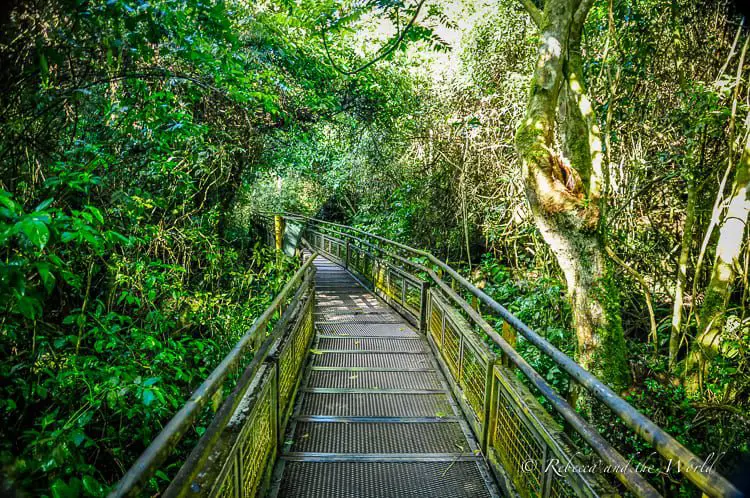
Wander the Paseo Inferior (the lower circuit). This series of boardwalks is around 1.5 kilometres long.
Later, hike through the Paseo Superior (upper circuit). These upper catwalks are just under a kilometre long and loop above the various falls that you’ve just walked under.
Take a boat ride under the falls
Get really wet and up close to the waterfalls on the Gran Aventura, a boat ride that takes you literally under the waterfalls.
The Iguazu Falls boat ride is probably one of the most fun things to do in Iguazu Falls.
Warning: you will get saturated so avoid wearing jeans or other heavy clothes. You receive a dry bag to put your valuables in and there’s time for photos before the boat speeds into the water. There’s also an option to purchase a video of the experience afterwards.
Be amazed by the Devil’s Throat
The biggest and most spectacular sight of the falls is the Garganta del Diablo (Devil’s Throat). Standing over this gaping hole, listening to the roar of the water, you will appreciate the power of Mother Nature.
You can take the train to Garganta del Diablo or walk 2.5 kilometres along a flat dirt road. By walking you’ll see many butterflies of all colours and sizes and avoid the often long queues at the train.

Take a full moon tour
Consider timing your visit to Iguazú Falls with the full moon. There are special Iguazú Falls full moon night tours which are a spectacular way to see the waterfalls by the silvery moonlight.
🌕 Check dates and book the Iguazu Falls full moon tour online here 🌕
Iguazu Falls Argentina costs and hours
The entry fee for adults on the Argentina side is ARS$60,000 for foreigners. Skip the queues and buy tickets online or buy a ticket at the gate with cash (Argentine pesos only) or a credit/debit card. Tickets can be bought up to 30 days in advance.
The website is only in Spanish, so you want to select “Comprar entradas” which will take you to the government website for all national parks in Argentina. Choose “Parque Nacional Iguazú” (it should appear as the top option), then “Comprar tickets” and choose “Portal de acceso único” for tickets for the falls.
The Argentine side of the park is open from 8am to 6pm daily.
How to get to the Argentina side of Iguazu Falls
The Argentina side of Iguazu Falls is located within Iguazú National Park, around 18 kilometres from Puerto Iguazú town.
By bus: The cheapest and easiest option is the regular public bus that runs between Puerto Iguazú and the national park throughout the day. Buses depart from the town’s main bus terminal and stop directly outside the park entrance. The journey takes around 30-40 minutes.
By taxi: Taxis are widely available in Puerto Iguazú and can get you to the park in around 20-25 minutes.
By private transfer: For maximum convenience (but, of course, highest cost), you can book a private transfer through your hotel or a local transport company.
Whichever option you choose, I recommend arriving as close to opening time as possible. The park is quieter in the morning, temperatures are cooler and you’ll have more time to explore the trails before the crowds arrive.
Visiting Iguazu Falls from the Brazil side
There are also plenty of things to do on the Brazil side of Iguazu Falls.
There’s a bus that takes you from the park entrance to the various activities in the park, so it’s very easy to get around.

Take the Path of the Falls
The 1.5-kilometre Path of the Falls provides scenic views of the falls and across to Argentina. The path crosses almost under the falls – prepare to get wet in some parts (you can purchase ponchos although some people are kind enough to hand theirs over once they’ve returned).
There’s an elevator or stairs to the top of the falls where you will see its full power. The thunder of thousands and thousands of litres of water rushing over the edge every second is incredible.
Take a helicopter ride
While the falls are incredible from the ground, seeing them from the air is even better. Take a helicopter ride over the falls. It’s an expensive 10 minutes but will be worth it!
Walk the trails
Most visitors to the Brazil side of Iguazu Falls stick to the famous Path of the Falls (Trilha das Cataratas), but there are several other trails within Iguaçu National Park that are worth exploring if you have extra time.
The Poço Preto Trail is one of the longest options, taking visitors deeper into the Atlantic Forest in search of wildlife such as toucans, monkeys and coatis. You can explore parts of the trail on foot or by bicycle.
The Bananeiras Trail combines walking and a boat crossing. This is a quieter trail away from the crowds and a chance to learn more about the park’s ecosystem.
For shorter walks, the Canafístula Trail and São João Trail mean you can experience the rainforest and spot native birds without committing to a lengthy hike.
While none of these trails offer the dramatic waterfall views of the Path of the Falls, they show another side of Iguaçu National Park and are a great option for nature lovers.
Iguazu Falls Brazil costs and hours
It costs R$131 for foreigners to enter the Brazil side. This includes entrance to the park, which includes the bus and access to the Path of the Falls and several other walking trails. Credit cards are accepted at the ticket machines at the gate, or you can buy tickets online in advance and choose an entrance time. (The website is helpfully in English.)
The Brazil side is open from 9am to 4pm Monday to Friday, and 8.30am to 4pm on Saturday and Sunday.
How to get to the Brazil side of Iguazu Falls
If you’re staying in Puerto Iguazú, you’ll need to cross the Argentina-Brazil border to reach Iguaçu National Park. Don’t forget to bring your passport and check visa requirements before travelling.
By public bus: Budget travellers can take a local bus from Puerto Iguazú to Foz do Iguaçu and then connect to another bus heading to Iguaçu National Park. While this is the cheapest option, it can be time-consuming and may require changing buses.
By taxi or remis: Many travellers choose to take a taxi or remis from Puerto Iguazú directly to the Brazil side of the falls. Some drivers will wait while you complete immigration formalities at the border before continuing to the park.
By private transfer or guided tour: If you’d prefer a hassle-free experience, private transfers and guided day tours can handle all the logistics for you. A tour like this one is a good option if you’re short on time or aren’t comfortable navigating the border crossing independently.
From Puerto Iguazú, allow around 45-60 minutes to reach the Brazil side, although border crossing times can vary depending on the season and time of day.
My recommendation? Unless you’re travelling on a tight budget, take a taxi, remis or organised transfer. The Brazil side is typically a half-day visit, so spending a little extra on transport can save a lot of time and make the day far more enjoyable. This is what we chose to do and it made the day a lot nicer.
If you’re staying in Foz do Iguaçu, getting to the falls is straightforward.
By public bus: Local buses run regularly between the city and Iguaçu National Park, stopping directly outside the visitor centre.
By taxi or rideshare: Taxis and rideshare services (like Uber) can get you to the park in around 20-30 minutes, depending on where you’re staying.
By organised tour: While not necessary, some visitors choose a guided tour that combines the falls with nearby attractions such as Bird Park or the Itaipu Dam.

Crossing the border between Argentina and Brazil
One of the best things about visiting Iguazu Falls is that it’s easy to experience both the Argentina and Brazil sides of the falls during the same trip. While crossing an international border might sound daunting, the process is generally straightforward.
Do you need your passport?
Yes. You’ll need your passport whenever you cross between Argentina and Brazil, even if you’re only visiting the falls for the day.
Make sure your passport is easily accessible, as you’ll need to present it at immigration checkpoints in both countries.
Do you need a visa?
Visa requirements depend on your nationality and can change over time, so always check the latest official government advice before travelling.
At the time of writing, Australians, Americans and Canadians require an eVisa to enter Brazil. Many other nationalities can enter Brazil visa-free for tourism. You can check requirements for your nationality here.
How long does the border crossing take?
The border crossing itself is usually quick, but wait times can vary depending on the season, time of day and whether you’re travelling during a holiday period.
As a general rule, allow at least an extra 30-60 minutes when travelling between Puerto Iguazú and the Brazil side of the falls. During busy periods, crossings can take longer.
While crossing the border does add a little extra planning, don’t let it put you off visiting both sides of Iguazu Falls. The panoramic views from Brazil and the immersive walking trails in Argentina are completely different experiences, and seeing both is one of the highlights of any trip to the region.
Where to stay
Puerto Iguazu
Now on to where to stay in Iguazu Falls. There are plenty of hostels and hotels in Puerto Iguazú for all budgets.
- We stayed at the Gran Melia Iguazú. This is the place to stay if you want to beat the crowds, as it’s located within Iguazú National Park. From the hotel balcony, you can see the mist rising from the waterfalls, and it’s a quick walk down to the entrance. Toucans flew over us while we sat on the deck with a drink. It really can’t be beat for location. | Check rates and availability online at Booking.com and Expedia
- A beautiful jungle boutique hotel is Puerto Bemberg. It’s surrounded by trails, trees and jungle flora and fauna. | Check rates and availability on Expedia or Booking.com
- In downtown Puerto Iguazú, O2 Hotel Iguazú is a great option, with a pool and comfy rooms. | Book a stay online at Booking.com or Expedia
- If you’re travelling on a budget, consider the simple but clean and colourful Iguazu Falls Hostel. It gets great reviews from guests, and has a swimming pool. | Check the latest rates at Iguazu Falls Hotel and book online

For more budget-friendly accommodation, this guide to the best hostels in Puerto Iguazu has some great suggestions.
Foz do Iguaçu
I’ve not stayed in Foz do Iguaçu so I don’t have any personal recommendations, but these hotels have great reviews online:
- The uber luxury Belmond Hotel das Cataratas is perfectly placed is right inside the national park. The rooms are absolutely gorgeous, with wooden floors and large beds. It’s certainly one of the more spectacular Iguazu Falls hotels. Book a stay at Belmond Hotel Das Cataratas online
- Located just outside the entrance to Iguaçu National Park, Sanma Hotel is one of the most convenient places to stay. It’s a boutique-style property and a good middle ground between the ultra-luxury Belmond and the larger resort hotels. | Check rates and availability
- Bourbon Foz do Iguaçu Hotel is modern, well located and people love the breakfast served. Check rates and book a stay at Bourbon Foz do Iguaçu Hotel online
Useful things to know before you go
Arrive early
The falls are one of South America’s most popular attractions, and the busiest viewpoints can become crowded later in the day. Arriving close to opening time means cooler temperatures, better wildlife spotting opportunities and fewer people in your photos. We arrived right on opening time and had many of the boardwalks all to ourselves for a while!
You’ll walk a lot
Iguazu Falls isn’t a place where you simply step off a bus, snap a few photos and leave. The parks cover a large area, and you’ll spend several hours exploring trails and boardwalks.
Wear comfortable walking shoes (I like my Tevas for this!), bring water and be prepared for plenty of time on your feet.
Expect to get wet
Even if you don’t take a boat ride, you’ll likely get sprayed by the mist at some of the viewpoints, especially near Devil’s Throat and on the Brazil side.
A lightweight rain jacket or poncho, waterproof phone pouch or dry bag will come in handy on your Argentina packing list.
Don’t feed the coatis
The parks are home to coatis – raccoon-like animals that are undeniably cute but can be surprisingly aggressive when food is involved. Keep snacks packed away and resist the temptation to feed them. Coatis are known for helping themselves to unattended food and bags!
The same goes for monkeys. Don’t feed them.

Protect your camera and phone
Between the humidity, mist and occasional downpours, electronics can get wet quickly. A waterproof case or dry bag is worth bringing, especially if you’re planning to take a boat trip beneath the falls.
The weather can be hot and humid
Iguazu Falls sits within a subtropical rainforest, so expect humidity throughout much of the year. Clothing that dries quickly, sunscreen, insect repellent and plenty of water will make your visit much more comfortable. Don’t wear jeans!
Visiting Iguazu Falls: Final thoughts
Before visiting Iguazu Falls, I couldn’t quite understand why so many travellers recommended spending two days here. After seeing the falls from both Argentina and Brazil, I completely get it.
The Argentina side immerses you in the waterfalls, while the Brazil side reveals their sheer scale. Together, they offer two very different perspectives on one of the world’s most spectacular natural wonders.
If your itinerary allows, spend at least two days exploring both sides of the falls. Whether you’re standing at the edge of Devil’s Throat, taking in the panoramic views from Brazil or feeling the spray from a boat beneath the cascades, Iguazu Falls is the kind of place that stays with you long after you’ve left.
It’s not just one of the highlights of Argentina or Brazil – it’s one of the most unforgettable experiences in South America.
FAQs
Do I need a passport to visit both sides of Iguazu Falls?
Yes. If you’re planning to visit both the Argentina and Brazil sides of Iguazu Falls, you’ll need your passport to cross the international border.
Do I need a visa to cross from Argentina to Brazil?
Visa requirements depend on your nationality and can change over time. At the time of writing, Australian, American and Canadian passport holders require an eVisa to enter Brazil. Always check the latest official government advice before travelling.
Can you visit Iguazu Falls without a tour?
Absolutely. Iguazu Falls is very easy to visit independently. Both the Argentina and Brazil sides have excellent infrastructure, including walking trails, visitor facilities and public transport connections. Unless you prefer the convenience of a guided tour, there’s no need to book one.
Is the boat ride worth it?
Yes! But only if you don’t mind getting completely soaked. The boat rides on both the Argentina and Brazil sides take you right up to the base of the waterfalls, offering a thrilling perspective you simply can’t experience from the viewing platforms. It’s one of the most memorable experiences at Iguazu Falls – it’s so fun and I’m glad we didn’t miss it.
What should I wear to Iguazu Falls?
Lightweight, breathable clothing and comfortable walking shoes. The region has a subtropical climate, so it can be hot and humid throughout much of the year. If you’re taking a boat ride or visiting viewpoints close to the falls, bring a waterproof jacket or poncho and a dry bag to protect your electronics.
Is Iguazu Falls suitable for children?
Yes. Families regularly visit Iguazu Falls, and both national parks have well-maintained paths, visitor facilities and plenty of viewpoints that are suitable for children. Just keep an eye on younger kids near railings and crowded viewing areas.
Is Iguazu Falls accessible for travellers with mobility issues?
Many of the main attractions on both sides of the falls are accessible. The Devil’s Throat walkway on the Argentina side and the main viewing trail on the Brazil side are wheelchair accessible, and both parks provide accessible facilities. However, some trails and activities, including boat rides, may not be suitable for all visitors.
Can you visit Iguazu Falls in one day?
Yes, but you’ll need to prioritise. If you only have one day, I recommend focusing on the Argentina side, which has more trails and viewpoints. While it’s technically possible to visit both sides in a single day, you’ll spend a lot of time travelling and crossing the border, which can make the experience feel rushed.
Can you swim at Iguazu Falls?
No. Swimming isn’t allowed at Iguazu Falls due to the powerful currents, steep drops and safety risks throughout the national parks.
If you’d like to get closer to the waterfalls, consider booking a boat tour instead. On both the Argentina and Brazil sides, boat excursions take visitors right up to the base of the falls, where you’ll experience the spray, noise and sheer power of the cascades up close – and get completely soaked in the process.
Did you find this article helpful? Consider buying me a coffee as a way to say thanks!
Do you have any more questions about visiting Iguazu Falls? Ask away in the comments below!
Need help planning your Argentina trip? 🇦🇷
Feeling overwhelmed about planning your trip to Argentina? I get it. And I can help! I offer one-to-one travel consultation calls to help you plan your trip to Argentina. In an hour, we can map out a realistic itinerary or work through your specific questions so you can book an incredible trip. Save hours of your time with my local knowledge and expertise.
Read next
Before you go… you might like these Argentina and Brazil travel articles:
- How to Plan a Trip to Argentina in 9 Easy Steps
- How to Plan the Perfect 2 Weeks in Argentina Itinerary
- My Top Argentina Travel Tips
- Is Argentina Safe to Visit?
- The Best Places to Visit in Argentina
- The most incredible things to do in Argentina
- How to Spend 3 Perfect Days in Buenos Aires
- How to Spend 3 Days in Rio de Janeiro
- The Best Places to Visit in Brazil
ARGENTINA TRIP ESSENTIALS
- Book your flight to Argentina online with Skyscanner. I like how this site allows you to find the cheapest days.
- One thing I always purchase is travel insurance! Travel Insurance Master allows you to compare across multiple policy providers, while SafetyWing is great for long-term travellers and digital nomads.
- Wise is my choice for sending and receiving money and spending money overseas (you can get a digital and physical card).
- Find a great hotel in Argentina. Check prices on Booking.com and Expedia online.
- Check out the huge range of day tours throughout Argentina on GetYourGuide or Viator. I love a good food tour in particular!
- Saving money? Check out the range of free walking tours across Argentina with GuruWalk (don’t forget to tip!).
- How to get around? I use DiscoverCars for car hire, or Motorhome Republic and Jucy for campervan/RV rental. For buses, trains and ferries, I use 12GO, Busbud and Omio.
- Grab an e-sim to stay connected while on the road.
- A copy of the Lonely Planet guide to Argentina will be handy. Also pick up a Spanish language phrasebook to help you navigate your visit.
- Keep those bottles of wine you’ll be buying safe in these wine bags.
- Check out my Amazon shop for my fave travel items – everything from backpacks and suitcases to travel adapters and beauty products.
PIN IT FOR LATER: VISITING IGUAZU FALLS
Like this article? Save this guide to visiting Iguazu Falls to Pinterest so you can plan your trip later.




Hi
I was wondering if you would be able to help me?
I will be traveling from Brazil to Argentina via the falls, how would you recommend that we do this? is it fairly easy or would we need to book with a tour (Just not sure if we would have to go back to our start point which would be somewhere in Brazil)?
Loving the blog btw- really helping my travel planning.
Thanks
Amanda
Hi Amanda! It’s very easy to cross the border. You can hire a taxi for the day or use public transport. Most hostels and hotels will have a driver service you can ask about, or just chat to one of the taxi drivers in town – are you staying in Foz do Iguacu?
Brilliant!