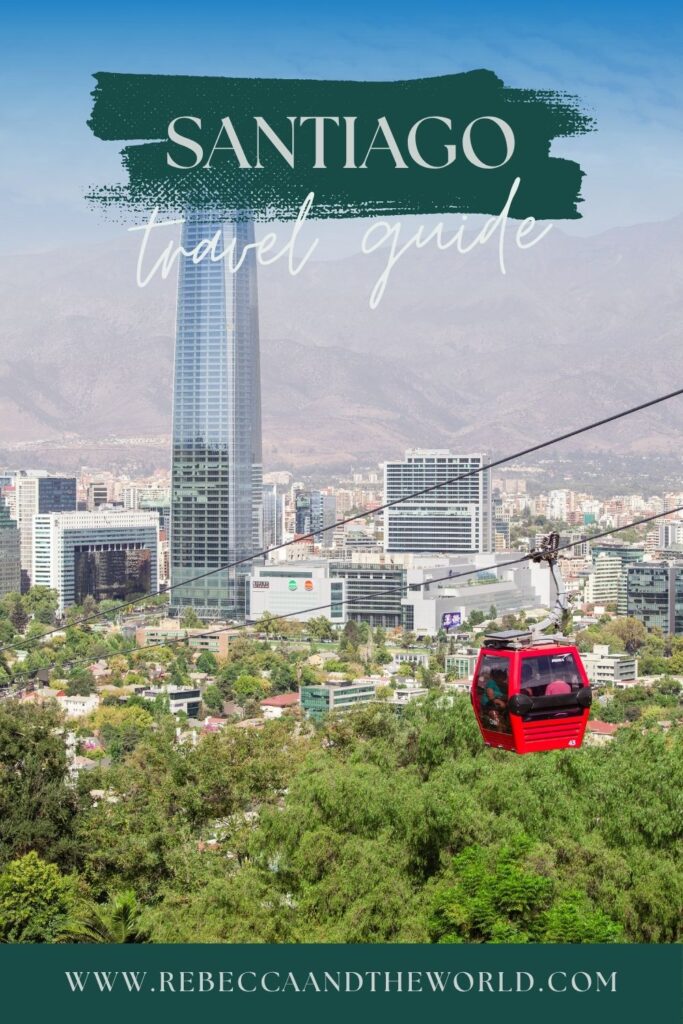

Wondering what to do in Santiago, Chile? Despite what you may have read elsewhere, this city is certainly worth a few days – and here’s my guide to the best things to do!
Santiago often gets treated as a quick stopover on the way to Patagonia or the Atacama, but it’s a city that’s well worth your time in its own right. Between the neighbourhoods, the viewpoints, the wine country day trips and the food scene, there’s far more here than many people expect.
This guide rounds up what I think are the best things to do in Santiago, Chile, so you can pick what suits your travel style and build a plan. Whether you’re into markets and museums, long lunches and cocktails, street art or getting out of the city for a breather in the Andes or nearby vineyards, I think you’ll be surprised by what this city has to offer.
If you’re short on time, you can easily pull a handful of highlights for a quick visit, but there’s also plenty here to keep you busy for longer.
This blog post may contain affiliate links, meaning if you book or buy something through one of these links, I may earn a small commission (at no extra cost to you).
Best things to do in Santiago – mapped out
Here’s a map of everything I’ve included in this list of top things to do in Santiago.
Top tip! Most museums in Santiago are closed on Mondays – so be sure to factor this into your plans if you can.
Visit La Chascona

Pablo Neruda’s house is fascinating for its quirky creativity. Originally built in the 50s for the poet’s secret mistress, Matilde Urrutia, La Chascona (his nickname for Matilde) you can get a peek inside this unusual home.
Take a self-guided tour through the house, where you’ll learn about Neruda and Urrutia’s unconventional relationship, and how the house was designed and built. La Chascona contains a number of remarkable artworks, photos and knick-knacks, and we loved wandering through, wondering what would be around the next corner or hidden in each nook.
Tours are by audio guide, which means you can take your time wandering through the house to find secret spots or discover the meanings behind certain artworks or architectural designs.
If you’re a Neruda fan, you can also visit his other houses, La Sebastiana in Valparaíso and Isla Negra in El Quisco.
Address: Fernando Márquez de la Plata 0192
Cost: CLP$11.000 per person
Opening hours: Tuesday to Sunday, 10am to 6pm (open until 7pm throughout January and February)
Wander through the Bellavista barrio
You can’t visit Santiago without checking out one of the city’s hippest neighbourhoods, Bellavista.
Most famous for its nightlife, I’d recommend coming here both during the day and in the evening if you can. During the day, you can explore the many cool shops, restaurants and bars, as well as check out the fantastic street art.
At night, come here for a drink and dinner. Pío Nono buzzes with university students and happy hours, but if you go across one street to Constitución, it’s far quieter with plenty of restaurant choices.
La Chascona is located in this barrio, so you can combine these two in one afternoon (as I suggest in my 2 days in Santiago itinerary).
→ READ NEXT: How to spend 2 days in Santiago, Chile
Eat your way through the markets
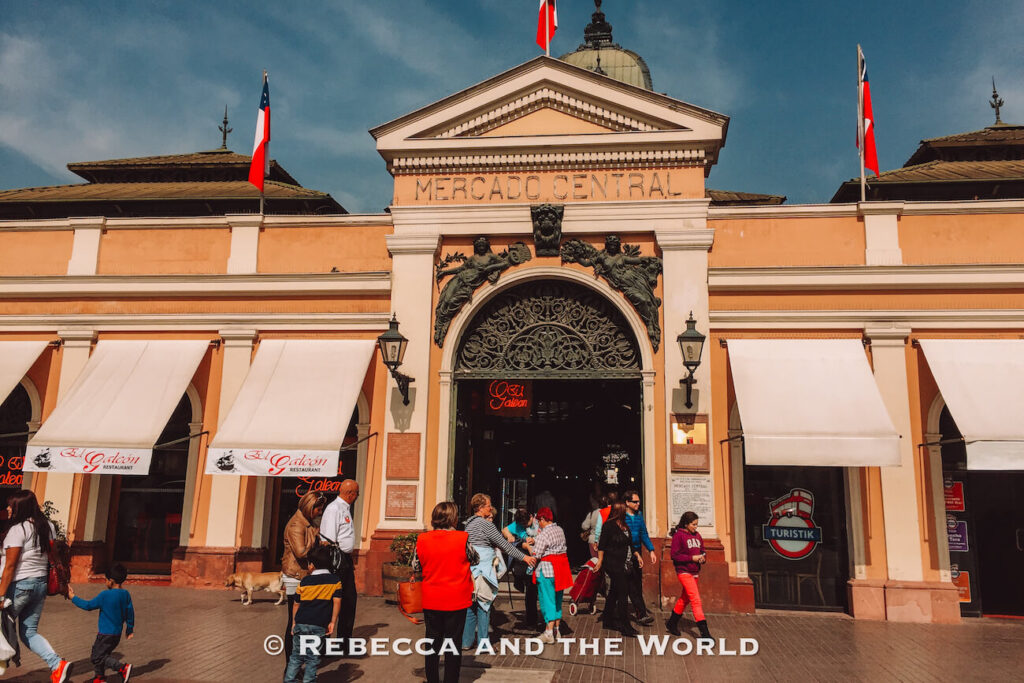
If there’s a way to see the inner workings of a city, it must be through its markets.
Santiago has several great markets to explore, and they’re all fairly close to each other.
La Vega Central is the largest. It covers four square blocks with lots of fruit and veggie vendors from all across the country – many of these producers sell direct to Santiago restaurants. Here, we saw corn as big as our heads and inhaled tantalising smells from the many small cafeterias. This is definitely the place to stop for a bite to eat – just follow your nose.
Just across the road is La Vega Chica, an extension of La Vega Central. The market is mostly produce vendors, but there are also some fantastic small restaurants.
The Mercado Tirso de Molina is home to restaurants selling delicious Peruvian, Venezuelan, Ecuadorian and Colombian food. Head here at lunchtime to have your fill. We heard warnings that this market is a little rough but we saw nothing of the sort ourselves. As always in a market, keep an eye on your things and don’t flash your stuff around.
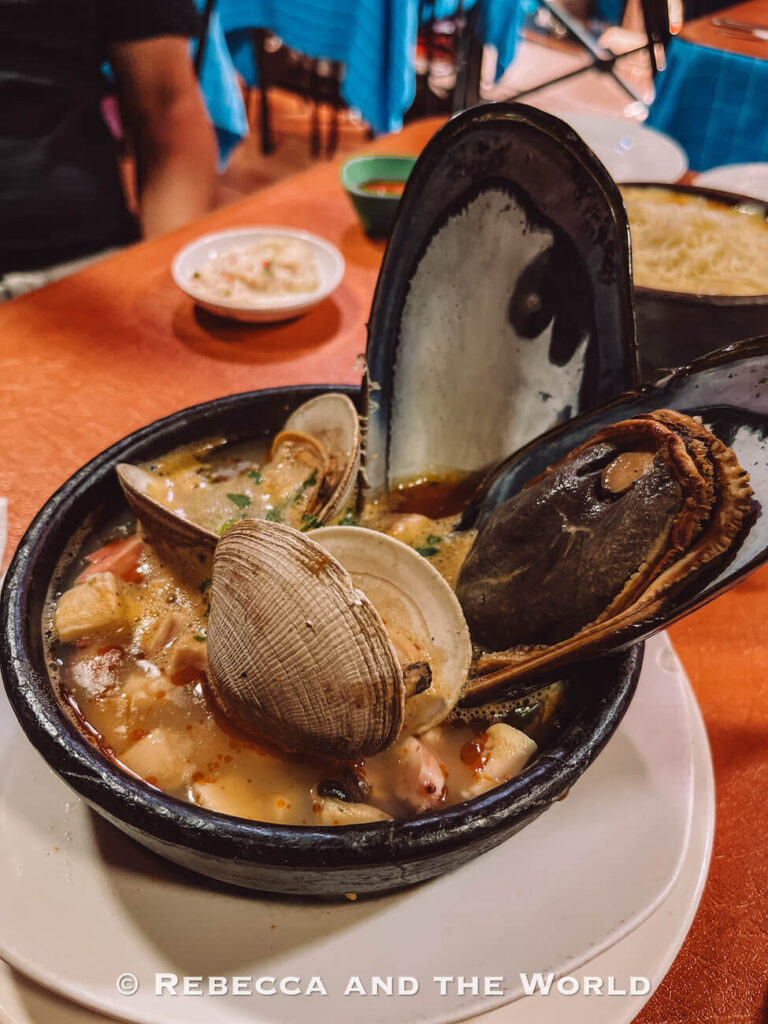
Mercado Central is the most touristy of the markets but that doesn’t mean you should avoid it. Famous for its seafood, this is the market to try seafood dishes like ceviche, paila marina (a flavoursome fish and shellfish soup) and chupé de jaiba (a type of baked crab pie).
🥟 Intimidated by big markets? Want to know exactly what and where to eat? Join A Chef’s Tour’s Mercado Meals, a fantastic food tour in Santiago that visits all four markets. 🥟
Discover the food scene with A Chef’s Tour
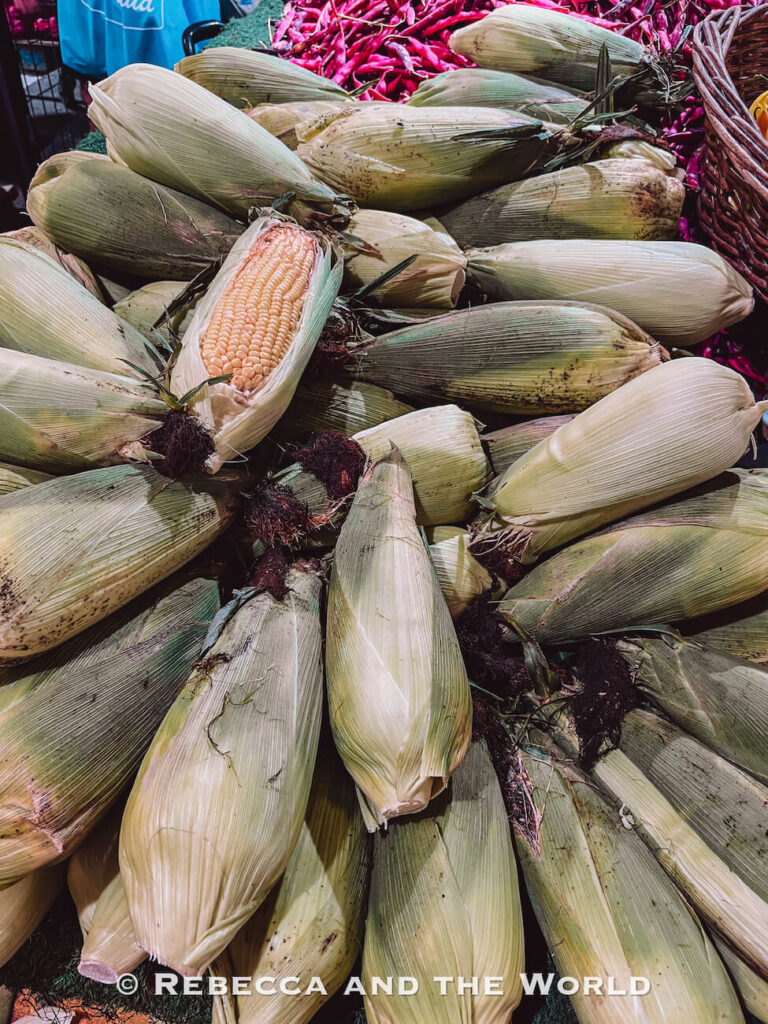
While I think the markets are some of the best Santiago attractions, they can be overwhelming. La Vega Central in particular is huge, with so many stalls and restaurants to see – it’s easy to get lost!
Which is why I recommend joining A Chef’s Tour for a guided visit through the markets. No need to stress out trying to decide what and where to eat – with A Chef’s Tour you’ll have a foodie lead you directly to the market vendors and dishes that Chile is most famous for.
This fairly new Santiago food tour takes place every day except Sunday. As well as stuffing us full of completo (Chile’s answer to the hot dog – but loaded), pastel de choclo (corn pie) and empanadas, our guide Raúl gave us a history lesson about Chile and Santiago as well as the stories behind why each of the dishes we tried are so important.
Check availability for the Mercado Meals Santiago food tour here and book an excellent eating experience!
→ READ NEXT: A Chef’s Tour: Review of the best food tour in Santiago, Chile
Watch the Changing of the Guard at Palacio de La Moneda
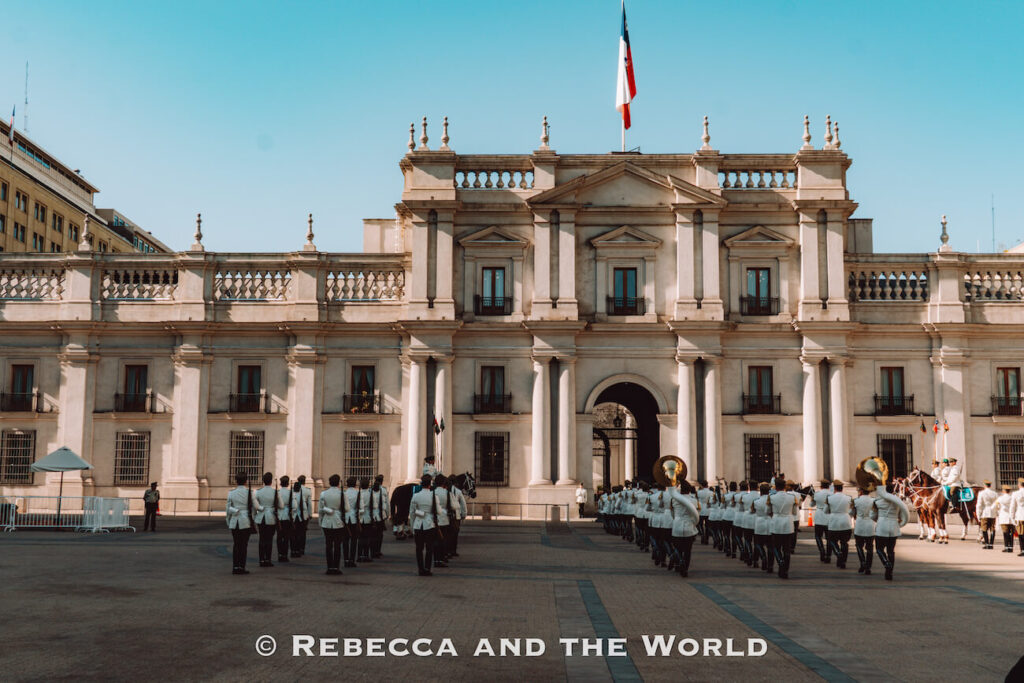
If you like a bit of pomp and ceremony, head to Palacio de La Moneda – Santiago’s presidential palace – for the Changing of the Guard of Carabineros de Chile. This ceremony has taken place since 1851.
It’s a surprisingly fun thing to do: there’s a marching band, mounted officers and plenty of photo opportunities, all set against the grand façade of one of the city’s most important buildings. When we were last there, the band even played The Final Countdown and We Are the Champions, much to the delight of the crowd.
The whole ceremony runs for around 30 minutes and it’s completely free to watch. It occurs in Constitución Square every day at 10am on even days in February, March, June, July, September and October, and on odd days in January, April, May, August, November and December.
My tip is to arrive 15-20 minutes early for a good spot so your view of this fun Santiago attraction isn’t blocked by crowds.
Where: Plaza de la Constitución (Palacio de La Moneda)
When: Every day at 10am on even days in February, March, June, July, September and October, and on odd days in January, April, May, August, November and December
See an exhibition at the Centro Cultural La Moneda

This underground cultural centre hosts a variety of exhibitions and art displays which change regularly. The space itself is also really interesting and worth a stroll around.
On our visits, we’ve seen exhibitions on Ancient Egypt, the history of film in Chile and photography exhibits, but check the website to see what’s on during your visit to Santiago. Many exhibitions are free to experience.
Address: Avenida Libertador Bernardo O’Higgins (closest metro station is La Moneda)
Opening hours: Exhibitions open Tuesday to Sunday, 10.15am to 6.45pm; restaurants and shops open 10am to 7pm every day
Pop into Museo Nacional de Bellas Artes

Even if you’re not usually a “museum person”, the Museo Nacional de Bellas Artes (Fine Arts Museum) is worth a stop — if only to admire the building. It’s one of Santiago’s prettiest interiors, with a huge central hall and a light-filled glass dome overhead. The building itself was completed in 1910.
Inside, you’ll find permanent collections of Chilean art, as well as temporary exhibitions (check the website to see what’s on when you visit Santiago). I’d highly recommend adding it to your list of things to do in Santiago Chile.
We saw some beautiful exhibitions, as well as a very cool performance out the front of the museum. It’s the kind of place you can dip into for 45 minutes or linger longer (especially on a hot afternoon when you need a break from walking).
Address: José Miguel de la Barra 650
Cost: Free
Opening hours: Tuesday to Sunday, 10am to 6.30pm
→ READ NEXT: Where to stay in Santiago
Take a stroll through Parque Forestal


One of my favourite ways to slow down in Santiago is with a wander through Parque Forestal, a long, leafy park that runs alongside the Mapocho River. It’s the perfect breather between sightseeing stops – wide paths, shady trees, people walking dogs or kicking a ball around, and plenty of park benches.
It also happens to be in a very handy location: the Museo Nacional de Bellas Artes sits right on the edge of the park, and you can easily continue on foot to Lastarria for a coffee, lunch or a browse through the little shops. Or you can walk through here on your way from Lastarria over the bridge to Bellavista.
A quick heads-up: Parque Forestal can sometimes be a gathering point for protests or demonstrations. On our most recent visit to Santiago, police were out in force one evening and moved people on, so if you see things starting to escalate, it’s best to leave the area and continue your stroll elsewhere.
Hang out at the Plaza de Armas

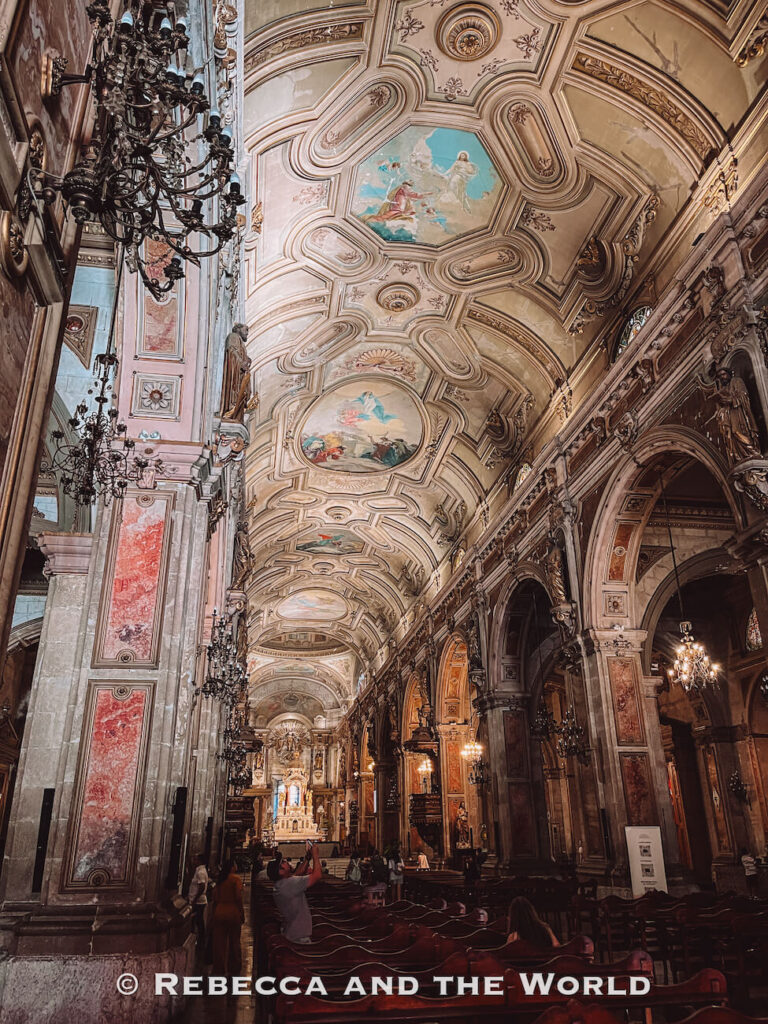
Like most cities in South America, Santiago has a main square. In Santiago, it’s the Plaza de Armas. The plaza is a great spot to relax, take photos and people watch when you visit Santiago.
You can also visit many of the buildings that surround the plaza, including the Metropolitan Cathedral of Santiago, Central Post Office Building and the Palacio de la Real Audiencia de Santiago. These enormous, elaborate buildings surround the plaza on almost all four sides.
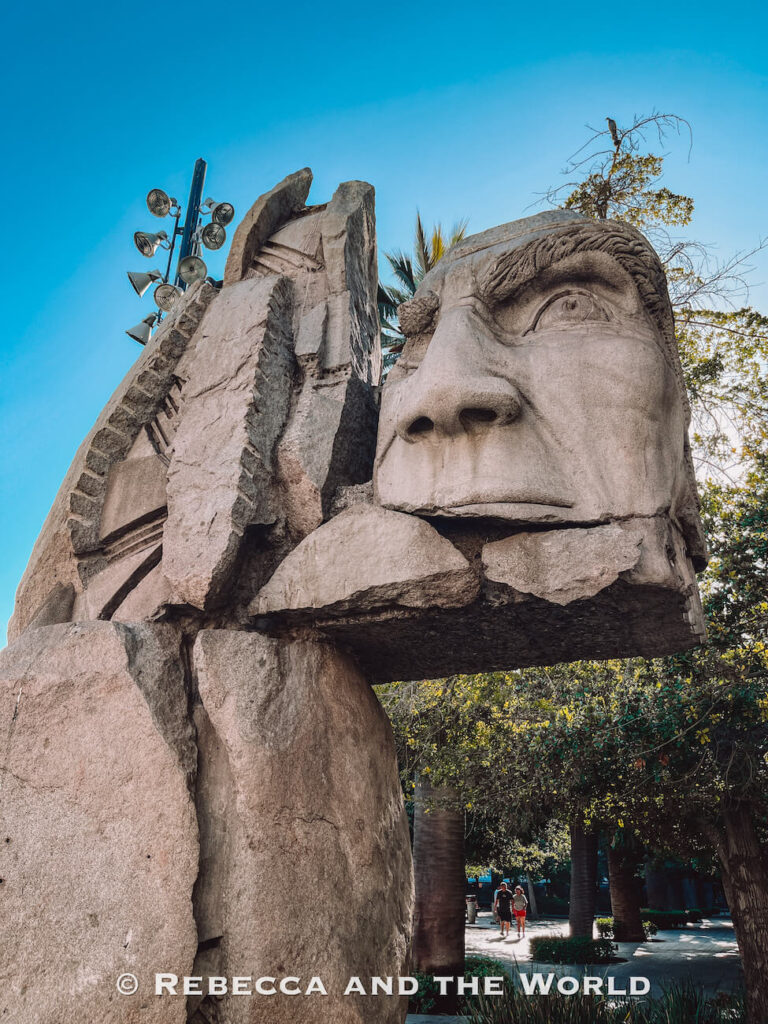
There are also some statues recognising important people and concepts: the 26-foot-tall, concrete-and-granite Monument to the Indigenous People is particularly striking. In the southwest of the plaza, it was installed in 1992 in recognition of the bravery of the Mapuche people, the Indigenous people of Chile who fought the Spanish conquistadors.
In the opposite corner of the plaza is a huge statue of Pedro de Valdivia on horseback. Pedro de Valdivia was a Spanish conquistador and soldier who led the Spanish campaign to colonise what is now Chile. He’s the founder of the city of Santiago. Of course, his statue being in such a prominent location comes with controversy as Chile considers its colonial history.
→ Want to see the highlights of Santiago and get some historical and cultural context? Join this free walking tour of the historic centre ←
Learn at the Museo de la Memoria y los Derechos Humanos
This sombre museum should be on any Santiago itinerary, even if you only have one day in Santiago.
The carefully put together Museo de la Memoria y los Derechos Humanos (Museum of Memory and Human Rights) recognises the thousands of people who were killed or disappeared during the brutal rule of General Augusto Pinochet from 1973 to 1990. It’s located in a contemporary building in Barrio Yungay.
It’s a heart-wrenching place but crucial for anyone who wants to learn more about a devastating period of Chile’s history.
Address: Matucana 501 (Quinta Normal is the closest metro station)
Cost: Free
Opening hours: Tuesday to Sunday, 10am to 6pm
Step inside Chile’s past at the Museo Histórico Nacional

Right on Plaza de Armas, the Museo Histórico Nacional is an easy (and genuinely interesting) stop if you want a better sense of Chile. The exhibitions cover everything from Indigenous cultures through the colonial period and independence, right up to more recent history – with loads of artefacts, portraits and everyday objects that help bring it all to life.
One thing to note is that all of the signage is in Spanish, but even if you can’t read it, it’s still interesting to spend an hour or so here looking at all the displays.
Address: Plaza de Armas, 951
Cost: Free
Opening hours: Tuesday to Sunday, 10am to 5.30pm
Don’t miss the Museo Chileno de Arte Precolombino
If you’re going to pick one museum in Santiago, make it the Museo Chileno de Arte Precolombino (the Chilean Museum of Pre-Columbian Art). It’s beautifully curated and genuinely fascinating, with artefacts and artworks from cultures across the Americas – think ceramics, intricate textiles, masks and metalwork – all presented in a way that’s easy to appreciate even if you don’t have a deep knowledge of pre-Hispanic history.
It’s the kind of place you can breeze through in an hour, or spend several hours exploring (especially the textile displays).
It’s also very central – just a short walk from Plaza de Armas – so it’s an easy one to slot into a day exploring the historic centre.
Address: Bandera 361 (corner of Compañía).
Cost: CLP$12.000 for foreign visitors (with cheaper prices for locals/students)
Opening hours: Tuesday to Sunday, 10am-6pm, closed Mondays
Drop by the Centro Gabriela Mistral

If you’re anywhere near Lastarria / Barrio Bellas Artes, it’s worth popping into Centro Gabriela Mistral (GAM) – Santiago’s contemporary cultural hub for theatre, dance, music and exhibitions.
Even if you don’t go to a performance here, the building itself is a great place to stop: there are open plazas where locals hang out, plus exhibition spaces and public art.
It’s named after Gabriela Mistral, Chile’s celebrated poet, educator and diplomat – and the first Latin American to win the Nobel Prize in Literature – which feels fitting for a place so focused on arts and ideas.
I like this as a “fill-in” activity: grab a coffee (or a cocktail in the subterranean bar, El Bajo), browse the bookshop, see what’s on in the galleries and then continue on to Lastarria or Bellavista for lunch or a drink. If you do want to catch a show, check the program on the official site – some areas are free to enter, while performances are ticketed.
Address: Av. Libertador Bernardo O’Higgins 227 (near Metro Universidad Católica)
Duck into the National Library of Chile
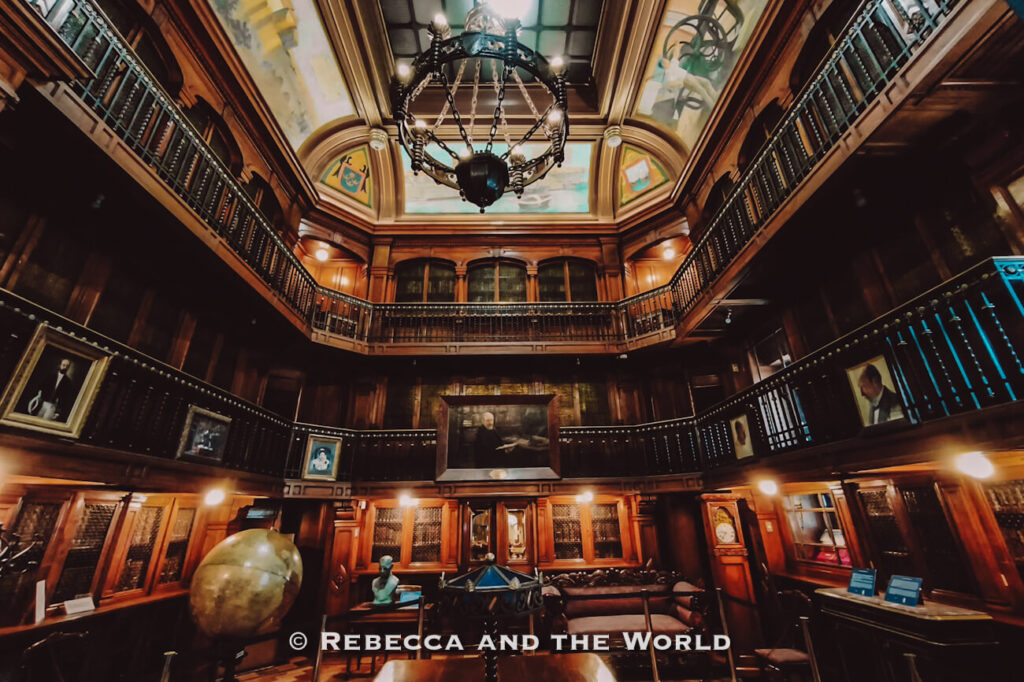
Even if you don’t have “visit a library” on your Santiago bucket list, the National Library of Chile (Biblioteca Nacional) is a lovely quick stop – partly for the grand, old-world architecture (think marble staircases and lofty halls), and partly because it’s so peaceful.
It’s been a key part of Chile’s intellectual life for more than two centuries, and it also hosts rotating exhibitions, so there’s usually something interesting to peek at beyond the reading rooms.
If you go, poke your head into the Sala Medina – it was my favourite room in the whole building, and with its dark timber and old books, it genuinely gave me Harry Potter library vibes.
Address: Av. Libertador Bernardo O’Higgins 651
Opening hours: Monday-Thursday 9am-6pm, Friday 9am-5pm
Climb Cerro Santa Lucía
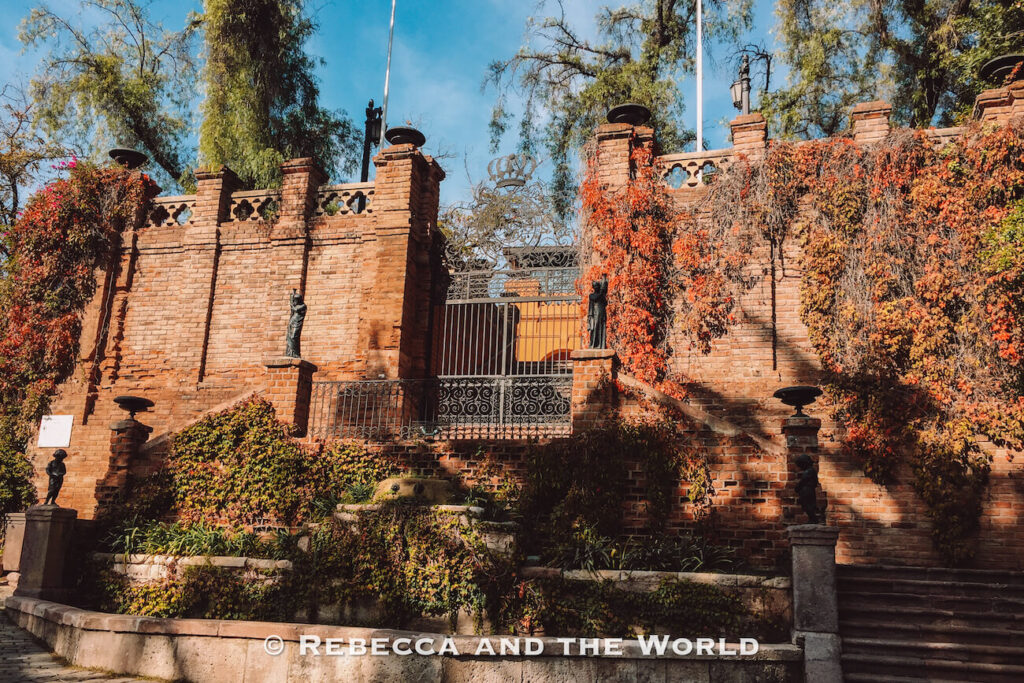
Escape the hustle and bustle of big city life in Cerro Santa Lucía surrounded by lovely gardens. This hill is the remnants of a 15-million-year-old volcano!
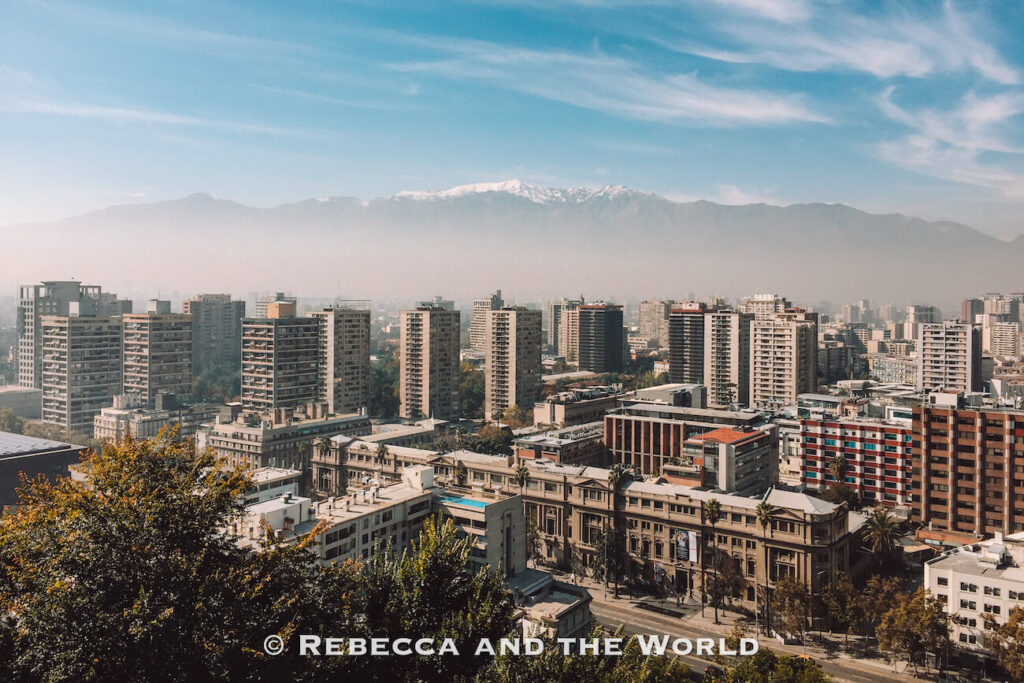
Santiago sits in a valley below the Andes, so from the top of the hill there’s a great view over the city and across to the peaks of the Andes in the distance (on a clear day).
It’s not a long hike, but there are a lot of steps, so wear decent shoes and take your time — and make sure to stop along the way to check out spots like the Neptune Terrace and peeking at Castillo Hidalgo (unfortunately you can’t go inside).
Address: Cerro Santa Lucía is located along Libertador Bernardo O’Higgins
Cost: Free
Opening hours: Daily, 9am to 7pm
Head up Cerro San Cristóbal
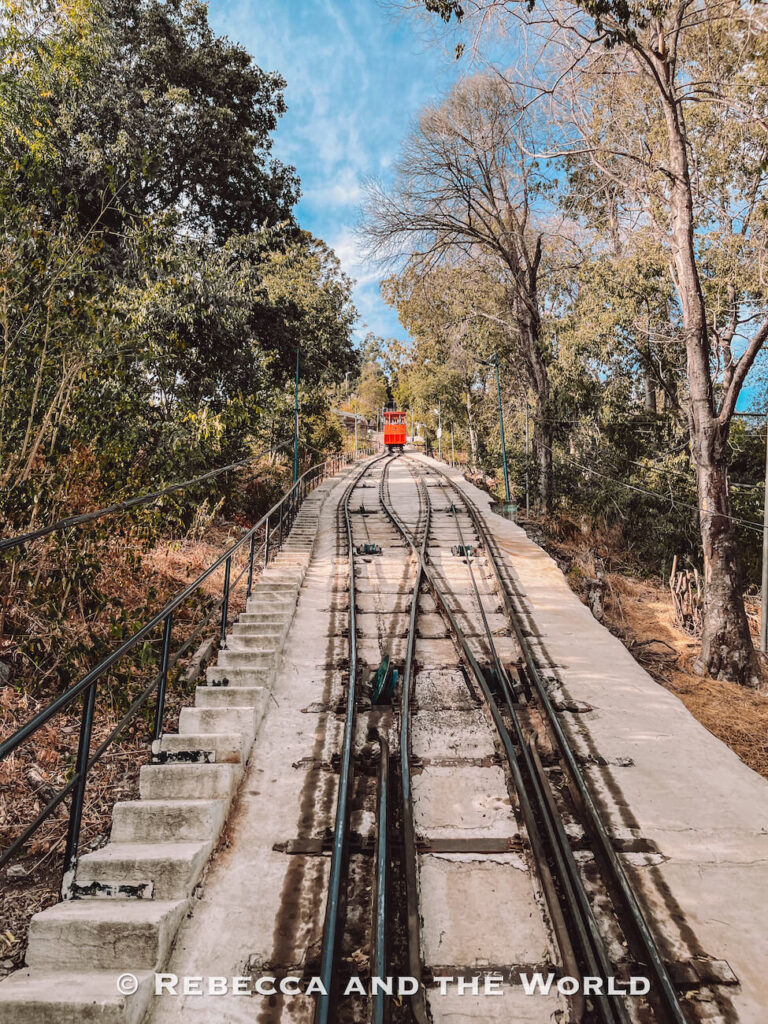

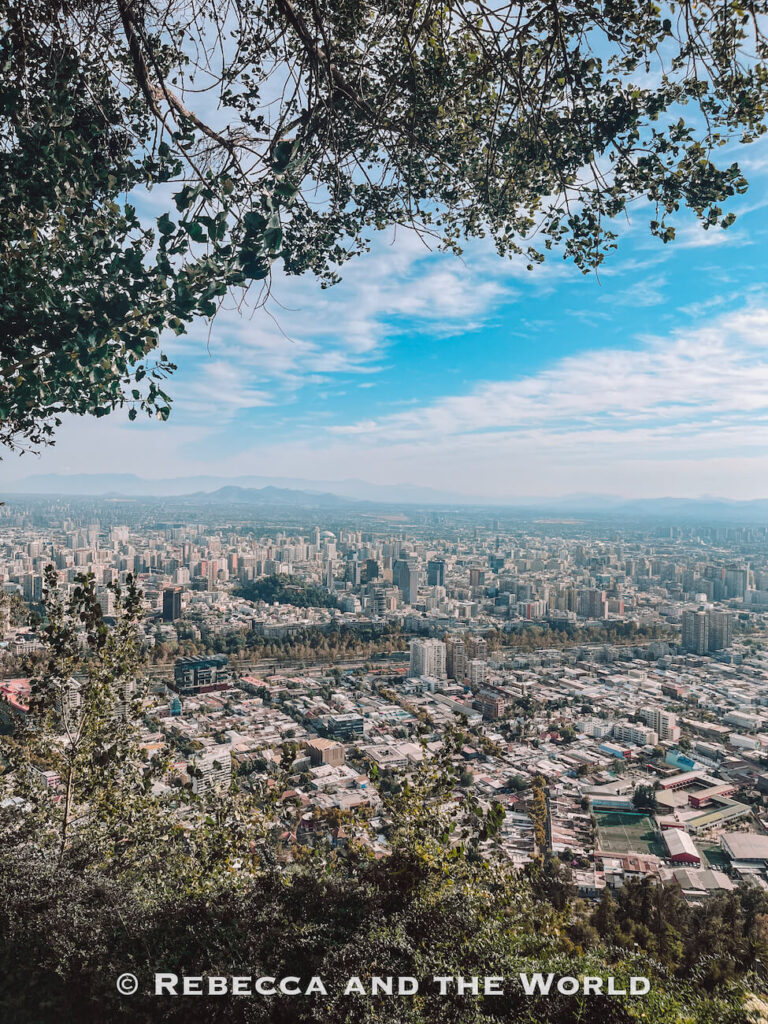
If you’re looking for a higher hill, head to Cerro San Cristóbal, the biggest hill in Santiago, which rises around 300 metres above the city.
But don’t worry, you don’t have to walk up here if you don’t want to – there’s a funicular that takes visitors up and down the hill (CLP$4.500 return trip; price goes up on weekends and public holidays). There’s also a cable car (teleférico).
This is one of the most popular things to do in Santiago. Cerro San Cristóbal (the official name is actually Parque Metropolitano de Santiago or Parquemet for short, so don’t be confused if you see both names) is home to a 14-metre-high statue of the Virgen de la Inmaculada Concepción (Virgin Mary), the national zoo, a botanical garden, an adventure park, swimming pools and a Japanese garden, so you could easily spend a whole day exploring the park.
Address: Pío Nono 450
Cost: Free to enter the park, but some attractions (for example, the zoo) have an entrance fee, as do the funicular and cable car
Opening hours: Daily, 6am to 7pm (winter months) and 6am to 8.30pm (summer months); funicular hours are shorter and depend on the season; opening hours for attractions vary
Taste pisco sours and wine

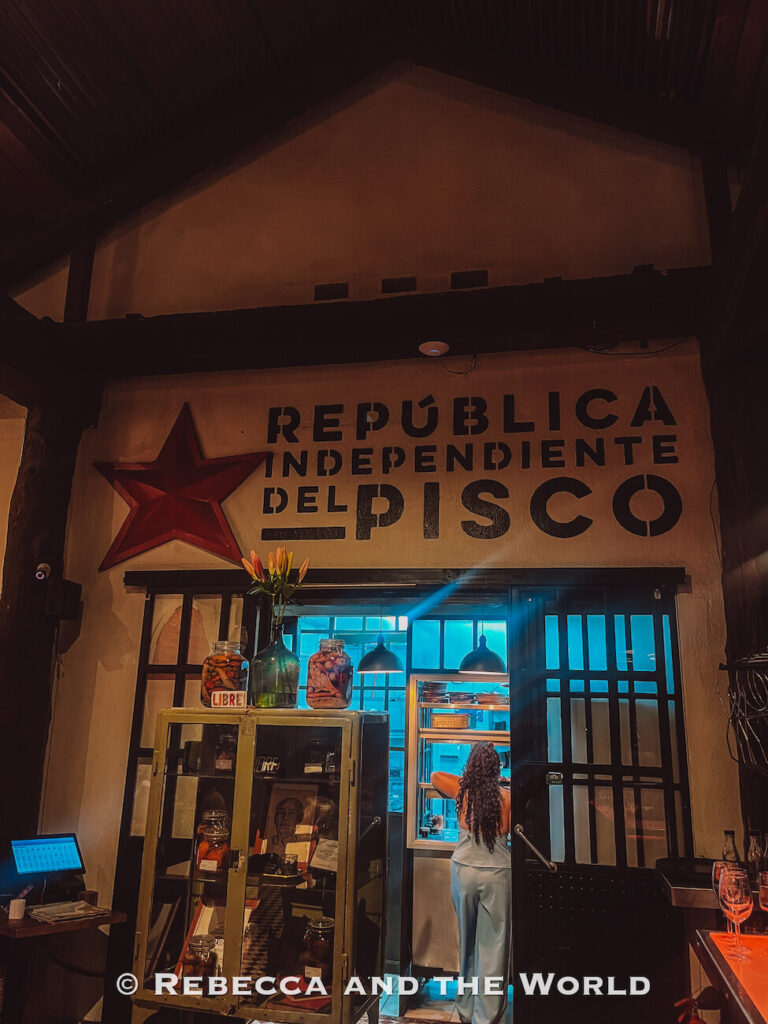
There’s plenty of debate between Peru and Chile about which country invented the pisco sour.
I’m certainly not going to insert myself into that discussion, but I am going to drink the cocktail, which became a firm favourite of mine after living in South America. You should try one (or a few!), too, when you visit Santiago.
I think Chipe Libre – República Independente del Pisco serves up some of the best pisco sours in Santiago, but do be prepared to be overwhelmed by the choices on offer. Talk to the bartender about your preferred tastes and they’ll point you in the right direction (our bartender Luis was fantastic with his recommendations).
Chile is also well known for its wine, and one of the best places to try wine in Santiago is Bocanáriz. All the servers are trained sommeliers and can guide you in a tasting. The menu is huge, so a flight can be the best way to test out a few different wines. I also love the food here – everything is so flavoursome and made with Chilean produce.
Take a Chilean cooking class

If you like food, then learning how to cook the food of whichever country you’re in is always an interesting way to understand the culture and people.
While Chile doesn’t have the same reputation as a culinary destination as Peru or Argentina, we always eat a lot of great food in Santiago.
We’ve also learned how to prepare a few classics ourselves. With the wonderful team from Uncorked Chile, we whipped up empanadas, sopapillas con pebre, ceviche (which we actually made with mushrooms instead of seafood, a great vegetarian alternative), leche asada (flan) and, of course, pisco sours.
Sadly, Uncorked Chile was a casualty of the pandemic, so here are some other Santiago cooking classes that I’d pick:
- In this cooking class with owners and chefs Patricio and Jennifer you’ll learn to make a few typical Chilean dishes – accompanied by cocktails. Check availability online here
- Learn to cook in a home in Santiago during this cooking experience – after you’ve shopped for ingredients at a local market. The meal is served with Chilean wines. Check availability online here
Sip wine on a day trip to the Maipo Valley
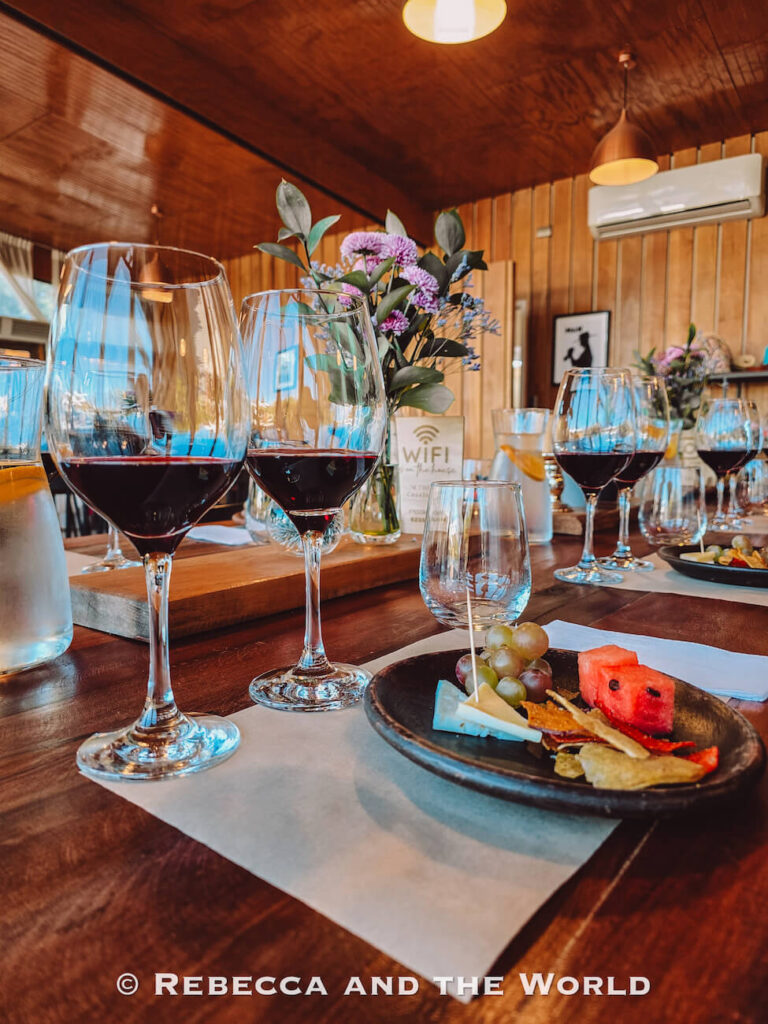

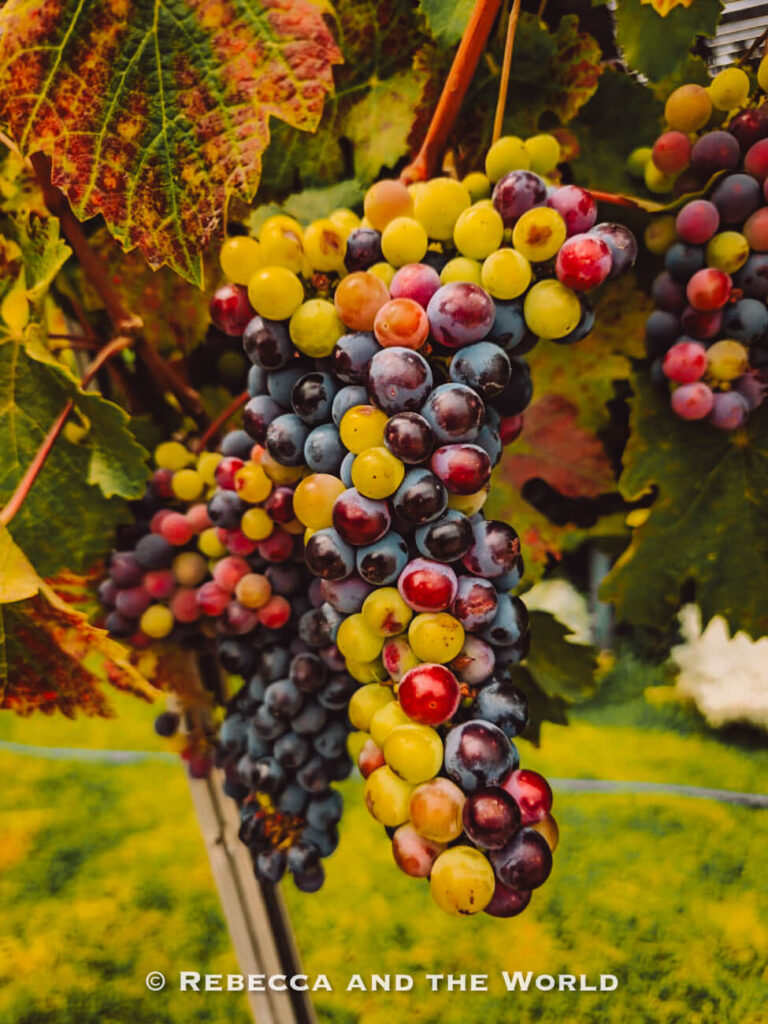
If you’re going to do just one day trip from Santiago, make it the Maipo Valley. It’s the closest wine region to the city, so you can be swirling a glass in the vineyards in under an hour.
Maipo is also one of Chile’s most famous wine regions – especially for Cabernet Sauvignon but also other Bordeaux varieties such as Merlot, Cabernet Franc and Carmenère – which makes it an easy choice even if you don’t know much about Chilean wine beyond “it’s good and it’s great value”.
We spent a day in the Maipo Valley on this fantastic wine tour, visiting three wineries as well as stopping for a delicious lunch. It was a great way to break up a city visit – and be surrounded by vineyards and mountain views. It truly is gorgeous out this way.
To keep it safe, I’d recommend taking this tour, but if you do have a designated driver, then you can easily rent a car, book some tastings and follow the itinerary I have in my Maipo Valley day trip guide.
🍷 BOOK A MAIPO VALLEY DAY TRIP HERE 🍷
Take a day trip to Valparaiso
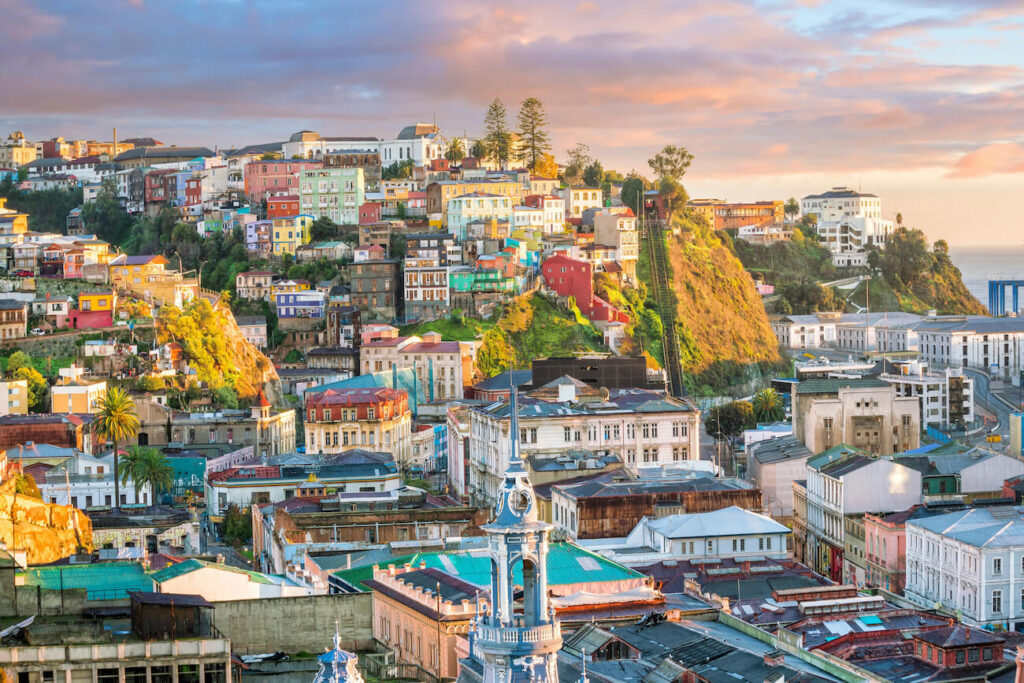
If you need a break from the city, Valparaíso is one of the easiest day trips from Santiago. This gritty, creative port city is famous for its maze of hillside neighbourhoods, street art and funiculars, and the historic quarter is UNESCO-listed.
Most people visit independently: buses run regularly and the ride is usually around 1.5-2 hours each way, depending on traffic and which terminal you’re using. You can book a seat on a bus on Busbud for a very affordable fare.
Or you can book a day trip to Valparaiso (and nearby Viña del Mar) and leave all the details up to someone else.
Once you arrive, the best plan is to simply wander – the magic of Valpo is in the crooked staircases, hidden murals, little galleries and sweeping viewpoints.
If you liked La Chascona in Santiago, then make sure you visit Pablo Neruda’s house in Valpo, La Sebastiana. It has beautiful views and plenty of quirky details inside. Just note it’s closed Mondays (like many museums).
Top tip: Valparaíso can feel a bit rough around the edges in parts, so keep your valuables tucked away, skip flashy jewellery/cameras, and consider joining a walking tour if you’d prefer to explore with a local.
BOOK A FREE WALKING TOUR IN VALPARAISO
Escape to Cajón del Maipo
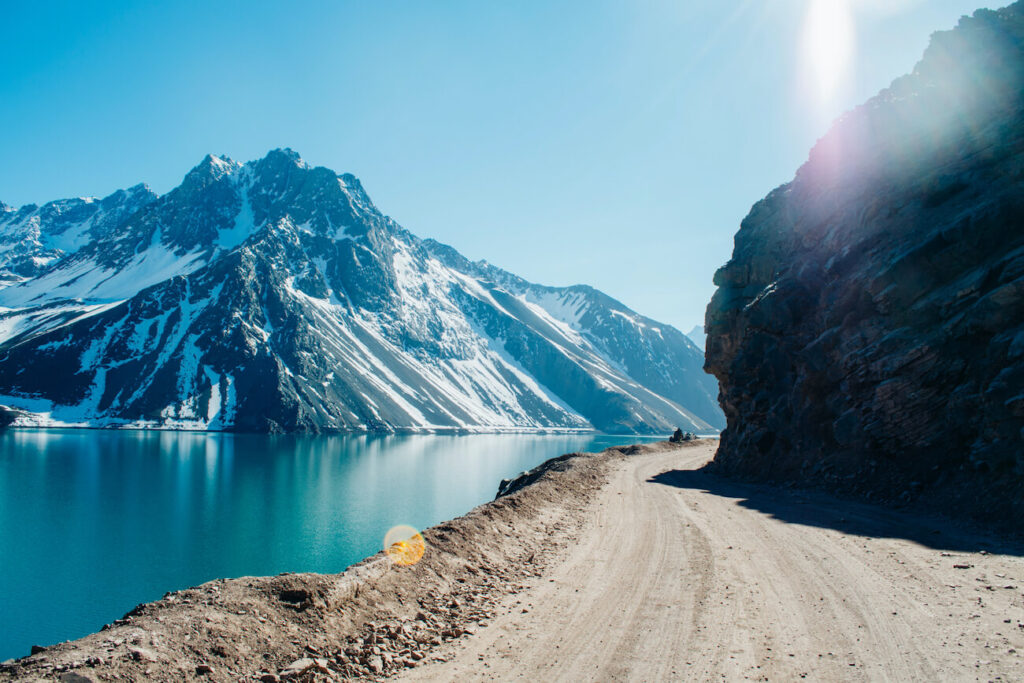
When you need a proper dose of mountain scenery, Cajón del Maipo is the classic Santiago day trip. This is the Andean canyon area southeast of the city, with a scenic road that leads past rivers, viewpoints and trailheads, with San José de Maipo as the main hub town. It’s close enough to do in a day, but it feels like a completely different world.
What you do here really depends on your travel style:
- For epic views: aim for Embalse El Yeso, the bright turquoise reservoir that’s one of the most photographed spots in the area. A quick heads-up: access to the shoreline is restricted for safety (you usually view it from the road/lookouts).
- For relaxation: pair the scenery with a soak at Termas Valle de Colina, a series of natural hot pools in the mountains.
- For a simpler (and cheaper) DIY day: you can bus it to San José de Maipo and potter around from there, but getting to the further sights (like the reservoir or hot springs) is much easier with a tour or private transport.
My tips: Start early, pack layers (it can be much colder up there), bring snacks and water, and don’t be surprised if plans need to change last-minute based on weather or road conditions.
Visiting Santiago – Need to know
Best time to visit Santiago
The shoulder seasons are the nicest times to visit Santiago: spring (September to November) and autumn (March to May). You’ll usually get mild, comfortable temperatures for walking around neighbourhoods and hitting viewpoints, and it’s generally less hectic than peak summer.
Summer (December to February) is hot and dry in Santiago, but it’s also the busiest and prices can jump.
Winter (June to August) brings cooler days and most of the city’s rain, but it can be a great time if you want fewer crowds in town.
Where to stay in Santiago
Santiago is a big, spread-out city, so where you stay makes a huge difference – especially if it’s your first visit. I have a full guide to where to stay in Santiago, where I recommend:
- Lastarria: My top pick for first-timers on a short trip. It’s walkable, central, and puts you close to museums, parks and great restaurants (and it’s an easy base for exploring the historic centre and nearby neighbourhoods).
- Bellavista: A fun, lively base if you want nightlife, street art and loads of bars and restaurants at your doorstep. It’s also super convenient for sights like La Chascona and it’s an easy trip into the centre. Just be a bit more mindful at night – it can get rowdy, so I’d choose accommodation on a quieter street.
- Centro Histórico: Great if you want to be right amongst Santiago’s classic landmarks and have easy Metro access. The trade-off is that it can feel busier than other areas, and it’s not my favourite spot late at night – but for sightseeing-focused trips (especially if you’ll be out and about all day), it’s a very practical base.
Here are some hotel options in Lastarria to consider:
The Singular Santiago (Lastarria)
On our first-ever trip to Santiago we stayed at The Singular Santiago, a beautiful luxury hotel. We loved the huge, comfortable bed (always a win after long travel days), and the staff genuinely went out of their way to make our stay wonderful. The location is excellent for sightseeing and they have a great rooftop bar. Check rates and availability on Booking.com or Expedia.
Hotel Magnolia
My most recommended hotel in Santiago is Hotel Magnolia. It’s in a great location, has a great rooftop bar and the rooms are modern and comfortable. Check rates and availability on Booking.com or Expedia.
Casa Noble Hotel Boutique
Casa Noble is a lovely boutique option with breakfast included. It’s a convenient base for exploring the main parts of the city, and it’s on a quiet street. Check rates and availability on Booking.com or Expedia.
Park Plaza Apart Hotel (Lastarria)
On our most recent trip we stayed at Park Plaza Apart Hotel. What I loved most was having a small kitchen, so we could make breakfast at “home”. The rooms could do with a refresh but overall it was comfy. Location-wise, it was an easy, convenient spot for getting around the city. Check rates and availability on Booking.com or Expedia.
How to get to Santiago
Santiago’s main airport is Aeropuerto Internacional Arturo Merino Benítez (SCL). There are direct connections from Australia, New Zealand, the UK/Europe, North America, and plenty of other South American cities.
→ CHECK FLIGHTS TO SANTIAGO ONLINE HERE ←
Getting from the airport to the city: Use Cabify or Uber to get from the airport to the city, or the official taxis which will give you a set rate (it’s not far off the price of a rideshare).
How to get around Santiago
For most of the key things to do in Santiago, you can easily get around on foot. It’s easy to walk from Lastarria to Bellavista and the historic centre.
Santiago has an extensive metro system. It’s straightforward, with seven colour-coded lines. To use it, you’ll need a Bip! card, which you can buy and top up at Metro stations and other authorised points. The Bip! card also works on the bus system.
Taxis and rideshare are both widely available. If you take a taxi, make sure the driver uses the meter to avoid surprises at the end of the trip. On our most recent trip I had two locals telling us to avoid taxis hailed on the street for safety reasons – but I’ve personally never had an issue getting a taxi in Santiago.
Things to do in Santiago: FAQs
Is Santiago worth visiting?
Yes – Santiago is absolutely worth visiting, and not just as a stopover. The city has plenty to keep you busy: great neighbourhoods to wander, excellent museums and markets, easy viewpoints, and a genuinely strong food and bar scene. Plus, you can be in wine country in under an hour.
How many days do you need in Santiago?
I’d say 2-3 days is the sweet spot for most travellers. That gives you enough time to see the key city sights (markets, museums, viewpoints, neighbourhoods) without rushing, and to work around practicalities like museum closures on Mondays. Stretch it and you can add on a few day trips to places like the Maipo Valley and the port town of Valparaiso.
Do I need a visa to visit Chile?
Citizens of countries including the USA, Japan, Canada, the UK, European Union and South American countries don’t need a visa to enter Chile. As of September 2025, Australians no longer need a visa to visit (hooray!). Check with your local embassy for up-to-date information and requirements.
Do you need cash in Santiago, or are cards widely accepted?
Cards are widely accepted in Santiago, and you can usually pay by card in hotels, restaurants, cafés, supermarkets, museums and most mid-range shops. That said, it’s still smart to carry some cash for smaller purchases like picking up a snack from a street vendor.
Is Santiago, Chile safe to visit?
Santiago is generally considered safe for tourists, especially in comparison to other large cities in Latin America. Like any major city, it has areas that are safer and others that are best avoided, especially at night. Pickpocketing and petty theft can happen, particularly in busy tourist areas, but most visitors have a safe experience in Santiago.
Did you find this article helpful? Consider buying me a coffee as a way to say thanks!
What do you think are the best things to do in Santiago, Chile? Let me know in the comments below if you have any questions before you visit Santiago.
Read next
Before you go… you might like these South America travel blogs:
- The Ideal First-Timer’s Guide to 2 Days in Santiago, Chile
- Where to Stay in Santiago: Best Areas + Hotel Recommendations
- How to Visit the Maipo Valley on a Day Trip from Santiago
- The Best Dishes to Eat in Chile: A Review of A Chef’s Tour
- How to Spend 3 Days in Buenos Aires, Argentina
- Rio de Janeiro Itinerary: 3 Days in The Marvellous City
CHILE TRIP ESSENTIALS
- Book your flight to Chile online with Skyscanner. I like how Skyscanner allows you to find the cheapest days.
- One thing I always purchase is travel insurance! Travel Insurance Master allows you to compare across multiple policy providers, while SafetyWing is great for long-term travellers and digital nomads.
- Wise is my choice for sending and receiving money and spending money overseas (you can get a digital and physical card).
- Find great hotels across Chile. Check prices on Booking.com and Expedia online.
- Check out the huge range of day tours throughout Chile on GetYourGuide or Viator. I love a good food tour in particular!
- Saving money? Check out the range of free walking tours in Chile with GuruWalk (don’t forget to tip!).
- Grab an e-sim to stay connected.
- How to get around? I use DiscoverCars for car hire, or Motorhome Republic and Jucy for campervan/RV rental. For buses, trains and ferries, I use 12GO, Busbud and Omio.
- A copy of the Lonely Planet guide to Chile will be handy. Also pick up a Spanish language phrasebook to help you navigate your visit.
- Buying some bottles of delicious Chilean wine? Keep them safe in these wine bags.
- Check out my Amazon shop for my fave travel items – everything from backpacks and suitcases to travel adapters and beauty products.
WHAT TO DO IN SANTIAGO, CHILE: PIN IT FOR LATER
Save this Santiago travel guide to Pinterest for later.