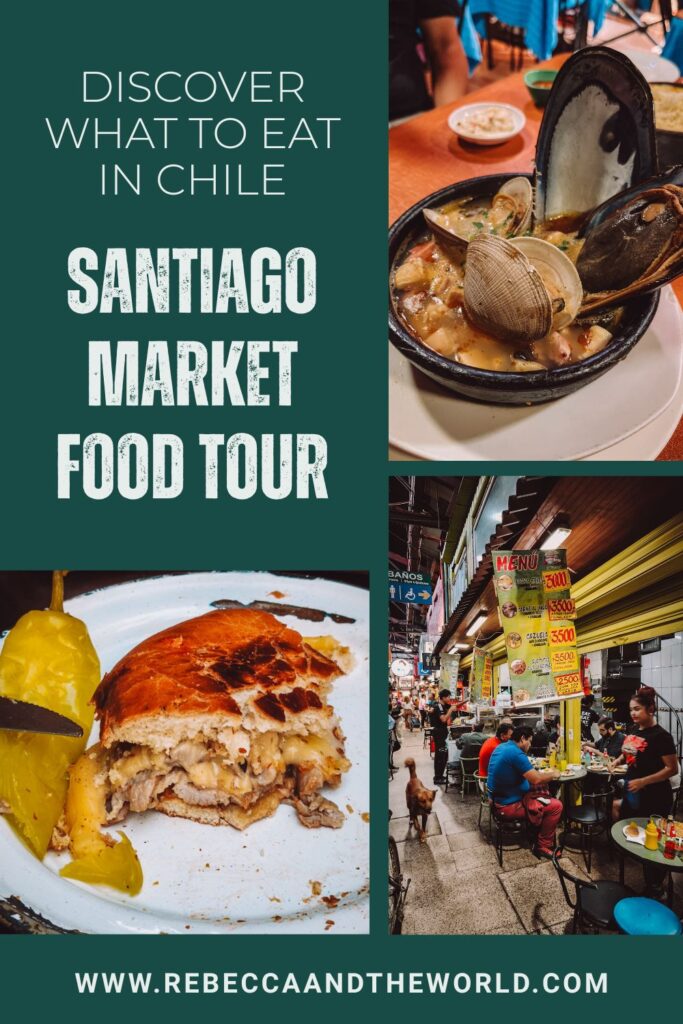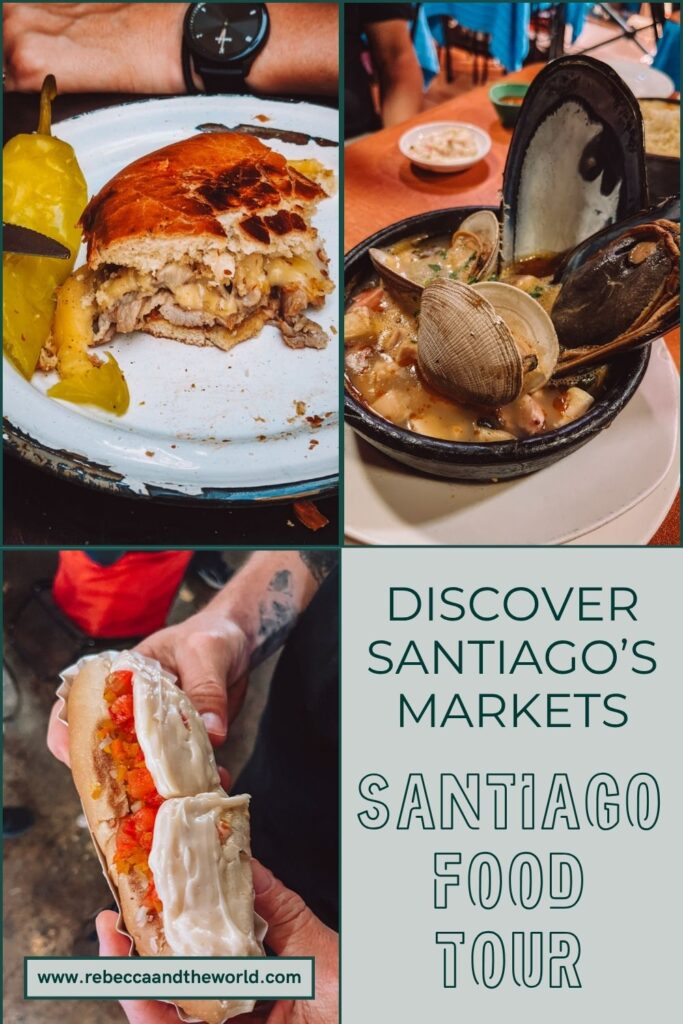

Wondering what to eat in Chile? You may not be familiar with the food in this country – which is why I recommend joining a Santiago food tour with A Chef’s Tour to explore the markets and get an understanding of Chile’s most important dishes.
Chilean food doesn’t get the same hype as its South American neighbours. Peru, Colombia, Argentina – they all have their famous dishes. But Chile? What are their culinary delights?
That’s why on my most recent trip back to Santiago I decided to take a deeper dive into Chilean food with A Chef’s Tour. I’ve visited Chile before, but if someone asked me what Chilean cuisine actually is beyond empanadas and wine, I didn’t have a great answer.
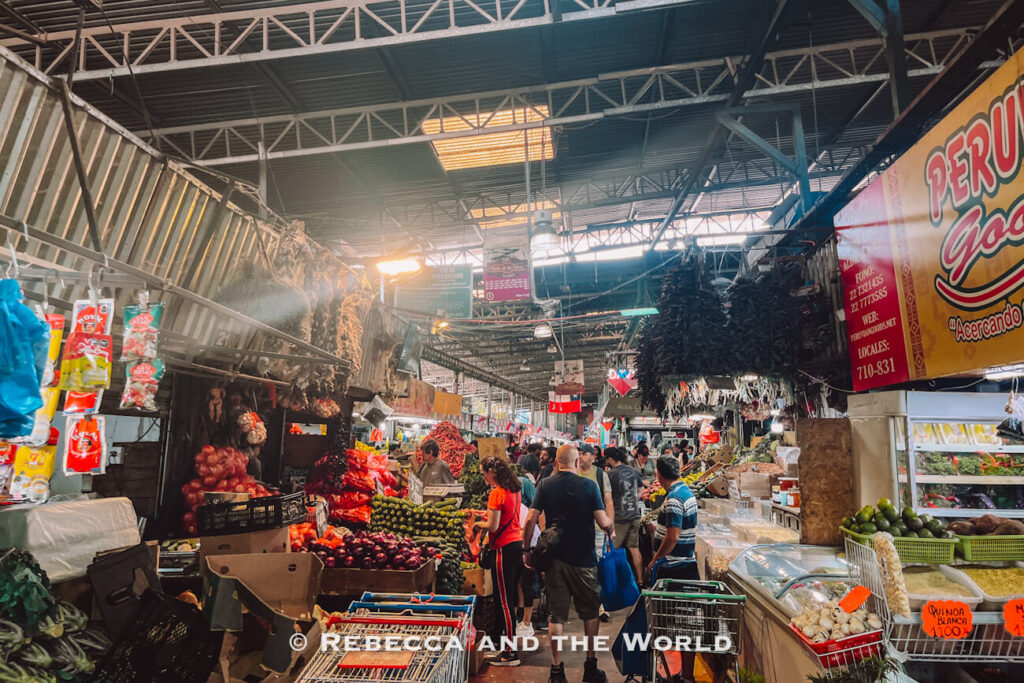
A Chef’s Tour’s “Mercado Meals” tour focuses on the city’s markets – which can be overwhelming if you don’t know what you’re looking at. There are ingredients you’ve never seen before, stalls selling similar-looking things in dizzying rows and a lot happening at once. Markets are one of the best ways into the food culture of a country, but when there’s so much noise and colour and activity, it’s easy to leave feeling like you’ve only skimmed the surface. Going with a guide will completely change the experience.
So, come along with me and discover some of Chile’s great dishes in this Santiago food tour review – street snacks you can grab on the go, corn-heavy comfort food that feels like someone’s home cooking, briny seafood straight from the Pacific and something sweet to finish.
This blog post may contain affiliate links, meaning if you book or buy something through one of these links, I may earn a small commission (at no extra cost to you).
What is A Chef’s Tour’s Santiago food tour?
If you’ve ever wandered into a big market on your first day in a new city and thought, Where do I even start? – this tour aims to solve that.
A Chef’s Tour’s Santiago food tour is built around the city’s market culture and it’s a great way to get a handle on Chilean food early in a trip.
The tour begins in Plaza de Armas, where our guide, Raúl, gave us a quick grounding in Chile’s Indigenous and colonial history before we did what locals do: jumped on the metro and headed straight for the food.
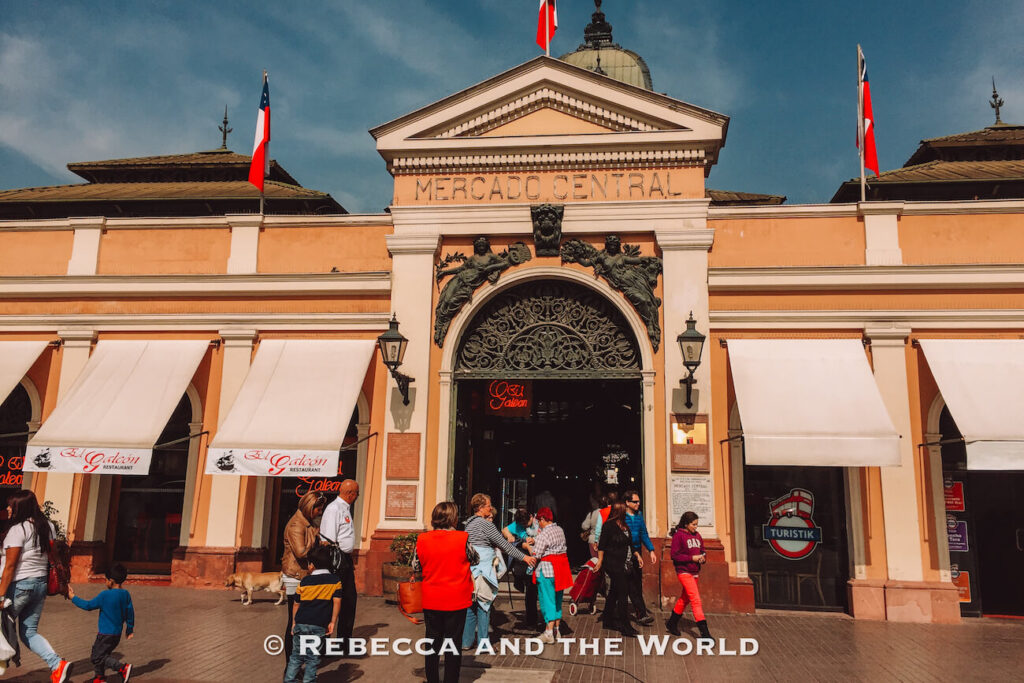
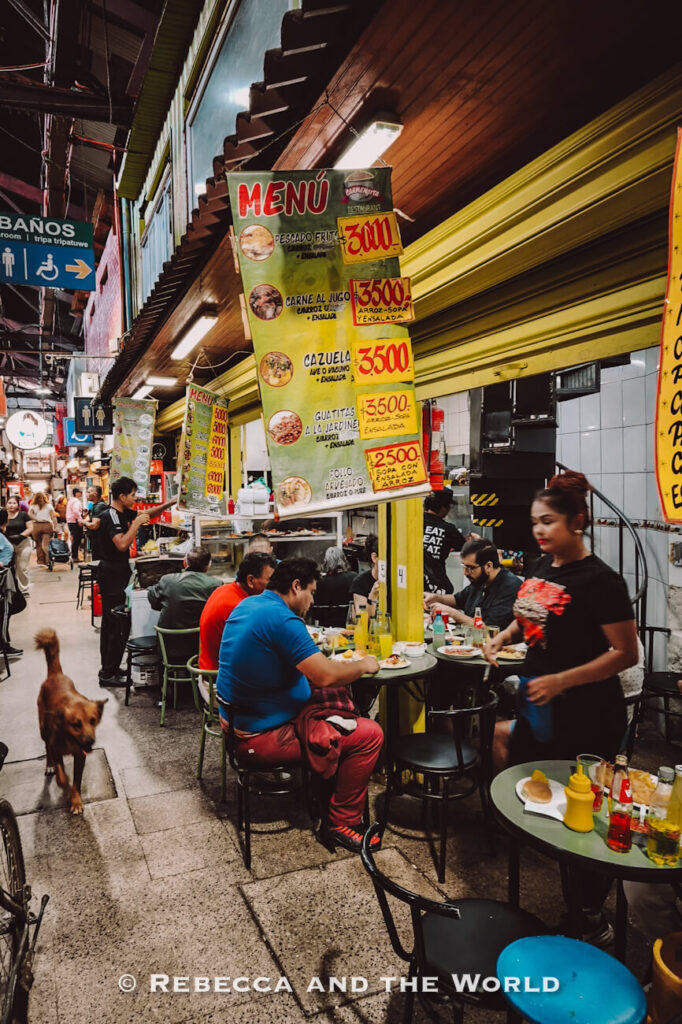
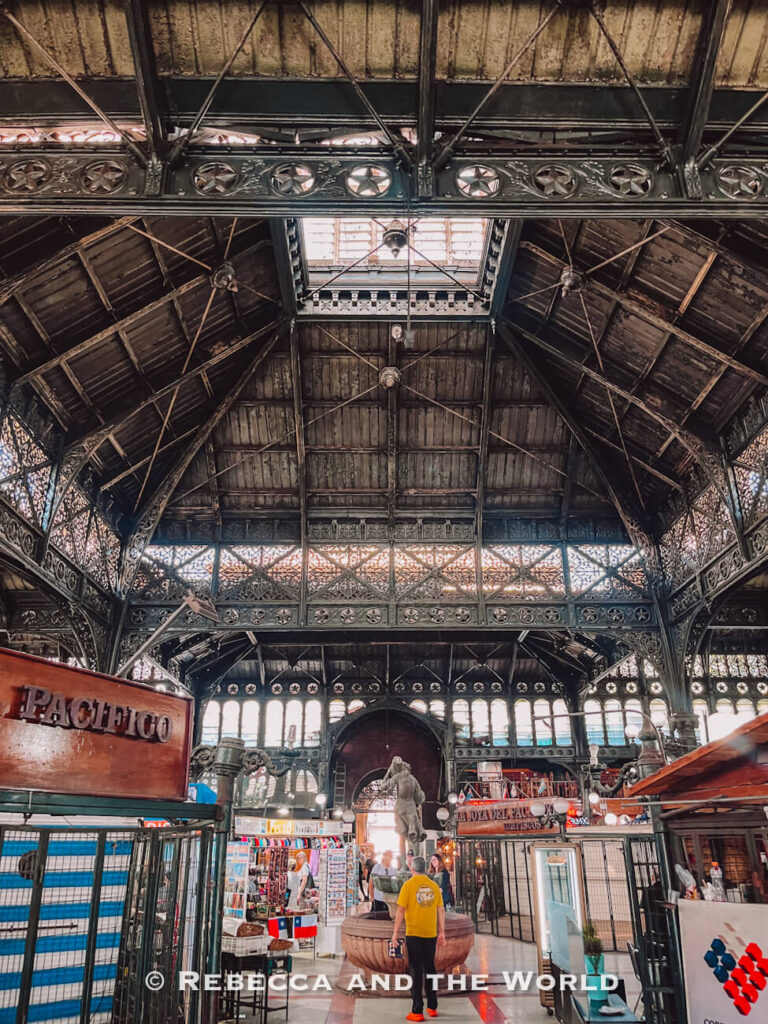
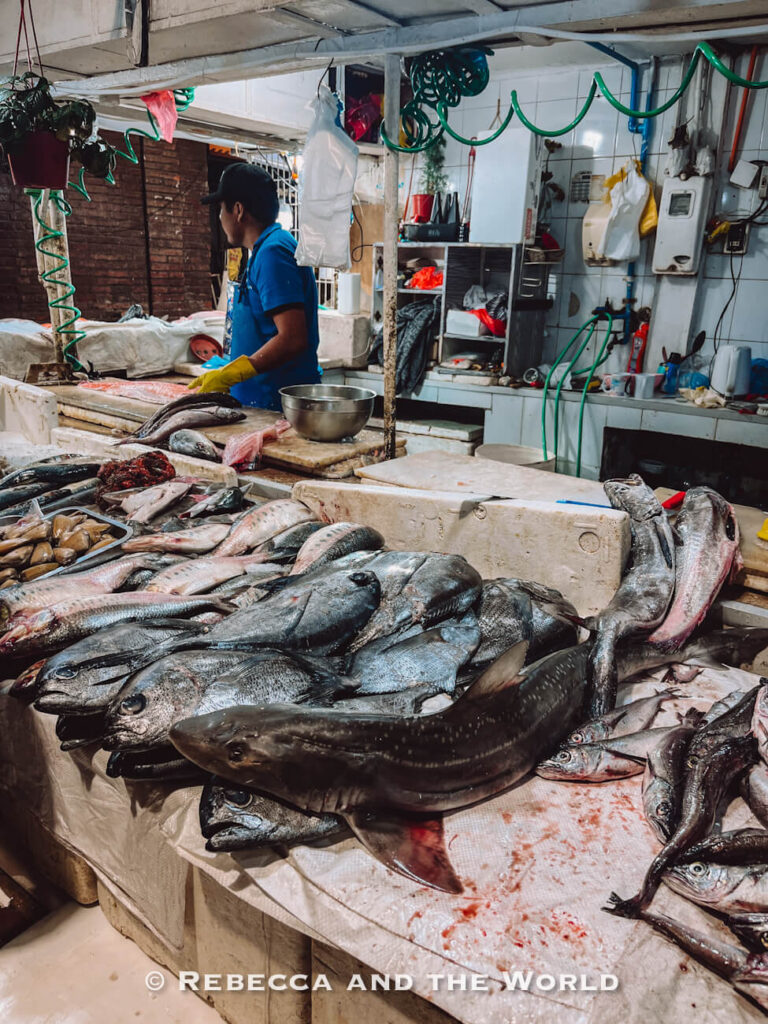
From there, the tour threads its way through four markets in central Santiago: La Vega Central, La Vega Chica, Tirso de Molina and Mercado Central. You walk between them, stopping as you go to eat, sip and learn.
What I appreciated most is that it’s not a tour where you’re nibbling while standing on a kerb and then being rushed along. We sat down for every bite. Some stops are quick – we tried an empanada at one spot and moved on – but others are more of a pause, where you can rest your feet and try a couple of dishes in one restaurant.
The food is paced well, too. It starts with smaller snacks and builds towards heartier, more filling dishes, finishing with a light (but sugary!) dessert as a sweet, very Chilean full stop at the end. In total, it’s 12+ tastings, and at US$59 per person, it’s genuinely good value – we were completely full by the time we left.
Group size is capped at eight people, but the tour is still fairly new, and on our day it was just my husband and me. That meant we could ask a million questions (Raúl handled them all) and go deeper on the dishes that interested us most. Raúl also seemed to know half the people working in the markets, so we felt in good hands.
And afterwards, I felt like I could actually read a menu and confidently order the things I’d enjoyed. Even though we’ve been to Chile before, this tour was my first time trying a few classics I’d seen everywhere (like completos and mote con huesillo), so I knew what to look for after the tour.
Tours run daily (except Sunday) from 10am to 2pm. I recommend: arriving hungry, wearing comfy shoes and not booking a big dinner that night! It’s a great addition to a 2-day Santiago itinerary!
🥟 BOOK A CHEF’S TOUR MERCADO MEALS SANTIAGO FOOD TOUR 🥟
What to eat in Chile
One of the best things about the Santiago food tour is that it covers a cross-section of traditional Chilean food: street snacks, comforting corn-based dishes, hearty soups and seafood. Chileans certainly know their way around carbs: bread, corn, potatoes, hearty soups, rich seafood bakes feature heavily. It’s not always the healthiest cuisine, but it is satisfying and comforting.
I’ve listed everything we tried on the tour below.
And before you come at me – this list of what to eat in Chile isn’t designed to be comprehensive! It doesn’t touch on many of the regional dishes that Chile is well-known for – this list is focused on the foods we tried (and enjoyed) while experiencing this Santiago Chile food tour.
1. Empanada de pino
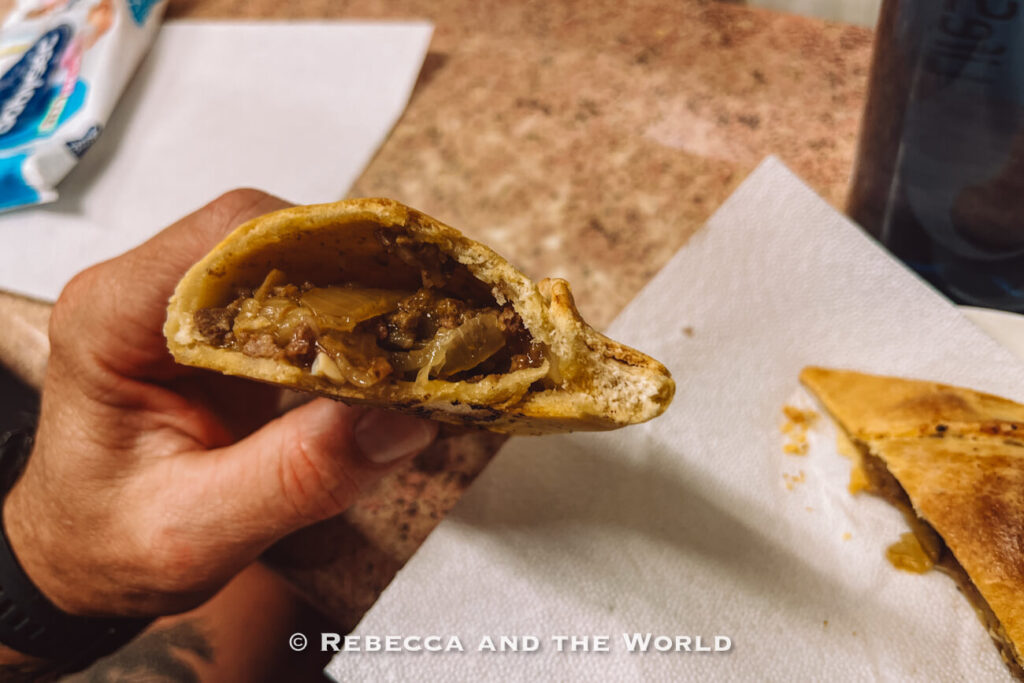
If you eat one thing in Chile, make it an empanada de pino. “Pino” refers to the classic filling of beef mince, hard boiled egg, olives and (usually but not always) raisins. It’s the version you’ll see everywhere, from bakeries to market counters. They’re quick, portable and genuinely satisfying.
The name originates from a Mapuche word, pinu, which means “pieces of cooked meat”.
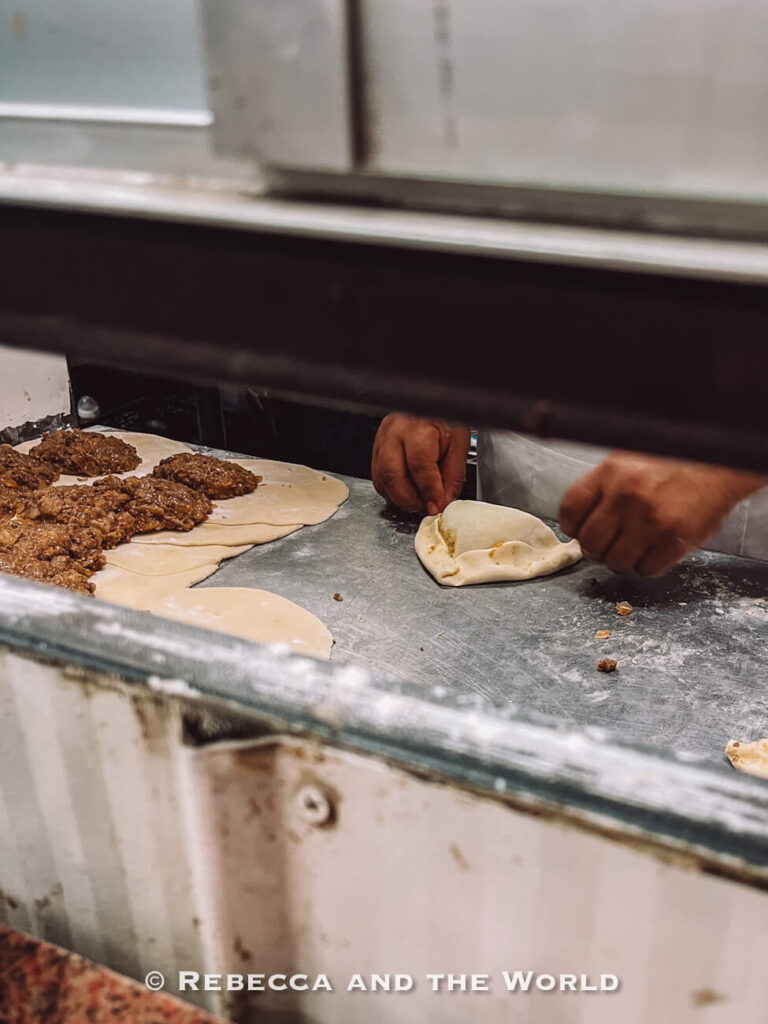
On the tour, we started with a pino empanada that was comically large – we had to share it, because I knew I had to pace myself. While we were munching it down, we could watch the staff making them in a steady rhythm behind the counter.
2. Sopaipillas
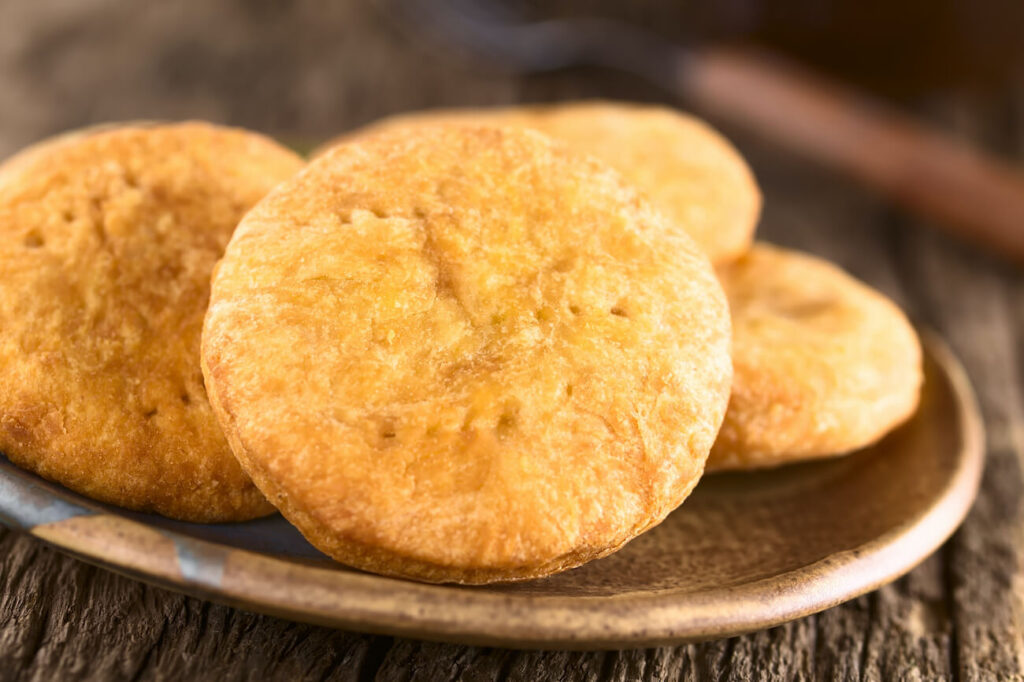
Sopaipillas are delicious: warm, comforting, slightly greasy in the best way and ideal for a quick snack. They’re round discs made of flour, pumpkin and salt, and then fried. They’re often eaten topped with pebre, a spicy sauce made of garlic, olive oil, vinegar, cilantro and aji peppers.
The spot the tour usually uses was closed on our day, so we didn’t have them on this particular tour – but I’m still including them because they’re such a classic, and we’ve actually made sopaipillas ourselves in Chile during a cooking class on a previous trip.
3. Completo
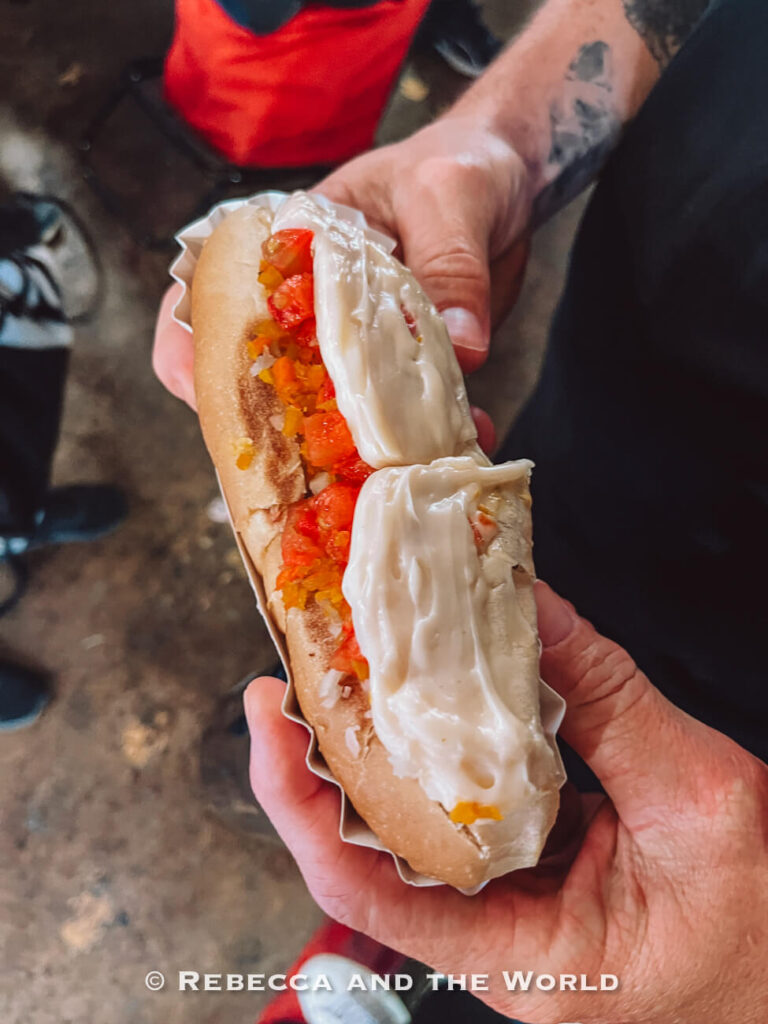
I’ll be honest: I’ve watched Anthony Bourdain eat a completo on his show and he didn’t exactly look thrilled, so I went in slightly sceptical.
But the completo we tried on the tour won me over. Chilean completos aren’t just “hot dogs” – they’re full meals disguised as fast food, loaded with toppings and absolutely unapologetic about it. And they’re super popular – the stand we bought ours from had a line of people waiting.
We had an Americano-style completo, topped with sauerkraut and an impressive amount of mayonnaise (Chileans really do love mayo). It was messy, oddly satisfying and much better than I expected.
If you want the most famous version, order an Italiano, which comes with tomato, avocado and mayo (ie. the colours of the Italian flag, hence the name).
You can eat these for a fast lunch, late-night bite or anytime you need something filling and quick. They’re not the healthiest thing but they are quite tasty!
4. Merkén
This was one of my favourite “small” tastings of the day: peanuts coated in merkén, the smoky chilli seasoning you’ll see all over Chile. It’s a smoky chili seasoning that comes from the Mapuche people and is made of goat’s horn chili, coriander seeds and salt.
It’s not tongue-scorching spice – it’s more of a smoky warmth – and it’s a great introduction to a flavour that pops up across Chilean food. After you’ve tried it once, you start noticing it everywhere – as a dry rub on meats, on roasted vegetables, seafood, sauces, dips, even sprinkled over chips.
5. Chilean sandwiches
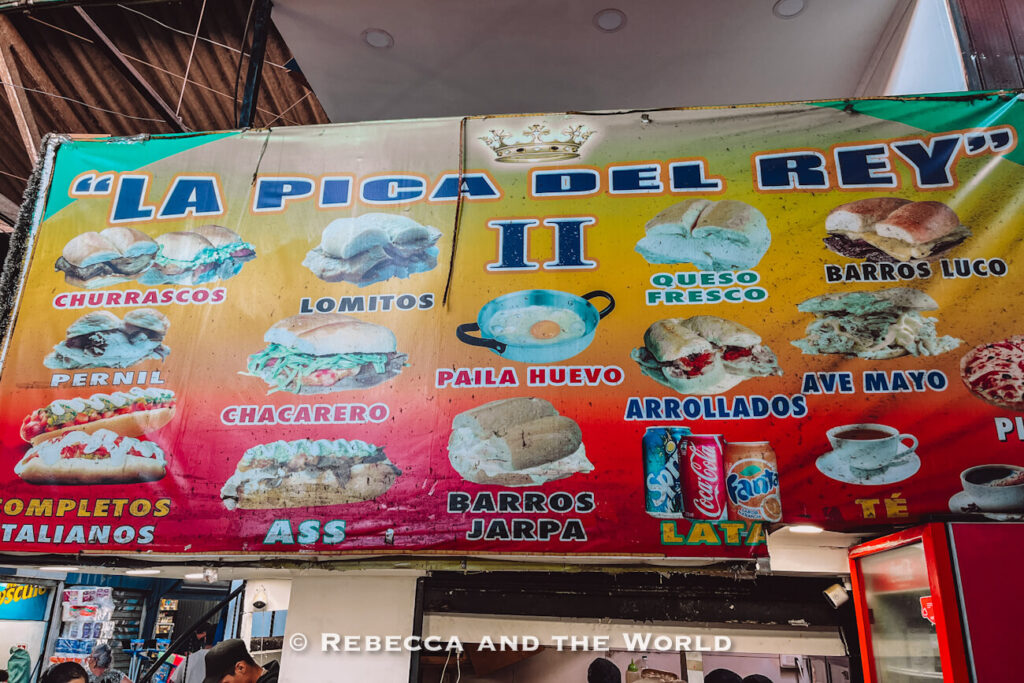
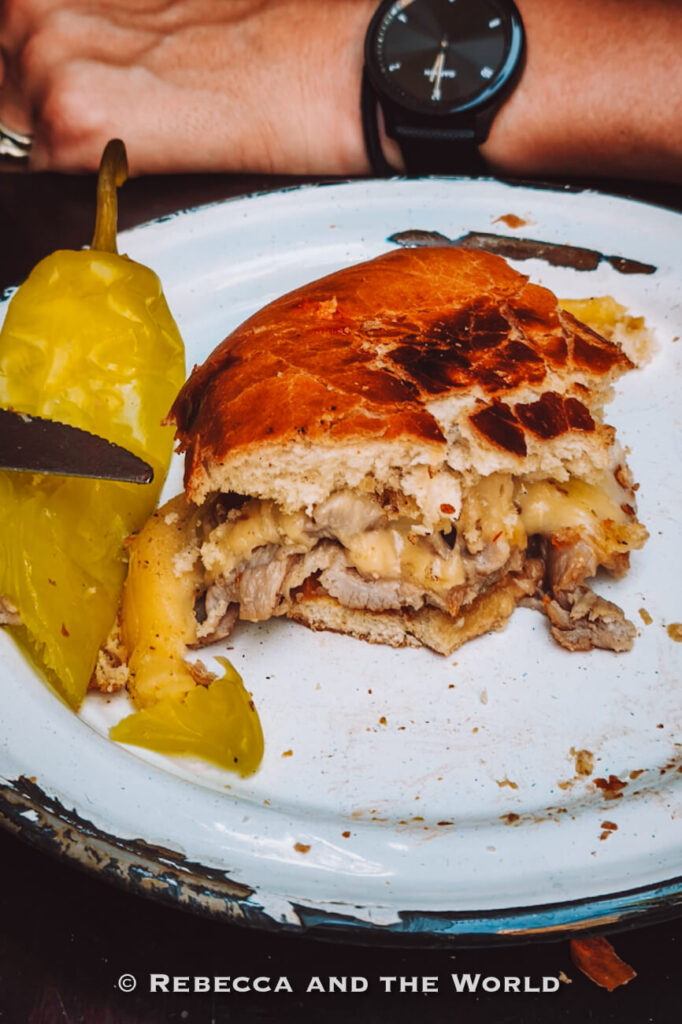
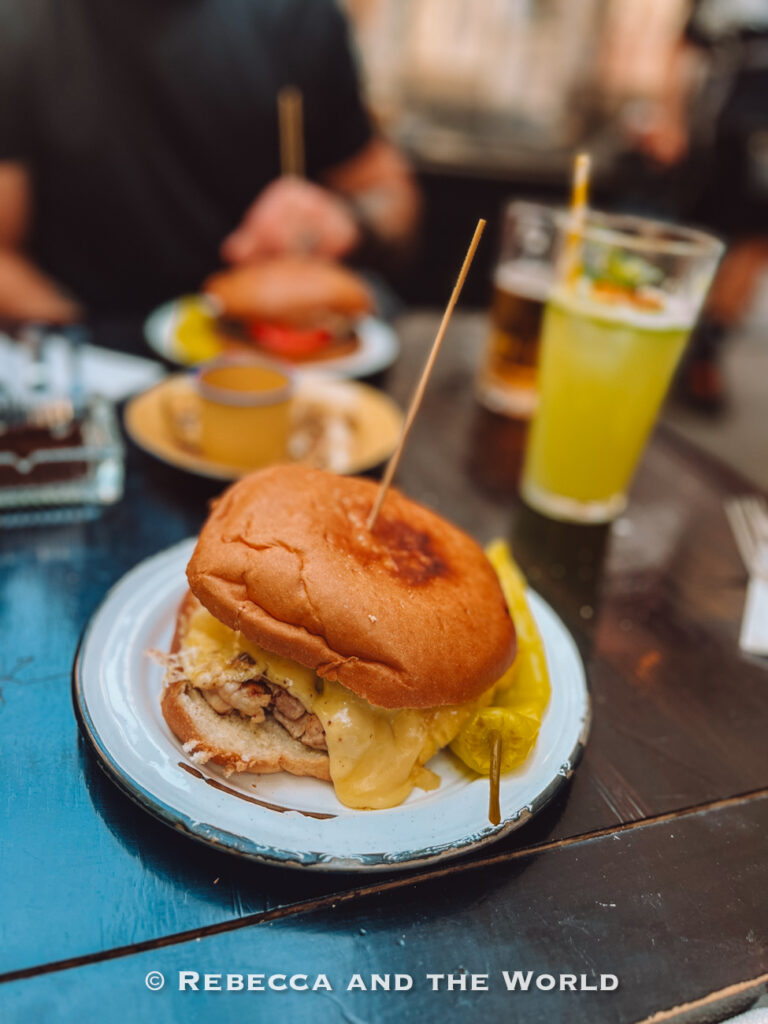
Chile has a serious sandwich culture. While we didn’t eat sandwiches on this tour, I’d be remiss not to include it in a guide to what to eat in Chile. Sandwiches in Chile aren’t a light lunch. They’re hearty and often gloriously overstuffed.
Look for a fuente de soda – a classic, casual Chilean eatery (think old-school diner vibes) – and start with one of these:
- Lomito (often piled with avocado and mayo)
- Churrasco (thin steak, usually with generous toppings)
- Barros Luco (beef and melted cheese, simple and iconic)
- Barros Jarpa (ham and cheese)
- Ave palta / ave pimiento (chicken with avocado / chicken with peppers)
6. Humita
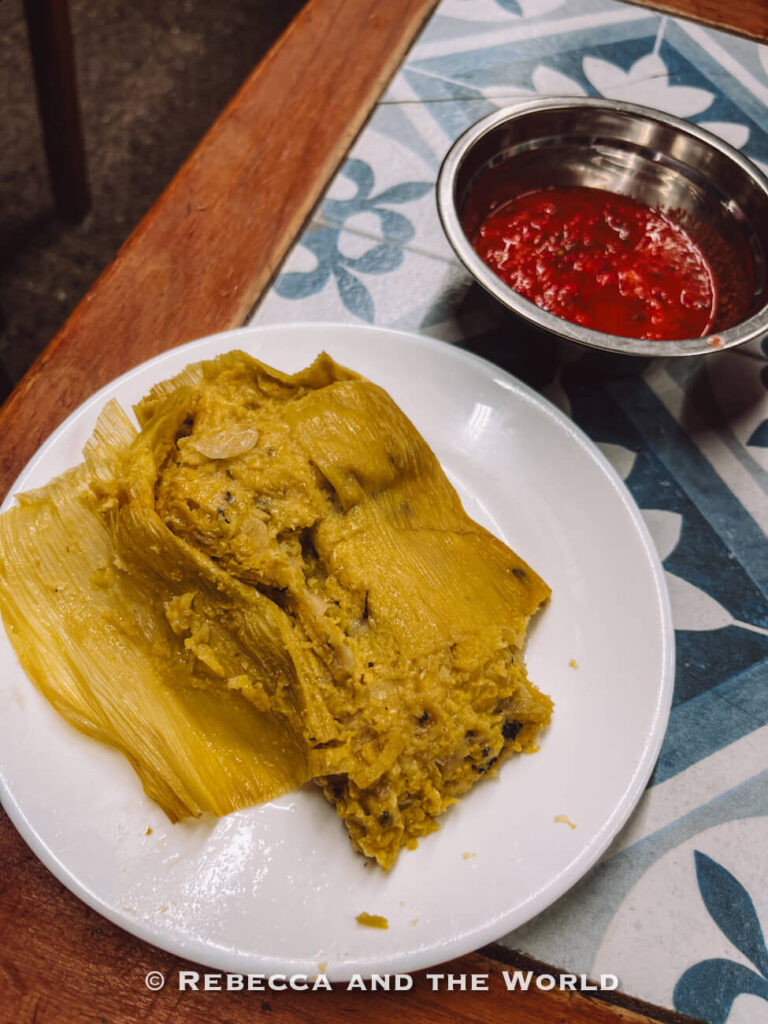
I love humitas. They’re so comforting: soft, warm and nourishing. They’re made of corn, which I also love.
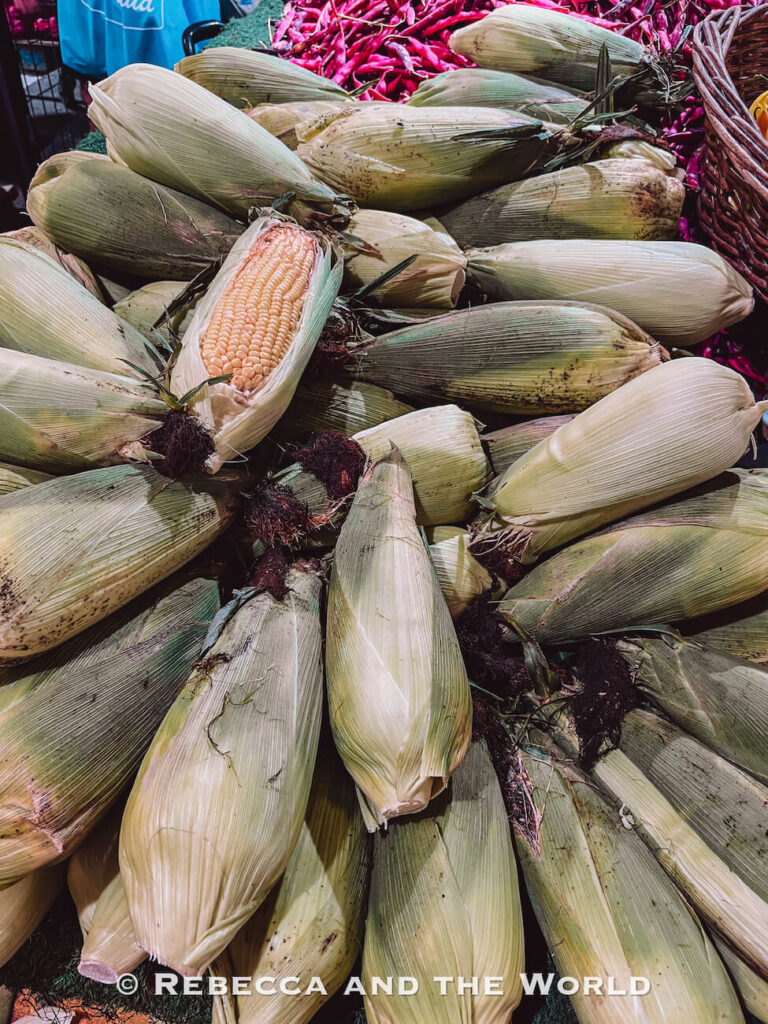
Humitas are also a good reminder that Chilean food is seasonal. Corn-based dishes tend to show up when corn is at its best, and you’ll often see humitas and pastel de choclo (see next food item) appearing around the same time.
7. Pastel de choclo
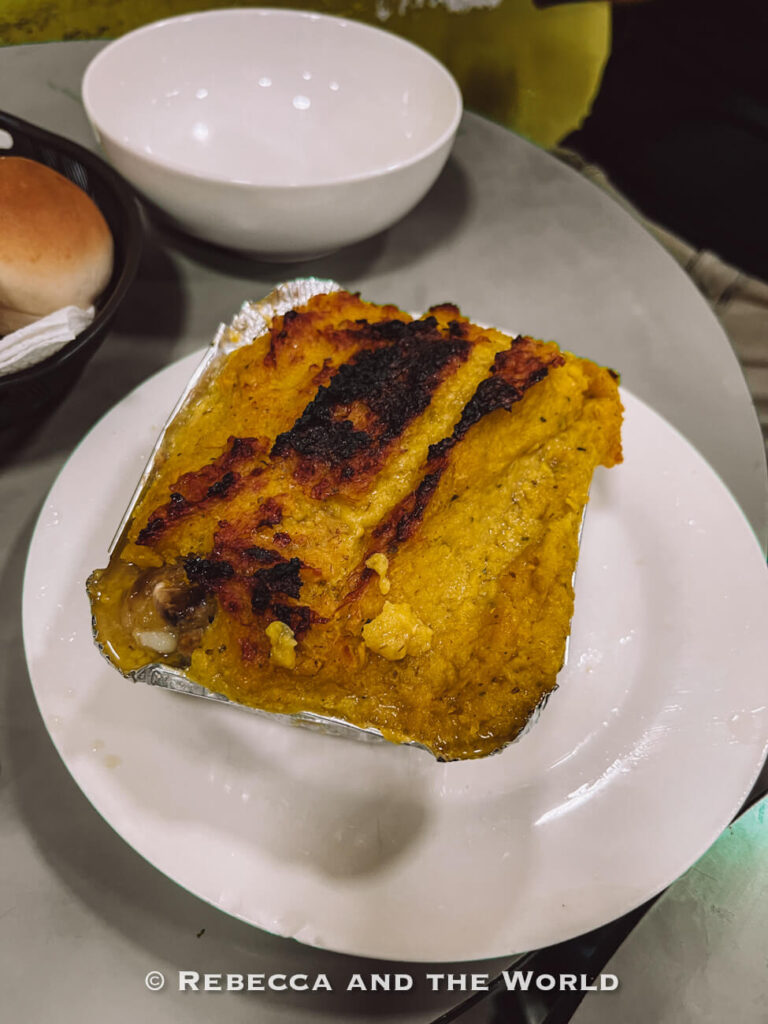
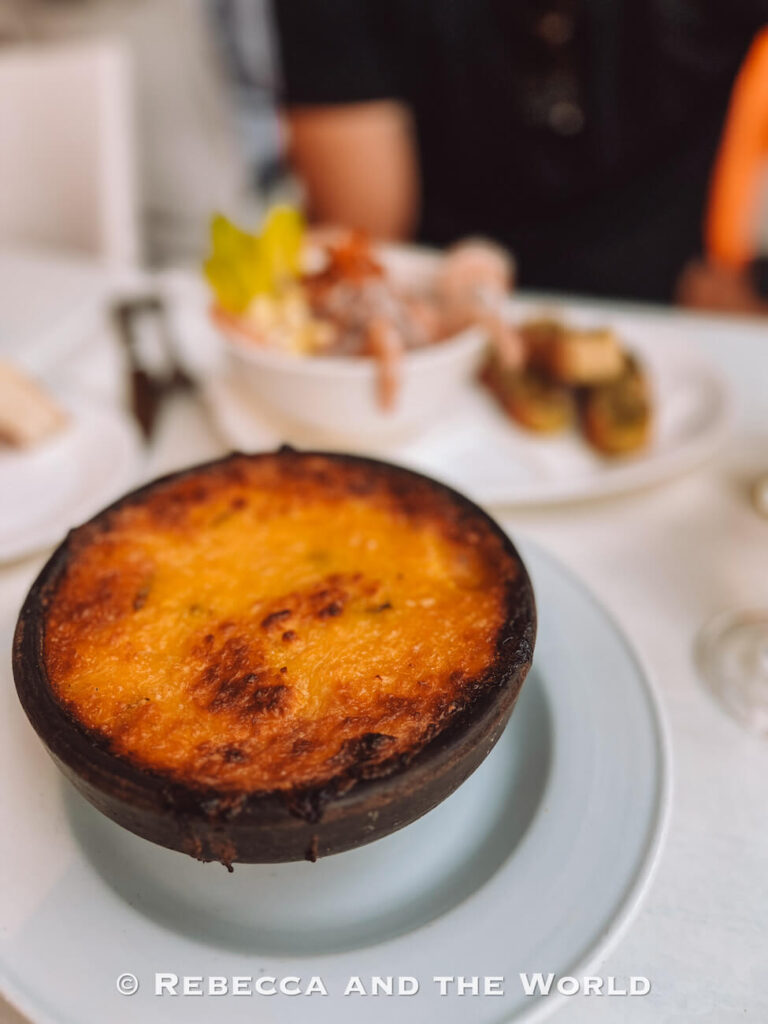
Pastel de choclo is one of Chile’s most famous comfort foods: a baked corn dish that sits somewhere between a savoury pie and a casserole (our guide said it’s kind of like Shepherd’s pie and I found that to be an accurate analogy). It’s usually made with a base of pino (a minced beef and onion mixture, similar to what you’d find in an empanada), often with chicken, black olives and sometimes hard-boiled egg and raisins mixed through. Then it’s topped with a thick layer of sweet corn purée and baked until golden.
Honestly, I didn’t really love the pastel de choclo we had on the tour. It leaned too sweet for my taste (some places sprinkle sugar on top), and ours came with a whole chicken thigh, bone and all, which I found a bit awkward to eat in this style of dish.
That said, I’ve had an excellent pastel de choclo elsewhere in Santiago (at Galindo) and it’s absolutely worth trying.
8. Porotos granados soup
This was a standout for me: porotos granados, a thick bean-and-corn soup that feels like the edible definition of comfort.
It’s filling and nourishing – and probably exactly the sort of thing I might not have ordered on my own in a restaurant, because it sounds plain on a menu. It’s not plain. It’s deeply satisfying.
So satisfying I didn’t even take a photo! #bloggerfail
9. Ceviche
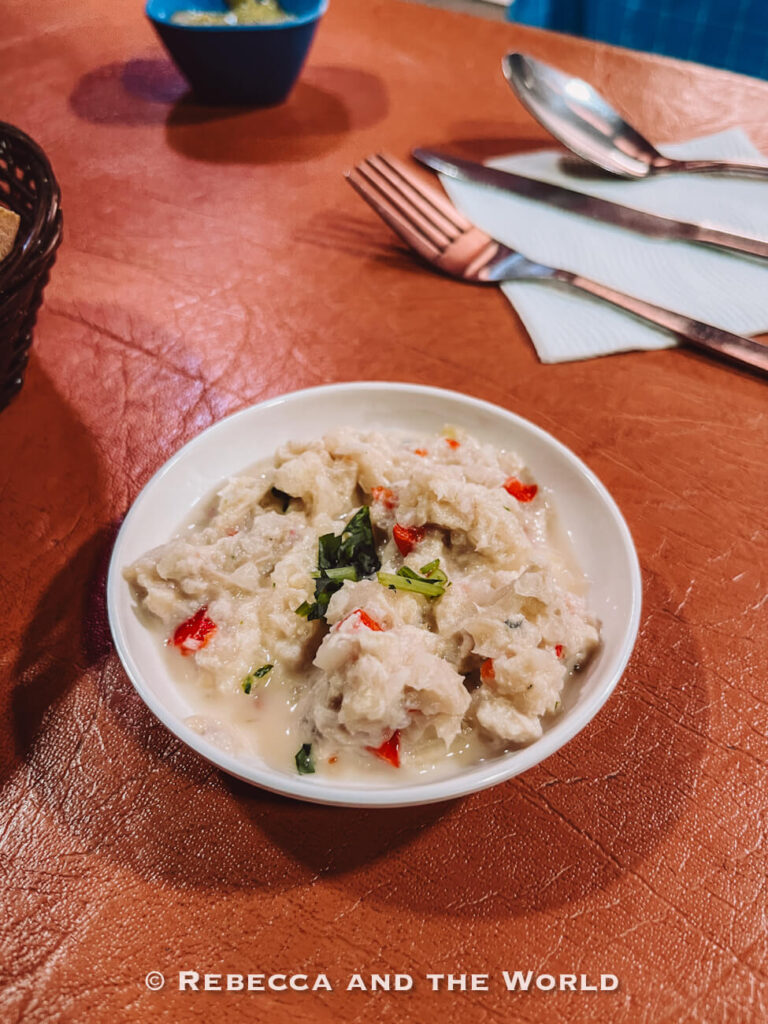
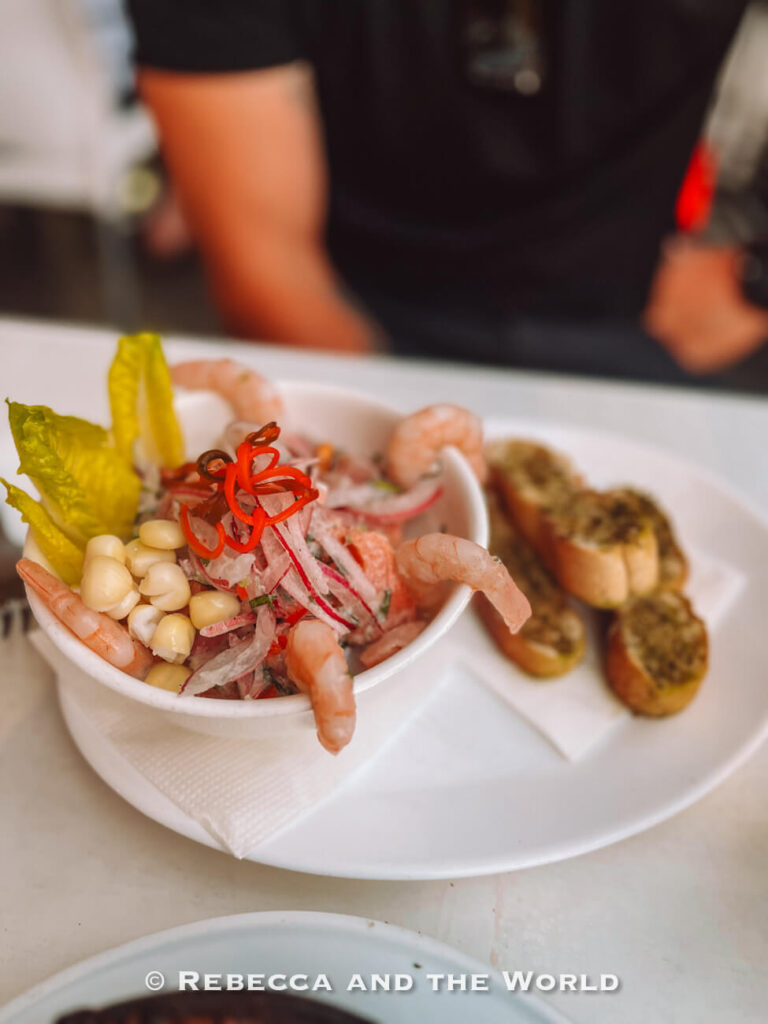
Ceviche is one of my favourite dishes when it’s done well: fresh seafood, bright citrus and a bit of heat.
It’s not uniquely Chilean (you’ll see versions across the Pacific coast of South America), but Chile’s access to excellent seafood means it’s easily found on menus here.
10. Paila marina
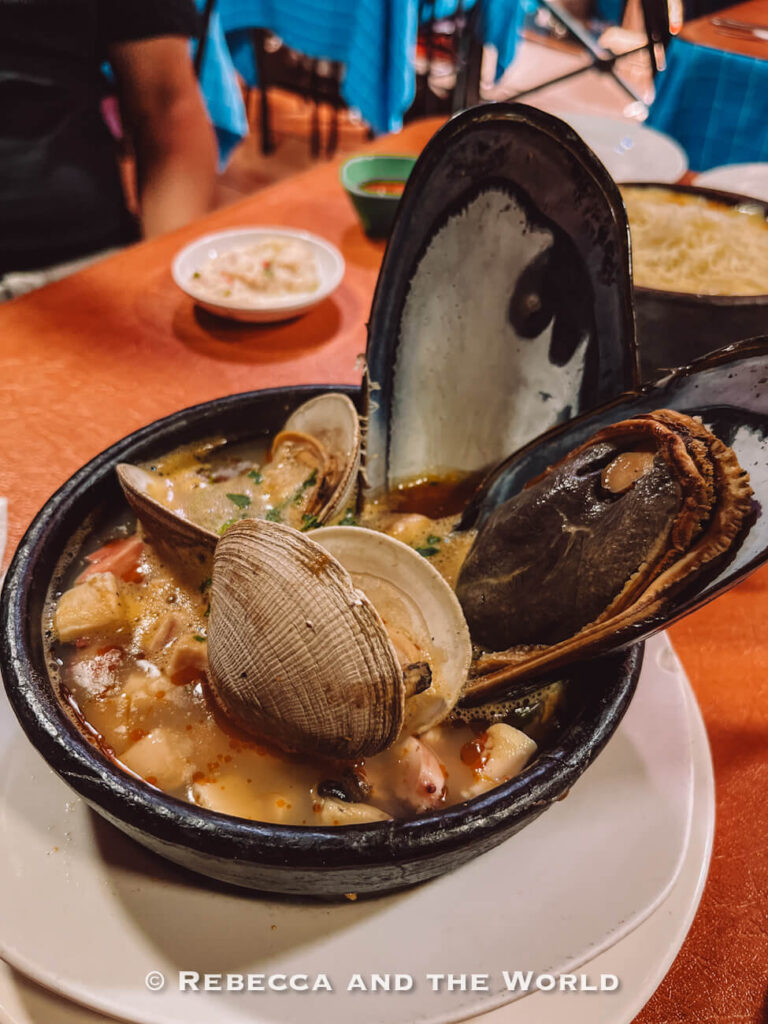
Chile is a long, long strip of coastline, so it makes sense that seafood shows up as a defining thread in Chilean cuisine – even in landlocked Santiago.
Paila marina is a briny seafood soup, and ours was simply overflowing with fish and mussels. I really enjoyed the lightness of the soup and the fresh seafood.
11. Chupe de jaiba
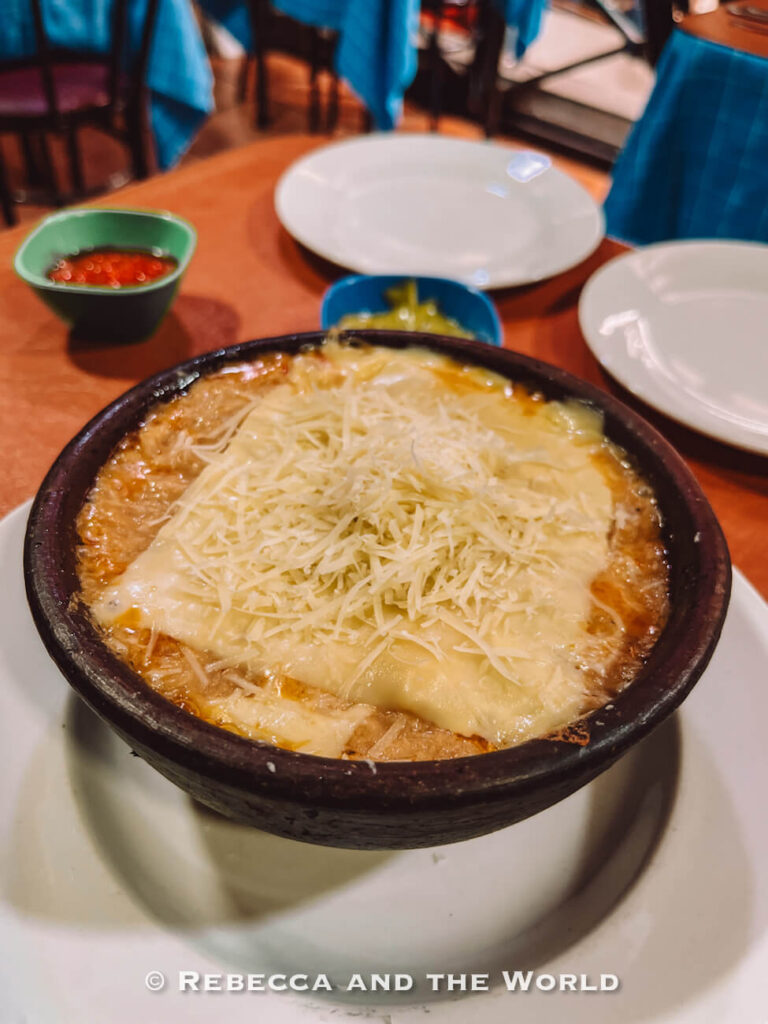
If paila marina is light and refreshing, chupe de jaiba is indulgent. It’s a rich, baked crab casserole (jaiba is crab), usually made with shredded crab meat folded through a creamy base with things like sautéed onion, garlic and spices, then thickened with bread or sometimes breadcrumbs.
It arrived at our table still bubbling, and it was easily one of the most memorable dishes of the tour.
12. Mote con huesillo
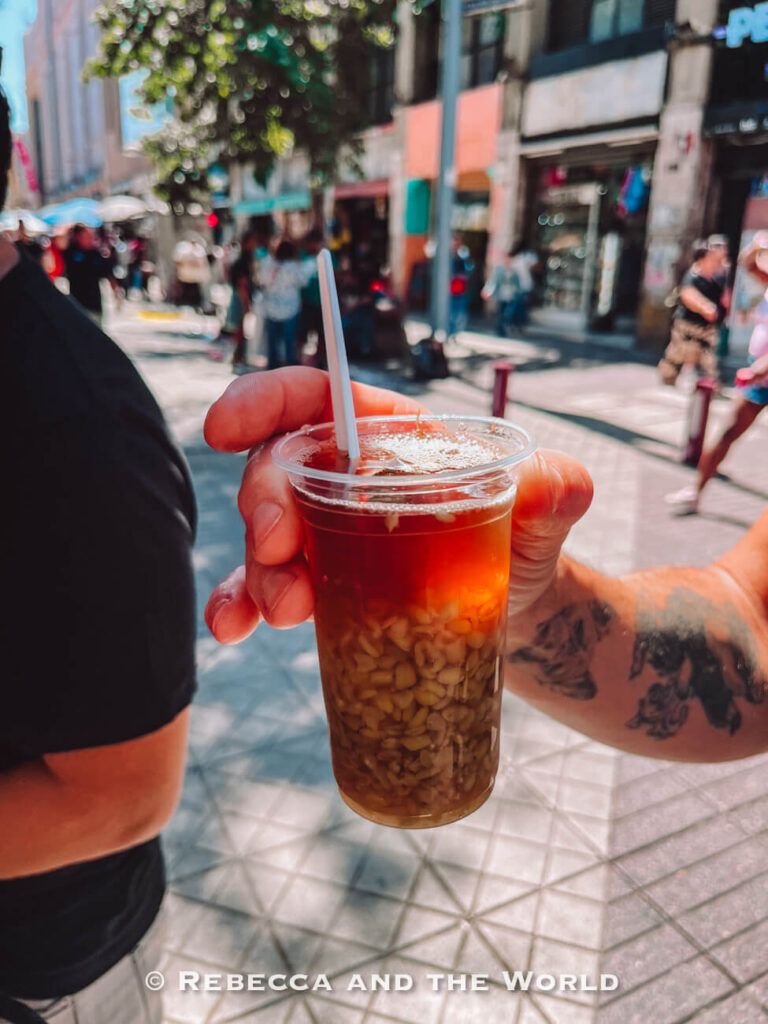
Mote con huesillo is the perfect example of why a food tour is useful: it’s not something most visitors would order without knowing what it is, but it’s wildly common once you start noticing it.
It’s a classic Chilean drink/dessert, made with huesillos (dried peaches that have been rehydrated and simmered until soft) and mote (cooked, husked wheat grains). Everything is served in a sweet, amber-coloured syrup, usually chilled, so you get a mix of fruity, sweet and slightly chewy bites as you drink it. I really enjoyed this – it’s quite refreshing and the syrupy sweetness is balanced by the savoury wheat.
It’s especially popular in warm weather, and you’ll see it everywhere from market stalls to street carts.
It was our final tasting on the tour – a lovely way to end a tour that’s otherwise heavy on savoury dishes.
13. Pisco sour
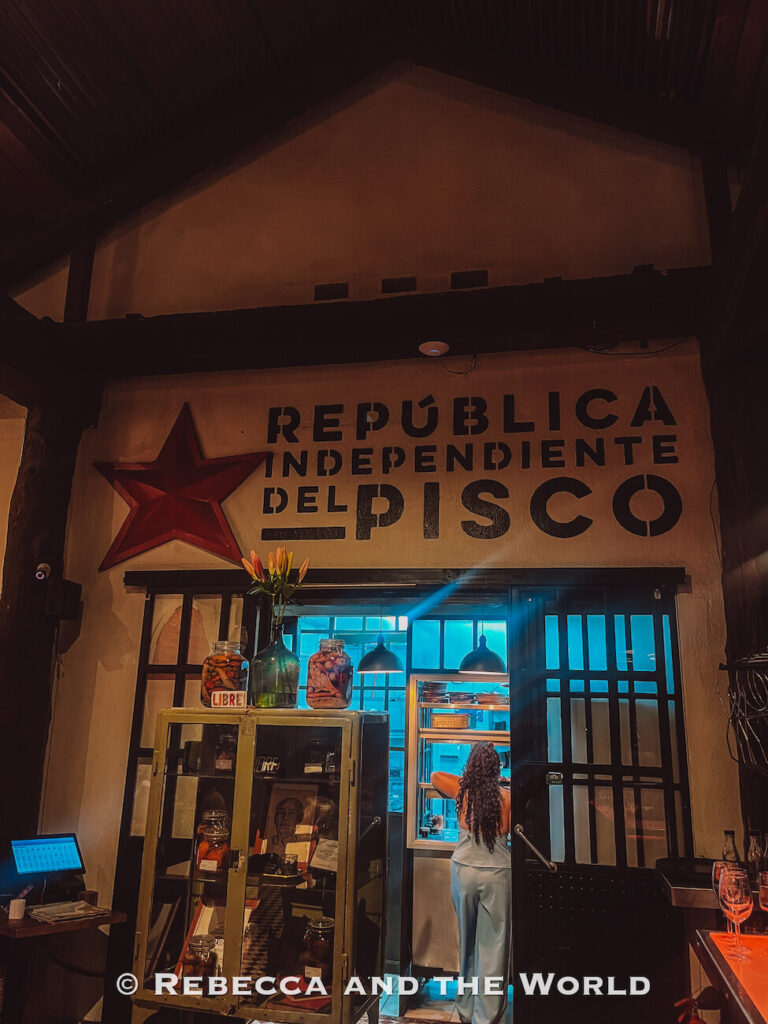
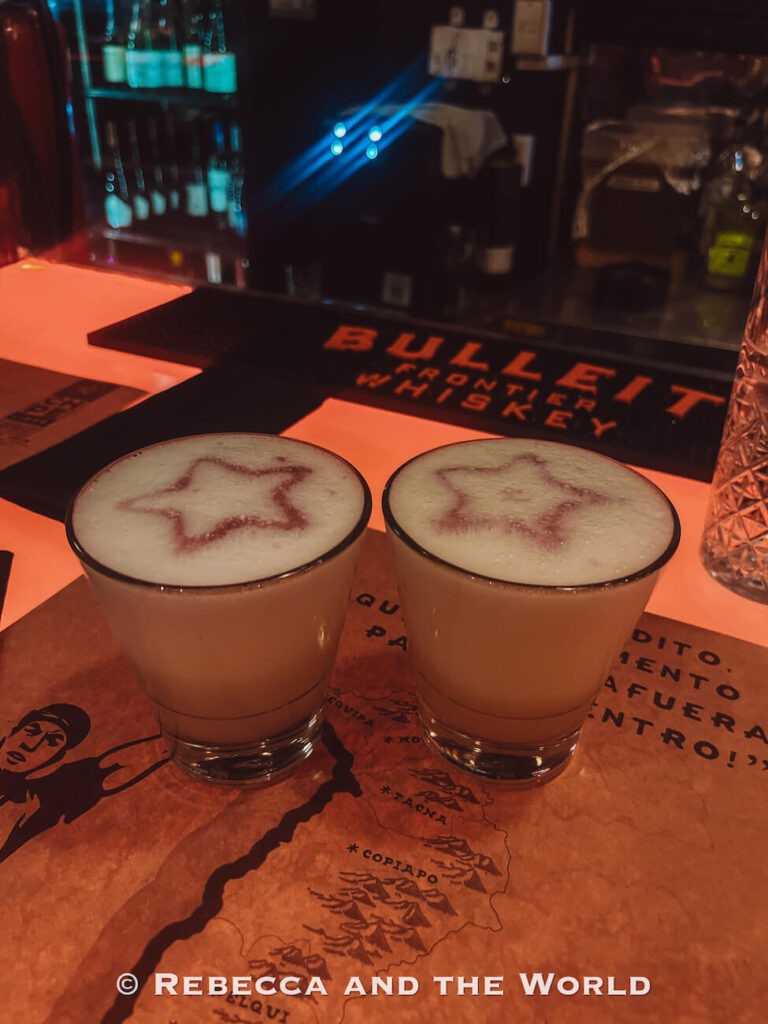
And of course, I couldn’t forget to include a pisco sour to wash everything down. Even though Chile is rightly famous for its wine (take a day trip to Maipo Valley from Santiago to learn more about Chilean wine), you should still make time for this classic cocktail. A pisco sour is typically made with pisco (a grape spirit), lime or lemon juice, a little sugar syrup and egg white, which gives it that frothy top. It’s bright, citrusy and dangerously easy to drink.
Pisco is a shared Chile-Peru obsession (no need to pick sides). I recommend Chipe Libre in Santiago, which is one of the best-known spots in the city for pisco-based drinks – but you can get a sour anywhere.
Is A Chef’s Tour’s Santiago market food tour worth it?
If you like eating as a way into a destination, this is a really strong use of half a day in Santiago. You’ll be dropped straight into the city’s market culture and you’ll leave with an understanding of what you’re seeing, what you’re eating and what you should look for on menus afterwards. Personally, I think it’s one of the best things to do in Santiago, Chile if you’re here for a few days.
Book it if…
- You want to understand Chilean food beyond empanadas. In four hours, you cover a surprisingly wide range: snacks, classic comfort dishes, seafood and a proper Chilean sweet to finish.
- You like combining sightseeing with food. Starting at Plaza de Armas with historical context and then moving through multiple markets made the tour feel like a helpful introduction to Santiago as much as a food tour.
- You find markets intimidating or you’re short on time. Santiago has several major markets and they can be chaotic. Having a guide who knows how the markets work (and who to buy from) removes the friction. You can just show up and eat well.
- You like asking questions and meeting people. Because groups are capped at eight, it doesn’t feel like you’re being herded around. You’ll have a chance to really dig into the details with your guide: what dishes mean, when people eat them, how to order and what’s worth seeking out elsewhere.
Consider skipping it if…
- You prefer slow, long meals. This is tasting-style pacing. You do sit down at each stop, but you’re still moving through multiple venues, and some are quicker than others.
- You don’t love walking or standing for stretches. It’s market-heavy and involves walking between markets. The route is central and manageable, but it’s still a few hours on your feet.
- You have significant dietary restrictions or allergies. Based on Chilean food (and the reality of eating in markets), it may not be the best fit if you need vegetarian, gluten-free, lactose-free options or if you have seafood allergies.
🥟 BOOK A CHEF’S TOUR MERCADO MEALS SANTIAGO FOOD TOUR 🥟
What to eat in Chile: Final thoughts
Chilean food isn’t usually held up as one of the world’s “great” cuisines, and before this tour I think I’d subconsciously bought into that idea a little. But spending a few hours eating through Santiago’s markets reminded me that foods can become more interesting and more delicious once you have the back story to them
Chilean food is practical, seasonal and comforting, with real highlights once you know what to look for. If you only try three things in Chile, I’d make them:
- Chupe de jaiba for something rich and indulgent (I had to force myself to put the fork down)
- Pastel de choclo for classic Chilean comfort food (as a lover of corn, this was such a delicious dish)
- Mote con huesillo for a surprising dessert
If you’re using Santiago as your entry point into the country, A Chef’s Tour’s Santiago food tour is a great way to taste the range in one go.
FAQs: A Chef’s Tour Santiago food tour
How hungry should I arrive?
Hungry. Don’t eat a big breakfast beforehand. The tour runs for four hours and it’s very filling, so something small in the morning (or just coffee) is plenty. I also wouldn’t plan a big dinner afterwards.
How much food is it, actually?
A lot. There are 12+ tastings, and because several of them are proper dishes (not just bites), it adds up to the equivalent of multiple meals. You won’t leave hungry, trust me.
Is it good for solo travellers?
Yes. Food tours are one of the easiest ways to meet people while still doing something structured, and this one is especially good if you feel a bit unsure about visiting the markets alone. Groups are capped at eight, so it stays social without being unmanageable.
Can the tour cater for dietary restrictions or allergies?
This tour may not be the best fit if you have dietary restrictions or allergies. They can’t cater for vegetarian diets, gluten intolerance, lactose intolerance or seafood allergies – so reach out to them to check before you book.
Did you find this article helpful? Consider buying me a coffee as a way to say thanks!
Would you take a Santiago food tour? What dishes would you like to try in Chile?
Read next
Before you go, you might like these Chile travel guides.
- The Perfect First-Time Visitor’s 2-Day Santiago Itinerary
- The Best Things to Do in Santiago, Chile
- How to Plan a Maipo Valley Day Trip from Santiago
- Where to Stay in Santiago: Best Areas + Hotel Recommendations
CHILE TRIP ESSENTIALS
- Book your flight to Chile online with Skyscanner. I like how Skyscanner allows you to find the cheapest days.
- One thing I always purchase is travel insurance! Travel Insurance Master allows you to compare across multiple policy providers, while SafetyWing is great for long-term travellers and digital nomads.
- Wise is my choice for sending and receiving money and spending money overseas (you can get a digital and physical card).
- Find great hotels across Chile. Check prices on Booking.com and Expedia online.
- Check out the huge range of day tours throughout Chile on GetYourGuide or Viator. I love a good food tour in particular!
- Saving money? Check out the range of free walking tours in Chile with GuruWalk (don’t forget to tip!).
- Grab an e-sim to stay connected.
- How to get around? I use DiscoverCars for car hire, or Motorhome Republic and Jucy for campervan/RV rental. For buses, trains and ferries, I use 12GO, Busbud and Omio.
- A copy of the Lonely Planet guide to Chile will be handy. Also pick up a Spanish language phrasebook to help you navigate your visit.
- Buying some bottles of delicious Chilean wine? Keep them safe in these wine bags.
- Check out my Amazon shop for my fave travel items – everything from backpacks and suitcases to travel adapters and beauty products.
PIN IT FOR LATER: SANTIAGO FOOD TOUR
Save this Santiago food tour guide to Pinterest for later so you know what to eat in Chile.