
Trying to figure out the best time to visit Tanzania? This guide breaks down the best months for catching the Great Migration (and where to see it) and how to avoid the rainy season.
From the vast plains of the Serengeti to the wildlife-packed Ngorongoro Crater and Zanzibar’s white-sand beaches, Tanzania is a destination that delivers on the dream trip.
And the good news is that Tanzania is a fantastic place to visit year-round for that dream trip. With everything from world-class safari circuits to laid-back island escapes, it’s the sort of country where you can plan an incredible itinerary in every season. But, as always, there are a few things to keep in mind so you can pick the right time for you.
In this guide, I’ll break down the best time to visit Tanzania, covering everything from Great Migration highlights to weather, crowds and the times you might consider going to save some money.
This blog post may contain affiliate links, meaning if you book or buy something through one of these links, I may earn a small commission (at no extra cost to you).
TL;DR? Quick answer: the best time to visit Tanzania
Tanzania is a year-round destination, but the “best” time depends on what you want to prioritise, whether that’s peak wildlife viewing, the Great Migration, fewer crowds or a Zanzibar add-on to a safari. Here’s a quick summary of the seasons and when you’d want to go based on your travel goals.
- Dry season (June-October): easier wildlife viewing, bigger crowds, higher prices
- Short rains (November-December): often isolated showers, safari still very doable, good shoulder-season deals (especially Nov to mid-Dec)
- Hotter months (January-March): warm, good wildlife spotting – including calving season!
- Long rains (April-May): greener landscapes, fewer tourists, big discounts, but some lodges may close
- First-time safari: June-October (northern Serengeti) or Feb for calving (Ndutu Plains)
- Honeymoon / anniversary / special trip: June-October or Jan-Feb
- Low season (and cost savings): Nov to mid-Dec or April-May if you’re rain-tolerant
Need to know! You need to purchase inbound insurance prior to your arrival in Tanzania. This must be done through the National Insurance Corporation. Separately, you also need insurance to travel to Zanzibar; this can be purchased from Zanzibar Insurance Corporation. However, coverage for both of these is limited, so you’ll need to have your own travel insurance as well.
When is the best time to see the Great Migration in Tanzania?
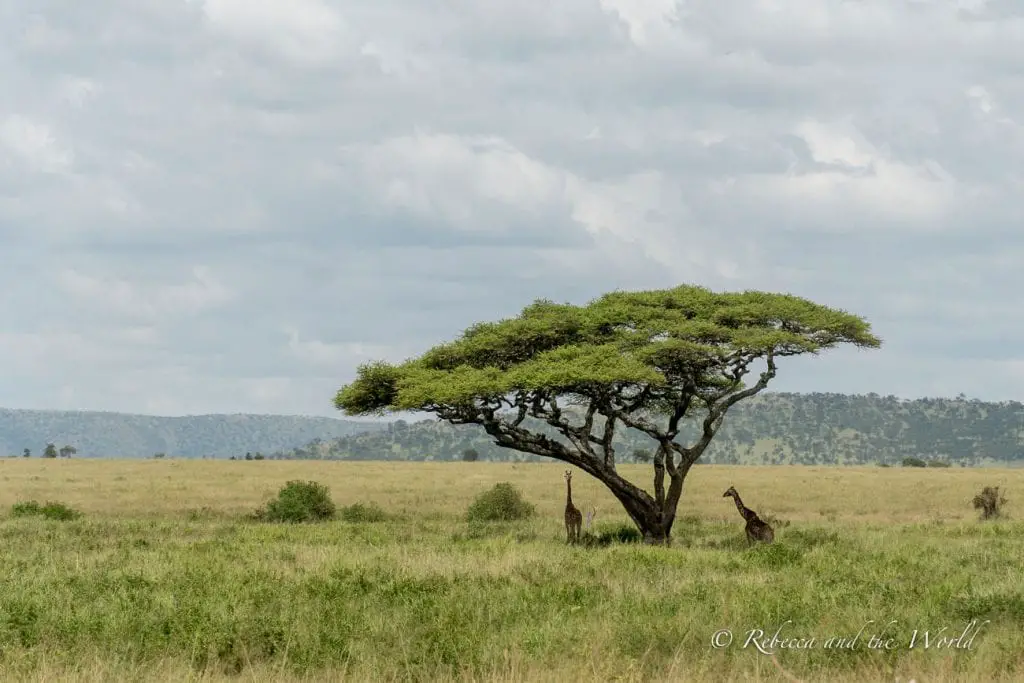
If it’s your first time in Tanzania, the Northern Circuit is most likely going to be where you’re headed – it was for me! This area is home to the heavy hitters of Tanzania: Serengeti National Park and Ngorongoro National Park, plus some of the most iconic safari landscapes in Africa.
And it’s in the Serengeti where you’ll find one of Tanzania’s most famous bucket-list experiences: the Great Migration. It’s one of the most spectacular wildlife events on the planet, with huge herds of wildebeest and zebra moving in search of fresh grazing, trailed by predators and plenty of drama (have you ever seen the crocodiles hunting as the zebra cross the river?!). It’s something that’s included in many Africa tour packages because it’s just so special.
But one thing to know is that the Migration doesn’t just happen in one part of the Serengeti. It moves around through the year. It’s called a migration, after all! This is great because it means you have plenty of opportunities to catch the animals on their migration – but it also means you need to consider where to base yourself.

Mid-July to early October: Northern Serengeti (Mara River crossings)
At this time of year, the herds gather in the Northern Serengeti and, if you’re lucky, you’ll see them attempt the Mara River crossings. It can be chaotic and tense, with thousands of animals bunching up at the riverbank, edging forward, retreating, then suddenly committing all at once.
You might see multiple crossing attempts in a day – or none at all – but even without a perfect “National Geographic moment”, the sheer density of wildlife is incredible.
Because this is also peak season, it does come with higher prices and more visitors, but if you want the best chance at river-crossing action, this is the window.
December to February: Ndutu plains (southern Serengeti – Ngorongoro area)
The Ndutu plains, which straddle the southern Serengeti and the northern Ngorongoro Conservation Area, is known for open landscapes and fantastic game viewing. The Migration returns to this region at this time of year.
February is the real headline month here because it’s calving season. Some 8,000 baby wildebeest and zebra are born around the Ndutu plains each season. There’s something pretty special about seeing the herds spread out across the open plains, with tiny, wobbly-legged calves trying to keep up.
Of course, calving season also brings predators. With so many vulnerable young animals around, the big cats and hyenas are never far away. Sightings can be (obviously) intense.
May to June: Western Corridor (Grumeti River area)
For a quieter Serengeti experience, consider the more remote Western Corridor. In May and June, the herds move through this part of the park as they head towards the Grumeti River. It’s not usually as busy as the north in peak season.
The crossings here tend to be smaller and less predictable than the Mara River spectacle, but it’s still pretty spectacular to be here without the crowds.
Important things to know about the Great Migration
A river crossing is never guaranteed
You may be desperate to see a Mara River crossing, but they run on wildebeest time, not ours. You might see multiple crossings in a day, or you might watch a build-up that lasts hours and ends with the herd wandering off in a different direction. Set your expectations.
You can have an incredible Tanzania safari without the Migration
The Serengeti is extraordinary at any time of year – but Tanzania has other standout parks too. If your dates don’t align perfectly with the herds, you can still see amazing wildlife and have a once-in-a-lifetime trip.
A great guide makes all the difference
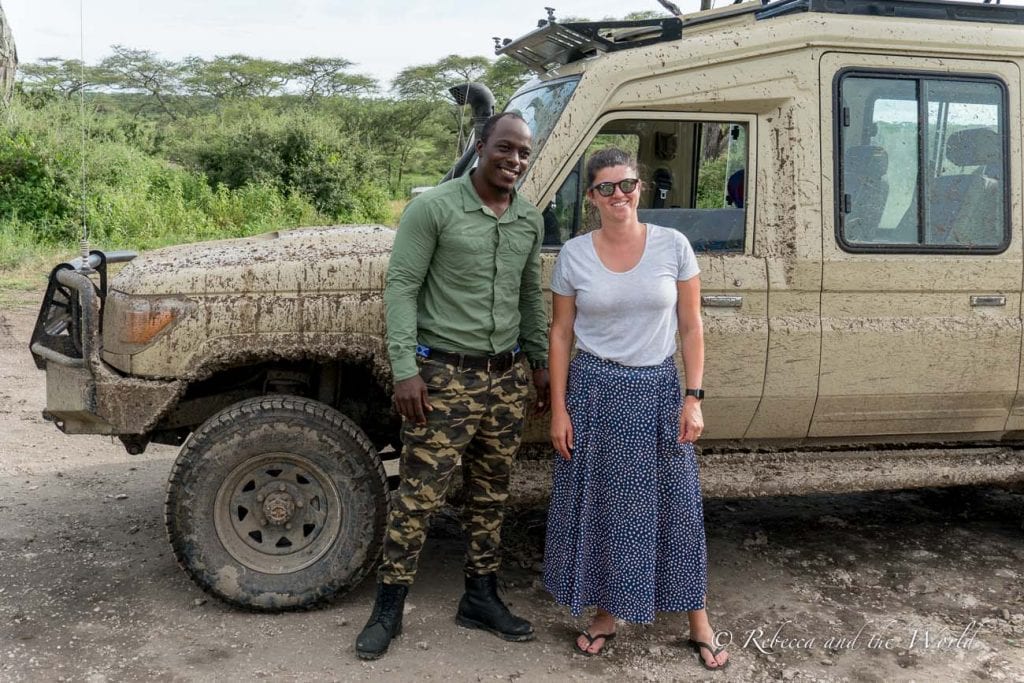
This is true in any safari destination, but it’s especially true when you’re following a moving wildlife event. The best experiences often come down to expert tracking, local knowledge – and being in the right place at the right time. Read reviews – the same guide names will keep popping up.
What about the rainy season in Tanzania?
Tanzania’s rainy season is often talked about like something to avoid at all costs, but it’s a bit more nuanced than that. Yes, there are months where rain can make travel trickier, but there are also plenty of reasons the wet season can be a brilliant time to visit.
In broad terms, Tanzania has two rainy periods. The short rains usually fall in November and early December, and they tend to be more like passing showers. You might get a burst of rain in the afternoon, then clear skies again, which usually means safaris can carry on without too much disruption.
The long rains arrive in April and May – this is when Tanzania can get properly wet. Muddy tracks can really slow the day down – or you may even end up bogged somewhere!
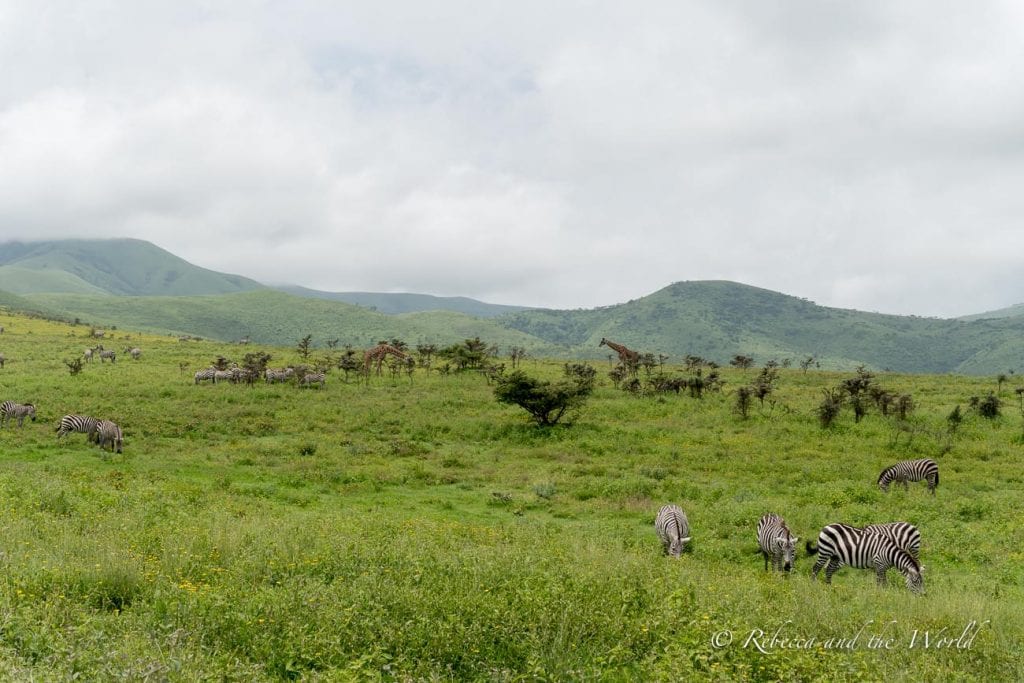
But, if you’re willing to risk it, it’s pretty special to see how the landscape changes. The parks turn lush and green.
It’s also typically quieter, which can make game drives feel more exclusive, even in the popular areas. And that means discounts, too. Lodges usually offer lower rates and better-value packages, particularly in the shoulder periods around the short rains. If you’re travelling on a budget, this can be the time to do it.
The caveat is that some lodges close completely or reduce services while they wait out the wettest weeks. That doesn’t mean you can’t visit Tanzania in April or May, but it does mean you need to plan a little more carefully. A good safari operator will help you plan all of this.
Of course, rain can come at any time. I planned my Tanzania itinerary in February. While it wasn’t the rainy season, I had a few days of rain but nothing that stopped us from getting out every day.
When is the best time to visit Zanzibar?
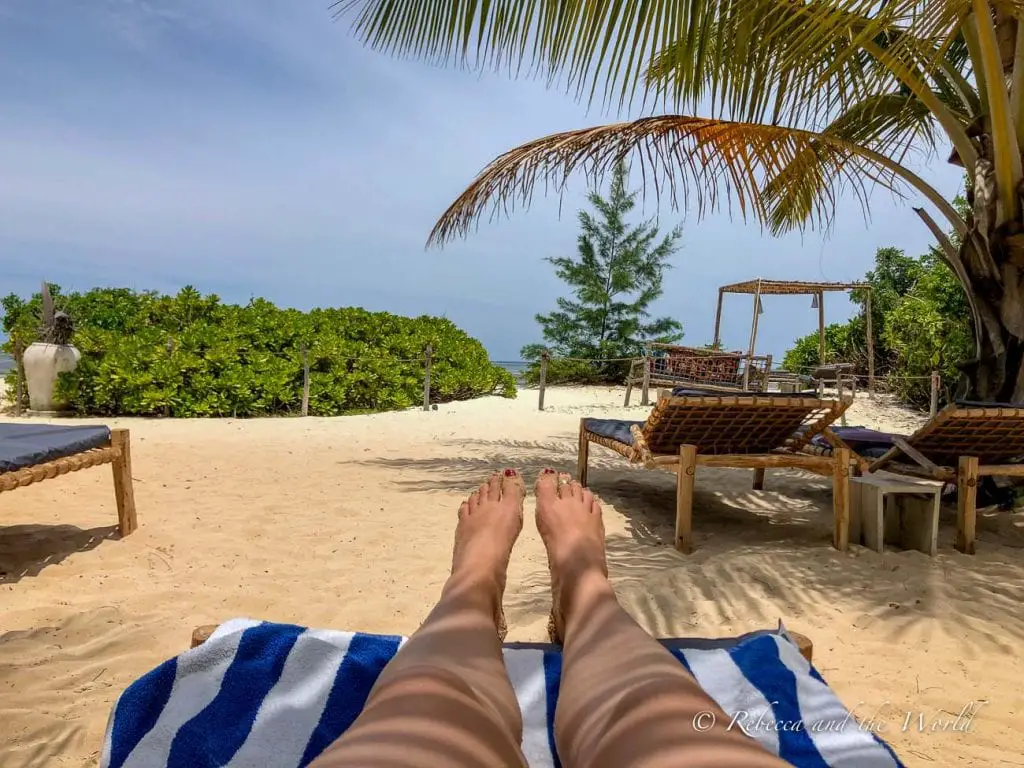
Zanzibar is a brilliant way to finish a Tanzania trip. After a few early mornings on safari, I spent several days doing very little.
The good news is that Zanzibar works for most of the year. In the drier months (June to October), there’s plenty of sunshine and lower humidity. January and February are also popular for beach time, with hot weather and generally good conditions, making them a nice pairing with calving season in the Serengeti.
Zanzibar can still be enjoyable in the greener months too. From November to early December there are often warm days with occasional showers, and it can be a good time for better-value rates and fewer visitors.
The main period that requires extra planning is the festive peak, roughly mid-December to early January, when many places book out, rates jump and minimum stays are common. Book well ahead!
Final thoughts: So when is the best time to visit Tanzania?
Tanzania really is a year-round destination, but the best time to visit comes down to what you want most from the trip. If you’re after the easiest safari conditions and better chances of wildlife viewing, it’s hard to go past the dry season from June to October.
But if you’re flexible and happy to trade perfectly dry weather for greener landscapes and better value, travelling in the rainy seasons (November to early December and April and May), can bring excellent deals and fewer crowds.
My best advice is to start with one simple question: what do you most want to see or do? Once you know whether your trip is all about river crossings, watching baby zebra take their first steps, the classic dry-season safari or time on a Zanzibar beach, choosing the right time of year becomes much easier.

FAQs: best time to visit Tanzania
When is the best time to visit Tanzania overall?
For the easiest safari conditions and consistently strong wildlife viewing, June to October is generally the best time to visit. It’s the dry season, so wildlife is easier to spot – and you can time a trip with the Great Migration.
When is the best time to see the Great Migration in Tanzania?
It depends on where the herds are in the Serengeti. Mid-July to early October is best for the Northern Serengeti and potential Mara River crossings, while December to February is best around Ndutu for big herds and calving season. May to June is a good time to visit the more remote Western Corridor.
When is calving season in Tanzania?
Calving season is typically February around the Ndutu plains (southern Serengeti–Ngorongoro area). It’s a standout time for predator sightings and dramatic wildlife moments.
Can you visit Tanzania during the rainy season?
Yes. The rainy season can still be a great time to travel, especially if you’re keen on lower prices, fewer crowds and lush landscapes. The short rains (November to early December) are often manageable, while April and May (long rains) tend to be wetter and muddier.
How far in advance should I book a Tanzania trip?
For most people, Tanzania is a bucket-list trip and you’ll be planning it 6 months or even a year out. For travel in June to October or over the late-December holiday peak, booking well ahead is smart, especially for sought-after camps in the Serengeti. For shoulder seasons, you may have more flexibility, but the best-value rooms can still go quickly.
Did you find this article helpful? Consider buying me a coffee as a way to say thanks!
Got any questions about when to visit Tanzania? Drop them in the comments below.
Related posts
Before you go… you might like these East Africa travel articles:
- A Unique 2-Week Tanzania Itinerary: Adventure, Safaris and Beaches
- A Wildlife-Packed Uganda Itinerary: One Week in the Pearl of Africa
- East Africa Packing List: What to Wear on Safari and Beyond
TANZANIA TRIP ESSENTIALS
- Book your flight to Tanzania online with Skyscanner. I like this site because it shows me which dates are cheaper.
- One thing I always purchase is travel insurance! Travel Insurance Master is a good place to start to get a comparison across multiple policy providers. Travelling longer? Then SafetyWing might be the best product.
- Wise is my choice for sending and receiving money and spending money overseas (you can get a digital and physical card).
- Find great hotels in Tanzania. Check prices on Booking.com and Expedia online.
- How to get around? I use DiscoverCars for car hire, or Motorhome Republic and Jucy for campervan/RV rental. For buses, trains and ferries, I use 12GO, Busbud and Omio.
- Grab an e-sim to stay connected while on the road.
- A copy of the Lonely Planet guide to East Africa will be handy.
- Pack a reusable water bottle. I travelled with this Nomader water bottle and filled it up at hotels and lodges in Tanzania, but I’ve also heard good things about this purifying Grayl bottle. Pack sunscreen (look for SPF50 or higher), a hat and sunglasses because the sun is hot!
- Check out my Amazon shop for my fave travel items – everything from backpacks and suitcases to travel adapters and beauty products.
PIN IT FOR LATER
Save this guide to the best time to visit Tanzania for your future bucket list trip planning!