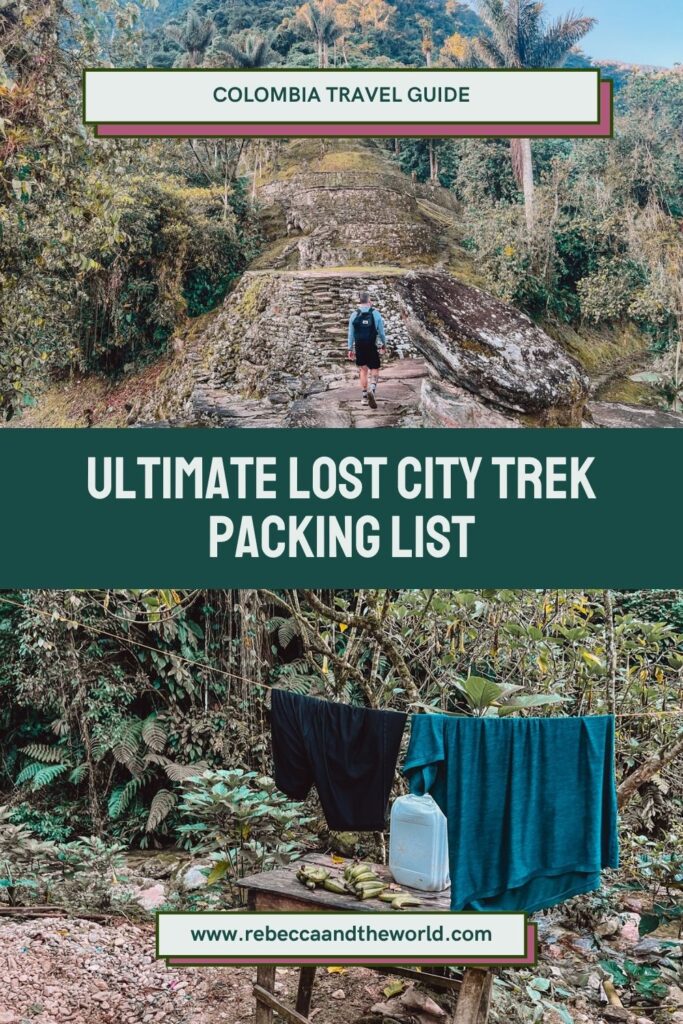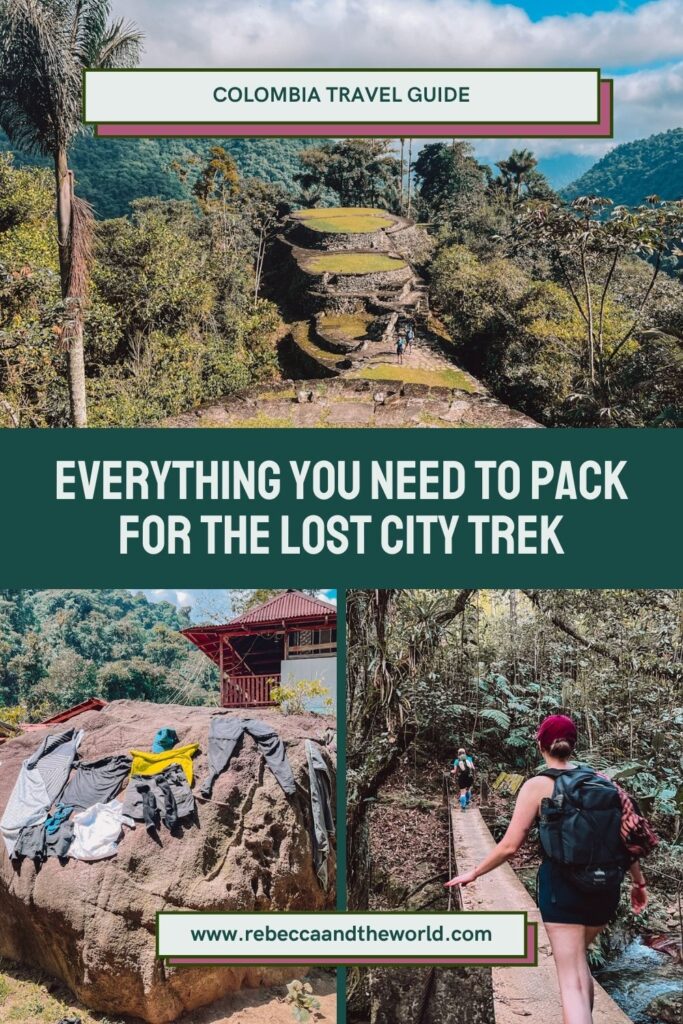

Planning your Lost City hike packing list? Here’s everything I recommend you pack, plus stuff I wish I’d brought and things I should have left at home.
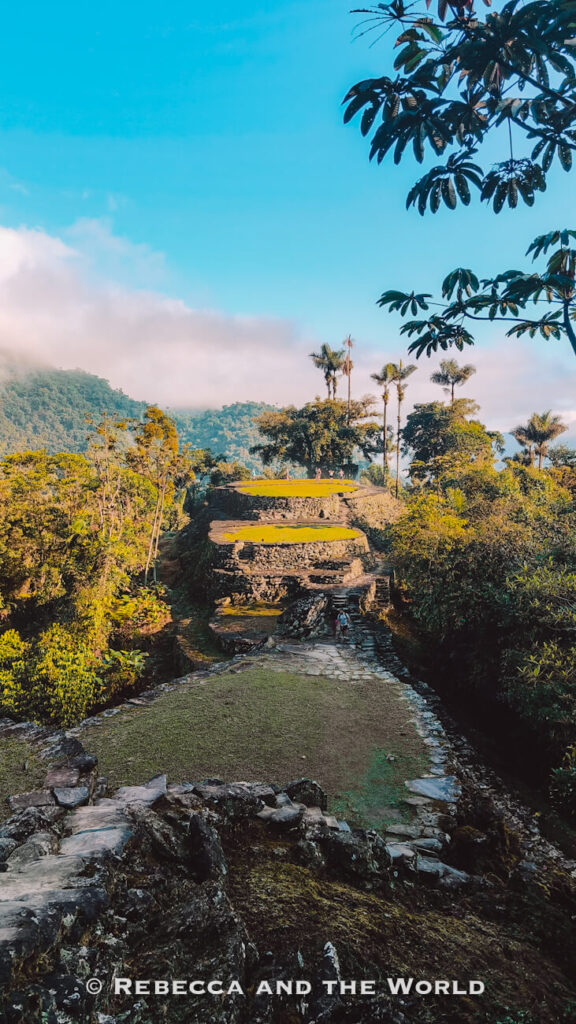
We’d been tossing up the Lost City hike for ages. It’s one of those trips that sounds a bit mythical on paper: four days in the Sierra Nevada mountains, walking through thick jungle, swimming in rivers to cool off, then climbing stone steps to reach an ancient city that most people will never see.
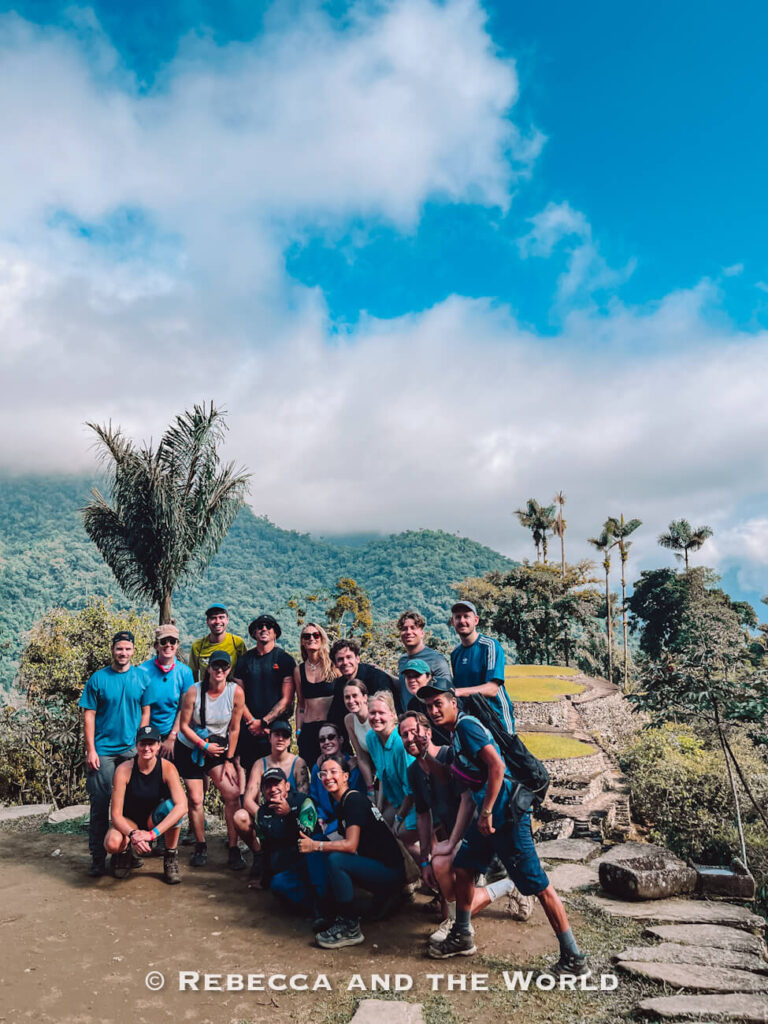
And I loved it. Did I regret my choices halfway up a steep hill, sweat pouring off me and thighs burning? Absolutely. But the scenery changes from humid jungle to open landscapes, there are gushing rivers and interesting birdlife, there are Indigenous cultures to learn about, and arriving at Ciudad Perdida makes all the sweat and sore legs worth it.
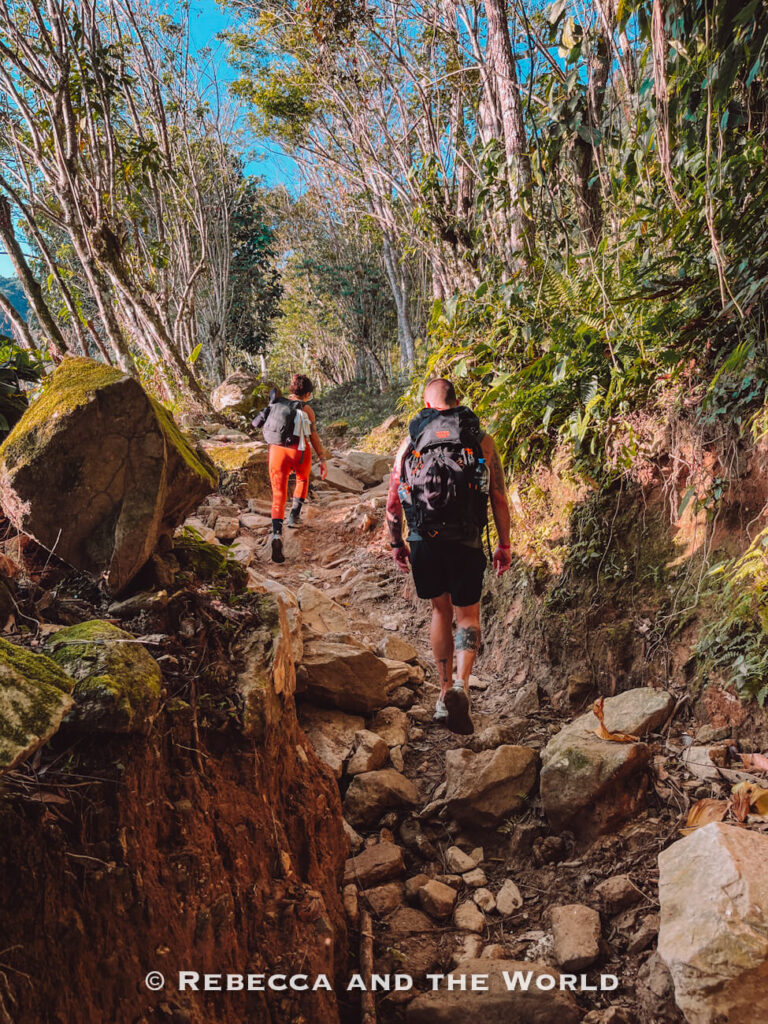
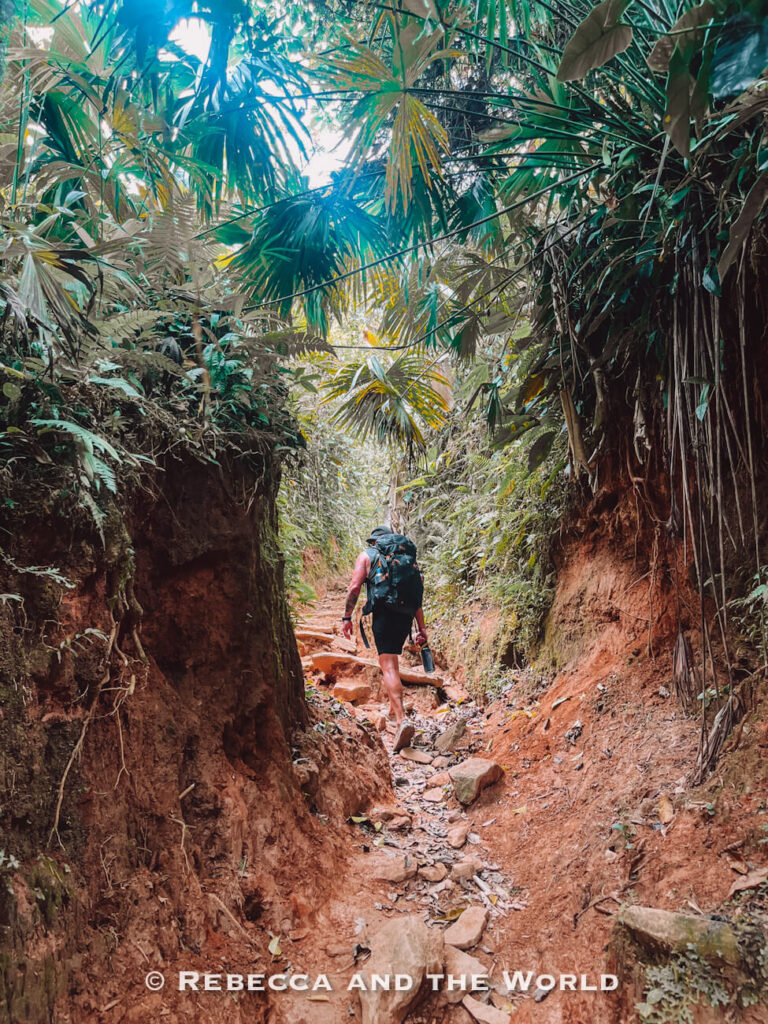
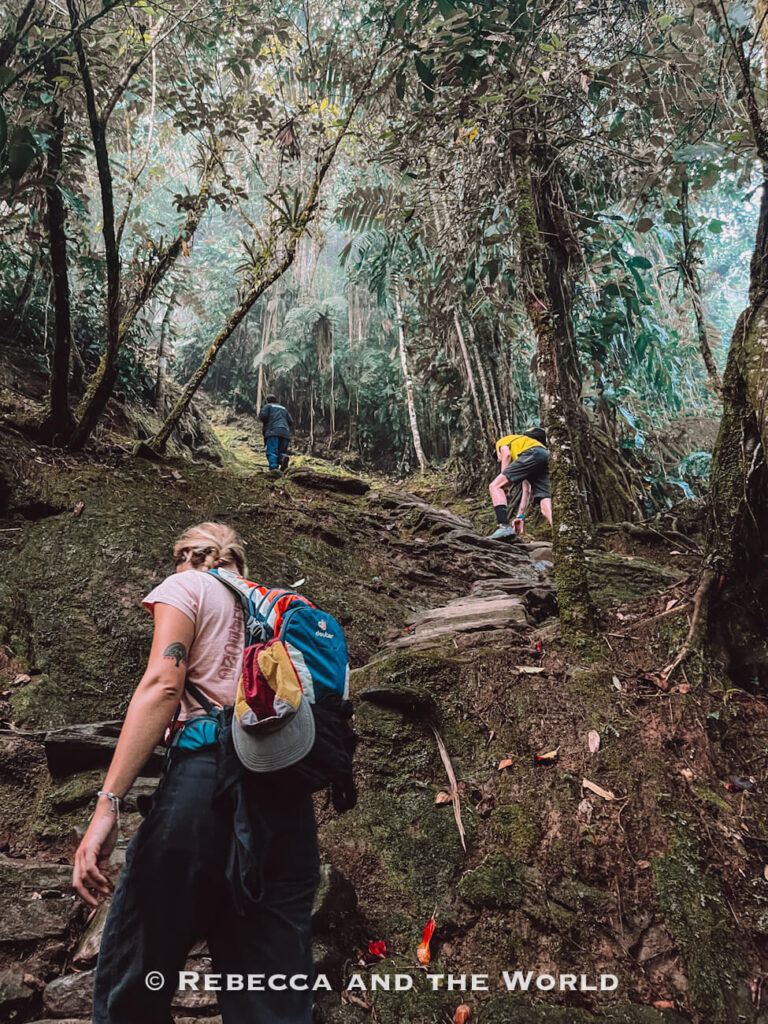
This is a tough hike, there’s no doubt about it. There’s heat and humidity, steep climbs and mud at certain times of the year. There’s no quick exit, no mobile phone coverage. Even if you’re reasonably fit, the conditions can make it feel tougher than you expect.
That’s why packing well is so important. You carry your own bag the whole way and you’ll feel the weight of every unnecessary item. In this article, I’m sharing exactly what I packed for the Lost City trek, plus what I’d leave behind next time and a few things I wish I’d brought.
This blog post may contain affiliate links, meaning if you book or buy something through one of these links, I may earn a small commission (at no extra cost to you).
What to pack for the Lost City hike
🥾 BOOK THE 4-DAY LOST CITY TREK WITH EXPOTUR HERE 🥾
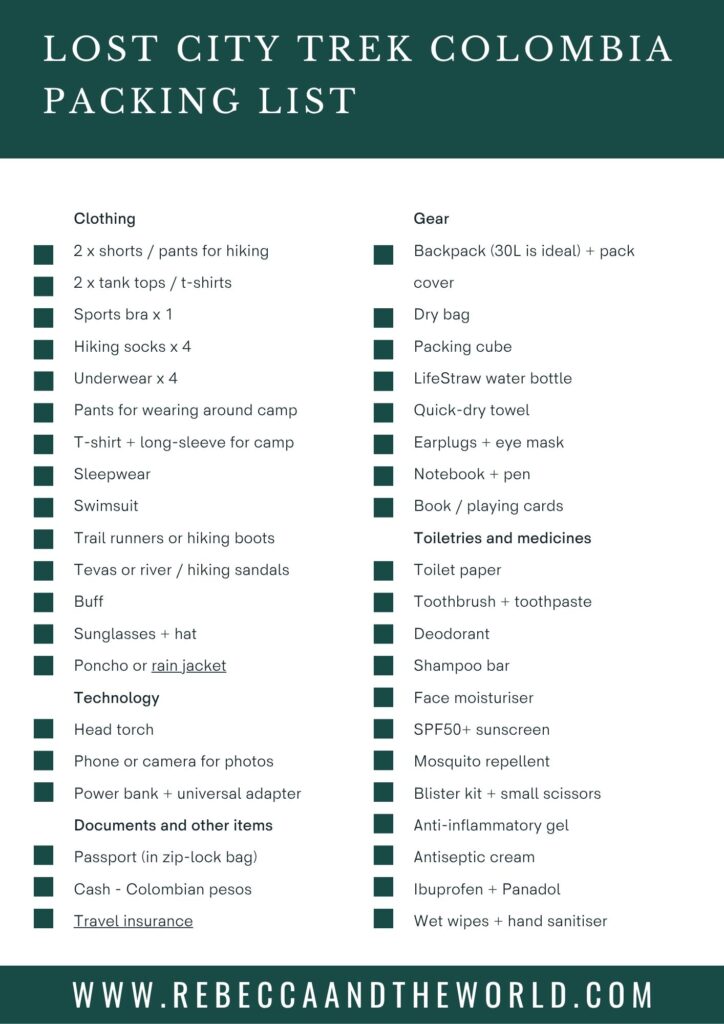
Ciudad Perdida packing list
Here’s everything I packed for the Lost City Colombia trek. We hiked with Expotur, and I highly recommend them – you can read my full Lost City trek guide which explains why.
Bags
Backpack + backpack rain cover
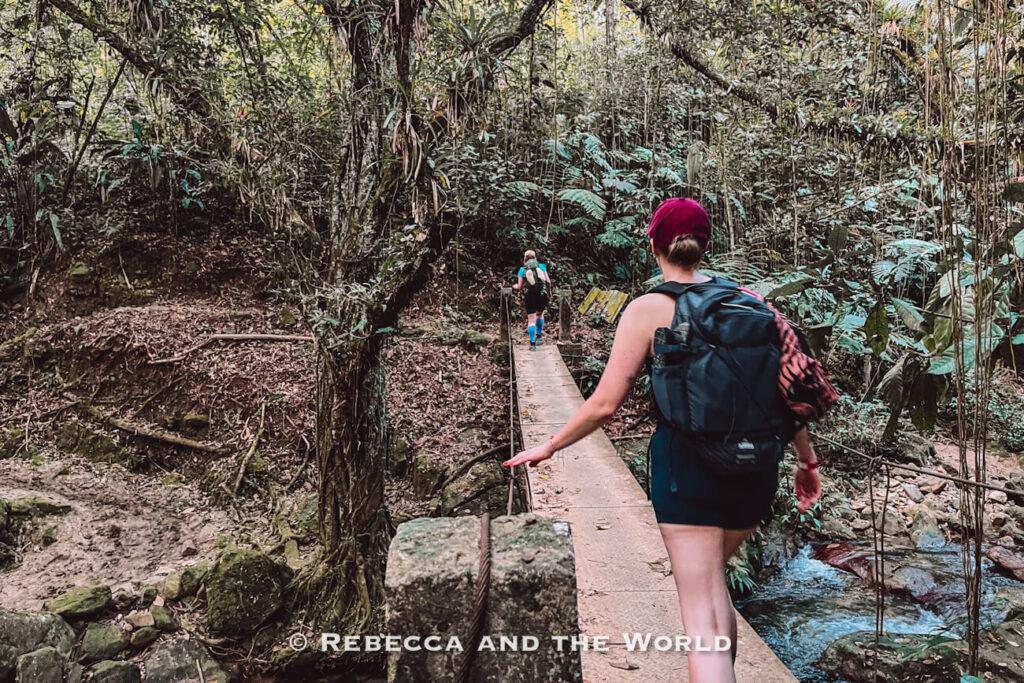
For this hike I used my husband’s 30-litre GORUCK backpack, which is not what I’d normally take trekking. But because we were travelling around South America for five weeks, we needed to be really intentional about what bags we brought with us.
I’ve mostly used this backpack for day hikes in the past (including my gorilla trek in Uganda) and it actually worked really well on the Lost City hike. 30L was big enough to fit the essentials without encouraging me to overpack. If you were carrying a water bladder, you’d need something slightly bigger to slot the bladder into.
Right now, I’m actually thinking about investing in the Osprey Fairview 40L backpack because it’s good for both travelling and hiking. The men’s version is the Farpoint 40L.
Bring a backpack you’ve used before. The Lost City trail is not the place to test out a new pack, realise the straps rub or discover it sits weirdly on your hips once it’s loaded up.
A rain cover is worth it. Even if you pack things in dry bags or ziplocks (which I recommend), a cover helps keep the worst of the rain and mud off your bag.
Dry bag
A small dry bag is essential on a jungle hike where there’s humidity, river crossings and the chance of rain.
I kept our passports in here, along with a few other small essentials that I didn’t want getting damp or lost in the bottom of my backpack. You could even bring a second one for your clothes.
Packing cube
I used one packing cube for all my clothes. Having everything contained meant I could pull out exactly what I needed, then shove the cube back in without turning my backpack into a disaster zone. I recently updated all our packing cubes with these Zoomlite compression packing cubes.
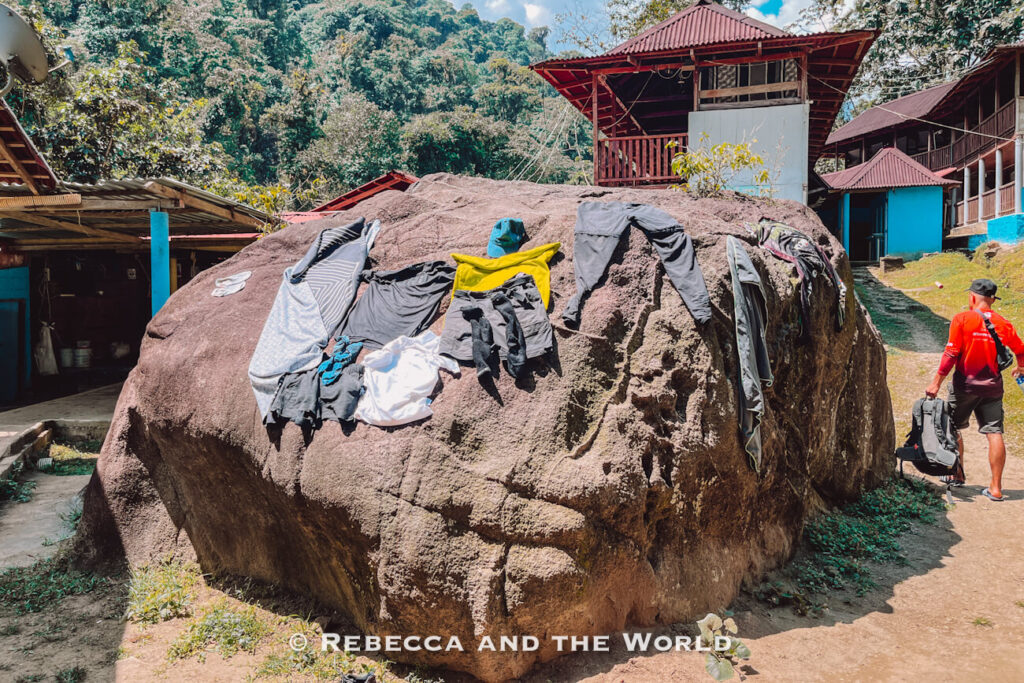
I’d also recommend bringing a plastic bag (or two) to separate wet or damp clothes. Between humidity, rain and river swims, something is going to stay damp. Keeping wet gear away from your dry stuff helps a lot.
Hiking clothes
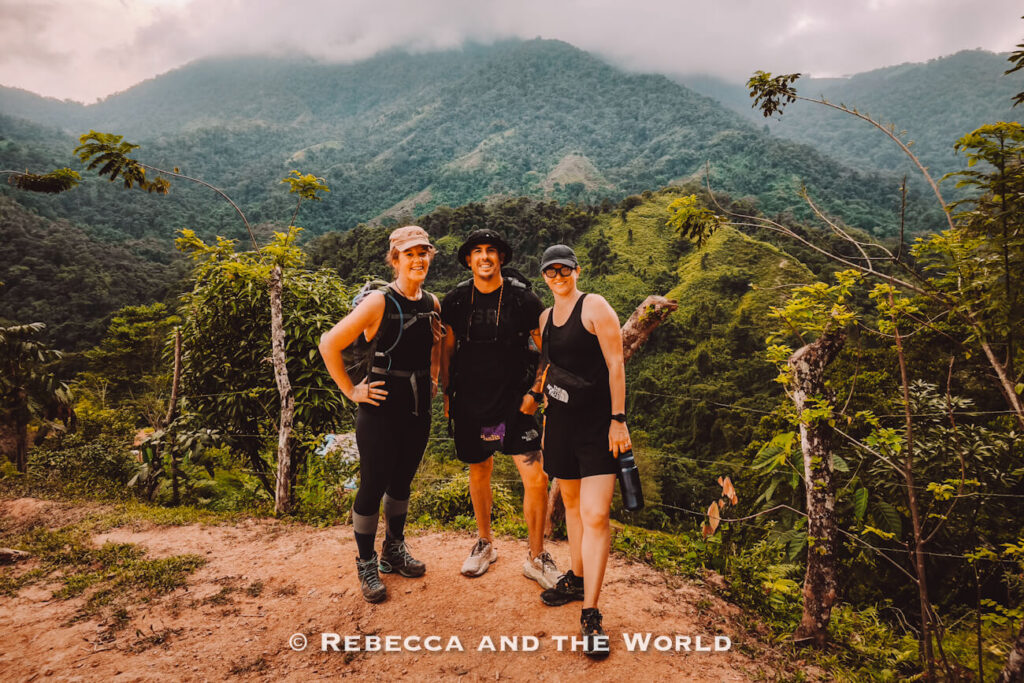
I packed really, really light for clothing – only two outfits total. One of our friends brought a fresh outfit for each day and even she agreed afterwards it was unnecessary. Did I smell great at the end of the hike? No. But neither did anyone else!
Shorts x 2
I packed two pairs of shorts. I chose shorts over hiking pants purely because of the heat. Yes, your legs will get muddy and you might get a few bites, but I was far more comfortable in shorts than I would have been in anything long.
Leggings were a definite no – I couldn’t imagine attempting to pull these on while I was sticky or while they were damp!
Tank tops x 2
Two tops was the right number for me. Make sure they’re quick-dry material and wick all the sweat that will inevitably pour off you.
Sports bra x 1
One was enough. I rinsed it at night along with my underwear (knowing that everything would still be damp in the morning). If you’re someone who likes to alternate, bring two, but I just put up with knowing that I was smelly and sweaty (like everyone else!).
Hiking socks x 4
I was glad I packed four pairs, one for each day. Protecting your feet on a hot, sweaty trek is so important. I brought these Merino wool hiking socks. They’re pretty thick, so I thought my feet would get hot, but I never had sweaty feet (or blisters!).
Underwear x 4
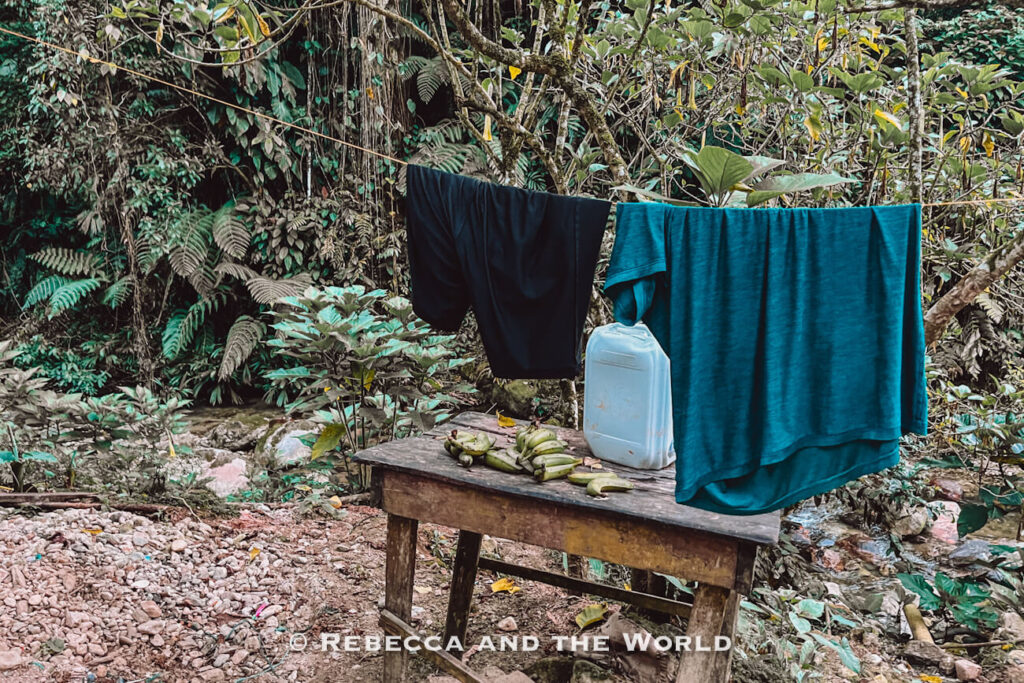
I packed four pairs and washed them every night. Because they were quick dry, they were usually close to dry by morning. This is one area where quick dry fabric is a no-brainer.
Sunglasses
Even though you’re in the jungle, there are exposed sections where the sun is relentless and sunglasses help with glare and comfort. My husband even brought a strap to keep his sunnies around his neck, which I also need to buy!
Hat
Also essential. It’s not just about sunburn, it’s about keeping your face cooler and making the heat feel a bit more manageable. A cap is easiest because it’s light and dries quickly if it gets wet, but something with a full brim would also be great to protect the back of your head.
Camp clothes
Camp outfit
You’ll want one set of clothes that never gets worn on the trail. Something dry(ish), comfortable and ideally long sleeves and long pants to help with mosquitoes once the sun drops.
I brought:
- Linen pants – These were light and breathable. These was part of my broader South America packing list rather than an item I specifically packed for the Ciudad Perdida hike.
- Merino wool t-shirt – Merino is great for multi-day trips because it doesn’t get smelly as fast, so I could wear this each night after a shower no problem.
- Long-sleeve top – This is the same Uniqlo UV-protection long-sleeve I wore daily on the Portuguese Camino and it came in handy again here. I liked having something with sleeves for evenings as it gave me a bit of protection from bugs without needing to slather on repellent constantly.
Sleepwear
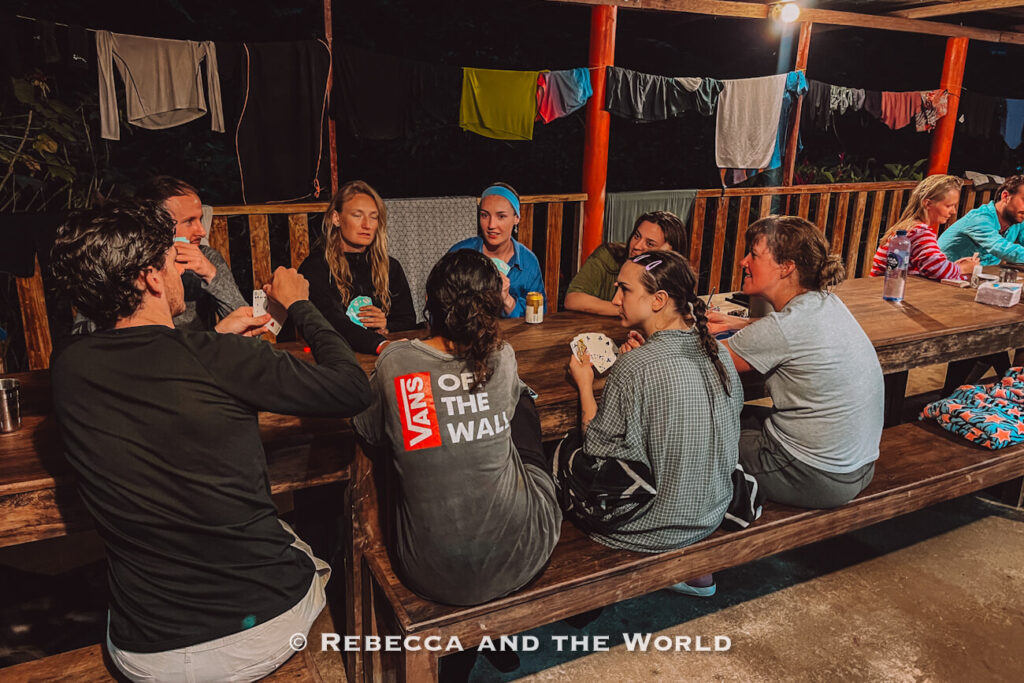
Pack something to sleep in. I packed a singlet top with a built-in bra as well as a light sleeveless dress that provided coverage when I got up in the middle of the night to go to the bathroom.
Swimsuit
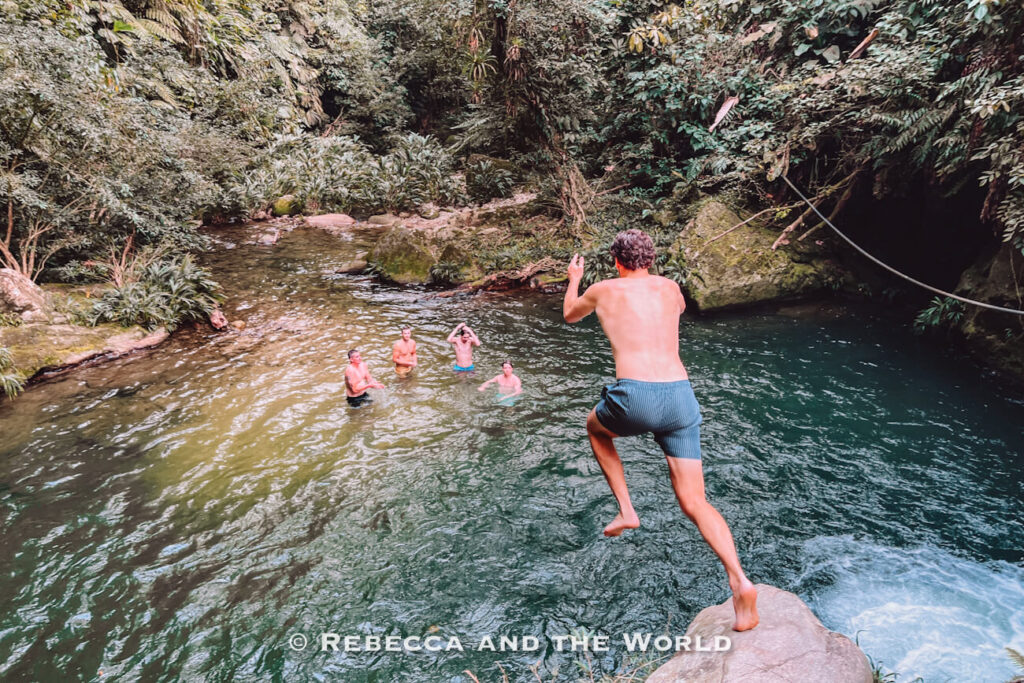
Bring something to swim in. There are plenty of chances to jump in the river to cool off, and it’s one of the best parts of the trek.
Earplugs and eye mask
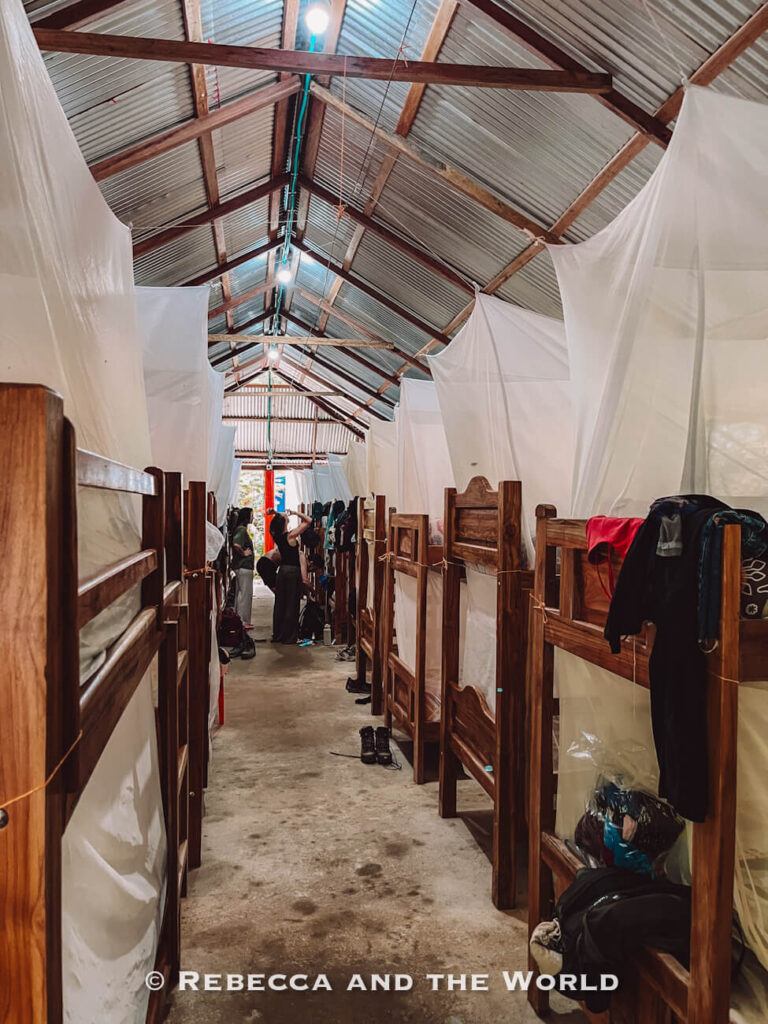
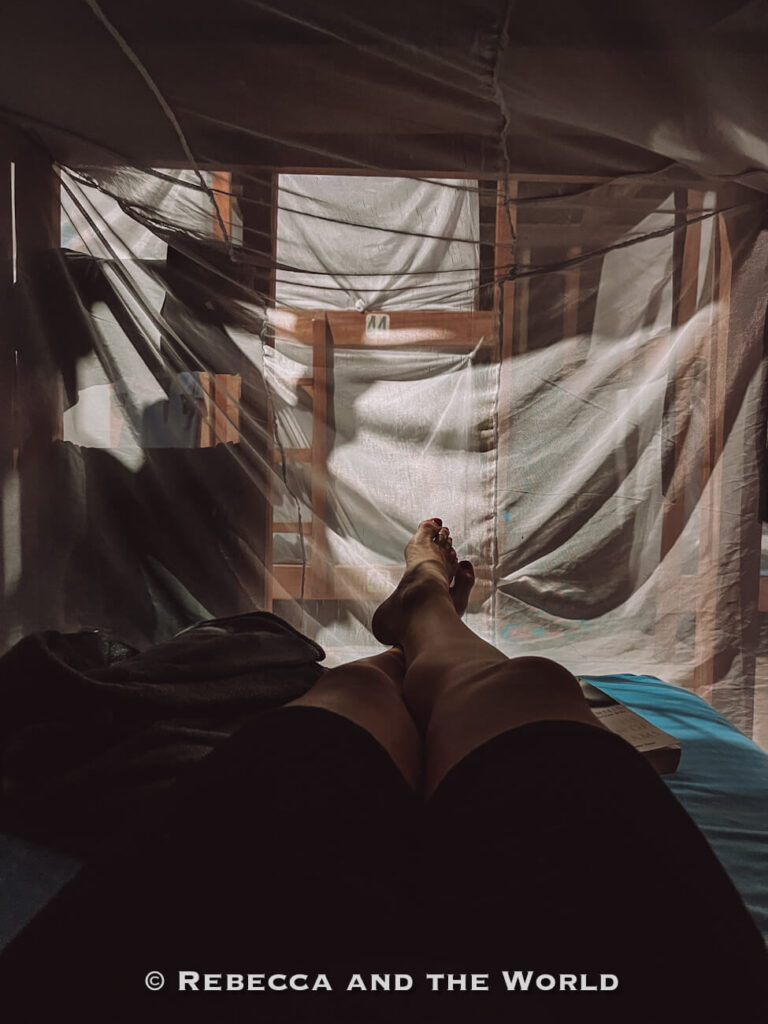
Absolute essentials. Camps can be noisy, you might want to go to sleep early while the lights are still on and sleeping in dorm-style huts means you’ll hear everything.
Shoes
Trail runners
This is the big decision for the Lost City trek: hiking boots or trail runners?
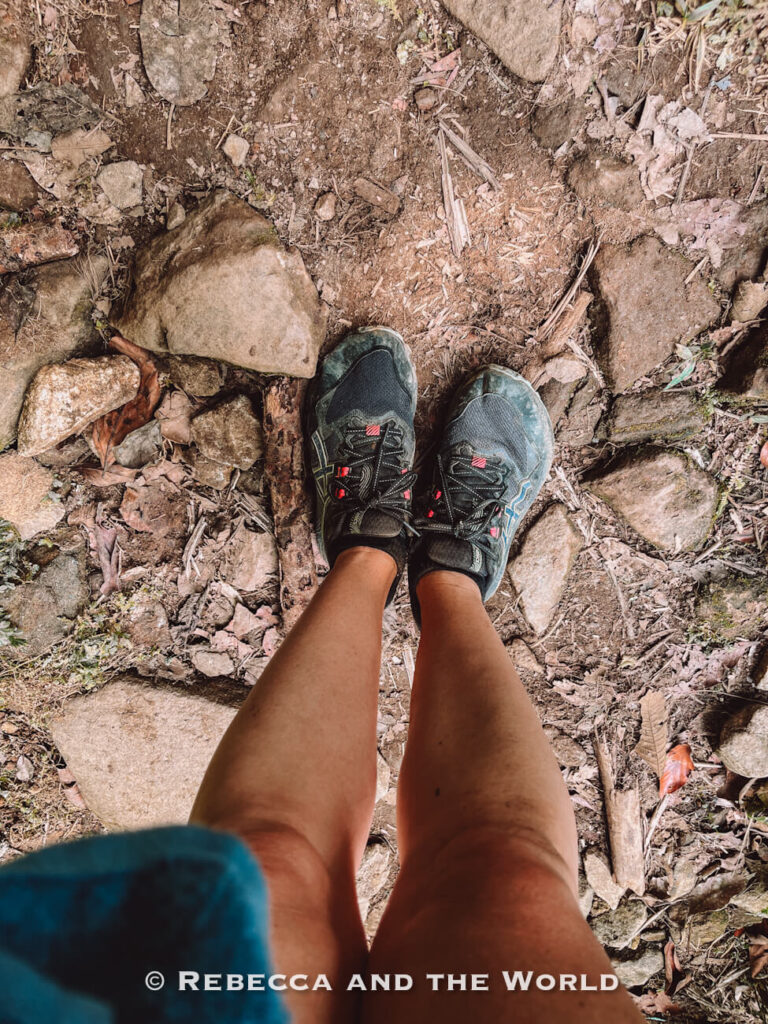
Honestly, it’s completely up to you and it comes down to what you’re comfortable in, what’s already worn in, and what you’re doing with your shoes for the rest of your trip. Because we were travelling for weeks afterwards, I didn’t want to carry bulky boots, so I wore trail runner sneakers.
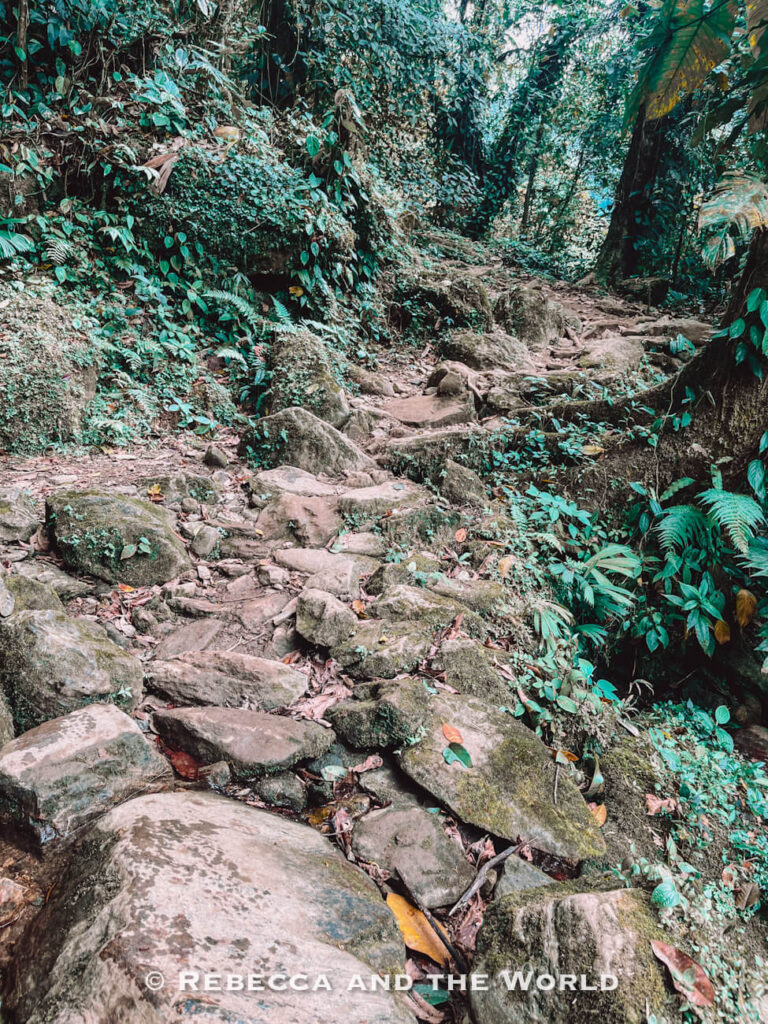
Whatever you choose, the non-negotiable is grip. The trail gets muddy and slick, there are plenty of uneven sections, and you want solid tread so you’re not sliding around on descents or river crossings.
If you’re usually a boots person and you like the ankle support, wear boots. If you prefer lightweight shoes and you’re used to hiking in sneakers, trail runners work well. Just don’t bring anything brand new.
Tevas
At the end of the day it felt amazing to peel off my hiking shoes and let my feet breathe. Tevas (or any similar hiking sandal) are practical around camp as well. They’re easy to slip on, fine if they get wet, and handy for quick trips to the bathroom or down to the river.
LifeStraw drink bottle
Normally, on a multi-day hike I’d take a hydration bladder like this one, but because we were travelling for five weeks I tried to limit the amount of gear I brought with us.
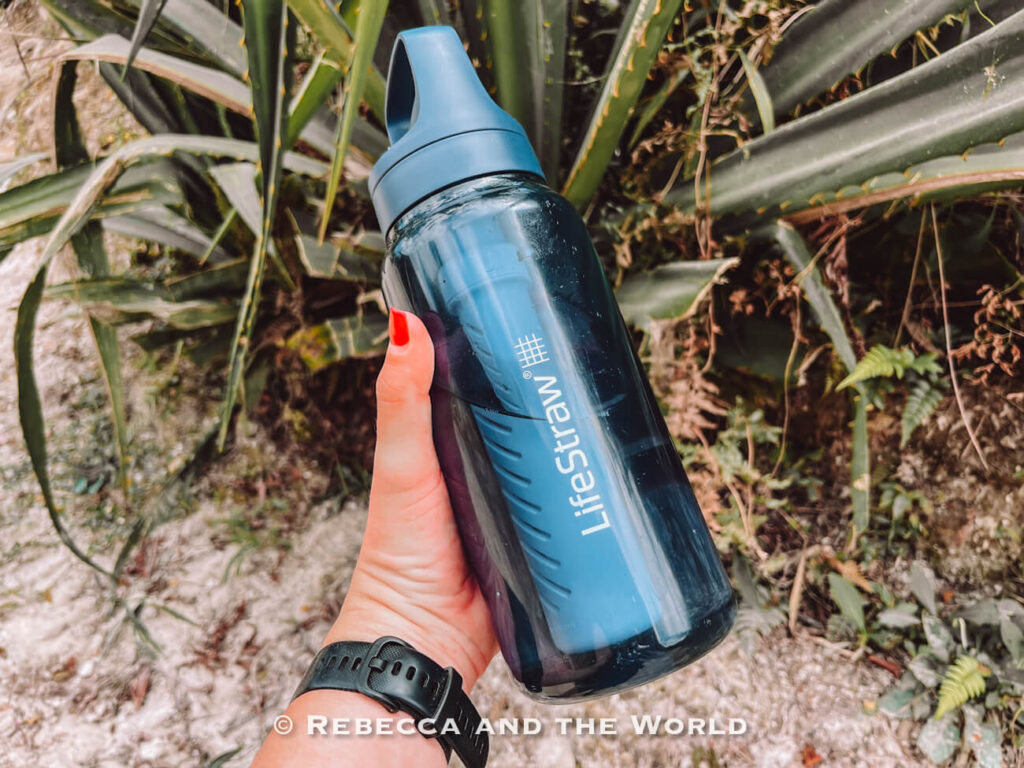
I bought a LifeStraw Go water bottle just before this trip because it would be great for the hike and for general travel around South America (I hate buying throw-away plastic bottles!). The LifeStraw protects against bacteria and parasites (99.999999% they say!) and reduces microplastics. Even though the water at camp was UV filtered, I liked having the LifeStraw as an extra layer of reassurance, and it made it easier to manage my water during the day.
One small downside: the straw can be tricky to suck from once the water level gets low, so you do need to tip it and angle it a bit to keep it flowing.
I also carried a second plastic bottle that I could fill up at camp and then transfer the water into my LifeStraw bottle as needed.
Buff / sweat towel
I ran out of time to buy a Buff (or anything similar) before we left, so I improvised and picked up a cheap face washer from a supermarket.
It did the job! Mostly that meant wiping sweat and I used it a lot. If you’ve got time, a proper Buff is lighter and more versatile, but if you’re already on the ground in Santa Marta (read my Santa Marta travel guide) and scrambling to organise last-minute bits, anything absorbent will work.
Towel
We brought our lightweight beach towels, and they were fine, but in hindsight I would have packed proper quick-dry travel towels like these Sea to Summit ones.
Not because anything dries quickly on this trek, it doesn’t, but because quick-dry towels are lighter and pack down smaller.
Sunscreen
Obvious, but it’s worth stressing: the sun in Colombia is seriously strong. There are plenty of shady parts, but once you’re in that sun you’ll feel it.
Before we left I went down a bit of a rabbit hole researching sunscreen, especially after seeing recent testing showing some sunscreens don’t actually deliver the SPF they claim. I ended up going with Neutrogena Ultra Sheer Body Lotion with SPF50+ because it scored well in Australian testing.
Make sure you bring enough sunscreen for four days of generous reapplication. There were many unprepared people on our trip who had to keep borrowing from others.
Mosquito repellent
I brought a tube of Good Riddance from Australia. It’s DEET-free and smells really nice, and it worked well for us. Mosquitoes aren’t normally attracted to me anyway (I’m sure I’ve now jinxed myself) and I didn’t get any bites while I had it on.
One thing to know: you’ll need repellent in the daytime as well as at night, and you’ll want to reapply throughout the day. Between sweat, humidity and river dips, it wears off fast, so bring enough for the full four days rather than trying to ration it.
Our tour company, Expotur, recommended bringing Nopikex, which you can buy in Colombia.
Toiletries
Expect to smell and expect everyone else to smell as well, so you can keep your toiletries pretty minimal.
Bring toilet paper. Most camps didn’t have it, and you don’t want to be caught out.
Then stick to the essentials – I brought:
- Toothbrush and toothpaste
- Shampoo bar that doubled as soap
- Deodorant
- Face moisturiser (a lightweight one, given the heat)
My shampoo bar did the job and saved space, but I will say my husband hated it because it didn’t have a fragrance, so he never felt “properly clean”. If you’re someone who needs that “freshly showered” feeling at the end of a sweaty day, you might want to bring something with more of a scent, even if it’s just a small bottle.
Medical stuff
Expotur had a full first aid kit, so we just brought the essentials.
Blister kit
Bring the stuff you need to manage blisters, even if you rarely get them. Our kit included Compeed, tape and lambs wool. Lambs wool was my husband’s saviour on the Portuguese Camino, and it worked just as well here for preventing hot spots from turning into full-blown blisters. My mum is a wool spinner, so I got her to send me some of her raw wool – but you can buy lambs wool at some pharmacies.
The key is to deal with any rubbing early, not once your foot is already angry.
Antiseptic cream
Useful for any cuts, scrapes or bites. The trail is muddy and you’re constantly brushing past plants, so little scratches happen easily.
Ibuprofen + Panadol
Worth packing. Even if you don’t usually take pain relief, having it on hand is comforting when you’ve done hours of steep climbs and your knees start complaining. A few Ibuprofen pills at the end of the day were great for reducing the inflammation in my knees (oh god, I sound old!).
Also, you can buy really strong ibuprofen in Colombia, about four times the strength we get in Australia, which is good to know if you forget to pack it or run out.
Anti-inflammatory gel
This is the one I wish we’d packed. Something like Voltaren gel or a Deep Heat style muscle rub would have been magic at the end of each day. Luckily our friend had an excellent medicine kit we could borrow from, and rubbing gel into sore muscles and groaning knees at night was so nice.
Small scissors
Handy for cutting tape and trimming bandaids.
Wet wipes and hand sanitiser
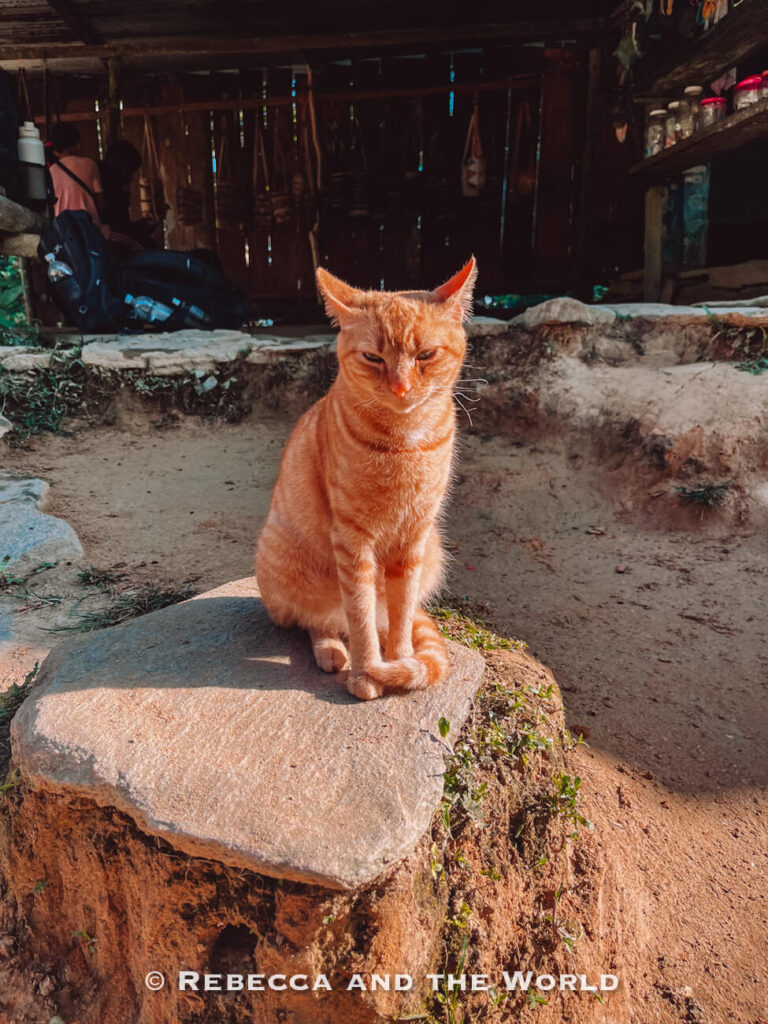
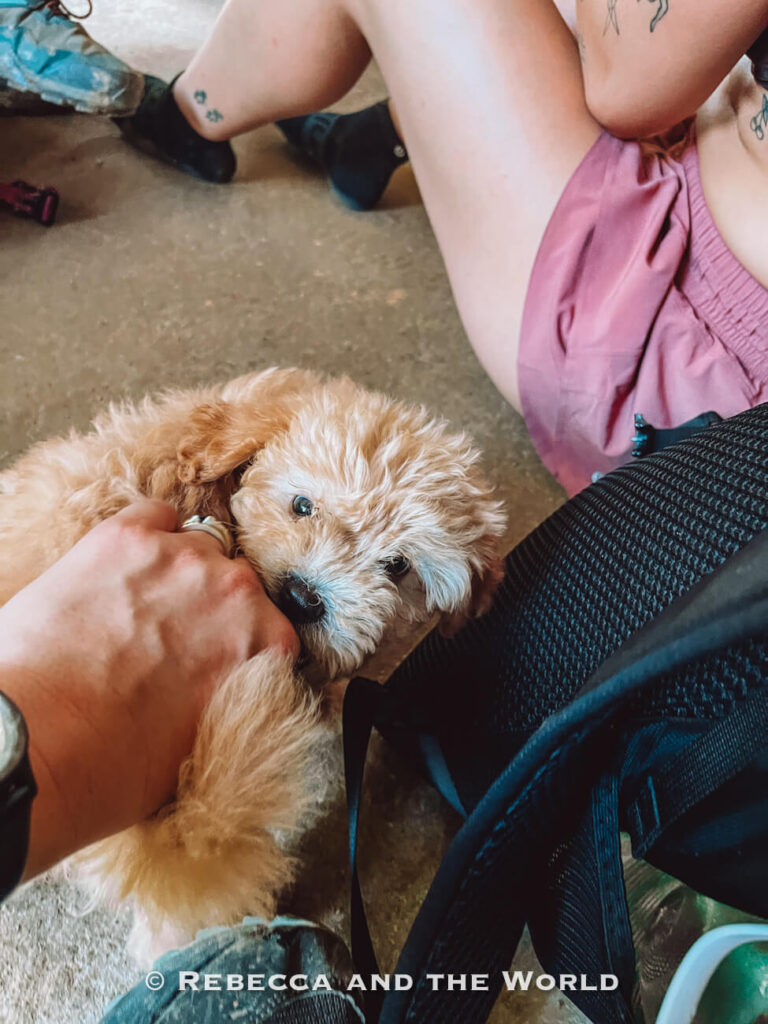
Wet wipes were great for a quick freshen up at the end of the day, and hand sanitiser is a non-negotiable before meals and snacks when you’ve been sweating and possibly patting cute cats and dogs.
Technology and miscellaneous stuff
Headlamp
Bring a headlamp. There are very few lights on at night at camp, and you’ll want both hands free for everything from finding your bed to heading to the bathroom.
Power bank
A power bank is essential. You’re off-grid for days and you’ll still want your phone for photos and maybe a bit of music. There are charging ports at all camps.
Phone / camera
I used my phone for most photos and videos and was glad I had it easily accessible. If you’re bringing a separate camera, just be realistic about weight and how often you’ll actually pull it out when you’re sweaty and muddy.
Universal charger
We brought a universal charger that has a USB port, which made it easy to charge our phones and the power bank.
Notebook and pens
I take lots of notes, so it was worth the space, but not everyone needs this. If you journal or you like capturing details while they’re fresh, it’s a nice add-on. If you’re packing ultra light, skip it.
Book
I love reading, and it was so nice to read a few pages before falling asleep. That said, I wish I’d brought a Kindle. Other people in our group had one and it made so much more sense weight-wise.
Snacks
I packed snacks from Australia: lollies, dried fruit and nuts. In hindsight, they weren’t really necessary. The three daily meals were more than enough, and we also got fresh fruit (watermelon, pineapple, oranges) several times throughout the day.
If you’re someone who gets a bit shaky between meals, bring a small stash. Otherwise, this is an easy category to cut back on to save weight.
What we didn’t pack
Hiking poles
This is one of those very personal gear choices. I didn’t bring hiking poles because I just don’t like using them, and I’m happy enough managing steep sections without them. But if you have dodgy knees or you know downhill hikes usually leave you sore, poles will be helpful on the steep descents.
Rain jacket
We didn’t pack rain jackets because it wasn’t the rainy season and we decided to take the risk. It worked out for us, luckily. The only rain we had was in the afternoon or at night when we were already in camp, so we didn’t really need proper rain gear on the trail.
That said, this is very timing-dependent. If you’re doing the hike in any of the rainy months, a rain jacket is a must-bring item. Jungle rain isn’t a light drizzle, and being soaked for hours while you’re still hiking would be miserable.
🥾 BOOK THE 4-DAY LOST CITY TREK WITH EXPOTUR HERE 🥾
Final thoughts: Lost City packing list
Packing for the Lost City hike is really about one thing: keeping it simple and light. Make a list of what you need and then think about whether you can cut it back further. Carrying a light backpack will make the hike so much more enjoyable!
FAQs: Ciudad Perdida hike packing list
What should you wear on the Lost City hike?
Think lightweight and quick-drying. I wore hiking shorts and a tank top during the day, plus proper hiking socks and trail runners. I also recommend a hat and sunglasses for the exposed sections and something with long sleeves for camp when the mosquitoes come out.
Should you pack long pants for mosquitoes or is it too hot on the Lost City trek?
For hiking, I found long pants too hot and went with shorts. For camp, long pants are worth it. Evenings are when you’ll notice mosquitoes more, and having some long, comfy layers makes it easier to sit around without constantly reapplying repellent.
How many outfits should you pack for the 4-day Lost City trek?
Less than you think. I’d aim for one main hiking outfit, one spare top, spare underwear and socks, and one dedicated set of camp clothes that stays dry. Dry socks and underwear make the biggest difference to comfort.
Do you need to filter water on the Lost City trek?
You don’t necessarily need to if your tour provides treated water, but it depends on the operator and your risk tolerance. I used a LifeStraw bottle as an extra layer of reassurance. If you’re not bringing a filter bottle, check what your trekking company provides and follow their guidance.
Can you refill your water bottle at camps?
Yes, you can refill at camps. On our trek, water was available at camp and treated (ours was UV filtered). I still carried an extra plastic bottle to fill up, then transferred that water into my LifeStraw bottle so I always had filtered water ready to go.
Is there electricity to charge your phone on the Lost City hike?
Yes – but don’t count on it. All the camps we stayed at had charging options, but they filled up pretty quickly (and we visited during shoulder season). Bring a power bank and assume that’s how you’ll keep your phone and camera charged for the four days.
Is there wifi on the Lost City hike?
Phone reception is patchy but some camps have wifi you can pay for. You should assume you’ll be off-grid for most of the trek. I actually loved that part!
Did you find this article helpful? Consider buying me a coffee as a way to say thanks!
What’s on your Lost City trek packing list? Any essentials you took with you?
Related posts
Before you go… you might like these Colombia travel articles:
- What to Expect on Colombia’s Lost City Trek + An Honest Expotur Review
- Is Santa Marta Worth Visiting? A Guide to Colombia’s Caribbean Gateway
- Is Palomino Worth Visiting? A First-Timer’s Guide + Tips for Planning Your Stay
- 3 Days in Cartagena Itinerary: Plan Your First Trip to This Colourful Colombian City
- 48 hours in Bogotá, Colombia: The Perfect 2-Day Itinerary for First-Time Visitors
COLOMBIA TRIP ESSENTIALS
- Book your flight to and around Colombia online with Skyscanner. I like how Skyscanner allows you to find the cheapest days to travel and compares multiple airlines at once.
- One thing I always purchase is travel insurance! Travel Insurance Master allows you to compare across multiple policy providers, while SafetyWing is great for long-term travellers and digital nomads.
- Wise is my choice for sending and receiving money and spending money overseas (you can get a digital and physical card).
- Find great hotels across Colombia. Check prices on Booking.com and Expedia online.
- Check out the huge range of day tours throughout Colombia on GetYourGuide or Viator. I love a good food tour in particular!
- Saving money? Check out the range of free walking tours in Colombia with GuruWalk (don’t forget to tip!).
- How to get around? I use DiscoverCars for car hire, or Motorhome Republic and Jucy for campervan/RV rental. For buses, trains and ferries, I use 12GO, Busbud and Omio.
- Grab an e-sim to stay connected while on the road.
- A copy of the Lonely Planet guide to Colombia will be handy. Also pick up a Spanish language phrasebook to help you navigate your visit.
- Check out my Amazon shop for my fave travel items – everything from backpacks and suitcases to travel adapters and beauty products.
PIN IT FOR LATER: LOST CITY TREK PACKING LIST
Save this Lost City trek packing list to Pinterest so you can plan your trip later!