
Wondering what to pack for the Camino de Santiago? Here’s everything I packed – and what I reckon you should leave behind.
I spent a lot of time planning what to pack for the Camino. Probably too much time! I combed websites and watched dozens of YouTube videos as I fine-tuned my packing list to get my bag to the lightest it could possibly be – while also making sure I didn’t leave anything critical behind.
So, to help save you some time, here’s what I packed, what I actually used and what I left behind – all with the benefit of hindsight. And while there were definitely things I didn’t need (and a few I wish I’d packed), overall, I was really happy with my setup.
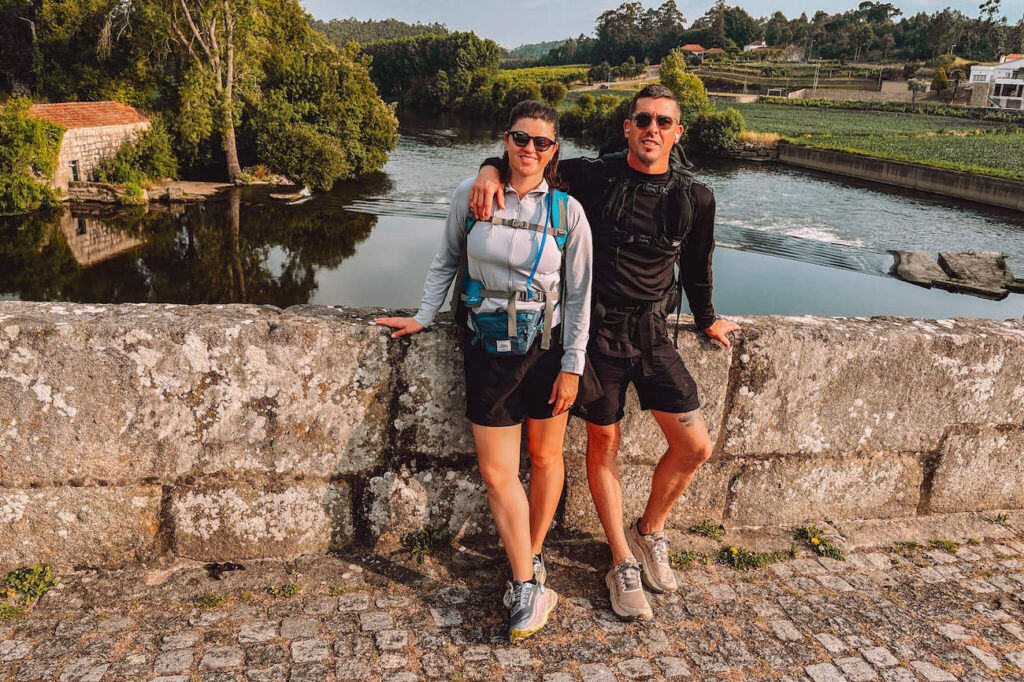
Some context: my husband and I walked the Portuguese Camino from Porto (check out my Porto 2-day itinerary) to Santiago de Compostela in June, so we had the benefit of warmer weather. We carried everything ourselves and packed light – we didn’t take advantage of the luggage transfers from town to town (although there were days I wish we had!).
With that in mind, let’s get into the list!
PS. You can download the list in a PDF printable by clicking right here!
PPS. I’ve collated everything in my Amazon Storefront right here.
If you’re not a resident of the EU, you’ll need to register for the Entry/Exit System (EES) when you travel to Europe. Digital registration happens when you cross borders. You can find out more information online here. Later (possibly 2027, although there’s no confirmation), the European Travel Information and Authorisation System (ETIAS) will kick off. More information about that here.
This blog post may contain affiliate links, meaning if you book or buy something through one of these links, I may earn a small commission (at no extra cost to you).
Whatever you pack… Pack light!
One of the most important pieces of advice I can give is this: pack light. You will feel every gram of your backpack with every step you take, especially on the long days on cobblestones.
There’s a rule of thumb that says your pack should weigh no more than 10% of your body weight. That’s a solid guide, but honestly, I’d aim for even less if you can manage it. I didn’t actually weigh my bag, but I’d guess that my pack was probably just a little over 10% of my body weight when I included water.
You don’t have to be ultra-minimalist. I’m definitely not. But you do need to be practical. Go through your packing list multiple times. Lay everything out and go through every single item. Ask yourself if you’ll really use that extra item – and be honest. I’m the organised one in our relationship, so I had a very specific list. My husband, on the other hand, threw in a bunch of “just in case” stuff and regretted some of those items by day two.
The good news is that if you are worried about the weight of your bag or have injuries (or just want a few extra outfits!), there are services that will transport your bag from place to place for you. While we didn’t use this service on the Camino, we did get them to move our other suitcase from Porto to Santiago, since we were travelling elsewhere in Europe. We used Pilbeo for this and they also do the door-to-door service. Other companies that other pilgrims recommended to me were Top Santiago and Tuitrans.
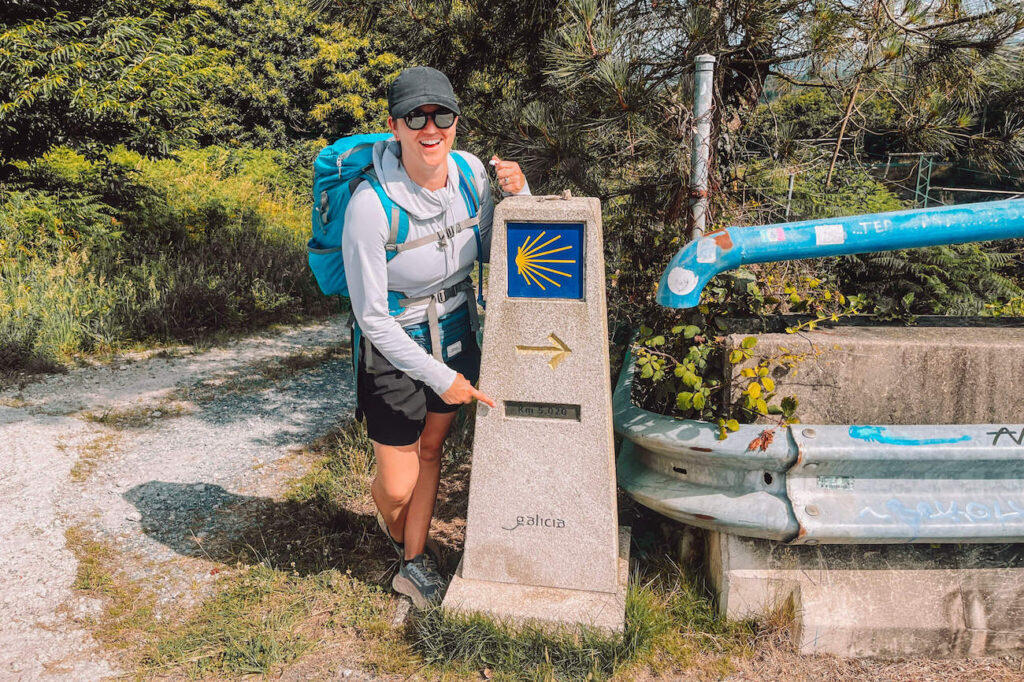
My Camino packing list
So, now you know how important it is to keep it light, here’s a detailed list of absolutely everything I packed.
Bags
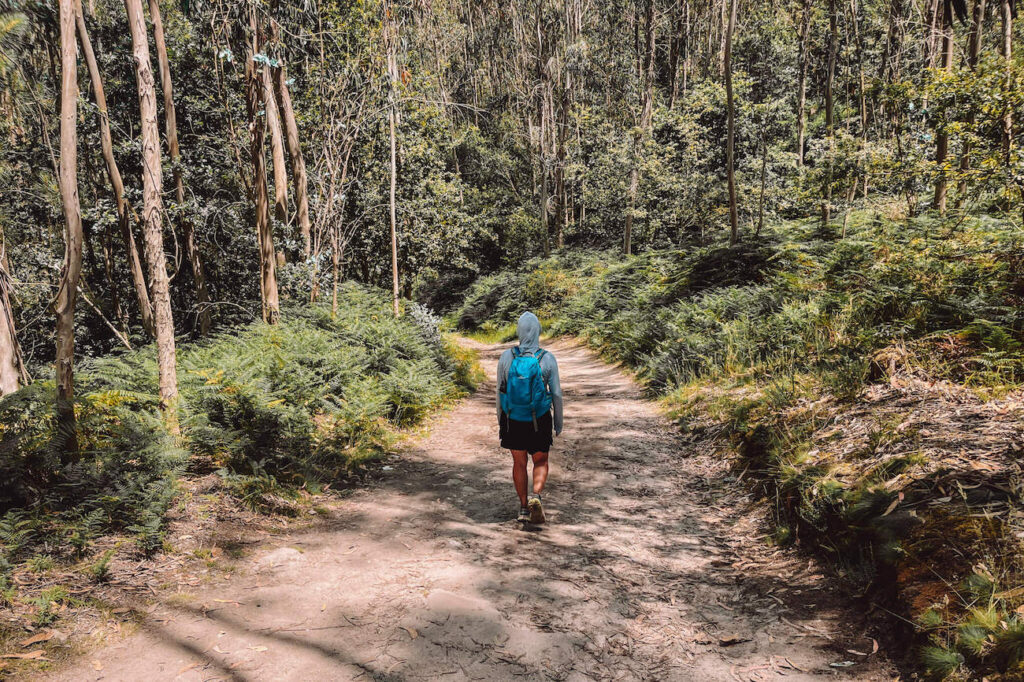
My main bag was a 40L Kathmandu backpack that I’ve had for years (I actually took it when I walked the Kokoda Track in Papua New Guinea). It’s not in stock anymore but this Osprey backpack (women’s here | men’s here) is similar, and what I will purchase next.
My backpack unfortunately doesn’t have waist belt pockets, which I would have loved, but I got around that by carrying a small bumbag (hip pack) for easy access to essentials like lip balm, a small notebook and hand sanitiser. This is the updated version of the bumbag I have.
Instead of carrying a water bottle, I brought a water bladder that sits inside my backpack. This is always my preferred way to hydrate – I can just grab the tube from over my shoulder to drink, rather than having to stop and pull out a water bottle. My water bladder can hold 3 litres, but I usually only filled it up to 1.5 or 2 litres just to save on weight. This is the water bladder I use.
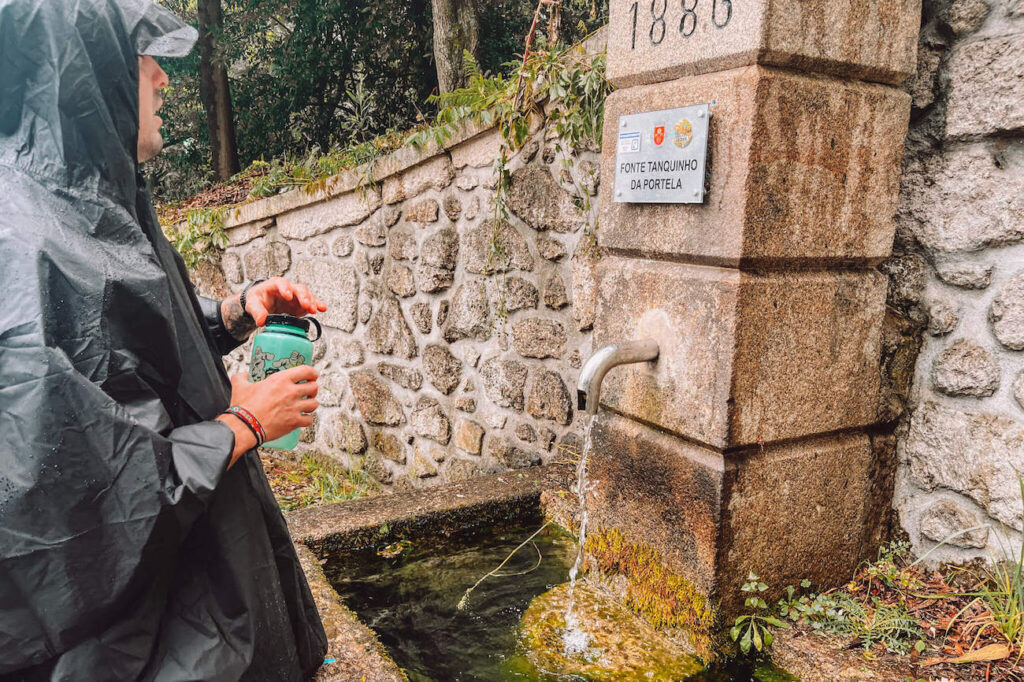
I also packed a packable tote bag. We used this for grocery runs (to avoid plastic or paper bags that would just get thrown away) and laundry trips.
Clothing
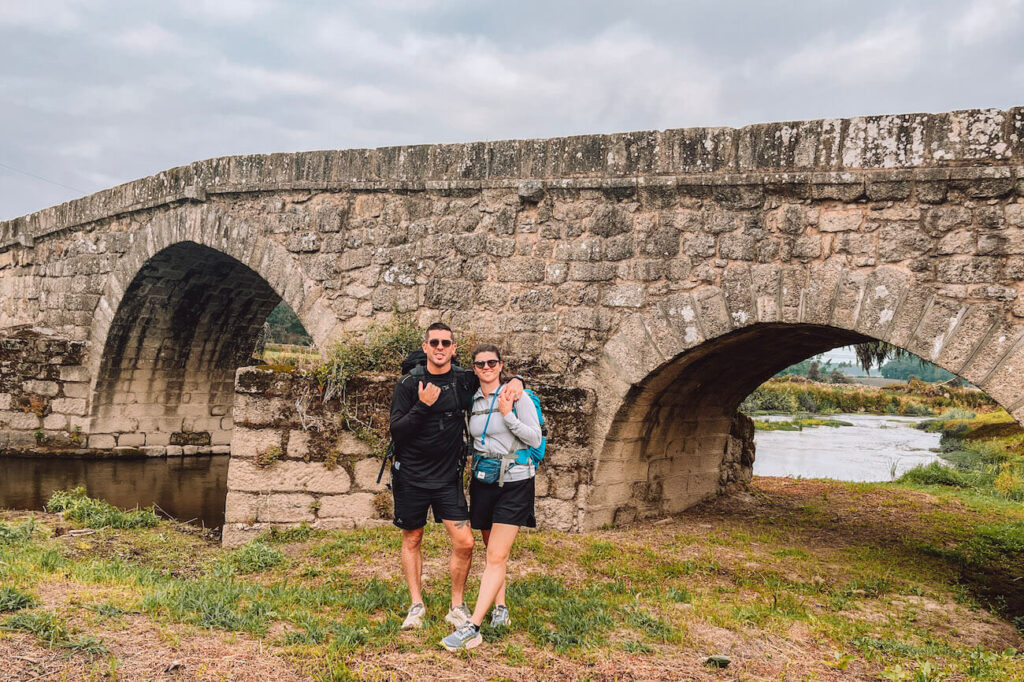
You honestly don’t need a lot of clothes on the Camino. I packed one outfit for walking during the day and another outfit for changing into at night. Did I get sick of these clothes? Yes. Was I glad to not have extra weight? Also yes.
Bring quick-drying items that are comfortable and functional. I recommend wearing them beforehand to make sure clothing doesn’t ride up or rub the wrong way – always good to do a test run!
There are laundry facilities at many hostels and albergues as well as in towns, so it’s easy to stay fairly clean!
Keep in mind that I travelled in June, so you’ll need to add some warmer gear if you’re planning to do the Camino in winter or the cooler months.
I packed:
One pair of shorts – I usually wear three-quarter length leggings when hiking, but I loved having bare legs on hot days. These LSKD running shorts were perfect – quick-dry, high-waisted, zip-up pockets and lined. These REI running shorts could be a great alternative.
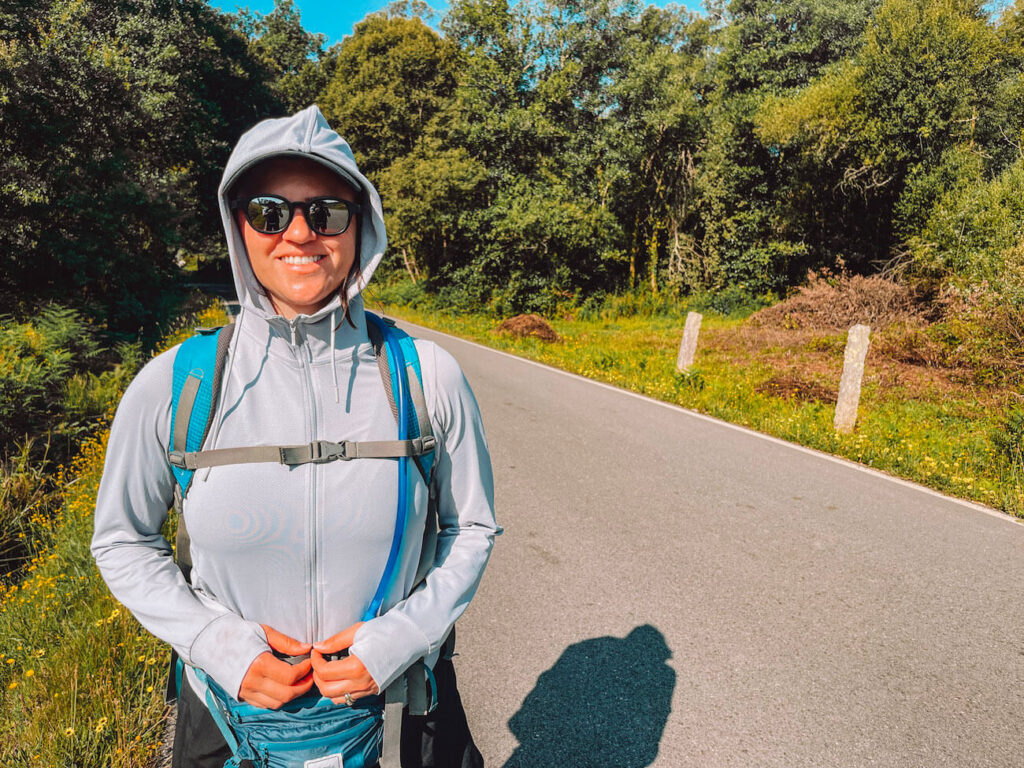
One long-sleeve UV protection zip-up top from Uniqlo – I am so glad I went with a long-sleeved top – it kept me protected from the sun and meant I didn’t need to put on as much sunscreen. Everyone kept asking me if I was hot, but the top is mesh and super breathable, and I never felt hotter than anyone else who was in short sleeves (nor did I end up with weird tan lines!). I really wanted this Ridge Merino Solstice Hoodie but it was out of stock when I was doing my trip preparation, so the Uniqlo version was a cheaper alternative that I was really happy with (and I actually preferred the full zip).
Two t-shirts – one merino wool, one synthetic quick-dry. I actually only needed one t-shirt in the end, because I wore the long-sleeve top most days without a t-shirt underneath. The other one I wore during the evenings and on rest days.
One pair of lightweight pants – these were for evenings. I only wore them a couple of times because the weather warmed up quickly.
One zip-up windbreaker – not very thick, but handy for a few cooler evenings. Again, I only ended up wearing this a few nights because of the warmer weather.
One sports bra and one regular bra – you could get away with one if you really want to pack light, but it’s nice to put on something fresh at night
4 x pairs of underwear – all from Paire, and they were super comfortable for walking. Also quick dry so I could wash them at night and they’d be dry by the morning.
2 x pairs of merino wool hiking socks – again, from Paire, and they held up really well after 250 kilometres of walking!
One extra pair of socks for night time – but I never needed them because it was so warm
One singlet top for sleeping
One cap for sun protection
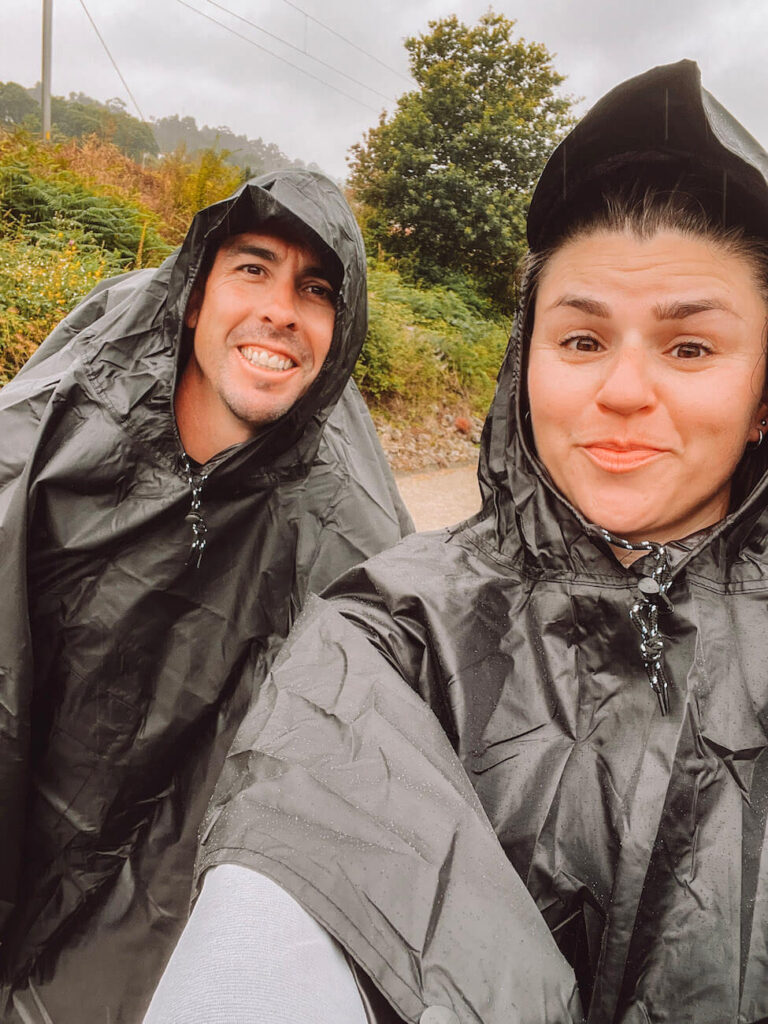
One poncho – this rolled up really well and was far lighter and smaller than a rain jacket (although if you’re going in rainier months, I’d recommend this rain jacket)
I put all my clothes in a dry bag to keep everything organised and protected from rain. Or, bring a pack cover to protect your entire bag.
The only clothing I wish I’d packed was a light summer dress. Something easy to slip on in the evenings when wandering around town on our rest day or going out for dinner. It would have been a nice change from my walking clothes and helped me feel slightly more human after a long, sweaty day. But not essential!
Footwear
I spent way too long researching footwear before the Camino. In the end, I chose trail runners over hiking boots, and I was really happy with that decision.
I walked the entire Portuguese Camino in a pair of New Balance Fresh Foam More Trail v3 trail runners (no longer available, these are similar). They were breathable, cushioned and had a thick enough sole to handle cobblestones, gravel paths and paved roads. The cobblestones in Portugal and Spain are no joke – they’re beautiful, but they’ll destroy your feet if you don’t have decent cushioning.
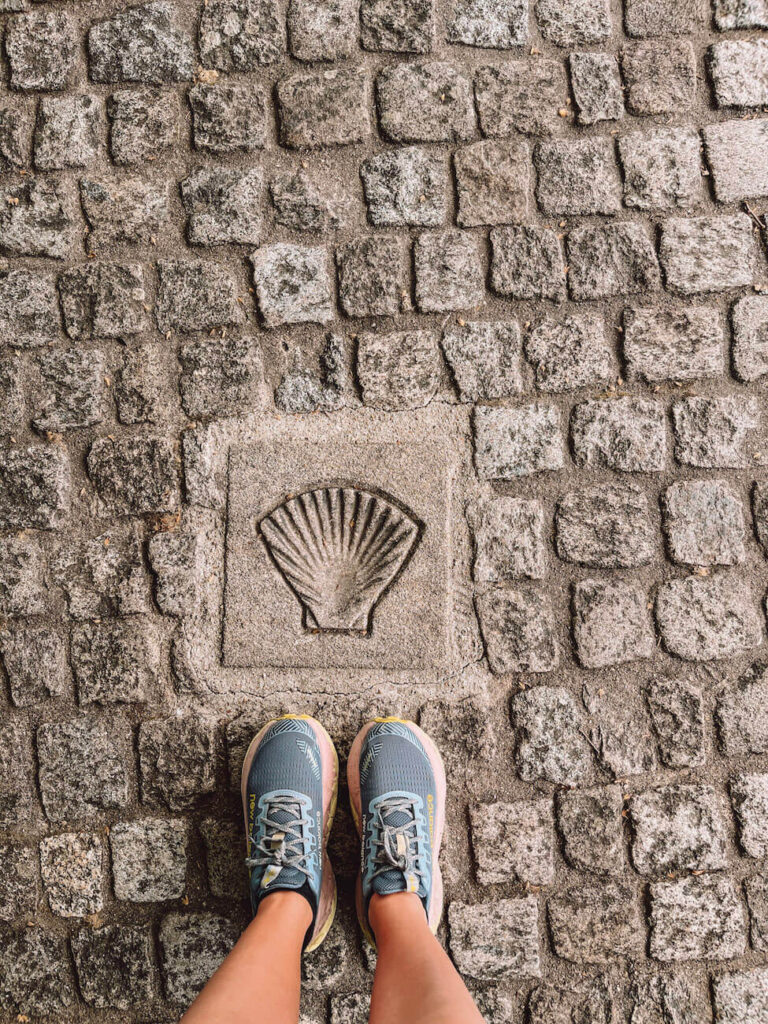
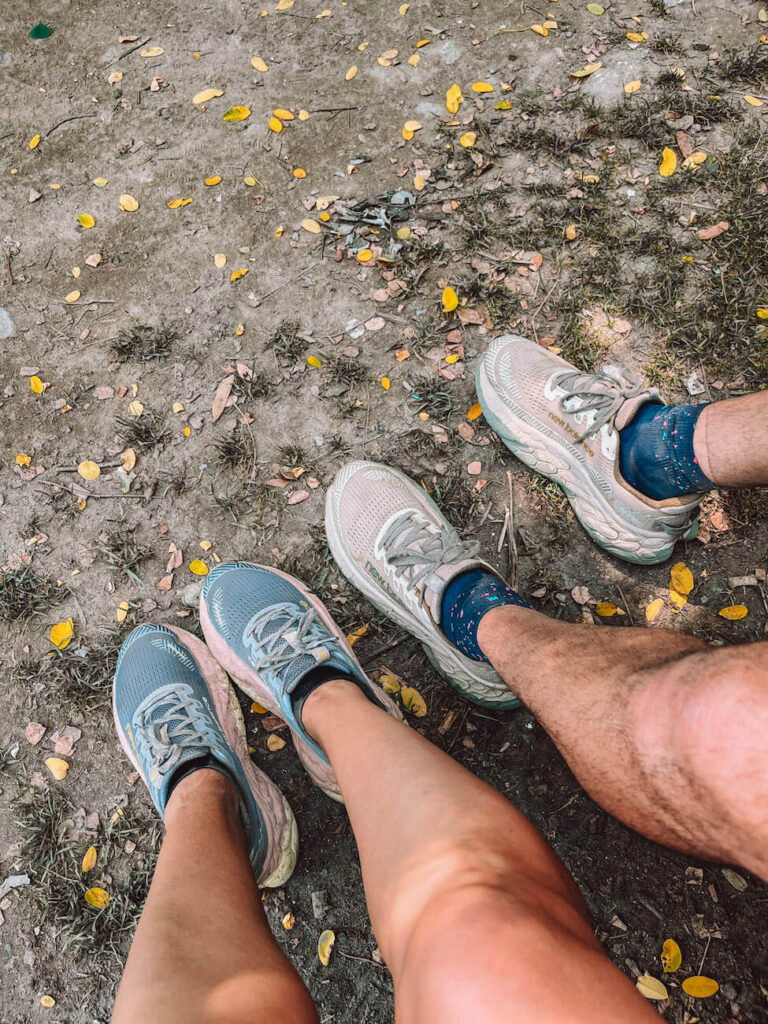
I saw lots of people in traditional hiking boots, but for summer walking on relatively flat terrain, trail runners are ideal. They’re lighter, dry faster, and don’t take forever to break in.
At the end of each day, I loved taking off my shoes and putting on my Tevas – such a relief!
It goes without saying that if you’re buying new shoes for the Camino, break them in properly before you go. Wear them on long walks, uphill and downhill, in different weather if you can.
Toiletries
There are shops, supermarkets, and pharmacies in nearly every town along the Camino, so don’t feel like you need to bring your entire bathroom with you. Just pack the essentials in travel sizes or decant products into travel bottles – you can always top up as you go.
Here’s what I brought:
- Sunscreen – absolutely essential. Easily available along the way, but I still brought a small bottle to start with
- Dr Bronner’s soap – we cut a bar in half to share. Great for body and laundry (and could use to wash your hair, too)
- Face cleanser/scrub and face moisturiser
- Mini shampoo – this lasted the whole trip because I also used the mini bottles at our accommodation (my hair was under a hat most days so a nice shampoo wasn’t going to make it any better!)
- Toothbrush and toothpaste
- Comb
- Deodorant
- Lip balm with SPF
- Wet wipes and hand sanitiser
- Nail clippers and a small nail file
- Tweezers
- Cotton buds
- Travel tissues
- Toilet paper – we brought one roll for roadside bathroom breaks (and of course I packed it out with me!)
- Eye drops
- Hair ties and bobby pins
All of this fit into a small toiletry pouch, and I didn’t miss anything major. Anything I ran out of (like toothpaste), I just picked up at the next pharmacy or supermarket.
First aid / blister kit
Even if you’ve never had blisters before, bring a blister kit. The Camino is different. Long days, varied surfaces, hot weather and lots of walking on cobblestones or uneven paths mean your feet take a beating.
While I survived without a blister, my husband wasn’t so lucky. Here’s what we packed and what we learned:
- Second Skin bandaids and fabric bandaids – we ended up buying Compeed once we were on the trail (specifically the toe ones as that’s where the blisters grew on my husband’s feet), and they worked really well
- Leukotape – great for holding bandaids in place, especially on tricky areas like toes
- Pins – for popping blisters (we brought safety pins, which could be used for other things as well, like hanging socks to dry on backpacks)
- Alcohol wipes – to sterilise the pins and clean blister areas
- Vaseline – applied each morning to areas prone to rubbing
- Lamb’s wool – this was a game-changer. I had read about it before but didn’t bring any. Then my husband got blisters and some lovely Australian ladies gave us some (which had come literally straight from a Merino sheep!). It cushions your toes and reduces friction. I’d absolutely pack this next time
- Small first-aid scissors – useful for cutting tape and bandages
- Antiseptic cream (like Neosporin) – for keeping blisters free of infections
- Voltaren gel – this was a lifesaver for sore spots and general aches. Easily available in pharmacies along the way
- Ibuprofen and Panadol — we brought a small stash and topped up en route
- Hydralyte – essential on hot days when we were sweating a lot
- Mylanta – came in handy after a couple of rich meals or too much wine
- Antihistamines – for hay fever or allergies
Gear
This is the random-but-useful category. Some of this gear might feel optional, but for us, we used it all.
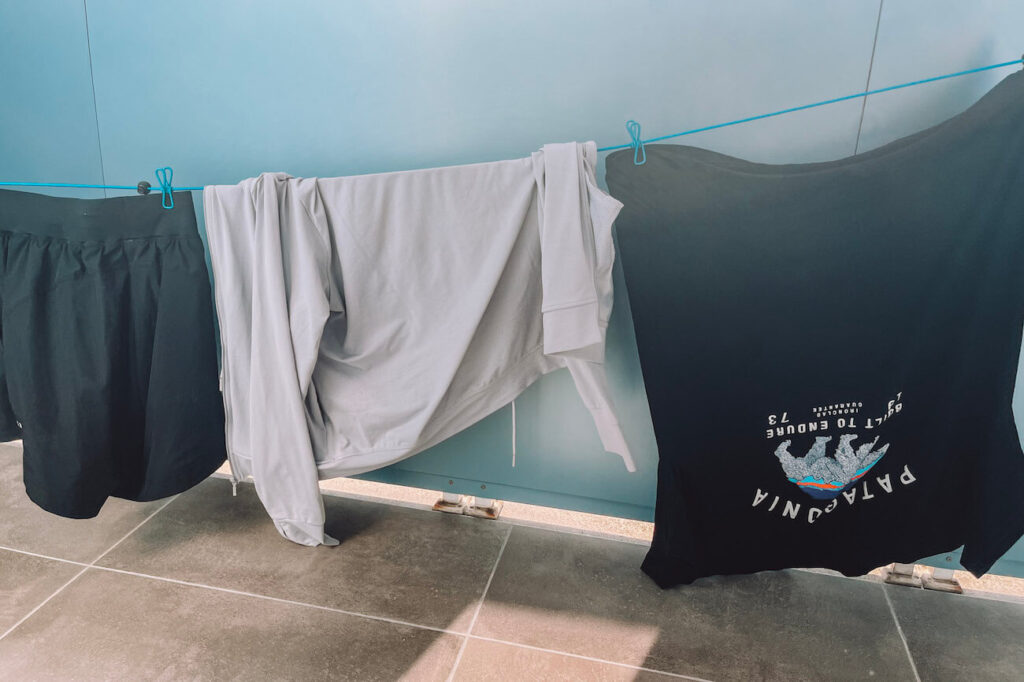
- Washing line – we did laundry most afternoons, and having our own line gave us flexibility when albergue clotheslines were full. Our washing line (find it here) has pegs attached, which does make it a little bulky, but it’s stretchy and can hold quite a few clothing items. We also saw some other pilgrims ingeniously resting their hiking poles between two chairs and using them as washing lines!
- Massage ball for rolling under feet – my husband is prone to muscle knots so he packed a massage ball and it was heaven after walking 25 km – painful but so good! You can also put it in a sock and hold it over your shoulder while against a wall to get out shoulder knots. A firm tennis ball works just as well!
- Pocket knife – I thought I would use this more but really didn’t… so I’d probably leave this at home next time (cutlery set and the first aid scissors would be sufficient)
- Cutlery set – we sometimes made our own lunch, and this was useful for cutting fruit and cheese or eating yoghurt
- Safety pins – great for pinning wet socks to your pack so they dry while you walk (and for popping blisters!)
- Quick-dry towel – not entirely necessary as we stayed in private rooms, where towels were provided. But we did use it as a picnic blanket a few times!
- Carabiner – I used it to hang items off my backpack
- Headlamp – again, something we didn’t use much but would be very helpful if you were staying in albergues
- Zip-lock bags – endlessly useful for snacks, toiletries and rubbish
- Earplugs – even though we stayed in private rooms, I still used these occasionally
- Eye mask – great for daytime naps!
- Small notebook and pens
Electronics
I tried to keep electronics to a minimum. There’s no need to bring a laptop or bulky camera gear unless you have a specific reason. My phone handled everything I needed: maps, photos and apps.
Here’s what I packed:
- iPhone – this doubled as my camera, translator and navigation tool
- Power bank – a must-have for charging your phone on the go
- Universal adapter – we’ve been using this universal adapter for years
- Garmin watch and charger – I liked tracking our daily steps and distance, but totally optional
- Headphones – I didn’t use them much, but they were nice for a podcast or music on the last few days when I needed a boost
Documents and money
Keep your documents safe, and carry a small amount of cash. Most places accept cards, but you’ll occasionally run into a cash-only café or need coins for laundry.
Here’s what we brought:
- Passports in a zip-lock bag – simple waterproofing in case of rain
- Money and credit cards in a small wallet – we used cards for most purchases
- Cash – we carried around 200 euros in notes, which lasted most of our trip
- Coins – useful for washing machines (typically 4-5 euros per load) and the odd vending machine or donation to a musician on the road
- Travel insurance – always a must for any trip! Check World Nomads or compare options on Travel Insurance Master
Sleeping gear
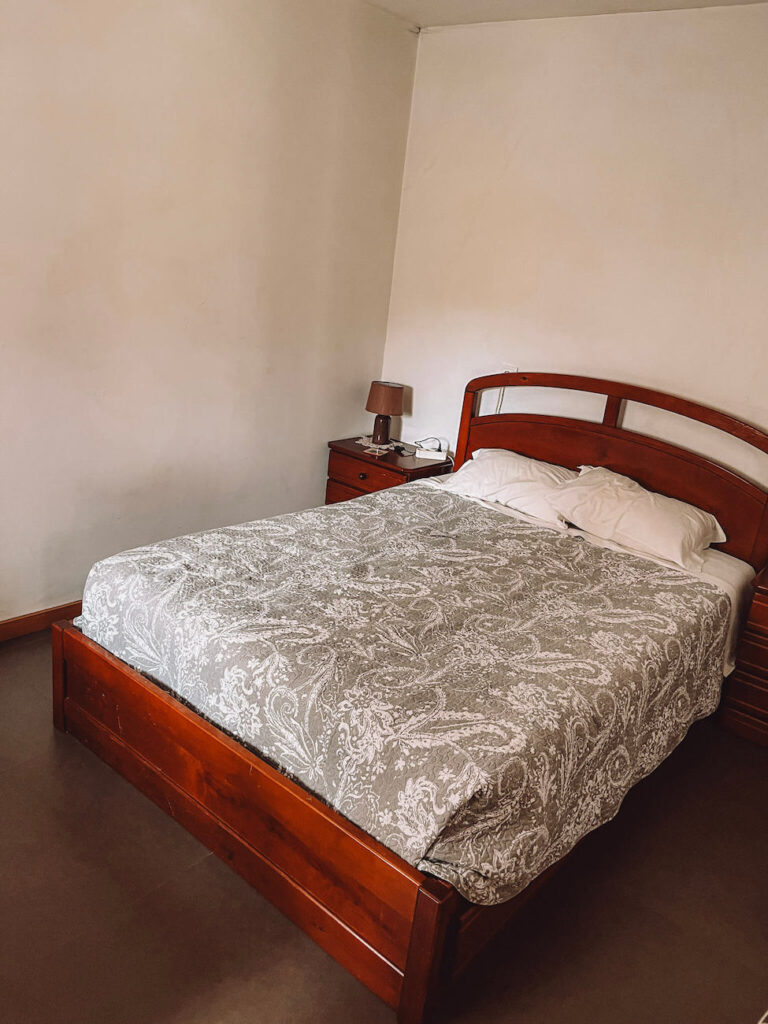
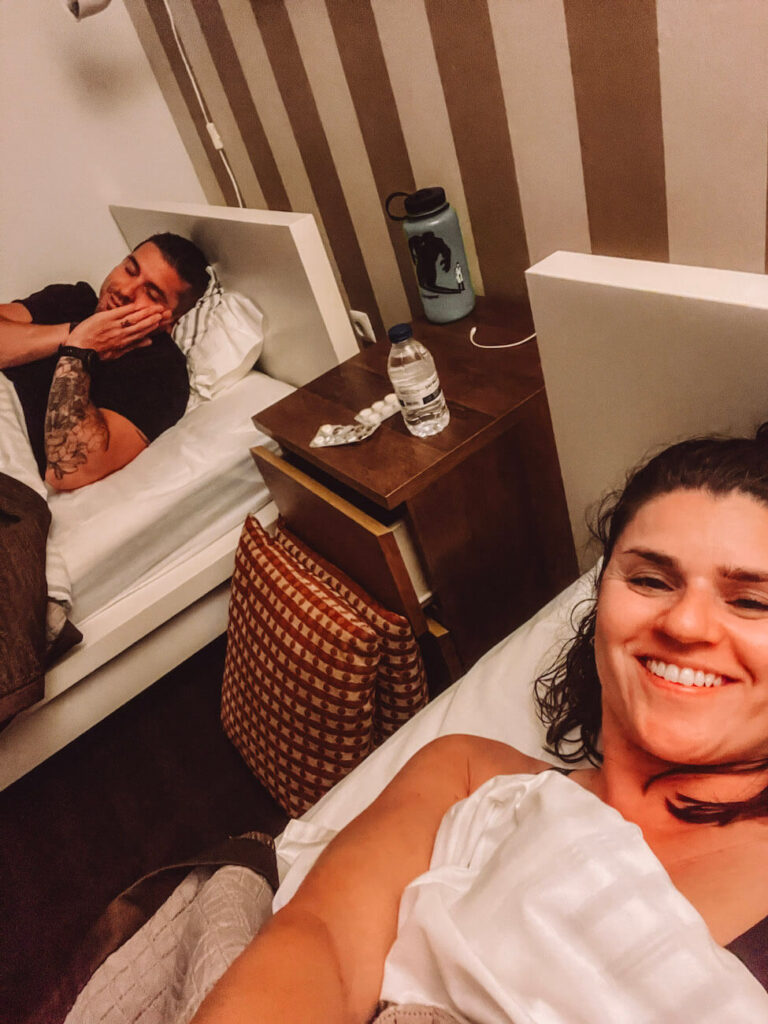
We chose to stay in private rooms the entire way, so we didn’t need much in the way of sleeping gear. Most places we booked provided sheets, towels and even little bottles of shampoo. After walking all day, having our own space made a huge difference.
But if you’re staying in albergues (the shared pilgrim hostels), you’ll need to bring your own:
- Sleep sheet or lightweight sleeping bag, depending on the season – many pilgrims debate the pros and cons of each. In summer, a sleep sheet is usually enough. We actually bought these sleeping bags thinking we would mix up accommodation between albergues and private rooms – but left them at home when we decided we’d stay in private rooms the entire way
- Quick-dry towel
- Earplugs and eye mask – even if you’re not a light sleeper, these are lifesavers in shared dorms
Optional extras
These definitely aren’t essential and will add unnecessary weight, but they are some things you might consider packing.
- Book – I’m an avid reader and love to have a book in hand if I have a few minutes of downtime. I picked up second-hand books along the way or found book swaps in a few of the accommodations we stayed in. I would have loved a Kindle for this trip!
- Tiny packable tote – as already mentioned, this came in handy for quick trips to the supermarket or for carrying laundry
- Small pack of cards – I debated bringing this and in the end we didn’t and that was fine – but would have been great to have on hand for down days/lazy afternoons
What I didn’t pack
Here’s what I considered packing but left behind and I didn’t miss any of it:
- Walking poles – this one’s personal. Lots of people love them, especially for long distances or steep descents. I personally find them annoying to carry and have never used them. But if you have knee issues, bring them
- Rain jacket – I opted for a poncho instead. We walked in June and only had two light days of rain. A bulky rain jacket would have been overkill, and the poncho was perfect for light showers
- Hiking boots – I nearly brought boots, but my New Balance trail runners were a much better fit for this route and season
- Full-size toiletries – completely unnecessary. You can buy shampoo, toothpaste and anything else along the way
- Guidebook – I downloaded a few Camino apps instead. They were lightweight, up-to-date, and easier to use. (My favourite Camino apps were Buen Camino and Wise Pilgrim!)
- Snacks from home – there are shops and bakeries everywhere. You don’t need to carry granola bars from your home country unless you have dietary restrictions
Seasonal considerations
What you pack will depend a lot on the time of year you’re walking. We did the Portuguese Camino in June, so we planned for warm weather, occasional rain and lots of sun. But if you’re walking in a different season, you’ll need to adjust your list.
Here’s a quick guide based on the research I did:
Spring (March to May)
- Expect rain and variable temperatures
- Pack layers, a waterproof jacket or poncho, and a warm top for evenings
- Albergues can still be chilly at night – consider a sleeping bag instead of just a sleep sheet
Summer (June to August)
- It’s hot, especially in Spain, and often humid in Portugal
- Focus on sun protection: cap, sunglasses, sunscreen and light, breathable clothing
- A poncho is usually enough for occasional rain
- Early starts help you avoid the midday heat
Autumn (September to November)
- Similar to spring, with cooler mornings and evenings
- Shorter days mean you’ll want to start earlier
- Pack light layers and something warm for nights
- Rain is common, especially in October and November
Winter (December to February)
- Many albergues close in winter, so plan accommodation ahead
- Fewer crowds, but cold, wet weather is likely
- You’ll need warmer gear: a proper sleeping bag, gloves, thermals, and waterproof layers and shoes
Final thoughts
Packing for a Camino is one of those things that seems stressful at first, but gets easier the more you read and think about what you’ll really use. My biggest tip? Lay everything out and be honest with yourself: do you really need each item? Can you buy it along the way if it turns out you do?
You’ll also realise how little you actually need – and that’s part of the beauty of the Camino.
Buen Camino!
→ Don’t forget! You can download the list in a PDF printable by clicking right here! And I’ve collated everything in my Amazon Storefront right here.
FAQs
What size backpack should I bring?
Aim for a 35-45L backpack. I used a 40L pack and it was perfect. It fit everything I needed without tempting me to overpack.
Should I bring a sleeping bag?
It depends on when and where you’re walking. If you’re staying in albergues during cooler months, yes. In summer, a lightweight sleep sheet is usually enough. If you’re staying in private rooms, sheets and towels will all be provided.
How often can I do laundry?
Most places have washing machines or at least sinks for hand washing. We did laundry every 2-3 days and it worked fine with just two sets of clothes.
Do I need to bring food?
No. There are cafés, bakeries and grocery stores all along the route. We carried snacks like fruit or nuts some days, but you can easily buy food as you go.
Can I buy gear along the way?
Yes. Pharmacies and outdoor shops are common in larger towns. You can find everything from Compeed to walking poles to new socks if something breaks or goes missing.
Did you find this article helpful? Consider buying me a coffee as a way to say thanks!
Planning your own Camino packing list? Let me know in the comments below if you have questions.
Related posts
Before you go… you might like these Portugal travel posts!
- What to know before walking the Portuguese Camino
- How to spend 2 days in Lisbon, Portugal
- How to spend 2 days in Porto
PORTUGAL TRIP ESSENTIALS
- Book flights to and around Portugal online with Skyscanner. I like this site because it shows me which dates are cheaper.
- One thing I always purchase is travel insurance! Travel Insurance Master allows you to compare across multiple policy providers, while SafetyWing is great for long-term travellers and digital nomads.
- Wise is my choice for sending and receiving money and spending money overseas (you can get a digital and physical card).
- Find a great hotel in Portugal. Check prices on Booking.com and Expedia online.
- Check out the huge range of day tours throughout Portugal on GetYourGuide or Viator – I’m a fan of food tours especially!
- Saving money? Check out the huge range of free walking tours across Portugal with GuruWalk (don’t forget to tip!).
- How to get around? I use DiscoverCars for car hire, or Motorhome Republic and Jucy for campervan/RV rental. For buses, trains and ferries, I use 12GO, Busbud and Omio.
- Grab an e-sim to stay connected while on the road.
- A copy of the Lonely Planet guide to Portugal will be handy.
- Check out my Amazon shop for my fave travel items – everything from backpacks and suitcases to travel adapters and beauty products.
CAMINO PACKING LIST
Save this Camino packing list to Pinterest so you can plan your trip later!