

Planning a trip to Ronda, Spain? Here’s my guide to the top things to do in Ronda – one full day covers the main sights, but stay a night (at least!) to see the bridge lit up.
Article updated November 2026: new train situation and 2026 prices
“I have sought everywhere the city of my dreams and I have finally found it in Ronda. There is nothing that is more startling than this wild and mountainous city.”
– Rainer María Rilke, Austrian poet and novelist
Andalucía has a lot going for it. There’s Seville, with its tiled patios and delectable tapas. Granada with the imposing Alhambra. The pueblos blancos of Zahara de la Sierra and Grazalema. The beautiful coastline.
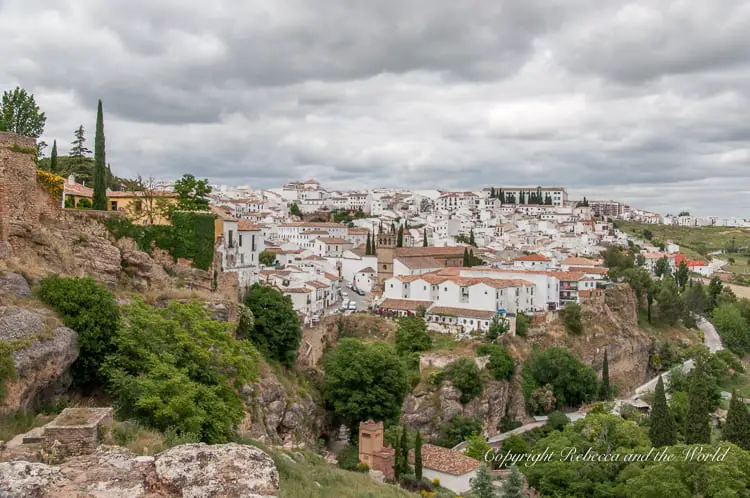
But if there’s one place in Andalucía that really stands out to me, it’s Ronda. In a region of ridiculously gorgeous small towns, Ronda is jaw-droppingly stunning – worthy of all the travel writing clichés (you may see the word charming a few times in this post!).
Perched on a clifftop and split in two by a gorge more than 100 metres deep, it’s easy to see why it’s nicknamed the “Eagle’s Nest”. This town has been fought over for centuries. The Celts were here first, followed by the Romans and then the Moors, who ruled Ronda until the Catholic Monarchs took it in 1485. You can still see their legacy everywhere, from the Arab Baths to the city walls.
Rilke wasn’t the only famous visitor to fall for Ronda. Ernest Hemingway spent summers here and set a scene of For Whom the Bell Tolls in Plaza de España. Orson Welles loved it so much that his ashes are buried on a bullfighter’s estate just outside town.
Despite this celebrity endorsements, I’d never heard of Ronda before I started doing research for our southern Spain road trip. But I’m so glad that I stumbled upon it and added it to our Spain itinerary.
If you’re visiting Ronda – or you’re planning a trip to Andalucía and you haven’t yet heard of this town – here are the best things to do in Ronda, plus where to eat and how to get there.
If you’re not a resident of the EU, you’ll need to register for the Entry/Exit System (EES) when you travel to Europe (in place since 10 April 2026). You can find out more information online here. Later (possibly 2027, although there’s no confirmation), the European Travel Information and Authorisation System (ETIAS) will kick off. More information about that here.
This blog post may contain affiliate links, meaning if you book or buy something through one of these links, I may earn a small commission (at no extra cost to you).
Where to stay in Ronda
- Buena Vista Ronda Club – stylish rooms with floor-to-ceiling windows that look over the surrounding countryside (where we stayed)
- Hotel Montelirio – in a 17th-century palace in the Old Town, just steps from Puente Nuevo, with classic Andalusian rooms
- Parador de Ronda – housed in the former town hall, it has spectacular views over El Tajo gorge and Puente Nuevo
13 Best things to do in Ronda
Here are my favourite things to do in Ronda, Spain. You can easily spend a few days wandering this lovely town.
Top tip! Pick up the Ronda Tourist Pass for €12, which gets you access to sites including the Puente Nuevo Interpretation Centre, Arab Baths, Casa del Gigante and Palacio de Mondragón. You can buy it online or at the tourist office.
1. View Puente Nuevo from above
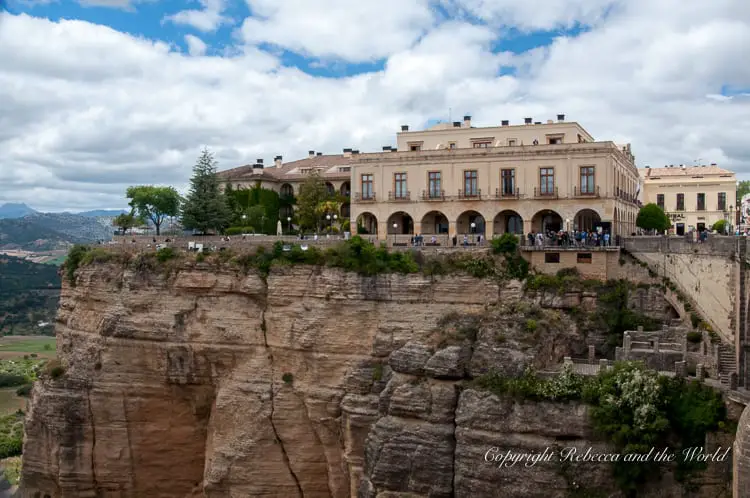
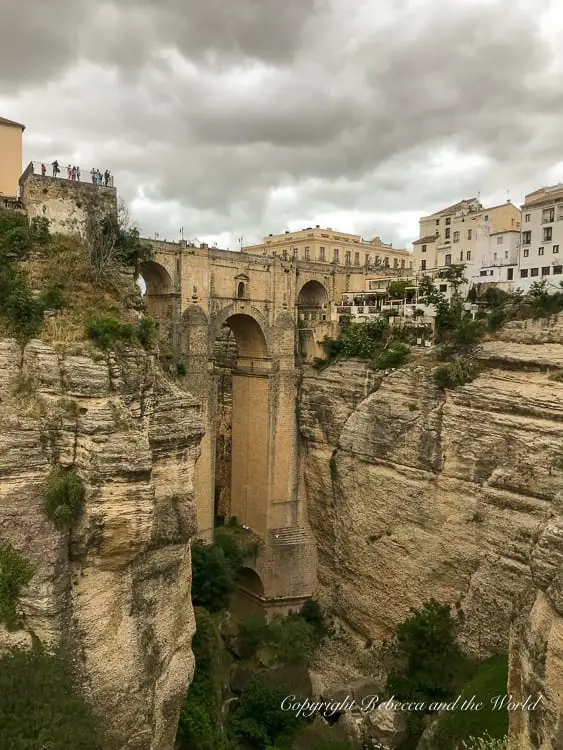
Ronda’s bridge is by far the town’s most famous landmark, and one of the most iconic images of Ronda.
While it may be called Puente Nuevo (New Bridge), this imposing structure isn’t actually very new: it’s actually more than 200 years old! Completed in 1793, it took more than 40 years to build.
The first attempt to complete the bridge ended in tragedy, when the entire structure collapsed in 1741, killing 50 people.
Above the centre arch is a room that is now a museum, the Puente Nuevo Interpretation Centre (entry €2.50). It was once used as a prison for criminals during the 19th century. The bridge is said to be the inspiration for the place from which people were thrown to their deaths during the Spanish Civil War that featured in Ernest Hemingway’s For Whom the Bell Tolls.
A great place to view the Puente Nuevo is near the former town hall building in Plaza de España, which is now a gorgeous parador you can spend the night in. From here you’ll be able to peer across the El Tajo gorge – which splits the city in two – toward the bridge.
For one of the best free views of the bridge, cross to the Old Town side and walk a few steps along Calle Armiñán to the Mirador de Aldehuela, opposite the Convento de Santo Domingo. It’s named after José Martín de Aldehuela, the architect who finished Puente Nuevo. From here you look straight down into the gorge, and you can see as far as the Puente Viejo too. It’s open 24 hours, so come back early in the morning before the crowds arrive! This was my favourite view of the bridge from above.
2. Hike down into the El Tajo gorge
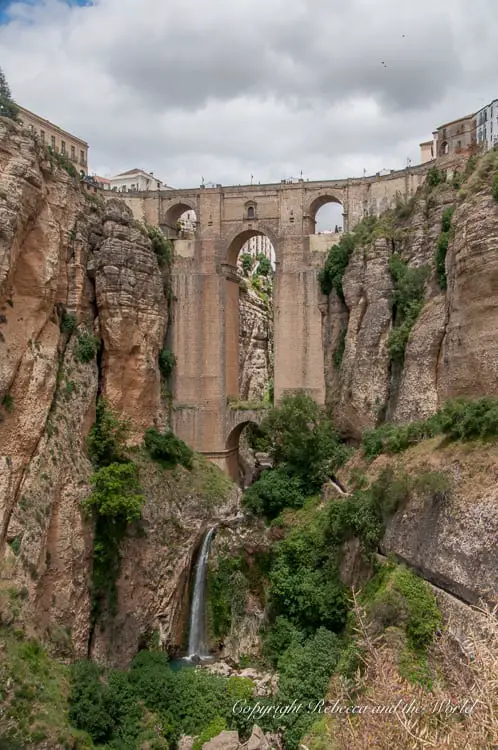
Seeing Puente Nuevo from above is impressive, but you only realise how massive it is when you’re standing beneath it! There are two ways to get down into the gorge: a free walk that takes you partway down, and a paid walkway that takes you right to the base of the bridge and through the gorge.
When I visited, you could walk all the way down into the gorge for free, but now the only way down into the gorge is the Camino del Desfiladero del Tajo – and you’ll need to buy a ticket.
The route starts at Plaza María Auxiliadora on the Old Town side of the bridge, where a steep path zigzags down the cliff to the foot of Puente Nuevo. From there, a wooden boardwalk runs along the Guadalevín River at the bottom of the gorge, a few metres above the water, with sheer rock walls on both sides. It’s one-way and takes about 20 minutes, finishing near the Arab Baths.
Tickets cost €12. Visitor numbers are limited, so book ahead online in peak season. It looks like you need to wear a hard hat (supplied). Children must be over 8, and anyone 8 or older needs photo ID and must be with an adult. Tripods and drones aren’t allowed. Check the official Desfiladero del Tajo website for current opening hours, which change with the seasons.
If you’d rather not pay, you can still get great free views of the bridge from the Mirador de Aldehuela and the Cuenca Gardens . You just won’t see it from the bottom!
3. Explore Plaza de España and the New Town
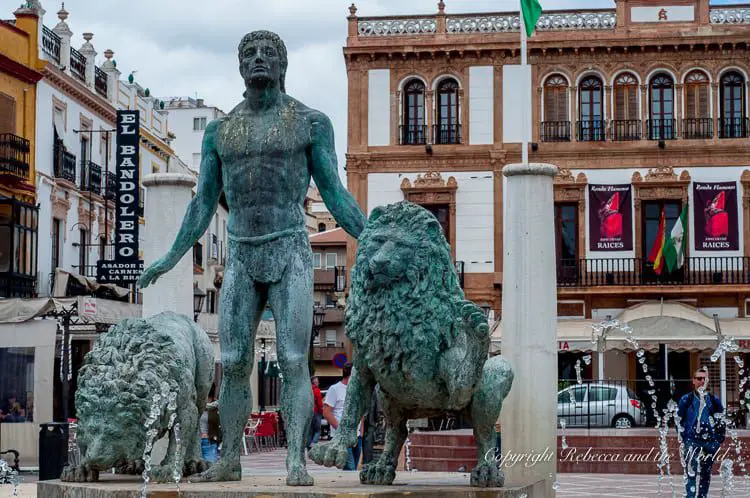
Like all towns in Spain, Ronda has a main plaza that’s the perfect place for people-watching. Plaza de España in Ronda has photogenic statues, fountains and churches to capture on camera.
Throughout the New Town you’ll find plenty of great restaurants, charming shops and cobblestoned streets to explore.
4. Visit the bullring and museum
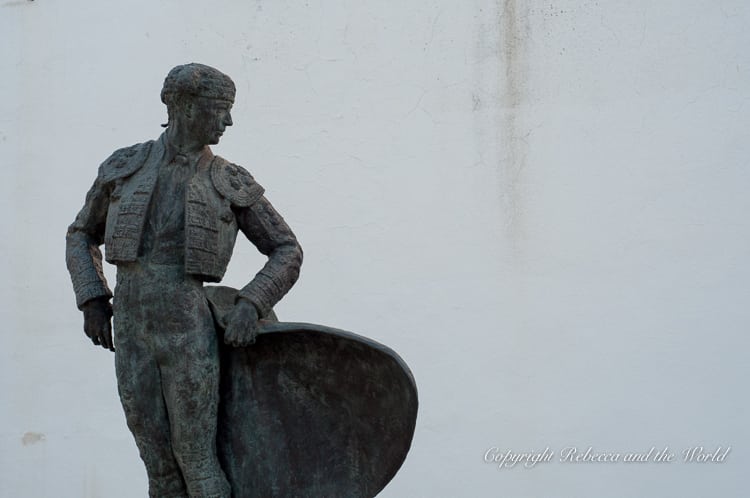
Not far from the Plaza de España is the Real Maestranza de Caballería de Ronda, Ronda’s bullfighting ring.
Capable of holding 5,000 spectators, it was built in 1785 and has seen some of Spain’s most famous matadors, including the Romero family in the 18th century. It was here that bullfighting began on foot, rather than on horseback.
Outside the gleaming white building is a statue of Antonio Ordonez, an important bullfighter from Ronda.
One of the most popular things to do in Ronda is to tour the bullring and museum, which costs €10,50 (€12 with an audio guide). It’s open daily, with hours varying depending on the season.
Even if you’re not a fan of bullfighting (I don’t condone it), it’s still interesting to learn about the history and importance of this sport.
5. Snack on churros and hot chocolate
What to do in Ronda when you’re tired from all that walking? Stop for a sugar fix to keep you going, and there’s nothing better in Spain than chocolate caliente and churros!
The best hot chocolate and churros in Ronda can be found at Churrería Alba (Carrera Espinel 44). I’d even go so far as to say it was the best hot chocolate I had in the whole of Spain. And trust me, I tried a lot of hot chocolate over our southern Spain road trip.
Churreria Alba also does a great breakfast – try the fantastic pan con tomate.
6. Cross the Puente Viejo
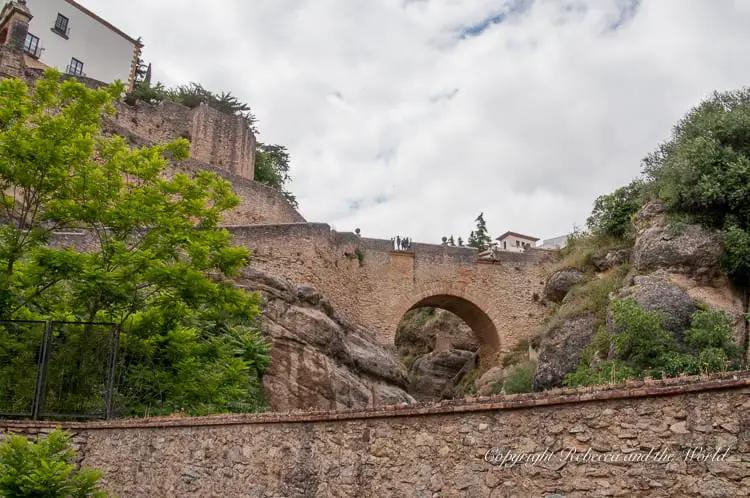
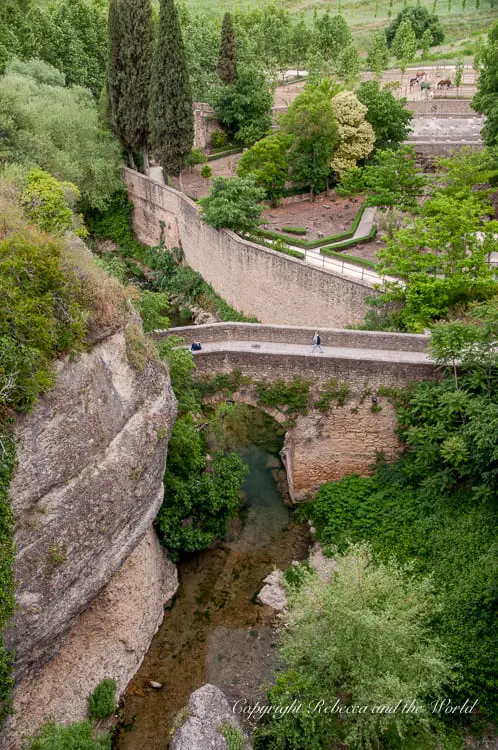
The Puente Viejo (Old Bridge) was built in 1616 and once was the main thoroughfare that joined the two parts of Ronda. Today it is only open to pedestrian traffic.
The bridge itself offers beautiful views and photos of the chasm below and the city’s third bridge, the Puente Árabe (Arab Bridge).
7. Check out the Baños Árabes (Arab Baths)
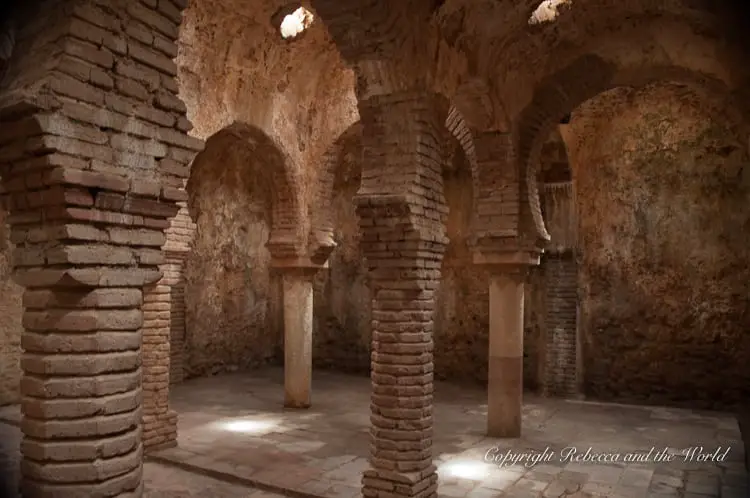
No longer in operation, these 13th century baths are some of the best preserved in Spain.
Built by the Moors of Spain, the baths were originally used as a place to purify and cleanse the body before entering the mosque.
Go inside where you can watch a video to learn about how the baths were used and imagine these baths filled with the who’s of who of society. Inside, the star shaped vents cut into the roof create lovely light patterns that make for interesting photos.
The baths are open daily (hours vary depending on the time of year) and cost €4.50.
8. Relax in the Cuenca Gardens
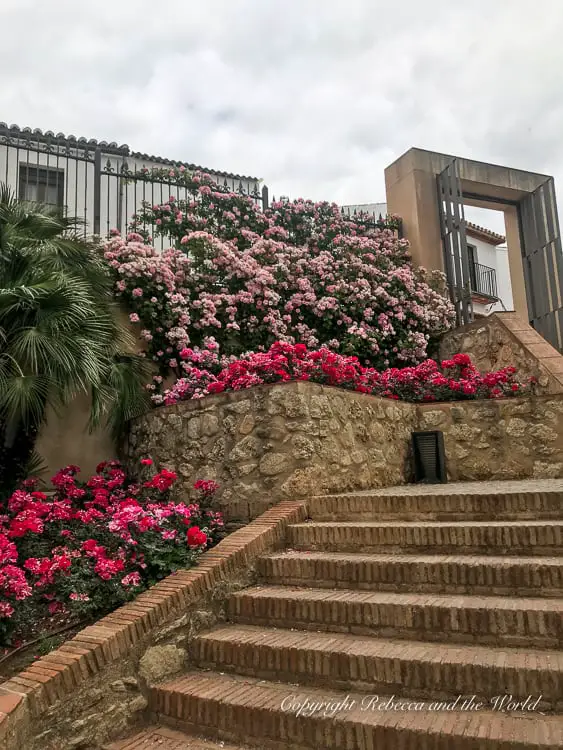
These lovely terraced gardens high above El Tajo gorge are a beautiful spot to rest after walking all over Ronda. Photogenic in its own right, it’s also a perfect vantage point for views of Puente Viejo and the Casa del Rey Moro.
You also get to see another angle of Puente Nuevo from this side of the bridge. Come at sunset to see the bridge bathed in a golden glow.
9. Visit the Casa del Rey Moro
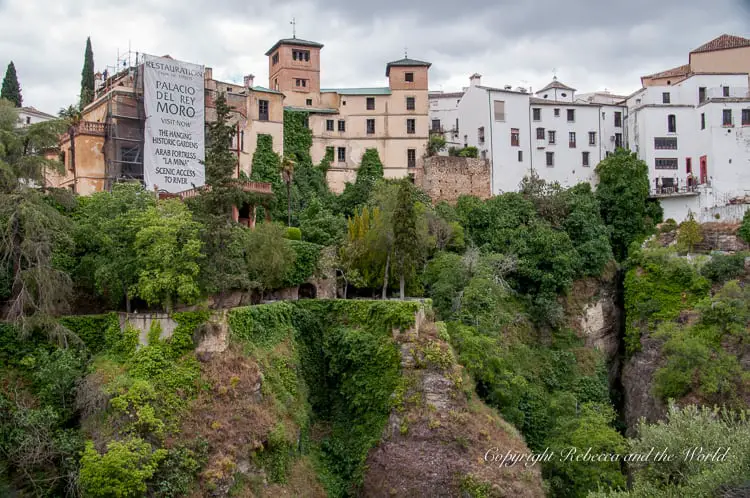
The name is somewhat a lie – this huge building was actually never the home of the Moorish king. It was, in fact, built long after the Moors.
You can visit the ingenious water mine (take note: you need to go down several hundred steps – 231 steps! – to get there) or explore the gorgeous gardens. Entry is €10 for adults and €3 for children under 12. Tickets cover the gardens and the water mine, but unfortunately the house itself is closed.
10. Stroll through the Old Town
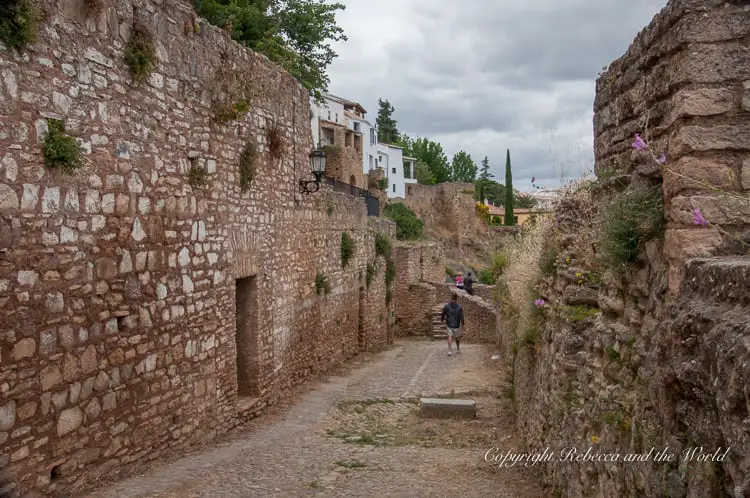
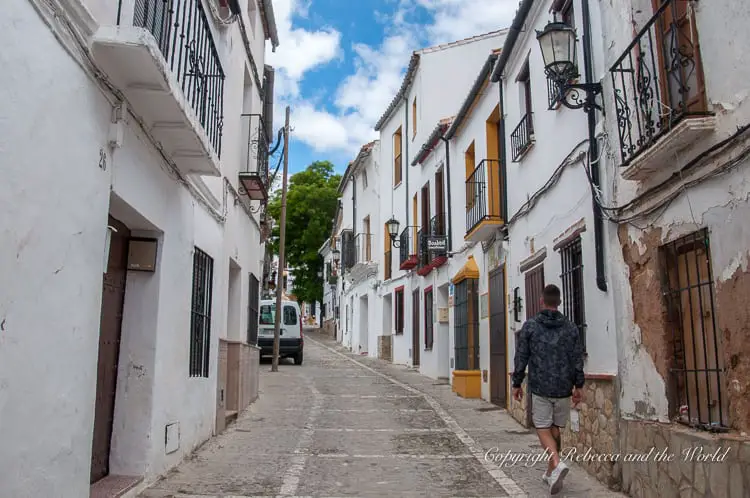
The oldest part of Ronda, the Old Town is a great place to spend an afternoon exploring. These streets are exactly how I imagined southern Spain would look like.
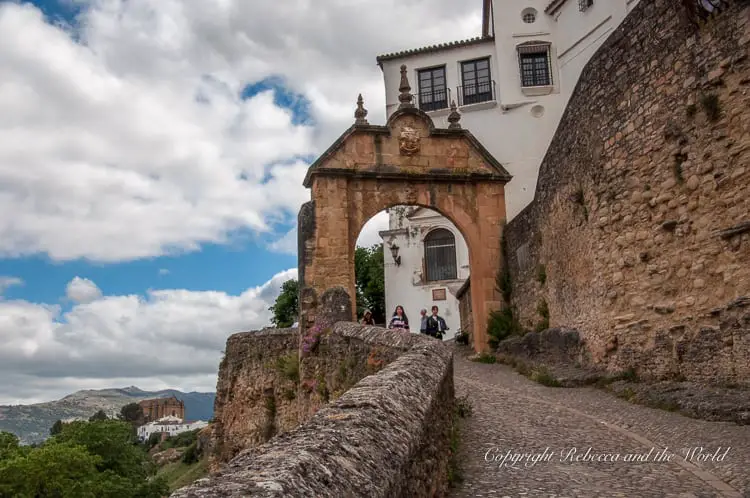
Entering via Puerta de Carlos V, you will see sections of the wall still in place. The Moors built these walls, the Murallas del Carmen, to help protect the city from invaders. You can walk along the top of some sections of the walls still today.
Wander the cobblestoned streets and enter the churches. There are plenty of small shops that sell jamón and other local products.
Two places you must add to your walking route are:
- Palacio de Mondragón: Ronda’s most beautiful palace is said to have belonged to Abomelic, the last Moorish king of Ronda, and Isabel and Fernando stayed here after taking the town in 1485. Today it’s home to the Municipal Museum. The real reason to go is the three courtyards, with Moorish tiles and views over El Tajo and the Serranía de Ronda. It closes at 3pm on weekends.
- Puerta de Almocábar: At the southern end of the Old Town, this 13th-century Moorish gate was once the main entrance to the walled city. Its name comes from al-maqabir, the Moorish cemetery that once stood outside the walls. Next to it is the 16th-century Puerta de Carlos V, and just inside is the fortress-like Iglesia del Espíritu Santo, finished in 1505. It’s about a 10-minute walk from Puente Nuevo.
11. Eat your way through Ronda: Best restaurants and tapas bars in Ronda

For such a small city, there are many great restaurants in Ronda.
Tragatá (Calle Nueva 4) is one of the best restaurants in Ronda. The modern Asian-Andalucían fusion menu features tapas like a delicious, crunchy octopus roll, patatas bravas, croquettes and refreshing salmorejo (a cold soup with a tomato base). It’s the hottest restaurant in Ronda (it’s Michelin recommended), so get here right at opening for a chance of getting a table.
Other highly recommended Ronda restaurants include:
- Bar Sanchez (Plazuela Arquitecto Francisco Pons Sorolla 7) – a small restaurant, so reserve in advance
- Casa María (Plaza Ruedo Alameda 27) – Spanish food with no menu; instead, you rely on the staff to provide recommendations and the specials of the day
- Bodega San Francisco (Calle Comandante Salvador Carrasco) – serves Andalucían classics like rabo de toro (oxtail stew)
12. Visit Ronda’s wineries
Ronda’s location and unique microclimate means it’s a great place for growing grapes. In Ronda, you’ll find red and white wines, made from Chardonnay, Gewurztraminer, Riesling, Cabernet Sauvignon, Tempranillo and Mourvèdre grapes.
There are almost two dozen wineries in the surrounding countryside, some of which are open for visits and tastings. A couple of recommended wineries to visit are:
- Bodega Descalzos Viejos – located in a former convent, this bodega is now one of the most popular to visit, both for its historical value and the quality of the wines made. You need to book ahead for a tasting and tour
- Doña Felisa Winery – this family wine-making business is located near Acinipo. You can take a guided tour and wine tasting (from €38,50) or add on a meal (€69)
If you can’t get out to explore the bodegas, then pay a visit to Entre Vinos (Calle Pozo, 2), a stylish wine bar that has many local wines on the menu. They also serve charcuterie plates featuring local cheeses. We loved having a nightcap here after dinner.
13. Visit the ancient city of Acinipo
If you have a car, take a trip to Acinipo, a former Roman city about 20 kilometres from Ronda. It has one of the best-preserved Roman theatres in Spain.
It’s free to enter, and you’re also unlikely to be surrounded by hordes of visitors. It’s closed Mondays, and there are no toilets or café on site, so plan ahead.
Unfortunately, we didn’t have a chance to visit Acinipo, but I’ll be adding it to our Ronda itinerary when I return!
How many days in Ronda?
One full day is enough to see Ronda’s main sights, but I recommend staying at least one night. With two or three nights, you can add the gorge hike, a winery visit and the Roman ruins at Acinipo.
Ronda is an easy day trip from Seville or Málaga, and plenty of people visit that way. But you’ll miss the best part: the evening, when the light turns golden on Puente Nuevo. Ronda ended up being the surprise highlight of our southern Spain road trip, and I’m so glad we stayed the night rather than rushing through!
If you want a slower pace, three or four days in Ronda is lovely. It gives you time to explore the countryside, taste wine and visit the white villages nearby.
Ronda in one day
Morning: Start with churros and hot chocolate at Churrería Alba on Carrera Espinel, then walk to Plaza de España and Puente Nuevo. Look at the bridge from above before heading inside to the Puente Nuevo Interpretation Centre. Cross into the Old Town and walk down the 231 steps of the water mine at Casa del Rey Moro. From there, keep going down to the Puente Viejo and the Arab Baths.
Lunch: Grab tapas at Tragatá, or book Casa María for a long lunch.
Afternoon: Cross the Puente Viejo back to the New Town and climb up through the Cuenca Gardens for some of the best bridge views in town. Then visit the bullring and museum. If you still have energy, hike down into the El Tajo gorge to see Puente Nuevo from below. It’s the view that ends up on every postcard!
Evening: Head back to the bridge at sunset to see it glowing gold, then finish with wine and tapas in the New Town.
Ronda in two or three days
With extra time, you can slow down and get out of town. Drive about 20km to Acinipo, the ruins of a Roman city with views across the Serranía de Ronda, and pair it with a tasting at Doña Felisa winery nearby. There are almost two dozen wineries around Ronda, so it’s worth a whole afternoon. Spend your last evening wandering the Old Town after the day-trippers have left!
Things to know before you visit Ronda
Where to stay in Ronda
There are plenty of hotels in Ronda, many of them with a lot of character. The best area to stay in is the area around the Puente Nuevo so you’re close to the action, but the town is quite small so it’s not too far to walk around.
Having said that, we stayed just outside the main tourist area, at the boutique Buena Vista Ronda Club, and we loved it. It’s a 15-minute walk to the main sights and most popular things to do in Ronda, and has stylish rooms with floor-to-ceiling windows that look over the surrounding countryside. There’s a pool and sauna on site. This is a small hotel with only a handful of rooms, so booking ahead is a must. Book a room at the Buena Vista Ronda Club online here
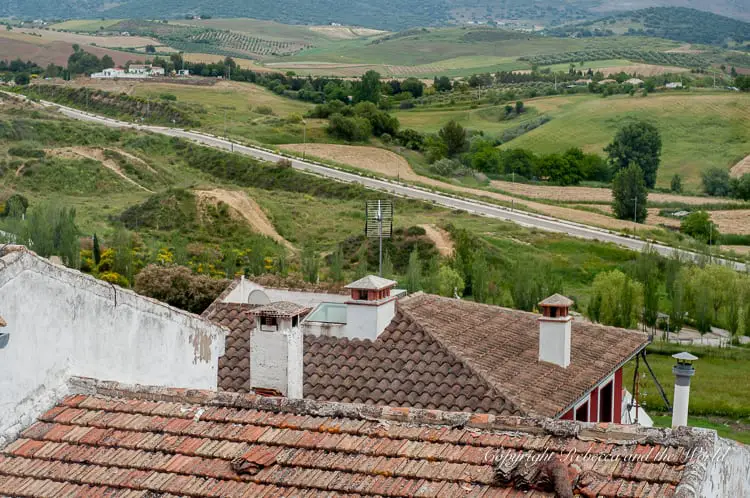
For a boutique stay right on the edge of the gorge, Hotel Montelirio is hard to beat. It’s in a 17th-century palace in the Old Town, just steps from Puente Nuevo, with classic Andalusian rooms, a small pool and a terrace looking straight over El Tajo. Even if you don’t stay here, book a table on the terrace at its Albacara restaurant for dinner at sunset. Check rates and availability here
For something really special, book a room at the Parador de Ronda, housed in the former town hall. One of the best hotels in Ronda, it has spectacular views over El Tajo gorge and Puente Nuevo. This is a great location. Book a room at Parador de Ronda online here
How to get to Ronda
Ronda is easily accessible by car, bus and train. Once there, it’s very easy to get around on by foot to tick off the best things to do in Ronda.
Like many other cities in Andalucía, parking can be a challenge. So, if you’re renting a car and driving to Ronda, check with your hotel first to see if they have onsite parking or can recommend where to park in Ronda.
Málaga to Ronda
By car, it’s only 1.5 hours from Málaga to Ronda. The quickest route is via the A-357 and A-367. Alternatively, you can drive along the coast via the AP-7 and A-397 (this route passes through tolls).
There are several buses that depart daily from Málaga to Ronda. The trip takes around 2-3 hours and you can buy tickets online.
By train, the journey from Málaga to Ronda takes around five hours, with a changeover at Antequera-Santa Ana. The direct train is currently (as of November 2026) closed for upgrade works and reopening isn’t expected until autumn 2027 – so buses are replacing trains. Buy tickets online at Omio, my go-to train and bus booking site.
Seville to Ronda
Seville is around 125 kilometres northwest of Ronda. The drive from Seville to Ronda takes around 1.5 hours, down the A-375. The drive between the two cities is stunning, and winds through many gorgeous pueblos blancos. I encourage you stop and explore them – so expect your trip to take longer!
Buses from Seville to Ronda depart from the Estación de Autobuses El Prado de San Sebastián in Seville, near Plaza de España. The trip takes around 2.5 hours. You can buy tickets at the station or online.
→ READ NEXT: How to spend 2 days in Seville
Granada to Ronda
Ronda lies 180 kilometres west of Granada. By car, it’s a 2.5-hour trip from Granada to Ronda, via the A-92.
Trains also run regularly every day, with the direct train taking around three hours. There’s a service that stops in Antequera-Santa Ana with a brief changeover required. Update: Trains are currently replaced by buses. Tickets are available online.
→ READ NEXT: How to spend 2 days in Granada
Best time to visit Ronda
The best time to visit Ronda is the shoulder seasons: March to June and October to November. During this time of year, you’ll find Ronda weather is milder and crowds fewer.
July, August and September are the hottest months of the year (June can also get pretty hot), and also the busiest for travellers.
November and December bring the heaviest rains of the year.
Day trips to Ronda
It’s possible to take a day trip to Ronda from Seville, Málaga and Granada. But do I recommend that? Not really.
If you’ve only got a short amount of time, then of course you should take the most efficient option to see the city.
While Ronda is small and you’ll easily see most of the city in a day, the joy of Ronda is simply wandering around without a schedule, finding cobblestoned streets to explore. That’s just not possible if you only take a day trip to Ronda. I recommend spending at least a night here.
If you just don’t have the time to visit Ronda for a night, then here are good options for day trips to Ronda:
- From Seville to Ronda, book this full-day tour which also stops at a few pueblos blancos
- Take a Málaga to Ronda day trip on this full-day excursion, which includes a guided tour through Ronda
- This day tour from Granada to Ronda includes all transportation and is offered in multiple languages
I haven’t done these day trips myself, so make sure to read the reviews carefully before you make your decision.
→ READ NEXT: The best day trips from Seville
My travel essentials
Final thoughts: What to do in Ronda
I went to Ronda expecting a pretty stop between Seville and Granada, and left wondering why everyone doesn’t rave about it more! It ended up being the surprise highlight of our whole trip to Andalucía.
The views are what everyone comes for, and they don’t disappoint.
My biggest tip? Don’t rush it. Sure, Ronda works as a day trip, but I recommend staying the night and you’ll see the town at its best, once the day-trippers have gone and the bridge glows gold at sunset. After a night here, it’s easy to see why Rilke called it the city of his dreams!
If you’re planning a trip to southern Spain, make sure Ronda is on your itinerary.
Things to do in Ronda: FAQs
How many days do you need in Ronda?
One full day is enough to see Ronda’s main sights, but I recommend staying at least one night. A day covers Puente Nuevo, the Old Town, Casa del Rey Moro and the Arab Baths. Stay two or three nights if you want to walk the El Tajo gorge, visit a winery and see the Roman ruins at Acinipo. If you like a slower pace, three or four days is lovely!
Is Ronda worth visiting?
Yes – Ronda was the surprise highlight of our trip to Andalucía. The Puente Nuevo, spanning a gorge more than 100 metres deep, is one of the most impressive sights in Spain. The town also has a centuries-old Moorish Old Town, one of the country’s oldest bullrings and wineries just outside town. It’s smaller and calmer than Seville or Granada, which makes it a lovely contrast on a southern Spain itinerary.
Can you do Ronda as a day trip from Seville or Málaga?
Yes, Ronda is an easy day trip from either Seville or Málaga, but I’d stay the night if you can. The easiest way is to drive or join a tour – it’s about 1.5 hours by car from Málaga and just under 2 hours from Seville. There are also buses from both cities. If you only have a day, arrive early and stay for sunset over Puente Nuevo before heading back.
Did you find this article helpful? Consider buying me a coffee as a way to say thanks!
What are your favourite things to do in Ronda? Drop your tips or questions in the comments below.
Read next
Before you go… you might like these Spain travel guides:
- Southern Spain Itinerary: The Best of Andalucía in 7 Days
- 2 Days in Granada, Spain: Tasty Tapas, Historic Neighbourhoods and the Amazing Alhambra
- 2 Days in Seville: The Perfect First-Timer’s Seville Itinerary
- 12 Brilliant Day Trips From Seville
- How to Buy Tickets for the Alhambra – And What to Do if They’re Sold Out!
- How to Spend 2 Days in Madrid: A Guide for First-Timers
SPAIN TRIP ESSENTIALS
- Book flights to and around Spain online with Skyscanner. I like this site because it shows me which dates are cheaper.
- One thing I always purchase is travel insurance! Travel Insurance Master allows you to compare across multiple policy providers, while SafetyWing is great for long-term travellers and digital nomads.
- Wise is my choice for sending and receiving money and spending money overseas (you can get a digital and physical card).
- Find a great hotel in Spain. Check prices on Booking.com and Expedia online.
- Check out the huge range of day tours throughout Spain on GetYourGuide or Viator. I’m a huge fan of food tours!
- Saving money? Check out the huge range of free walking tours across Spain with GuruWalk (don’t forget to tip!).
- How to get around? I use DiscoverCars for car hire, or Motorhome Republic and Jucy for campervan/RV rental. For buses, trains and ferries, I use 12GO, Busbud and Omio.
- Grab an e-sim to stay connected while on the road.
- A copy of the Lonely Planet guide to Spain will be handy, along with a Spanish language phrasebook.
- Check out my Amazon shop for my fave travel items – everything from backpacks and suitcases to travel adapters and beauty products.
PIN IT FOR LATER:
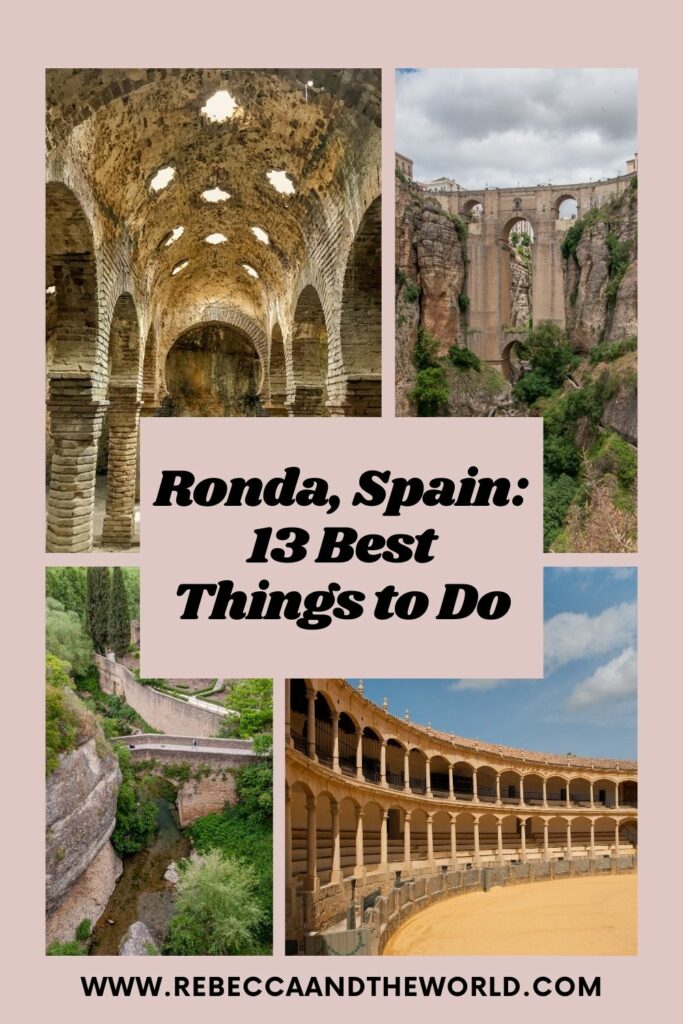
Save this guide to the best things to do in Ronda, Spain, to Pinterest for later.

Hey Rebecca! I’m planning a 2-week trip to Spain and your post on Ronda definitely makes me want to visit! How many days do you recommend staying here? I don’t want to rush around to see everything, I’d like to really enjoy each site at my own pace. Thanks in advance!
-Claire
Hey Claire! If you want to take it a bit slower, I’d say 3-4 days would be a great amount of time. Enjoy!!
One of the most beautiful places I’ve ever seen!
It really is! 🙂
Great post!, Ronda is such an amazing city, really worth visiting it. Love the view from the gorge and the new bridge. Worth visiting also the bullring and old town
Hey Peter, thank you so much for the comments! It’s such a beautiful city, I’m so glad we added it to our itinerary.
I also didn’t know about Ronda until recently when I read about it on a magazine. It’s incredible that places like this exist. I guess one of the things that make it so intriguing is the fact that despite the challenges, humans decided to settle in such unusual locations, made possible by engineering feats.
Especially so given the limited technology they had back in the times that it was built. Mind blown!