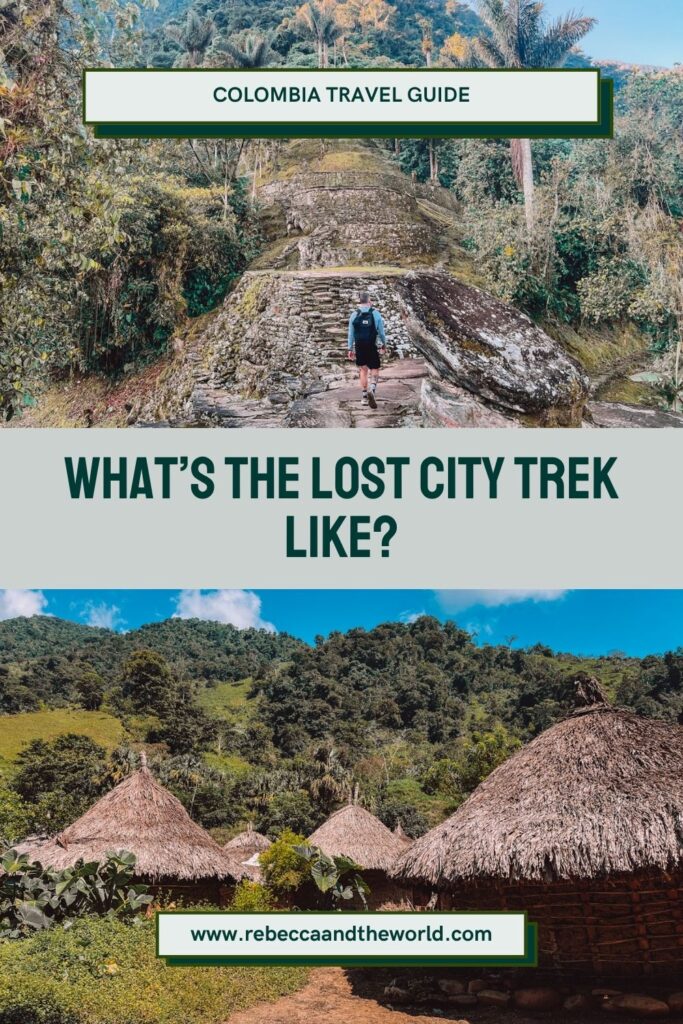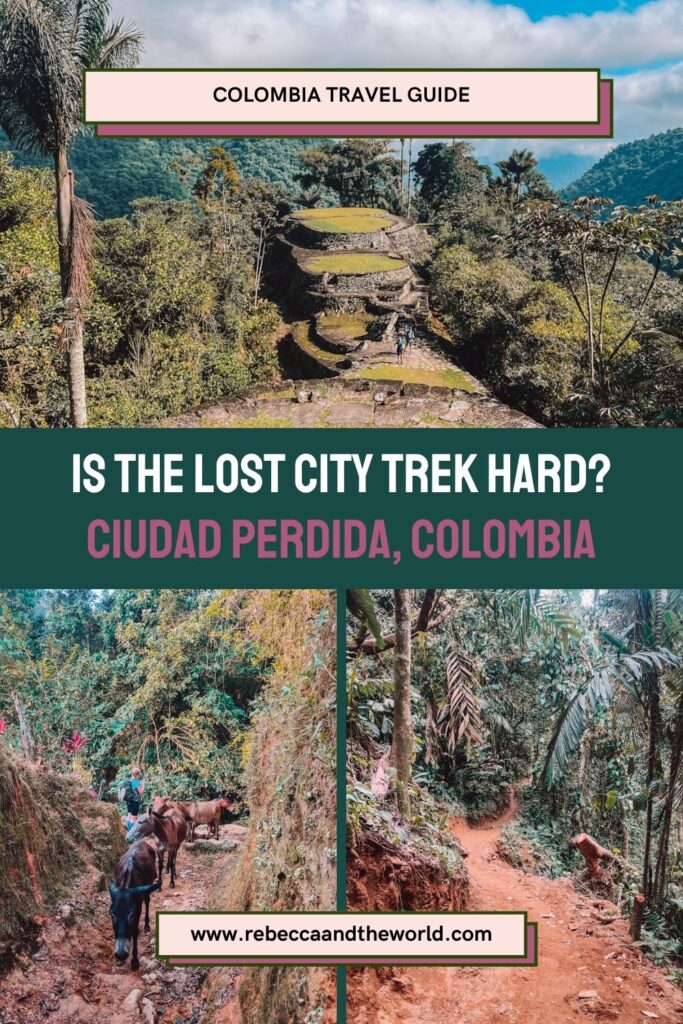

Planning to hike Colombia’s Ciudad Perdida? Here’s a guide to the tough Lost City trek and a review of Expotur, the company we hiked with.
Hiking to Ciudad Perdida (the Lost City trek Colombia) has been sitting on my travel bucket list for years.
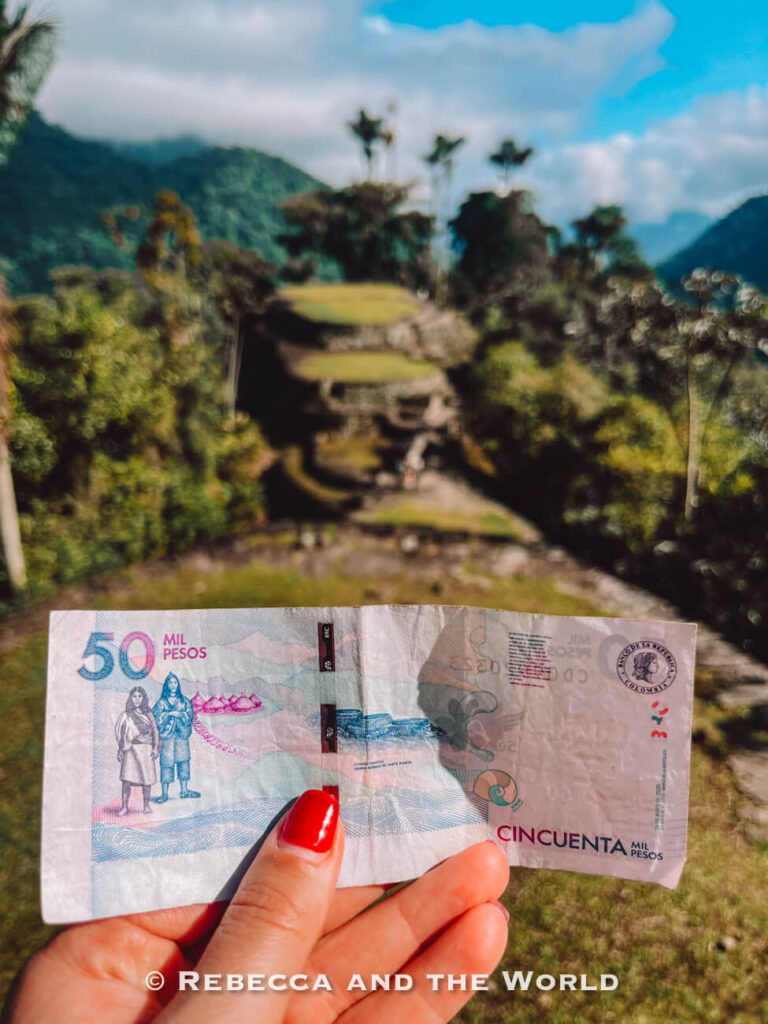
Hidden deep in the Sierra Nevada mountains in Colombia, it’s a pre-Columbian archaeological site built by the Tayrona people around 800 AD, long before Machu Picchu. Known as Teyuna by the Indigenous people, what you see today is a network of stone terraces, circular platforms and pathways carved into the mountainside – and the only way in is on foot, through dense jungle.
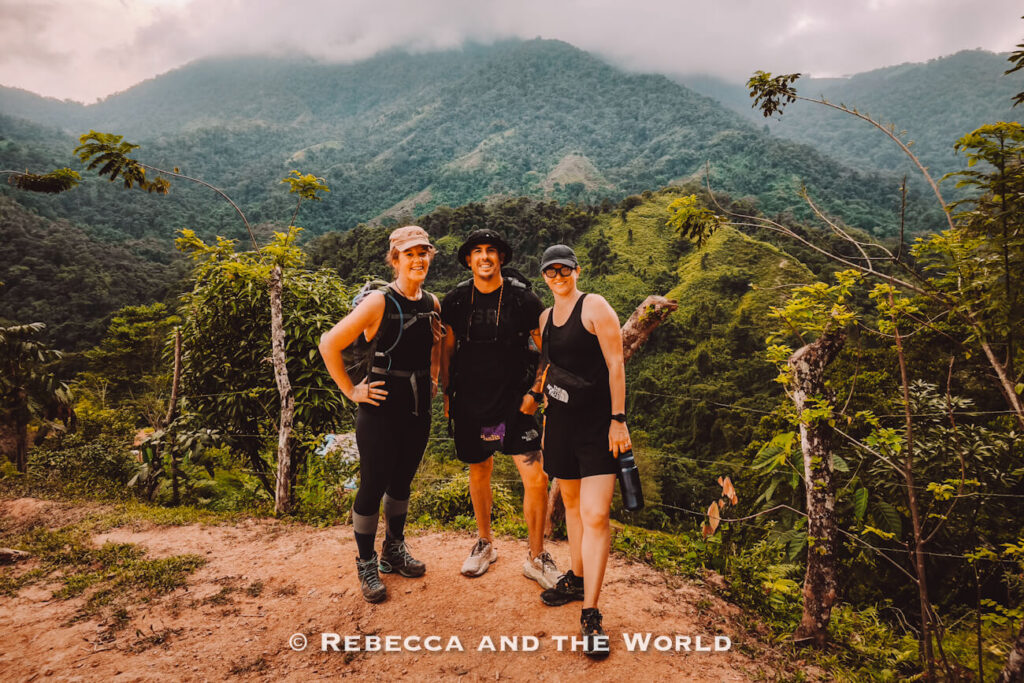
After years of thinking about doing the hike, I finally did it with my husband and a friend who lives in Bogotá, booking the 4-day Lost City trek with Expotur.
And while the destination is obviously the headline act, the company you choose makes a huge difference to the whole experience – from how each day of the hike is run and safety to food, camp set-ups and the overall vibe of the group.
In this post, I’m sharing exactly what it was like hiking with Expotur: what the 4-day Ciudad Perdida trek is like, what’s included, what surprised me (in both good and challenging ways), and whether I’d recommend Expotur if you’re planning your own trip to the Lost City.
This blog post may contain affiliate links, meaning if you book or buy something through one of these links, I may earn a small commission (at no extra cost to you).
Quick overview: 4-day Lost City trek Colombia with Expotur
- Trek length: 4 days, 3 nights (there are also 3-day and 5-day options)
- Difficulty: Challenging, mainly because of the heat and humidity, long stretches of steep climbing and the staircase up to Ciudad Perdida
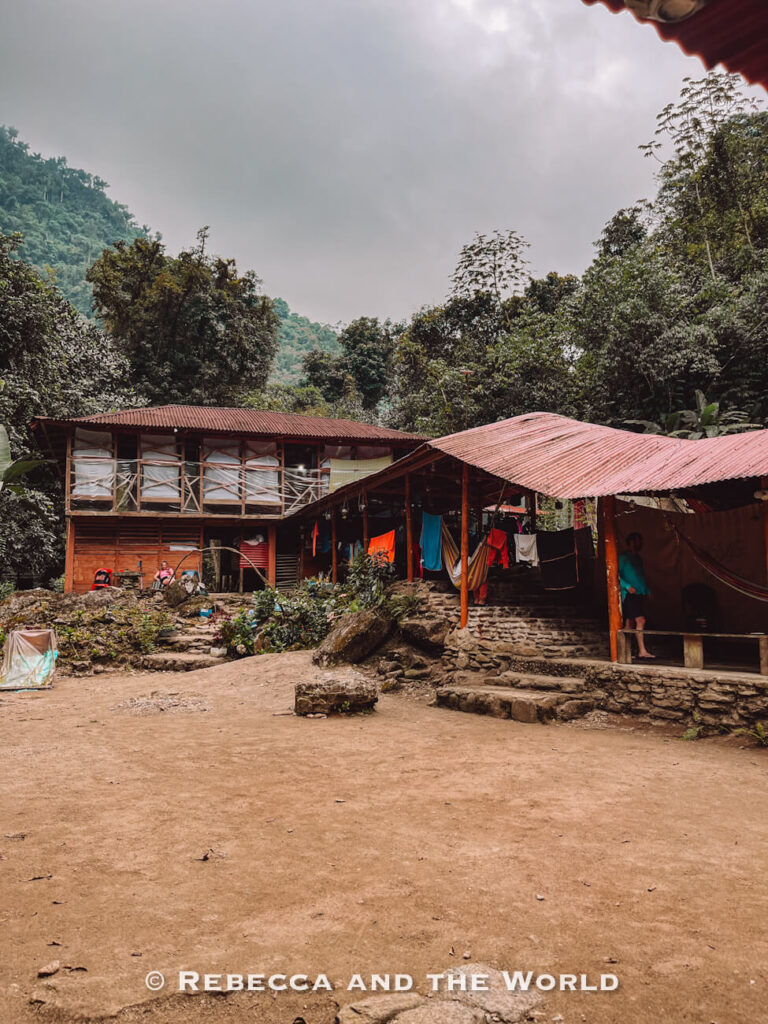
- Accommodation: Camps with bunk beds and mosquito nets. Showers are very basic – cold water from a tap above (no showerhead). Flushing toilets. No fans (but bunks are open air so often get a cool breeze)
- What’s included with Expotur: Transport to and from the start of the hike, all meals and filtered water at camps, guide support (plus translator and cook), Lost City entrance fee, souvenir t-shirt
- Group size: Groups can be up to 16 people – which is what we had – though we also saw much smaller groups on the trail
- Would I book with Expotur again? You’ll need to read this review… but, spoiler: Yes.
- Highlights:
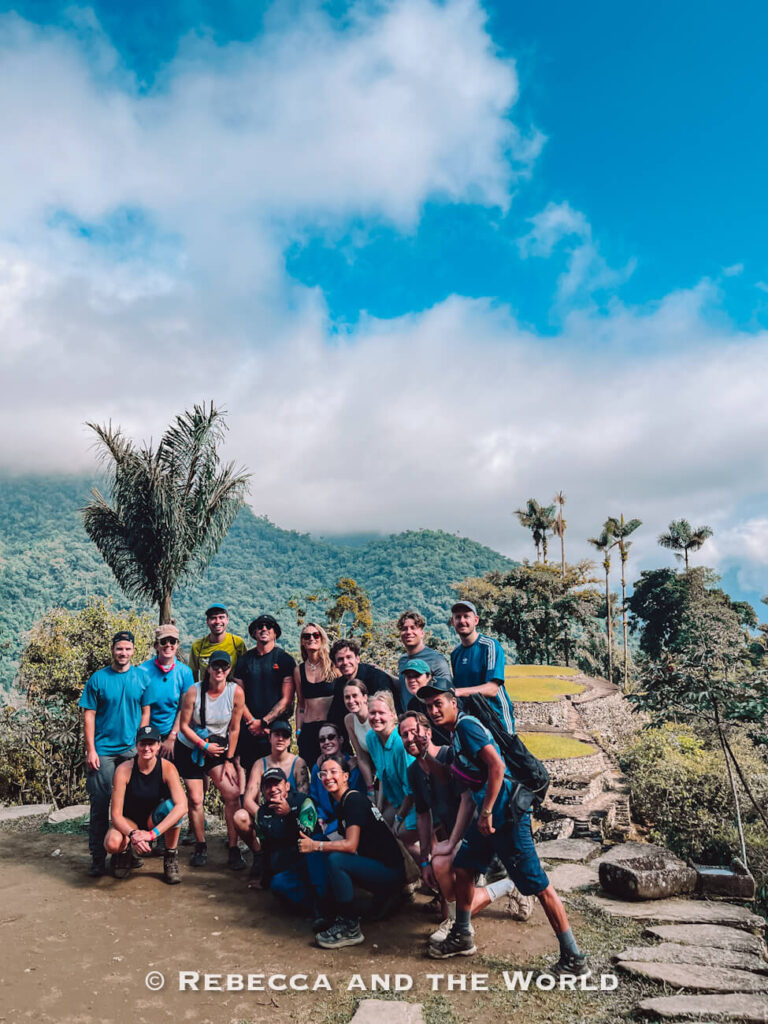
- Reaching Ciudad Perdida after days of hiking – and having the site largely to ourselves
- The group experience – our guides, support crew and fellow hikers were fantastic
- The swimming holes – refreshing and the perfect reward at the end of a hot, sweaty day
Why we chose Expotur
The Lost City trek has to be done with a guide, so choosing a company is the first big decision. I read a lot of reviews before we booked and kept coming back to Expotur. They consistently had the most positive feedback on Tripadvisor, especially around organisation and the quality of the guides. Price wasn’t a deciding factor (every operator is priced the same), so it came down to which company seemed most reliable.
Looking back, I’m happy with our choice. The whole experience was well-run and professional. The only thing I wish I’d known earlier is that some companies trek with Indigenous guides walking alongside the group. I think that could add an extra layer of insight and connection to the region, and it’s something I would have liked to consider.
We briefly considered the 3-day trek, but I’m so glad we didn’t. Even with four days, the heat and humidity can be brutal, and there are long stretches of steep climbing that really test your legs. Three days would have been punishing and far too rushed for us. If you want a little more breathing room, there’s also a 5-day option, which would suit anyone who’s less confident in their fitness or simply wants a slower pace.
What was the booking and pre-trek experience like?
Booking with Expotur was straightforward from the start. I had a few questions before locking anything in and they replied quickly by email, in excellent English. They also have a solid set of FAQs and clear pre-departure details, plus useful packing suggestions (read my full Lost City packing list guide here).
Payment was easy. We paid a US$30 deposit via PayPal, then went into their Santa Marta office the day before the trek to pay the balance by credit card. You can also finalise payment on the morning you leave, but if you’re doing it that way, it’s worth arriving earlier so you’re not rushing when everyone’s checking in.
On departure day, we were picked up from our hotel and taken to the office to meet the rest of the group. We stored our larger bags there while we were on the trek. I’ll be honest – I felt a bit uneasy about this because my laptop was in my suitcase and, if anything had happened, travel insurance wouldn’t have covered it. In the end it was completely fine and I needn’t have worried.
🥾 BOOK THE 4-DAY LOST CITY TREK WITH EXPOTUR HERE 🥾
What is the Lost City hike like?
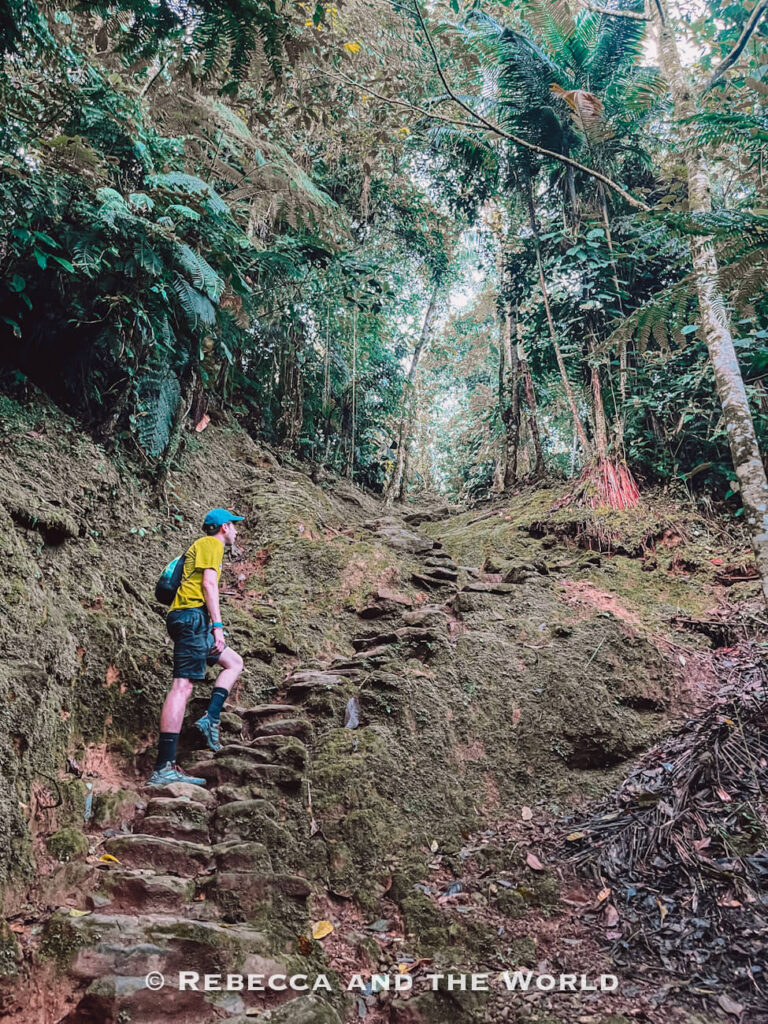
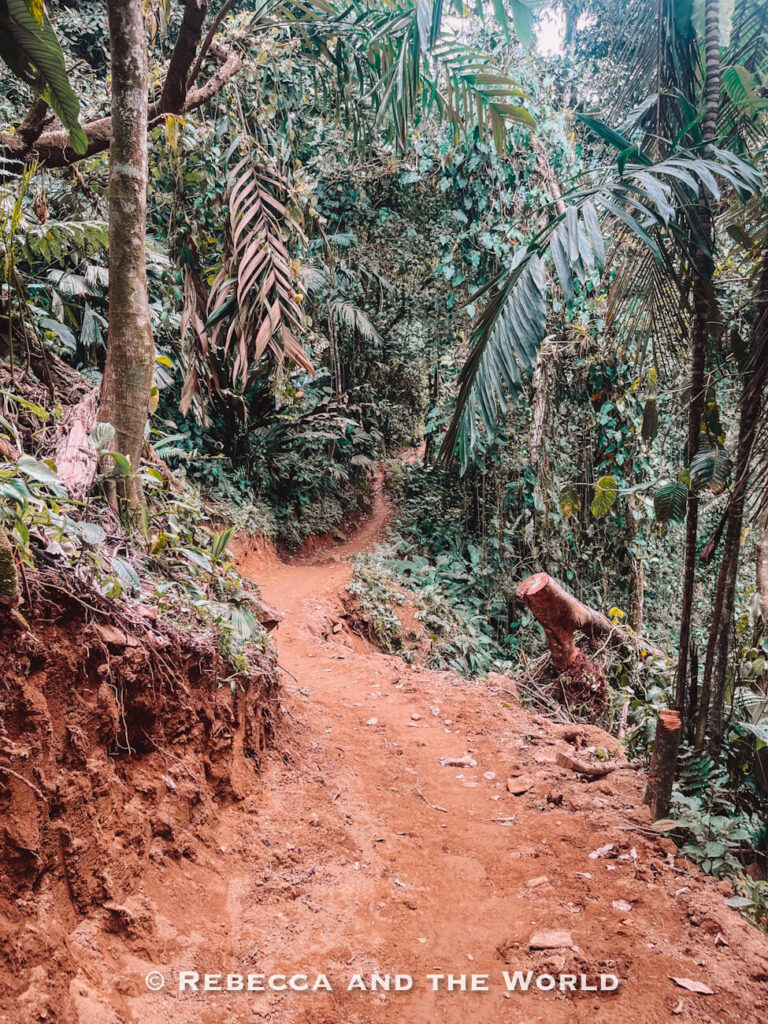
The Lost City trek is a jungle hike, and what you really need to plan for is a mix of heat, humidity and relentless ups and downs. Expotur ran the days with early starts, a steady pace and plenty of breaks, and while it’s not a luxury experience by any stretch, everything you need is taken care of so you can focus on putting one foot in front of the other. It’s tough, but it’s one of the most incredible things to do in Colombia.
Day 1 – Santa Marta to the trailhead, then on to Camp Adán
We were picked up from our hotel at around 7.45am and driven to the Expotur office in Santa Marta (read my Santa Marta travel guide). You can walk there, but with our suitcases it was easier to take the pick-up. At the office we met the rest of our group, did the last bits of admin and left our larger luggage behind for storage while we were on the trek.
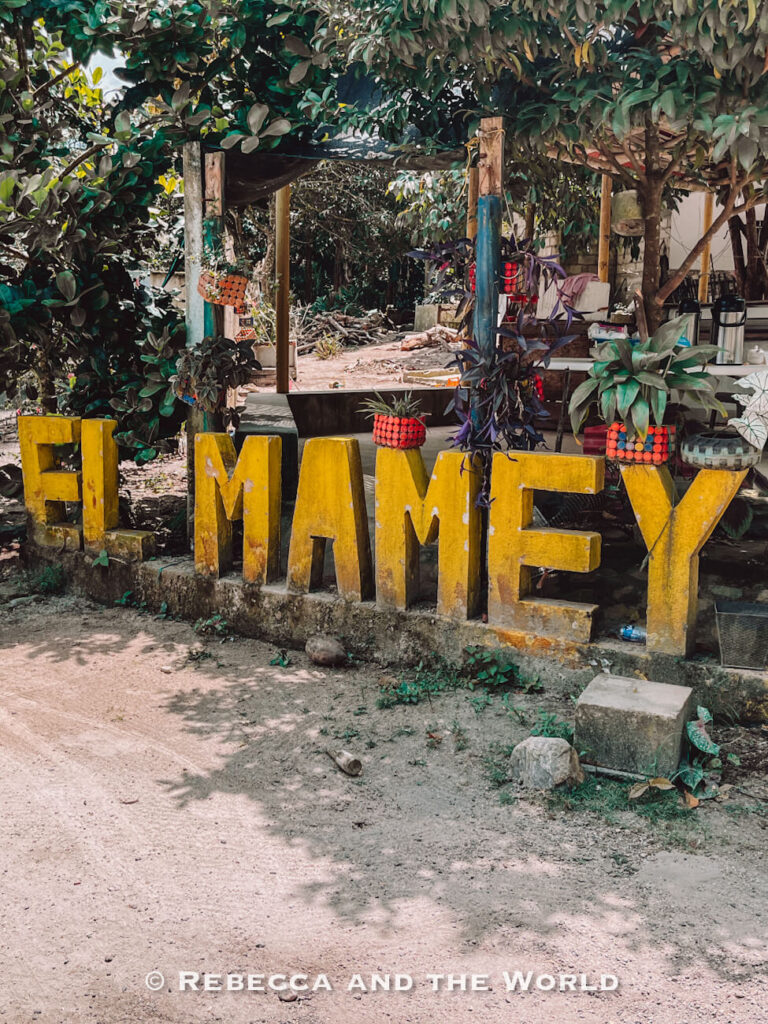
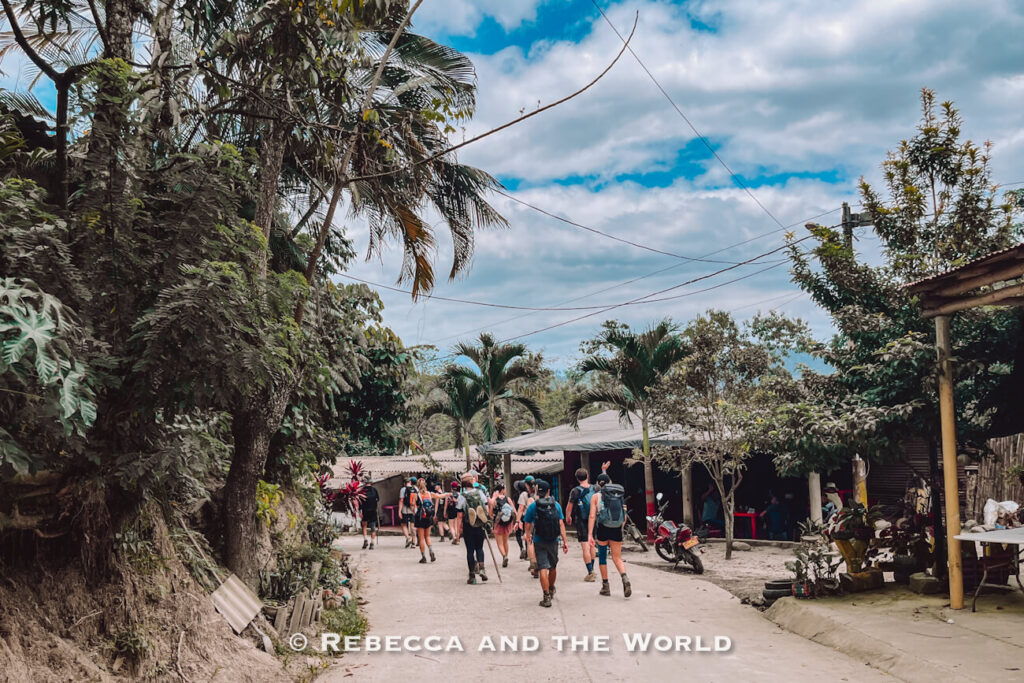
From there, we drove to El Mamey in the back of a troopy. The first stretch is on the highway, but the final section into town is on a bumpy, rutted dirt road that really earns its 4WD status. Being thrown into our fellow travellers was certainly a way to get to know each other!
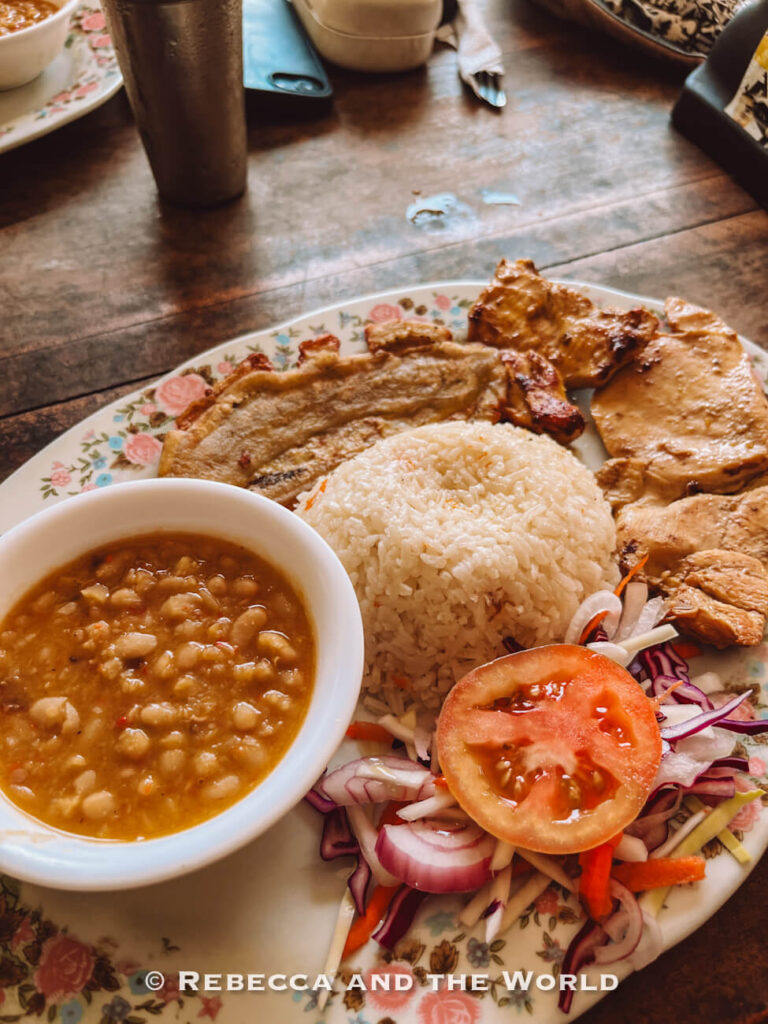
Lunch was at a local restaurant in El Mamey and it was delicious – grilled chicken with rice, a bean salad and plantain. This is also where we met the full team who would be looking after us for the next four days – Ariel (our main guide), Sofia (translator), Eliecer (cook) and Duverney (junior guide).
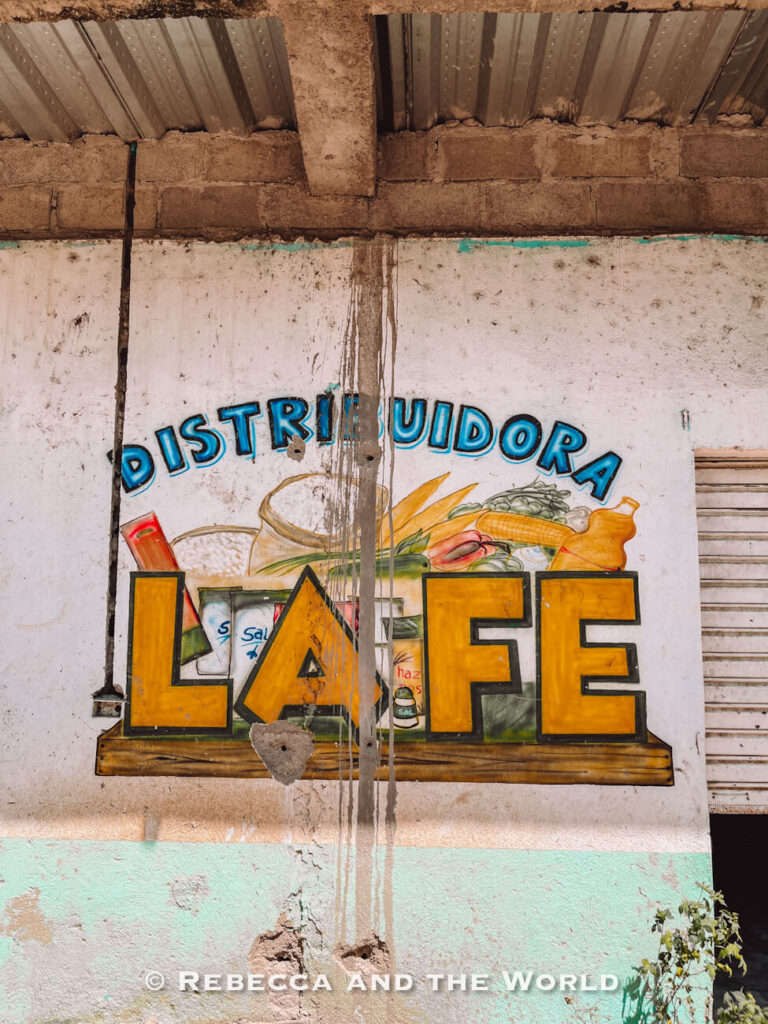
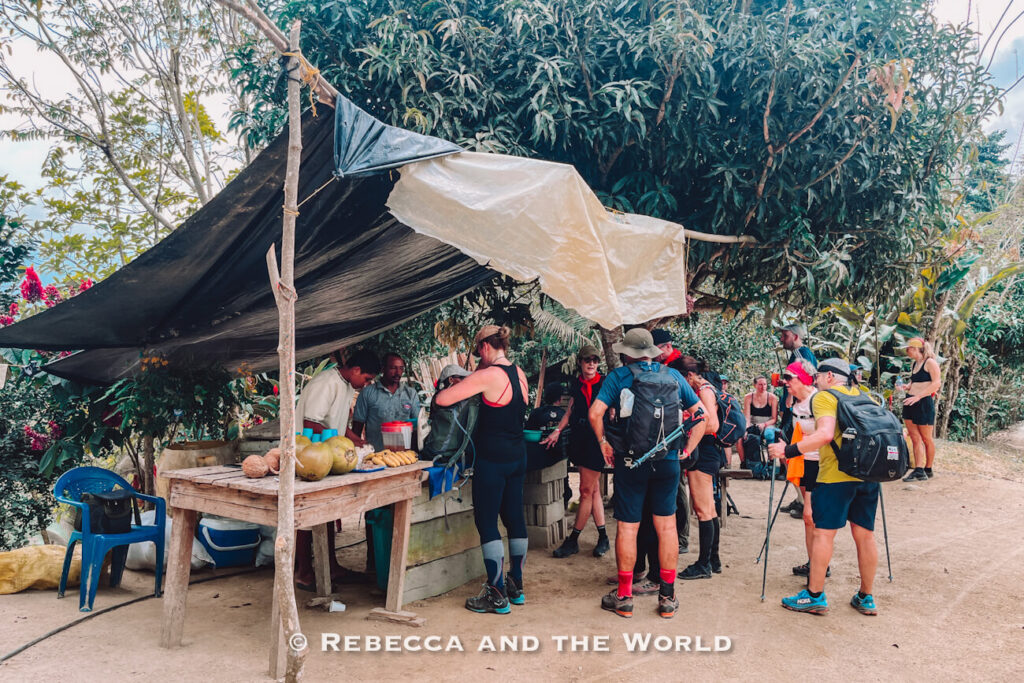
We set off walking at around 12.30pm and reached camp at about 3.15pm. The first afternoon is a lot of uphill, and you need to carry enough water because you won’t have access to filtered water again until you reach camp. Don’t worry though, there are a few stops along the way where you can buy drinks and snacks (one stop even sold fresh coconuts). Expotur built in plenty of breaks, and our guides regularly handed around fresh fruit.
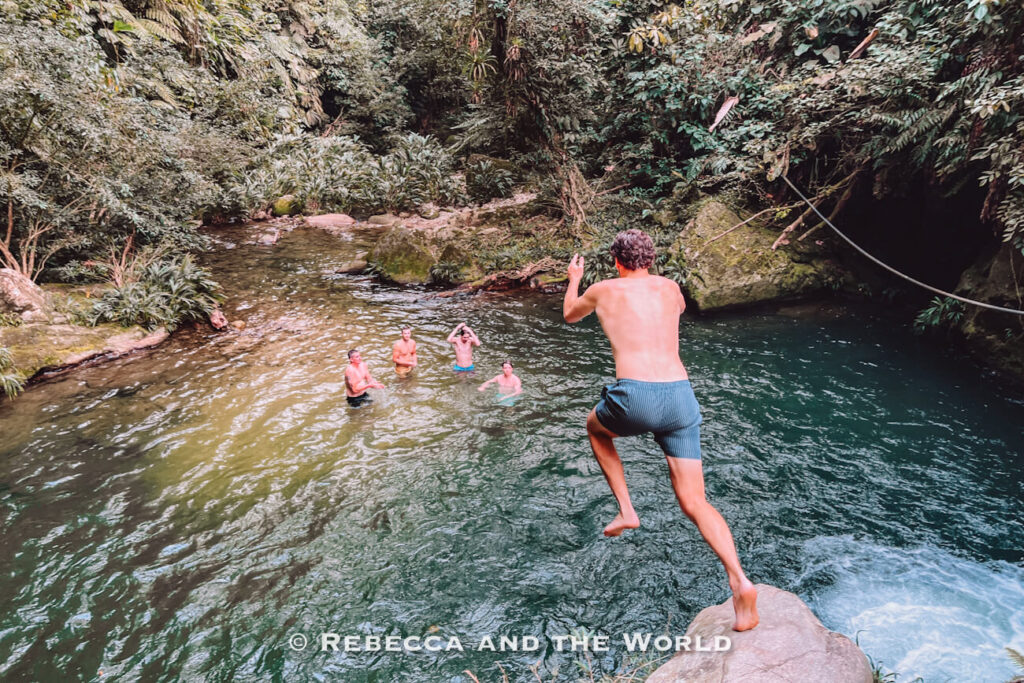
Our first night was at Camp Adán. After choosing bunks, we headed straight for the swimming hole. To get in, you can either jump from a rock about three metres up or climb down a ladder. (I chose the ladder!) The water is crystal clear and absolutely freezing.
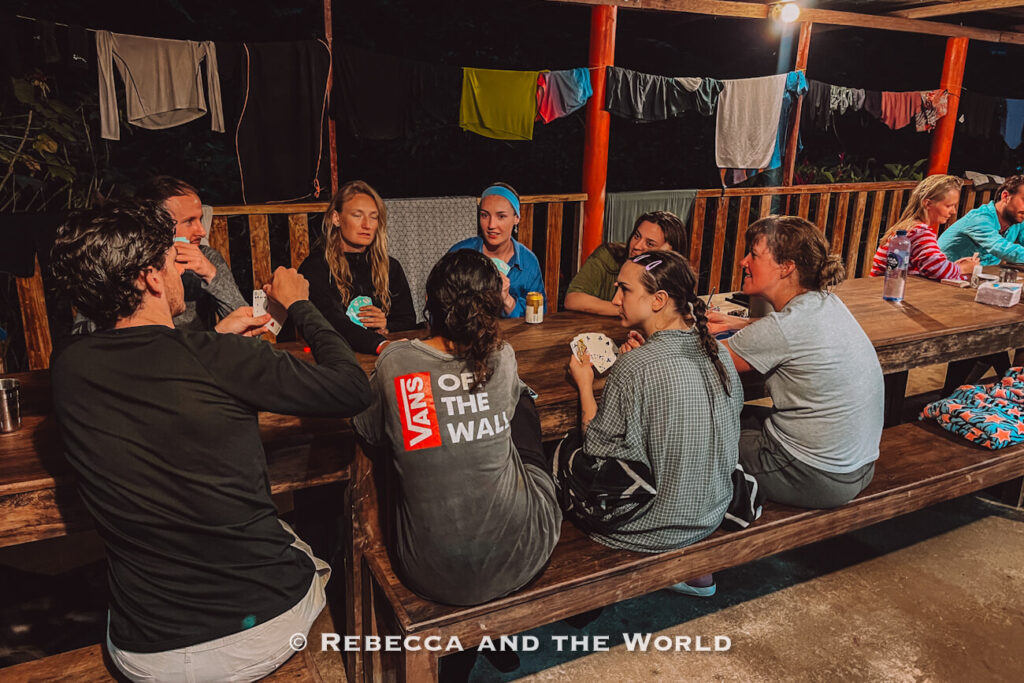
Back at camp, there were beers for sale, dinner was served and we ended the night playing cards with the group. With the river gurgling nearby and the sound of frogs chirping, I had one of the best sleeps I’ve had in ages.
Day 2 – Indigenous village visit and the dreaded “happy hour”
The lights came on at 5am, breakfast was at 5.30am and before long we were back on the trail.
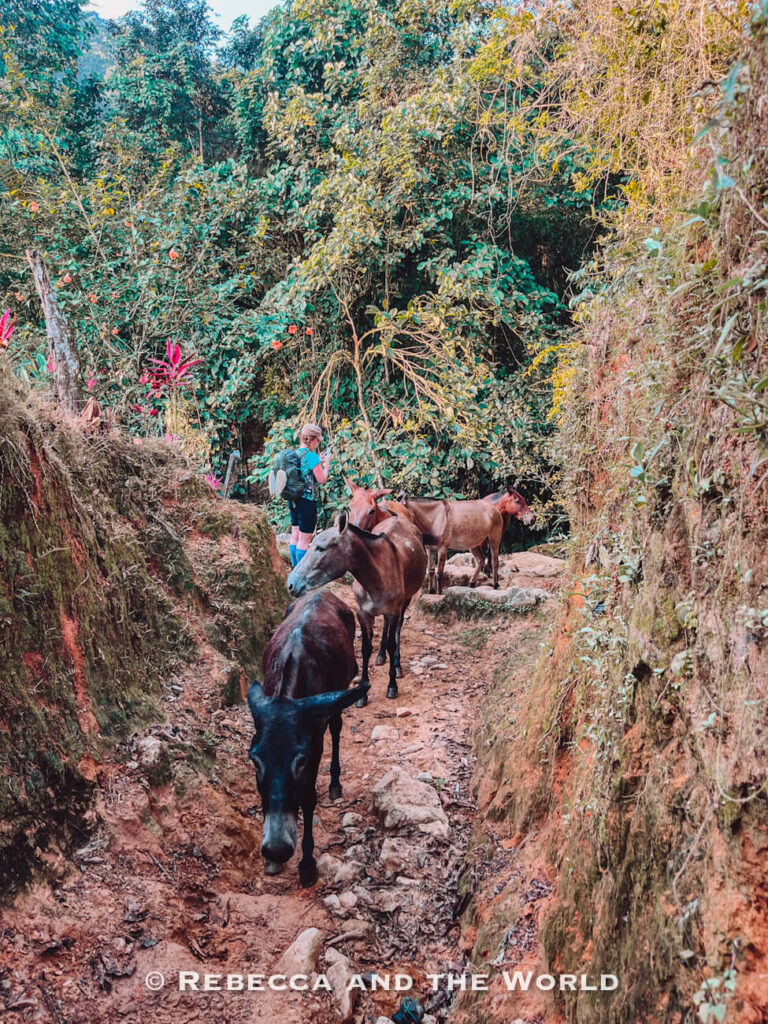
The morning began with a narrow path, but we weren’t the only ones using it: mules are a constant presence on this trek, carrying supplies between camps. Any time one approached, someone would call out “burro, burro” and we’d shuffle to the side to let them pass.
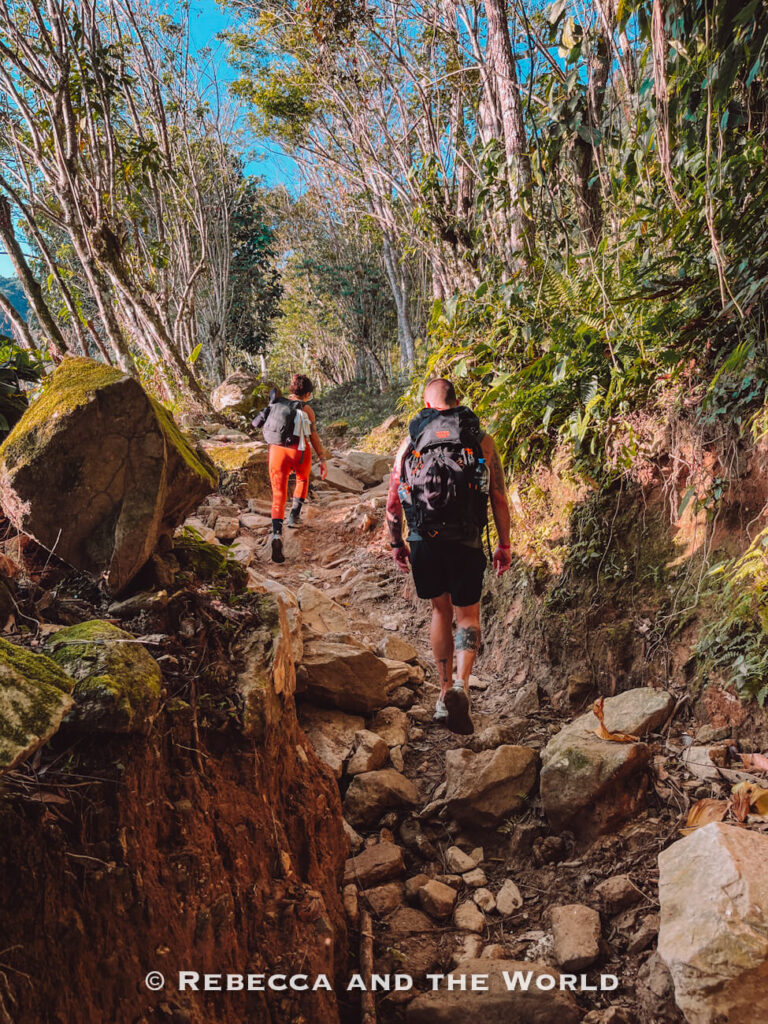
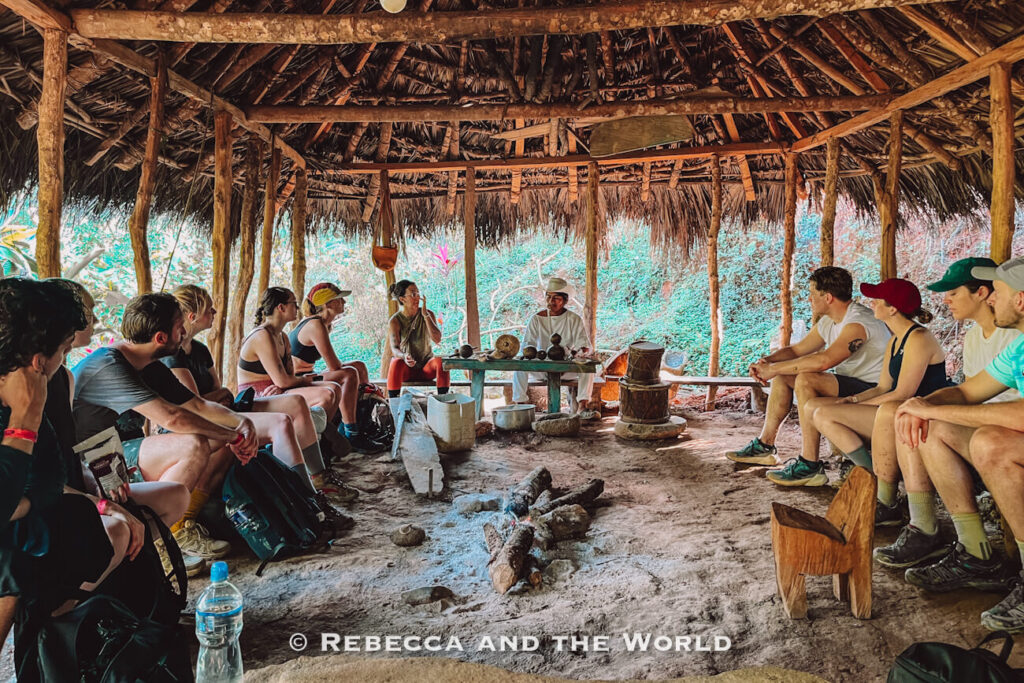
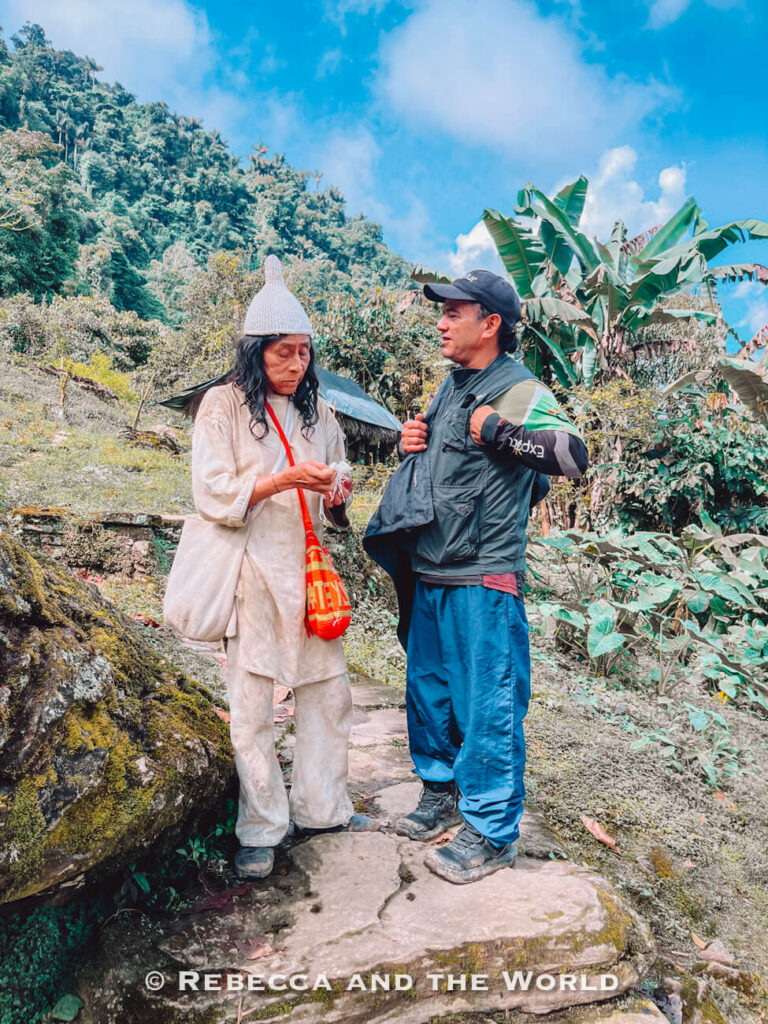
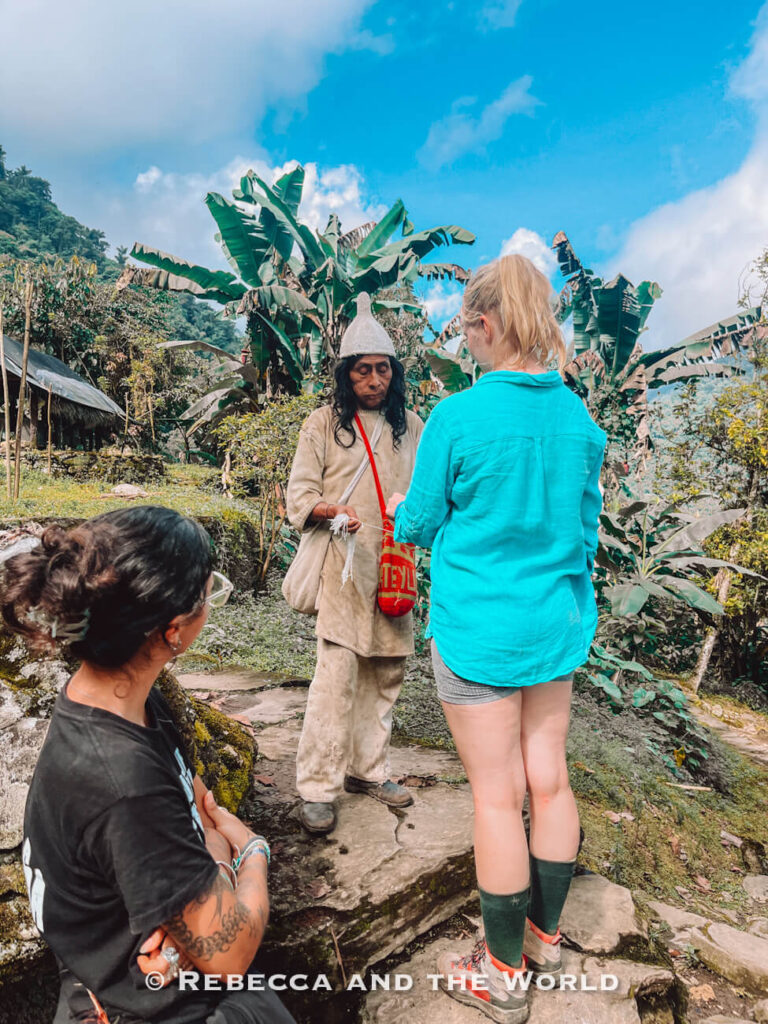
During the morning we visited an Indigenous community where we spoke with a Wiwa man who explained the poporro – a small gourd carried by men and used alongside coca leaves, with lime, in a daily practice that’s both practical and deeply symbolic. As he described it, receiving a poporro marks an important step in a young man’s transition into adulthood.
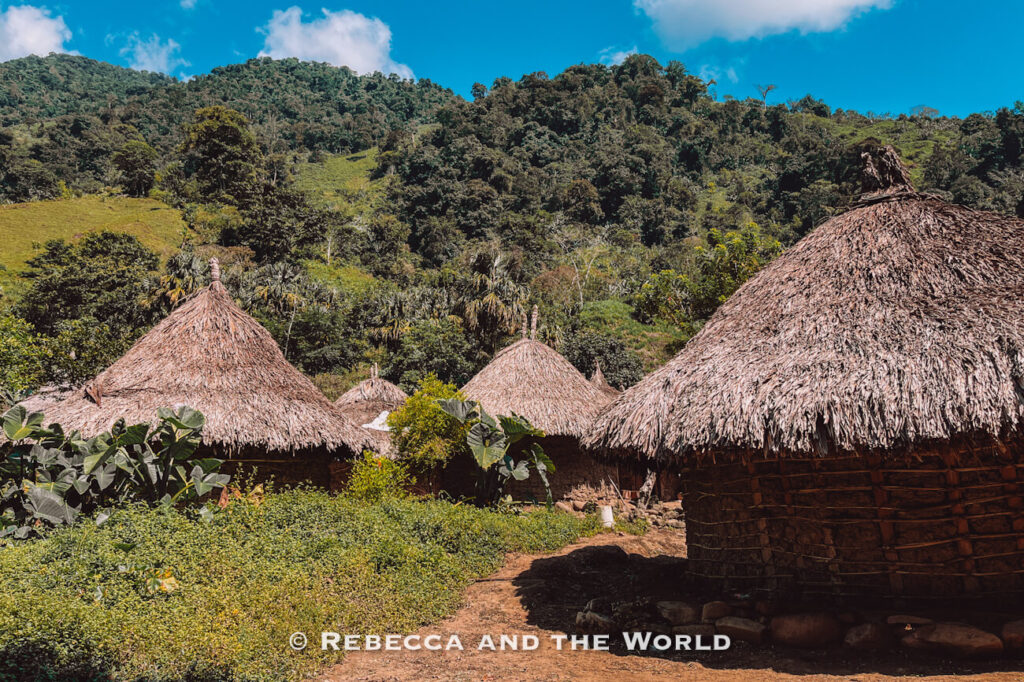
We also saw how homes are built from natural materials, and learned that much of what families eat is grown by them or traded.
It was a brief conversation, but it added real depth to the trek – a reminder that this landscape is home to many Indigenous peoples, with traditions that are very much alive.
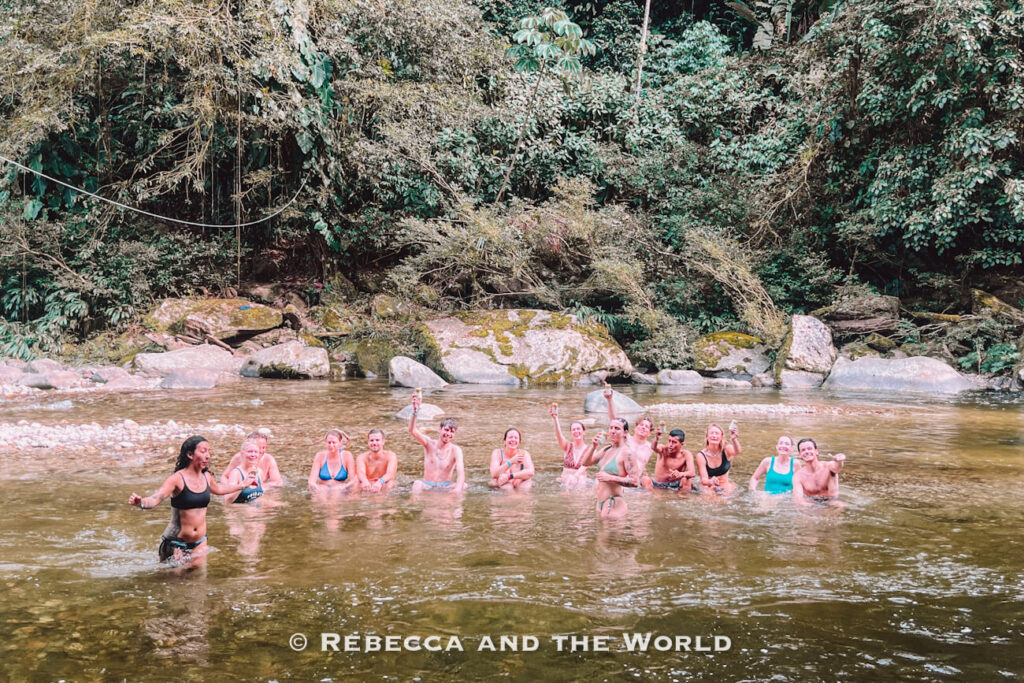
We stopped for lunch at Camp Mumake and a swim. The river here has a strong current, but you can sit in the middle in calmer water and cool off.
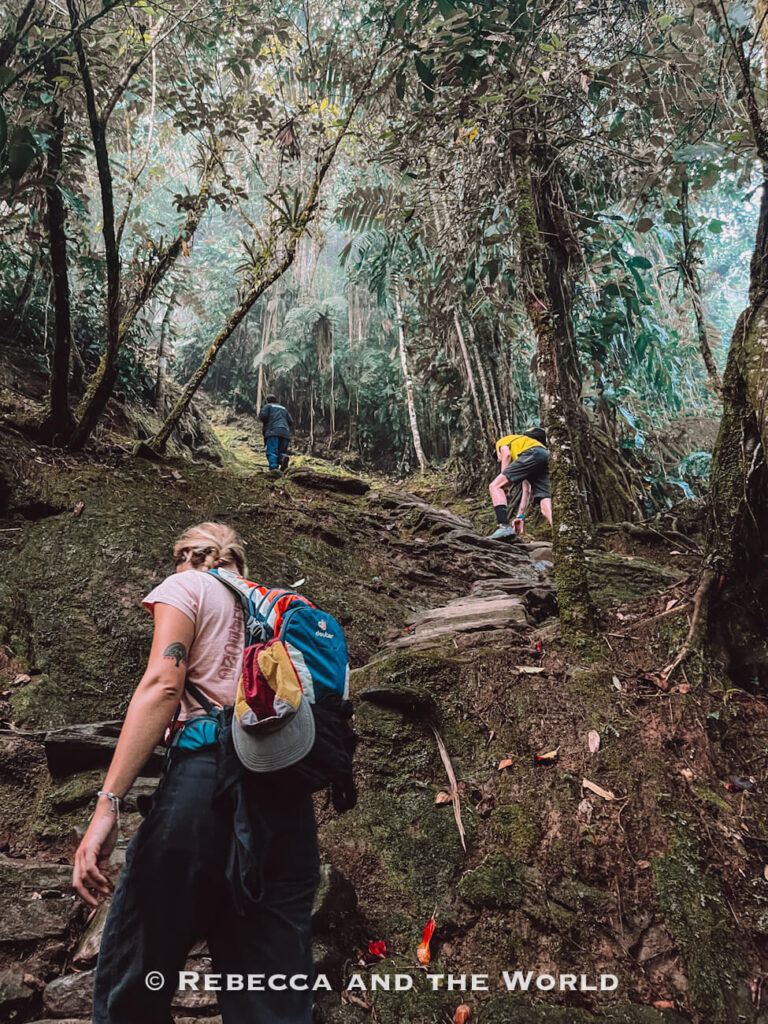
After lunch came the toughest stretch of the day – a steep, continuous climb for about an hour with no real break. The guides cheerfully and ironically call it “happy hour”. Needless to say, I was not happy at all. I fell to the back of the group and Duverney stayed with me, encouraging me step by step as I questioned my life choices.
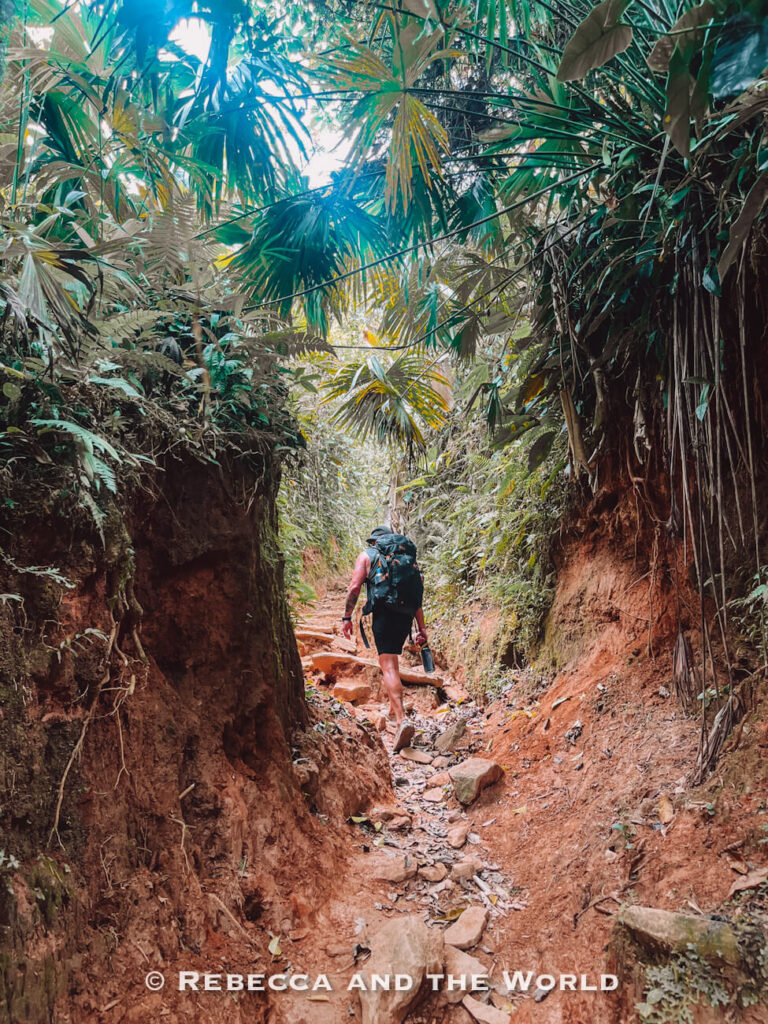
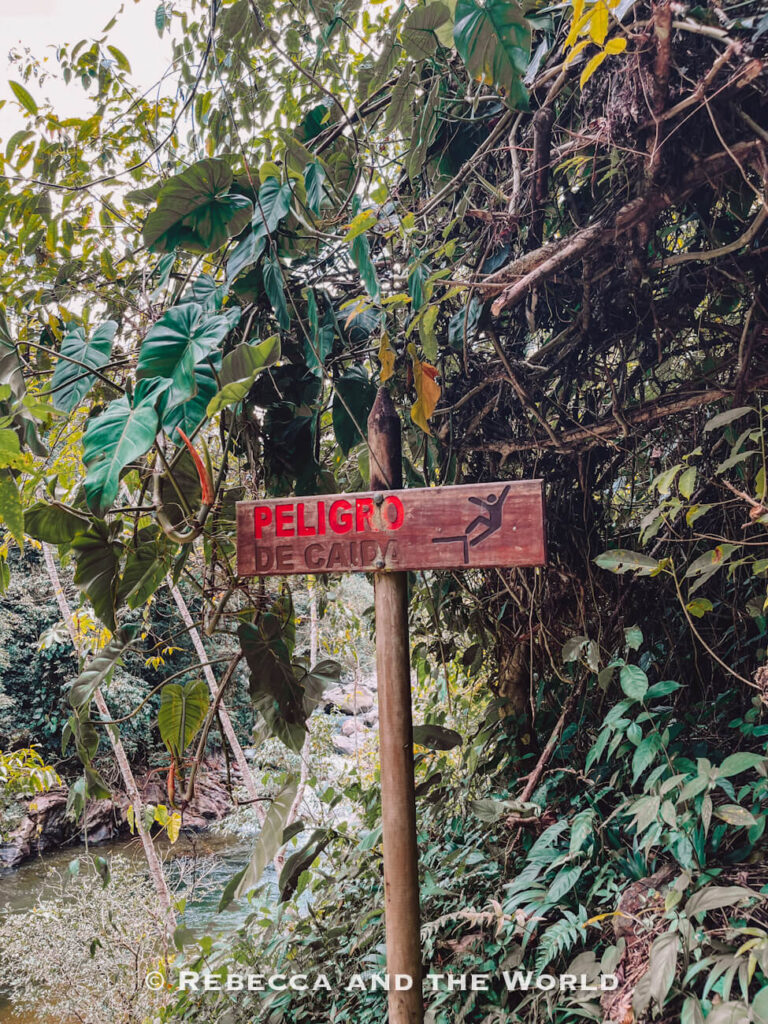
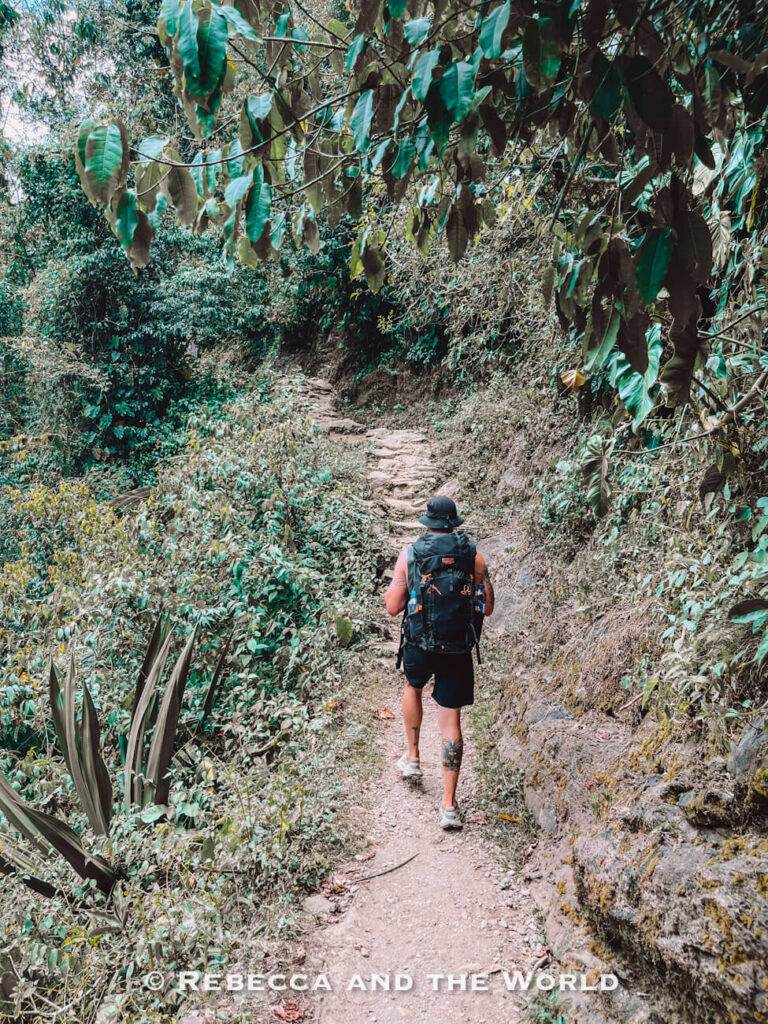
The trail eased into more ups and downs after that, weaving through lush forest and open landscapes. We passed waterfalls, local homes and farm areas, and even spotted pigs snuffling about in the undergrowth. By the time we reached Camp Paraiso for the night, everyone was ready for another plunge into the river – again, shockingly cold, but a great way to soothe muscles.

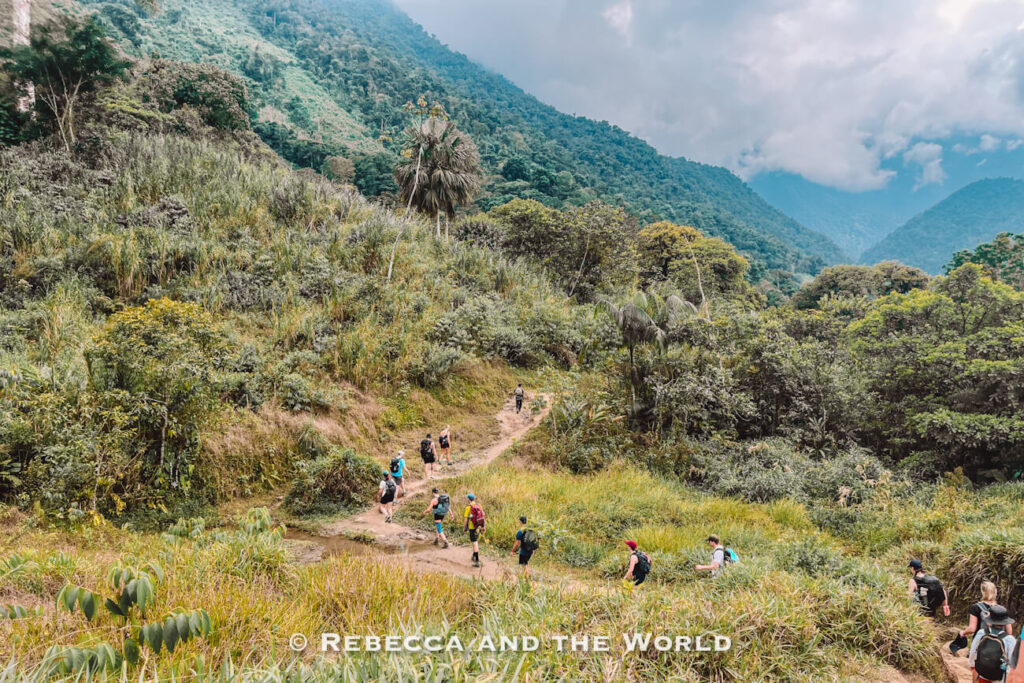
That evening, Ariel shared a lot of the region’s history. He talked about the Sierra Nevada mountains, what’s grown in the area and how farmers once relied on selling produce like avocados, plantains and beans. When that wasn’t profitable, many turned to marijuana, then later coca – a shift that fed into the violence and instability linked to armed groups, including FARC. Ariel spoke about his own memories of running away at night as a kid because of the violence.
He also talked about how tourism has changed things. And while there’s a lot to unpack in that, one tangible impact is that thousands of local families now earn income in some way through the trekking industry.
Day 3 – Ciudad Perdida
Day three was the day we’d all been working towards, and it began the same way as day two – lights on at 5am, breakfast at 5.30am, then straight onto the trail. There was a different energy in the group that morning. We were sore and sweaty and a little sleep-deprived, but everyone was excited, because today we were finally going to see Ciudad Perdida.
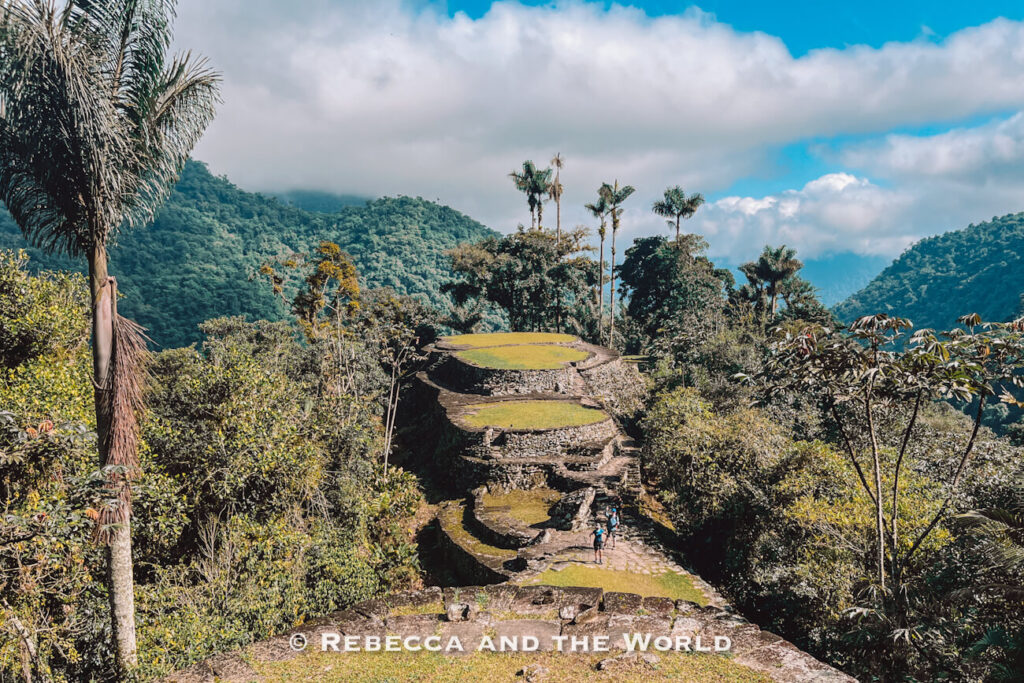
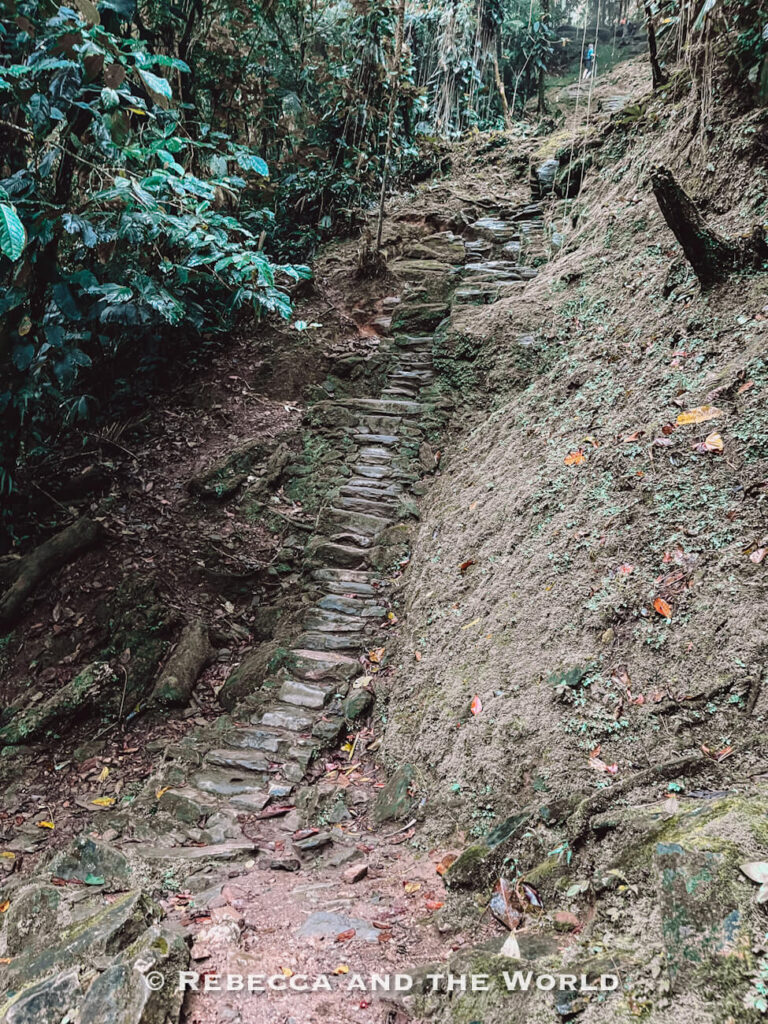
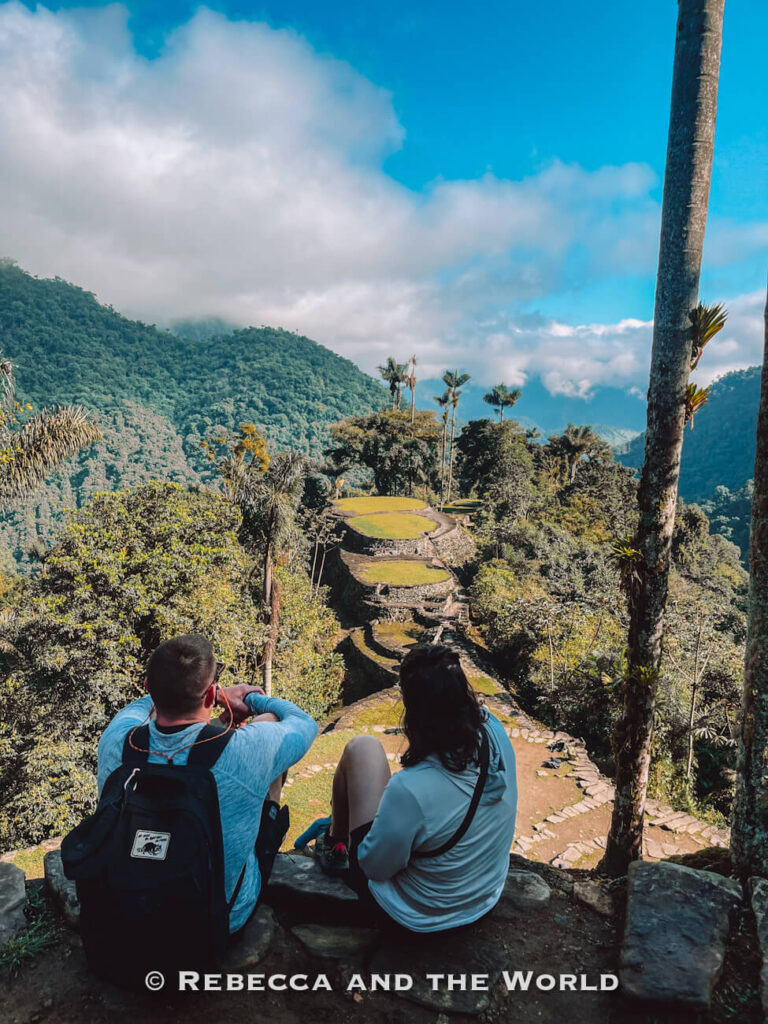
To reach the site, you need to climb around 1,200 stone steps, and it took us about an hour. Because it had rained the night before, the staircase was slick and slippery, with moss covering parts of the stones. The steps themselves are narrow and uneven, and there are sections where you really have to slow down and watch every foot placement.
At the top, Ariel guided us through the history of the Lost City, with Sofia translating, and it was one of the highlights of the whole trek. We learned about the site’s past, what happened when the Spanish arrived and how the city was eventually abandoned around 1650. It was “discovered” by a group of treasure looters in 1972 and, after the treasures started appearing on the black market, archaeologists arrived at the site in 1976 and reconstruction work began.
The thing that really stayed with me is that Ciudad Perdida is 650 years older than Machu Picchu – and yet when we were there, it felt quiet and uncrowded, very unlike Machu Picchu. At one point, there were probably only around 30 people on site, so it felt really special to be there.
We had snacks up on the terraces while we listened, taking it all in – the thick green hills, the stonework, this “lost” city in the middle of the jungle.
We also had the chance to meet the Spiritual Leader, who is the guardian of this place and represents authority for the community here. You can pay a small amount for a bracelet and protection for a safe return. I’m still wearing mine as I write this, two months later.
Getting back down the steps was its own adventure. Between the rain, the moss and my very real fear of slipping, I spent a decent amount of time scooting down on my bum. At the bottom, there’s another icy pool where you can swim, fed by water that collects from a waterfall you can actually see up near the top of the site.
We returned to Camp Paraíso for lunch and then continued on to Camp Mumake for the night, the same camp where we’d eaten lunch the day before. By then we were all running on equal parts adrenaline and sore legs, so a couple of beers while sitting in the river felt like the only reasonable way to celebrate making it to the Lost City at last. Travel bucket list item complete!
Day 4 – The long walk out
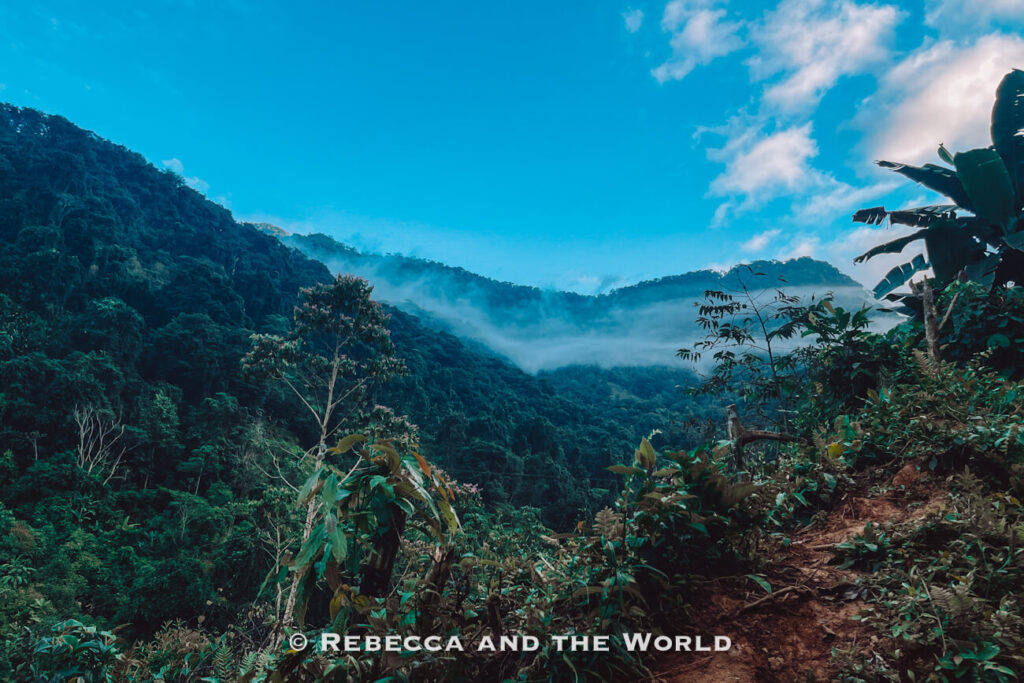
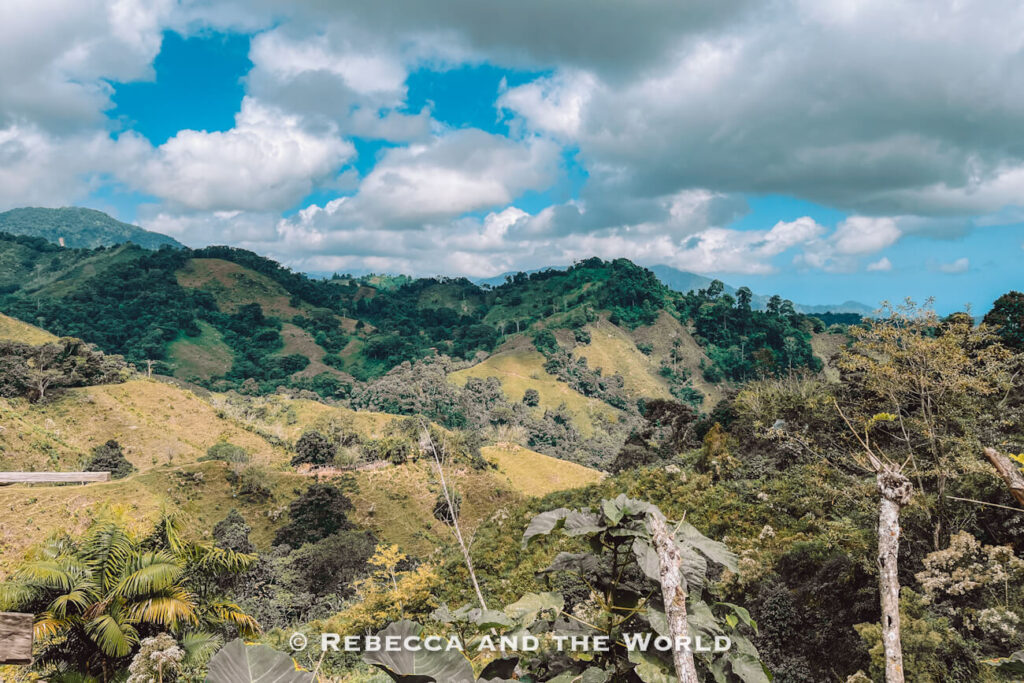
Day four was the hardest day for me, mainly because it’s the full hike back out to where you started. We were all feeling it by then – sore legs, stiff knees and that slightly grim determination that kicks in when you know you just have to keep moving.
A lot of the day is downhill, which was brutal on my knees.
We made it back to El Mamey for lunch at the same restaurant as day one. (Expotur told us that restaurants rotate between groups so the business is shared around, which is a fantastic way to support this small community).
Then it was back into the troopy for the bumpy ride out of town and onto the highway. Everyone was in that happy, exhausted mood where you’re half asleep but also buzzing from what you’ve just done. Our group put on Bad Bunny and Shakira and sang along for the ride back – a perfect ending, honestly.
And just like that, the trek was over and we were on our way to our next destination – Palomino (read my Palomino travel guide) – dusty, tired and ridiculously proud of ourselves.
🥾 BOOK THE 4-DAY LOST CITY TREK WITH EXPOTUR HERE 🥾
What are the Expotur guides and support crew like?
The biggest reason I’d recommend Expotur is the team. This is a tough trek, so having guides who are calm, capable and supportive makes all the difference.
Ariel was our main guide and he was excellent. He grew up in this region and his connection to this area is obvious in the depth of knowledge when he talks about the Sierra Nevada, local life and the complicated history of the area. He also handled questions diplomatically and honestly, without glossing over the harder parts. I especially enjoyed the evening chats at camp and his guiding at Ciudad Perdida itself – it wasn’t just facts, it was context, and it made the whole experience richer.
Sofia was our translator and she quickly became everyone’s favourite person on the trek. Her English was fantastic and she brought such a warm energy to the days. She’d often walk in the middle of the group, chatting and checking in, which did wonders for morale on the harder stretches.
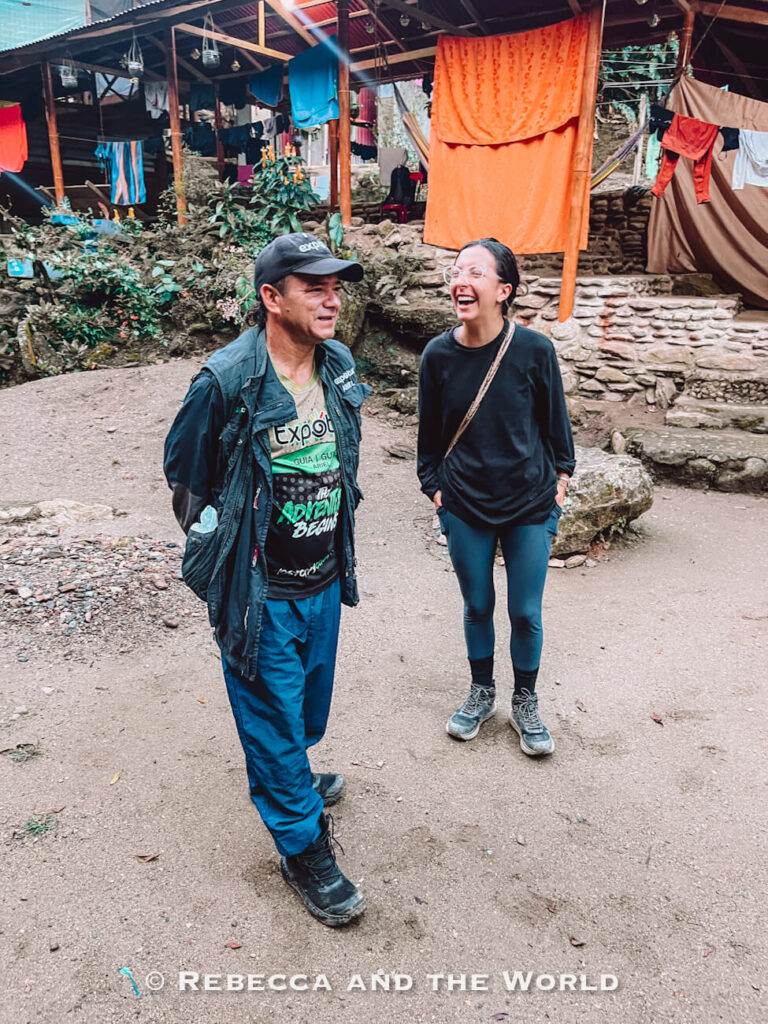
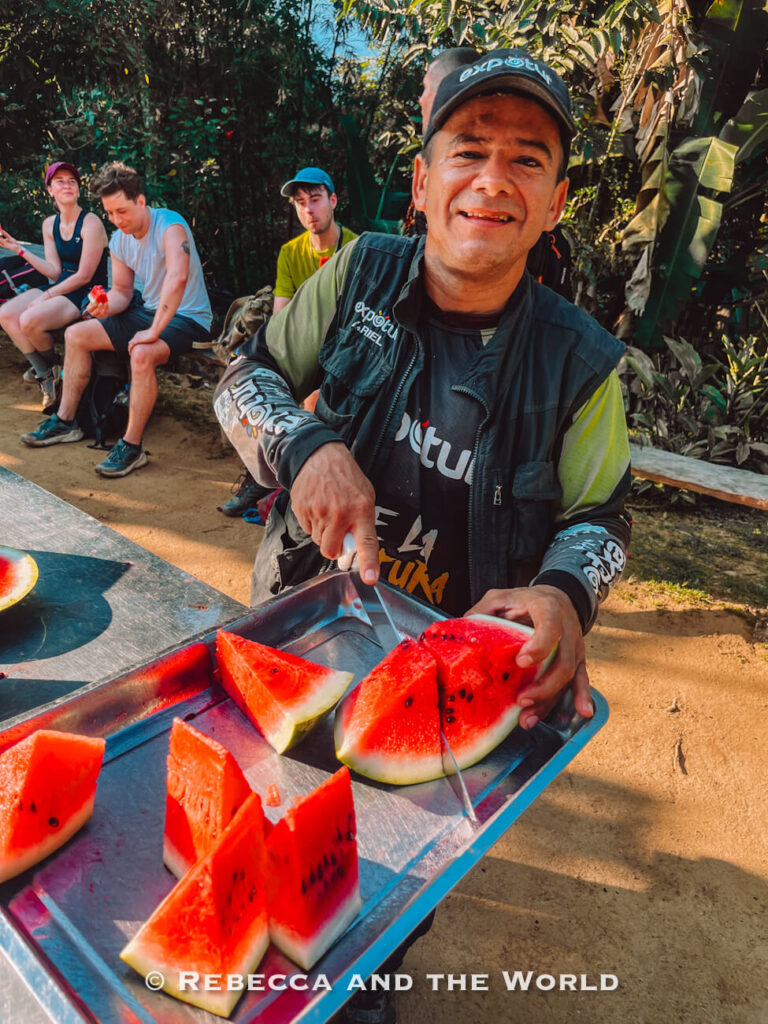
Expotur’s guiding style also worked well for mixed fitness levels. Ariel tended to lead from the front at a fairly quick pace, but he would always wait and regroup so no one was left behind. Duverney stayed towards the back, encouraging the slower walkers – which, on the “happy hour” climb, included me.
In terms of safety, we didn’t have any major issues, but one person in our group ended up with very bad blisters. Ariel had a solid first aid kit and was able to clean and dress her feet – it was reassuring to see that they were prepared for the things that commonly go wrong on a trek like this.
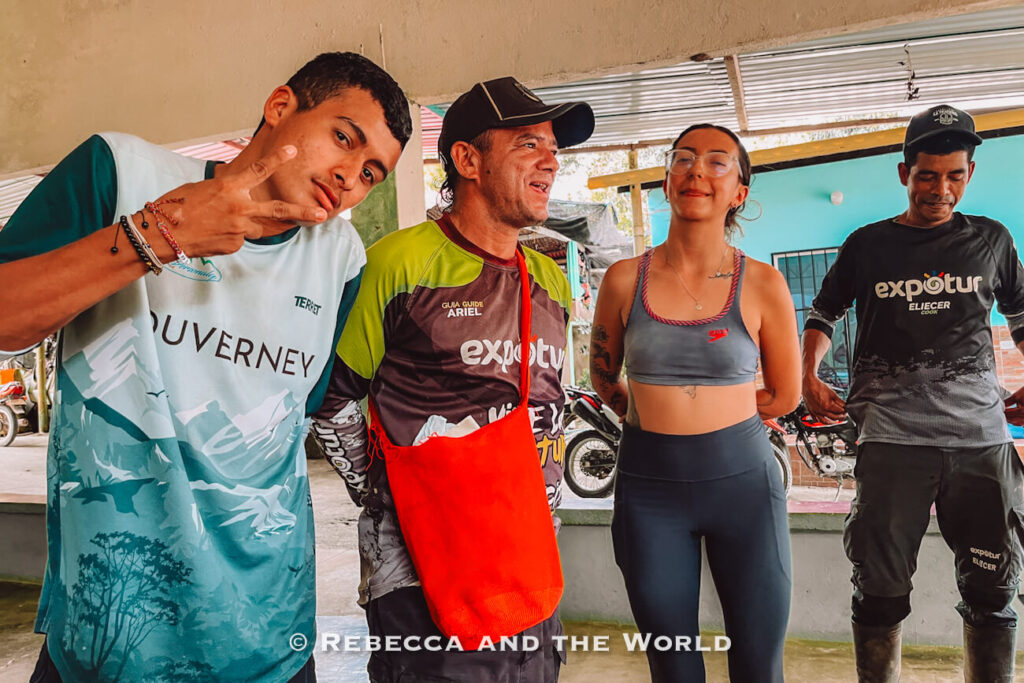
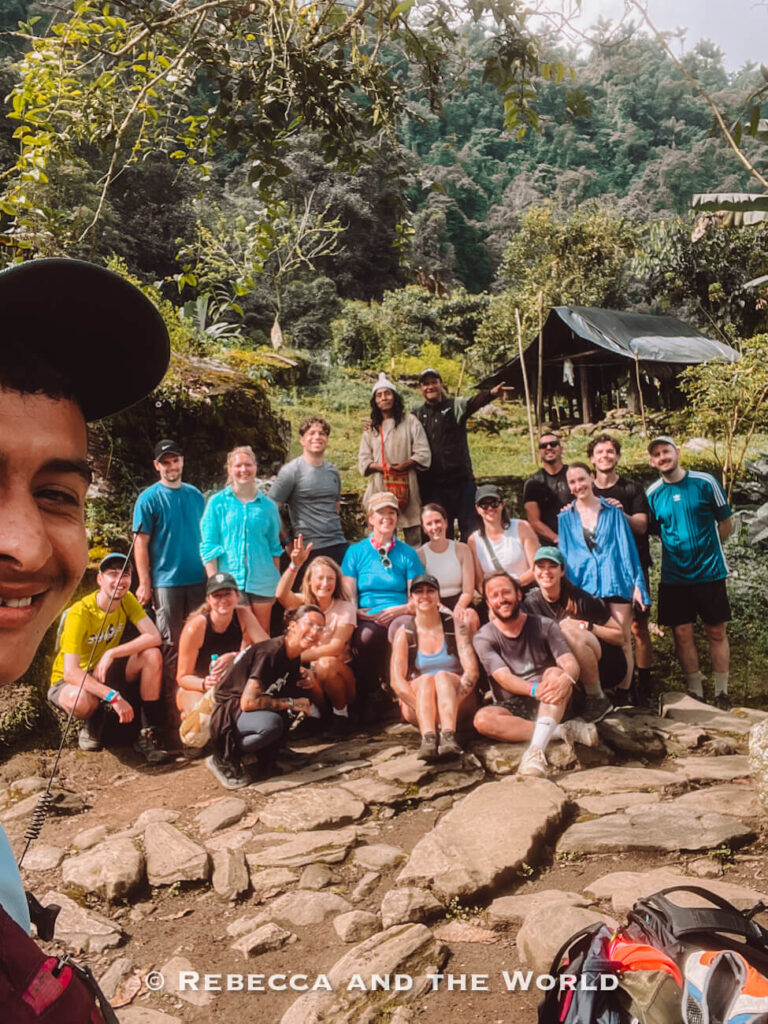
And finally, the group itself. We had 16 people and somehow got incredibly lucky – everyone was interesting, curious and easy to spend four very sweaty days with. That’s not something a company can completely control, of course, but Expotur created a friendly, organised environment that made it easy for the group to gel quickly.
What’s the food like?
Considering how much energy you burn each day, the food on the Expotur trek was better than I expected. Portions were generous and I never felt hungry. Everything was built around the basics you want when you’re hiking in heat and humidity: plenty of carbs, protein and lots of fruit during breaks.
Breakfasts were filling and consistent – eggs, toasted cheese sandwiches, arepas, fresh juice, plus coffee or hot chocolate. Lunches were usually chicken with rice, and dinners were things like spaghetti or chicken/steak with rice and plantains, often finished off with a chocolate bar or a Milo biscuit. The only meal I didn’t love was a slightly questionable tinned fish with rice on the first night. We stopped multiple times during the day for pineapple, watermelon, oranges and popcorn.
Eliecer was an absolute whizz in the kitchen, making nutritious meals for all 20 of us – and coming out piping hot.
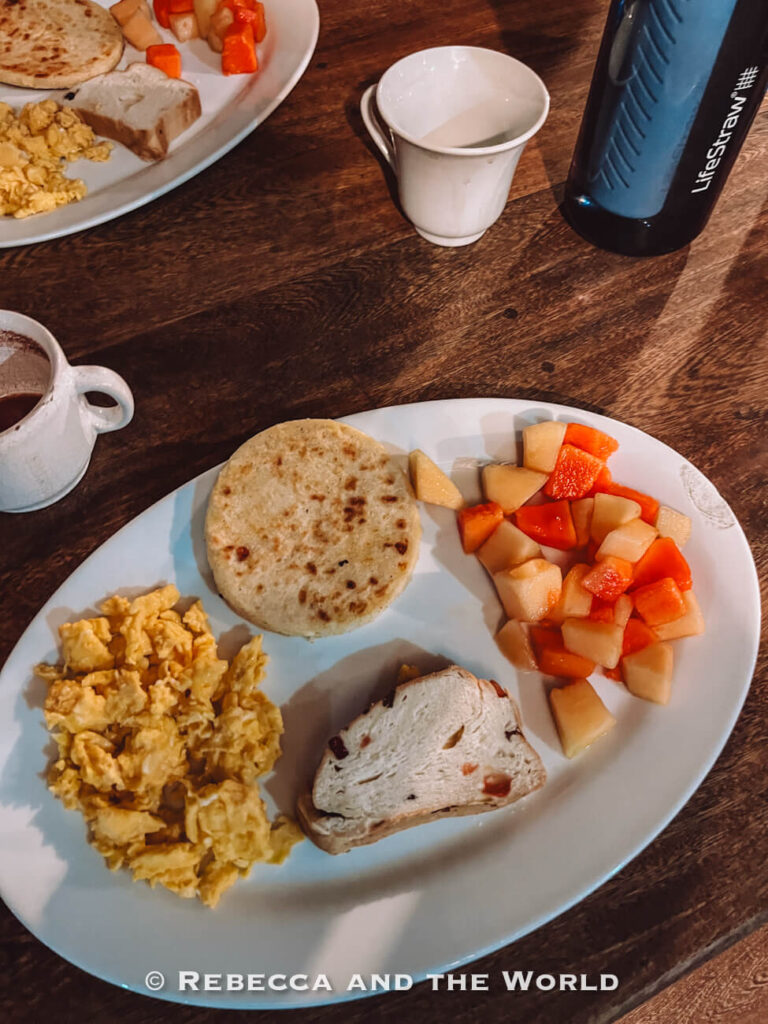
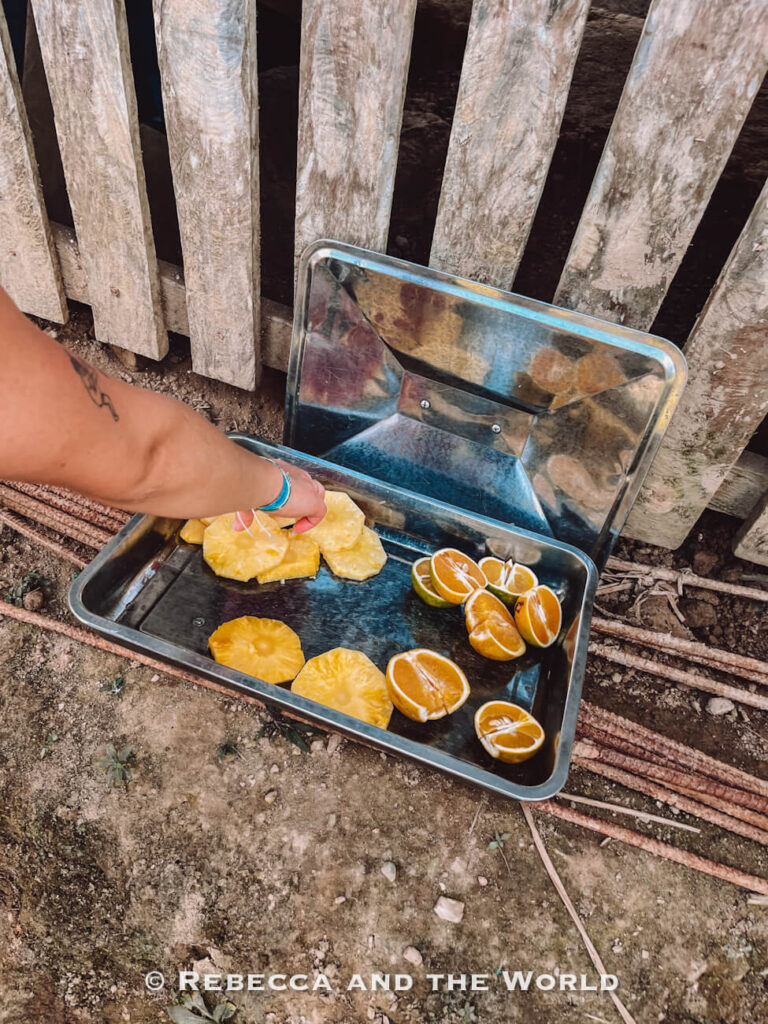
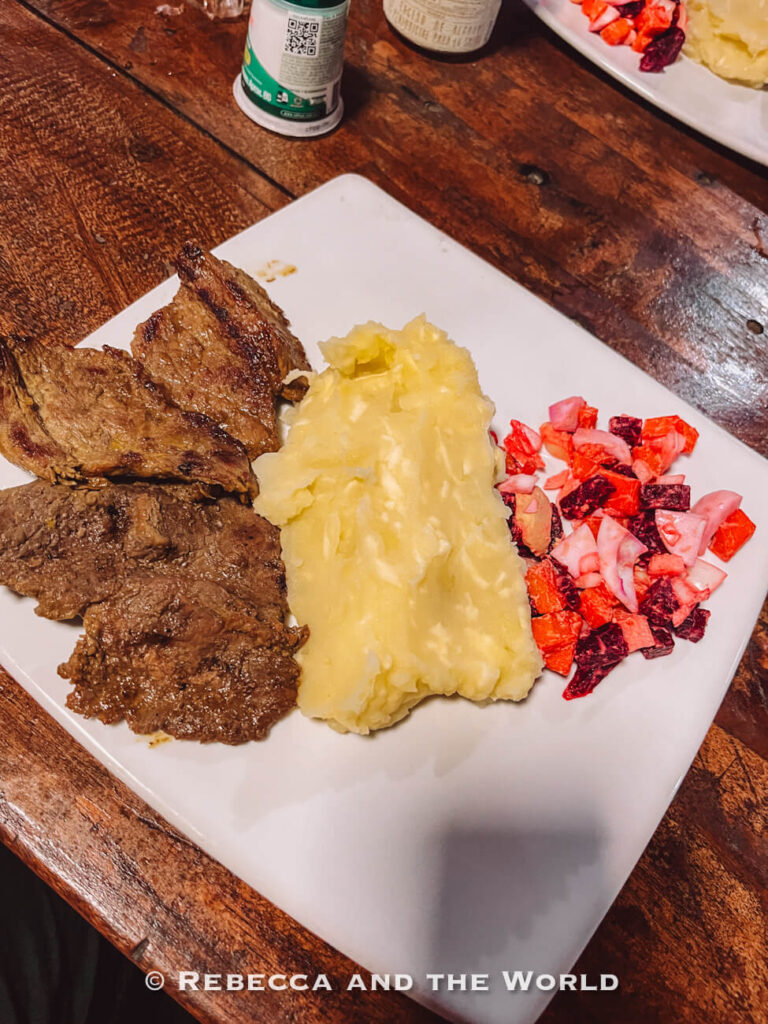
A few people in our group were vegetarian and Expotur catered for them, although I’ll be honest – their meals didn’t look quite as appealing as ours.
Water was filtered and provided at each camp. There were a few places along the trail where you could buy drinks (nothing beats a can of Coke on a hot day!).
I brought extra snacks like lollies, dried fruit and nuts, and while they were nice to have, they weren’t essential.
What’s the accommodation like?
Accommodation on the Lost City trek is basic. The camps are run individually and shared by all the tour groups. Each night we slept in bunk beds with mosquito nets. Because we went in low season, there weren’t so many people, so most nights we each got a bottom bunk. I can’t imagine how crowded the dorms would feel when the camps are full.
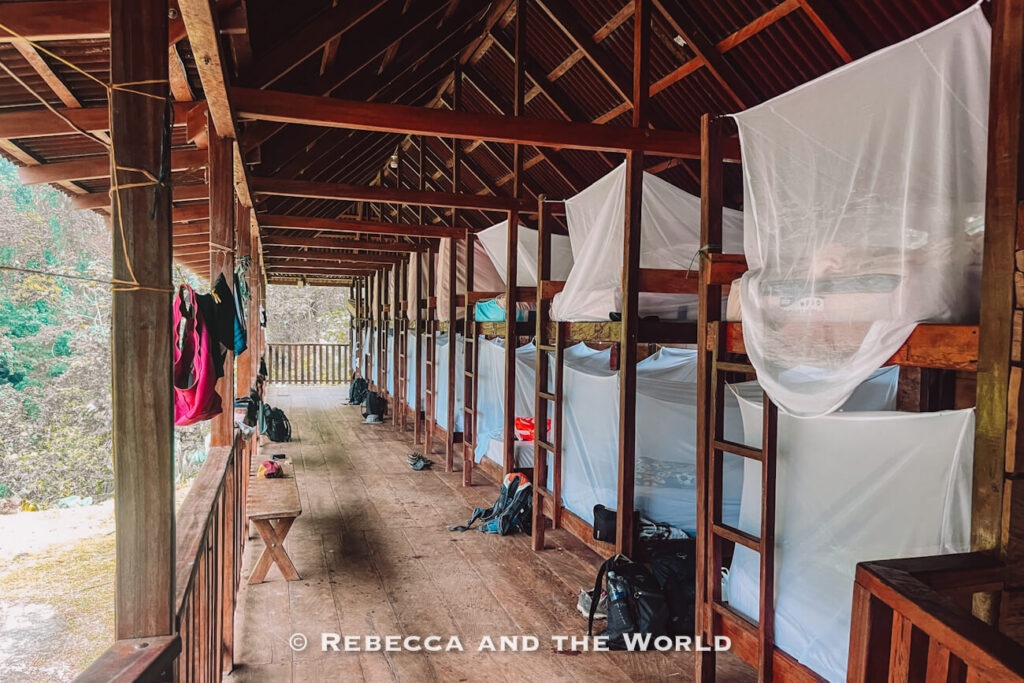
The facilities are simple. Toilets are flushing – but you do need to bring your own toilet paper. Showers were as no-frills as it gets: cold water only, coming from a tap above you, not even a proper showerhead.
There are no fans (but it wasn’t too hot at night), and with the humidity, nothing really dries. Even if the rain holds off, your clothes will stay damp the whole time. The camps do have plenty of places to hang towels and clothes overnight, which helps a bit, but pack with the expectation that you’ll be wearing slightly wet things in the morning.
Charging was available at each camp, and the second camp even had wifi, but I found it much better to be off-grid and lean into the simplicity of it all. Mosquitoes weren’t bad for us, although we did have a couple of spider sightings – inevitable when you’re sleeping in the jungle.
Is Expotur worth it?
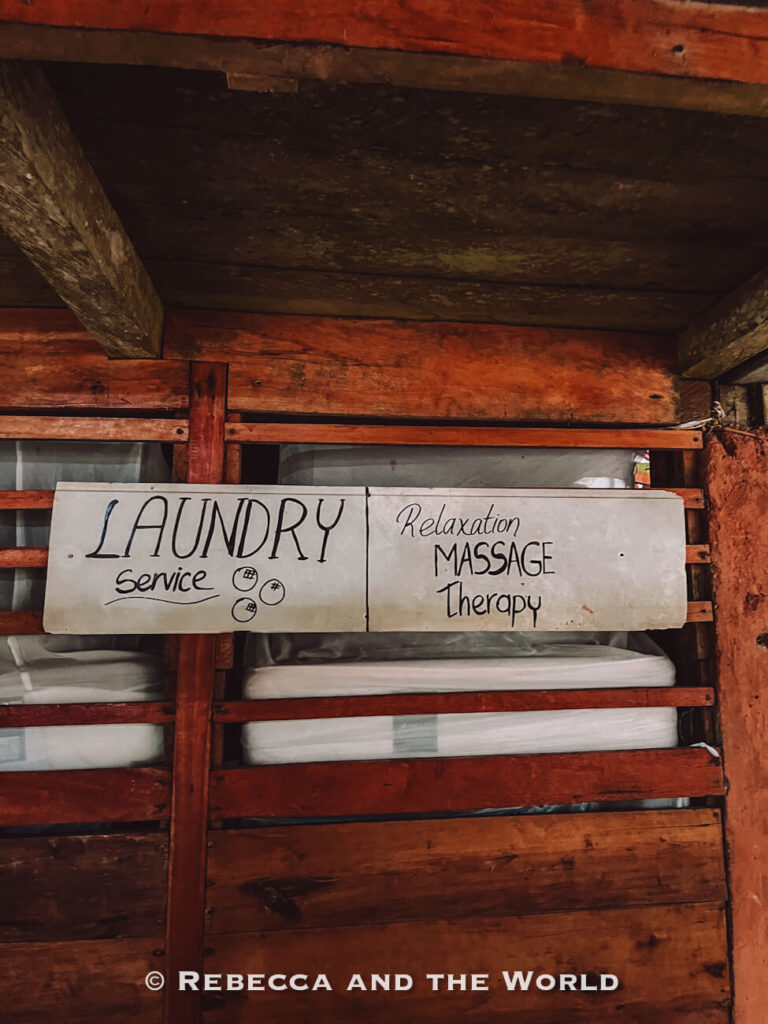
We paid COP$1,860,000 per person for the 4-day Lost City trek, which worked out to around US$500, and I thought it was good value for what you get. Four days of transport, accommodation, all meals, filtered water at camps, the Lost City entrance fee and an entire team keeping everything running smoothly. When you consider the logistics of moving food and supplies through the remote jungle, it feels fair.
That said, you’ll want to bring plenty of cash for the extras. We spent money on snacks and drinks along the trail, beers at camp and small purchases from Indigenous communities. And then there’s tipping. We tipped as a group, and we personally contributed COP$50,000 per person towards the team, which felt appropriate given how hard they work and how much they look after you.
Tips if you book the Lost City hike with Expotur
- Go in March if you can. It felt like a sweet spot – we avoided the January and February crowds, and we also missed the really heavy rains. Sofia showed us photos from just a month later where the river was torrential, and it looked like a completely different trek.
- Pack for humidity. Quick-dry clothes make life easier, but even then, expect to feel damp the whole time. Bring a light rain layer and a dry bag to keep important stuff protected.
- Bring blister care and actually use it early. Once your feet start rubbing, it can go downhill fast. I’d pack blister patches, tape, antiseptic wipes, lamb’s wool (our secret!) and a small tube of something like paw paw or anti-chafe balm.
- Don’t forget toilet paper. Only one camp supplied it.
- Wear whatever footwear you trust most, but make sure it’s broken in and has good grip. Trail runners or hiking boots both work – the key is comfort and traction on steep, sometimes slippery paths.
- Do some prep hikes if you can. You can’t really train for the humidity, but you can strengthen your legs and knees. Long walks with hills and stairs help a lot. I assumed I’d be fine because I’d done the Kokoda Track years ago – and then remembered I’m much older now (sigh). We had not trained at all and even just a few prep hikes would have helped.
- Bring cash for the extras. You’ll want money for drinks, snacks, beers at camp, little handmade items and tips at the end.
- If you can, ask if Ariel and Sofi are on your departure. A good guide and translator can turn a tough trek into an incredible one, and they added so much to our experience. We loved them!
🥾 BOOK THE 4-DAY LOST CITY TREK WITH EXPOTUR HERE 🥾
Final thoughts: Would I recommend Expotur?
The Lost City trek was the highlight of our time in Colombia – the kind of experience that’s hard, sweaty and occasionally uncomfortable, but completely worth it for the sense of achievement and the chance to see an incredibly historic site in such a spectacular setting.
If you’re expecting comfort, you’ll hate it. The camps are basic, the showers are cold and the early starts are relentless. But if you can embrace the simplicity, show up reasonably fit and focus on the experience rather than the creature comforts, it’s one of the most memorable hikes I’ve done.
As for Expotur, I’d happily recommend them. The logistics were smooth, the food was solid, and the guides and support crew were excellent.
FAQs: Lost City hike
Is the Lost City trek hard?
Yes! Mainly because of the heat and humidity and long climbs on steep paths. The 1,200 steps up to Ciudad Perdida are also no joke, especially if it’s rained and they’re slippery.
Should I do the Lost City trek in 4 days or 5 days?
For us, 4 days was the sweet spot. We considered 3 days and I’m very glad we didn’t – it would have been punishing. If you’re worried about fitness or want a slower pace, the 5-day option would be a good choice.
Are the Lost City camps clean?
They’re basic, but functional and clean. We had bunk beds with mosquito nets and clean sheets/blanket, flushing toilets and cold showers. Don’t expect comfort or privacy, and bring your own toilet paper, but the set-up is totally manageable if you go in with the right expectations.
How much should you tip guides and cooks on the Ciudad Perdida hike?
This varies by group and budget, but tipping is expected. We tipped as a group and we personally contributed COP$50,000 per person to the team. I’d bring extra cash so you can tip in a way that feels fair to you.
What’s the food like on the Ciudad Perdida trek?
Better than I expected. Portions were generous and filling, with lots of carbs and protein, plus plenty of fruit. Breakfasts were things like eggs, arepas and toasted cheese sandwiches, lunches were typically chicken and rice, and dinners were pasta or meat with rice and plantains.
What is the Lost City trek Colombia like in heavy rain?
Rain can make the trail muddy and slippery and can change river conditions quickly. The guides adjust pacing and keep an eye on safety, but you should expect to get wet at some point and pack accordingly – a light rain layer and a dry bag for anything important are necessary. Pick your time of year wisely!
Did you find this article helpful? Consider buying me a coffee as a way to say thanks!
Are you considering the Lost City trek Colombia? Let me know if you have any questions via the comments below!
Related posts
Before you go… you might like these Colombia travel articles:
- Lost City Trek Packing List: What to Pack and What to Leave Behind
- Is Santa Marta Worth Visiting? A Guide to Colombia’s Caribbean Gateway
- Is Palomino Worth Visiting? A First-Timer’s Guide + Tips for Planning Your Stay
- 3 Days in Cartagena Itinerary: Plan Your First Trip to This Colourful Colombian City
- 48 hours in Bogotá, Colombia: The Perfect 2-Day Itinerary for First-Time Visitors
COLOMBIA TRIP ESSENTIALS
- Book your flight to and around Colombia online with Skyscanner. I like how Skyscanner allows you to find the cheapest days to travel and compares multiple airlines at once.
- One thing I always purchase is travel insurance! Travel Insurance Master allows you to compare across multiple policy providers, while SafetyWing is great for long-term travellers and digital nomads.
- Wise is my choice for sending and receiving money and spending money overseas (you can get a digital and physical card).
- Find great hotels across Colombia. Check prices on Booking.com and Expedia online.
- Check out the huge range of day tours throughout Colombia on GetYourGuide or Viator. I love a good food tour in particular!
- Saving money? Check out the range of free walking tours in Colombia with GuruWalk (don’t forget to tip!).
- How to get around? I use DiscoverCars for car hire, or Motorhome Republic and Jucy for campervan/RV rental. For buses, trains and ferries, I use 12GO, Busbud and Omio.
- Grab an e-sim to stay connected while on the road.
- A copy of the Lonely Planet guide to Colombia will be handy. Also pick up a Spanish language phrasebook to help you navigate your visit.
- Check out my Amazon shop for my fave travel items – everything from backpacks and suitcases to travel adapters and beauty products.
PIN IT FOR LATER: LOST CITY TREK COLOMBIA
Save this guide to the Lost City trek to Pinterest so you can plan your Ciudad Perdida experience later.