
Visiting Lisbon for the first time? Here’s a great 2 days in Lisbon itinerary that hits the highlights of Portugal’s buzzing capital.
Lisbon is one of those cities that grabs you almost right away. With its tile-covered buildings and bright yellow trams, Portugal’s capital is easy to fall for at first glance. But beyond the photogenic façades lies a city layered with history, shaped by centuries of exploration, resilience and creativity. And while Lisbon is one of Europe’s oldest capitals, it certainly doesn’t feel stuck in the past.
It’s also compact enough to explore in a weekend, with many of the main sights within walking distance or a quick tram ride away. Compared to other big European capitals like Madrid or Barcelona, Lisbon feels more laidback and chilled – but it’s never dull.
This two-day itinerary is designed for first-timers and weekend visitors who want to see the highlights without rushing. I’ve focused on walking-friendly routes, great local food, and a mix of historic and modern Lisbon – with enough time to slow down and enjoy the city’s vibe (and maybe even enjoy an afternoon siesta).
Over 48 hours, you’ll wander through neighbourhoods where laundry hangs between buildings that are hundreds of years old, sample the world’s best custard tarts in their birthplace, listen to haunting Fado performances in intimate venues and watch the sunset paint the city golden from panoramic viewpoints.
Here’s how to do it.

If you’re not a resident of the EU, you’ll need to register for the Entry/Exit System (EES) when you travel to Europe. Digital registration happens when you cross borders. You can find out more information online here. Later (possibly 2027, although there’s no confirmation), the European Travel Information and Authorisation System (ETIAS) will kick off. More information about that here.
This blog post may contain affiliate links, meaning if you book or buy something through one of these links, I may earn a small commission (at no extra cost to you).
Best things to do in Lisbon
If you only have a couple of days, here are some of the best things to do in Lisbon:
- Join a free walking tour to explore key sites like Baixa, Rossio Square and Praça do Comércio
- Wander (and get lost in!) Alfama’s maze of cobblestone lanes
- See a live Fado performance in an intimate venue
- Visit Belém’s Jerónimos Monastery, Torre de Belém and the Monument to the Discoveries
- Indulge in as many pasteis de nata as you can, including from the original Pastéis de Belém bakery
- Browse boutiques at LX Factory
- Watch the sunset from a miradouro like Senhora do Monte, Santa Catarina or the rooftop at Park Bar
These highlights form the backbone of a perfect Lisbon weekend. In the itinerary below, you’ll see how to fit them into two days without feeling rushed.
2-day Lisbon itinerary overview
Day 1: Historic Lisbon
Start your first day with a free walking tour – one of the best ways to get an overview of Lisbon’s history and neighbourhoods. We loved this Lisbon free walking tour, which hits the main highlights over three hours (prepare to get your step count up!) and even included a pastel de nata tasting. Our guide left us with a huge list of recommended things to do and restaurants to try.
Alternatively, follow the below route for a self-guided stroll through the city.
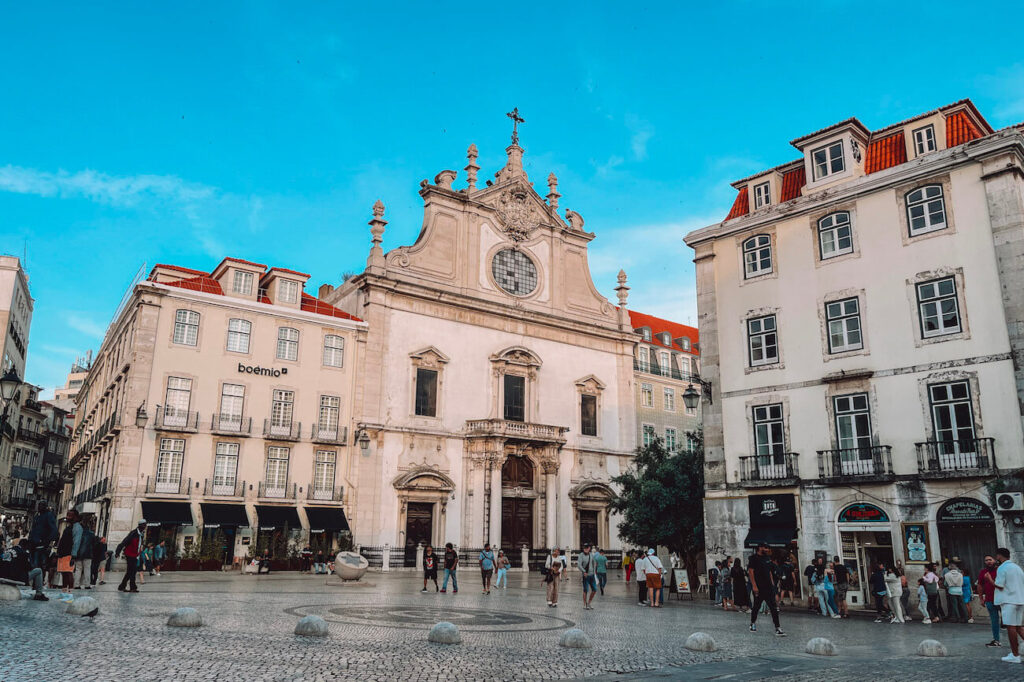
Many tours begin in the heart of Baixa, the city’s elegant downtown rebuilt after the devastating 1755 earthquake. Striking on All Saints’ Day (one of the most important religious holidays – meaning all the churches were full and candles were lit for prayers), the quake was followed by a tsunami and fires that destroyed much of Lisbon, killing tens of thousands and reshaping the city forever.
You’ll likely pass through Rossio Square, with its wave-patterned paving (reminding me of Rio de Janeiro) and beautiful fountains.
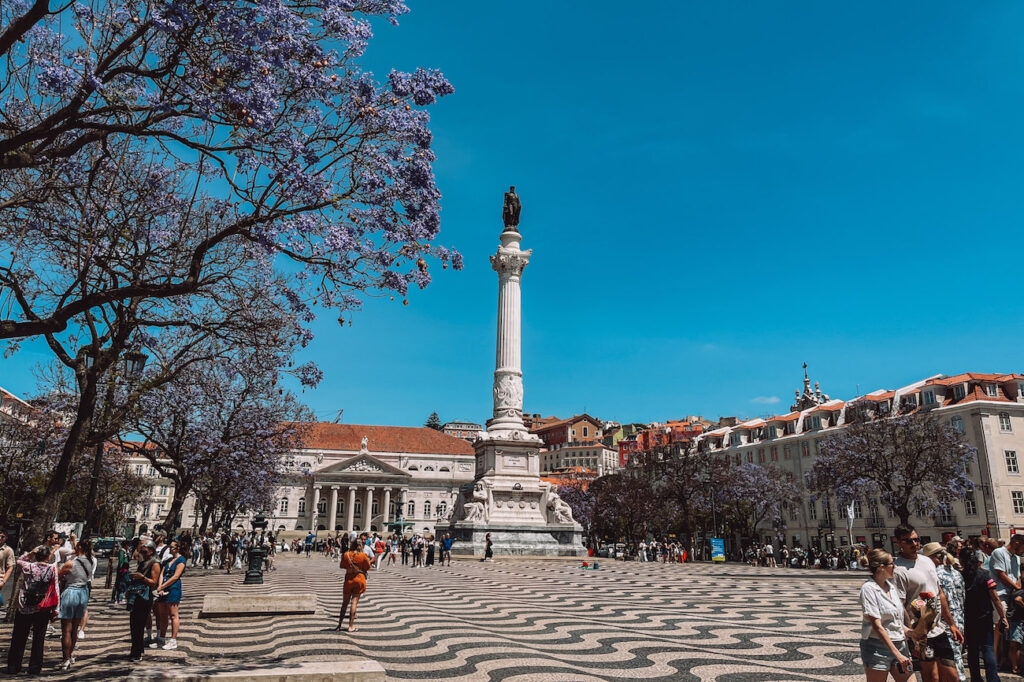
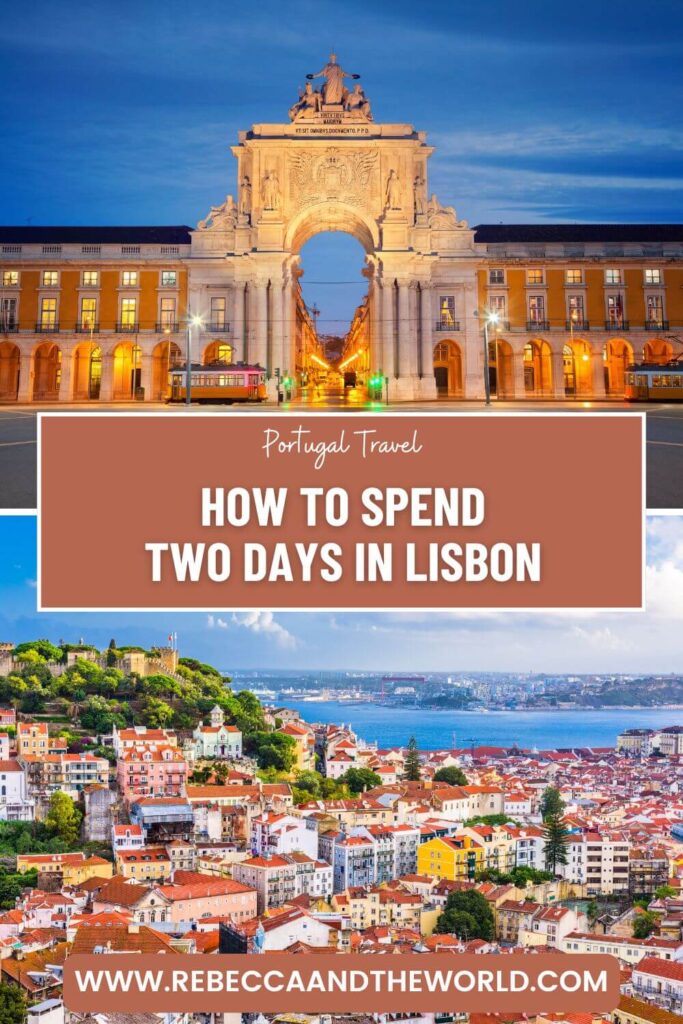
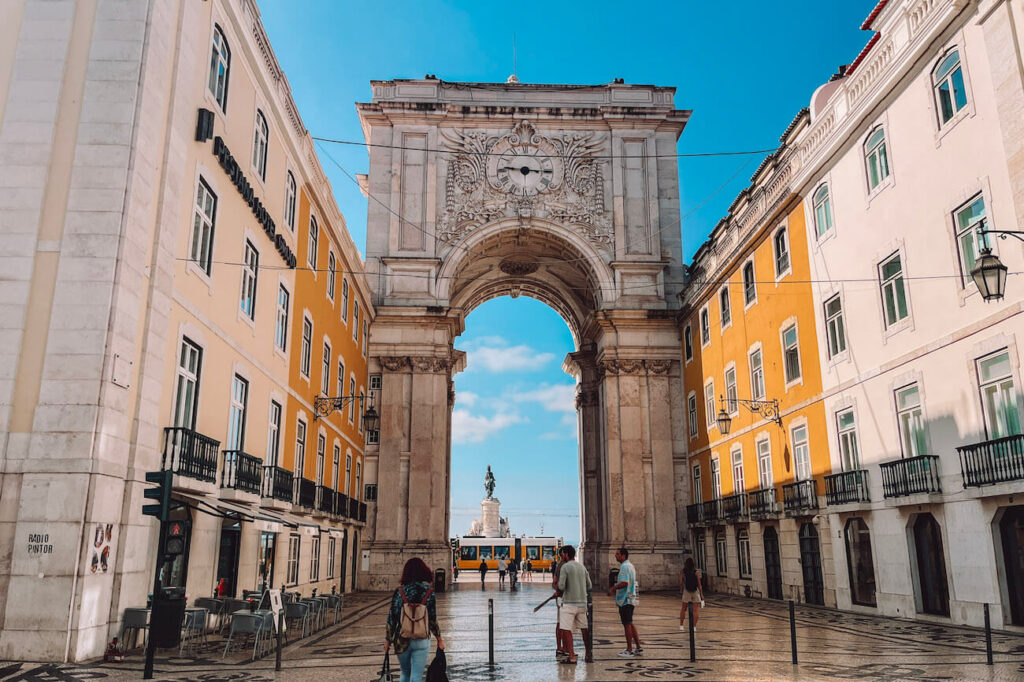
From there, guides often lead you to Praça do Comércio, an expansive riverfront square framed by yellow arcaded buildings, once the grand entry point for ships arriving from Portugal’s colonies. Snap a photo in front of the Lisboa sign.

Our tour guide was excellent, weaving stories about the city’s historic characters, such as the Marquis of Pombal, a cruel despot who also masterminded Lisbon’s post-earthquake reconstruction.
We also heard about Celeste Caeiro, the Lisbon waitress whose spontaneous act during the 1974 “Carnation Revolution” became a national symbol. When soldiers filled the streets to overthrow Portugal’s dictatorship, she handed out carnations, tucking them into rifle barrels and buttonholes.
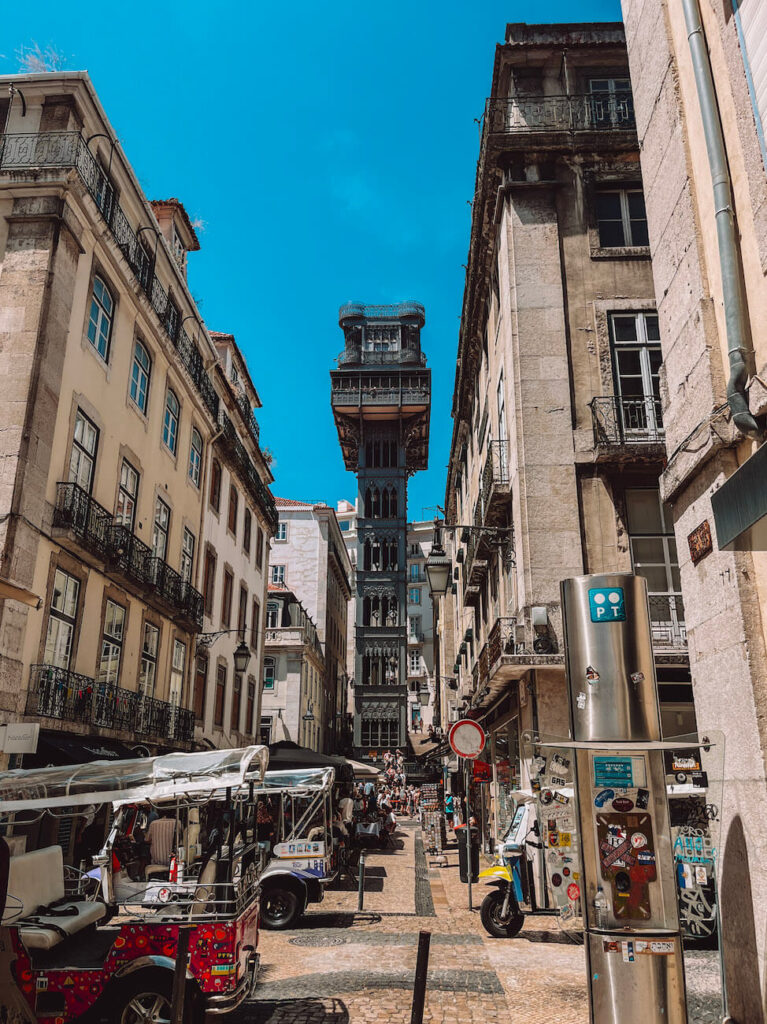
You’ll also spot the Elevador de Santa Justa – an ornate lift that connects Baixa to the Carmo Square area. It’s a popular tourist attraction – but here’s a secret tip: you don’t need to queue for the ride to enjoy the views. Instead, take the steps around the back to reach the top platform and enjoy the same sweeping perspective over downtown Lisbon – for free!

Tours often wind up in Alfama, the oldest district in Lisbon, a maze of cobbled streets that survived the earthquake. Spend some time getting lost here – ignore Google Maps and simply wander.
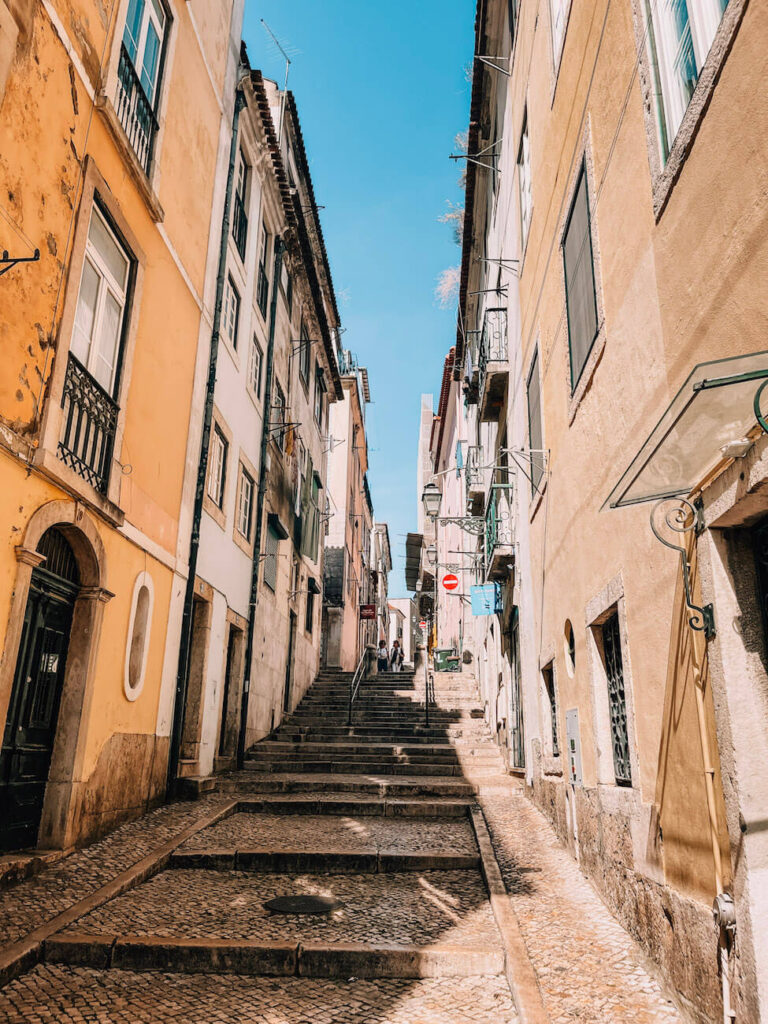
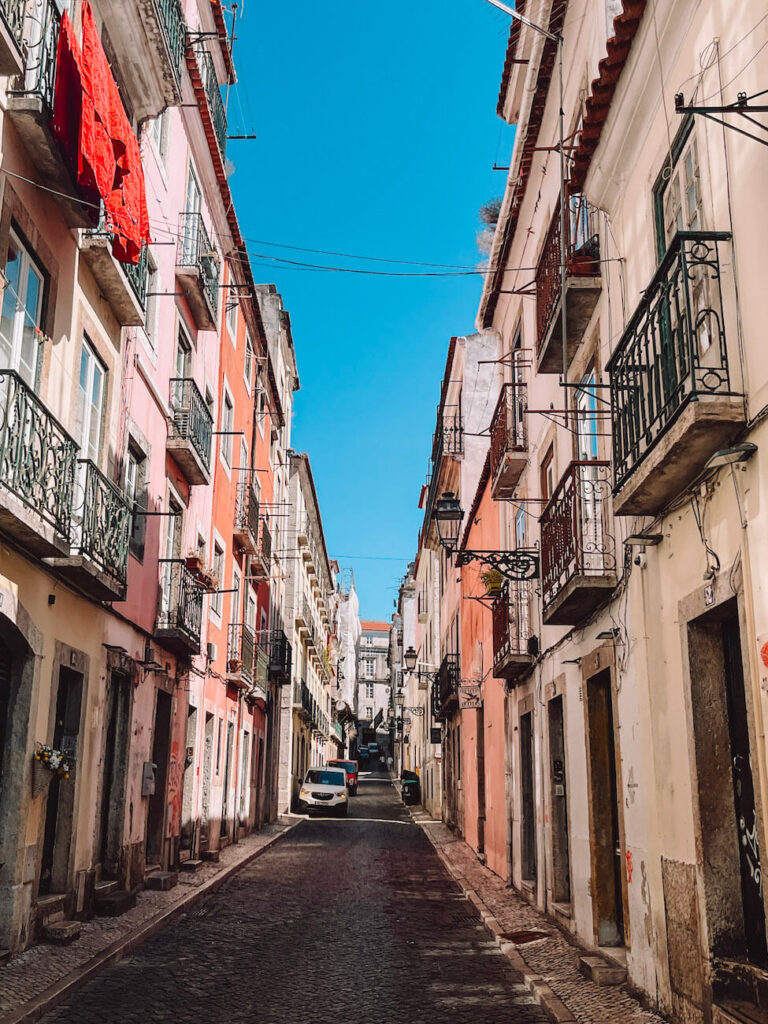
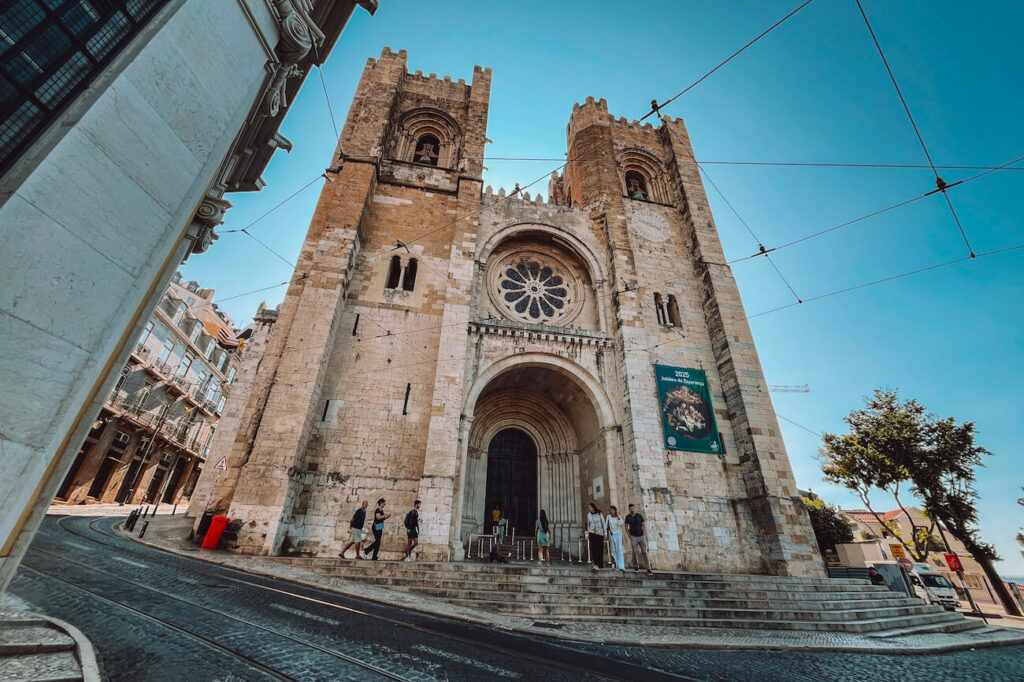
In Alfama, you’ll find Sé Cathedral, which dates back to the 12th century, and viewpoints like Miradouro de Santa Luzia, which frames Alfama’s terracotta rooftops against the shimmering Tagus River.
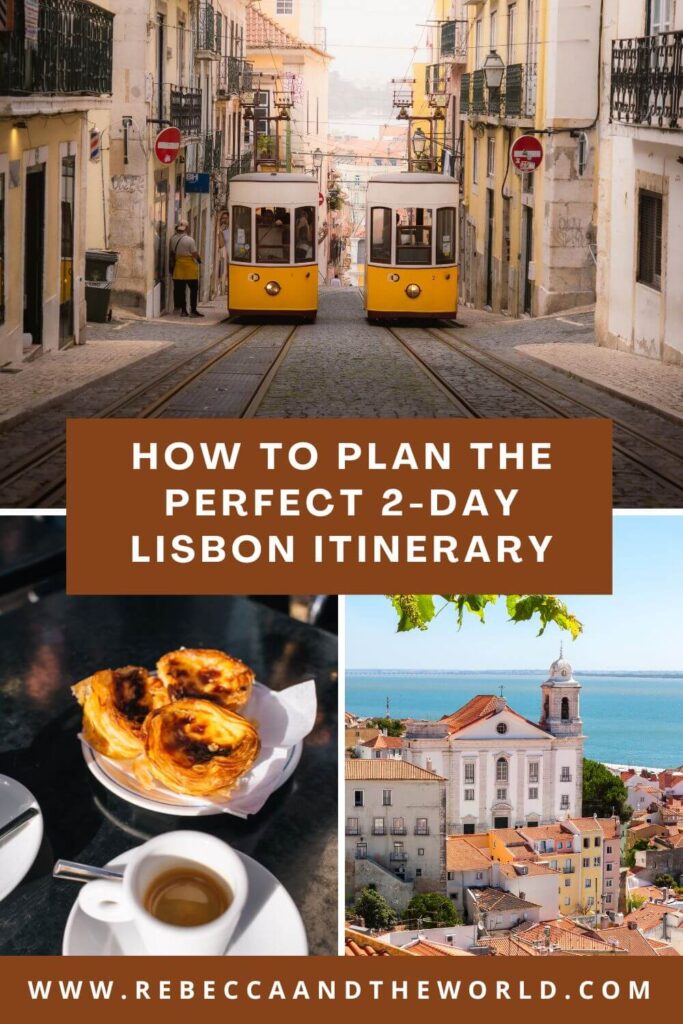
You’ll likely also see Tram 28 along the way – it’s iconic, but usually packed. If you really want to ride it, go early or late in the day. I preferred just to snap a few photos rather than squeezing on!

Book the Lisbon free walking tour online here
In the evening, take a seat at a Fado show. This UNESCO-recognised musical tradition blends soulful lyrics with mournful guitar, capturing the Portuguese concept of saudade – a bittersweet longing. The setting is just as important as the music itself, so opt for small venues like Tasca do Chico, Adega Machado or Clube de Fado for a more intimate experience. Arrive early or reserve in advance to get the best seats.
If you’re not ready to end the night, take a slow wander through Alfama’s lantern-lit streets or stop for a nightcap or two at one of the many neighbourhood bars.
Walking tip: Lisbon is built on hills, so wear comfortable shoes with good grip (to manage the slippery cobblestones and tiles)!
Day 2: Historic Belém and contemporary Lisbon
Your second day begins along the river, where Lisbon’s maritime past meets its creative present.
Start your morning in Belém (pronounced beh-LENG,with a nasal “ng”).
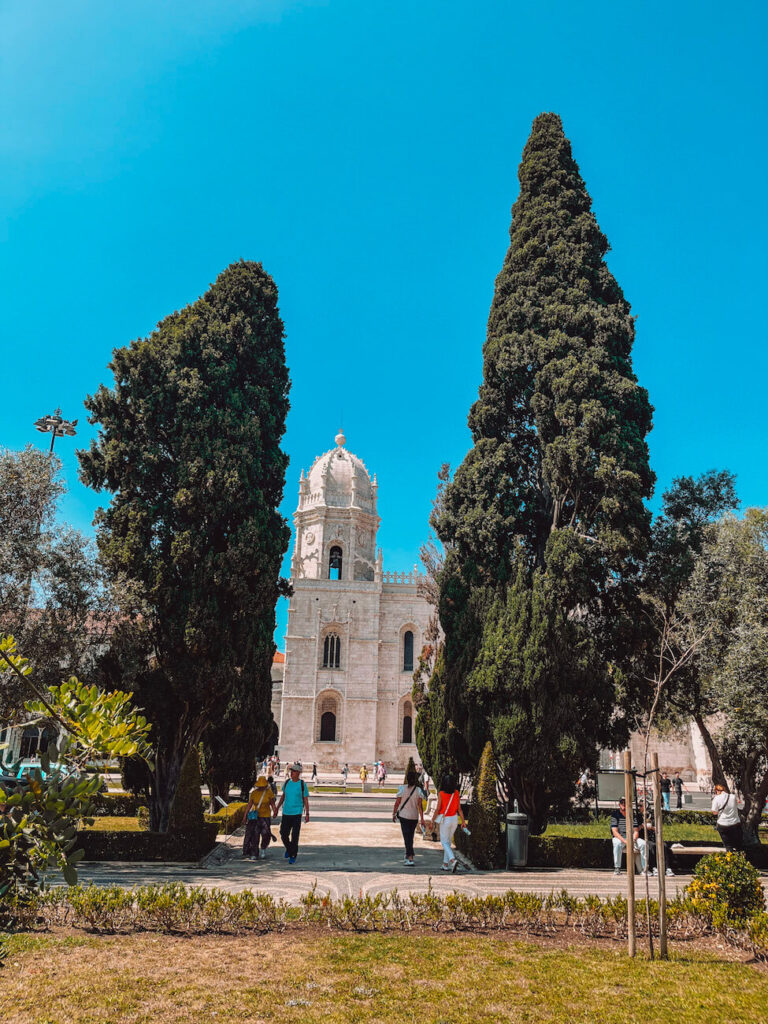
First, visit the Jerónimos Monastery, a UNESCO World Heritage site. Built in the early 1500s, it was funded by profits from the spice trade. The cloisters are particularly beautiful, with intricate carvings. Get here early to avoid the busloads of tourists that descend later in the morning. You can buy tickets at the on-site ticket office, but given how popular the site is, I’d recommend buying them online in advance.
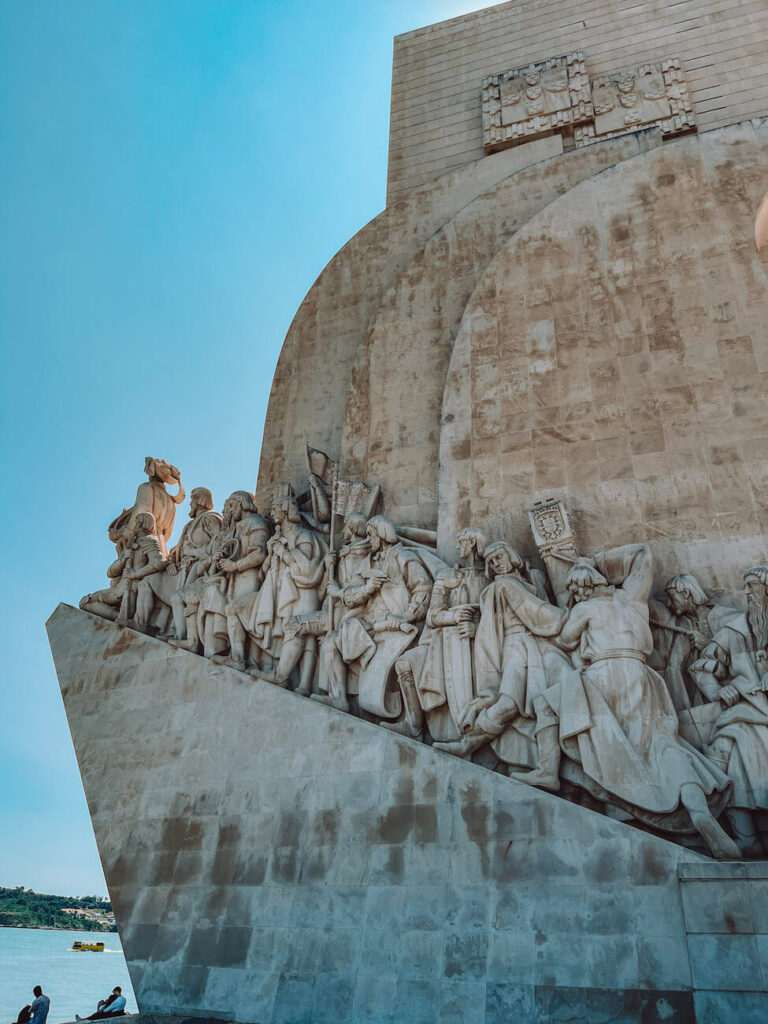
A short walk along the waterfront brings you to the Monument to the Discoveries, a stone sculpture shaped like a ship’s prow that tells the story of Portugal’s “Age of Discovery”.
In the 15th and 16th centuries, ships set sail from this stretch of the Tagus River bound for Africa, Asia and South America. Many of Portugal’s most famous (and controversial) explorers departed from here, including Vasco da Gama. You can climb to the top of the monument for views over the river and city. (The sculpture itself also provides sweet relief from the hot sun!)
Nearby, the Torre de Belém (Belém Tower), built in the 16th century, was both a fortress and a ceremonial gateway to Lisbon. Here’s a range of Belem walking tours that include visits to both the Torre and Jeronimos Monastery.
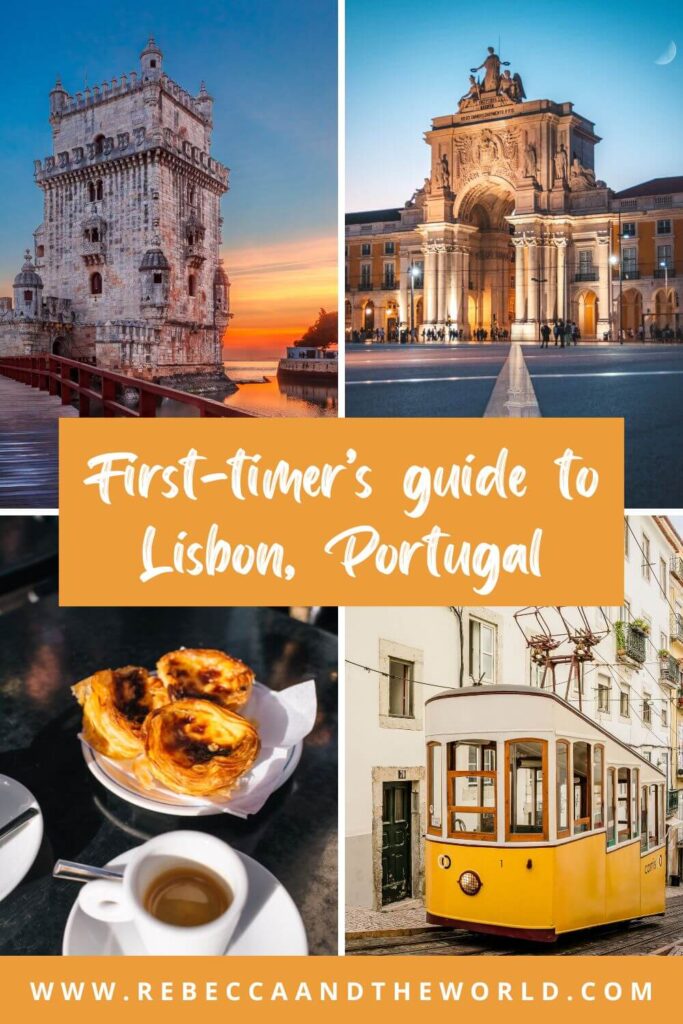
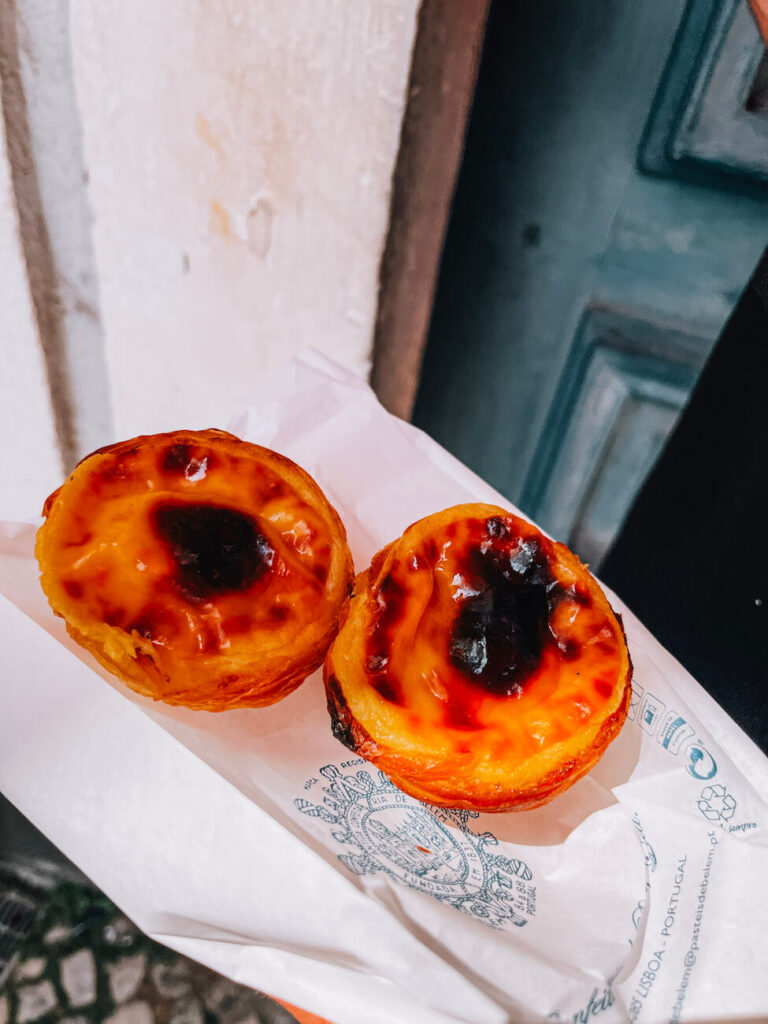
No trip to Belém is complete without a stop at the Pastéis de Belém bakery, where the original pastel de nata recipe is said to have been created by monks at the monastery. Expect a queue, but it moves quickly – and the custard tarts are worth it.
Top tip: There’s also a smaller store a few shops down that’s usually much quieter than the main outlet, which means you may even get a seat.
From Belém, head towards LX Factory, a half-hour walk or 10-minute bus ride from Belém. This former 19th-century textile complex is now home to boutiques, galleries and cafés. There are also several bars that have afternoon happy hours.
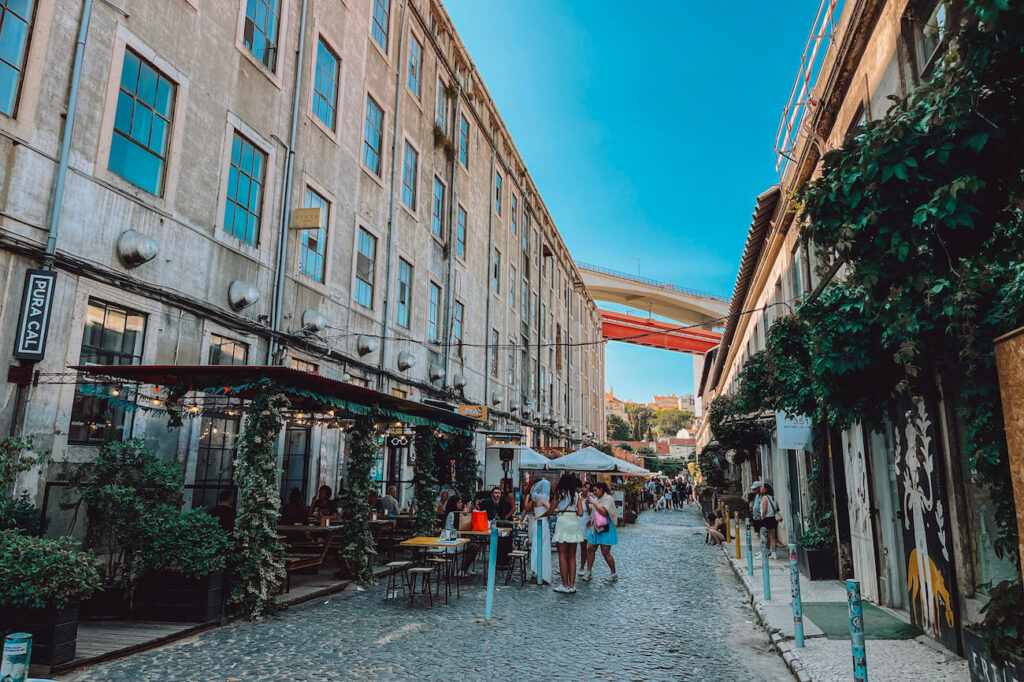
Later, make your way to Time Out Market in Cais do Sodré. This gourmet food hall gathers some of Lisbon’s best chefs and restaurants under one roof, with everything from seafood to artisanal desserts. It’s a great place to sample different Portuguese flavours in one go.
For sunset, head to one of Lisbon’s many miradouros (viewpoints). Miradouro da Senhora do Monte has one of the highest and most sweeping views of the city, Miradouro da Graça has equally stunning views, and the rooftop bar at Park (on top of a parking garage) serves cocktails with skyline views.
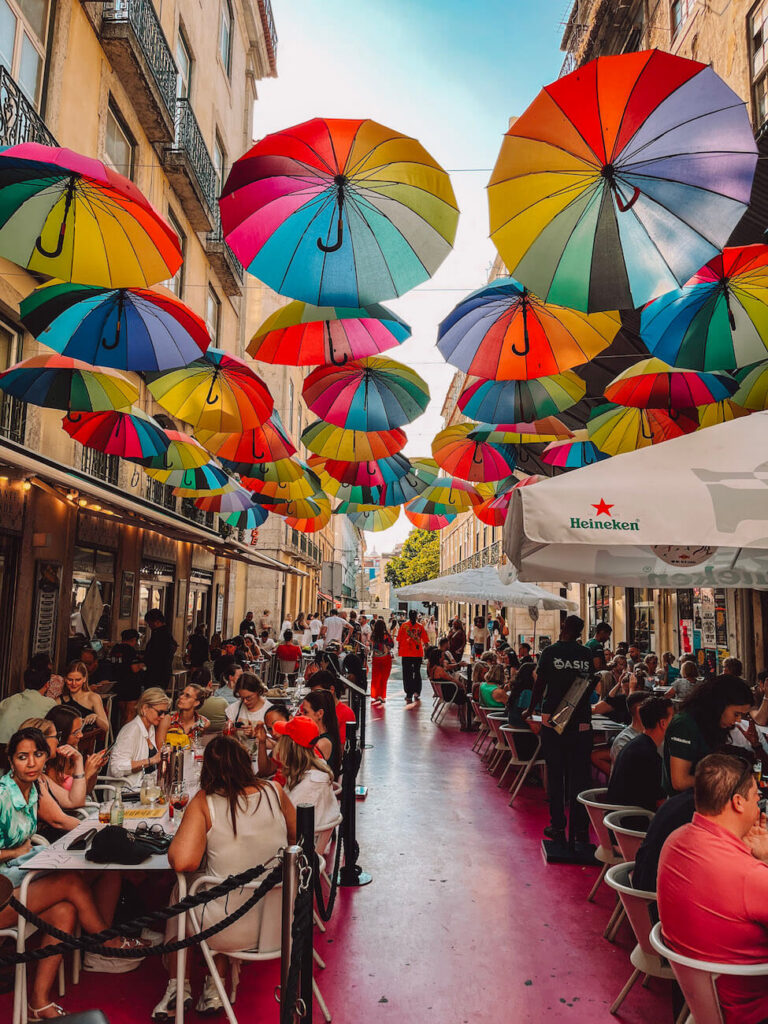
If you have energy left at the end of this whirlwind weekend in Lisbon, then it’s time to hit up Lisbon’s nightlife. Bairro Alto is packed with small bars and live music venues that spill onto the streets, while Cais do Sodré is known for its clubs and late-night scene. Pink Street, with its colourful pavement, is always packed (although I find it too touristy). Alfama has lots of little bars sprinkled throughout its narrow streets.
Map of 2-day Lisbon itinerary
Know before you go
Best time to visit Lisbon
Lisbon is great to visit year-round, but timing can make a big difference to your trip. Spring (April to June) is ideal – the days are long, jacaranda trees burst into bloom and the city hums without feeling overcrowded. Early autumn (September to October) has warm days and fewer tourists.
Summer is hot and busy, especially in August when both tourists and locals fill the streets – and the tourist numbers seem to be increasing. Winters are mild by European standards, but you can expect some rain and shorter days.
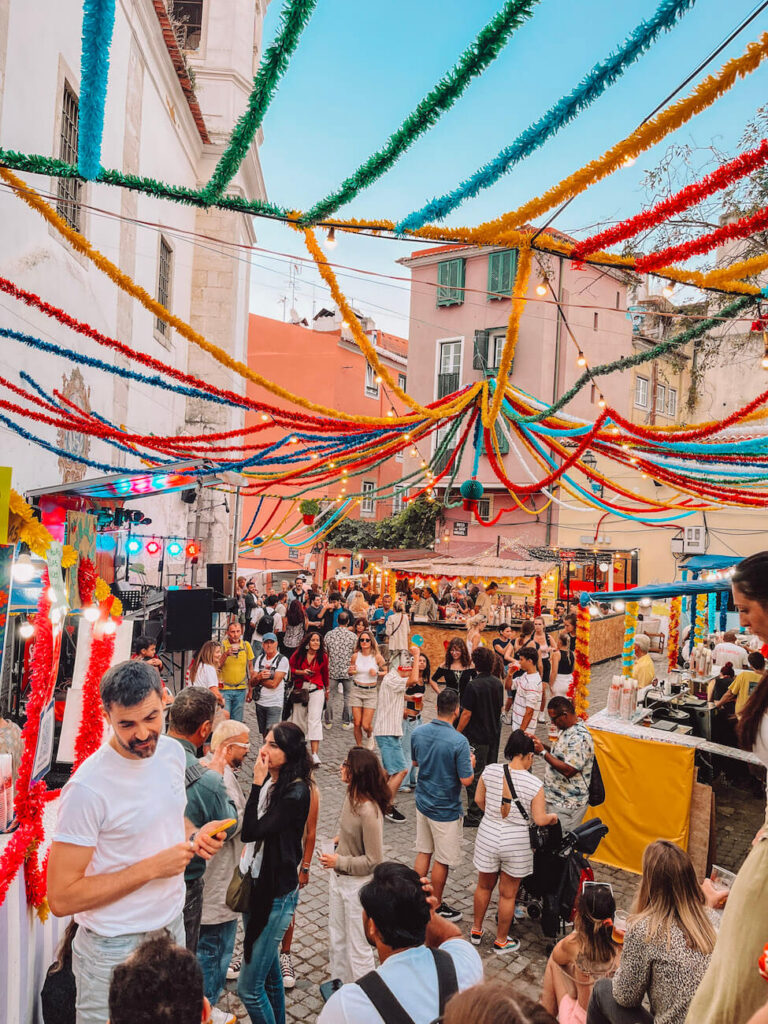
We visited in early June and it was busy but not as crowded as the peak summer months. The days were warm, so bring sunscreen and a hat. We were also in Lisbon during the Santos Populares festival – it was such serendipitous timing. This huge festival takes over parts of the city, including Alfama, with street parties with food, music and drinks. If you can plan to be in Lisbon during this time, I highly recommend it!
How to get to Lisbon
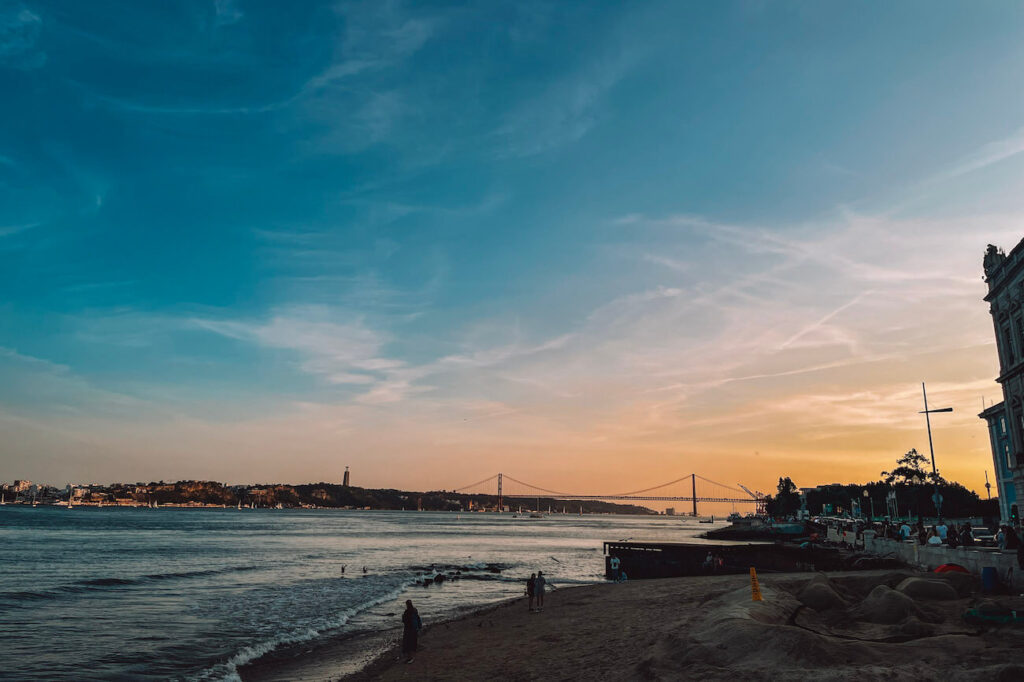
Lisbon’s Humberto Delgado Airport (LIS) sits just 7km from the city centre, so you can be sipping your first bica (espresso) within an hour of landing. Bolt and Uber operate throughout the city, so compare the price of both for the trip into the city, or arrange an airport transfer.
How to get around Lisbon
Once you’re in the city, be ready to walk – a lot. Lisbon’s compact size means that wandering on foot is the best way to stumble upon tiled façades, traditional cafés and gorgeous viewpoints.
Public transport is inexpensive and efficient, with trams, metro and buses connecting most areas. We used our credit card to tap onto the bus, but it’s better value to purchase a rechargeable Navegante card which can be used on buses, the metro, trams and funiculars.
There are also a tonne of tourist tuk-tuks that give tours as they drive you around the city. We didn’t take one but saw lots of people doing them – and the great thing is that the drivers aren’t super pushy.
Language tips
We found English was widely spoken, but learning a few Portuguese basics did earn us a few smiles. A simple obrigado/a (thank you) or bom dia (good morning) goes a long way.
Whatever you do, resist the urge to speak Spanish – the languages might look similar on paper but Portuguese people are very proud of their own language. As our tour guide told us, the worst thing you can do in Lisbon is start a sentence with “Hola!” and then finish it in English!
Safety in Lisbon
Lisbon is a safe city, but like anywhere popular with visitors, a little street smarts will make your trip smoother. In busy areas like tram stops, viewpoints and popular squares, keep an eye on your belongings – pickpockets work quickly and often target distracted tourists. Tram 28 in particular is known for both its scenic route and light-fingered passengers!
You might also be approached on the street by people trying to sell you drugs. It goes without saying, but just ignore them (although we saw a couple of tourists attempting to make a purchase!).
Where to stay in Lisbon
Where you base yourself can shape your experience of Lisbon, especially when you only have a couple of days. If you want to stay in an Airbnb, check whether it’s owned by locals or a management company – if the latter, reconsider. Companies and foreigners buying up accommodation has had a real impact on the affordability of housing across the city (read more about the problem here).
Baixa is the flat, central downtown area and a perfect choice for first-time visitors. It’s where we stayed, and we loved being able to step out the door and be minutes from the main sights, the riverfront and countless cafés. The grid-like streets make it easy to navigate, and you’re never far from a tram or metro stop.
- Hotel da Baixa (⭐ 9.5/10) – a 4-star gem in Lisbon’s historic heart, with a gorgeous façade and modern interiors, close to Rossio Square | Book on Booking.com | Book on Expedia
- Convent Square Lisbon (⭐ 9.2/10) – a 13th-century convent reborn as a sleek luxury hotel, with a rooftop plunge pool | Book on Booking.com | Book on Expedia
Alfama is atmospheric, with narrow lanes and laundry fluttering between buildings. Be prepared for hills and stairs (not great for anyone with mobility issues or for lugging big suitcases).
- AlmaLusa Alfama (⭐ 9.1/10) – stylish boutique hotel housed in a restored historic building | Book on Booking.com | Book on Expedia
- Hotel Convento do Salvador (⭐ 8.9/10) – another former convent, with art-adorned rooms and an excellent location | Book on Booking.com | Book on Expedia
If you’re a night owl who enjoys hopping between bars and live music venues, then Bairro Alto could be your spot. Just know it can be noisy until the wee hours.
- Pátio do Tijolo (⭐ 9.5/10) – a beautifully designed, modern guesthouse tucked between Bairro Alto and Príncipe Real, with chic rooms with balconies or patios | Book on Booking.com | Book on Expedia
- Inn Bairro Alto BA Sweet (⭐ 8.2/10) – a welcoming B&B-style guesthouse in the heart of Bairro Alto, with both private and shared rooms at affordable rates | Book on Booking.com | Book on Expedia
What to eat and drink in Lisbon
You can’t come to Lisbon without eating a pastel de nata, Portugal’s famous custard tart – and it’s totally fine to eat more than one a day. I ate my bodyweight in them and while I found it impossible to choose a favourite, I do recommend trying Manteigaria, Nat’elier, Fabrica de Nata, Castro and, of course, the OG from Pastéis de Belém.



Portugal is famous for its seafood. Our guide told us that Portugal consumes a third of the world’s cod fish! Bacalhau (salt cod) is served in countless forms – baked, fried, in croquettes. In summer, grilled sardines are the dish of choice, particularly during the Santo António festival in June when the streets smell of charcoal and fish.
For something hearty, try a bifana – a simple pork sandwich with a peppery marinade – best eaten standing at a crowded counter with a cold beer.
Or go for peri-peri chicken, marinated in a spicy chilli sauce and usually served with fries and salad. Like Nando’s but way better.
To drink, sample ginjinha, a sweet cherry liqueur that locals sip as a quick pick-me-up, sometimes in a little chocolate cup that you eat whole. Or order a glass of Vinho Verde, a crisp, lightly sparkling wine from northern Portugal. It’s fabulous sipping in summer.



We enjoyed:
- Kossie’s Café, Hygge and Copenhagen Coffee Lab for brunch and good coffee
- O Churrasco or Bonjardim for perfectly grilled peri-peri chicken
- Nova Pombalina for quick, budget-friendly bifanas as well as the most famous from As Bifanas do Afonso
- Nova Wine Bar and Black Sheep for relaxed tapas and excellent wine lists
We didn’t do a food tour on this trip, but here are the ones I had on my list:
- Devour Lisbon: The Ultimate Portuguese Food Tour – I think Devour Tours create some of the best food tour itineraries (the most recent tour I did with them was on our Madrid trip)
- Undiscovered Lisbon Food & Wine Tour by Eating Europe – a little more expensive than some other Lisbon food tours, but this small-group food tour has rave reviews
- Lisbon Small-Group Guided Walking Tour – if you’re on a budget, this is a great option. It’s a walking tour with tonnes of historical and cultural information, with a pastel de nata and tapa thrown in
Be aware that in many restaurants, bread, olives or cheese might appear at your table without being ordered. They aren’t usually free – you can politely decline if you don’t want them, or enjoy them knowing they’ll be added to the bill.
Tipping isn’t mandatory, but rounding up the bill or leaving 5-10% is appreciated for good service.
Final thoughts on two days in Lisbon
Two days in Lisbon gives you enough time to see its most famous sights – although I would love to come back and spend weeks here. While you won’t see everything, this itinerary offers a good mix of history, views, food and culture – but will leave you wanting more!
Lisbon itinerary FAQs
Is 2 days enough in Lisbon?
Yes, for a first visit. You’ll cover the main sights and get a good feel for the city. Although you’ll want to come back!
What’s the best area to stay in Lisbon in for a short trip?
Baixa or Alfama are great picks. Both are central and walkable to most attractions.
Can you visit Sintra from Lisbon in a half-day trip?
Technically yes, but it’s too rushed. We didn’t visit Sintra on this trip, but other people we spoke to said it’s better to save it for a longer trip and stay overnight there if you can.
Did you find this article helpful? Consider buying me a coffee as a way to say thanks!
Have questions or want to share your own Lisbon itinerary tips? Leave a comment below – I’d love to hear from you.
Related posts
Before you go, you might like these Portugal travel posts.
- How to spend 2 days in Porto, Portugal – A first-timer’s guide
- What to pack for the Portuguese Camino
- What to know before hiking the Portuguese Camino
PORTUGAL TRIP ESSENTIALS
- Book flights to and around Portugal online with Skyscanner. I like this site because it shows me which dates are cheaper.
- One thing I always purchase is travel insurance! Travel Insurance Master allows you to compare across multiple policy providers, while SafetyWing is great for long-term travellers and digital nomads.
- Wise is my choice for sending and receiving money and spending money overseas (you can get a digital and physical card).
- Find a great hotel in Portugal. Check prices on Booking.com and Expedia online.
- Check out the huge range of day tours throughout Portugal on GetYourGuide or Viator – I’m a fan of food tours especially!
- Saving money? Check out the huge range of free walking tours across Portugal with GuruWalk (don’t forget to tip!).
- How to get around? I use DiscoverCars for car hire, or Motorhome Republic and Jucy for campervan/RV rental. For buses, trains and ferries, I use 12GO, Busbud and Omio.
- Grab an e-sim to stay connected while on the road.
- A copy of the Lonely Planet guide to Portugal will be handy.
- Check out my Amazon shop for my fave travel items – everything from backpacks and suitcases to travel adapters and beauty products.
PIN IT FOR LATER: 2 DAYS IN LISBON ITINERARY
Save this guide to planning 2 days in Lisbon to Pinterest for later.