
Planning a trip to the Daintree Rainforest? This guide covers how to get there, the best walks and lookouts, Mossman Gorge, the Daintree Discovery Centre and everything else you need to know before you go.
The Daintree is unlike anywhere else you’ll visit in Australia. This is the world’s oldest continuously surviving tropical rainforest – some say it’s 180 million years old, which means it was already ancient when dinosaurs were still walking the earth.
I’d read that fact before we visited, but it’s a different thing entirely to stand under a tree that’s been growing since before there were flowering plants, or to walk a boardwalk where the signage casually mentions that the plant beside you was thought to be extinct until 1971. You feel very small in the Daintree – and I mean that in the best possible way. It’s easy to understand why Sir David Attenborough himself described this area as “extraordinary”.
We spent the better part of a week exploring this part of Tropical North Queensland in a campervan, from the walking trails at Mossman Gorge in the south to the beaches and national park boardwalks up around Cape Tribulation. In this Daintree Rainforest guide I’m sharing everything you need to know about visiting – from the best walks and lookouts to how to get here.
This blog post may contain affiliate links, meaning if you book or buy something through one of these links, I may earn a small commission (at no extra cost to you).
Where is the Daintree Rainforest?
Unlike most other national parks in Australia, Daintree National Park isn’t one contiguous park. It’s made up of two separate sections: Mossman Gorge and Cape Tribulation. These two areas are about an hour’s drive apart.
Mossman Gorge is the southern section, just 20 minutes north of Port Douglas. It’s the easiest section to access. I recommend spending at least half a day exploring the walking trails and swimming holes – here’s my full guide to the best things to do in Mossman Gorge.
The Cape Tribulation/northern section is the stretch between the Daintree River and Cape Tribulation, and this is the Daintree Rainforest of the postcards. This is where “the rainforest meets the reef”, with the rainforest tumbling onto the stunning white-sand beaches of Cape Tribulation (with barely another person in sight). I have a full guide to what to do in Cape Tribulation.
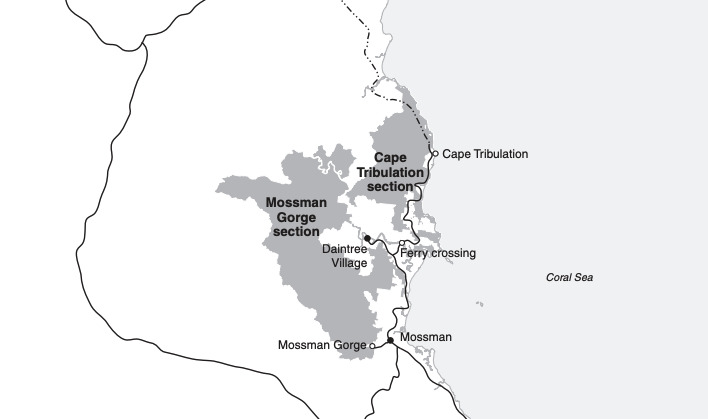
Both sections are part of the Wet Tropics of Queensland World Heritage Area, a roughly 9,000 square kilometre stretch of rainforest running between Townsville and Cooktown that’s home to an incredible array of frog, mammal, reptile, butterfly and bird species.
How to get to the Daintree Rainforest
You can get to both sections of the Daintree via the Captain Cook Highway north of Cairns, one of the most beautiful coastal drives in the country. There’s no public transport to either section, so you’re either self-driving or joining a tour.
Getting to Mossman Gorge
Mossman Gorge is 20km north of Port Douglas (about 20 minutes’ drive) and 77km north of Cairns (about 1 hour 15 minutes), super easy and accessible!
Getting to Cape Tribulation/northern Daintree Rainforest
To reach the rest of the Daintree, you need to cross the Daintree River, and the only way to do that is via the Daintree River ferry. This cable ferry runs from 5am to midnight every day (except Christmas Day). The crossing itself takes about five minutes, and it costs $31 one-way or $51 return for a car.
From the ferry, it’s about 35km along a sealed road to Cape Tribulation, so you don’t need a 4WD. A standard 2WD car (or a Jucy campervan, in our case) will get you everywhere in this guide. (Check out rental cars at DiscoverCars, the site I always use to compare rates and cars.)
Tours are the other way to visit. Day tours run from Cairns and Port Douglas and typically bundle the ferry crossing, a river cruise, the Discovery Centre or a boardwalk and a stop at Cape Tribulation into one long day. If you’re not hiring a car, this is the way to go, though you’ll cover a lot of ground quickly. But if you can, I’d give the Daintree at least two days and stay a night or two north of the river.
→ READ NEXT: Cairns to Port Douglas drive: The best stops along the way
Best time to visit the Daintree Rainforest
The best time to visit the Daintree is April to October, during the dry season, when the weather is more predictable and the rainforest is easier to explore without constant downpours. We visited at the start of August and had beautiful sunny days with cool evenings – ideal for walking, and a relief at night given our campervan didn’t have air conditioning.
The wet season (November to March, which locals call the “green season”) is still absolutely worth visiting, but expect heat, serious humidity and regular rain, sometimes monsoonal. The rainforest is at its most lush, the creeks run hard and it’s quieter and cheaper, but some tours and campsites scale back or close altogether, and swimming holes can be off-limits after heavy rain.
Whenever you go, pack a light rain jacket. The Daintree is one of the wettest places in Australia, with almost 4 metres of rain recorded each year on average!
→ READ NEXT: Cairns to Cape Tribulation road trip: The ultimate 7-day itinerary
Things to do in Mossman Gorge
The Mossman River tumbles through a gorge of enormous granite boulders, surrounded by rainforest that’s been growing for millions of years.
I’ve written a full guide to Mossman Gorge, but here’s what you need to know to plan a visit.
Walk the trails
The walks at Mossman Gorge are all short and all connected, so you can do as much or as little as you like. All four together add up to around 3.4km, which took us a leisurely couple of hours.
The Baral Marrjanga Walk (660m return) is the wheelchair-accessible boardwalk to the river lookout, with raised sections that put you up in the mid-canopy. The Lower River Track (640m return) runs along the riverbank past the main swimming hole. The Rex Creek suspension bridge track (1.4km return) takes you over a swaying suspension bridge (the fun part!) to the Rainforest Circuit Track, a 2.4km loop through the heart of the rainforest with excellent signage about the Kuku Yalanji people and the trees you’re walking past. Take the short offshoot to Wurrmbu Creek while you’re on the loop.
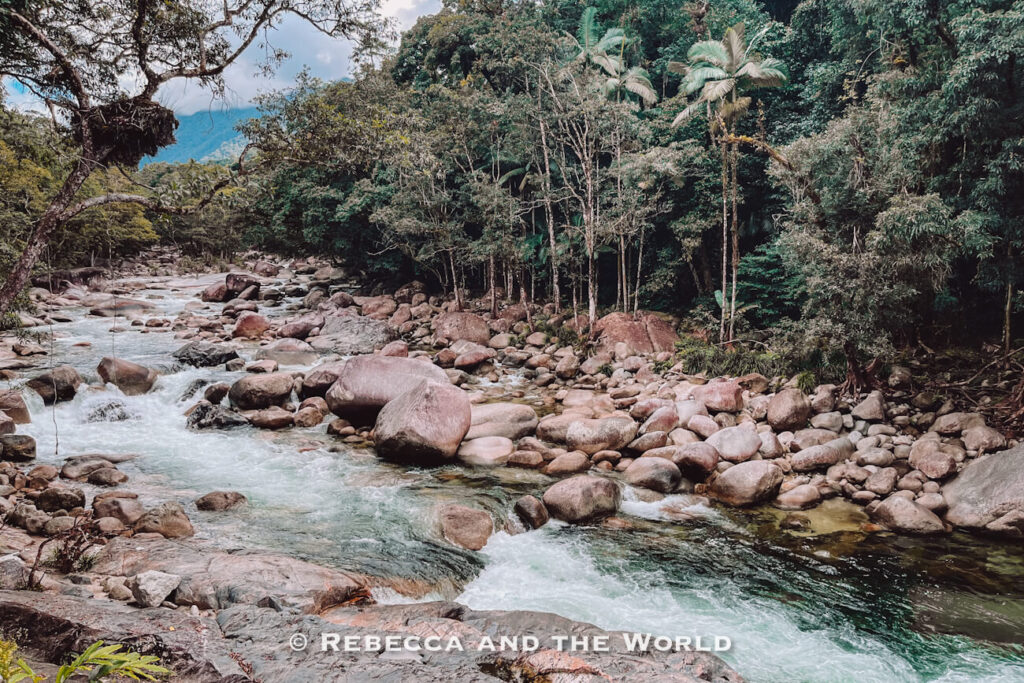
Honestly, the scale of the trees here is what struck me most. Some are enormous, and standing underneath them really puts into perspective how small we are and how long they’ve been growing.
Swim in the Mossman River
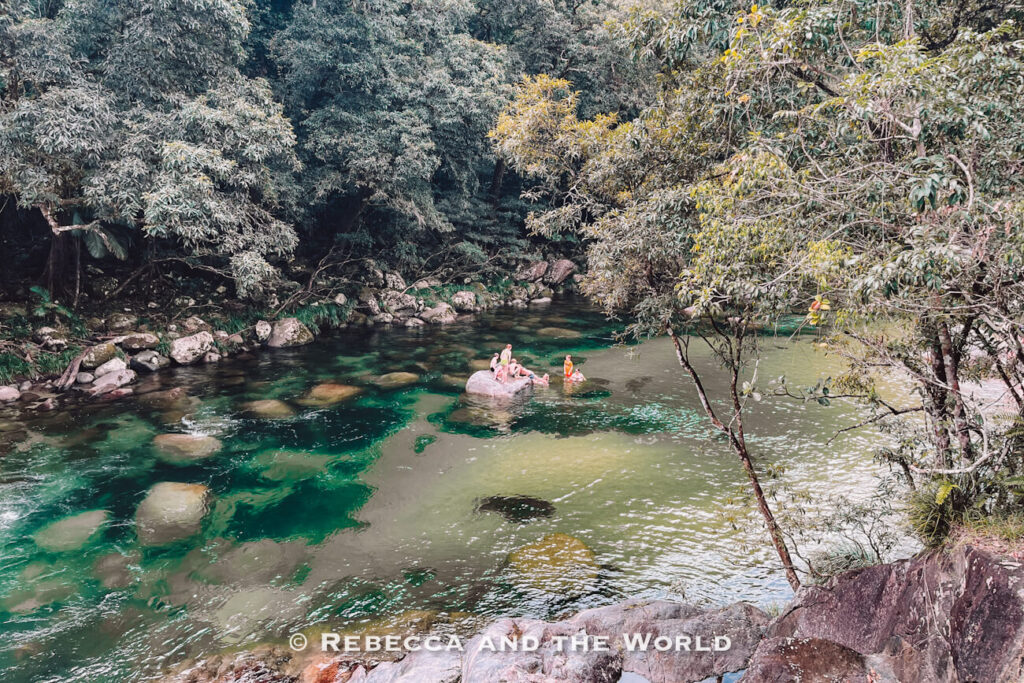
The main swimming hole is on the river below the Lower River Track, but you’ll also find less-crowded swimming spots along the Rainforest Circuit Track. Wurrmbu Creek is another option.
The water is cold – far too cold for me, though plenty of people were happily floating around!
Check the signs at the shuttle stop for the latest swimming conditions: there are strong currents and submerged rocks, and people do drown here. Never jump or dive in.
Do the Ngadiku Dreamtime Walk
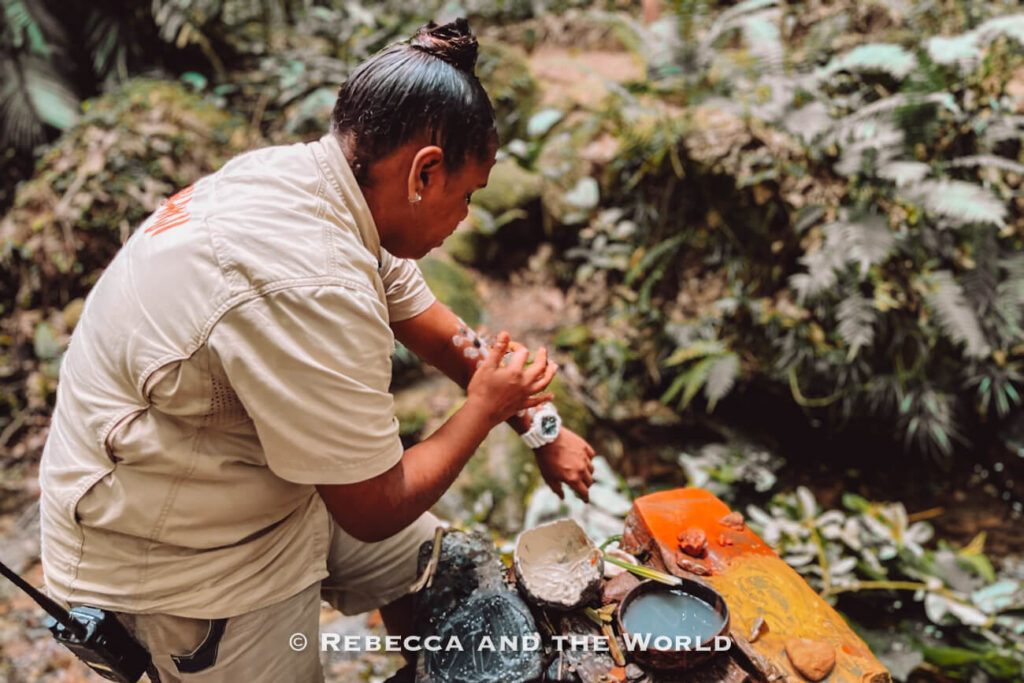
While all of the walks above are free to do (other than the cost of the shuttle bus to get there), I highly recommend doing the paid, 1.5-hour guided Ngadiku Dreamtime Walk. Led by Kuku Yalanji guides, this tour visits a private section of the gorge, starting with a Welcome to Country and smoking ceremony and finishing with damper and billy tea. Our guide, Kairisha, shared so much about how her people have used the plants here for food, medicine and shelter, showed us how natural paints are made and told us about her own totem. It completely changed how I saw the rainforest afterwards.
→ READ NEXT: Mossman Gorge: Everything you need to know before you go
Daintree Discovery Centre
About 10km north of the ferry, the Daintree Discovery Centre is a great way to learn more about the rainforest and how it’s evolved.
The big drawcard is the 23-metre canopy tower, which takes you up through the layers of the rainforest to look out over the treetops, with orchids and giant basket ferns growing at eye level on the way up. There’s also an aerial walkway through the mid-canopy, where most of the birdlife hangs out, and a network of ground-level boardwalks through the forest floor, including a display on the ancient plant families that make the Daintree so significant.
Entry includes a self-guided audio tour and a guide book, and your ticket is valid for seven days, so you can come back if you’re staying in the area.
Need to know: The Daintree Discovery Centre is open daily from 9am to 5pm. Entry is $41 for adults, $19 for children and $100 for a family. Allow around two hours.
Things to do in the Daintree Rainforest (north of the Daintree River)
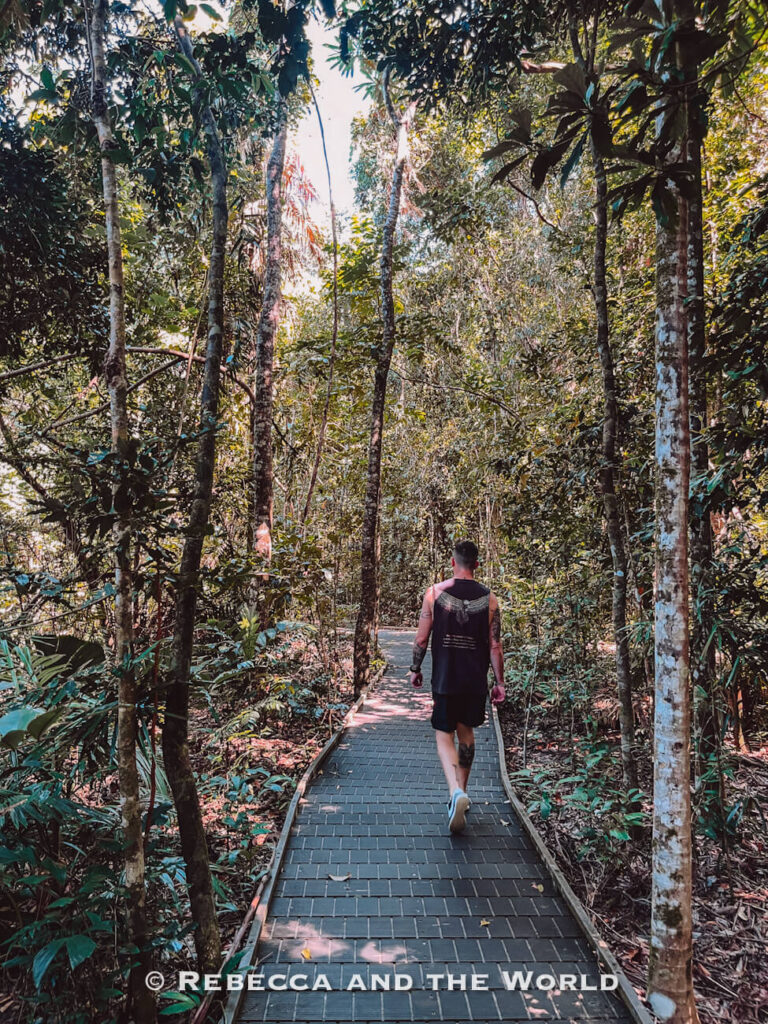
North of the Daintree River, the rainforest is laced with boardwalks and lookouts, and for such a remote area I was impressed with how well built they are, and how good the informational signage is.
They’re all free, and I’ve listed them from south to north, in the order you’ll reach them driving up from the ferry.
Walu Wugirriga (Mount Alexandra) Lookout
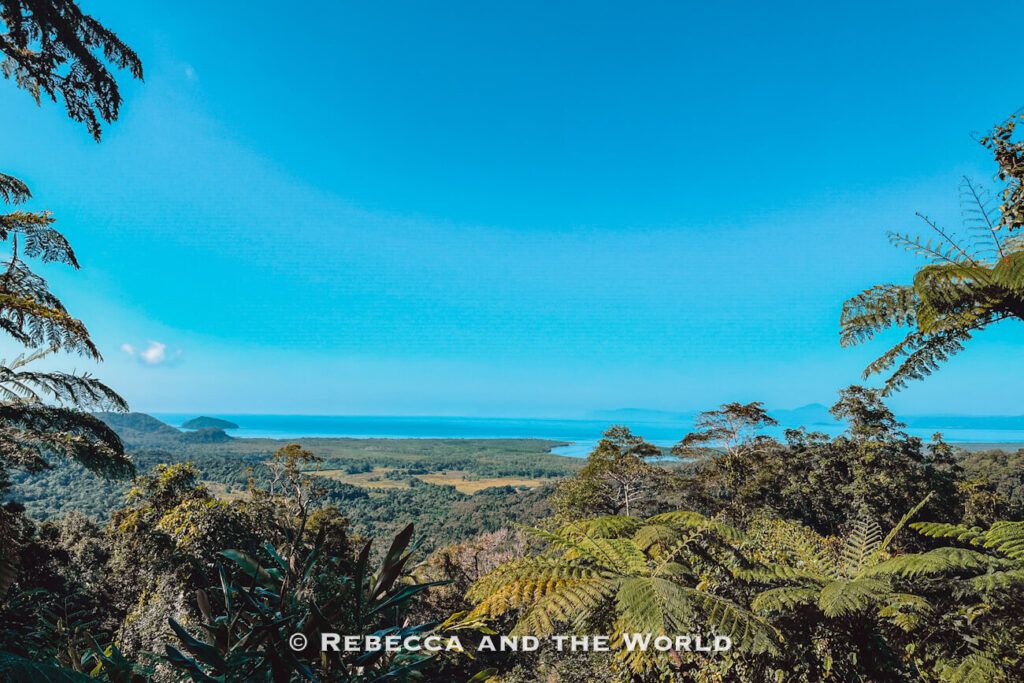
Make this your first stop after the ferry. The lookout sits at the top of the Alexandra Range, and from the platform you get sweeping views back over the mouth of the Daintree River, the coastline and out to Snapper Island and the Low Isles.
There’s a decent-sized car park with room for caravans and campervans, and it’s only a few minutes’ detour off the main road.
Jindalba Boardwalk
Jindalba means “foot of the mountain” in Kuku Yalanji, and this boardwalk takes you through lowland rainforest at the base of Walu Wugirriga. It’s the most accessible of the northern walks, with three linked tracks so you can pick your distance.
The Rainforest Walk (80m return) is fully accessible and a good option if mobility is a factor or you’re short on time – even in that short stretch you’ll see some seriously huge trees. The Boardwalk Loop (650m) extends it with a few stairs and a lookout about 100m off the main path over the rainforest canopy. The Circuit Track (3km loop) is a different beast: at times it barely feels like a path, with stony ground, roots waiting to catch your feet and creek crossings, so wear shoes you don’t mind getting wet. It’s worth the effort though, and you’re likely to have it to yourself.
Walking these tracks, I felt so small standing among trees that are thousands of years old! The signs tell you what to look and listen for, from flying foxes to various marsupials (what I would give to see a tree kangaroo in the wild). There’s a big, shady car park and toilets on site.
Madja Boardwalk
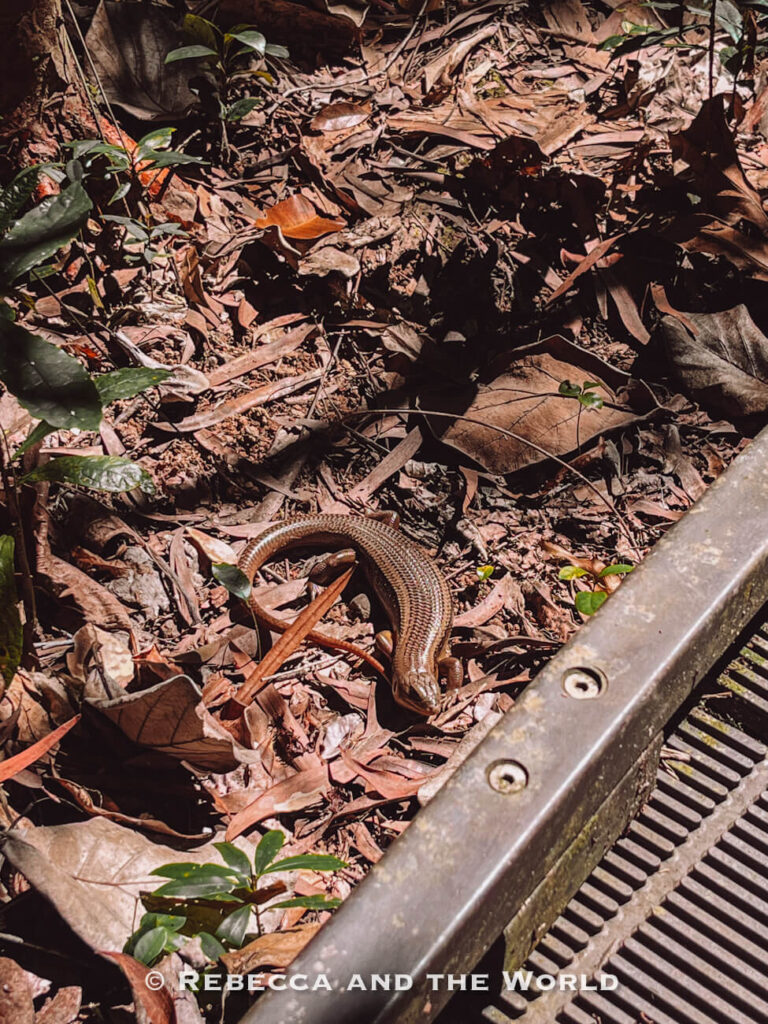
This was my favourite walk in the Daintree – mainly because we spotted a musky rat-kangaroo foraging on the ground right at the end of the trail!
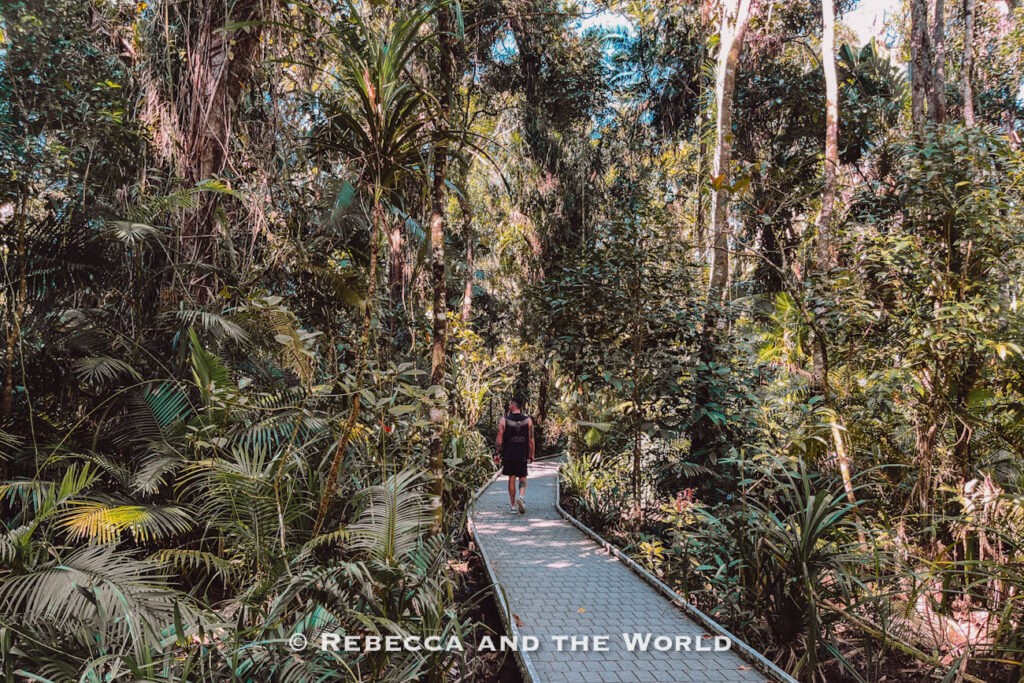
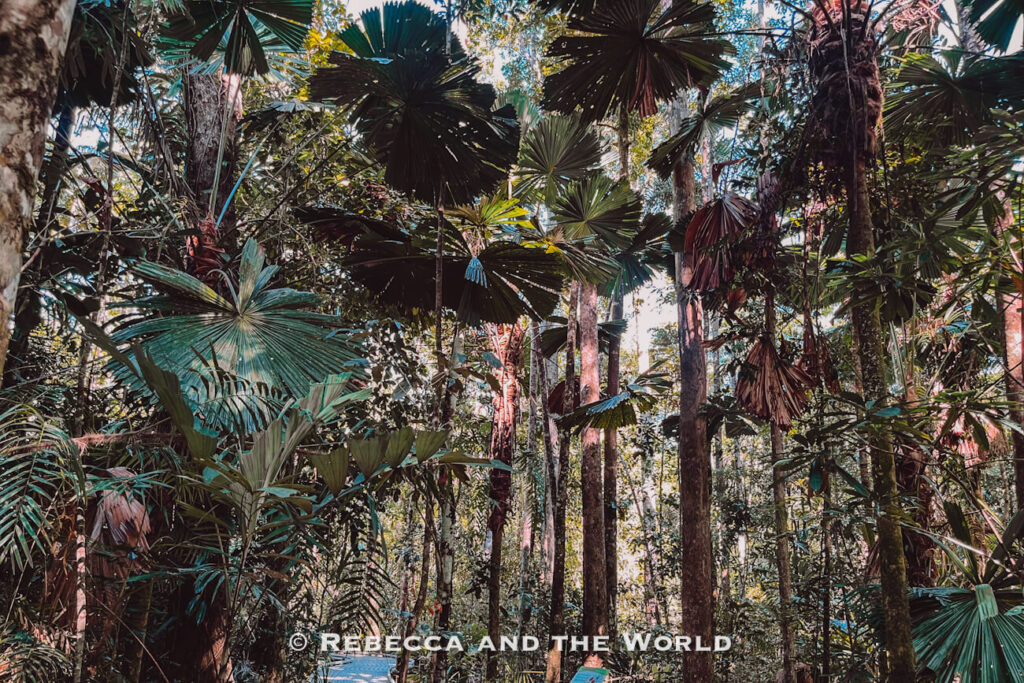
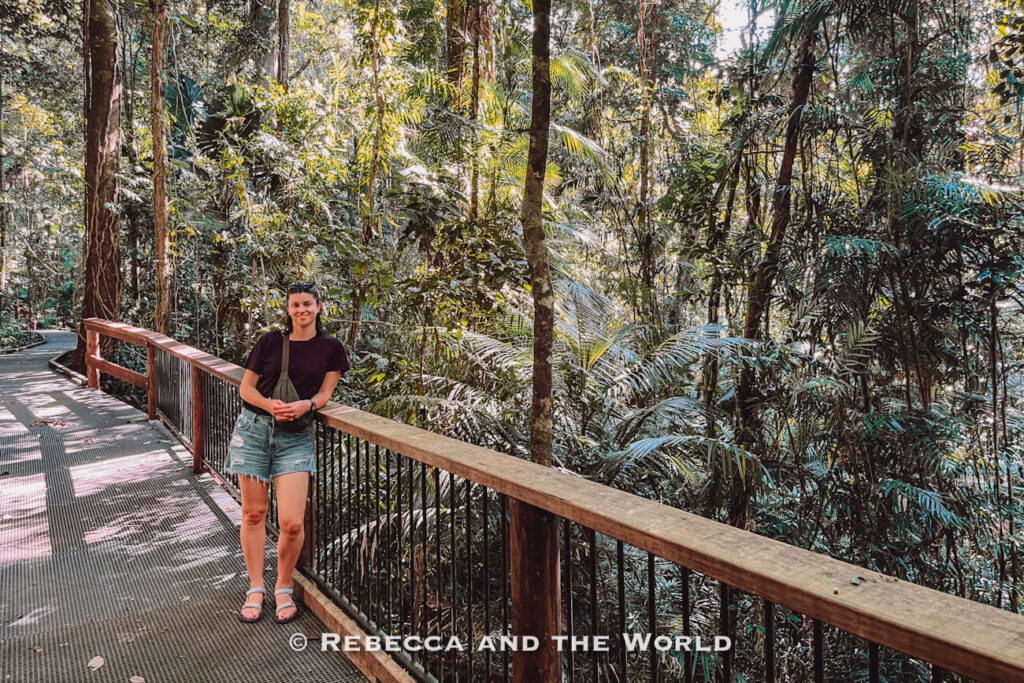
The Madja Boardwalk is a 1.2km stroll along a mix of concrete paths and boardwalk, crossing Oliver Creek and running alongside the freshwater stream for part of the way. The canopy here is thick and the signage is excellent, covering trees like Hope’s cycads (the world’s tallest cycad species, around since before flowering plants existed), ribbonwood trees (thought to be extinct until they were rediscovered in 1971) and silky oaks. I loved the fan palms, which can grow up to 2m across.
Towards the end of the walk you walk through the mangroves along the creek. We visited at low tide and could see the tangle of roots in the mud.
There’s a small car park, but you can pull up alongside the road opposite if it’s full. No toilets here, so plan accordingly.
Dubuji Boardwalk
Dubuji means “the place of spirits” in the language of the Eastern Kuku Yalanji people, and this is the boardwalk that combines rainforest with beach, which makes it a great spot to linger.
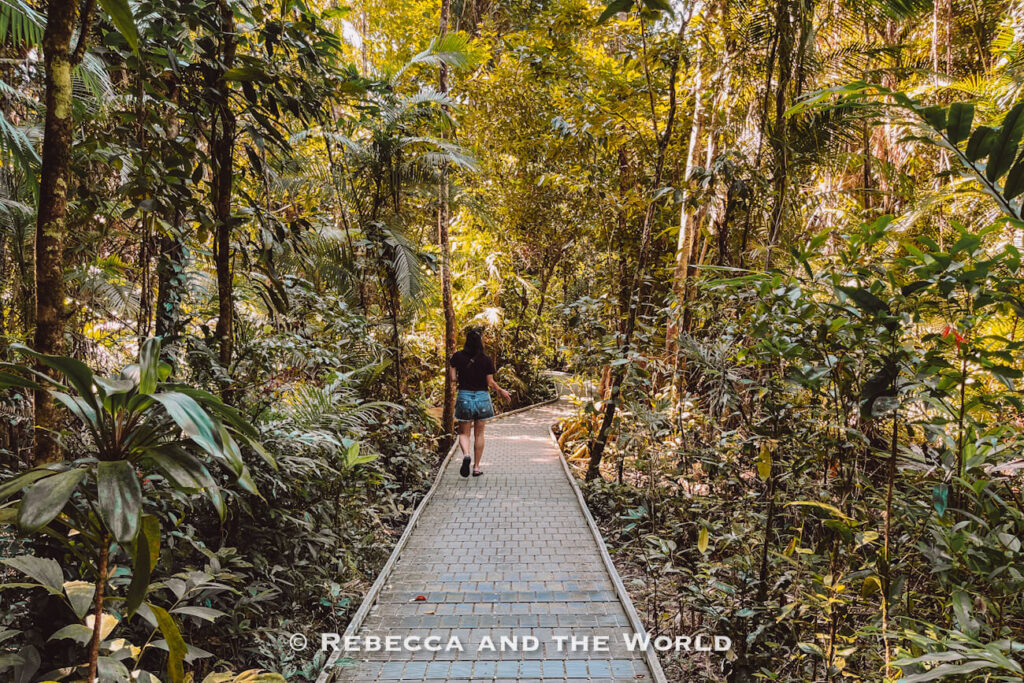
There are three linked tracks: the full Dubuji Boardwalk (1.5km circuit), a Short Loop (740m) leading to Myall Beach and the Myall Beach Track (740m return), which you can tack onto the end of the full circuit. All three are wheelchair accessible with assistance, and the boardwalk winds through rainforest, swamp and mangroves before delivering you onto a wide, empty beach.
Dubuji is also home to the Bamanga Muruku Tourism Hub, a relatively new visitor centre with excellent displays about Kuku Yalanji culture and their relationship with the land and the weather – well worth reading through. Free guided boardwalk tours run Monday to Friday at 10.30am and 12.15pm (we arrived just after one started, unfortunately).
There’s a shady picnic area behind the centre, toilets and plenty of parking for campervans and caravans.
Kulki Boardwalk and Lookout
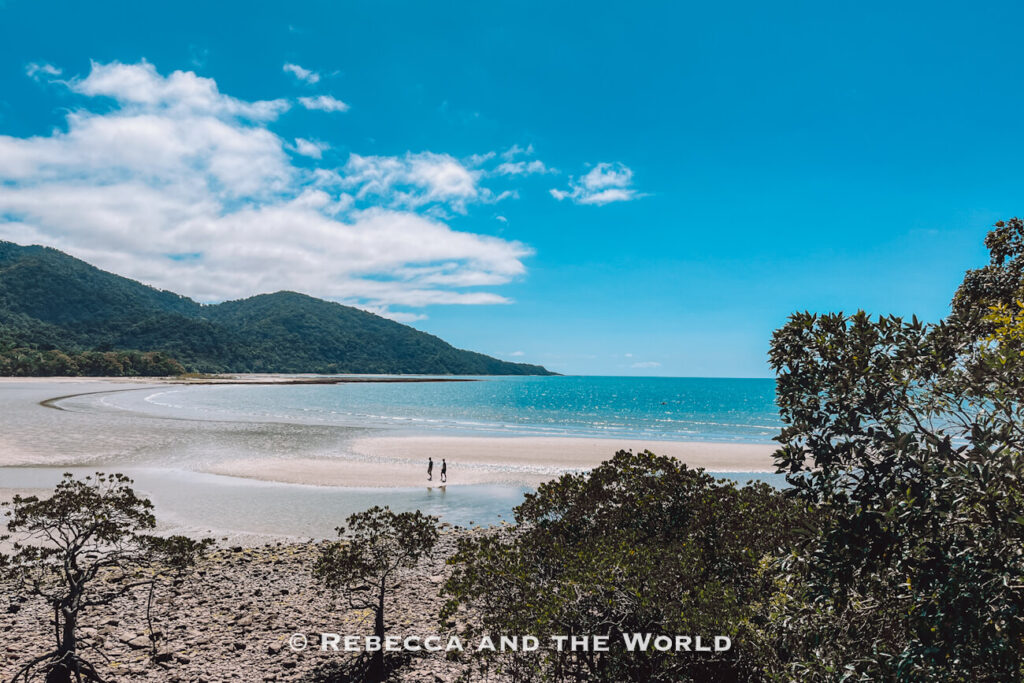
Kulki is the most northerly of the boardwalks, right at Cape Tribulation itself. It’s a short walk (600m return) along a mix of concrete path and boardwalk to a lookout over the beach and ocean, with the rainforest tumbling down to the sand on either side.
The lookout is exposed, so go in the morning or late afternoon for softer light – we were there at midday and the glare was harsh. From the lookout you can walk straight down onto Cape Tribulation Beach.
There are picnic tables and a toilet on site, and the path is manageable for wheelchairs, though the concrete gets rough in parts.
Warning: Cassowaries do cross the road in this region, so drive slowly, especially in and around Cape Tribulation. Don’t ever approach cassowaries. If you do see one, stand behind a tree or back away slowly (don’t turn your back to the bird!).
Mount Sorrow Ridge Trail
If you’re after a serious hike, the Mount Sorrow Ridge Trail is a 7km return Grade 4 walk with a tough reputation – steep, rough and for experienced, fit hikers only. Allow six to seven hours and start early. The reward is meant to be big views over the coast.
We didn’t have time on this trip, so it’s on the list for next time!
Other things to see and do in the Daintree
The beaches
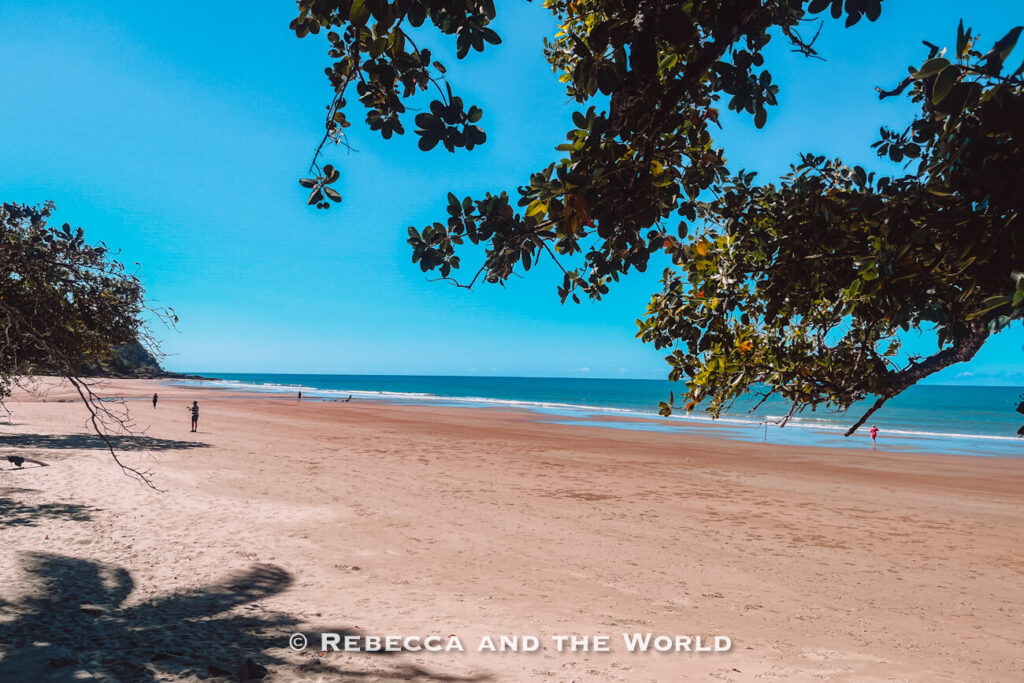
The beaches north of the river are wide, soft and almost always empty, and they’re one of my favourite things about this part of the world. Just remember this is croc country (and marine stinger territory in summer), so you’ll be skipping the ocean swim!
- Cow Bay Beach (Kaba-Kada, meaning “rains a lot”) is a great lunch stop on the way north, with covered picnic tables (and a tree swing that my husband had a lot of fun on).
- Thornton Beach is another wide stretch of sand with hermit crabs scuttling about, plus a lovely little café on the beach for coffee, cake or ice cream.
- Cape Tribulation Beach and neighbouring Myall Beach are the showpieces – palm-fringed, incredibly fine sand and the best spots on this coast for sunrise and sunset.
I’ve covered all of these, plus Noah and Coconut beaches, in more detail in my Cape Tribulation guide.
→ READ NEXT: The best things to do in (and around) Cape Tribulation
Daintree River cruise
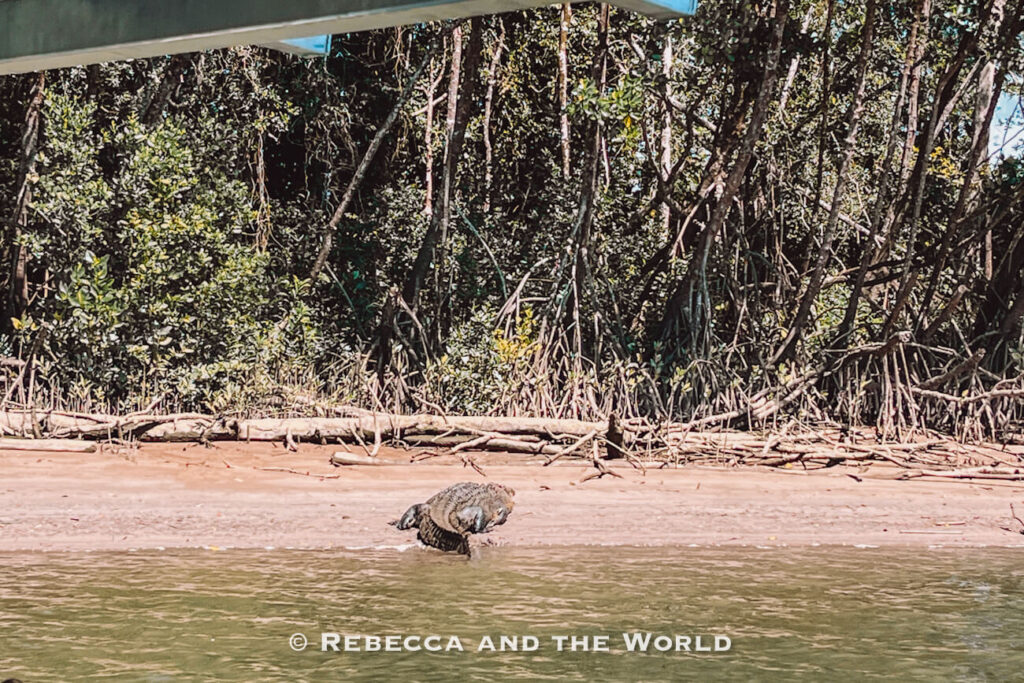
Down by the ferry crossing, a couple of operators run wildlife-spotting cruises on the Daintree River. We went with Solar Whisper, which has a small, quiet solar-electric boat. On our cruise we spotted five crocodiles (including two teeny weeny babies), a pair of water pythons mating, a Little Kingfisher and a Brahminy Kite. Our guide Dave was full of interesting information the whole way.
Most cruises run around an hour. What you see depends on the tide and the time of day, so ask the operator when the best departure time is.
Practical tips for visiting the Daintree Rainforest
Fuel up before the ferry. The last reliable fuel stop is around the tiny town of Diwan, so fill up before you get much further north.
Download offline maps. Phone signal is patchy at best north of the Daintree River and cuts out completely for long stretches, so save maps, bookings and anything important before you cross.
Carry some cash. Smaller stops up here (honesty-box fruit stalls, some cafés) don’t always have reliable EFTPOS or only take cash.
Wear closed-toe shoes. While most of the walking trails here are on well-maintained boardwalks, there are a few tracks that are stony or root-covered, and you’ll want real shoes rather than thongs. Water shoes are handy if you’re planning to swim at Mossman Gorge.
Pack for the climate. Light cotton or linen clothes, insect repellent (we were surprisingly untroubled in August), reef-safe sunscreen and a light rain jacket.
Allow enough time. Mossman Gorge is a half day on its own. For the northern Daintree, allow at least a full day if you want to do the Discovery Centre and a couple of boardwalks, and ideally stay a night or two so you can spread the walks out and see the beaches at sunrise and sunset.
Respect the place. This is Kuku Yalanji country and one of the most ecologically significant places on Earth. Stay on the boardwalks, take your rubbish with you, don’t take anything from the rainforest and follow the signage.
Final thoughts
The Daintree Rainforest is one of the most magical places in Australia. It’s not just old, it’s one of the most ecologically significant places you’ll ever walk through. The fact that you can experience it via sealed roads, well-built boardwalks and a decent visitor centre makes it even more special – so make sure you treat it well.
Whether you’ve got half a day at Mossman Gorge or a few days exploring north of the river, I hope this Daintree Rainforest guide has given you everything you need to build it into your Tropical North Queensland itinerary. Yes, it’s remote, and yes, your phone will stop working – but that’s exactly what makes it worth the trip!
Daintree Rainforest guide: FAQs
Do you need a 4WD to visit the Daintree Rainforest?
No. The road is sealed all the way from the Daintree River ferry to Cape Tribulation, so a standard 2WD car is fine for everything covered in this guide. You only need a 4WD if you plan to continue north from Cape Tribulation on the Bloomfield Track up to Cooktown.
Is the Daintree Rainforest the same as Mossman Gorge?
Not quite. Daintree National Park is made up of two separate sections: Mossman Gorge in the south, and the area north of the Daintree River (Cape Tribulation). These two parts are about an hour’s drive apart.
How long does it take to cross the Daintree River?
The ferry crossing itself takes about five minutes, but factor in extra time during peak periods (roughly 9am to midday and 2pm to 5pm), when queues can build up. It costs $31 one-way or $51 return for a car.
What’s the best time of year to visit the Daintree?
April to October, during the dry season, for the most reliable weather. November to March is the green season, with more rain and humidity but a lusher, greener rainforest.
How many days do you need in the Daintree?
A half day is enough for Mossman Gorge. For the northern Daintree, a full day lets you do the Discovery Centre and a couple of boardwalks, but two or three days is ideal if you want to explore the beaches and walks around Cape Tribulation as well.
Can you visit the Daintree without a tour?
Yes. The road is sealed and easy to self-drive, and the Discovery Centre, boardwalks and lookouts are all set up for independent visitors. A guided tour adds value if you want more wildlife spotting or cultural context.
Is it safe to swim in the Daintree Rainforest?
Not in the ocean or the Daintree River, because of crocodiles (and marine stingers in summer). The Mossman River at Mossman Gorge is the main safe swimming spot, when conditions allow, and there are a couple of freshwater holes around Cape Tribulation – always check locally first.
Did you find this article helpful? Consider buying me a coffee as a way to say thanks!
I hope this things to do in the Daintree Rainforest guide has inspired you to plan a trip to this incredible national park. Got any questions? Let me know in the comments below.
Read next
Before you go, you might like these Australia travel articles:
- Things to Do in (and Around) Cape Tribulation
- What to See and Do in Mossman Gorge
- Things to Do in Port Douglas: What to See, Do and Eat in Australia’s Favourite Town
- The Best Stops on a Cairns to Port Douglas Drive
- The Ultimate Cairns to Cape Tribulation Road Trip Itinerary
AUSTRALIA TRIP ESSENTIALS
- Book your flight to Australia online with Skyscanner. I like this site because it shows me which dates are cheaper.
- One thing I always purchase is travel insurance! Travel Insurance Master allows you to compare across multiple policy providers, while SafetyWing is great for long-term travellers and digital nomads.
- Wise is my choice for sending and receiving money and spending money overseas (you can get a digital and physical card).
- Find a great hotel in Australia. Check prices on Booking.com and Expedia online.
- Check out the huge range of day tours throughout Australia on GetYourGuide or Viator.
- Saving money? Check out the range of free walking tours across Australia with GuruWalk (don’t forget to tip!).
- How to get around? I use DiscoverCars for car hire, or Motorhome Republic and Jucy for campervan/RV rental. For buses, trains and ferries, I use 12GO, Busbud and Omio.
- Grab an e-sim to stay connected while on the road.
- A copy of the Lonely Planet guide to Australia will be handy.
- Pack sunscreen (look for SPF50 or higher), a hat and sunglasses to protect your eyes and skin.
- Check out my Amazon shop for my fave travel items – everything from backpacks and suitcases to travel adapters and beauty products.
PIN IT FOR LATER: THINGS TO DO IN THE DAINTREE RAINFOREST
Save this Daintree Rainforest guide to Pinterest so you can plan your trip later.