
Want to discover Tashkent’s food scene and its beautiful metro stations? This Food & Metro Tour combines them in one experience – so do I recommend it? Read on to find out!
Alright, you don’t have to read very far into this article to find out what I think of Craft n Culture’s 4-hour food tour and metro journey! If you’re curious about Uzbek culture, history, architecture and food, then this tour is something you shouldn’t skip. Honestly, I think it’s one of the best things to do in Tashkent – especially if you’re short on time.
Run by a young Uzbek / Polish couple, this tour manages to combine two of the best things to do in the city into a single outing: eating your way through Chorsu Bazaar and riding the metro with a knowledgeable guide who can explain what you’re looking at.
Here’s my review of this tour and why I think it’s a fantastic way to see Tashkent in a short amount of time.
(PS. I paid for this tour myself, but I am now an affiliate partner.)
This blog post may contain affiliate links, meaning if you book or buy something through one of these links, I may earn a small commission (at no extra cost to you).
What is the Craft n Culture Food Tour & Metro Journey?
Craft n Culture’s Food Tour and Metro Journey is a four-hour tour with a local guide, covering Uzbek food, Tashkent’s metro stations and its most famous market.
This isn’t a fixed Tashkent walking tour with other travellers – you book it for yourself or your own group at the time of your choosing. The tour is offered in English, Russian and Uzbek and costs $70 per person.
The Craft n Culture tour includes pick up from your hotel (although I opted to meet my guide at the starting point), metro tickets, tastings at the Chorsu Bazaar and a huge plov lunch at the end.
A few things to wear/bring: comfortable shoes, since you’ll be on your feet through the bazaar and up and down metro stairs; hand sanitiser, given how much hands-on tasting is involved; and some cash, both for buying any extra snacks at the bazaar and for tipping at the end. They provide water at the start of the tour, so you don’t need to bring your own.
It doesn’t include drop off back at your hotel (or anywhere else) or any personal purchase you make along the way.
Note that the tour isn’t wheelchair accessible, and you’ll need to let the guide know in advance if you have any allergies or dietary restrictions.
🍉 BOOK CRAFT N CULTURE’S FOOD AND METRO TOUR HERE 🍉
What happens on the Tashkent food tour?
Over four hours there are several stops: Chorsu Bazaar, a handful of Tashkent’s most popular metro stations and the city’s famous plov restaurant. Here’s what I experienced on my Tashkent walking tour.
Chorsu Bazaar
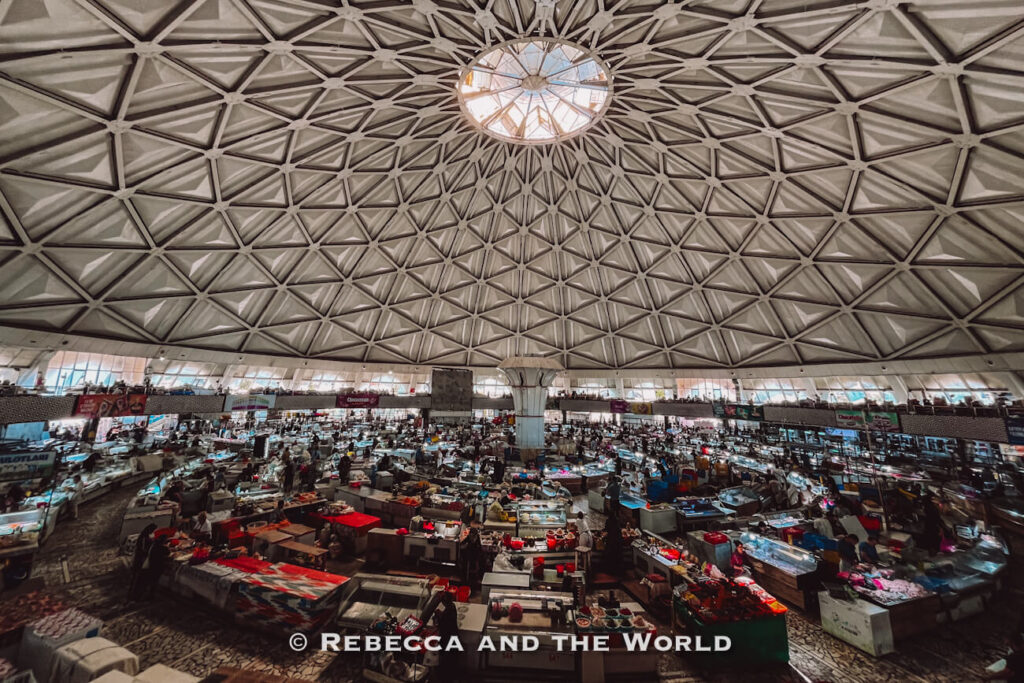
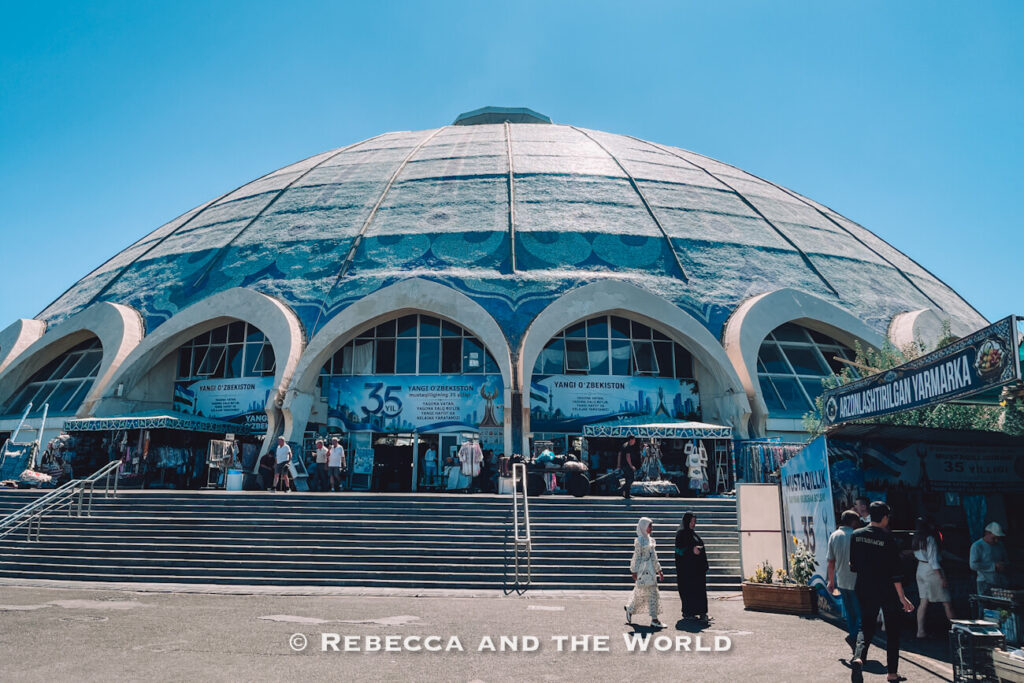
The tour begins at Chorsu Bazaar, one of Tashkent’s most recognisable landmarks. This isn’t a tourist attraction – it’s a real, live market that’s used by locals every single day.
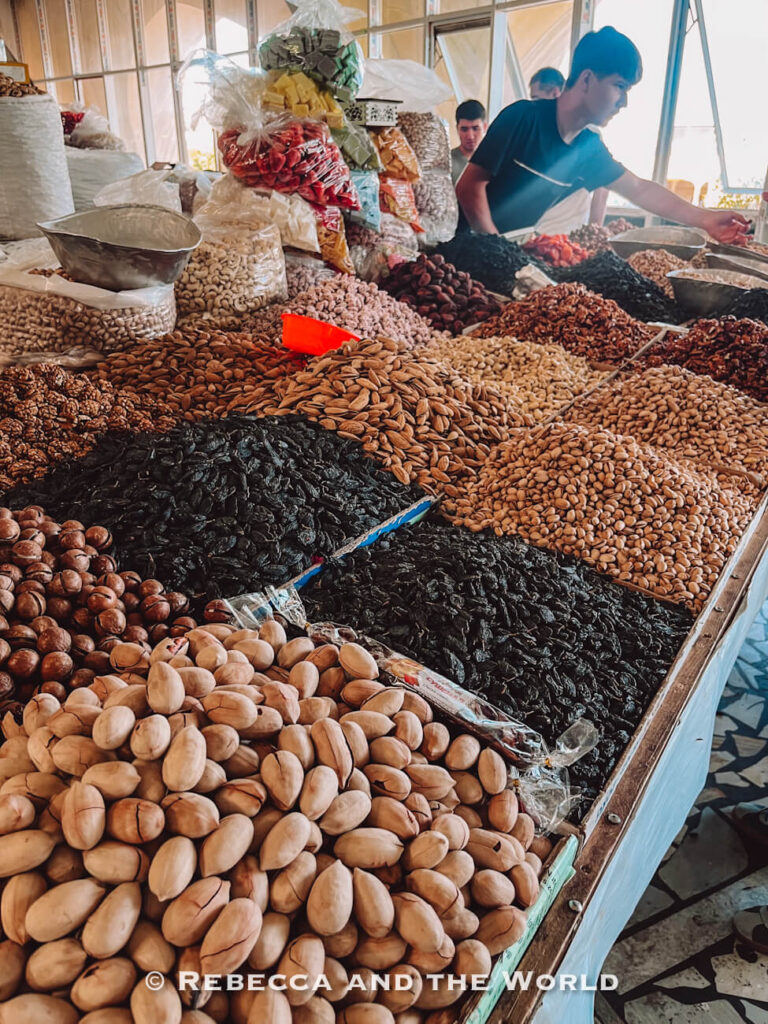
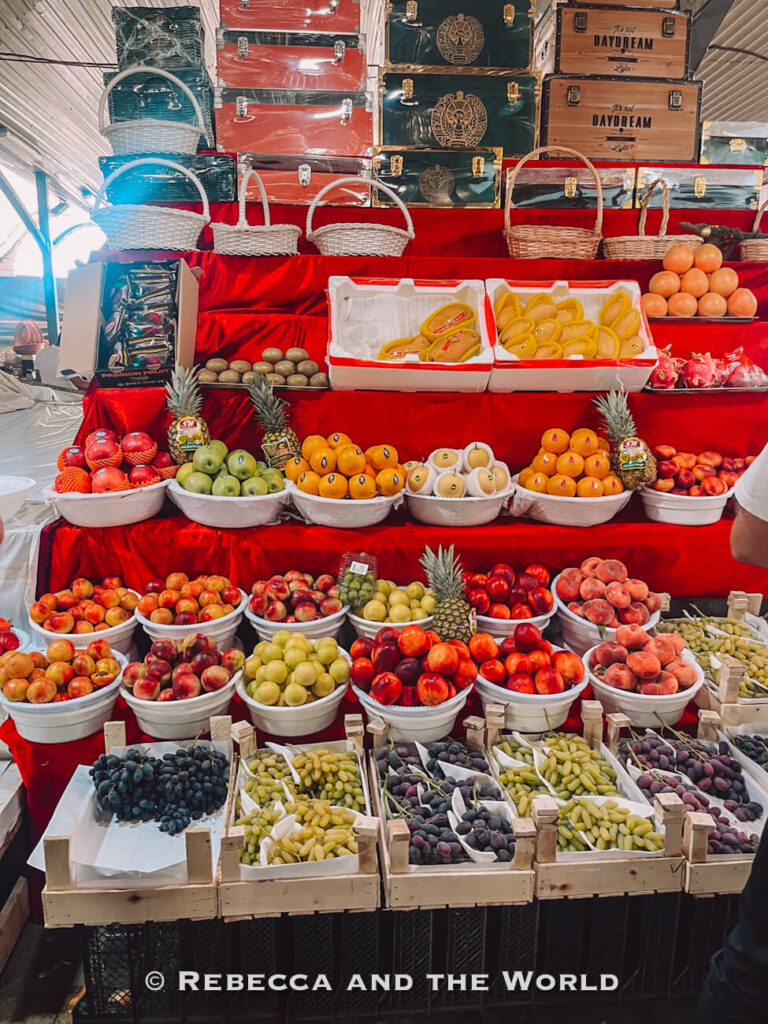
I loved wandering through the market – and with Yusuf and Julia (Craft n Culture’s owners) pointing out all the fruit, dried nuts, sweets, meats, dairy products and more, I felt like I got a great insight not only into Uzbek food culture but also Uzbekistan’s history as well.
Did you know there are some 200,000 Koreans living in Uzbekistan, mostly in Tashkent? Forced here in the masses by Stalin, they have maintained their traditions and created a popular fusion cuisine.
This is something I’d never have learned wandering through the market by myself – and it certainly wasn’t something I read in my guidebook.
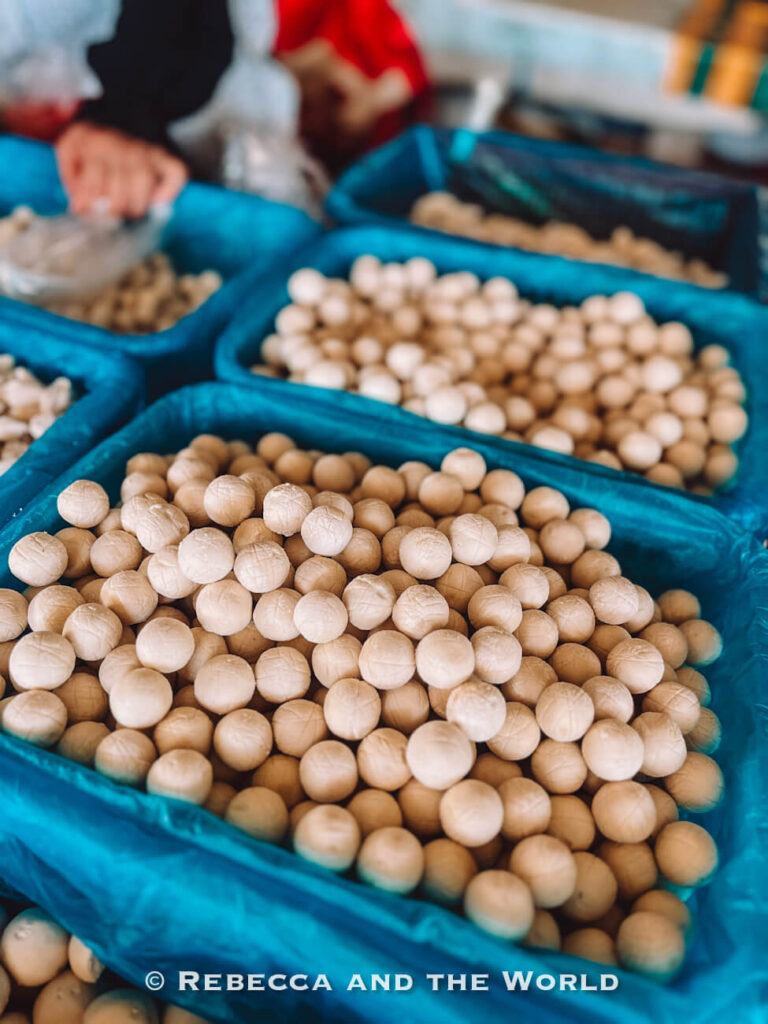
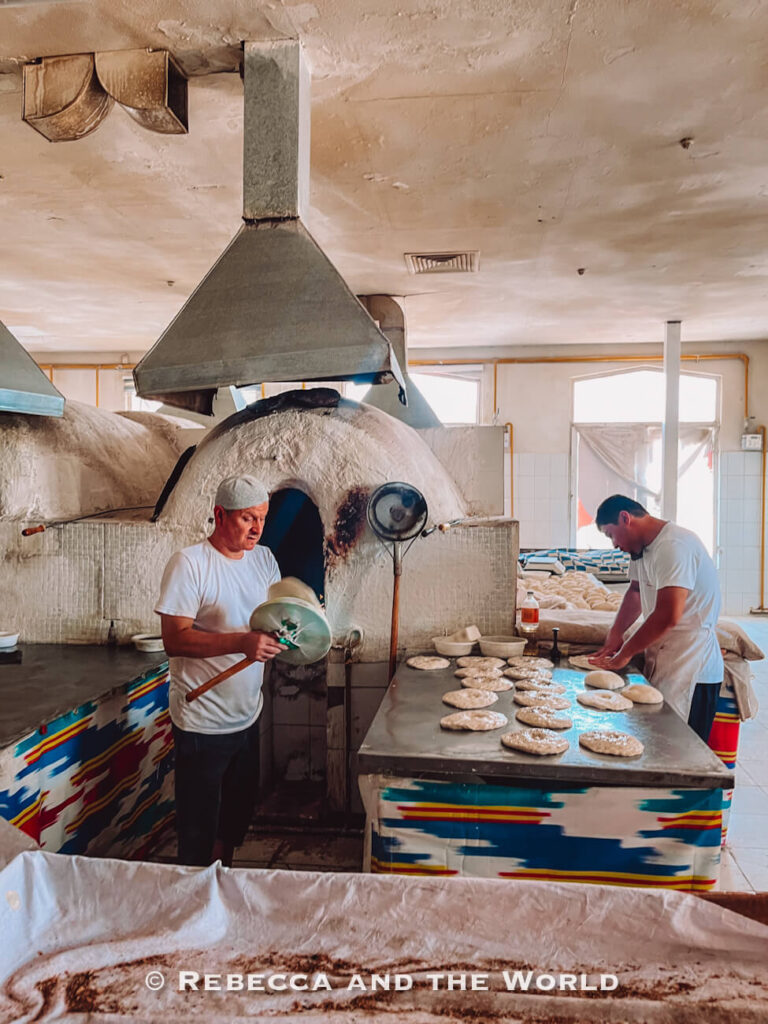
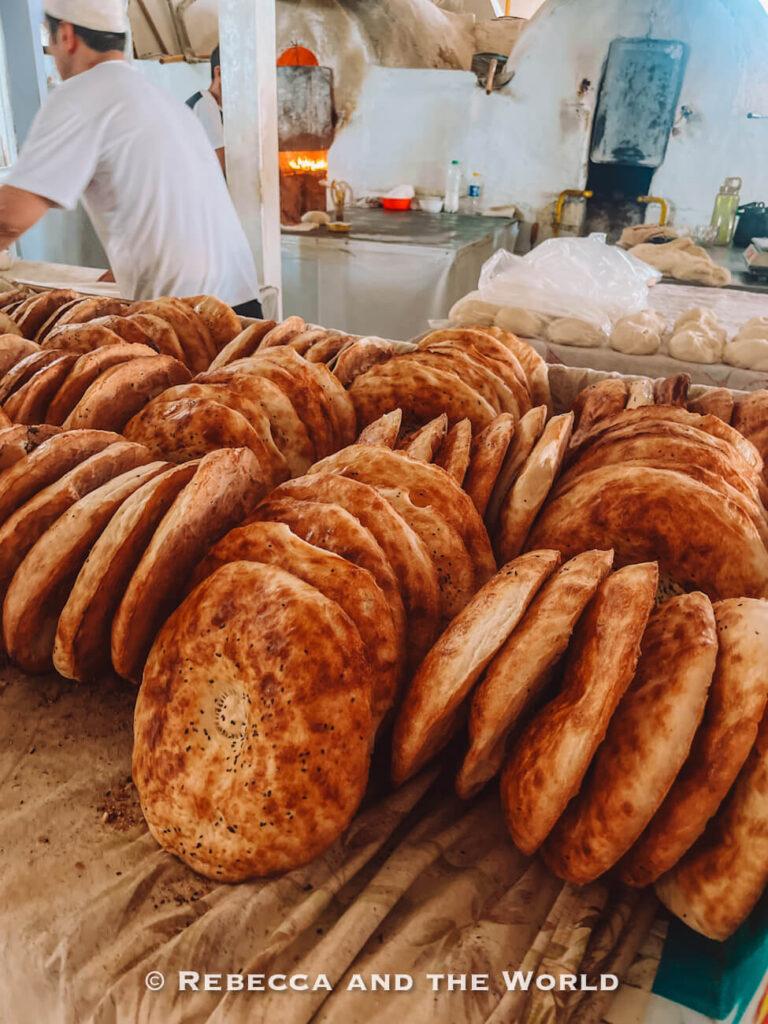
One of my favourite parts of this Tashkent food tour was wandering through the bakery, seeing the beautifully stamped breads and watching the bakers slap freshly kneaded balls of dough onto the searingly hot walls of the tandoor oven to cook.
Having a guide in the market pays for itself immediately in the food court – if vendors hear you speaking English, prices go up. So it’s handy having a local order for you.
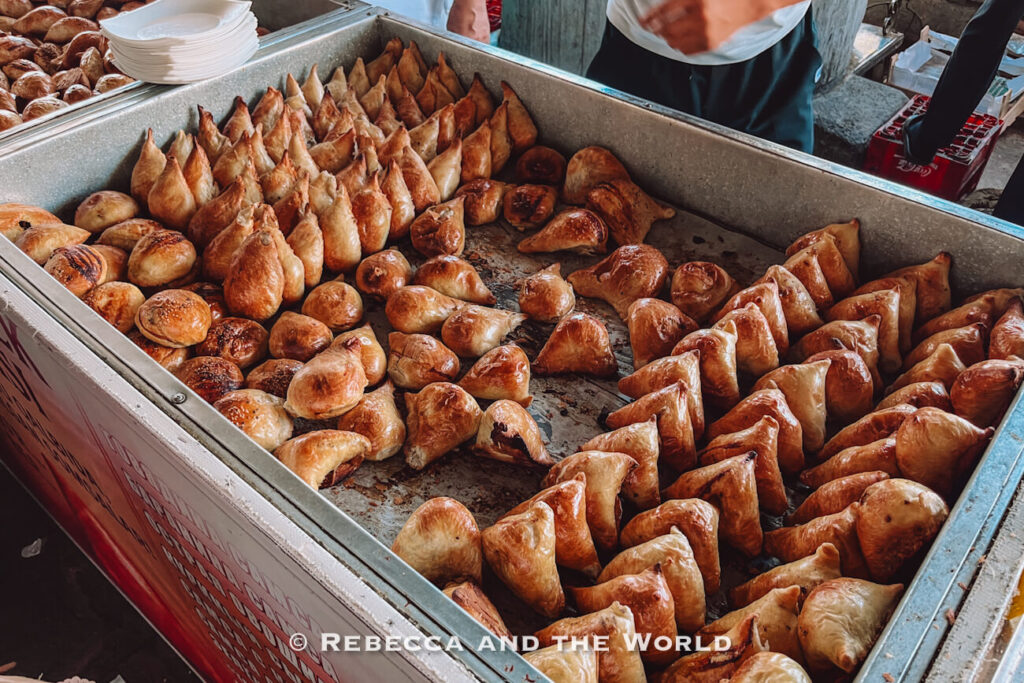
I tried a lamb samsa straight out of the tandoor (which is heated to somewhere between 400 and 500°C) – flaky and rich and the perfect snack.
But the hanim was my favourite – and something I’d not seen on lists of what to eat in Uzbekistan before I arrived. Yusuf described it as a kind of Uzbek lasagne, but it’s really closer to a giant dumpling: shredded potato or meat wrapped in dough and covered in a tomato-based sauce, eaten by hand (which you cover in a plastic bag). It was absolutely delicious – I would have eaten five whole pieces myself, but I knew there was more food coming!
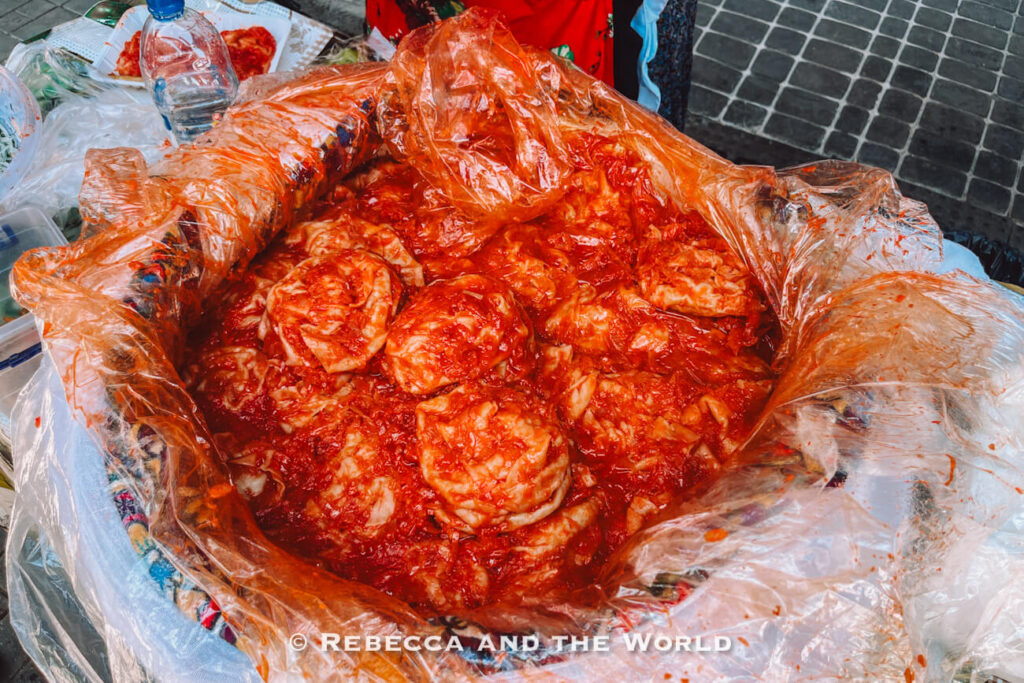
There’s an Instagram-famous lady who makes hanim that people queue for – but Yusuf and Julia also make a point of spreading their custom around rather than only visiting the most Instagram-famous stalls, which I appreciated.
→ READ NEXT: What to eat in Uzbekistan (COMING SOON)
The metro leg
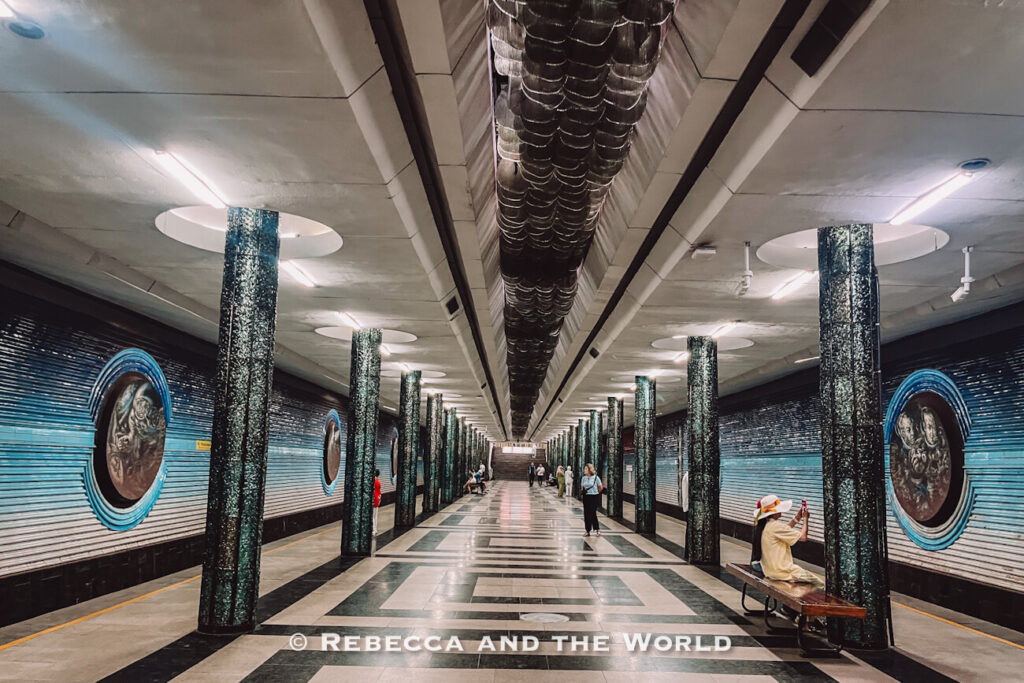
After a decent amount of time at Chorsu Bazaar, it was onto Tashkent’s famous metro stations: grand chandeliers, marble columns and intricate mosaics.
When Tashkent’s metro system opened in 1977, it was the first underground railway in Central Asia, and its stations doubled as nuclear bomb shelters during the Cold War. These were considered military infrastructure, so photography wasn’t even allowed inside until 2018. Luckily, photos are allowed now – because you’ll be taking a lot of them.
We worked through several of the system’s best-known stops, and the context Yusuf and Julia added made all the difference.
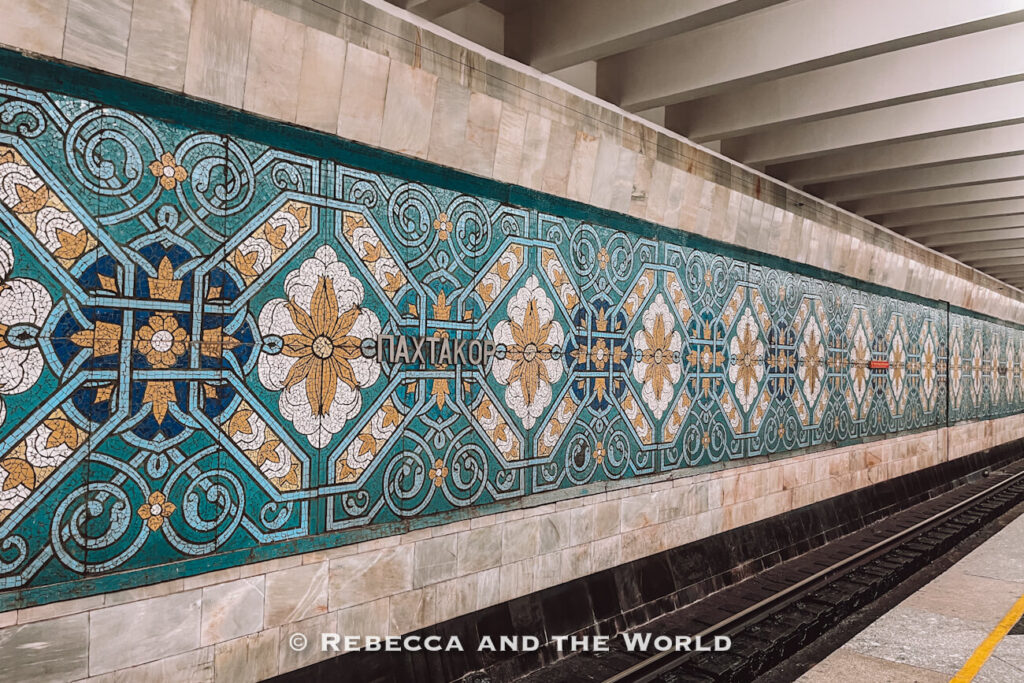
Paxtakor station, which means “cotton picker”, is decorated in vibrant blue and green cotton-flower mosaics. Here, I learned about the darker side of Uzbekistan’s cotton industry: in Soviet times, from mid-September to the end of November, students, teachers and professionals were sent to work the cotton fields, a practice that amounted to forced and child labour. (Although Yusuf did say that some of his family members looked upon this time almost fondly – time off school, hanging out with friends, drinking vodka in the fields – again, something I’d not read about.)
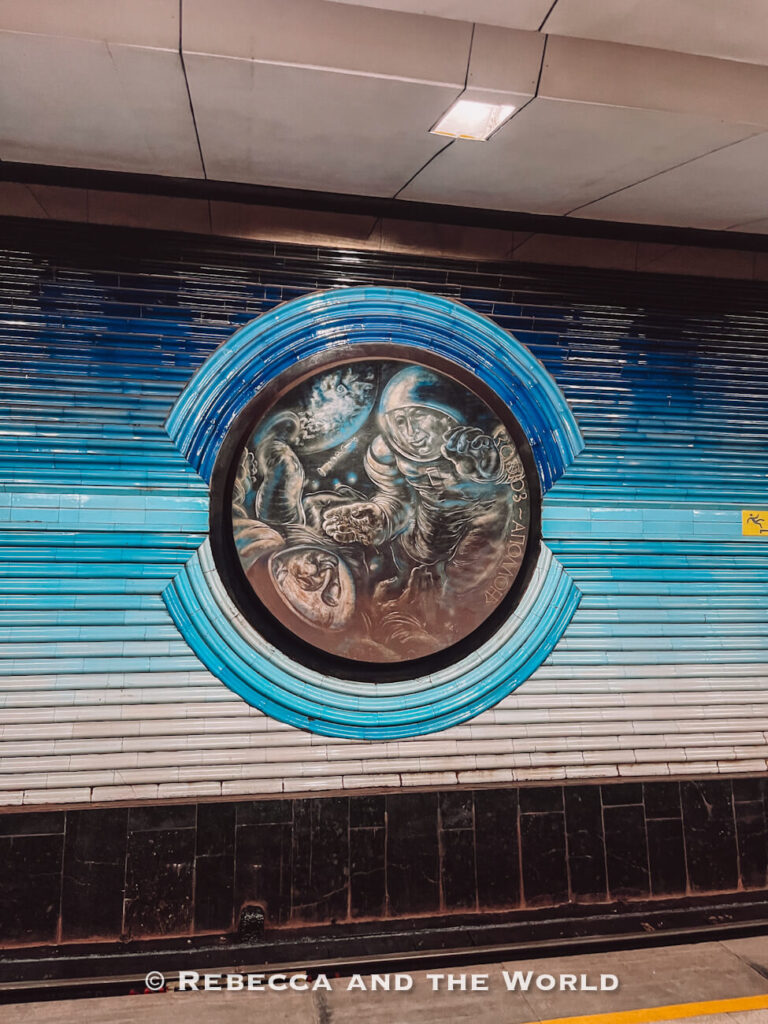
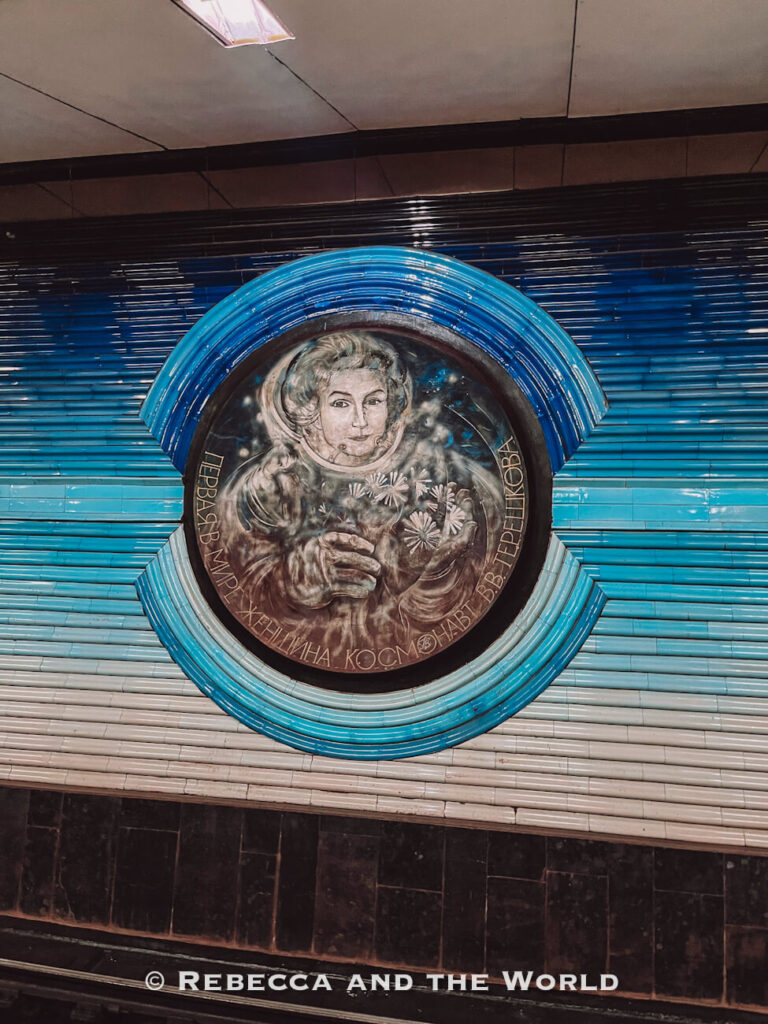
At Kosmonavtlar, probably the most famous Tashkent metro station, the walls fade from white to blue to represent the view astronauts get of Earth from space. There are individual paintings of Ulugbek (Amir Timur’s grandson and a famous astronomer), Valentina Tereshkova (the first woman in space), Yuri Gagarin (the first man in space) and Icarus along the platform. It was so interesting stopping at several of the paintings and learning about the person in them.
We also stopped at other beautiful stations like Gafur Galom, with its turquoise granite columns and intricate ceramic murals, Alisher Navoi, with murals inspired by the famous writer’s works, and O’zbekistan, which has chandeliers shaped like cotton flowers.
While I’ve no doubt I would have been blown away by the beauty and grandeur of the metro stations if I’d visited them alone, having Yusuf and Julia provide all this background information made me notice many more details I wouldn’t have picked up myself.
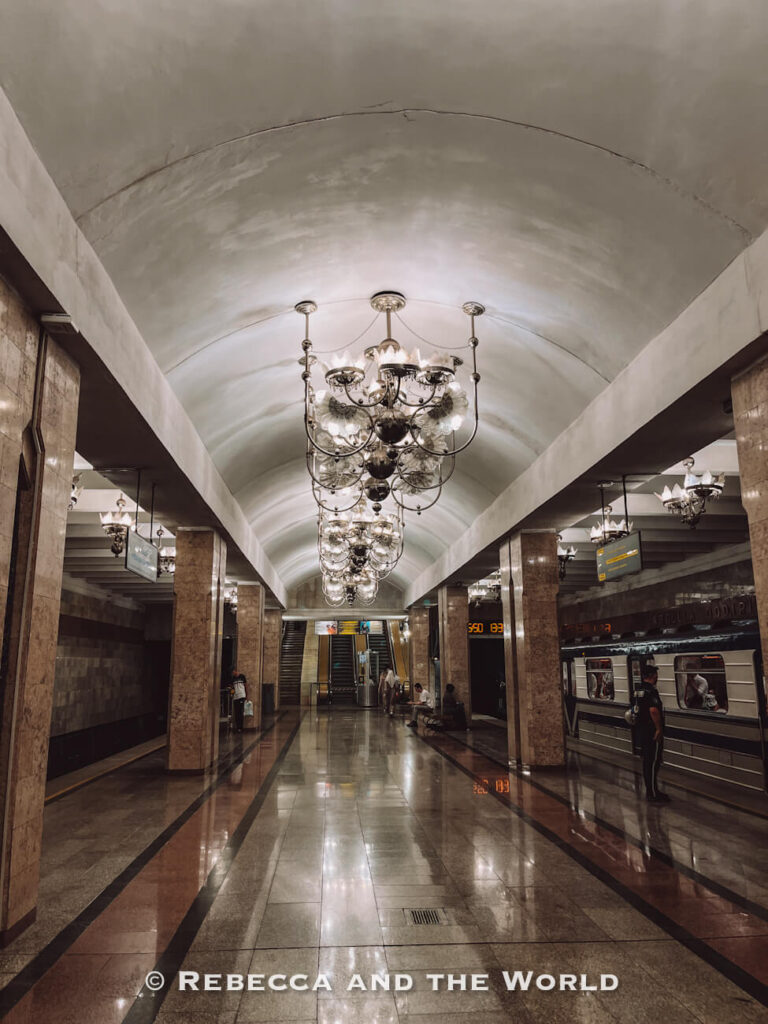
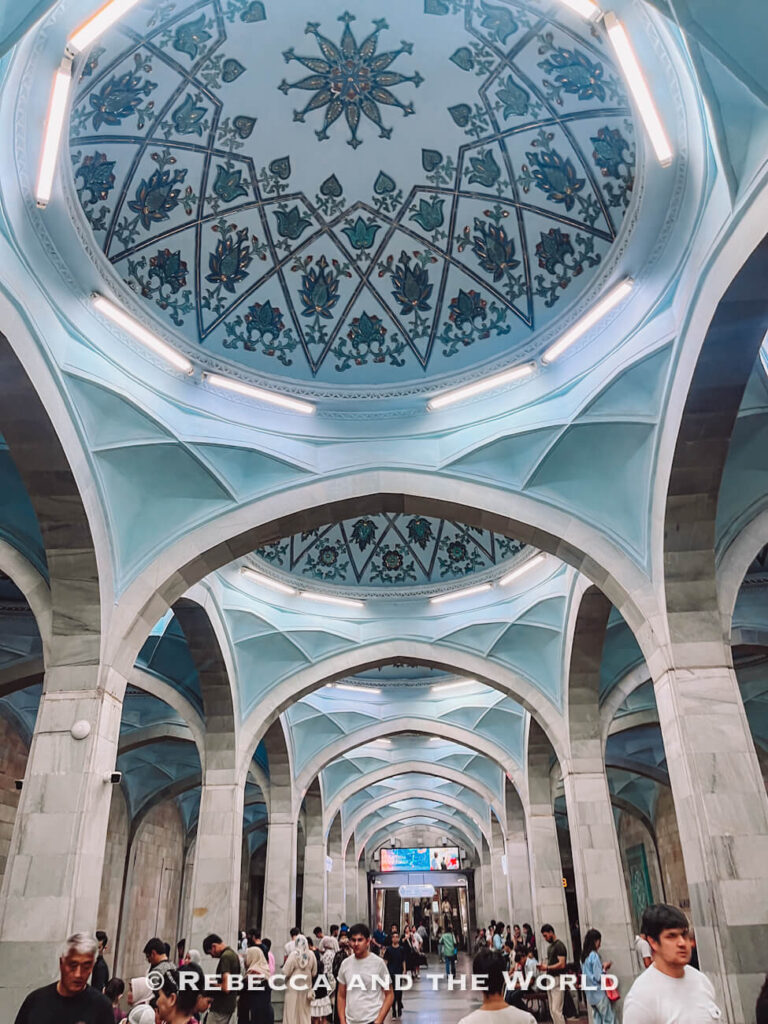
We didn’t make it to every metro station in Tashkent, but a few are worth seeking out on your own if you have time or simply want an excuse for another metro ride. These are the other ones I had on my list: Chilonzor (1977), with bright murals and giant crown-like chandeliers; Hamid Olimjon (1980), with glazed white marble light pillars; Mustaqillik Maydoni (1977), one of the grandest stations on the whole system, with huge marble pillars and glass chandeliers; Beruniy (1991), named for the Uzbek scholar Al-Biruni, with a curved ceiling of marble patterns and crystal chandeliers; and Yunus Rajabiy (2001), named for a famous Uzbek musician, with large marble pillars topped by gilded light installations.
Plov at Besh Qozon
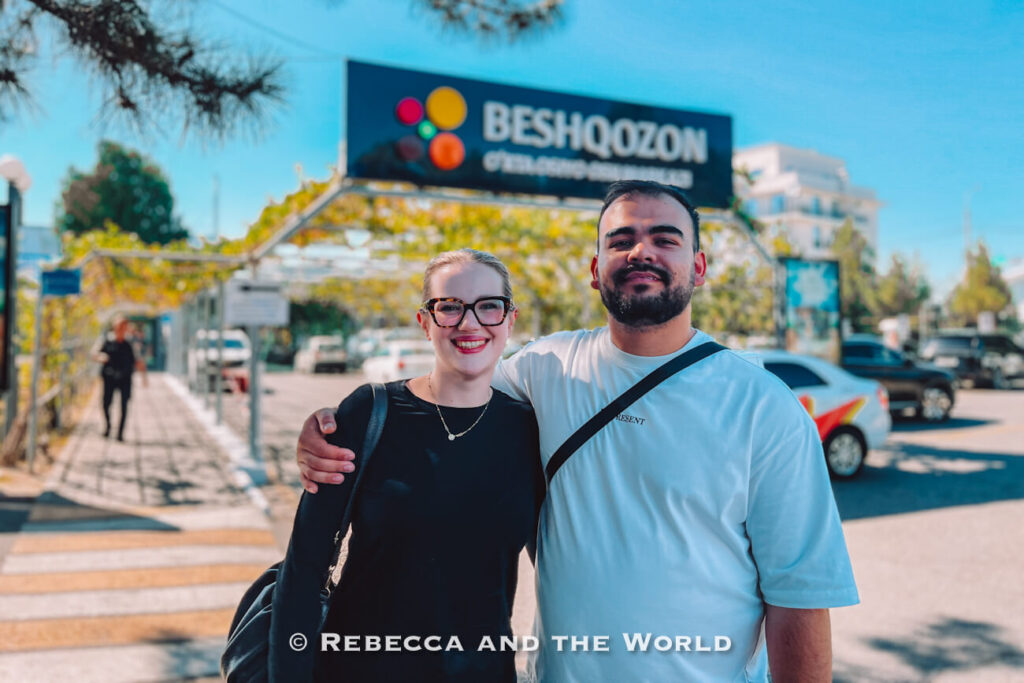
The tour wraps up at Besh Qozon, Tashkent’s famous plov centre, where huge cauldrons of plov are cooked every day for hundreds of hungry customers.
Plov is Uzbekistan’s national dish, a big, hearty pile of rice slow-cooked with meat (usually beef or lamb), carrots and plenty of oil in a huge cast-iron cauldron called a kazan. The rice soaks up all the flavour from the meat and vegetables, and it’s often seasoned with cumin, garlic and sometimes raisins or chickpeas. If you’ve had pilaf or biryani, it’s a distant cousin – but nothing else tastes quite like it. Uzbeks eat it for lunch, at weddings and celebrations, and it’s very much a point of pride, with every region claiming its own version.
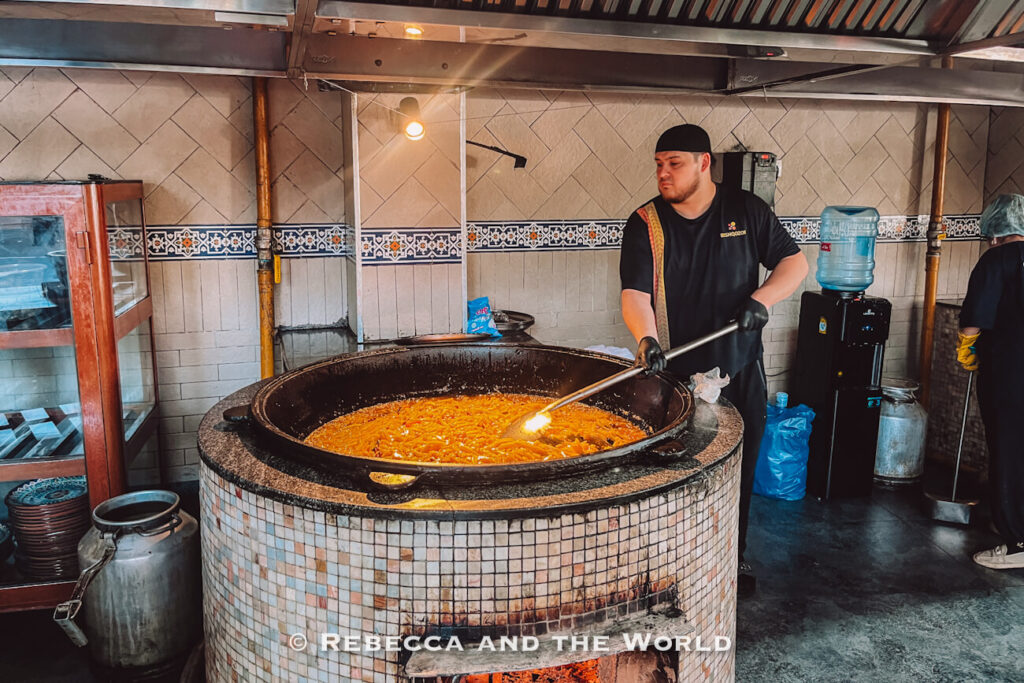
I tried three different kinds of plov here: Tashkent plov (also called wedding plov and one of the most popular styles of plov), made with beef, sunflower seed oil and raisins and topped with a slice of horse meat (horse meat isn’t as common here as it is in Kazakhstan); Fergana-style plov, made with sheep’s fat, usually lamb, and easily the deepest in flavour of the three (this was my favourite!); and a more Persian-style layered Samarkand plov, made with linseed oil, beef and yellow carrots.
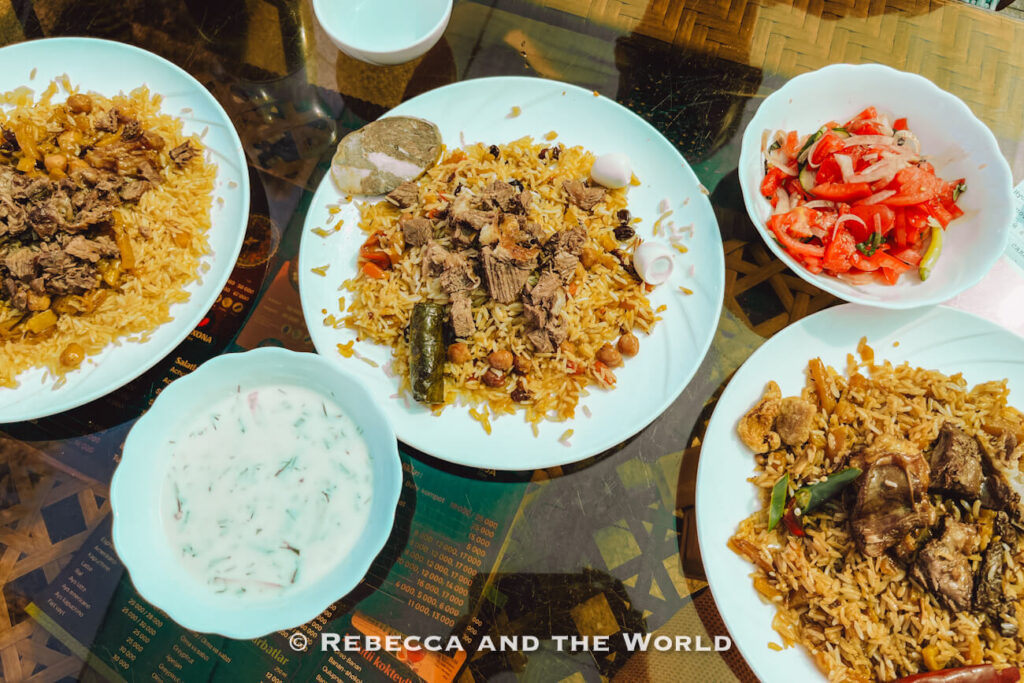
I fully expected to find plov too oily, but it’s one of the most delicious – and filling – foods you can eat, and an absolute must-try when in Uzbekistan.
I learned from Yusuf that the rice should be fluffy and the oil rich enough that it drips down your arm to your elbow. And it’s eaten with your hands or a spoon – NEVER with a fork!
Besh Qozon plov was a fitting way to end four hours of eating and exploring – piles of plov cooking away in huge cauldrons, and a proper sit-down lunch after a morning spent snacking my way around the market.
🍉 BOOK CRAFT N CULTURE’S FOOD AND METRO TOUR HERE 🍉
Pros
A good tour guide can completely change the way you look at a city and a country – and that’s what I walked away from this tour with. Yusuf and Julia provided so much interesting information, things I hadn’t read in the books I’d devoured before this trip. I loved the historical and cultural context they provided – as well as their own personal stories and opinions they weaved into their commentary.
While four hours may seem like a long time, I thought it was the right amount for a tour of this depth. I had the chance to eat – a lot! – and see many of the beautiful metro stations, without feeling rushed at all.
It’s also worth saying: I was really impressed by the tourism business Yusuf and Julia have built here. Beyond this specific tour, they run similar craft and culture-focused experiences in Samarkand and Bukhara, centred on things like wood carving, knife making, bread making and plov cooking. If this tour is representative of their standard, it’s well worth looking at what they offer in those cities too if you’re continuing on through Uzbekistan. They’ve also just opened up a cafe in Tashkent!
On value for money: at $70 per person for four hours that includes a full meal, a market’s worth of tastings and metro tickets, this compares well against other paid experiences in Tashkent, especially once you factor in the private experience.
→ READ NEXT: How to spend 2 days in Tashkent
Cons
Honestly, nothing. The only thing that might not suit everyone is that this is a private tour, not a group tour. So, if you’re travelling alone you might not want to take a four-hour tour solo or pay the higher price (there are other group tours available). For me, I loved having the attention of Yusuf and Julia and the chance to ask a million questions! Luckily I had brought a new notebook along with me as I filled one!
🍉 BOOK CRAFT N CULTURE’S FOOD AND METRO TOUR HERE 🍉
Final verdict: Craft n Culture Tashkent food tour
5 out of 5. This was the best thing I did in Tashkent – and the best way to see the highlights of the city in a short amount of time. Between the food, the metro history and how much real knowledge Yusuf and Julia bring to both halves of the tour, it more than earns its place at the top of the city’s reviews.
→ READ NEXT: How to plan the ultimate Uzbekistan itinerary (COMING SOON)
FAQs: Best Tashkent food and metro tour
Is the Craft n Culture food tour worth the price?
Yes, I think so. At $70 per person for four hours, a full lunch, market tastings and metro tickets, with a private, knowledgeable guide throughout, I think it’s good value.
Do you need to book in advance?
I’d recommend it, particularly in peak season. These guys are making a name for themselves and I wouldn’t be surprised if they are booked out months in advance! Booking is instant once confirmed, and cancellation is free up to 24 hours ahead, so there’s little downside to locking in a date early and adjusting later if your plans change.
Is it suitable for kids, vegetarians or people with allergies?
The tour welcomes all skill levels, and Yusuf and Julia ask for advance notice on allergies and dietary restrictions so they can plan around them. If you’re vegetarian, it’s worth flagging this when you book, given how meat-focused a lot of the tastings are (plov, samsa, hanim). Meat is a staple in Uzbekistan!
Can you do this tour solo, or only in a group?
Craft n Culture’s tours are all private, rather than shared group tours. So you can book this tour just for yourself, though the per-person cost is more noticeable if you’re travelling alone rather than splitting it across a couple or a small group of friends/family.
Is the tour wheelchair accessible?
No, the tour isn’t wheelchair accessible, due to the bazaar’s crowds and uneven surfaces and the metro’s stairs.
Did you find this article helpful? Consider buying me a coffee as a way to say thanks!
Would you take Craft n Culture’s Food and Metro Journey? Let me know if you have any questions about this Tashkent food tour in the comments below!
Read next
Before you go, you might like these travel articles:
- How to Spend 2 Perfect Days in Tashkent, Uzbekistan
- The Ultimate Uzbekistan Itinerary (COMING SOON)
- How to Spend 2 Days in Samarkand (COMING SOON)
- How to Spend 2 Days in Bukhara (COMING SOON)
- The Best Things to Do in Khiva (COMING SOON)
BOOKING A TRIP SOON? HERE ARE SOME HELPFUL LINKS
- Book your flight online with Skyscanner – it’s where I always start my flight research. (I then book directly with the airline.)
- One thing I always purchase is travel insurance. Travel Insurance Master allows you to compare across multiple policy providers, while SafetyWing is great for long-term travellers and digital nomads.
- Wise is my choice for sending and receiving money and spending money overseas (you can get a digital and physical card).
- Find a great hotel on Booking.com.
- How to get around? I use DiscoverCars for car hire, or Motorhome Republic and Jucy for campervan/RV rental. For buses, trains and ferries, I use 12GO, Busbud and Omio.
- Grab an e-sim to stay connected while on the road.
- Check out the huge range of day tours throughout major cities and countries on GetYourGuide, Klook or Viator. I’m always a fan of a good food tour!
- Saving money? Check out the huge range of free walking tours on GuruWalk (don’t forget to tip!).
- Stuff I always pack? A reusable water bottle, packing cubes and a handy electronics organiser. Check out my Amazon shop for all my fave travel items – everything from backpacks and suitcases to travel adapters and beauty products.
PIN IT FOR LATER: TASHKENT FOOD TOUR
Save this Tashkent food tour review to Pinterest so you can plan your trip later.